Overview

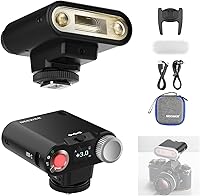
The NEEWER Z160 Camera Flash is a palm-sized speedlite that punches above its weight class for photographers who shoot light and move fast. It has a retro rotary dial aesthetic that sits naturally on a mirrorless body without looking out of place on a city street. At just 5.6oz, the weight is genuinely negligible. What separates it from similarly priced rivals is the built-in lithium battery — no scrambling for AA cells before a shoot. It covers standard hot shoe cameras from Canon, Nikon, Fuji, Olympus, Panasonic, and Sony MI mounts. At this price tier, you are not buying a workhorse studio strobe; you are buying a capable, travel-friendly fill light.
Features & Benefits

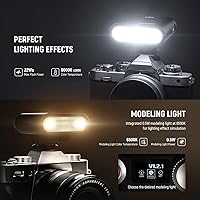
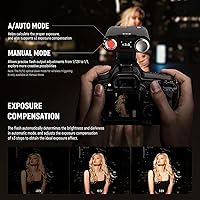
The Z160 offers two shooting modes that handle most real-world situations: Auto and Manual. Auto mode manages fast-moving scenes with ±3EV exposure compensation, while Manual lets you dial power anywhere from 1/128 for gentle fill to a full 1/1 output. The optical slave modes (S1 and S2) are a genuine bonus — they allow this compact flash to act as a triggered off-camera unit without purchasing a wireless transmitter separately. Color temperature holds at 6000K across power levels, which matters when blending ambient and flash. The 1.5-second recycle keeps pace with a normal shooting rhythm, and a full charge replenishes in about 1.5 hours via USB-C.

Best For

This mini speedlite makes the most sense for photographers who prioritize portability over raw power. Street shooters will appreciate how unobtrusive it looks and feels — it does not transform your camera into a bulky rig. Content creators who need a quick on-camera fill light for indoor or shaded situations will get solid results without managing AA batteries mid-shoot. It is also a smart pick for beginners who want both Auto and Manual control to learn flash fundamentals at manageable cost. One honest caveat: this is not the flash for harsh midday sun. Check the compatibility list carefully — several Canon, Sony, and Fuji bodies are specifically excluded from full functionality.

User Feedback

With over 13,000 ratings averaging 4.5 stars, the Z160 has earned its position as a category bestseller. Buyers consistently highlight the design and build quality for the price — it does not feel cheap in hand, which genuinely surprises people at this tier. USB-C charging is frequently praised as a welcome modern convenience. On the critical side, some users note that outdoor performance in bright conditions hits a ceiling, which is expected for a GN14 unit — this is simply not a sunlight flash. A handful of buyers also flagged compatibility edge cases beyond the official exclusion list, so verifying your specific camera body before purchasing is a worthwhile step.

Pros

  • At just 5.6oz, this mini speedlite is light enough to forget you are even carrying it.
  • The built-in lithium battery eliminates the AA dependency that frustrates so many compact flash users.
  • USB-C charging means one less proprietary cable cluttering your travel bag.
  • Manual power control from 1/1 down to 1/128 gives real creative flexibility for close-up and fill work.
  • S1/S2 optical slave modes allow basic multi-flash setups without purchasing a separate wireless trigger.
  • Color temperature holds consistently at 6000K across power levels, which keeps skin tones predictable.
  • The 1.5-second recycle time keeps pace with a normal, unhurried shooting rhythm without feeling sluggish.
  • Auto mode with ±3EV compensation makes this compact flash approachable for beginners right out of the box.
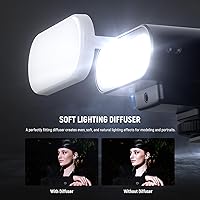
  • The included diffuser is immediately useful — it is not an afterthought accessory.
  • For indoor and shaded shooting scenarios, the value offered at this price point is genuinely hard to argue with.

Cons

  • GN14 output cannot compete with bright ambient daylight — outdoor portraits in direct sun will expose this limit fast.
  • The optical slave sensor struggles to trigger reliably in high-ambient-light outdoor environments.
  • Full-power flash counts in real-world use often fall short of the stated 650-flash specification.
  • The exclusion list of incompatible cameras is longer than buyers expect, and some unlisted bodies have also caused issues.
  • No carrying pouch is included, which feels like an oversight for a flash marketed on portability.
  • Adjusting power via the rotary dial is slower than button-based interfaces during fast-paced shooting.
  • The S1/S2 slave mode documentation in the box is thin — first-time flash users will likely need external tutorials.
  • The 0.5W modeling light is too dim to be useful in any environment with meaningful ambient light.
  • There is no radio triggering support, limiting wireless use to line-of-sight optical scenarios only.
  • The hot shoe foot has shown minor wear in some units after repeated camera swapping over extended periods.

Ratings

The scores below for the NEEWER Z160 Camera Flash were generated by our AI system after analyzing thousands of verified global buyer reviews, with spam, bot-submitted, and incentivized feedback actively filtered out before scoring. The Z160 earned strong marks in portability and value, though real user data also surfaces genuine limitations around output power and compatibility that buyers deserve to know before purchasing. Both the strengths and the frustrations are reflected honestly here.
Portability & Form Factor
94%
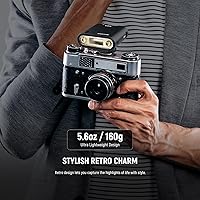
At 5.6oz, this mini speedlite barely registers on a mirrorless body — reviewers consistently describe forgetting it is even mounted during long street sessions. The palm-sized footprint slides into a jacket pocket or small camera bag without reorganizing your entire kit.
A handful of users with larger DSLR bodies noted the compact size feels slightly disproportionate and can be awkward to grip when adjusting controls one-handed. The rotary dial, while stylish, requires two hands in some shooting positions.
Build Quality
83%
For a flash at this price tier, the Z160 feels noticeably solid — users repeatedly express surprise at the quality of the housing and the satisfying click of the dial. The retro-styled display screen looks sharp and reads cleanly even in daylight.
The plastic construction is ultimately plastic — a hard drop onto pavement is unlikely to end well. A few reviewers flagged minor flex in the hot shoe foot after extended use, which is worth monitoring if you frequently swap the flash between cameras.
Flash Output Power
61%
39%
Indoors and in shaded outdoor environments, the 22Ws output handles fill flash duties competently. Portrait and street shooters working in controlled or low-ambient-light conditions generally get the exposure results they need without pushing the unit hard.
In bright midday sun, the GN14 ceiling becomes apparent quickly — you simply cannot overpower harsh ambient light with this unit. Users shooting weddings or outdoor events in direct sunlight found themselves frustrated, and this is an honest constraint that the spec sheet reflects accurately.
Battery Life & Charging
88%
The built-in lithium battery is one of the Z160's clearest advantages over AA-powered alternatives. Charging via USB-C in roughly 1.5 hours is genuinely convenient for travel photographers who already carry a single multi-port charger for all their devices.
Real-world flash counts at lower power settings beat expectations, but shooting sustained full-power bursts does fall short of the stated 650-flash figure for some users. Battery-level feedback on the display is appreciated, though a few reviewers wanted more granular percentage readings.
Recycle Time
86%
The 1.5-second recycle at full power keeps pace comfortably with a normal portrait or street shooting rhythm. Users working in Auto mode at partial power report even faster turnaround, making the Z160 feel responsive during active sessions.
At maximum output in cold temperatures, a small number of reviewers noticed the recycle stretching slightly longer than expected. This is a minor edge-case issue and unlikely to affect most shooting scenarios, but worth noting for photographers working in winter conditions.
Color Accuracy
81%
19%
The 6000K color temperature holds consistently across power levels, which is not a given at this price point. Users blending the Z160 with natural window light report minimal color-cast issues, and the included diffuser softens output without pushing it too warm.
A small subset of reviewers shooting under mixed artificial lighting noticed a slightly cooler cast than anticipated — not a major issue but worth factoring in if color-critical work like product photography is your primary use case.
Ease of Use
91%
Beginners consistently highlight how quickly they got up and running — the Auto mode handles exposure decisions confidently, and the Manual mode dial is intuitive enough that most users skipped the manual entirely. The display is clear and the controls are logically laid out.
The S1/S2 optical slave modes are not explained thoroughly in the included documentation, and a portion of first-time flash users found the triggering behavior confusing without supplemental tutorials. A clearer quick-start guide would reduce that friction considerably.
Optical Slave Performance
74%
26%
When conditions are right — indoors or in shaded environments with a clear line of sight to the triggering flash — the S1 and S2 modes work reliably and let users build basic multi-light setups without investing in radio triggers. Several reviewers use the Z160 as a second light triggered by their main flash.
In bright outdoor environments, the optical sensor can struggle to detect the trigger flash reliably, leading to missed pops. Users shooting S2 mode alongside a camera with a strong pre-flash sequence also reported occasional misfires that required positioning adjustments.
Hot Shoe Compatibility
77%
23%
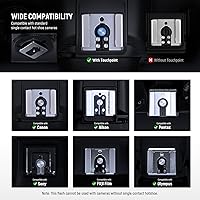
The single-contact hot shoe design covers a genuinely wide range of camera systems — Canon, Nikon, Fuji, Olympus, Panasonic, and Sony MI users all report straightforward mounting with no adapter needed. For most mainstream camera owners, it simply snaps on and works.
The exclusion list is longer than many buyers expect — specific Canon Rebel, Sony, and Fuji models are explicitly not supported, and a handful of reviewers discovered incompatibilities with bodies not on the official list. Verifying your specific camera model before purchasing is strongly advised.
Modeling Light Usefulness
67%
33%
The 0.5W modeling light gives photographers a useful way to preview where light and shadows will fall before firing, which genuinely helps beginners learn to read lighting setups. In darker rooms it provides enough output to be a practical aid.
At 0.5W, the modeling light is too dim to be useful in any environment with significant ambient light — it essentially disappears outdoors. Experienced photographers may find it more symbolic than practical, though for its intended role as a learning aid it is adequate.
Value for Money
92%
The ratio of capability to cost is where the Z160 earns its strongest marks. Buyers moving up from no external flash at all describe it as a revelation — they get Auto and Manual control, optical slave functionality, and USB-C charging in a stylish package that does not break the budget.
Photographers who have used mid-range or professional speedlites will notice the output and feature ceiling quickly — this compact flash is not a replacement for a full-power unit but rather a complement to one. Managing those expectations is key to satisfaction.
Design & Aesthetics
88%
The vintage-inspired rotary dial and compact silhouette give the Z160 a distinctly non-generic look that content creators and street photographers appreciate — it fits the aesthetic of a thoughtfully assembled kit rather than looking like an afterthought bolted onto the hot shoe.
The design-first approach means some functional trade-offs: the dial can be slow to adjust in fast-moving situations compared to traditional button-based interfaces. For photographers who prioritize speed of adjustment in the field, this layout takes some getting used to.
Manual Power Control Range
84%
Spanning 1/1 down to 1/128 gives users real flexibility for close-up portrait work, macro photography, or gentle fill in bright conditions. Being able to dial in precise fractional stops in Manual mode is a feature set that many competing mini flashes in this tier omit entirely.
Adjusting power in fine increments via the rotary dial takes more deliberate turns than some users prefer during a fast-paced shoot. There is no quick-jump shortcut between extremes, so going from 1/1 to 1/128 requires spinning through every intermediate step.
Package Contents & Accessories
73%
27%
Including a diffuser dome and a USB-C cable in the box is a thoughtful touch — users do not need to immediately spend more to get a functional kit. The diffuser noticeably softens the output and is the kind of accessory most photographers reach for immediately.
A carrying pouch or protective case is absent, which feels like an oversight given that portability is the Z160's central appeal. Several reviewers mentioned sourcing a small padded pouch separately to protect the unit in a crowded camera bag.

Suitable for:

The NEEWER Z160 Camera Flash is a strong fit for photographers who shoot on the move and want a capable fill light without adding bulk or weight to their kit. Street photographers in particular will appreciate how unobtrusive it looks mounted on a compact mirrorless body — it does not announce itself the way a large professional speedlite does, which matters when you are trying to stay inconspicuous in public spaces. Travel shooters who have grown tired of sourcing AA batteries in unfamiliar cities will find the built-in lithium battery and USB-C charging genuinely practical — one cable handles the flash alongside a phone, tablet, and laptop. Content creators who shoot primarily indoors or in shaded environments — product flats near a window, talking-head videos, indoor lifestyle content — will get reliable, consistent color temperature without fussing over complex settings. Beginners who want to learn the fundamentals of both Auto and Manual flash control without a steep financial commitment will also find this compact flash an approachable and rewarding starting point.
Not suitable for:

The NEEWER Z160 Camera Flash is not the right tool for photographers whose work regularly takes them into bright, high-ambient-light conditions — think outdoor wedding receptions at midday, beach portraits in direct sun, or event photography in large, open venues. The GN14 output ceiling is real, and no amount of creativity fully compensates for the physics of a 22Ws unit competing with harsh sunlight. Working professionals who depend on a speedlite as their primary and only flash for client work will likely find the power output and feature set too limiting over time. Photographers shooting with certain Canon Rebel models, specific Sony bodies including the A9III and A99, or select Fuji cameras like the X-A3 and X100 series should also be aware that this flash is explicitly not supported on those systems — and some buyers have encountered compatibility issues beyond even that official list, so verifying your specific body is not optional. Anyone expecting radio wireless triggering will also be disappointed, as the Z160 relies entirely on optical slave modes that struggle in brighter outdoor environments.
Specifications

  • Flash Output: The unit delivers 22Ws of power with a guide number of GN14 at ISO 100, suitable for indoor and shaded outdoor fill flash work.
  • Color Temperature: Flash color temperature is rated at 6000K ±200K, providing consistent, neutral-to-slightly-cool daylight-balanced light across all power levels.
  • Power Range: Manual mode spans from full power (1/1) down to 1/128 in stepped increments, giving precise control over flash output for close-up and fill scenarios.
  • Flash Modes: Four operating modes are available: Auto (A), Manual (M), and optical slave modes S1 and S2, with S1/S2 accessible only in Manual mode.
  • Auto Exposure: In Auto mode, the flash supports ±3EV exposure compensation to help match ambient light conditions without manual power adjustments.
  • Recycle Time: The flash recycles to full power in approximately 1.5 seconds, enabling a natural shooting pace for portrait and street photography.
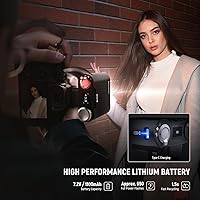
  • Battery: A built-in 7.2V 1100mAh lithium-ion battery powers the unit, delivering up to 650 full-power flashes on a single charge under ideal conditions.
  • Charge Time: The battery charges fully in approximately 1.5 hours via a USB-C port requiring 5V/2A input; a USB-A to USB-C cable is included in the box.
  • Modeling Light: An integrated 0.5W LED modeling light operates at 6500K and is designed for previewing light placement and shadow direction before firing.
  • Focal Coverage: The flash head covers a fixed 28mm focal length, making it compatible with standard wide to normal lens shooting scenarios without zoom adjustment.
  • Sync Speed: The flash synchronizes at 1/250s or faster, which is standard for most DSLR and mirrorless camera shutters using a mechanical curtain.
  • Hot Shoe Type: The unit uses a single-contact standard hot shoe mount, compatible with Canon, Nikon, Fuji, Olympus, Panasonic, and Sony MI-shoe cameras.
  • Weight: The flash body weighs 5.6oz (160g), making it one of the lighter external speedlites available for everyday carry and street photography use.
  • Dimensions: Package dimensions measure 5 x 4.92 x 3.43 inches, with the flash unit itself compact enough to fit in a jacket pocket or small camera bag pouch.
  • Battery Protection: Built-in safety circuits protect the lithium battery against overcharge, over-discharge, over-current, and short-circuit conditions during normal use and charging.
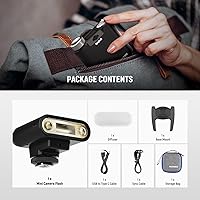
  • Included Accessories: The package includes a bounce diffuser dome and a USB-A to USB-C charging cable; no carrying case or external trigger is included.
  • Incompatible Bodies: The flash is explicitly not compatible with Canon EOS Rebel SL3/250D, Rebel T7/1500D, T100/3000D, 4000D, 200DII, and R50, nor with Sony A9III, A99, A77, A350, or ZV-1F, nor with Fuji X-A3, X100F, or X100T.
  • Input Charging: Charging requires a 5V/2A USB power source; faster chargers are compatible but the unit draws only the power it requires for safe lithium charging.

Related Reviews
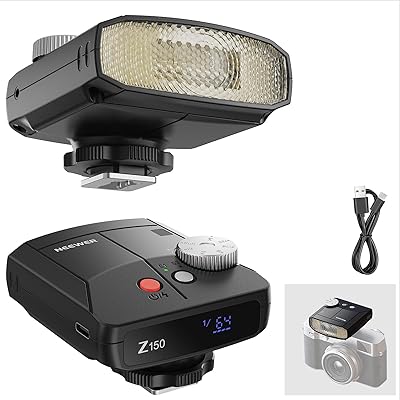
NEEWER Z150 Mini Hot Shoe Flash
81%
94%
Portability & Form Factor
91%
Battery Life & Charging
71%
Light Output & Power
89%
Ease of Use
86%
S2 Optical Slave Performance
More
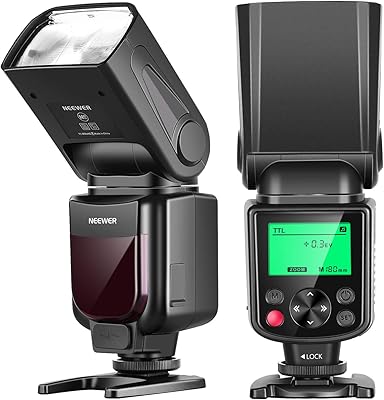
NEEWER 750II TTL Camera Flash Speedlite
84%
88%
Flash Power & Performance
85%
Ease of Use
72%
Build Quality
90%
TTL Functionality
80%
Portability & Weight
More
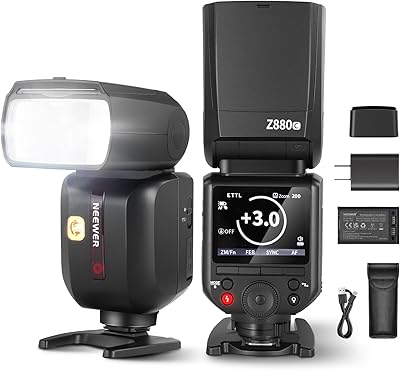
NEEWER NW635II-S TTL Camera Flash Speedlite
86%
88%
Value for Money
91%
Performance
75%
Build Quality
85%
Ease of Use
92%
Portability
More
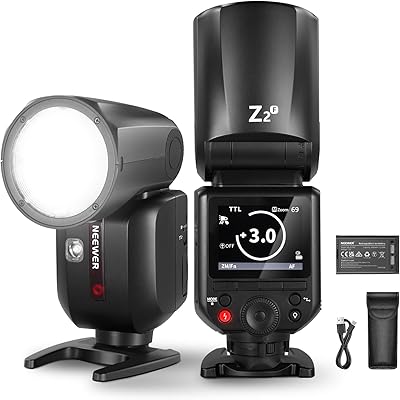
NEEWER Z880-C TTL Camera Flash Speedlite
83%
83%
Build Quality
88%
TTL Accuracy
86%
HSS Performance
74%
Wireless Reliability
91%
Battery Life
More
NEEWER Z2-F 2.4G TTL Camera Flash Speedlite for Fujifilm
86%
88%
Performance
85%
Ease of Use
91%
Wireless Connectivity
83%
Battery Life
90%
Flash Power Output
More
Godox TT600S Speedlight Camera Flash
79%
93%
Value for Money
88%
Wireless Performance
84%
Build Quality
91%
Output Consistency
76%
High-Speed Sync
More
NEEWER TT560 Speedlite Flash
75%
91%
Value for Money
74%
Ease of Use
83%
Build Quality
78%
Compatibility
77%
Light Output & Power Range
More
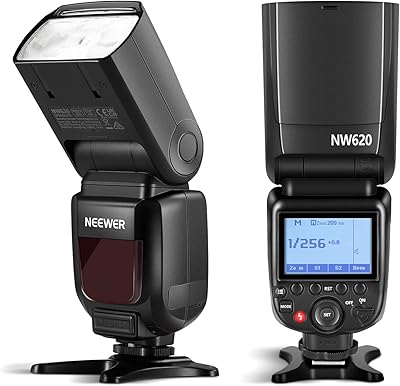
NEEWER NW620 Speedlite Flash
75%
88%
Value for Money
84%
Flash Output & Power
79%
Build Quality
91%
LCD Display & Controls
62%
Recycling Time
More
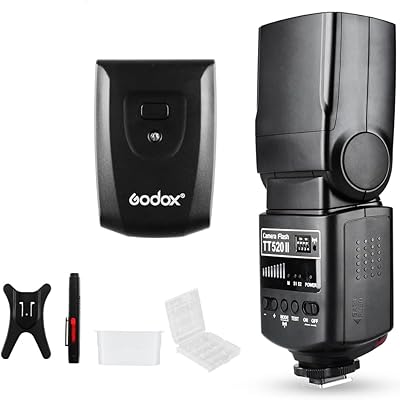
Godox TT520II Speedlite Flash
76%
91%
Value for Money
78%
Build Quality
84%
Wireless Performance
82%
Flash Output Consistency
76%
Ease of Use
More
Godox TT520III Hot Shoe Flash
80%
91%
Value for Money
88%
Ease of Setup
84%
Wireless Performance
79%
Light Output & Power
86%
Manual Control Precision
More

FAQ

Yes, the Z160 is compatible with Sony cameras that use the standard Multi-Interface (MI) hot shoe, which includes the A7 series and ZV-E10. However, it is explicitly not supported on the Sony A9III, A99, A77, A350, or ZV-1F, so double-check your specific model before purchasing.

It does, within limits. The S1 and S2 optical slave modes allow the flash to fire when it detects another flash firing nearby — S1 responds to any flash pulse, while S2 ignores pre-flash signals from TTL systems. This works reliably indoors and in shaded environments, but the optical sensor can miss triggers in bright ambient light outdoors.

The rated 650 full-power flashes is a best-case figure. In practice, most users report counts that fall somewhere in the 400 to 600 range depending on power settings and temperature. At lower power settings like 1/4 or 1/8, you can expect significantly more shots per charge. The battery indicator on the display helps you track charge level during a shoot.

For open shade or overcast conditions, yes — it handles fill flash duties well in those scenarios. In direct harsh sunlight, the GN14 output simply does not have enough power to meaningfully compete with the ambient light. If bright outdoor portraiture is your main use case, you will likely want a higher-powered speedlite.

The flash requires a 5V/2A USB power source and charges via the included USB-A to USB-C cable. Most modern power banks output at least 5V/2A, so charging on the go from a portable battery pack works perfectly — which is one of the more practical advantages of this design over AA-battery alternatives.

The dial is intuitive once you are familiar with it, but it does require deliberate turns to move between power settings — there is no quick-jump shortcut. In low light, the display is readable and helps. That said, if you need to rapidly swing from 1/128 to full power mid-shoot, it takes more time than a button-based interface would.

No, the Z160 does not support TTL metering on any camera system. It operates in Auto mode (which uses an onboard sensor to judge exposure) and Manual mode (where you set power yourself). If you rely heavily on TTL for event or wedding work, you will need to look at a different flash.

In a dark room or dimly lit studio, the 0.5W modeling light gives you a reasonable sense of where shadows will fall before you fire — useful for beginners learning to read light. In a normally lit room or outdoors, it essentially disappears. Think of it as a learning aid rather than a serious previewing tool.

The officially excluded Canon bodies are the EOS Rebel SL3/250D, Rebel T7/1500D, 2000D, Rebel T100/3000D, 4000D, 200DII, and R50. If your Canon body is not on that list, it should work with the standard hot shoe. A small number of buyers have also flagged compatibility issues with models outside the official list, so checking community forums or the product Q and A section for your specific body is a worthwhile step.

Unfortunately, no — the package includes the flash unit, a diffuser dome, and a USB-C charging cable, but no carrying pouch or protective case. Given that portability is one of this compact flash's main selling points, picking up a small padded accessory pouch separately is a smart move to protect it in a camera bag.

Where to Buy

B&H Photo-Video-Audio
In stock $69.99