


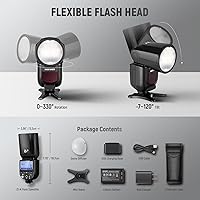
Overview

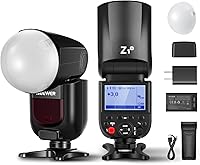
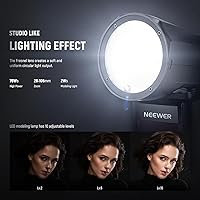
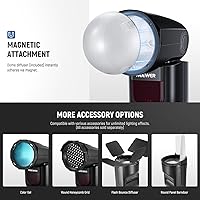
The NEEWER Z1-N TTL Speedlite for Nikon sits in an interesting spot — capable enough for semi-professional work, priced within reach of serious hobbyists. Unlike traditional rectangular flash heads, it uses a circular fresnel lens that wraps light in a rounder, more natural pattern, producing softer falloff at the edges rather than the hard cutoff you get from a conventional speedlite. That difference is noticeable in portraits, especially when shooting close to a subject. NEEWER includes a magnetic dome diffuser in the box, which adds immediate value and saves you from hunting down a modifier separately. It is a practical starting point for Nikon shooters ready to step beyond basic flash.

Features & Benefits

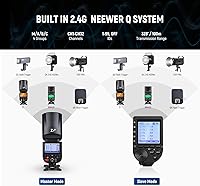
At 76Ws, this Nikon speedlite punches reasonably hard for a hot-shoe flash. TTL mode handles fast-changing scenes well on most current Nikon bodies, though accuracy can drift slightly on older F-mount cameras — worth knowing before you rely on it at a paid shoot. The high-speed sync up to 1/8000s is genuinely useful for outdoor portraits in bright sun, letting you balance ambient light without stopping down aggressively. The built-in 2.4G wireless system supports up to four groups across 32 channels, so you can run a basic multi-light setup without an external trigger. A 2W LED modeling lamp with ten brightness levels offers a quick way to visualize where shadows will fall before you fire a single shot.

Best For

This round-head flash makes the most sense for portrait and event photographers already shooting Nikon who want noticeably softer light without buying a full studio kit. If you have been relying on a basic pop-up or entry-level speedlite, the rounder light quality here is a real step up — skin tones render more naturally, and backgrounds avoid that harsh, flat look. The wireless master capability means you can start building a multi-flash setup using just this unit, without immediately needing a separate transmitter. Videographers shooting short clips or behind-the-scenes content will find the continuous LED useful for fill light. Magnetic modifier compatibility also opens the door to creative shaping tools down the road.

User Feedback

Owners consistently praise the light softness and wrap compared to standard rectangular flashes, with portrait photographers noting a clear improvement in how light falls across faces. Battery life holds up well in real-world use, and the 1.5-second recycle time keeps things moving during fast-paced shoots. On the downside, several users report that wireless range drops noticeably in environments with walls or obstacles — the 100m figure assumes open space. The D810 incompatibility catches buyers off guard, so verify your body before purchasing. A handful of reviewers also note that menu navigation has a learning curve, and TTL consistency varies depending on which Nikon body you happen to be pairing it with.

Pros

  • The circular fresnel head produces softer, more flattering light than traditional rectangular speedlites — noticeably so in portraits.
  • A dome diffuser is included in the box, adding immediate practical value without extra purchases.
  • High-speed sync up to 1/8000s makes outdoor shooting in bright conditions genuinely manageable.
  • Built-in wireless master mode lets you control additional flashes without buying a separate transmitter.
  • Battery life holds up well through a full shooting day at moderate power settings.
  • The 28–105mm auto-zoom adjusts flash coverage intelligently as you switch focal lengths.
  • Magnetic modifier compatibility opens up creative shaping options as your kit grows.
  • Firmware updates via USB mean the flash can be patched and improved over time.
  • The bounce head range — 330 degrees horizontal and 120 degrees vertical — gives real flexibility for creative angles.
  • Solid value for the feature set, especially for photographers stepping up from entry-level flash gear.

Cons

  • TTL accuracy varies noticeably across older Nikon F-mount bodies and cannot be relied upon blindly.
  • Indoor wireless range drops significantly in environments with walls or obstacles — real-world performance is far below the 100m spec.
  • The Nikon D810 is explicitly incompatible, a detail that is easy to miss before purchasing.
  • Menu navigation has a steep learning curve that frustrated documentation does little to shorten.
  • The flash is heavier than average for a hot-shoe unit, causing noticeable front-heavy imbalance on lighter mirrorless bodies.
  • Full-power bursts during extended event coverage cause recycle times to creep upward as heat builds.
  • The plastic construction does not inspire confidence for rough or demanding shooting environments.
  • The LED modeling lamp is too dim for outdoor or brightly lit use — it is only effective in controlled indoor settings.
  • Magnetic modifiers and the full AK-R1 accessory kit are sold separately, adding cost for those who want to expand.
  • A second battery is not included, which requires careful power planning during high-volume shooting days.

Ratings

The NEEWER Z1-N TTL Speedlite for Nikon earns its place as one of the more talked-about round-head flashes in the prosumer Nikon space, and the scores below reflect exactly that — generated by AI after analyzing verified buyer reviews worldwide, with spam, bot-driven, and incentivized feedback actively filtered out. The results capture what real photographers love about this Nikon speedlite and where it genuinely falls short, with no glossing over the friction points.

Light Quality
91%
This is consistently the category users rave about most. The circular fresnel head produces a noticeably rounder, softer light pattern that flatters skin tones in portraits far better than a standard rectangular speedlite. Photographers shooting headshots or small group events report a natural falloff that reduces the need for heavy post-processing.
In very large spaces or when bouncing off high ceilings, the softness advantage narrows considerably and the output can feel a touch thin at the edges. A few users note that without the dome diffuser attached, the light is harder than expected for a round-head design.
TTL Accuracy
78%
22%
On current Nikon Z-series bodies, TTL exposure tends to be reliable and consistent across varied scenes, which gives event photographers confidence when lighting conditions shift quickly. Many users on Z6II and Z7II bodies report minimal need for flash exposure compensation during indoor shoots.
TTL performance is noticeably less consistent on older F-mount bodies, with some D750 and D7500 users reporting occasional overexposure in high-contrast scenes. This is not a dealbreaker, but it means older-camera users should budget time to dial in manual adjustments as a backup.
High-Speed Sync Performance
86%
Outdoor portrait shooters specifically call out the 1/8000s HSS capability as a practical tool for killing harsh ambient light without closing down the aperture. Being able to shoot wide open in bright afternoon sun while keeping backgrounds naturally blurred is a genuine advantage at this price level.
At maximum HSS speeds, some users notice a slight drop in effective output power, which is a known physical limitation of HSS flash rather than a flaw unique to this unit. Still, a small number of buyers expected more power headroom at 1/8000s and found themselves needing to move the flash closer than anticipated.
Wireless Reliability
71%
29%
The built-in 2.4G system works well in open studio environments and outdoor settings, letting photographers trigger and adjust remote flashes without a separate transmitter. The four-group, 32-channel setup gives enough flexibility for basic multi-light portrait configurations.
In real-world indoor environments — hotel ballrooms, event halls with thick walls, or shooting through doorways — reliable range shrinks dramatically from the 100m specification. Several users report dropouts beyond 15 to 20 meters indoors, which is frustrating when trying to run a two-room setup.
Battery Life
83%
The included 2600mAh lithium battery holds up well during typical shooting days, and most users confirm that the 480-shot figure is realistic at moderate power settings. The 1.5-second recycle time keeps pace with portrait sessions without becoming a bottleneck.
At full power, recycle time stretches noticeably and the shot count drops, which affects fast-paced event work. A handful of users wish a second battery was included in the box, as running a full wedding day on a single charge requires careful power management.
Build Quality
74%
26%
The flash feels solid in hand without being unnecessarily heavy, and the head rotation mechanism moves firmly with no wobble during bounce adjustments. Most users consider the build quality fair for the price tier, especially given the included accessories.
The plastic construction does not inspire confidence for photographers who work in demanding environments, and a few users report the hot shoe foot feeling slightly loose after extended use. It does not carry the tank-like feel of premium flagship speedlites from Canon or Nikon's own lineup.
LED Modeling Lamp
77%
23%
The 10-level continuous LED is genuinely useful for quickly previewing shadow placement before committing to a shot, particularly during portrait setups in dimly lit spaces. Videographers shooting short social media clips have found it adequate as a mild fill light in controlled environments.
At 2W, the modeling lamp is too dim to be useful outdoors or in brightly lit rooms, limiting it to indoor close-range applications. A few users expected stronger output based on the marketing emphasis and were disappointed when using it as a solo continuous light source.
Magnetic Modifier System
82%
18%
The magnetic mounting system is quick and intuitive, and the included dome diffuser snaps on and off in seconds — a practical advantage when switching between direct and diffused flash mid-shoot. Compatibility with the AK-R1 and CR-M2 accessory kits expands creative options considerably.
The full modifier kit is sold separately and adds meaningful cost on top of the flash itself. A couple of users also note that the magnetic ring can occasionally loosen during active bouncing, requiring a quick check between shots.
Menu & Usability
66%
34%
Once the menu logic clicks, navigating between TTL, manual, and stroboscopic modes is reasonably fast. Photographers who have used other NEEWER products will find the interface familiar and transition quickly.
First-time users consistently describe the menu system as unintuitive, with mode-switching requiring multiple button presses that are not clearly labeled. The learning curve is steeper than it should be, and the included documentation does not bridge the gap particularly well.
Compatibility Range
69%
31%
The flash covers a broad range of Nikon Z and F-mount bodies, making it a viable option for photographers who shoot across multiple camera generations within the Nikon system. Firmware updates via USB also future-proof the unit to a reasonable degree.
The Nikon D810 exclusion is a genuine frustration for a segment of buyers who discover the incompatibility only after purchase. Beyond the D810, a few users with very early F-mount bodies also report limited TTL functionality, so checking the official compatibility list before buying is essential.
Value for Money
84%
Relative to competing round-head speedlites with similar feature sets, this Nikon speedlite represents strong value, particularly given the included dome diffuser and the wireless master capability built in. For photographers stepping up from a basic kit flash, the performance-per-dollar ratio is hard to argue with.
Buyers comparing it to higher-end alternatives from Godox or Profoto will notice gaps in build refinement and TTL consistency. For strictly professional paid work, the savings may not outweigh the occasional reliability concerns that crop up at critical moments.
Zoom Range & Coverage
80%
20%
The 28–105mm auto zoom range handles most shooting scenarios without manual adjustment, intelligently matching the flash coverage to the lens focal length being used. Manual override gives photographers tighter control when creative directional light is needed.
At the telephoto end of the zoom, light distribution becomes visibly narrower and requires more precise aiming, which can be fiddly during fast-moving event work. A small number of users also report the auto-zoom occasionally selecting a suboptimal focal length when switching between lenses rapidly.
Recycle Speed
81%
19%
The 1.5-second recycle time at full power is competitive for this class of flash and keeps up comfortably during portrait sequences or ceremony coverage. Photographers shooting at mid-power settings report even faster recovery that rarely interrupts their shooting rhythm.
During extended bursts at maximum power — think continuous reception dancing coverage — heat buildup can cause the recycle time to creep upward noticeably. This is not unique to this unit but is worth factoring in for high-volume event work.
Size & Weight
75%
25%
At 2.48 pounds, the flash sits on the heavier side for a hot-shoe unit, but the weight feels appropriate given the integrated battery and wireless hardware packed inside. On a mirrorless body like the Z6II, the balance is manageable for handheld shooting sessions.
Mounted on a lighter mirrorless body, the flash-forward weight distribution becomes tiring during long handheld sessions, and a few users recommend a battery grip to offset the imbalance. It is not a compact travel flash by any measure.

Suitable for:

The NEEWER Z1-N TTL Speedlite for Nikon is built for Nikon shooters who have outgrown a basic kit flash and want noticeably better light quality without stepping into full studio strobe territory. Portrait photographers will get the most from the round-head design — the circular light pattern wraps more naturally around faces, and the included dome diffuser means you can start shooting softly lit headshots right out of the box. Event photographers covering weddings, engagements, or corporate gatherings will appreciate the high-speed sync for outdoor work and the reliable battery life that carries through a full shooting day at moderate power. If you have been running a single on-camera flash and want to experiment with multi-light setups, the built-in wireless master capability lets you add a second unit without buying a separate trigger right away. Videographers shooting behind-the-scenes content or short social clips will also find the continuous LED modeling lamp a practical bonus for fill light in controlled indoor spaces.

Not suitable for:

The NEEWER Z1-N TTL Speedlite for Nikon is not the right tool for every Nikon user, and a few situations make it an easy pass. If you shoot on a Nikon D810, stop here — this flash is explicitly incompatible with that body, and no firmware update changes that. Photographers who rely heavily on TTL across a mixed bag of older F-mount cameras should also temper expectations, as TTL consistency is meaningfully weaker on earlier bodies compared to current Z-series cameras. Working professionals who need bulletproof wireless reliability in complex indoor venues — think large reception halls or multi-room conference spaces — will find the real-world wireless range falls well short of the advertised figure. Buyers expecting compact travel-friendly gear will be caught off guard by the flash's weight and footprint, which leans heavier than average for a hot-shoe unit. Finally, if your work demands the tactile build quality and polished interface of flagship speedlites, this round-head flash will feel like a step down in refinement, even if the light output is competitive.

Specifications

  • Flash Output: The flash delivers 76Ws of maximum output power, suitable for portraits, events, and outdoor fill work.
  • Sync Speed: High-speed sync reaches up to 1/8000s, with standard first and second curtain sync options also supported.
  • Flash Modes: Supported modes include TTL auto, manual, stroboscopic, and optical slave (S1 and S2), covering a wide range of shooting scenarios.
  • Zoom Range: The flash head zooms between 28mm and 105mm, operable in both automatic and manual modes to match lens focal length.
  • Color Temperature: Output maintains a stable color temperature of 5600K with a tolerance of plus or minus 200K for consistent results across a shoot.
  • Flash Duration: Flash duration ranges from 1/180s at low power to 1/20000s at minimum output, offering freeze capability for fast-moving subjects.
  • Wireless System: A built-in 2.4G wireless module supports 4 groups, 32 channels, and 99 ID settings, with a maximum open-air range of 328ft (100m).
  • Wireless Modes: The unit can operate as a wireless master or slave, compatible with QPro-N TTL transmitters for expanded multi-light configurations.
  • Battery: Powered by a 7.4V 2600mAh lithium-ion battery (model NB-Z1), which is included in the box.
  • Battery Life: The included battery supports approximately 480 full-power flashes per charge under standard shooting conditions.
  • Recycle Time: Full-power recycle time is 1.5 seconds, allowing reasonably fast shooting sequences during portrait or event coverage.
  • Modeling Lamp: A built-in 2W continuous LED modeling lamp offers 10 adjustable brightness levels for previewing light placement before shooting.
  • Head Rotation: The flash head rotates 0° to 330° horizontally and tilts from -7° to 120° vertically for flexible bounce and off-camera positioning.
  • Modifier Mount: A magnetic mounting system supports the included dome diffuser and is compatible with AK-R1, CR-M2, and CRB1 accessory kits.
  • Dimensions: The unit measures 2.99 x 3.66 x 7.76 inches, placing it on the larger end of hot-shoe speedlites due to the round-head design.
  • Weight: The flash weighs 2.48 pounds including the battery, which is heavier than most standard rectangular speedlites in this category.
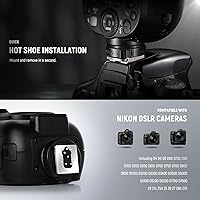
  • Compatibility: Designed for Nikon Z and F mount camera bodies; explicitly not compatible with the Nikon D810.
  • Firmware: Firmware can be updated via USB connection, allowing NEEWER to push improvements and expanded camera compatibility over time.

Related Reviews
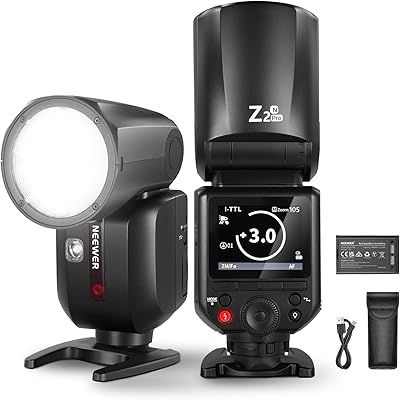
NEEWER Z2PRO-N TTL Round Head Flash Speedlite
82%
91%
TTL Accuracy
88%
Light Quality
86%
Battery Life & Charging
79%
Wireless Reliability
84%
Build Quality
More
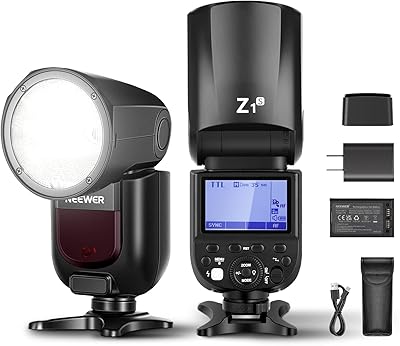
NEEWER Z1-S Round Head Flash Speedlite
83%
91%
Light Quality
83%
Build Quality
72%
TTL Accuracy
93%
Battery Life
88%
Recycle Time
More
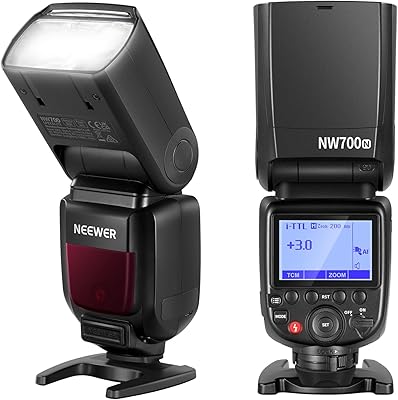
NEEWER NW700-N TTL Flash Speedlite
79%
84%
TTL Metering Accuracy
79%
TCM Function Usability
82%
High-Speed Sync Performance
71%
Build Quality & Durability
86%
Recycle Speed
More
NEEWER 750II TTL Camera Flash Speedlite
84%
88%
Flash Power & Performance
85%
Ease of Use
72%
Build Quality
90%
TTL Functionality
80%
Portability & Weight
More
NEEWER NW645II-S TTL Flash Speedlite
81%
86%
TTL Accuracy
83%
High-Speed Sync Performance
78%
Build Quality
61%
Optical Slave Reliability
81%
Recycle Speed
More
NEEWER RF1-N Macro Ring Flash for Nikon
86%
87%
Lighting Performance
91%
Ease of Use
83%
Build Quality
90%
Portability
78%
Battery Life
More
NEEWER NW635II-S TTL Camera Flash Speedlite
86%
88%
Value for Money
91%
Performance
75%
Build Quality
85%
Ease of Use
92%
Portability
More
NEEWER Z880-C TTL Camera Flash Speedlite
83%
83%
Build Quality
88%
TTL Accuracy
86%
HSS Performance
74%
Wireless Reliability
91%
Battery Life
More
NEEWER Z2-F 2.4G TTL Camera Flash Speedlite for Fujifilm
86%
88%
Performance
85%
Ease of Use
91%
Wireless Connectivity
83%
Battery Life
90%
Flash Power Output
More
NEEWER TT560 Speedlite Flash
75%
91%
Value for Money
74%
Ease of Use
83%
Build Quality
78%
Compatibility
77%
Light Output & Power Range
More

FAQ

Yes, it works well with current Nikon Z-series bodies and TTL performance tends to be most consistent on these newer cameras. The hot shoe fitting is fully compatible, and wireless control functions correctly with supported QPro-N transmitters as well.

Unfortunately no. The NEEWER Z1-N TTL Speedlite for Nikon is explicitly listed as incompatible with the D810, and this is not something a firmware update resolves. If the D810 is your primary body, you will need to look at a different flash option to avoid compatibility issues.

Yes, and this is one of the more practical aspects of the design. The flash has a built-in 2.4G wireless system that allows it to act as a master unit and control other compatible slave flashes directly. You only need an additional transmitter if you want to leave all flashes off-camera simultaneously.

The 100m range figure assumes open space with no obstructions. In a real venue with walls, furniture, and crowds, expect reliable range closer to 15 to 25 meters depending on the environment. It is solid for most event work within a single room, but do not count on it for setups spanning multiple spaces.

The dome diffuser comes included in the box, which is a practical bonus since it lets you start shooting with softened light right away. The broader AK-R1 and CR-M2 modifier kits are sold separately if you want to expand your shaping options later.

TTL works on these bodies but tends to be less consistent than on current Z-series cameras. You may find yourself needing to apply flash exposure compensation more frequently, and in high-contrast scenes there can be occasional overexposure. It is not a dealbreaker, but plan for a short calibration session when using it on an older body for the first time.

The battery is removable and replaceable — it uses the NB-Z1 lithium-ion pack, and spares are available for purchase separately. Having a second battery on hand is a smart move if you are covering a full-day event, since a single charge handles around 480 full-power flashes under normal conditions.

The head rotation mechanism feels firm and holds position well under normal use, so bounce shooting is not a concern for most photographers. That said, the overall construction is plastic-forward, so it is not built for rough handling or demanding outdoor conditions the way a flagship speedlite might be.

Yes, stroboscopic mode is supported and lets you fire the flash multiple times during a single exposure to capture motion trails or freeze multiple positions of a moving subject. It is a less commonly used mode but useful for creative editorial work or controlled studio experiments.

The circular fresnel head produces a noticeably rounder, softer light pattern compared to a traditional rectangular flash. In practice, the falloff at the edges of the light is more gradual, which tends to be more flattering on faces and reduces harsh shadows on nearby backgrounds. The difference is most apparent in close-range portrait work where the shape of the light source is visible in catchlights.

Where to Buy