Overview

The NEEWER NW645II-S TTL Flash Speedlite sits squarely in the mid-range, built for Sony Alpha enthusiasts and semi-pro photographers who want serious capability without paying first-party prices. This updated version improves meaningfully on its predecessor through a cleaner LCD interface and more reliable TTL communication — changes that translate directly to fewer fiddly adjustments between shots. Because it mounts exclusively to Sony Alpha hot shoes, the full camera-to-flash communication chain works as intended rather than through partial workarounds. Expect a well-rounded speedlite with a strong feature set for its tier, though a few practical trade-offs are worth understanding before committing.
Features & Benefits

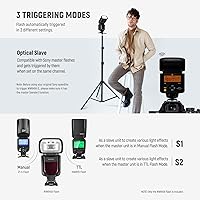
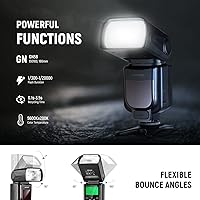
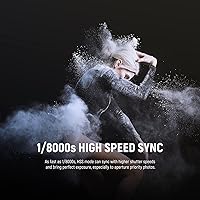
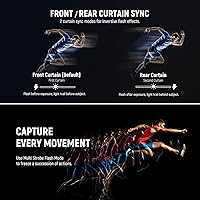
High-speed sync up to 1/8000s is the headline here — shoot outdoor portraits in harsh midday sun with a wide aperture and this NEEWER flash stays usable where most speedlites hit a wall. The GN58 guide number gives it enough reach for wedding receptions and smaller events without pulling in supplemental lights. Rear curtain sync fires at the end of an exposure, so moving subjects leave expressive light trails rather than awkward leading streaks. S1 and S2 optical slave modes let you trigger it off-camera without a radio transmitter, a handy fallback in many studio or indoor setups. A 270° rotating, near-90° tilting head rounds things out for natural bounce lighting off ceilings and walls.

Best For

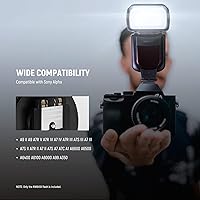
This Sony speedlite fits best in the hands of Sony Alpha mirrorless shooters — A7, A9, and A6000-series users in particular — who want reliable TTL performance without the premium of a native Sony flash. Portrait and event photographers working outdoors will get real mileage from the HSS capability. Hobbyists building a simple off-camera lighting rig using optical triggers will find the slave modes handy indoors, though it is worth noting that strong ambient light can interfere with optical triggering outdoors, so plan around that limitation. Traveling and run-and-gun photographers will appreciate the lightweight, pocketable build. And for anyone doing long-exposure motion work, rear curtain sync adds a genuinely creative tool to the kit.

User Feedback

Across its rating pool, user sentiment leans clearly positive. The most repeated praise focuses on TTL accuracy — owners report the flash communicates consistently with Sony bodies without the exposure drift that sometimes affects third-party options. Build quality earns favorable mentions too, especially relative to its price tier. That said, honest caveats surface regularly: the optical slave function can struggle to fire reliably in bright outdoor conditions, and more than a few users flag that menu navigation takes some getting used to. Long-term durability remains harder to assess from current reviews, with no widespread complaints but also not many years of field data yet. Against Sony-native flashes, most reviewers frame the NW645II-S as a strong value alternative rather than a direct substitute.

Pros

  • TTL auto-exposure communicates reliably with Sony Alpha bodies, reducing guesswork in fast-moving situations.
  • High-speed sync up to 1/8000s opens up wide-aperture shooting in full daylight without ND filters.
  • The NW645II-S delivers GN58 output — enough power to work a reception hall or outdoor ceremony without auxiliary lights.
  • Rear curtain sync support adds a genuinely creative tool for motion-trail and long-exposure work.
  • A 270-degree rotating flash head makes ceiling and wall bounce natural in almost any shooting environment.
  • The backlit LCD is clear and readable even in dimly lit event venues.
  • Color temperature holds consistently near daylight across power levels, keeping skin tones neutral.
  • Lightweight enough to stay on a mirrorless body all day without noticeable fatigue.
  • Optical slave modes allow basic off-camera triggering indoors without spending on a radio system.
  • CP-E4 external power port supports faster recycling during continuous shooting sessions.

Cons

  • Optical slave triggering misfires frequently in outdoor or bright ambient conditions — a significant limitation for location work.
  • Menu navigation has a steep learning curve; accessing advanced functions requires too many button presses.
  • TTL metering can drift on subjects with extreme tonal contrast, requiring manual compensation to correct.
  • At full power, battery drain is fast and mid-session AA swaps become common during extended events.
  • Hot shoe contact wear has been noted by users who regularly mount and dismount the flash.
  • No built-in radio receiver means an additional purchase is needed for reliable off-camera use outdoors.
  • Power output drops noticeably at the upper HSS speeds, reducing effective working distance in bright light.
  • Older Sony DSLR bodies like the A350 show occasional TTL inconsistencies not present on newer mirrorless models.
  • The button layout around the LCD feels cramped, making quick adjustments awkward in low light.
  • Long-term durability data is limited given the product's relatively recent launch date.

Ratings

The NEEWER NW645II-S TTL Flash Speedlite was evaluated by our AI system after analyzing verified global user reviews, with spam, bot-generated, and incentivized submissions actively filtered out. Scores reflect a balanced synthesis of real shooter experiences across portrait, event, travel, and hobbyist use cases. Both the genuine strengths and recurring frustrations are transparently represented below.
TTL Accuracy
86%
Most Sony Alpha users report that TTL exposures land reliably close to correct without constant manual dialing. Photographers shooting fast-moving events like receptions or candid portraits particularly appreciate how little correction is needed between frames.
A consistent minority of users note occasional TTL misfires when shooting subjects with very bright or very dark backgrounds, requiring exposure compensation to compensate. It is not a dealbreaker, but it does surface in mixed-lighting environments more than some would like.
High-Speed Sync Performance
83%
Outdoor portrait shooters consistently praise HSS as one of the strongest reasons to choose the NW645II-S over cheaper alternatives. Being able to shoot at wide apertures in direct sunlight without wrestling sync speed limitations makes a real difference for natural-light fill work.
At the upper end of HSS speeds, some users observe a noticeable drop in effective flash output, which limits working distance in bright conditions. This is a physics trade-off inherent to HSS, but buyers expecting full power at 1/8000s may be caught off guard.
Build Quality
78%
22%
For a third-party speedlite in this price bracket, the physical construction earns genuine respect. The flash foot feels solid on the hot shoe, the LCD panel sits flush and scratch-resistant, and the overall assembly does not rattle or flex under normal handling.
A handful of reviewers flag that the plastic body, while decent, does not inspire confidence during heavy event or travel use. There are isolated reports of hot shoe contact wear after extended mounting and unmounting cycles, which is worth tracking if you swap flashes frequently.
Optical Slave Reliability
61%
39%
Indoors and in controlled studio environments, the S1 and S2 optical slave modes trigger consistently and allow useful off-camera setups without purchasing a separate radio transmitter. For hobbyists building a basic multi-flash arrangement, this is a meaningful cost saver.
Outdoors in bright ambient light, the optical sensor struggles significantly — this is the most cited complaint across user reviews. Photographers attempting to use the slave mode at outdoor events or in daylight setups report frequent misfires, and a radio trigger becomes essentially mandatory in those conditions.
Recycle Speed
81%
19%
At moderate power settings, the recycle time is fast enough to keep up with continuous event shooting without forcing obvious pauses. Wedding and reception photographers in particular mention they rarely miss a moment waiting for the flash to ready itself.
At full power, recycle time stretches toward the longer end of its range, and battery drain accelerates noticeably. Users shooting extended events on AA batteries often find themselves changing cells mid-session, making the CP-E4 external power port a worthwhile accessory to consider.
Bounce & Swivel Range
84%
The 270-degree horizontal rotation combined with near-90-degree vertical tilt gives photographers real flexibility when working in tight spaces or awkward angles. Bouncing off a side wall while keeping the camera horizontal is natural and smooth with the NW645II-S head movement.
The downward tilt stops at -7 degrees, which is enough for most bounce scenarios but limits certain macro or table-level shooting setups. A small number of users wish the locking mechanism at swivel positions felt more positive — it holds, but without the satisfying click of premium-tier flashes.
LCD Display Clarity
88%
The backlit LCD earns consistent praise for being easy to read both indoors and in dimly lit event venues. Settings like power level, zoom, and sync mode are all visible at a glance, which reduces fumbling during fast-paced shoots.
A few users with larger hands or those wearing gloves find the button layout around the LCD a bit cramped. The display itself is solid, but the controls adjacent to it could benefit from slightly more spacing for easier tactile use in the dark.
Menu Navigation & Usability
66%
34%
Once a user has spent time with the interface, common adjustments like power output and sync mode changes become second nature. The logical grouping of core functions means experienced flash users adapt reasonably quickly.
First-time users and those switching from other brands consistently describe the menu as unintuitive during the initial learning period. Accessing less-used functions like stroboscopic mode or optical channel settings requires navigating several layers that are not clearly labeled on the body.
Color Consistency
82%
18%
The 5600K color temperature holds steady across power levels, which matters when mixing flash with ambient daylight. Portrait photographers report clean, neutral skin tones without the warm or cool shifts that can occur with cheaper flash units at varied output levels.
A small number of users shooting high-volume event work report slight color temperature variation across a long session, though this is subtle and unlikely to be visible in typical post-processing workflows. It is more noticeable when stacking flash-lit and ambient shots side by side.
Sony Camera Compatibility
91%
The Sony-specific hot shoe design means full electronic communication with Alpha bodies works as expected, including TTL metering and HSS triggering. Users across the A7, A9, and A6000 series report no significant pairing or firmware issues.
Because it is purpose-built for Sony, anyone planning to switch camera systems will find the flash unusable without an adapter. A small number of users on older Sony bodies like the A350 also note occasional TTL inconsistencies that do not appear on newer mirrorless models.
Rear Curtain Sync
79%
21%
Photographers doing intentional motion blur work — light painting, streaking headlights, or creative long-exposure portraiture — find the rear curtain sync implementation effective and easy to activate. The results align correctly with expectations for the technique.
Some users note that rear curtain sync behavior can feel unpredictable when combined with TTL at slower shutter speeds, requiring a switch to manual flash output for precise control. It works, but it rewards users who understand the underlying technique rather than beginners expecting automatic results.
Value for Money
87%
Relative to Sony-native flash options at higher price points, the NW645II-S delivers a feature set — HSS, TTL, rear curtain sync, optical slave — that represents a compelling proposition for enthusiast photographers who do not need absolute top-tier performance.
Buyers expecting first-party build polish and flawless menu ergonomics will find the price gap with Sony-brand flashes feeling more justified after extended use. For casual or occasional shooters the value holds well, but heavy professional users may find themselves wishing they stretched the budget.
Weight & Portability
85%
At just over a pound, this NEEWER flash sits comfortably on a mirrorless body without creating significant front-heavy imbalance. Travel photographers and those who shoot all day at events appreciate not adding noticeable fatigue to an already equipment-heavy kit.
The included accessories — diffuser and reflector — add a small amount of bulk to the carry case. Nothing dramatic, but photographers who pack minimally may leave them behind, negating some of the included value.
Manual Output Control
83%
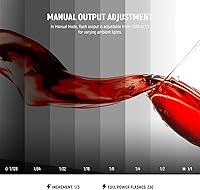
The ability to dial output in 1/3-stop increments across a 1/1 to 1/128 range gives photographers granular control for manual flash work. Studio-style shooters and those doing product photography at home find this level of precision genuinely useful.
Adjusting manual output in the field requires navigating through the menu rather than a dedicated quick-access dial, which slows things down compared to flashes that offer a direct control knob. In fast-changing situations this friction adds up.

Suitable for:

The NEEWER NW645II-S TTL Flash Speedlite is a strong match for Sony Alpha photographers who want a well-equipped speedlite without the steep cost of a first-party option. Portrait shooters working outdoors will get real mileage from the high-speed sync capability, which lets them overpower daylight and shoot at wide apertures without fighting the camera's native sync limit. Event and wedding photographers on a tighter gear budget will appreciate the GN58 output and reliable TTL communication across the A7, A9, and A6000 series bodies. Hobbyists building their first off-camera lighting setup indoors will find the optical slave modes a practical entry point — no additional trigger hardware required to start experimenting. Travelers and documentary-style shooters who carry light will also find the compact, sub-pound body easy to justify in the bag. If you are a Sony shooter who wants HSS, bounce, rear curtain sync, and TTL in a single unit at a mid-range price, this flash covers a lot of ground.
Not suitable for:

The NEEWER NW645II-S TTL Flash Speedlite is not the right call for photographers who work primarily outdoors and plan to rely on optical slave triggering — that function struggles badly in bright ambient light, and the frustration is well-documented across user reviews. Professional photographers who need absolute reliability across long, high-volume event days may find the menu navigation and occasional TTL inconsistency in tricky lighting conditions harder to accept when paying jobs are on the line. Anyone shooting with Canon, Nikon, Fujifilm, or any non-Sony system should look elsewhere entirely, since the hot shoe is Sony-specific and the full feature set does not carry over via generic adapters. Photographers expecting the build solidity and control ergonomics of Sony-native or flagship third-party flashes will notice the difference in hand. And if radio-triggered multi-flash setups are central to your workflow, you will need to budget for a separate radio trigger — the built-in triggering is optical only.
Specifications

  • Guide Number: Rated GN58 at ISO 100 in meters, providing sufficient flash reach for event halls, outdoor portraits, and studio-style setups.
  • Sync Speed: Supports high-speed sync up to 1/8000s, enabling wide-aperture shooting in bright daylight without overexposure.
  • Flash Duration: Flash duration ranges from 1/300s to 1/20000s, allowing sharp freezing of fast movement depending on power setting.
  • Recycle Time: Recycle time spans 0.1 to 3.5 seconds depending on power level and battery condition.
  • Manual Output: Manual flash power is adjustable from full output (1/1) down to 1/128 in precise 1/3-stop increments.
  • Color Temperature: Outputs a consistent 5600K daylight-balanced color temperature with a tolerance of plus or minus 200K.
  • Vertical Tilt: Flash head tilts from -7 degrees downward to 90 degrees upward for ceiling bounce and low-angle fill.
  • Horizontal Rotation: Flash head rotates 270 degrees horizontally, covering left, right, and rear bounce positions.
  • Slave Modes: Includes S1 and S2 optical slave modes for off-camera triggering when paired with manual or TTL master flash units respectively.
  • Sync Modes: Supports TTL, HSS, rear curtain sync, and stroboscopic flash modes for a broad range of creative applications.
  • External Power: Equipped with a CP-E4 compatible external charging port to accommodate an optional battery pack for faster recycling.
  • Display: Features a backlit LCD screen that shows current power level, zoom setting, sync mode, and channel information at a glance.
  • Mount Type: Designed exclusively for the Sony Alpha hot shoe, enabling full electronic TTL and HSS communication with compatible Sony bodies.
  • Item Weight: Weighs 1.28 pounds, keeping the overall camera-and-flash system balanced when mounted on Sony mirrorless bodies.
  • Dimensions: Measures 8.98 x 3.94 x 3.03 inches, a standard speedlite footprint that fits most flash pouches and camera bags.
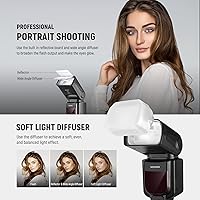
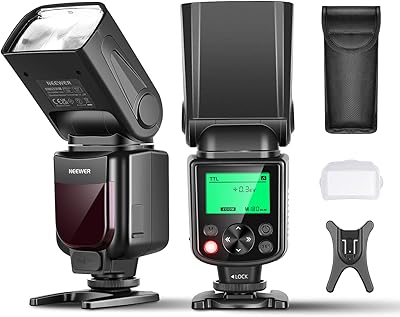
  • In the Box: Package includes the NW645II-S speedlite unit, a bounce diffuser, and a reflector card for softening and redirecting light output.
  • Compatibility: Compatible with Sony Alpha mirrorless and DSLR bodies including the A9 II, A7R V, A7 IV, A7S III, A1, A6600, A6400, and others in the Alpha lineup.
  • Model Number: Official manufacturer model number is NW645II-S, reflecting it as the second-generation variant of the NW645 series for Sony.

Related Reviews
NEEWER NW635II-S TTL Camera Flash Speedlite
86%
88%
Value for Money
91%
Performance
75%
Build Quality
85%
Ease of Use
92%
Portability
More
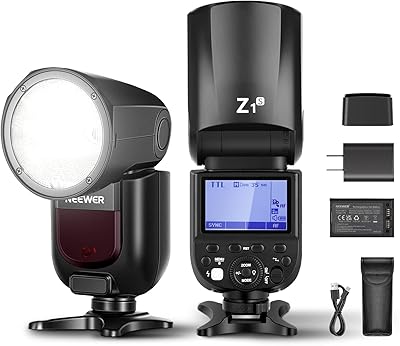
NEEWER Z1-S Round Head Flash Speedlite
83%
91%
Light Quality
83%
Build Quality
72%
TTL Accuracy
93%
Battery Life
88%
Recycle Time
More
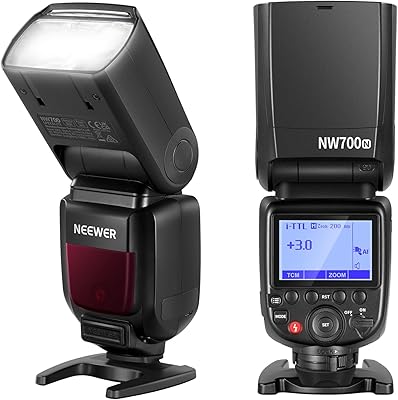
NEEWER NW700-N TTL Flash Speedlite
79%
84%
TTL Metering Accuracy
79%
TCM Function Usability
82%
High-Speed Sync Performance
71%
Build Quality & Durability
86%
Recycle Speed
More
NEEWER 750II TTL Camera Flash Speedlite
84%
88%
Flash Power & Performance
85%
Ease of Use
72%
Build Quality
90%
TTL Functionality
80%
Portability & Weight
More
NEEWER Z1-N TTL Speedlite for Nikon
78%
91%
Light Quality
78%
TTL Accuracy
86%
High-Speed Sync Performance
71%
Wireless Reliability
83%
Battery Life
More
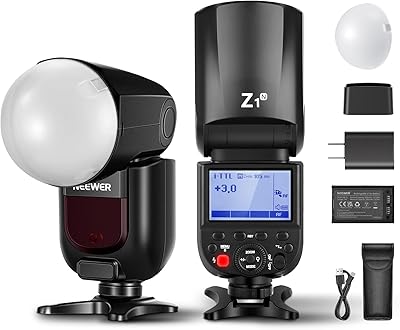
NEEWER Z2PRO-N TTL Round Head Flash Speedlite
82%
91%
TTL Accuracy
88%
Light Quality
86%
Battery Life & Charging
79%
Wireless Reliability
84%
Build Quality
More
NEEWER Z880-C TTL Camera Flash Speedlite
83%
83%
Build Quality
88%
TTL Accuracy
86%
HSS Performance
74%
Wireless Reliability
91%
Battery Life
More
NEEWER Z2-F 2.4G TTL Camera Flash Speedlite for Fujifilm
86%
88%
Performance
85%
Ease of Use
91%
Wireless Connectivity
83%
Battery Life
90%
Flash Power Output
More
NEEWER NW620 Speedlite Flash
75%
88%
Value for Money
84%
Flash Output & Power
79%
Build Quality
91%
LCD Display & Controls
62%
Recycling Time
More
NEEWER TT560 Speedlite Flash
75%
91%
Value for Money
74%
Ease of Use
83%
Build Quality
78%
Compatibility
77%
Light Output & Power Range
More

FAQ

Yes, the NW645II-S TTL Flash Speedlite is fully compatible with the Sony A7 IV and communicates through the Alpha hot shoe for automatic TTL exposure metering. HSS is also supported, so you can shoot at shutter speeds beyond 1/250s if needed outdoors.

You can, but only in certain conditions. The built-in S1 and S2 optical slave modes let it fire when triggered by another flash unit. The catch is that optical triggering works well indoors or in shaded environments but becomes unreliable in bright sunlight, where ambient light confuses the sensor. For consistent outdoor off-camera use, a radio trigger is strongly recommended.

The NW645II-S runs on four standard AA batteries. Battery life depends heavily on output level — at moderate power you can expect several hundred flashes per set, but at full power that number drops noticeably. If you shoot long events, carrying a spare set of AAs or investing in a CP-E4 compatible battery pack connected via the external port will keep you from running dry mid-session.

Yes, and it is worth knowing going in. HSS works by emitting a rapid series of pulses to cover the entire sensor as the shutter curtain travels, which inherently reduces effective output compared to a standard sync burst. At 1/8000s you will have noticeably less power than at 1/250s, so working distance shrinks. This is standard behavior across all HSS-capable flashes, not a flaw specific to this unit.

The honest answer is that there is a learning curve, especially for users coming from other flash systems. Basic adjustments like power level and TTL or manual mode switching are fairly accessible once you have spent an hour with it. Digging into stroboscopic mode or optical channel settings takes more trial and error. It helps to keep the manual on your phone for the first few shoots.

Generally yes. The head moves with moderate resistance — firm enough to stay where you set it, loose enough to reposition quickly with one hand. A small number of users feel the detent positions could be more defined, but for most bounce photography scenarios the movement is practical and dependable.

Not in any useful way. The hot shoe is physically Sony-specific and the TTL communication protocol is proprietary. You might get basic manual triggering with a generic adapter, but HSS, TTL, and rear curtain sync will not function. If you shoot Canon or Nikon, you need a flash built for your system.

Rear curtain sync can be set directly on the flash itself through its sync mode options, which is convenient. That said, for the most predictable results in TTL mode you may want to switch to manual flash output — combining TTL with rear curtain at slower shutter speeds can produce inconsistent exposures until you dial in the right settings for your scene.

The flash ships with a bounce diffuser and a reflector card. The diffuser softens the output for more flattering close-range portraits, and the reflector is handy for bouncing a bit of light forward when the head is aimed upward. Neither is a studio-grade modifier, but both are genuinely usable for everyday shooting rather than being purely decorative inclusions.

Sony-native flashes have an edge in menu integration, build polish, and radio triggering features that justify their higher price for working professionals. The NW645II-S holds up well on core TTL accuracy and HSS performance, but the ergonomic experience and long-term reliability confidence are areas where the Sony-branded options pull ahead. For enthusiast photographers who do not depend on flash every day, the NEEWER unit makes a compelling case — for full-time professional use, the investment in a first-party flash is easier to justify.

Where to Buy