Overview

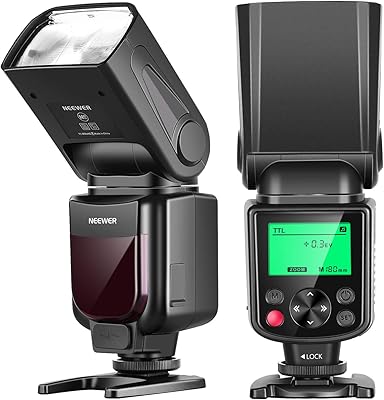
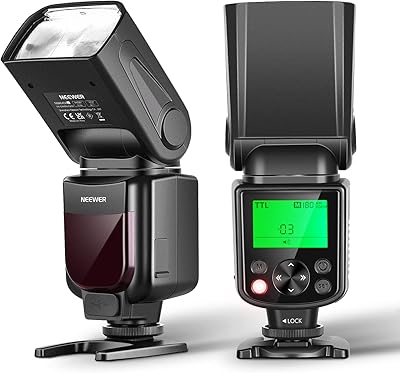
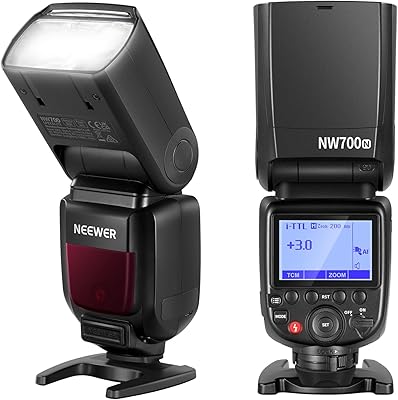
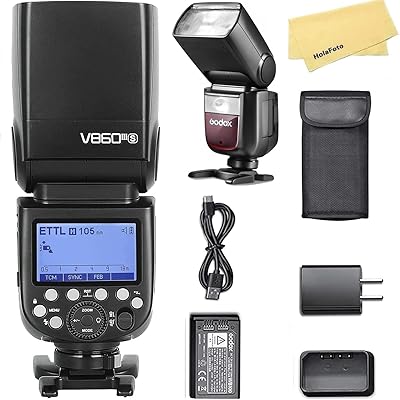
The NEEWER NW635II-S TTL Camera Flash is a Sony-dedicated speedlite that sits comfortably in the mid-range tier — capable enough for serious work, approachable enough for someone who just graduated from a kit lens and a pop-up flash. Unlike universal flashes that try to serve every camera brand with varying results, this Sony speedlite is built specifically for the Alpha ecosystem, which shows in how cleanly it communicates with Sony bodies. The GN58 guide number is genuinely competitive for this price class — you get meaningful reach for indoor events and outdoor fill. The included soft diffuser is a practical bonus, not an afterthought. Keep expectations grounded: this is a strong on-camera or small-venue tool, not a substitute for a studio strobe.
Features & Benefits

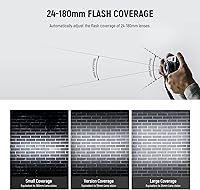
Where the NW635II-S earns its keep is in its practical, day-to-day shooting modes. TTL handles exposure automatically and lets you nudge output by up to ±3 stops — handy when TTL meters a tricky scene and you know it's slightly off. Drop into manual and you can step output down to 1/128 power in precise 1/3-stop increments, ideal for close-up or still-life work. The flash head articulation — tilting down to -7° and up to 90°, rotating a full 270° — means you can bounce off almost any ceiling or wall without repositioning yourself. Auto zoom tracks your lens from 24 to 180mm. The S1/S2 optical slave modes let it fire off another flash, but be clear-eyed: that is not the same capability as a radio trigger.

Best For

This Neewer flash is most at home with Sony Alpha shooters who want dependable TTL performance without the premium price tag of Sony's own HVL lineup. If you shoot events — weddings, parties, corporate functions — the lightweight 400g body and flexible bounce head make it easy to work a room for hours. It is also a solid first step-up option for beginners who want TTL as a safety net while exploring manual control at their own pace. Travel photographers will appreciate the reliance on standard AA batteries; you are never hunting for a proprietary charger in an unfamiliar city. Hobbyists curious about stroboscopic effects or basic off-camera optical triggering will find enough room here to experiment without committing to a pricier system.

User Feedback

With nearly 4,000 ratings averaging around 4.5 stars, the NW635II-S has a genuinely broad base of satisfied users — that kind of volume makes a high score harder to dismiss as a fluke. Photographers commonly praise its accurate TTL metering on Sony bodies and an LCD interface that is easy to read and navigate. On the critical side, two things come up regularly: AA batteries at full power do not last as long as some shooters expect, and there is no built-in radio triggering — the S1/S2 optical slave is useful but situationally limited. A handful of users have noted that recycle times can stretch under rapid burst shooting. The bundled diffuser gets mixed marks — it softens light effectively but covers a narrower angle than some would like.

Pros

  • TTL metering integrates cleanly with Sony Alpha bodies, producing accurate exposures without constant manual adjustments.
  • GN58 guide number delivers strong reach for a speedlite at this price point.
  • Manual power control steps down to 1/128 in 1/3-stop increments, giving precise output for careful setups.
  • The flash head swivels and rotates widely, making ceiling and wall bounce easy in most indoor environments.
  • At 400g, this Sony speedlite is light enough to shoot with comfortably all day without fatigue.
  • Standard AA batteries mean you can restock anywhere — no proprietary charger or battery pack required.
  • Auto and manual zoom from 24 to 180mm keeps flash coverage matched to your lens without extra effort.
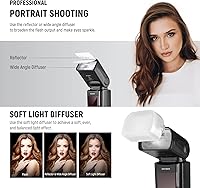
  • An included soft diffuser adds real value, softening light straight out of the box.
  • Nearly 4,000 user ratings averaging 4.5 stars reflects broad, consistent real-world satisfaction across many shooting styles.
  • Built-in LCD screen and intuitive controls make the NW635II-S approachable for beginners and quick to navigate for experienced shooters.

Cons

  • AA batteries drain noticeably faster at high power output, cutting into your shot count during long sessions.
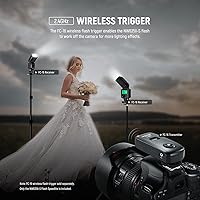
  • No built-in radio trigger means off-camera use requires purchasing a separate radio transmitter.
  • Recycle time at full power can stretch beyond 3.5 seconds during rapid burst shooting, causing missed moments.
  • TTL accuracy may need manual compensation dialing in on some Sony bodies, particularly in tricky mixed lighting.
  • The included diffuser softens light well but covers a narrower spread than a purpose-built softbox or bounce card.
  • No built-in wireless commander function limits its usefulness as a master unit in a multi-flash setup.
  • The CP-E4 battery pack for extended studio power is sold separately, adding cost if heavy sustained shooting is needed.
  • Color consistency may vary slightly compared to higher-tier professional speedlites under demanding output conditions.

Ratings

The NEEWER NW635II-S TTL Camera Flash earned its place in our review database through AI-assisted analysis of thousands of verified global buyer ratings, with active filtering applied to remove incentivized, bot-generated, and duplicate submissions. The scores below reflect the honest consensus of real Sony Alpha photographers across a wide range of shooting environments — from wedding receptions to travel photography and hobbyist studio work. Both standout strengths and genuine frustrations are reported with equal transparency so you can make a truly informed decision.
TTL Metering Accuracy
83%
Sony Alpha shooters consistently report that TTL metering works reliably across a broad range of indoor and outdoor shooting scenarios — events, family portraits, and run-and-gun wedding coverage among them. The ±3 stop compensation range provides enough room to quickly correct when the camera's reading drifts slightly off in mixed light.
On certain Sony bodies, particularly in scenes mixing artificial ambient and flash, TTL can expose slightly hot or flat and requires per-venue compensation dialing. The metering is competent and broadly praised, but it is not as precisely calibrated as Sony's own first-party HVL flash lineup.
Build Quality
79%
21%
For its price tier, the NW635II-S feels noticeably more solid than comparable budget speedlites — the hot shoe mount clicks in firmly, the zoom mechanism moves smoothly, and the housing shows no flex under normal handling pressure. Most reviewers describe it as durable and road-worthy enough for regular event work.
The all-plastic body carries no weather sealing, and a subset of users flagged that the battery compartment door develops a slightly looser action after extended use. For casual and semi-professional shooting this is acceptable, but photographers working in damp or demanding outdoor conditions should factor this in.
Flash Power Output
86%
The GN58 guide number delivers genuine room-filling punch at ISO 100, holding up well at wedding receptions, corporate events, and dimly lit venues where lower-rated flashes start to visibly struggle. Photographers consistently report strong, consistent output that keeps pace with demanding multi-room coverage scenarios.
At maximum zoom and full power, AA batteries drain at a pace that catches less prepared shooters off guard during longer events. The output is competitive for the price class but does not approach the sustained power available from higher-wattage studio monolights or top-tier flagship speedlites.
Value for Money
91%
This is where the NW635II-S earns its reputation — buyers consistently report getting TTL performance, bounce versatility, and solid build quality that would cost considerably more from a Sony-branded alternative. The included soft diffuser adds tangible real-world value rather than functioning purely as packaging filler.
The value proposition weakens slightly once you factor in that reliable off-camera use typically requires purchasing a separate radio trigger system, adding meaningful cost to the overall setup. As a standalone on-camera speedlite, though, few options in this segment come close at this price point.
Battery Performance
67%
33%
Using standard AA batteries is a genuine logistical advantage — replacements are available at any convenience store worldwide, and NiMH rechargeable cells work well for regular shooters looking to reduce ongoing running costs. The approximately 230 full-power flashes per set provides a workable baseline for casual and event sessions.
At consistently high power levels, batteries deplete faster than many users expect and recycle times noticeably lengthen as cells drain. Several reviewers noted that sustained full-output shooting across a long event shortened effective shooting windows significantly, making spare battery management a non-negotiable part of any serious shoot.
Recycle Speed
73%
27%
At power levels below full output — which covers most portrait and event work in practice — recycle times are fast enough to keep comfortable pace with natural shooting rhythms. Many users report that dialing back to half or quarter power brings the wait time down significantly, making it practical for fast-moving indoor coverage.
The 3.5-second full-power recycle is adequate but not exceptional, and some users have reported that under sustained rapid burst conditions the flash occasionally falls behind. Photographers shooting fast-paced action like first dances or sports will find this more limiting than those who work at a steadier, more deliberate pace.
Bounce & Articulation
88%
The combination of -7° to 90° vertical tilt and 270° horizontal rotation gives photographers real practical flexibility when working indoor events. Ceiling bounce, side-wall fill, and rear bounce are all achievable without awkward camera positioning, and the head locks firmly at each chosen angle without creeping during a shoot.
The rotation mechanism lacks clearly defined position stops or markings at common angles like 45° or 60°, which can slow down adjustments slightly when switching between compositions under time pressure. A small number of users noted that the tilt lock loosens marginally after heavy repeated use over many months.
Ease of Use
84%
The rear LCD is bright, clearly laid out, and quick to navigate — even first-time flash users typically report feeling comfortable with the controls within a session or two. Switching between TTL and manual modes is intuitive, and the menu hierarchy does not bury the most commonly adjusted settings behind unnecessary sub-menus.
The button layout can feel slightly cramped for photographers with larger hands, and reaching the stroboscopic mode settings in particular requires more button presses than feels efficient in the field. Photographers accustomed to other flash system interfaces may need a short adjustment period before the button logic feels fully natural.
Sony Compatibility
89%
Purpose-built for the Sony Alpha ecosystem, this speedlite slots into the Multi Interface Shoe and communicates cleanly with Sony mirrorless bodies for reliable TTL metering, auto-zoom, and remote control. Verified users across the A7, A9, and A6000 series all report a stable, responsive connection with no communication dropouts under normal shooting conditions.
Being Sony-exclusive is a significant constraint — the flash cannot be moved to a Fujifilm, Canon, or Nikon body without losing all electronic functions. Photographers who own cameras from multiple brands or plan to switch systems will need to budget for a separate universal trigger or an additional flash unit to cover non-Sony bodies.
Off-Camera Versatility
62%
38%
The built-in S1 and S2 optical slave modes allow the flash to be triggered off-camera by another light source without any additional hardware cost. For controlled indoor environments where a second flash acts as the master trigger, this works reliably enough for creative two-light portrait setups on a tight budget.
Optical triggering is inherently line-of-sight dependent and struggles outdoors or in bright ambient conditions, making it impractical for many common off-camera flash scenarios. The absence of a built-in radio receiver is the most consistently raised limitation in user reviews — reliable wireless off-camera shooting simply requires purchasing a separate radio trigger system.
Diffuser Quality
71%
29%
The included soft diffuser produces noticeably smoother, less harsh light compared to bare flash output — a meaningful practical upgrade for close-quarter portrait work and filling shadows in small rooms. For photographers just beginning to explore flash modifiers, having it included in the box saves an immediate additional purchase.
The diffuser covers a narrower spread angle than most users expect, limiting its effectiveness for wide group shots or larger interior spaces. Several reviewers noted that it sits somewhat loosely on the flash head and can shift or detach during rapid camera movement, which is a minor but persistently mentioned field annoyance.
Portability
87%
At 400g without batteries, this Neewer flash is genuinely comfortable to carry through a full day of shooting — whether that means walking a wedding venue for six hours or packing light for international travel. The compact dimensions mean it fits naturally into a standard camera bag side pocket without displacing other essential gear.
Adding four AA batteries does increase the total weight, and photographers switching from ultra-compact travel flashes may notice the additional bulk when shooting handheld in tight spaces. The mounting foot, while secure, adds a modest amount of height that can slightly affect how the camera-plus-flash combination balances when shooting in portrait orientation.
Zoom Coverage
82%
18%
The auto-zoom function tracking lens focal length from 24mm to 180mm is a practical time-saver that most users enable and leave alone. For photographers who frequently swap lenses during events, the flash adapts automatically without any manual intervention, keeping light coverage appropriately matched to each focal length throughout a shoot.
At the widest 24mm setting, some light falloff toward the frame edges can appear in environmental portraits or wide group compositions, which is a common characteristic of on-camera speedlites at their widest zoom position. Photographers who regularly shoot at very wide focal lengths may find themselves adding manual exposure compensation to compensate.
Color Consistency
78%
22%
The stated 5600K ±200K color temperature keeps white balance consistent enough that images from a full event shoot blend cohesively in editing without significant per-shot white balance corrections. Portrait photographers in particular appreciate that skin tones remain predictable across a full gallery rather than shifting noticeably warm or cool between frames.
Color temperature can drift slightly at lower power settings, which is a known characteristic of this class of speedlite rather than a defect specific to this unit. A subset of users with color-critical workflows noted that the ±200K variance occasionally required minor white balance correction during batch editing in post-production.
Manual Mode Control
85%
The 1/1 to 1/128 output range in 1/3-stop increments gives photographers meaningful granular control that is genuinely useful in still-life work, controlled portrait setups, and any scenario where consistent, repeatable output matters. The manual mode is accessible and straightforward, not buried behind complex sub-menus or requiring multi-step navigation.
For photographers who primarily shoot TTL and only occasionally use manual, the fine 1/3-stop increments can make it slightly slow to dial in a rough starting exposure without a few test shots first. There is no preset or bookmarking system to quickly jump between commonly used manual power ratios, which experienced studio shooters may miss.

Suitable for:

The NEEWER NW635II-S TTL Camera Flash is purpose-built for Sony Alpha shooters who want reliable, capable speedlite performance without the sticker shock of first-party options. It hits a sweet spot for event and wedding photographers who need strong output, flexible bounce angles, and confident TTL metering across a busy shooting day. Beginners moving up from a camera's built-in pop-up flash will find the auto TTL mode a genuine safety net — it handles exposure decisions while they focus on composition and timing. Travel photographers benefit from the 400g build and the use of standard AA batteries, which are easy to source anywhere in the world. Even hobbyists looking to dip into off-camera lighting or stroboscopic multi-flash effects will find enough functionality here to experiment meaningfully, without needing to invest in a far more expensive system.
Not suitable for:

The NEEWER NW635II-S TTL Camera Flash is not the right tool for photographers shooting with Canon, Nikon, Fujifilm, or any system outside the Sony Alpha lineup — its TTL communication is Sony-specific, and mounting it on another brand's body will give you nothing more than basic manual fire at best. If your workflow depends on high-speed radio triggering with a dedicated commander unit, you will need to add a third-party radio transmitter separately; the built-in S1/S2 optical slave modes are handy in certain conditions but are no substitute for a true radio system. Studio photographers who need consistent power output across marathon shoot sessions and sub-one-second recycle times at full power will likely outgrow this speedlite quickly. Shooters who work primarily in high-burst environments — sports, fast action, wildlife — may find the full-power recycle time restrictive under pressure. This Neewer flash runs on AA batteries exclusively, so professionals who prefer external lithium packs for sustained heavy use will need to budget for the optional CP-E4 battery pack or consider stepping up to a higher-tier unit.
Specifications

  • Guide Number: Rated GN58 at ISO 100 and 180mm, providing strong light output for mid-range indoor and outdoor flash work.
  • Color Temperature: Outputs a consistent 5600K ±200K daylight-balanced color, keeping skin tones and whites accurate across a shoot.
  • Head Tilt: The flash head tilts from -7° downward to 90° upward, covering direct, angled, and full ceiling-bounce positions.
  • Head Rotation: The flash head rotates 270° horizontally, enabling left, right, and rear bounce without repositioning the camera.
  • Zoom Range: Flash coverage spans 24mm to 180mm and adjusts automatically to match lens focal length or can be set manually.
  • Manual Output: Power adjusts from full (1/1) down to 1/128 in 1/3-stop steps, giving 22 discrete output levels for precise control.
  • TTL Compensation: Exposure compensation in TTL mode ranges ±3 stops in 1/3-stop increments for fine output adjustment after metering.
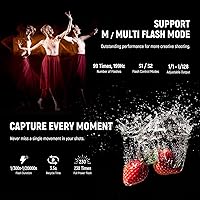
  • Recycle Time: At full power the flash recycles in approximately 3.5 seconds; recycle time shortens significantly at reduced output levels.
  • Flash Count: A fresh set of four AA batteries delivers approximately 230 full-power flashes before requiring replacement.
  • Flash Duration: Flash duration ranges from 1/300s at full power to 1/20000s at minimum power, offering meaningful motion-stopping capability.
  • Power Source: Requires four standard AA batteries — alkaline or NiMH rechargeable — which are available worldwide at low cost.
  • Battery Pack: Compatible with the optional CP-E4 external battery pack (not included) for extended capacity and faster recycle times.
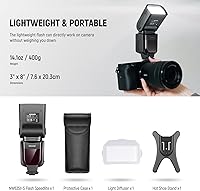
  • Weight: The unit weighs 400g (14.1oz) without batteries, sitting on the lighter end for a GN58-class speedlite.
  • Dimensions: Manufacturer-listed dimensions measure 9.02″ x 3.86″ x 3.23″ for the packaged unit.
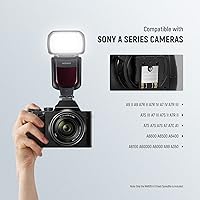
  • Mount: Attaches via Sony's Multi Interface Shoe for full electronic communication with compatible Sony Alpha camera bodies.
  • Display: Features a built-in LCD screen on the rear panel for reading and adjusting flash settings directly on the unit.
  • Sync Port: Includes a standard PC sync jack for wired trigger connections to external cameras or studio equipment.
  • Operating Modes: Supports TTL, Manual, S1 optical slave, S2 optical slave, and Multi stroboscopic shooting modes.
  • Included Items: Package contains the speedlite unit and one soft diffuser; batteries and the CP-E4 battery pack are sold separately.

Related Reviews

NEEWER NW645II-S TTL Flash Speedlite
81%
86%
TTL Accuracy
83%
High-Speed Sync Performance
78%
Build Quality
61%
Optical Slave Reliability
81%
Recycle Speed
More
Neewer 750II TTL Camera Flash Speedlite
78%
76%
TTL Metering Accuracy
91%
Value for Money
62%
Build Quality
88%
Ease of Use
84%
LCD Screen Clarity
More
NEEWER Z880-C TTL Camera Flash Speedlite
83%
83%
Build Quality
88%
TTL Accuracy
86%
HSS Performance
74%
Wireless Reliability
91%
Battery Life
More
NEEWER Z1-S Round Head Flash Speedlite
83%
91%
Light Quality
83%
Build Quality
72%
TTL Accuracy
93%
Battery Life
88%
Recycle Time
More
Godox X2T-S TTL Wireless Flash Trigger
81%
91%
TTL Accuracy
88%
High-Speed Sync
86%
Build Quality
84%
Interface & Usability
61%
Bluetooth App Integration
More
NEEWER Z2-F TTL Round Head Speedlite Flash
81%
89%
Light Quality
91%
Battery Life
86%
TTL Accuracy
74%
Wireless Performance
88%
Value for Money
More
NEEWER Z160 Camera Flash
81%
94%
Portability & Form Factor
83%
Build Quality
61%
Flash Output Power
88%
Battery Life & Charging
86%
Recycle Time
More
NEEWER Z150 Mini Hot Shoe Flash
81%
94%
Portability & Form Factor
91%
Battery Life & Charging
71%
Light Output & Power
89%
Ease of Use
86%
S2 Optical Slave Performance
More
NEEWER NW700-N TTL Flash Speedlite
79%
84%
TTL Metering Accuracy
79%
TCM Function Usability
82%
High-Speed Sync Performance
71%
Build Quality & Durability
86%
Recycle Speed
More
Godox V1S Round Head Camera Flash
83%
93%
Light Quality
91%
TTL Accuracy on Sony Bodies
89%
Battery Life & Endurance
86%
Recycle Time
88%
Wireless System Integration
More

FAQ

Yes, this Sony speedlite is fully compatible with the A7 IV, along with a broad range of Sony Alpha bodies including the A7R V, A7S III, A9 II, A1, A6600, and A6400. It connects via Sony's Multi Interface Shoe, enabling full TTL metering and automatic zoom adjustment from the camera. It is worth double-checking your specific model against the official compatibility list before purchasing, as TTL behavior can vary slightly across camera generations.

It fully supports TTL — the flash and camera communicate automatically to calculate a proper exposure. You can also dial in up to ±3 stops of compensation when TTL meters a scene slightly off, which does happen in tricky or mixed lighting. If you prefer full control, there is a complete manual mode with output adjustable from full power down to 1/128 in fine 1/3-stop increments.

You can, with some limitations. The NW635II-S has built-in S1 and S2 optical slave modes that let it fire when it detects a burst of light from another flash — no cable needed. However, optical triggering requires line-of-sight and can misfire outdoors or in bright ambient light. For consistent, distance-reliable off-camera triggering you will need a separate radio transmitter and receiver, since there is no built-in radio system.

At full power, expect around 230 flashes from a fresh set of four AA batteries. In practice, most photographers shoot at mixed power levels, so real-world battery life usually runs longer. That said, sustained high-output shooting — think large group portraits in a dim venue — drains batteries faster than some users anticipate. Keeping a spare set on hand is a smart habit, and NiMH rechargeable AAs are worth considering for the long term.

The S1 and S2 modes are optical slaves: the flash fires when its light sensor detects another flash burst. S1 fires on any detected pulse; S2 ignores a camera's pre-flash and fires only on the main burst, which is useful with cameras that emit a pre-flash during TTL. Both require clear line-of-sight and can struggle in bright conditions or around obstacles. A radio trigger sends a wireless electronic signal that works reliably regardless of ambient light or visual obstructions — a fundamentally more robust solution, but one you would need to purchase separately.

The NEEWER NW635II-S TTL Camera Flash performs well in typical conditions — most Sony Alpha users find it meters accurately enough for events, portraits, and everyday shooting. That said, TTL on any third-party flash is not flawless; in high-contrast or mixed-light scenes you may need to nudge the compensation by a stop or so. A quick test series at the start of a new shoot to establish your baseline is always a good idea.
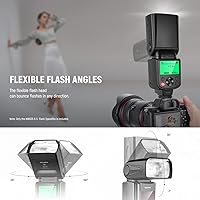
Yes, and this is genuinely one of this speedlite's stronger practical features. The head tilts from -7° up to 90° for ceiling bounce and drops slightly for low-angle fill. It also rotates 270° horizontally, so you can aim it at a side wall or even behind you without awkward camera positioning. Bouncing off a white or neutral-colored ceiling is one of the simplest ways to get softer, more natural-looking light at an indoor event.

The bundled diffuser genuinely softens direct flash output and reduces harsh shadows, so it earns its place in the box. However, it covers a narrower angle than many photographers expect, and it is not a replacement for a proper bounce card or purpose-built softbox. For run-and-gun event work it does a respectable job; for portrait or product photography where light quality matters most, a dedicated modifier will give noticeably better results.

Yes, NiMH rechargeable AAs work well and are a smart choice for regular users. They provide consistent voltage under load, which can actually improve recycle consistency compared to cheap alkaline batteries as they run low. Look for cells rated at 2000mAh or higher from a reputable brand. The main thing to watch is that NiMH batteries self-discharge when sitting unused, so charge them the night before a shoot rather than assuming they are still full.

Sony's native HVL flashes carry a small but real edge in TTL consistency and overall build refinement, as you would expect from a first-party product. The NW635II-S closes that gap considerably for everyday shooting and comes in at a significantly more accessible price point. For most event, portrait, and travel photographers the performance difference is minor enough that the savings are well worth it. If you need the absolute tightest TTL integration for demanding professional work, the native Sony option remains the safer long-term investment.