Overview

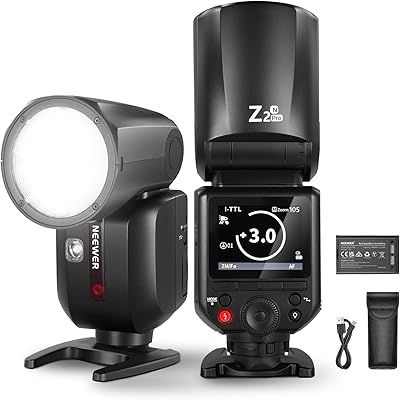
The NEEWER Z1-S Round Head Flash Speedlite is a Sony-dedicated speedlite built for photographers who are tired of the harsh, uneven output that traditional rectangular flashes produce. The circular Fresnel lens is the real story here — it delivers light that falls off naturally toward the edges, which matters a lot when shooting portraits and you'd rather not spend every session wrestling with diffusers. Sitting comfortably between budget no-name flashes and Sony's own costly offerings, this round-head speedlite ships with a lithium battery, charger, and carry bag included. The feature list is genuinely impressive for the price, though a couple of trade-offs are worth knowing before you buy.
Features & Benefits

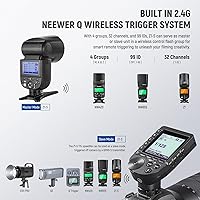
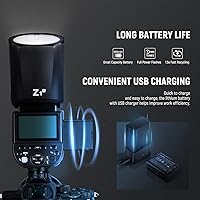
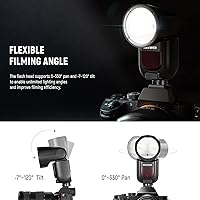
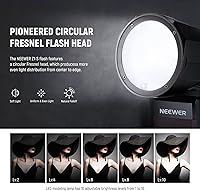
The circular Fresnel head pushes light evenly from center to edge rather than producing the hot-center, rapid-falloff pattern of a standard speedlite — a real advantage for portrait work. At 76Ws with 1/8000s high-speed sync, you can shoot wide open in full sun without fighting a shutter speed ceiling. The 2600mAh battery handles around 480 full-power shots at a 1.5-second recycle time, which holds up well through a demanding event. The 10-level LED modeling lamp is a practical touch for low-light focusing, and the tilt and swivel range is generous. The 2.4GHz Q wireless system integrates cleanly with compatible TTL triggers across 4 groups and 32 channels.

Best For

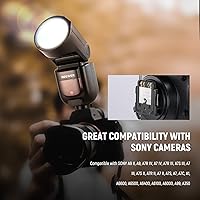
This Sony-compatible speedlite makes the most sense for A7, A9, and A6000-series shooters who want proper TTL and high-speed sync without the steep cost of a first-party flash. Portrait photographers will appreciate getting softer light straight from the hotshoe without always reaching for a softbox. It also holds its own for wedding and event work, where fast recycling and a dependable battery matter above most else. If you are already using NEEWER or Q-system gear, integrating this flash is painless. For enthusiasts moving up from a basic kit flash, the professional-grade controls here offer genuine room to grow without overwhelming complexity.

User Feedback

Early buyers have settled around a 4.3-out-of-5 rating — encouraging, even if the review pool is still modest. Consistent praise lands on light quality, with many noting the round head makes a visible difference, alongside battery longevity and solid construction for the price. A handful of users compare it favorably to the Godox V1-S, its closest rival, though preferences vary by workflow. On the critical side, TTL accuracy can be inconsistent in tricky lighting, and experienced shooters often prefer manual mode for more predictable results. Worth flagging clearly: the wireless transmitter is sold separately, which catches some buyers off guard and adds meaningfully to the overall cost.

Pros

  • The circular Fresnel head produces noticeably softer, more even light than traditional speedlites — a genuine advantage for portraits.
  • Battery life is a real strength, delivering around 480 full-power shots on a single charge through demanding shoots.
  • High-speed sync up to 1/8000s lets you shoot wide open outdoors without fighting your shutter speed ceiling.
  • The Z1-S flash ships with battery, charger, and carry bag included, which reduces immediate out-of-pocket extras.
  • A 1.5-second recycle time keeps up well with event photography pacing during fast-moving moments.
  • The 2.4GHz Q wireless system supports 4 groups and 32 channels, covering multi-light setups without channel conflicts.
  • Tilt and swivel range is genuinely generous, making bounce flash from walls and ceilings flexible across a wide range of angles.
  • USB firmware updates mean the flash can improve over time without hardware replacement.
  • Bowens-mount compatibility unlocks a wide range of studio modifiers that most photographers already own.
  • For Sony-system shooters, the feature-to-price ratio compares favorably to both Sony-branded and Godox alternatives.

Cons

  • The wireless transmitter is sold separately — a real additional cost that is easy to overlook before buying.
  • TTL accuracy can be unreliable in backlit or high-contrast scenes, pushing experienced users toward manual mode.
  • The proprietary NB-Z1 battery means no AA fallback option if you run out of charge on a long job.
  • Wireless performance in cluttered interiors or environments with radio interference can drop below expectations.
  • No weather sealing limits use in conditions that many Sony mirrorless bodies are actually designed to handle.
  • The LCD panel is hard to read in direct sunlight, making on-the-fly adjustments outdoors more awkward than they should be.
  • Heat buildup during extended stroboscopic sessions has been noted by some users, with possible impact on recycle consistency.
  • The tilt lock mechanism feels less secure at extreme angles, sometimes requiring readjustment mid-shoot.
  • Sourcing a spare battery requires sticking to proprietary NB-Z1 stock, with limited third-party options available.

Ratings

The NEEWER Z1-S Round Head Flash Speedlite earns a strong overall position among Sony-compatible third-party speedlites, and these scores reflect that fairly. Our AI has analyzed verified buyer reviews from across global markets, actively filtering out incentivized, bot-generated, and spam submissions, so what you see here represents genuine hands-on experience from real photographers. Both where this flash genuinely excels and where it falls short are reflected transparently in every category below.
Light Quality
91%
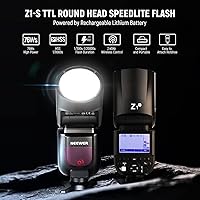
The circular Fresnel head is the reason most photographers choose this flash over a conventional speedlite, and users consistently say the difference is visible in their shots. Light wraps more naturally around subjects, edge falloff is gradual rather than abrupt, and portrait results straight out of the hotshoe look noticeably more polished without extra modifiers.
A small number of users note that at very close distances the round head can produce a slightly ring-shaped catchlight that not everyone prefers. It is a minor aesthetic point, but portrait photographers who are particular about catchlight shape should be aware of it.
Build Quality
83%
For a mid-range price point, the Z1-S flash feels more substantial than most competitors at this tier. The plastic housing has a matte finish that resists minor scuffs, the hot shoe foot feels secure on camera, and the controls have a tactile, deliberate click that inspires confidence during fast-paced event shooting.
The build stops short of weather sealing, which limits its use in light rain or humid outdoor conditions that Sony mirrorless bodies can sometimes handle. A few users also noted that the LCD panel can be difficult to read in direct sunlight, requiring extra steps to adjust settings on the fly.
TTL Accuracy
72%
28%
In controlled and studio-adjacent environments, TTL performs reliably enough for most shooters to trust it on a first pass. Users report that for indoor events, receptions, and portrait sessions with consistent backgrounds, the exposure tracking keeps up without constant manual intervention.
TTL consistency drops noticeably in high-contrast scenes, backlit situations, or outdoors where the ambient light changes quickly. Experienced photographers in the review pool consistently recommend switching to manual mode for predictable results, which means beginners relying entirely on TTL may face a learning curve in challenging conditions.
Battery Life
93%
This is one of the flash categories that genuinely impresses. The 2600mAh lithium pack delivers around 480 full-power shots on a charge, and users shooting full-day wedding events report finishing jobs without needing a mid-shoot recharge. The included charger and the availability of a spare battery make long assignments feel manageable.
The battery is a proprietary NB-Z1 format, so you cannot swap in generic AA cells as a backup the way you can with traditional speedlites. Sourcing a genuine spare battery adds to the total ownership cost, and a few users noted the charger is relatively slow compared to newer USB-C fast-charge solutions.
Recycle Time
88%
A 1.5-second full-power recycle time holds up well for burst-adjacent shooting like first dances, ceremonies, or portrait sequences where you need a quick follow-up shot. Most users find it responsive enough that missed moments from waiting on the flash are rare under typical shooting conditions.
Under sustained stroboscopic use or extended burst sessions, a handful of users have noted slight warmth building in the flash body, which appears to marginally affect recycle consistency over time. This is not a widespread complaint, but photographers planning heavy stroboscopic work should factor it in.
Wireless Performance
74%
26%
The 2.4GHz Q wireless system integrates cleanly for photographers already using compatible triggers, and a claimed range of up to 328 feet line-of-sight gives plenty of flexibility for larger shooting environments. Multi-group setups with 4 groups and 32 channels cover most multi-flash configurations without channel conflicts.
Real-world wireless performance in cluttered environments — crowded reception halls with thick walls, outdoor spaces with heavy radio interference — can be less reliable than the spec sheet suggests. Some users report occasional misfires or drop-outs in dense urban interiors, which undermines confidence during critical moments. The transmitter is also sold separately, adding cost that some buyers discover only after purchase.
High-Speed Sync
86%
HSS up to 1/8000s is a meaningful capability for outdoor portrait shooters who want to use wide apertures in bright daylight. Users report that fill-flash in harsh midday sun becomes a practical technique rather than a workaround, producing balanced exposures that would otherwise require ND filters.
Like most third-party HSS implementations, power output drops noticeably at the highest sync speeds, requiring higher flash power settings to compensate. This can eat into battery life faster than expected during extended outdoor HSS sessions, and a few users note that recycle time feels slower when working at high sync speeds repeatedly.
Value for Money
89%
Against Sony-branded alternatives and even the Godox V1-S, the Z1-S flash delivers a comparable feature set at a price that feels fair for what you get. Users repeatedly cite the bundled battery, charger, and bag as meaningful additions that reduce out-of-pocket extras for a working photographer.
Once you factor in the separately sold wireless transmitter — essentially a required purchase for multi-flash setups — the actual cost climbs closer to premium territory. Buyers who did not budget for the transmitter are the most vocal sources of post-purchase disappointment in the review pool.
Ease of Use
77%
23%
The menu system is logical enough for photographers with any prior speedlite experience, and the physical controls are well-labeled and accessible without diving deep into menus for common adjustments. USB firmware updates mean the interface can improve over the product's lifetime without hardware changes.
First-time speedlite users may find the range of modes — TTL, manual, stroboscopic, optical slave S1 and S2, and wireless — somewhat dense to navigate without the manual nearby. The LCD is functional but not as intuitive as the interfaces found on some competing units at this price level.
Compatibility
87%
Sony Alpha system coverage is broad, spanning A7, A9, A1, and A6000-series bodies, which means most Sony mirrorless shooters will find their camera on the supported list without any research. S2-type and Bowens-convertible mounting options also open up a reasonable range of third-party modifiers.
The flash is purpose-built for Sony and offers no cross-brand compatibility, which matters for photographers who shoot with multiple camera systems. Users who later switched from Sony to a different brand found the flash effectively redundant, a consideration worth noting for anyone whose system loyalty is not firmly settled.
Modifier Versatility
81%
19%
Support for the AK-R1 accessory kit and Bowens-mount conversion gives this round-head speedlite more creative flexibility than its form factor might suggest. Users who already own Bowens-compatible softboxes and beauty dishes can adapt their existing gear without investing in a separate system.
The S2-to-Bowens adapter is not included, so photographers hoping to use their existing studio modifiers immediately will need to purchase it separately. The AK-R1 accessories are also proprietary, meaning there is limited third-party support for the magnetic mount system relative to the broader Godox ecosystem.
LED Modeling Lamp
76%
24%
Having a 10-level adjustable modeling lamp built into a hotshoe speedlite is genuinely useful in dark reception venues or studio setups where a small continuous light helps with autofocus acquisition and composition checks. Users found it a practical alternative to carrying a separate small LED panel.
At 2W the modeling lamp is helpful for focus assistance and previewing light direction, but it is not powerful enough to substitute for a real continuous light source in video or serious product photography. Users expecting a meaningful video light should temper those expectations.
Tilt and Swivel Range
84%
The 0-to-330-degree horizontal swivel and -7-to-120-degree vertical tilt range is among the more generous available on a speedlite at this price. Users praise the ability to bounce light off side walls and ceilings across a wide range of shooting positions without repositioning the camera or flash body.
The tilt lock mechanism, while functional, does not feel as firm as some photographers prefer when the flash is pointed at extreme angles. A small number of users noted the head shifted slightly under its own weight when fully horizontal, which required occasional readjustment during longer shoots.

Suitable for:

The NEEWER Z1-S Round Head Flash Speedlite is a strong fit for Sony mirrorless photographers — particularly those shooting on A7, A9, or A6000-series bodies — who want noticeably better light quality than a standard rectangular speedlite without spending on a first-party Sony flash. Portrait photographers will get the most out of the circular Fresnel head, since it produces a softer, more natural falloff that flatters subjects and reduces the need for a diffuser on every shot. Wedding and event shooters will appreciate the 2600mAh battery holding through a full day of coverage, with a fast enough recycle time to stay responsive during ceremonies and receptions. Photographers already using the NEEWER or Q-compatible wireless ecosystem will find this flash integrates cleanly into multi-light setups. It also makes a compelling upgrade for enthusiasts who have outgrown a basic kit flash and want real manual control, HSS capability, and wireless triggering in a single unit.
Not suitable for:

The NEEWER Z1-S Round Head Flash Speedlite is not the right choice for photographers who shoot across multiple camera brands, since it is purpose-built for Sony Alpha bodies and offers no meaningful cross-platform compatibility. Anyone expecting a complete wireless lighting kit should know upfront that the TTL transmitter is sold separately, meaning the advertised Q wireless functionality comes at an additional cost that is easy to miss at purchase. Photographers who rely heavily on TTL in unpredictable, high-contrast, or rapidly changing lighting conditions may find the auto-exposure tracking inconsistent enough to be frustrating, and would likely need to shoot in manual mode more often than they prefer. Shooters planning heavy stroboscopic or sustained rapid-fire work should factor in the possibility of heat buildup during extended sessions. Finally, this flash is not well-suited for anyone needing even basic weather resistance — the body has no sealing, which limits deployment in outdoor conditions that many Sony bodies can actually tolerate.
Specifications

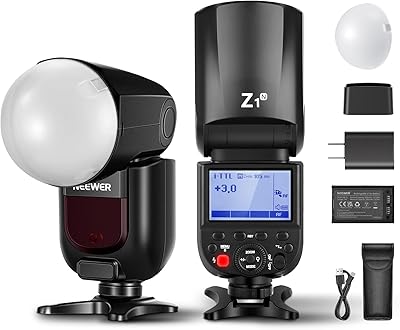
  • Flash Power: The flash delivers 76Ws of output power, providing strong exposure capability for both indoor portrait sessions and outdoor fill-flash work.
  • Flash Zoom: The zoom head covers a 28–105mm range and can be set to track your lens focal length automatically or adjusted manually for deliberate light spread control.
  • Color Temperature: Color temperature is rated at a stable 5600K with a tolerance of ±200K, keeping skin tones consistent across a full shoot without post-processing correction.
  • HSS Sync Speed: High-speed sync reaches up to 1/8000s, allowing wide-aperture shooting in bright ambient light without overexposure caused by shutter speed limitations.
  • Flash Duration: Flash duration ranges from 1/300s at full power to 1/20000s at minimum power, giving action photographers useful motion-freezing capability at reduced output levels.
  • Battery: The included NB-Z1 lithium-ion battery is rated at 7.4V and 2600mAh, providing up to 480 full-power flashes on a single charge.
  • Recycle Time: Full-power recycle time is 1.5 seconds, fast enough for event and wedding shooting where quick follow-up shots are frequently needed.
  • Modeling Lamp: A built-in 2W LED modeling lamp offers 10 adjustable brightness levels, useful for previewing light direction and assisting autofocus in dim environments.
  • Wireless System: The integrated 2.4GHz Q wireless system supports 4 groups, 32 channels, and 99 ID codes, compatible with QPro-S and Q-S TTL transmitters sold separately.
  • Wireless Range: Line-of-sight wireless range extends up to 328ft (100m) under unobstructed conditions, though real-world range in cluttered interiors will be shorter.
  • Rotation Range: The flash head rotates horizontally from 0° to 330°, enabling bounce flash off walls and ceilings across nearly any camera orientation.
  • Tilt Range: Vertical tilt spans from -7° to 120°, allowing downward fill angles as well as steep upward bounce positions for natural overhead light simulation.
  • Mount Type: The hot shoe is designed specifically for the Sony Alpha system and is not compatible with Canon, Nikon, or other proprietary TTL mount standards.
  • Modifier Mounts: The flash supports S2-type brackets, AK-R1 magnetic accessories, and can be converted to Bowens mount for use with a wide range of studio light shapers.
  • Firmware Updates: Firmware is updatable via USB, allowing NEEWER to push performance improvements and bug fixes without requiring hardware service or replacement.
  • Item Weight: The flash body weighs 1.1 pounds, which is comparable to other lithium-powered round-head speedlites in this class and manageable for all-day handheld use.
  • Package Dimensions: The packaged unit measures 9.61 x 7.13 x 4.29 inches, sized to fit the included carry bag for transport between locations.
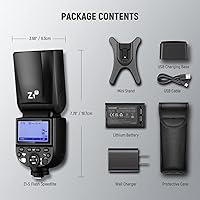
  • Included Items: The package includes the flash unit, one NB-Z1 lithium-ion battery, a USB battery charger, and a protective carry bag; the wireless transmitter is not included.

Related Reviews
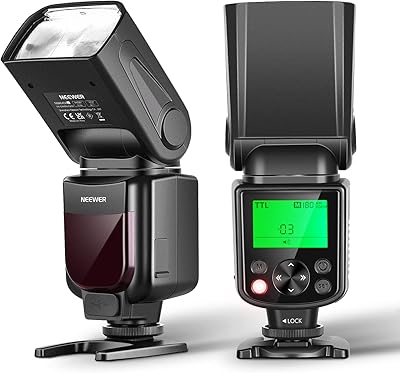
NEEWER NW645II-S TTL Flash Speedlite
81%
86%
TTL Accuracy
83%
High-Speed Sync Performance
78%
Build Quality
61%
Optical Slave Reliability
81%
Recycle Speed
More
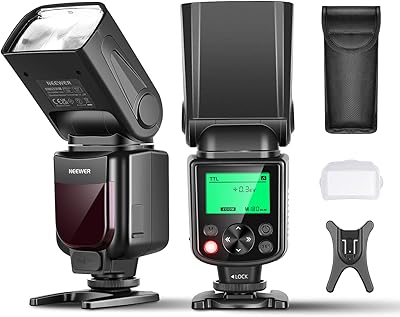
NEEWER NW635II-S TTL Camera Flash Speedlite
86%
88%
Value for Money
91%
Performance
75%
Build Quality
85%
Ease of Use
92%
Portability
More
NEEWER Z1-N TTL Speedlite for Nikon
78%
91%
Light Quality
78%
TTL Accuracy
86%
High-Speed Sync Performance
71%
Wireless Reliability
83%
Battery Life
More
NEEWER TT560 Speedlite Flash
75%
91%
Value for Money
74%
Ease of Use
83%
Build Quality
78%
Compatibility
77%
Light Output & Power Range
More
NEEWER NW620 Speedlite Flash
75%
88%
Value for Money
84%
Flash Output & Power
79%
Build Quality
91%
LCD Display & Controls
62%
Recycling Time
More
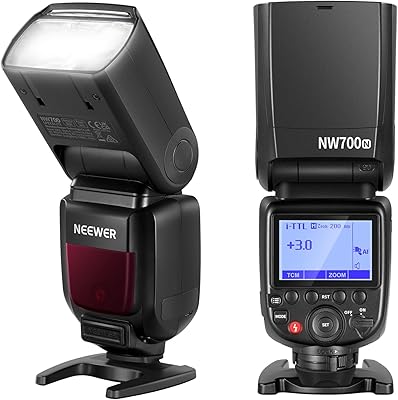
NEEWER NW700-N TTL Flash Speedlite
79%
84%
TTL Metering Accuracy
79%
TCM Function Usability
82%
High-Speed Sync Performance
71%
Build Quality & Durability
86%
Recycle Speed
More
NEEWER 750II TTL Camera Flash Speedlite
84%
88%
Flash Power & Performance
85%
Ease of Use
72%
Build Quality
90%
TTL Functionality
80%
Portability & Weight
More
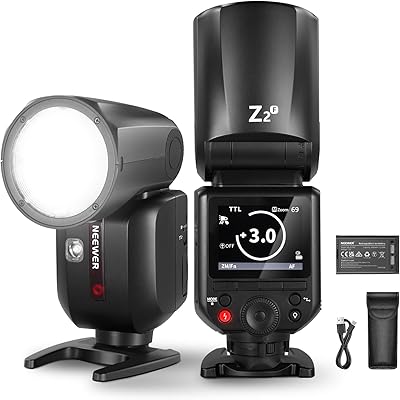
NEEWER Z2PRO-N TTL Round Head Flash Speedlite
82%
91%
TTL Accuracy
88%
Light Quality
86%
Battery Life & Charging
79%
Wireless Reliability
84%
Build Quality
More
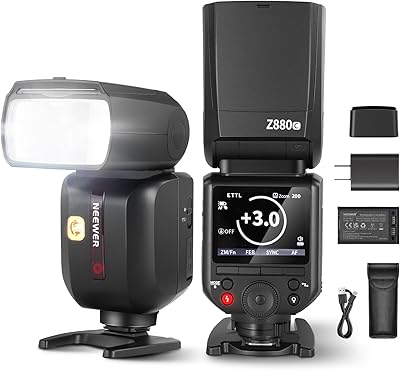
NEEWER Z880-C TTL Camera Flash Speedlite
83%
83%
Build Quality
88%
TTL Accuracy
86%
HSS Performance
74%
Wireless Reliability
91%
Battery Life
More
NEEWER Z2-F 2.4G TTL Camera Flash Speedlite for Fujifilm
86%
88%
Performance
85%
Ease of Use
91%
Wireless Connectivity
83%
Battery Life
90%
Flash Power Output
More

FAQ

Yes, both of those bodies are explicitly supported. The Z1-S flash is built around the Sony Alpha hot shoe and covers a broad range of A7, A9, A1, and A6000-series bodies, so full TTL and HSS communication should work without any adapters or workarounds.

Yes, and this is worth knowing before you order. The 2.4GHz Q wireless system on the flash is fully capable, but the TTL transmitter that sits on your camera hot shoe is sold separately. You will need a QPro-S or Q-S compatible trigger to fire the flash wirelessly with TTL control. Budget for that purchase if multi-light wireless shooting is your goal.

With a standard rectangular flash head, light tends to be brightest in the center and falls off more sharply toward the edges, which can create an uneven look on subjects. The circular Fresnel design spreads light more uniformly from center to edge and produces a softer, more gradual falloff — particularly noticeable in portrait work where skin tones look more natural and shadows are less harsh. It is a real and visible difference, not just a marketing claim.

For most working photographers, yes. The 2600mAh lithium pack is rated for around 480 full-power flashes per charge, which comfortably covers a typical wedding timeline from ceremony through reception. If you shoot at reduced power settings — which is common indoors — you will likely get even more shots. Carrying a spare NB-Z1 battery is still a sensible precaution for very long or demanding events.

It performs well in straightforward conditions — consistent backgrounds, indoor venues, and scenes without extreme backlighting. Where TTL struggles is in rapidly changing or high-contrast situations, like backlit outdoor portraits or mixed ambient and flash environments. Many experienced photographers who use this flash end up relying on manual mode for predictable results in those scenarios, so if you are comfortable with manual flash exposure, the inconsistency in TTL is much less of a concern.

You can, but you will need an S2-to-Bowens adapter bracket since the flash itself does not have a native Bowens mount. That adapter is a common and inexpensive accessory. Once attached, most standard Bowens-compatible softboxes, beauty dishes, and octoboxes will work as expected.

No, it does not have any weather or moisture resistance. The body is unsealed plastic, which means you should avoid using it in light rain, high humidity, or dusty outdoor environments. This is a meaningful limitation if you shoot outdoor events in unpredictable conditions, especially since many Sony Alpha bodies it is paired with do have weather sealing of their own.

They are genuinely close competitors. Both use a round Fresnel head, both support TTL and HSS for Sony, and both run on a proprietary lithium battery. The Godox V1-S has a slightly larger user base and a more mature ecosystem of accessories. The Z1-S competes on price and includes the carry bag and charger in the box. Photographers already invested in NEEWER accessories will find the Z1-S integrates more naturally, while Godox users will lean toward the V1-S for ecosystem continuity.

Firmware updates are done via USB and are straightforward enough that most users can handle them without any technical background. NEEWER provides firmware files and instructions on their website. It is worth checking for updates after purchase, as NEEWER has historically used firmware releases to address early compatibility or performance issues.

Some users have reported noticeable warmth in the flash body after extended stroboscopic sessions or sustained burst shooting at high power levels. It is not a widespread complaint under normal portrait or event use, but if you are planning to use stroboscopic mode heavily — for example, for multi-exposure creative effects — it is worth taking short breaks between sequences to let the unit cool and maintain consistent recycle performance.