Overview

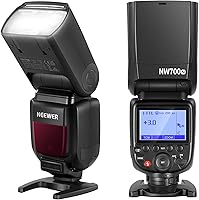
The NEEWER NW700-N TTL Flash Speedlite entered the Nikon-compatible speedlite market in early 2023, carving out a practical middle ground between entry-level flashes and expensive pro strobes. At 368g, this Nikon speedlite is light enough to carry all day without fatiguing your wrist or throwing off your camera balance. It currently sits at #349 in Shoe-Mount Flashes — a respectable position for a relatively new unit. One detail worth flagging early is the dual power supply option: it runs on four AA NiMH batteries or an optional CP-E4 external pack. Neither comes in the box, so factor that into your total cost from the start.
Features & Benefits

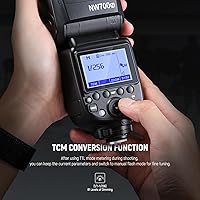
The standout here is the TCM function — TTL Convert to Manual — which lets you fire a TTL-metered shot first, then lock that exposure as a manual value to fine-tune from there. It is a genuinely practical workflow for photographers who trust TTL to get them in the ballpark but want manual consistency shot to shot. The 1/8000s high-speed sync is equally useful outdoors, letting you shoot wide-open apertures in bright light without overexposing the background. Output runs from full power down to 1/256 in precise 0.1-stop increments, and the GN60 guide number covers most portrait distances comfortably. Full tilt and pan range rounds things out nicely for bounce flash work.

Best For

This external flash makes the most sense for Nikon DSLR owners making their first real upgrade from a pop-up flash — TTL automation removes a lot of guesswork early in the learning curve. Event and portrait photographers will appreciate reliable metering and fast recycle times in busy shooting situations. If you shoot outdoors often, high-speed sync alone earns its keep. Photographers already invested in the NEEWER ecosystem will find the NW700-N integrates cleanly with compatible triggers. One important clarification: the S1/S2 modes are optical slave only, requiring an unobstructed line of sight — anyone expecting built-in radio triggering will need to budget for a separate dedicated trigger.

User Feedback

With a 4.3 out of 5 rating across 80 reviews, buyer sentiment leans positive — though the sample is small enough that the overall picture could shift as more long-term owners weigh in. Recurring praise focuses on consistent TTL accuracy, quick recycle speed, and solid construction relative to the price. On the critical side, several buyers found the instruction manual thin on detail, particularly around multi-flash and TCM configuration. The missing batteries are a frequent frustration — a small but avoidable box-opening surprise. Long-term durability remains an open question; the unit simply has not been on the market long enough to establish a reliable track record under sustained, regular use.

Pros

  • TTL metering is accurate and consistent across a wide range of Nikon DSLR bodies.
  • The TCM function bridges automatic convenience and manual precision in a genuinely practical way.
  • 1/8000s high-speed sync makes outdoor fill-flash viable at wide apertures without overexposed backgrounds.
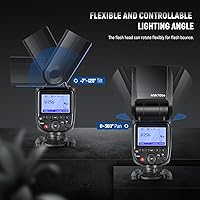
  • Full 360-degree pan and wide tilt range give real flexibility for bounce flash in tight spaces.
  • At 368g, this Nikon speedlite is light enough for extended on-location use without fatigue.
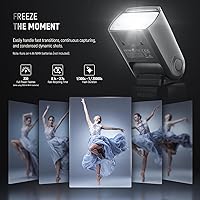
  • Output adjusts from full power down to 1/256 in fine 0.1-stop increments for precise control.
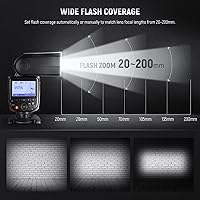
  • Auto zoom from 20mm to 200mm means the flash adapts automatically as you switch lenses.
  • The USB-C firmware update port suggests ongoing manufacturer support beyond the initial launch.
  • Wide-angle diffuser and reflector panel are included, adding immediate practical value in the box.
  • The dual power supply option — batteries or an optional CP-E4 pack — adds flexibility for heavy shooting days.

Cons

  • No batteries are included; four AA NiMH cells must be purchased separately before first use.
  • The instruction manual is thin and does not adequately explain TCM or multi-flash configuration.
  • S1/S2 wireless triggering is optical only — radio triggering requires an additional purchase.
  • The CP-E4 external power port adds versatility, but the pack itself is a significant added expense.
  • Long-term durability is unverified; fewer than 100 reviews and a 2023 launch date mean limited track record.
  • Recycle speed and flash output drop noticeably with low-quality or mismatched AA batteries.
  • The pan lock can feel loose after repeated repositioning, risking accidental head shifts mid-shoot.
  • TTL metering can overexpose in high-contrast outdoor scenes, requiring manual compensation adjustments.
  • The menu navigation has a real learning curve that first-time flash users will need time to work through.
  • GN60 reach starts to feel limited in large venues or group shots beyond roughly 8 to 10 meters.

Ratings

The NEEWER NW700-N TTL Flash Speedlite earns a well-rounded set of scores derived from AI analysis of verified global buyer reviews, with spam, bot-generated, and incentivized submissions actively filtered out before any scoring was applied. The ratings below reflect the real-world highs and frustrations that paying customers consistently reported across portrait sessions, event shoots, and outdoor assignments. Both the standout strengths and the friction points that genuinely affect day-to-day use are represented without softening.
TTL Metering Accuracy
84%
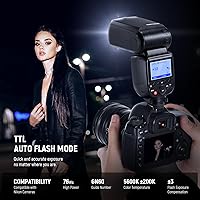
Buyers consistently noted that TTL exposures landed close to correct right out of the box, particularly during indoor portrait sessions and event work where lighting changes quickly. The automatic metering held up well across varied Nikon bodies without requiring constant manual adjustments between shots.
A portion of users reported occasional overexposure in high-contrast outdoor scenes, suggesting the metering algorithm can struggle when mixing strong ambient light with flash. Fine-tuning with exposure compensation helped, but it added an extra step some photographers found disruptive mid-shoot.
TCM Function Usability
79%
21%
Photographers who understood the TCM workflow praised it as a genuinely useful bridge between TTL convenience and manual repeatability — particularly useful when shooting a subject in consistent lighting and wanting locked, predictable output for a full set of images.
The instruction manual does not explain TCM clearly enough for newcomers, and several buyers admitted they did not realize the feature existed until they researched it independently. The learning curve is real, and the payoff depends heavily on whether the shooter invests time upfront.
High-Speed Sync Performance
82%
18%
Outdoor portrait shooters repeatedly highlighted HSS as a deciding factor in their purchase, and real-world results at 1/2000s and beyond largely delivered on the promise — shallow depth-of-field fills in full sun without blown backgrounds. That is a capability absent on many flashes in this price tier.
As expected with any HSS implementation, flash output drops noticeably at very high sync speeds, which limits effective working distance. A few users shooting in harsh midday sun found they had to move closer to their subject than expected to maintain adequate exposure.
Build Quality & Durability
71%
29%
At 368g, the NW700-N feels reassuringly solid for its weight class — the hot shoe foot and flash head both drew positive comments for not feeling flimsy during regular use. The overall construction holds up well under the handling typical of a working portrait or event shooter.
Long-term durability data is genuinely thin given the unit only launched in early 2023. A few buyers reported minor cosmetic wear after moderate use, and with fewer than 100 reviews in the pool, any firm conclusions about multi-year reliability would be premature.
Recycle Speed
86%
The 0.1-second recycle time at lower power outputs impressed event photographers who need to fire multiple frames quickly during ceremonies or candid moments. Even at higher outputs, users found the 2.7-second ceiling acceptable and rarely missed a shot because of lag.
Recycle speed drops noticeably at full power, and the rate is heavily battery-dependent. Users running older or mismatched AA cells reported slower-than-expected recovery, underscoring that investing in quality 2500mAh NiMH batteries is not optional — it is effectively required for peak performance.
Guide Number & Range
78%
22%
GN60 provides enough punch for most portrait distances in the 3–8 meter range, and users shooting small-to-medium group portraits in indoor venues generally found the output more than sufficient without pushing to full power constantly.
Photographers working larger spaces — banquet halls, wide outdoor scenes, or group shots beyond 10 meters — noted the guide number starts to feel limiting. It is not a weakness so much as a natural ceiling that buyers should factor in before purchasing.
Flash Mode Versatility
81%
19%
Having TTL, Manual, Multi strobe, and S1/S2 optical slave modes in a single unit at this price point is genuinely useful for photographers who experiment with lighting setups. Multi strobe mode drew specific praise from users shooting motion studies and creative long-exposure work.
The S1/S2 optical slave modes require a clear, unobstructed line of sight to the triggering flash — something buyers expecting wireless radio-style triggering discovered the hard way. This is an optical system only, and anyone needing reliable through-wall or off-angle triggering must budget separately for a radio trigger.
Head Articulation & Bounce
88%
Full 360-degree pan combined with -7° to 120° tilt gives the NW700-N one of the more flexible head movements in its class. Wedding and event photographers particularly appreciated the ability to bounce light off ceilings and walls without repositioning the camera.
A small number of users noted the pan lock could feel slightly loose after repeated repositioning, making it easy to accidentally shift the head between shots in fast-paced environments. It is a minor ergonomic gripe, but one that warrants attention during busy assignments.
Zoom Coverage
83%
Auto zoom from 20mm to 200mm means the flash adapts intelligently as you switch lenses, concentrating light precisely where the frame edge falls. Users who regularly swap between wide and telephoto lenses appreciated not having to adjust zoom manually between setups.
At the 200mm end, the beam narrows significantly, and a couple of users reported uneven light distribution at extreme telephoto zoom settings. It is an edge case for most buyers, but macro and tight telephoto shooters may notice it.
Power Supply & Battery Setup
62%
38%
The added CP-E4 power port is a thoughtful inclusion for professional use, allowing connection to an external battery pack for dramatically faster recycle times during heavy-volume shooting like weddings or sports events — a feature usually reserved for pricier flashes.
Nothing is included in the box to power the flash. No AA batteries, no external pack — buyers need to source both independently, and the CP-E4 pack adds meaningful cost on top of the unit price. This caught a surprising number of buyers off guard based on review comments.
LCD Display & Controls
77%
23%
The LCD panel is clear and readable in most lighting conditions, displaying current settings at a glance without needing to squint. Users who had previously used flashes with vague LED indicators found the NW700-N noticeably easier to navigate in the field.
The menu system has a moderate learning curve, and the physical button layout is not immediately intuitive for first-time users. Combined with a sparse instruction manual, new flash users reported spending more time than expected getting comfortable with basic navigation.
Included Accessories
74%
26%
The bundled wide-angle diffuser and reflector panel add practical value right out of the box — the diffuser softens light noticeably for close-up portraits, and the catchlight panel helps add that small reflection in a subject's eyes that makes portraits feel more alive.
Both accessories are plastic and feel lightweight relative to aftermarket alternatives. The diffuser in particular received comments about being easy to lose given its small size and clip-on fit, with a few buyers reporting it detached unexpectedly during shoots.
USB-C Firmware Updateability
80%
20%
The USB-C firmware port signals that NEEWER intends to support the NW700-N beyond launch, which reassures buyers who have been burned by orphaned accessories in the past. It is a small but meaningful sign of post-sale product investment.
At the time of most reviews, no firmware update had been publicly released, so the practical benefit remained theoretical for the majority of buyers. Whether NEEWER delivers meaningful updates over time is still an open question without a track record to evaluate.
Value for Money
85%
Across the review pool, value perception scored consistently high — buyers repeatedly expressed that the NW700-N delivers a feature set that would cost significantly more from a first-party Nikon flash. For hobbyists and semi-pros unwilling to pay premium brand prices, the ratio of capability to cost is hard to argue with.
The hidden cost of batteries, and potentially a radio trigger for wireless use, can push total outlay meaningfully higher than the unit price suggests. Buyers who factored these extras in after purchase occasionally felt the advertised value proposition overstated the all-in cost.

Suitable for:

The NEEWER NW700-N TTL Flash Speedlite is a strong match for Nikon DSLR owners who are ready to move beyond their camera's built-in pop-up flash but are not yet willing to spend flagship money on a first-party Nikon speedlite. Event photographers shooting weddings, birthday parties, or corporate functions will appreciate the reliable TTL metering and quick recycle times that keep up with unpredictable, fast-moving moments. Outdoor portrait shooters — the kind who like shooting wide open in bright sunlight — will find the 1/8000s high-speed sync genuinely useful for balancing ambient light without being forced to stop down. The TCM function is a real draw for semi-pros who want the convenience of TTL to get them close, then the precision of manual output to lock in consistency across a full portrait set. Photographers already invested in NEEWER gear will find the NW700-N slots naturally into that ecosystem, particularly for those considering adding a compatible trigger down the line.
Not suitable for:

The NEEWER NW700-N TTL Flash Speedlite is not the right call for professional photographers who depend on their gear under sustained, high-volume conditions — the unit simply has not been on the market long enough to establish a durability record that justifies that kind of reliance. Studio photographers who need consistent, repeatable power output for controlled commercial work will likely find the GN60 guide number limiting at larger working distances, and will miss the modeling lamp and precision controls found on dedicated monolights. Anyone expecting built-in radio wireless triggering will be disappointed — the S1/S2 slave modes are optical only, meaning a clear line of sight to the triggering flash is required, which rules out multi-room or through-barrier setups without purchasing a separate radio trigger. Canon, Sony, or Fujifilm shooters should look elsewhere entirely, as this flash is engineered specifically for the Nikon TTL system and will not communicate properly with other mounts. Finally, buyers hoping to shoot straight out of the box should know that batteries are not included — you will need four AA NiMH cells before the flash fires a single shot.

Specifications

  • Brand & Model: Manufactured by NEEWER under the model designation NW700-N, released to market in February 2023.
  • Compatibility: Designed exclusively for Nikon DSLR cameras with a standard hot shoe mount supporting Nikon TTL communication.
  • Guide Number: Rated at GN60 (ISO 100, 105mm zoom position), providing sufficient output for portrait and event distances up to approximately 8–10 meters.
  • Sync Speed: Supports high-speed sync up to 1/8000s, allowing use at shutter speeds beyond the camera's standard X-sync limit.
  • Flash Duration: Minimum flash duration reaches 1/20000s when powered by 2500mAh NiMH AA batteries, enabling freeze of fast motion.
  • Output Range: Manual output is adjustable from 1/1 (full power) down to 1/256 in 0.1-stop increments for precise exposure control.
  • Flash Modes: Supports TTL, Manual, Multi strobe, and S1/S2 optical slave modes for flexible use in varied lighting scenarios.
  • Recycle Time: Recycle time ranges from approximately 0.1 seconds at low power to 2.7 seconds at full power, depending on battery condition.
  • Full Power Flashes: Rated for approximately 230 full-power flashes per set of four fully charged 2500mAh NiMH AA batteries.
  • Zoom Coverage: Flash head zoom covers 20mm to 200mm in both automatic and manual modes, adapting output angle to match the lens in use.
  • Head Tilt Range: Flash head tilts from -7° downward to 120° upward for downward fill and overhead bounce applications.
  • Head Pan Range: Flash head rotates a full 360° horizontally, enabling bounce flash off walls on either side without removing the unit from the hot shoe.
  • Weight: The unit weighs 368g (13oz) without batteries, keeping the camera rig manageable during extended handheld sessions.
  • Power Supply: Accepts four AA NiMH batteries (not included) or an optional CP-E4 external battery pack (not included) via a dedicated power port.
  • Connectivity: Equipped with a USB Type-C port for firmware updates, allowing the unit to receive software improvements after purchase.
  • Display: Features a backlit LCD screen that shows current flash mode, output level, zoom position, and other active settings at a glance.
  • Dimensions: Physical dimensions are approximately 7.95″ deep x 2.17″ wide x 7.95″ tall, with a packaged size of 3.9″ x 12.6″ x 12.6″.
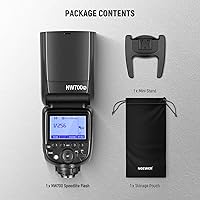
  • Included Accessories: Ships with a wide-angle diffuser panel and a catchlight reflector panel to assist with soft, natural-looking flash output.
  • Wireless Trigger Support: Compatible with the NEEWER FC-16 external trigger (sold separately) for remote off-camera flash operation.
  • TCM Function: The TTL Convert to Manual (TCM) function captures a TTL-metered reading and locks it as a manual output value for consistent repeat exposures.

Related Reviews
NEEWER Z2PRO-N TTL Round Head Flash Speedlite
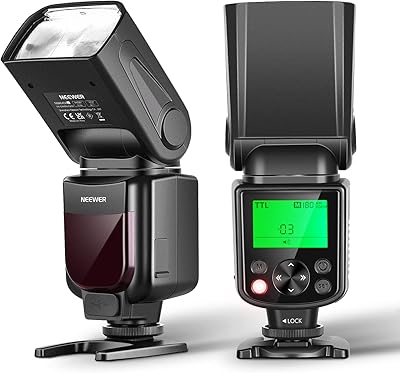
82%
91%
TTL Accuracy
88%
Light Quality
86%
Battery Life & Charging
79%
Wireless Reliability
84%
Build Quality
More
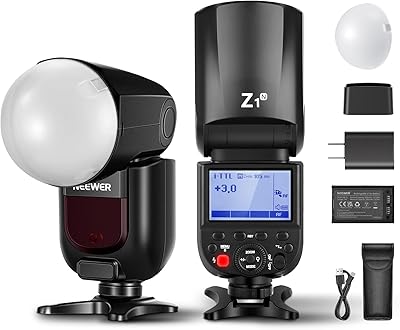
NEEWER Z1-N TTL Speedlite for Nikon
78%
91%
Light Quality
78%
TTL Accuracy
86%
High-Speed Sync Performance
71%
Wireless Reliability
83%
Battery Life
More
NEEWER NW645II-S TTL Flash Speedlite
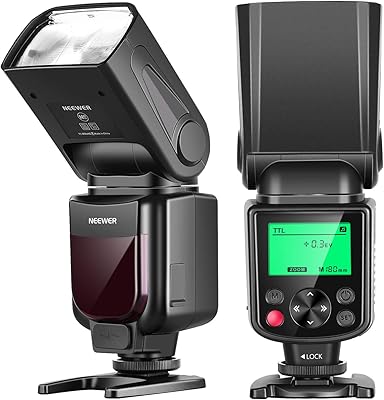
81%
86%
TTL Accuracy
83%
High-Speed Sync Performance
78%
Build Quality
61%
Optical Slave Reliability
81%
Recycle Speed
More
NEEWER 750II TTL Camera Flash Speedlite
84%
88%
Flash Power & Performance
85%
Ease of Use
72%
Build Quality
90%
TTL Functionality
80%
Portability & Weight
More
NEEWER NW635II-S TTL Camera Flash Speedlite
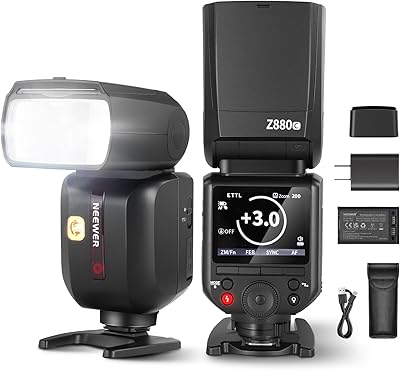
86%
88%
Value for Money
91%
Performance
75%
Build Quality
85%
Ease of Use
92%
Portability
More
NEEWER Z880-C TTL Camera Flash Speedlite
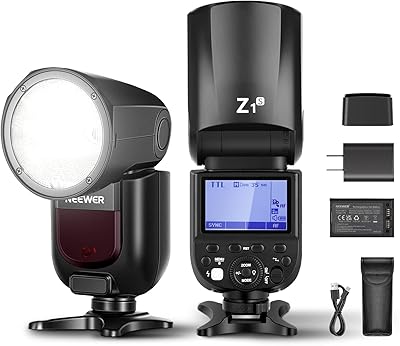
83%
83%
Build Quality
88%
TTL Accuracy
86%
HSS Performance
74%
Wireless Reliability
91%
Battery Life
More
NEEWER Z1-S Round Head Flash Speedlite
83%
91%
Light Quality
83%
Build Quality
72%
TTL Accuracy
93%
Battery Life
88%
Recycle Time
More
NEEWER Z2-F 2.4G TTL Camera Flash Speedlite for Fujifilm
86%
88%
Performance
85%
Ease of Use
91%
Wireless Connectivity
83%
Battery Life
90%
Flash Power Output
More
NEEWER NW620 Speedlite Flash
75%
88%
Value for Money
84%
Flash Output & Power
79%
Build Quality
91%
LCD Display & Controls
62%
Recycling Time
More
NEEWER TT560 Speedlite Flash
75%
91%
Value for Money
74%
Ease of Use
83%
Build Quality
78%
Compatibility
77%
Light Output & Power Range
More

FAQ

Batteries are not included — you will need four AA NiMH rechargeable batteries before the flash will fire. This catches a lot of buyers off guard, so factor that into your budget upfront. Standard alkaline AAs will work in a pinch, but quality 2500mAh NiMH cells make a meaningful difference to recycle speed and total shot count.

No — this unit is built specifically around Nikon TTL communication. Mounting it on a Canon, Sony, Fujifilm, or other brand camera will likely result in no TTL function at all, and in some cases may not fire reliably. If you shoot anything other than Nikon, you will need a different model designed for your specific system.

Standard flash sync tops out around 1/200s to 1/250s on most DSLR bodies. If you want to shoot at, say, 1/1000s in bright sunlight to keep your background from blowing out while still using flash on your subject, you need HSS. The NW700-N supports up to 1/8000s, which is genuinely useful for outdoor portraits where you want a shallow depth of field without overexposing everything behind your subject.

Sort of — the S1 and S2 optical slave modes let the flash trigger when it detects another flash firing nearby. But this is an optical system, meaning the NW700-N needs a clear, unobstructed line of sight to the triggering light source. It will not work reliably around corners, through walls, or in bright ambient light that confuses the sensor. For dependable off-camera triggering, you will want to add a dedicated radio trigger like the NEEWER FC-16.

TCM stands for TTL Convert to Manual. In practice, you fire one TTL-metered shot to let the flash figure out a good exposure, then hit TCM to lock that exact power level as a manual value. From that point, output stays consistent shot to shot regardless of what the camera's metering thinks. It is particularly handy when you have found a good exposure in a fixed lighting setup and want to stop the flash from second-guessing itself.

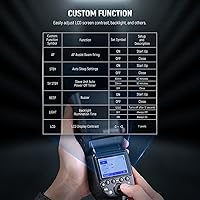
The flash does emit an audible ready beep, and based on buyer feedback, the volume is noticeable but not disruptive in most shooting environments. The unit includes custom function settings accessible through the LCD menu, and audio alerts can be disabled through those settings — useful for quiet ceremonies or situations where any extra noise is unwelcome.

Mostly yes — the pan and tilt locks hold their position well under normal handling. A few users did report the pan lock feeling slightly loose after repeated adjustments, which can cause the head to shift unintentionally if you bump the flash. It is not a widespread issue, but if you are shooting in fast-paced situations where you frequently reposition the head, it is worth double-checking your angle before each burst.

In auto zoom mode, the flash reads the focal length data from the lens and adjusts the zoom head accordingly — so swapping from a 35mm to an 85mm lens will trigger an automatic adjustment without you touching anything. You can also override this and set the zoom manually anywhere between 20mm and 200mm if you want to intentionally narrow or widen the beam for creative purposes.

Firmware updates are applied through the USB-C port on the side of the flash — you connect it to a computer and use NEEWER's update utility. As of the time most reviews were written, no firmware update had been publicly released for this specific unit, so the practical benefit is still theoretical for most owners. That said, the presence of the port at least signals that the manufacturer has not closed the door on post-launch improvements.

For close-up and mid-range subjects, yes — it does noticeably soften the light and reduce harsh shadows compared to bare flash. At greater distances it loses effectiveness quickly, and the plastic build is lightweight enough that it is easy to misplace. Think of it as a useful starter accessory rather than a professional-grade modifier; it handles basic portrait and group shot needs without requiring anything extra, but dedicated softboxes or bounce cards will outperform it for more controlled work.

Where to Buy