
Overview

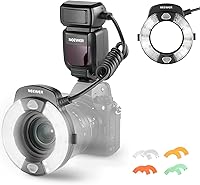
The NEEWER RF1-N Macro Ring Flash for Nikon arrived in early 2025, targeting close-up photographers who want reliable TTL ring lighting without the cost of professional-grade systems. At 76Ws output and a GN15 guide number, this macro ring flash lands squarely in mid-range territory — capable enough for serious macro work, but not competing with high-end studio strobes. What stands out immediately is the 13oz compact build, which makes it genuinely practical whether you're in the field chasing insects or set up at a studio table shooting jewelry. It's priced fairly for what it delivers, with the caveat that it's still building its track record.

Features & Benefits

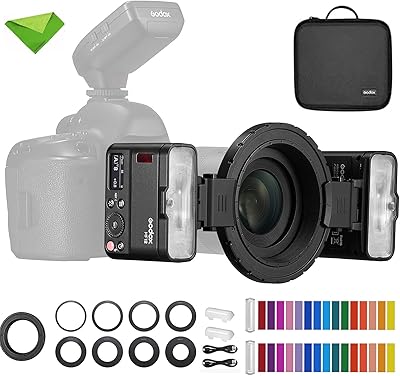
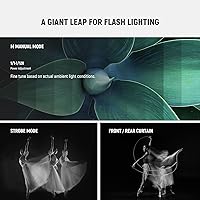
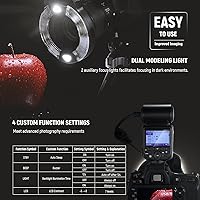
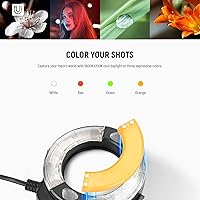
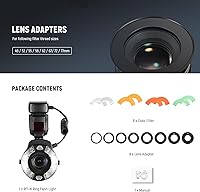
The RF1-N gives you three flash modes — TTL, Manual, and a stroboscopic MULTI mode — which covers the full range from quick automatic shooting to deliberate creative work. The independent A/B flash tubes with 8:1 to 1:8 ratio control are where things get genuinely interesting: being able to bias the light from one side gives you subtle shadow shaping that flat ring flash users often miss. Two assist focus lights with ten adjustable brightness levels take a lot of frustration out of shooting in dim conditions. Throw in front and rear curtain sync, a PC sync port, four color gels, and eight lens adapter rings from 49mm to 77mm, and the accessory package punches well above its class.

Best For

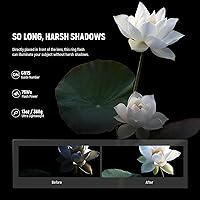
This Nikon ring flash makes most sense for macro photographers working with insects, flowers, jewelry, or product flat-lays where shadow-free lighting is the priority. If you shoot Nikon and want TTL metering to handle exposure automatically — especially in unpredictable field conditions — this is a practical alternative to renting or waiting for a more expensive solution. It's also a solid fit for content creators and small studio operators who need portable ring lighting that can pack into a bag without drama. The color gels open the door to artistic and atmospheric effects beyond straight documentary macro work. One hard limit: it's Nikon-only, so Canon or Sony users need to look elsewhere.

User Feedback

With 56 ratings and a 4.3 out of 5 average as of early 2025, this macro ring flash has a solid but still limited feedback pool — keep that in mind before treating the score as definitive. Buyers generally report that TTL exposure accuracy holds up well across different Nikon bodies, which is the most critical real-world test for a flash like this. A recurring positive is the ease of initial setup. On the flip side, a few users flag that the build quality carries a noticeable plastic feel, and battery drain under sustained shooting is worth planning around. The LCD interface draws mostly favorable comments for being straightforward, though it is not a particularly sophisticated screen.

Pros

  • TTL metering works reliably across Nikon bodies, saving time in fast or unpredictable shooting conditions.
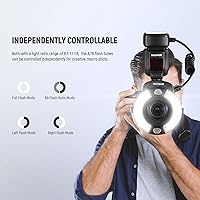
  • Independent A/B flash tubes with adjustable ratio control give you real shadow-shaping capability, not just flat ring light.
  • The assist focus lights are genuinely useful in dim macro environments — ten brightness levels is more flexibility than most competitors offer.
  • Eight lens adapter rings included in the box means most Nikon users are covered from day one.
  • Three flash modes — TTL, Manual, and stroboscopic MULTI — handle everything from quick documentary shots to creative experimental work.
  • At 13oz, this macro ring flash is light enough to carry all day in the field without fatigue.
  • Color gels and front/rear curtain sync options give hobbyists studio-style creative tools at an accessible price.
  • The CP-E4 external power port is a thoughtful addition for high-volume studio sessions where battery swaps would interrupt workflow.

Cons

  • Nikon-only compatibility is a firm limitation — no cross-system use, no future-proofing if you switch brands.
  • Only 56 ratings as of early 2025, which makes it difficult to assess long-term durability or edge-case reliability.
  • The plastic build quality is noticeable and may feel underbuilt to photographers used to mid-tier or pro flash hardware.
  • Battery life under sustained high-output shooting can be disappointing, especially without access to an external power source.
  • GN15 guide number is modest — fine for true macro distances, but limiting if you occasionally need to light subjects at greater range.
  • Recycling time up to 2.7 seconds on AA power is a real constraint during rapid-fire shooting sequences.
  • The LCD screen is functional but basic — not a polished interface for photographers who prefer detailed on-flash controls.
  • No dedicated case or protective pouch is included, which is a practical gap given the number of loose adapter rings and gels in the kit.

Ratings

The NEEWER RF1-N Macro Ring Flash for Nikon has been scored below by our AI system after analyzing verified buyer reviews worldwide, actively filtering out incentivized, bot-generated, and duplicate feedback to reflect genuine user experience. With a relatively small but consistently positive review pool as of early 2025, both the real strengths and the honest frustrations of this Nikon ring flash are transparently reflected in every category score.

TTL Accuracy
83%
Most Nikon shooters report that TTL metering delivers reliably correct exposures across a range of camera bodies, particularly when photographing insects and botanical subjects outdoors where lighting conditions shift quickly. The automation holds up well without constant manual override, which buyers specifically value during fast-paced field sessions.
A handful of users note occasional TTL inconsistency when switching between older Nikon DSLR bodies and newer Z-series mirrorless, suggesting the communication protocol is not perfectly uniform across the full Nikon ecosystem. Edge-case exposure errors in high-contrast macro scenes are reported, though infrequently.
Build Quality
61%
39%
The RF1-N feels solid enough for careful studio and garden use, and buyers who treat it with reasonable care report no structural failures over regular shooting sessions. The physical controls — buttons and dials — have a consistent, responsive feel that does not suggest imminent failure.
The predominant complaint across reviews is that the plastic housing feels noticeably lightweight and less durable than the price might suggest. Photographers coming from metal-bodied competitors find the construction underwhelming, and there is no weather sealing to speak of, making it a poor fit for wet or dusty outdoor conditions.
Ease of Setup
88%
Buyers consistently highlight how quickly the flash can be assembled and mounted — attaching an adapter ring, clipping the ring onto the lens, and sliding the controller unit into the hot shoe takes only a few minutes without tools. First-time macro flash users specifically call out how approachable the initial setup experience is.
Managing eight loose adapter rings without a storage solution adds minor friction, and a few users report the rings feel slightly loose on certain lens barrel diameters. The cable routing between the ring and the controller unit can also feel awkward when shooting handheld in tight spaces.
LCD Interface
74%
26%
The LCD screen gives a clear readout of the essential parameters — mode, power level, and ratio settings — without unnecessary clutter, and buyers appreciate being able to glance at settings without squinting. The adjustable backlight duration and contrast settings are a practical touch that most competing flashes in this range omit.
The screen is purely functional rather than refined, and users accustomed to the richer menus found on flagship flash units will find it limited. Navigation through custom settings like auto sleep and buzz alerts is workable but not intuitive, requiring a few read-throughs of the manual to memorize.
A/B Tube Ratio Control
86%
The ability to independently control the two flash tubes — with a ratio range from 8:1 to 1:8 in half-stop steps — is one of the features buyers mention most positively, particularly those shooting jewelry and textured objects where a pure flat light would kill detail. It meaningfully separates the RF1-N from simpler single-tube ring flashes.
Dialing in the right ratio in the field takes some experimentation, and users new to ratio-controlled lighting occasionally find the half-stop increments too coarse for fine-tuning shadow depth on very small subjects. There is no visual preview of the ratio effect, so the learning curve requires trial-and-error shooting.
Battery Life
58%
42%
Under light to moderate use — occasional flash sessions with adequate rest between bursts — the four AA batteries provide enough capacity for a comfortable single shooting day. The CP-E4 external power port is a well-received option for studio users who want to avoid frequent battery interruptions.
Sustained high-output shooting drains batteries noticeably faster than buyers expect, and the recycling time creeping toward 2.7 seconds as batteries deplete is a real workflow disruptor during sequences. Several reviewers flag that standard NiMH rechargeables underperform compared to alkaline or lithium AAs.
Recycling Speed
63%
37%
At lower output settings, the recycling time dips to around 0.1 seconds, which is genuinely fast for a macro ring flash in this price tier and allows for near-continuous shooting when you do not need full power. For static subjects like flowers or product flat-lays, this is rarely a meaningful constraint.
At full or near-full power on standard AA batteries, the 2.7-second recycling time becomes a practical limitation, especially for nature photographers chasing fast-moving insects. Without an external power pack, sustained rapid-fire shooting is not a realistic use case for this flash.
Assist Focus Lights
81%
19%
Buyers working in dim indoor studios or shaded garden environments specifically praise the focus assist lights for making autofocus lock-on significantly more reliable. Ten brightness levels give enough range to match the ambient light conditions without washing out the scene or disturbing insects during field photography.
The two 0.59W lights are adequate for macro distances but noticeably dim if the subject is more than a foot away, limiting their usefulness outside of true close-up distances. A few users note that the color temperature of the assist lights casts a slightly warm tone that can influence exposure metering if left on during the shot.
Color Gels
72%
28%
The four included gels — white, red, green, and yellow — give buyers an accessible introduction to colored macro lighting without any additional purchase, and creative photographers shooting artistic botanical or product work find genuine value in them. Mounting and swapping gels is quick and does not require tools.
Four colors is a limited palette compared to what gel expansion packs offer, and the gels themselves are thin and feel like they could degrade faster than the flash unit. Serious color photographers will likely outgrow the included selection and need to source compatible third-party gels separately.
Lens Adapter Compatibility
77%
23%
Eight adapter rings covering 49mm through 77mm thread sizes means the vast majority of Nikon lens users are covered without any extra purchase, which buyers consistently flag as a genuinely convenient inclusion. The rings attach securely for most lens barrel sizes within that range.
Photographers with 82mm or larger filter threads — common on wide-aperture telephoto and some pro-grade macro lenses — are left out and need a third-party step-down ring workaround. A few users also report that the adapter fit on certain lens barrels feels slightly imprecise, introducing minor wobble under the ring flash.
MULTI Stroboscopic Mode
69%
31%
Buyers who experiment with motion-capture macro photography — water drops, insect wing movement, or falling pollen — find the MULTI mode a worthwhile creative addition that is unusual at this price point. It works reliably when set up correctly and produces the intended stacked-motion effect.
The mode requires careful coordination of shutter speed, flash frequency, and ambient light, and without clear in-manual guidance, many buyers report that getting usable results takes significant trial and error. It is not a feature most buyers will use regularly, but those who do sometimes note the frequency control range could be wider.
Value for Money
79%
21%
Given the breadth of what the RF1-N ships with — three flash modes, A/B tube control, focus assist lights, eight adapter rings, color gels, and curtain sync — the pricing lands in a spot that most hobbyist and semi-pro Nikon photographers consider fair. Comparable ring flashes with fewer features often cost noticeably more.
The plastic build and limited long-term track record mean the value calculation depends partly on how durable the unit proves over time, which remains an open question for a flash launched in early 2025. Users comparing it directly against higher-end Nikon ring flashes will find the gap in output and build quality to be real, not just nominal.
Flash Sync Options
76%
24%
Having both front and rear curtain sync alongside a physical PC sync jack gives this Nikon ring flash a level of studio and creative integration that buyers do not typically expect at this price. The PC sync port is particularly appreciated by photographers who want to trigger the flash reliably from a wired remote or sync cable.
High-speed sync is absent, which is a genuine limitation for outdoor macro shooters who want to combine ring flash with wide apertures in bright sunlight. At a maximum sync speed of 1/400s, controlling ambient exposure in sunny conditions requires neutral density filtration rather than shutter speed alone.
Portability
84%
At 13oz, the RF1-N is genuinely light enough to carry on extended outdoor shoots without fatigue, and buyers doing insect or flower photography in the field specifically note that the compact form does not throw their handheld balance off significantly. It packs flat and fits into a camera bag side pocket without occupying a dedicated slot.
The controller unit that mounts on the hot shoe adds a small but noticeable height profile to the camera, which some users find slightly awkward when working from low angles or tripod-mounted setups in tight spaces. The loose adapter rings and gels also need separate containment to transport cleanly.

Suitable for:

The NEEWER RF1-N Macro Ring Flash for Nikon is a strong match for Nikon shooters who spend serious time on close-up work — insects, botanical photography, jewelry, coins, or product flat-lays where even, wrap-around light makes a real difference. If you've been relying on a standard speedlight and a diffuser to approximate macro lighting, this is a meaningful step up that won't require selling other gear to afford. The TTL mode is particularly valuable for nature photographers working in unpredictable conditions, where manually dialing in exposure for every shot is impractical. Studio-based content creators and small-product photographers will appreciate the portability — at just under a pound, it moves between setups without hassle. The included adapter rings cover 49mm through 77mm filter threads, so most Nikon lens users won't need to buy additional accessories out of the box.

Not suitable for:

The NEEWER RF1-N Macro Ring Flash for Nikon is a hard pass for anyone not shooting on the Nikon system — there is no Canon, Sony, or Fujifilm variant of this model, and there is no workaround. Photographers who need serious output for larger subjects or wider scenes will also find the GN15 guide number limiting; this is a dedicated macro tool, not a general-purpose flash. If you shoot fast-paced events or long sessions on a single battery charge, the reliance on four AA batteries and a recycling time that can stretch to 2.7 seconds under load may become genuinely frustrating. Those expecting premium build quality comparable to higher-end flash systems should temper expectations — the construction is functional but lightweight plastic, not metal-bodied. And if you need long-term reliability data before committing, the product's early-2025 launch means that track record simply does not exist yet.

Specifications

  • Brand & Model: Manufactured by NEEWER under the model designation RF1-N, released in January 2025.
  • Compatibility: Designed exclusively for Nikon cameras with a standard hot shoe connection; not compatible with Canon, Sony, Fujifilm, or other brands.
  • Flash Output: Delivers a maximum output of 76Ws with a guide number of GN15 measured at ISO 100 and 1 meter distance.
  • Color Temperature: Outputs a daylight-balanced 5600K color temperature for natural, consistent results in both studio and outdoor macro conditions.
  • Flash Modes: Supports three modes: TTL for automatic exposure, Manual with 1/1 to 1/128 power adjustment, and MULTI for stroboscopic creative effects.
  • Flash Duration: Flash duration ranges from 1/400s at full power down to 1/19300s at minimum power, allowing motion-freezing capability at reduced outputs.
  • Recycling Time: Recycles in 0.1 to 2.7 seconds depending on output level and power source used.
  • A/B Tube Ratio: Independent A and B flash tubes are individually controllable with a lighting ratio adjustable from 8:1 to 1:1 to 1:8 in 1/2-stop increments.
  • Focus Assist: Two 0.59W assist focus lights offer 10 selectable brightness levels to support autofocus in low-light macro environments.
  • Power Source: Runs on 4x AA batteries (1.5V alkaline or high-drain rechargeable) and supports an external power source via a CP-E4 compatible port.
  • Battery Yield: Provides approximately 100 to 1500 flashes per set of AA batteries depending on output level and shooting frequency.
  • Weight: The flash unit weighs 13oz (368g), making it practical for both handheld field photography and bench-mounted studio setups.
  • Adapter Rings: Includes 8 lens adapter rings covering 49mm, 52mm, 55mm, 58mm, 62mm, 67mm, 72mm, and 77mm filter thread sizes.
  • Color Gels: Ships with 4 color gel filters in white, red, green, and yellow for atmospheric or color-corrected macro shooting.
  • Flash Sync: Supports both front and rear curtain sync modes, plus a PC sync jack for studio trigger or wired remote use.
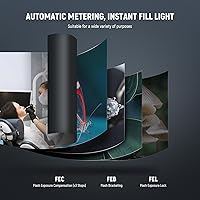
  • Exposure Controls: Includes exposure compensation, auto exposure bracketing, and a flash lock function for controlled multi-shot sequences.
  • Display: Features an LCD screen with adjustable contrast and backlight duration, alongside customizable settings for auto sleep and audio alerts.
  • Package Dimensions: The retail package measures approximately 10.8 x 10.56 x 2.84 inches and has a total shipping weight of 1.96 pounds.

Related Reviews
NEEWER Z2PRO-N TTL Round Head Flash Speedlite
82%
91%
TTL Accuracy
88%
Light Quality
86%
Battery Life & Charging
79%
Wireless Reliability
84%
Build Quality
More
NEEWER Z1-N TTL Speedlite for Nikon
78%
91%
Light Quality
78%
TTL Accuracy
86%
High-Speed Sync Performance
71%
Wireless Reliability
83%
Battery Life
More
Godox V860III-N Nikon Speedlight Flash
84%
93%
Battery Life
91%
Recycle Time
88%
High-Speed Sync Performance
84%
TTL Accuracy
87%
Wireless Reliability
More
YONGNUO YN14EX II Macro Ring Flash
77%
91%
Lighting Quality
78%
TTL Accuracy
88%
A/B Ratio Control
63%
Build Quality
86%
Value for Money
More
Godox X2T-N Wireless Flash Trigger Transmitter
81%
91%
Wireless Reliability
87%
TTL Accuracy
84%
High-Speed Sync Performance
79%
Build Quality
88%
Ease of Use
More
Godox MF-R76 Macro Ring Flash
82%
93%
Light Quality
88%
Dual-Tube Control
91%
Battery Life
79%
Manual Exposure Control
89%
Camera Compatibility
More
NEEWER TT560 Speedlite Flash
75%
91%
Value for Money
74%
Ease of Use
83%
Build Quality
78%
Compatibility
77%
Light Output & Power Range
More
Godox MF12-K2 Macro Flash
85%
91%
TTL Accuracy
84%
Build Quality
88%
Battery Life
86%
Wireless Reliability
71%
Ease of Setup
More
NEEWER NW620 Speedlite Flash
75%
88%
Value for Money
84%
Flash Output & Power
79%
Build Quality
91%
LCD Display & Controls
62%
Recycling Time
More
NEEWER Z160 Camera Flash
81%
94%
Portability & Form Factor
83%
Build Quality
61%
Flash Output Power
88%
Battery Life & Charging
86%
Recycle Time
More

FAQ

Yes, as long as your Nikon Z body has a standard hot shoe or you use the appropriate adapter, the RF1-N is designed to communicate with Nikon's TTL system. That said, TTL compatibility can vary slightly between camera generations, so it is worth checking that your specific Z body is confirmed compatible before purchasing.

Rechargeable AAs work fine as long as they are high-drain 1.5V cells — the type rated for flash and high-current devices. Standard NiMH rechargeables that output 1.2V may cause inconsistent performance or slower recycling times, so look specifically for 1.5V lithium-ion rechargeable AAs if you want the best results.

No tools are needed. You attach the appropriate adapter ring to your lens, clip the flash ring onto it, slide the controller unit into your camera's hot shoe, and connect the cable. Most buyers report being up and shooting within a few minutes of opening the box.

Overall power changes how bright the flash is across both tubes equally. The A/B ratio lets you make one side of the ring brighter than the other, which introduces subtle directional shadow — useful for adding a slight sense of depth or texture to macro subjects that would otherwise look completely flat under even ring light.

No, HSS is not a listed feature of this flash. The maximum sync speed is 1/400s, which is the camera's standard flash sync speed. If you regularly shoot at shutter speeds faster than that — for example in bright outdoor conditions with wide apertures — this is a meaningful limitation to be aware of.

Unfortunately, no. The included adapter rings top out at 77mm. If your lens is 82mm, you would need to source a third-party step-down ring to bring it to 77mm, which can work but adds a small layer of inconvenience and may affect how securely the flash ring sits on the lens.

In MULTI mode, the flash fires multiple rapid bursts within a single exposure, capturing multiple positions of a moving subject on one frame — think a bee mid-wingbeat or water droplets at different stages of a splash. It is a creative tool rather than an everyday shooting mode, but it is a genuinely useful addition for experimental macro work.

No dedicated case or pouch is included in the standard package. Given that the kit ships with eight loose adapter rings and four gel filters, this is a noticeable gap. A small zip pouch or accessory case purchased separately is strongly recommended to keep everything organized.

The RF1-N does not have a built-in wireless receiver. However, the PC sync jack allows you to trigger it via a wired cable connected to a compatible transmitter or sync port. For optical wireless triggering, a third-party optical slave adapter could work in some scenarios, but native radio wireless triggering is not supported.

For most users shooting in normal conditions — garden photography, studio benchtops, indoor product work — the build quality is functional and adequate. It is not weather-sealed and does not feel as robust as metal-housed pro-grade flash units, so it requires reasonable care. Rough outdoor environments or careless handling over time could be a concern, but for careful hobbyist and semi-pro use it should hold up without issue.

Where to Buy

B&H Photo-Video-Audio
In stock $109.99