Overview

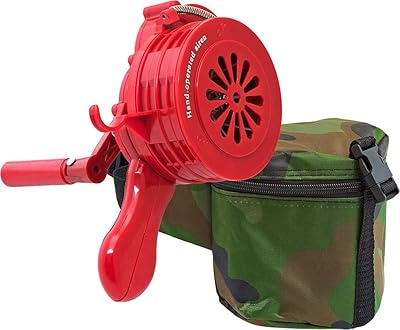
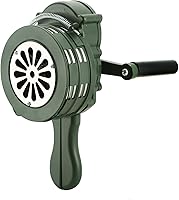
The MYFULLY MY-0289 Manual Hand Crank Siren is a niche but genuinely useful tool — not a gadget for everyone, but exactly right for people who take emergency preparedness seriously. Built from aluminium alloy with a foldable handle, this hand crank siren is compact enough to toss in a go-bag yet sturdy enough for rough conditions. The price sits at an accessible mid-range point for a purely mechanical safety device with no electronics inside. One thing to set straight upfront: sound output scales with crank speed. Spin it slowly and you get a modest alert; spin it hard and you get a wall of noise. Manage expectations accordingly.
Features & Benefits

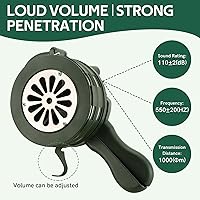
At 110dB measured at one meter, this hand crank siren is genuinely loud — comparable to a chainsaw at close range — with a tone around 550Hz that cuts through background noise effectively. In open outdoor conditions, that sound can carry up to 1,000 meters, making it practical for signaling across fields, campgrounds, or factory floors. The aluminium body handles physical abuse better than plastic would, and the foldable handle design means the whole unit collapses into a compact form that fits in the included waist pack. No charging, no batteries, no dead device during the one moment you actually need it — that alone justifies the purchase for a certain type of buyer.

Best For

This emergency horn makes most sense for people who have thought carefully about what happens when the power grid goes down. Households in tornado or flood-prone areas where outages are routine are an obvious fit — no batteries to go dead in the junk drawer. It also works well for camp counselors and coaches who need a reliable, loud signal without worrying about charge levels. School safety staff and factory supervisors running evacuation drills will find the range and volume genuinely adequate. What it is not is a casual purchase — if you just need a sideline noise-maker and don't care about off-grid reliability, a cheaper air horn canister probably does the job faster.

User Feedback

Buyers consistently praise the solid aluminium construction — the weight and heft give it a reassuringly tool-like feel rather than a cheap novelty vibe. The most common complaint, worth flagging honestly, is that sustaining maximum volume requires real, continuous arm effort. You cannot lazily spin the handle and expect 110dB; it takes committed cranking. The included waist pack draws mixed reactions — some find it a handy carry solution, others consider it a bit flimsy relative to the unit itself. Buyers who switched from electronic sirens tend to be the happiest, citing confidence in long-term reliability. Those expecting instant, effortless noise may find the adjustment mildly frustrating at first.

Pros

  • All-metal aluminium alloy construction is built to outlast plastic-bodied sirens by years.
  • Fully manual operation means no batteries to die, corrode, or forget to replace.
  • 110dB output at one meter is loud enough to carry across a large open field.
  • The gear-driven ramp-up produces a crescendo effect that is actually effective for crowd signaling.
  • Foldable handle reduces storage bulk and makes the unit genuinely pack-friendly.
  • Sound carries up to 1,000 meters in open terrain, covering wide outdoor areas reliably.
  • Long-term owners report zero performance degradation even after years in storage.
  • The included waist pack provides a carry option most competing sirens simply do not offer.
  • Works identically in freezing winters, humid summers, and every condition in between.
  • No software, no firmware, no setup — pick it up and it works.

Cons

  • Sustaining peak volume requires real, continuous arm effort that tires quickly under stress.
  • The waist pack stitching and buckle quality fall noticeably short of the main unit's build standard.
  • Sound output wavers if cranking rhythm breaks, which can happen naturally under panic conditions.
  • At 2.62 pounds, it adds meaningful weight to an already heavy emergency kit.
  • No IP rating or water resistance certification is provided, leaving wet-weather durability uncertain.
  • The included documentation is poorly translated and offers no guidance on long-term maintenance.
  • Volume ramps up over the first second or two rather than hitting full output instantly.
  • Older users or those with grip limitations may find consistent maximum-volume cranking physically difficult.
  • Real-world urban range is significantly shorter than the open-field specification suggests.

Ratings

The MYFULLY MY-0289 Manual Hand Crank Siren scores below were produced by our AI rating engine after processing verified buyer reviews from multiple global markets, with spam, bot-generated, and incentivized feedback actively filtered out. This hand crank siren earned strong marks in reliability-focused categories but shows real friction in areas tied to physical effort and included accessories. Both the genuine strengths and the honest pain points are reflected in every score.
Build Quality
88%
Buyers consistently single out the aluminium alloy body as the standout quality indicator — it feels like a real tool, not a toy. People who have kept this emergency horn in a go-bag or garage for months report no visible corrosion, warping, or loosening of the crank mechanism.
A handful of buyers noted that the gear assembly can develop a slight rattle after extended heavy use, suggesting the internal tolerances are adequate but not precision-engineered. The green paint finish also shows scuffs more readily than anodized alternatives would.
Sound Output
83%
At full crank speed the alarm is genuinely startling — loud enough to clear a sports field or alert neighbors several houses away. The 550Hz tone sits in a frequency range that cuts through wind and ambient crowd noise better than higher-pitched electronic beepers.
The volume is directly tied to how fast and consistently you spin the handle, which means a tired or smaller-handed user may not hit the advertised 110dB in a real stress situation. Several buyers flagged that the first second or two of cranking produces a ramp-up rather than an instant full-volume blast.
Ease of Use
74%
26%
There is genuinely nothing to configure, charge, or troubleshoot — pick it up and crank. For users who keep it as an emergency kit backup, that zero-setup quality is exactly what they need when seconds count.
Sustaining maximum volume requires consistent, forceful rotation, which some users — particularly older buyers or those with wrist or grip issues — found tiring after more than 15 to 20 seconds. It is not the effortless push-button experience many newcomers initially expect.
Portability & Storage
81%
19%
The foldable handle is a practical detail that makes a real difference — the unit collapses into a noticeably more packable shape that fits in larger side pockets of a hiking pack or emergency kit bag. The included waist pack adds a carry option that most comparable sirens do not offer.
At 2.62 pounds, this manual alarm is heavier than it looks in photos, and some buyers found the waist pack uncomfortable to wear for extended periods. It is portable in the technical sense, but not something you would casually clip on for a light trail walk.
Battery-Free Reliability
93%
This is arguably the single most compelling reason buyers choose this emergency horn over electronic alternatives. Multiple reviewers specifically mentioned testing it years after purchase and finding it worked perfectly — no dead batteries, no corroded terminals, nothing to replace.
The only real limitation here is that the mechanical gear system requires physical force, so if the user is incapacitated or very young, the device is effectively unusable. That is an inherent design constraint rather than a quality flaw, but it is worth factoring into a household emergency plan.
Transmission Range
77%
23%
In open flat terrain — parks, fields, rural roads — buyers report the sound carrying impressively far, which matches the 1,000-meter specification reasonably well. For farm alerts, campground signaling, or outdoor sporting events, the range is more than adequate.
In urban environments with buildings, traffic noise, and wind interference, real-world range drops significantly. Buyers in suburban neighborhoods noted the sound was clearly audible only within two to four blocks, which is still useful but well short of the open-field figure.
Durability Over Time
84%
The all-metal construction means this emergency horn does not crack, fade, or degrade the way plastic-bodied sirens do after years of storage in temperature-variable environments like car trunks or outdoor sheds. Long-term owners report the crank mechanism remains smooth with no lubrication needed.
A small number of users reported loosening in the handle fold joint after frequent repeated use, suggesting the pivot mechanism may wear over years of regular deployment. This appears rare but worth noting for buyers planning to use it as a daily-use coaching or event tool.
Value for Money
79%
21%
Buyers who frame this as a long-term safety investment rather than a disposable gadget tend to feel very good about the price. Compared to battery-powered electronic sirens in the same range, the all-metal build and zero-maintenance nature shift the value calculation clearly in its favor.
Buyers who purchased it expecting convenience-tier loudness with minimal physical input occasionally felt the price was steep for what it delivered. If your use case is casual or low-frequency, cheaper compressed-air horn alternatives may offer better perceived value.
Included Accessories
61%
39%
The fact that any carry solution is included at all is a plus — most competing units ship with nothing. The waist pack does function as intended for light, short-duration carry and keeps the unit accessible without needing a separate bag.
The waist pack quality is noticeably below the standard set by the aluminium body — the fabric and stitching feel budget-tier, and several buyers reported strap wear or buckle loosening within months. It is better treated as a temporary solution than a long-term carry accessory.
Noise Consistency
71%
29%
Buyers who practiced with the manual alarm before storing it for emergencies found they could dial in a fairly steady, consistent tone after a few uses. The gear-driven ramp-up also provides a natural crescendo effect that some event coordinators actually prefer for crowd signaling.
For first-time users under stress, maintaining a steady crank rhythm to produce a consistent alarm tone is harder than it sounds. The volume wavering that comes with uneven cranking can make the alert seem less authoritative in high-stakes situations.
Size & Dimensions
76%
24%
The 8-inch by 9-inch footprint is compact enough to sit in a kitchen cabinet or fit in the main compartment of a mid-size backpack without dominating the space. The folded profile genuinely reduces bulk compared to non-folding crank sirens on the market.
The dimensions are slightly larger than the product photos suggest, and a few buyers mentioned being surprised by the actual size on arrival. It is not large by any objective standard, but it is not a palm-sized device either — closer to a thick hardcover book in hand.
Mechanical Design & Engineering
82%
18%
The step-acceleration gear system is a smart engineering choice — it allows a user to build up sound output progressively rather than requiring instant full-force cranking. The mechanism feels intentional and well-matched to the intended use case of sustained emergency signaling.
The gear system does introduce a short lag before the siren reaches full output, which may be a minor frustration in situations requiring an immediate, instantaneous alarm. Users accustomed to electronic push-button devices may find this ramp-up unintuitive at first.
Weather & Environment Resistance
78%
22%
Aluminium alloy holds up well against moisture, humidity, and temperature swings — conditions that degrade plastic-bodied sirens quickly. Buyers in coastal or high-humidity areas specifically noted the unit showed no rust or material degradation after prolonged storage.
There is no stated IP rating or formal water resistance certification, so buyers should not assume it is waterproof. Using this emergency horn in heavy rain or submerging it accidentally could compromise the internal gear mechanism over time.
Instruction Clarity
58%
42%
The core operation is intuitive enough that most buyers figured it out without reading anything — unfold the handle, crank it, it makes noise. For the basic function, no manual is really necessary.
The included documentation is sparse and poorly translated in places, which frustrated buyers trying to understand the gear mechanism or optimal cranking technique to maximize output. There is no guide on maintenance, lubrication intervals, or long-term storage recommendations.

Suitable for:

The MYFULLY MY-0289 Manual Hand Crank Siren is purpose-built for people who take preparedness seriously and understand that electronics fail at the worst possible moments. It fits naturally into a household emergency kit in tornado-prone or flood-prone regions, where a dead battery during a power outage could mean a useless alarm exactly when you need one most. Camp counselors, school safety staff, and outdoor event coordinators will appreciate having a loud, reliable signal device that requires zero charging discipline and works the same on day one as it does five years later. Farmers, factory floor supervisors, and worksite managers dealing with off-grid or high-interference environments will also find the manual alarm genuinely practical for evacuation drills or wide-area alerts. If your core concern is long-term, zero-maintenance reliability over push-button convenience, this emergency horn belongs in your kit.
Not suitable for:

The MYFULLY MY-0289 Manual Hand Crank Siren is the wrong choice for anyone expecting instant, effortless maximum volume — and being upfront about that saves a lot of buyer frustration. If you need an alarm that activates at full power with a single button press, an electronic or compressed-air horn will serve you better. Buyers with limited hand strength, wrist injuries, or grip issues will likely struggle to sustain the consistent cranking effort required to hit peak output, which undermines the device in the exact high-stress moments it is meant for. It is also not well-suited for very compact carry setups — at nearly three pounds with a footprint comparable to a thick hardcover book, this manual alarm adds real weight and bulk to a minimalist bug-out bag. Finally, casual buyers looking for a sideline noise-maker for low-stakes recreational use will find the price and size hard to justify against simpler, lighter alternatives.
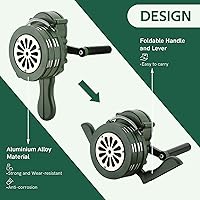
Specifications

  • Model Number: The unit is identified by model number MY-0289, manufactured by MYFULLY.
  • Material: The body and primary structural components are constructed from aluminium alloy for corrosion resistance and long-term durability.
  • Sound Output: Rated at 110±2 dB measured at 1 meter under optimal cranking conditions.
  • Audio Frequency: The siren tone operates at approximately 550±20 Hz, a mid-range frequency effective at cutting through ambient outdoor noise.
  • Transmission Range: Sound carries up to 1,000 meters in open, unobstructed outdoor conditions.
  • Power Source: Entirely manual — no batteries, electrical power, or charging of any kind are required.
  • Drive Mechanism: A gear-based step-acceleration system progressively increases sound output as crank rotation speed increases.
  • Handle Design: The crank handle is foldable, reducing the overall footprint for compact storage and transport.
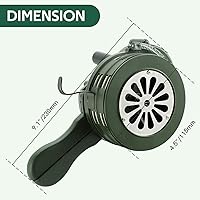
  • Dimensions: The unit measures 8″ in length, 4.5″ in width, and 9.1″ in height when unfolded for use.
  • Weight: The complete unit weighs 2.62 pounds, reflecting the all-metal aluminium alloy construction.
  • Color: Available in green as the standard color option.
  • Included Accessories: Each unit ships with one waist carry pack for hands-free portability in the field.
  • Package Contents: One hand crank siren unit plus the included waist pack; no additional components are included.
  • Batteries Required: No batteries are included or required at any point during operation or storage.
  • Control Method: Operation is controlled entirely by manual hand cranking — there are no electronic controls, switches, or buttons.
  • Availability Date: This product was first made available for purchase in October 2021.
  • Certifications: No formal IP water-resistance rating or third-party safety certification is stated by the manufacturer.
  • Maintenance: No lubrication schedule or formal maintenance procedure is specified in the product documentation.

Related Reviews
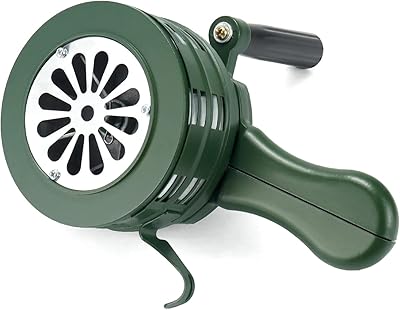
QWORK Hand Crank Siren Horn
79%
88%
Sound Output
83%
Build Quality
91%
Ease of Use
86%
Portability
79%
Volume Control
More
Vixen Horns VXS-1000P Hand Crank Siren
78%
83%
Sound Output & Range
88%
Ease of Use
62%
Build Quality
91%
Portability & Form Factor
77%
Volume Control & Adjustability
More
Rckskaya Condor 1 Emergency Hand Crank Radio
73%
88%
Power Source Versatility
72%
NOAA Weather Reception
83%
Flashlight Performance
67%
Phone Charging Capability
79%
SOS Alarm & Signaling
More
Pristar Hand Crank 10000mAh Emergency Weather Radio
71%
83%
Value for Money
76%
Build Quality
52%
Hand Crank Performance
78%
NOAA Reception
47%
Solar Charging
More
Esky 10000mAh Emergency Hand Crank Radio
73%
91%
Value for Money
84%
Radio Reception
72%
Battery Performance
47%
Hand Crank Charging
53%
Solar Panel Efficiency
More
Givoust MD-107R Hand Crank Emergency Weather Radio
75%
83%
NOAA Reception Quality
78%
Battery Life
81%
Charging Versatility
57%
Hand Crank Efficiency
66%
Build Quality & Durability
More
GIDEZH H27 30000mAh Emergency Weather Radio
75%
82%
Battery Capacity
86%
NOAA Reception Quality
78%
Charging Versatility
88%
All-in-One Convenience
74%
Flashlight Performance
More
Eton Quest All-Band Emergency Weather Radio
77%
88%
Battery Life
91%
NOAA Weather Alerts
83%
Multi-Source Charging
86%
AM/FM Reception
57%
Shortwave Reception
More
Tenergy T101 Emergency Hand Crank Weather Radio
79%
92%
Power Source Versatility
88%
NOAA Weather Alert Reception
84%
Hand Crank Charging
83%
LED Flashlight Performance
67%
USB Phone Charging
More
ZZMICHP 16000mAh Hand Crank Emergency Weather Radio
85%
92%
Battery Life & Power
87%
Ease of Use
68%
Portability & Size
85%
Durability & Build Quality
90%
Radio Performance
More

FAQ

No, not at all. The manual alarm is entirely mechanical — you supply the power by cranking the handle. There is nothing to charge, no batteries to buy or replace, and no power outlet required. That is the core reason many emergency preparedness buyers choose it over electronic alternatives.

At full cranking speed it genuinely hits around 110dB at close range, which is comparable to a chainsaw — very loud. The catch is that reaching and sustaining that volume requires firm, consistent rotation. For older adults with wrist issues or children under about ten, getting to peak output may be difficult. It works, but it is not effortless.

There is no official IP rating or waterproofing certification stated by the manufacturer, so you should not treat it as waterproof. Light rain exposure is unlikely to cause immediate damage given the aluminium body, but submerging it or using it in heavy downpours repeatedly is not recommended. Store it dry when not in use.

In a wide open field or rural area, the range approaches the 1,000-meter specification reasonably well. In a suburban neighborhood with buildings, parked cars, and traffic, expect the effective range to drop significantly — realistically two to four blocks of clear audibility. It is still very loud by any measure, just not open-field loud in dense environments.

Yes, and it works well for that purpose. Coaches and referees who do not want to deal with recharging an electronic horn or buying replacement compressed-air canisters find this emergency horn a practical sideline tool. Just be aware that it takes a half-second or so to ramp up to full volume, so instant-blast signaling is not its strong suit.

It wavers somewhat with crank speed, which is by design rather than a defect. Crank faster and the pitch and volume rise; slow down and they drop. With a little practice most users develop a steady rhythm that produces a consistent, authoritative tone. Think of it less like a button and more like an instrument that responds to your input.

The waist pack functions well enough for light, occasional carry, but the fabric and buckle quality are noticeably below the standard set by the aluminium unit itself. It is useful for keeping the alarm accessible during an outdoor event or emergency drill, but several buyers have reported strap wear over time. Treat it as a convenient bonus rather than a serious long-term carry solution.

Aluminium alloy is naturally corrosion-resistant, so surface rust is not a real concern even in humid storage environments. Long-term owners report the unit remains functional after years of garage or shed storage with no special treatment. The main risk over very long storage is dust in the gear mechanism, which a quick wipe-down and test crank every year or so will address.

The main advantage this hand crank siren holds over a compressed-air horn is longevity — an air horn canister eventually runs dry and must be replaced, while this manual alarm works indefinitely with no consumables. The air horn wins on instant loudness with zero effort, though. For a go-bag or long-term emergency kit, the manual alarm is arguably the smarter investment; for casual one-off use, an air horn is simpler.

The manufacturer does not specify a maintenance schedule, and most long-term users report no issues without any lubrication. If the crank starts to feel stiff after years of use, a small amount of light machine oil on the gear assembly would likely help. Otherwise, a periodic test crank every few months to confirm it is working smoothly is all that most buyers bother with.