
Overview

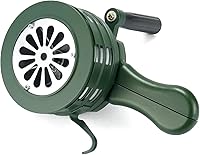
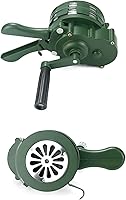
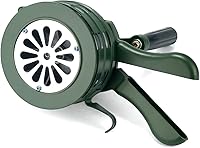
The QWORK Hand Crank Siren Horn is a no-nonsense emergency alarm built for situations where power simply isn't available. Made from aluminum alloy with an anti-rust coating, it feels solid without being heavy — just over 2 lbs, which matters when you're stocking a go-bag or mounting it in a facility. The green finish gives it a distinctly utilitarian look, and nothing about the build feels cheap. What sets this manual alarm horn apart is the crank-speed volume control: turn faster, get louder. It sits at a mid-range price for something that genuinely requires no batteries, no wiring, and no setup.

Features & Benefits

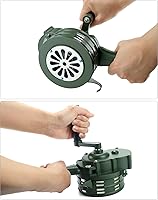
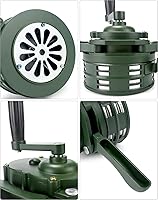
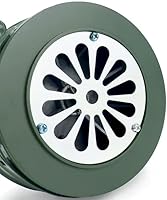
At 110 decibels, this crank-powered siren is genuinely loud — the kind of sound that cuts through ambient noise in a busy warehouse or open field. The hand-crank mechanism is the star here: no power source needed, ever. A trigger on the body opens internal vanes, which helps focus and project the sound — a detail you wouldn't expect at this price. The aluminum body handles moisture and corrosion well, so leaving it in a shed or emergency kit isn't a concern. Crank faster and volume climbs almost immediately, giving you real-time control over how much attention you need to draw.

Best For

This hand-crank siren makes the most sense for anyone building a no-power emergency kit — whether that's at home, a school, or a remote job site. Industrial environments are a natural fit: factories, oil depots, and warehouses often need off-grid alert options, and this fills that role without any ongoing maintenance costs. Disaster relief and flood control teams find real value here too, since reliable power can vanish fast in crisis conditions. Outdoor workers and hikers can carry it as a distress signal, and event safety marshals can use it for quick, clear crowd alerts without needing to shout.

User Feedback

Buyers who pick up the manual alarm horn generally come away impressed by how loud it actually is — most weren't expecting that kind of output from a hand-powered device. The build quality earns consistent praise, with the metal body feeling far sturdier than the price might suggest. That said, some users note that crank fatigue sets in quickly if you need to run it for more than a minute or two — it's not designed for sustained operation. A few buyers also flagged that the claimed range assumes quiet, open conditions. Overall, the feedback leans positive, especially for occasional emergency use.

Pros

  • No batteries or power source ever needed — completely self-sufficient in any emergency scenario.
  • Aluminum alloy construction feels genuinely solid and resists rust after months of outdoor storage.
  • 110 decibels is legitimately loud; it cuts through ambient noise in open industrial settings.
  • Zero setup required — operational immediately, straight out of the box.
  • Crank-speed volume control gives real-time flexibility without buttons or settings to manage.
  • At just over 2 lbs, this crank-powered siren fits easily into a go-bag or truck emergency kit.
  • The trigger-activated vane lets you direct sound toward a specific area rather than broadcasting blindly.
  • Versatile enough to serve factories, schools, campgrounds, and home emergency kits alike.
  • No recurring costs — no batteries to replace, no charging infrastructure to maintain.
  • Ranked among the top options in its category, reflecting consistent buyer satisfaction over time.

Cons

  • Sustained cranking beyond 60 to 90 seconds causes significant arm fatigue for most adults.
  • The crank handle joint can develop looseness over time with repeated aggressive use.
  • No IP rating is provided, so true waterproofing in heavy rain or submersion is unverified.
  • The 0.62-mile range claim only holds in quiet, open, flat conditions — real-world range is often much shorter.
  • No lanyard loop, mounting hole, or carry case is included, making secure attachment or storage awkward.
  • The smooth exterior provides minimal grip during fast cranking, especially with sweaty or gloved hands.
  • Left-handed users may find the ergonomics slightly awkward under high-stress conditions.
  • The bright green color and bulky form factor make it impractical for any discreet alert scenario.
  • Internal plastic components near the vane mechanism feel noticeably less robust than the metal body.
  • No replacement parts or clear warranty terms are readily available if the crank mechanism fails.

Ratings

The QWORK Hand Crank Siren Horn has been evaluated by our AI rating system after processing verified buyer reviews from across the globe, with spam, bot activity, and incentivized feedback actively filtered out. The scores below reflect an honest cross-section of real-world experiences — from emergency prep enthusiasts to industrial safety teams — capturing both what this crank-powered siren does well and where it leaves some users wanting more. Strengths and frustrations are weighted equally so you can make a genuinely informed call.

Sound Output
88%
Most users were caught off guard by just how loud this manual alarm horn gets when you put some speed into the crank. In open outdoor settings, it cuts through ambient noise convincingly, and several buyers tested it specifically against sirens in their industrial facilities with solid results.
A handful of users noted that sustaining peak volume requires consistent, fast cranking — slow down even slightly and the decibel level drops noticeably. In enclosed or echo-heavy spaces, the sound can also feel harsh rather than directional.
Build Quality
83%
The aluminum alloy housing genuinely feels like it was built with rough handling in mind. Users who stored it in outdoor sheds, truck beds, or emergency kits over multiple seasons reported no meaningful rust or degradation, which is a real confidence booster for long-term storage.
Some buyers found the crank handle connection point to be the weak link — after repeated aggressive use, a few reported minor loosening at the joint. The internal plastic components visible near the vane mechanism also felt less premium than the metal exterior suggests.
Ease of Use
91%
There is essentially zero learning curve here. You pick it up, point it, and crank. Users who handed it to children during drills or to older adults in a facility setting reported no confusion whatsoever, which speaks to how intuitive the trigger-and-crank setup really is.
Left-handed users occasionally flagged the ergonomics as slightly awkward depending on how you grip the body. There are no ambidextrous accommodations, which is a minor but real friction point in high-stress moments.
Portability
86%
At just over 2 lbs with a compact cube-like footprint, this crank-powered siren fits comfortably in a backpack side pocket or emergency go-bag without adding meaningful bulk. Hikers and field workers specifically praised how little space it demands relative to what it delivers.
The shape, while compact, is not the easiest thing to clip or attach to a belt or vest. A few users wanted a mounting hole or lanyard loop built into the body — something missing from the current design.
Volume Control
79%
21%
The variable-volume mechanic — tied directly to crank speed — is more intuitive than it sounds. Users who needed a lower-volume alert indoors versus a full-blast outdoor alarm appreciated having that spectrum available without any switches or settings to fumble with.
The control is entirely manual and physically demanding, meaning you cannot hold a steady mid-volume output for long without your arm tiring. There is no lock or setting to maintain a consistent level hands-free, which limits its use in scenarios requiring prolonged alerting.
Crank Endurance
61%
39%
For short bursts — 15 to 30 seconds of hard cranking — the mechanism holds up well and the handle grip provides enough purchase to generate real speed quickly. Users who used it in brief emergency drills found it perfectly adequate for the task.
Extended use is where the design shows its limits. After a minute or two of continuous cranking, arm fatigue sets in fast, and multiple users noted soreness after sustained testing. This is not a siren you can run continuously for several minutes without relay cranking or rest.
Weatherproofing
77%
23%
The anti-rust exterior coating held up well for users who left the manual alarm horn in outdoor tool sheds or mounted in semi-exposed facility areas. Light rain and humidity did not appear to affect performance based on several months of reported use.
There is no official IP rating provided, and buyers who exposed it to heavy rain or direct submersion reported concern about the internal mechanism. Calling it waterproof in a rigorous sense is a stretch — water-resistant in practical conditions is closer to accurate.
Value for Money
82%
18%
For a battery-free, metal-bodied alarm that actually hits meaningful decibel levels, the mid-range price feels fair to most buyers. Users who compared it to cheaper plastic alternatives said the build alone justified paying a bit more.
A small segment of buyers felt the crank durability issues and ergonomic shortcomings were hard to overlook at this price tier. If the handle mechanism needed to be the strongest component, it should have been engineered as such from the start.
Setup & Readiness
94%
Straight out of the box, no assembly, no batteries, no app — it just works. Emergency preparedness buyers loved this aspect specifically, noting that a device sitting in a kit for months needs to be immediately operational when grabbed in a crisis.
There is no carry case or storage bag included, which means the unit rattles loose in kits and bags. A basic protective sleeve would go a long way toward keeping the vane mechanism free of debris during storage.
Noise Range Accuracy
63%
37%
In genuinely open, quiet environments — a flat field, a quiet industrial yard — buyers confirmed the sound travels impressively far. Several users doing outdoor drills said it was audible well beyond what they expected from a hand-powered device.
The 0.62-mile range claim falls apart quickly in real-world conditions with wind, ambient noise, or any physical obstructions. Urban users and those in forested areas found the effective range to be significantly shorter, leading to some disappointment relative to expectations.
Grip & Ergonomics
68%
32%
The body has enough surface area to hold securely with one hand while cranking with the other, and the trigger placement is accessible without awkward finger positioning. For most right-handed users, the form factor works without complaint.
Users with smaller hands or reduced grip strength found the device harder to stabilize during fast cranking. The smooth exterior offers little tactile grip, and a rubberized patch or contoured handle would meaningfully improve control under stress.
Durability Over Time
74%
26%
The aluminum body shows minimal wear even after months of storage and periodic use. Users who checked on units after a year in an emergency kit reported the exterior looking close to new, which is a genuine plus for infrequently used safety tools.
Long-term crank durability is the main unknown. Users who tested it heavily over several months noticed the handle joint developing play, and without a clear warranty or replacement parts available, the long-term reliability picture is somewhat uncertain.
Directional Sound Control
72%
28%
The trigger-activated vane system is a genuinely useful feature that most users did not expect. Being able to open or close the vanes to direct sound toward a specific area — rather than broadcasting in all directions — was appreciated in factory floor settings.
The vane mechanism feels somewhat fragile compared to the rest of the build, and a few users avoided using the trigger repeatedly for fear of damaging it. The directional effect is also subtle enough that in open air, most users could not distinguish a significant difference.
Use Case Versatility
85%
From school emergency drills to warehouse safety protocols to backcountry distress signaling, this crank-powered siren adapts to a surprising range of scenarios. Users across very different environments — industrial, educational, recreational — all found plausible applications for it.
It is not subtle. There is no low-profile mode, and the bright green color combined with the alarm output makes this unsuitable for any situation requiring discretion. It is built exclusively for situations where you want maximum attention, fast.

Suitable for:

The QWORK Hand Crank Siren Horn was built for people who need a loud, reliable alert system that works regardless of whether power is available — and that is a more common requirement than most buyers initially realize. Emergency preparedness households will find it a natural fit: it sits in a kit for months, gets grabbed in a crisis, and works instantly without charging or battery checks. Industrial facilities — factories, oil depots, warehouses — are another strong match, particularly for sites where electrical alarm systems are either unavailable, unreliable, or simply overkill for a secondary alert role. Disaster relief volunteers and flood response teams who operate in infrastructure-compromised environments will genuinely appreciate having something this self-sufficient in their gear. Outdoor workers, remote hikers, and backcountry campers who want an audible distress signal that weighs under 2.5 lbs and never needs replacing also get real utility here. School safety coordinators and event marshals who run periodic drills or need crowd-control alerts without a PA system will find it practical and easy to hand off to untrained staff.

Not suitable for:

The QWORK Hand Crank Siren Horn is not the right call for anyone who needs an alarm they can sustain for more than a minute or two at a time — crank fatigue is a real physical constraint, not a design flaw that gets better with practice. If your use case demands continuous or automated alerting, a battery-powered or wired electronic siren will serve you far better. Buyers expecting the 0.62-mile range to hold up in cities, forests, or windy conditions are likely to be disappointed — that figure assumes a quiet, flat, open environment, which is rarely the reality. People with limited hand strength, arthritis, or reduced grip will find fast cranking physically difficult, especially under stress. This manual alarm horn is also not discreet — the bright green color and the sound it produces will immediately draw attention from everyone nearby, making it unsuitable for any situation requiring a low-profile alert. Finally, anyone looking for a plug-in or mount-and-forget solution should look elsewhere; this is a grab-and-use tool, not a fixed installation.

Specifications

  • Brand: Manufactured by QWORK under model number WD10167.
  • Material: The body is constructed from aluminum alloy with an anti-rust exterior coating for long-term corrosion resistance.
  • Weight: The unit weighs 2.12 lbs, making it manageable for single-handed carrying during emergencies.
  • Dimensions: Packaged dimensions measure 6.85 x 6.69 x 6.65 inches, giving it a compact, roughly cube-shaped footprint.
  • Color: Available in green, which provides visual identification in outdoor and industrial environments.
  • Noise Level: Maximum output reaches 110 decibels when the crank is turned at full speed.
  • Sound Range: Under optimal open-air conditions, sound projection can reach approximately 0.62 miles.
  • Power Source: Entirely manual — powered by hand cranking with no batteries, charging, or electrical connection required.
  • Volume Control: Output volume is adjusted in real time by varying crank rotation speed; faster cranking produces louder sound.
  • Vane Mechanism: A trigger-activated vane system opens to project sound directionally, allowing the user to focus alarm output toward a specific area.
  • Installation: No installation is required; the unit is fully operational directly out of the box.
  • Battery Requirement: No batteries are needed or included; the device is fully self-powered through manual operation.
  • Weather Resistance: The anti-rust coating and aluminum alloy construction provide resistance to moisture and corrosion in outdoor conditions, though no official IP rating is stated.
  • Use Environments: Designed for use in factories, warehouses, schools, homes, oil depots, and disaster relief or flood control scenarios.
  • Availability: First listed for sale in January 2023 and currently ranked #35 in the Security Horns and Sirens category on Amazon.
  • UPC: Product UPC is 795973596345, corresponding to QWORK model WD10167.

Related Reviews
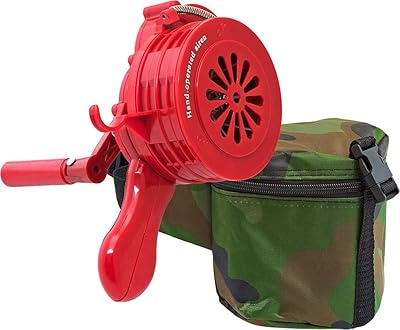
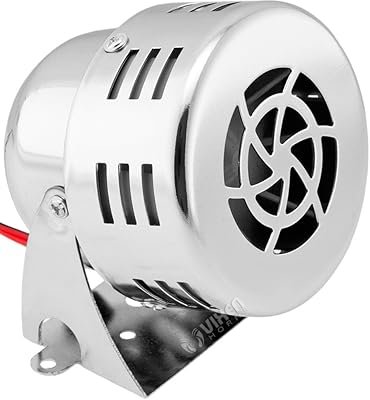
Vixen Horns VXS-1000P Hand Crank Siren
78%
83%
Sound Output & Range
88%
Ease of Use
62%
Build Quality
91%
Portability & Form Factor
77%
Volume Control & Adjustability
More
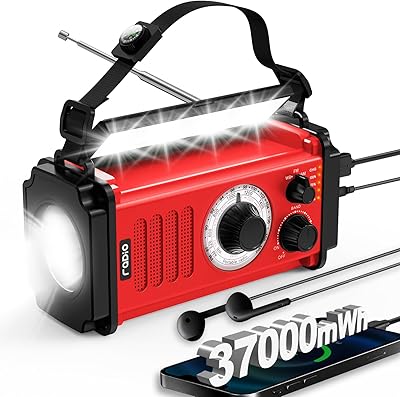
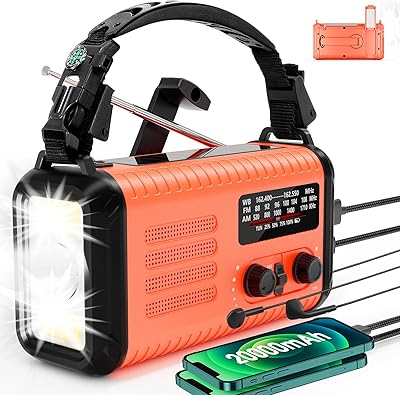
Rckskaya Condor 1 Emergency Hand Crank Radio
73%
88%
Power Source Versatility
72%
NOAA Weather Reception
83%
Flashlight Performance
67%
Phone Charging Capability
79%
SOS Alarm & Signaling
More
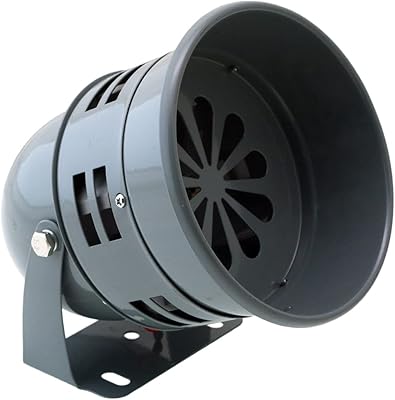
Vixen Horns VXS4006 Electric Air Raid Siren
74%
88%
Sound Output & Volume
81%
Build Quality & Housing
91%
Ease of Installation
67%
Range & Coverage
73%
Tone & Sound Character
More
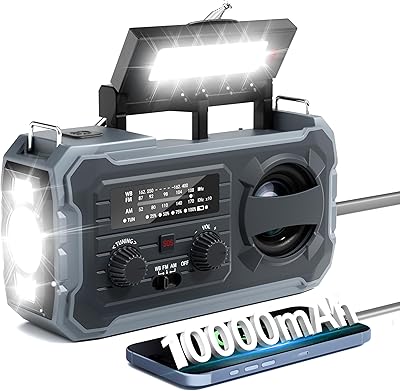
Pristar Hand Crank 10000mAh Emergency Weather Radio
71%
83%
Value for Money
76%
Build Quality
52%
Hand Crank Performance
78%
NOAA Reception
47%
Solar Charging
More
Givoust MD-107R Hand Crank Emergency Weather Radio
75%
83%
NOAA Reception Quality
78%
Battery Life
81%
Charging Versatility
57%
Hand Crank Efficiency
66%
Build Quality & Durability
More
Vixen Horns VXS-9060C Electric Siren
86%
91%
Loudness and Range
88%
Build Quality and Durability
85%
Ease of Installation
92%
Value for Money
89%
Compactness and Design
More
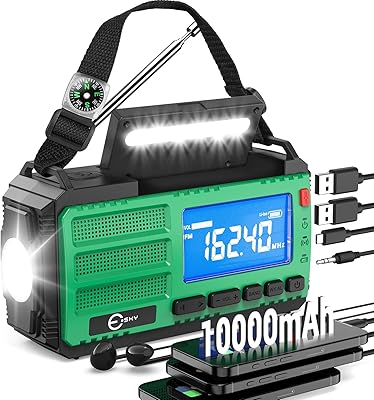
Esky 10000mAh Emergency Hand Crank Radio
84%
89%
Battery Life
94%
Power Options Flexibility
76%
Portability & Weight
85%
Build Quality
91%
SOS Alarm & Emergency Features
More
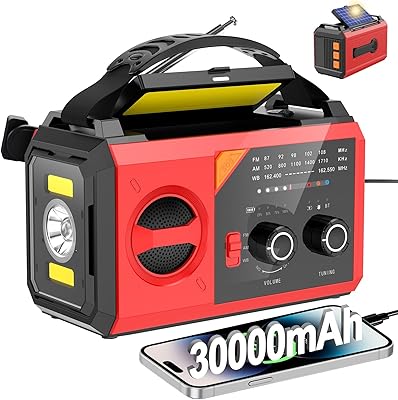
GIDEZH H27 30000mAh Emergency Weather Radio
75%
82%
Battery Capacity
86%
NOAA Reception Quality
78%
Charging Versatility
88%
All-in-One Convenience
74%
Flashlight Performance
More
Eton Odyssey All-Band Emergency Weather Radio
68%
83%
NOAA Reception Quality
79%
AM/FM Reception
54%
Shortwave Performance
41%
Hand Crank Charging
38%
Solar Panel Effectiveness
More
Vixen Horns VXS-1450AR Industrial Air Raid Siren
79%
93%
Sound Output & Loudness
88%
Build Quality & Materials
84%
Installation Ease
61%
Duty Cycle & Continuous Operation
67%
Value for Money
More

FAQ

Not at all — that is one of its most practical qualities. The entire device runs on manual power from the hand crank, so there is nothing to charge, replace, or run out of at the wrong moment. If you can turn the handle, it will make noise.

To put it in perspective, 110 decibels is roughly equivalent to a power saw or a live rock concert heard up close. It is genuinely loud enough to cause discomfort if you are standing next to it, and it will carry well across a parking lot, open field, or factory floor. Expect people nearby to stop and pay attention.

Under ideal conditions — think a quiet, flat, open field with no wind — that range is plausible. In practice, most real-world environments have enough ambient noise, wind, and physical obstructions to reduce that effective range considerably. Treat the 0.62-mile figure as a best-case ceiling rather than a typical result.

Most adults find that about 60 to 90 seconds of fast, continuous cranking is where arm fatigue starts to kick in. For short emergency bursts, that is more than enough. If you need a prolonged alert, plan for relay cranking or brief rest intervals — this is not a device designed for sustained, uninterrupted operation.

The aluminum body and anti-rust coating handle light moisture and humidity well, and users who have stored it in outdoor sheds or truck beds report no issues over time. That said, there is no stated IP waterproof rating, so I would not deliberately submerge it or leave it exposed to heavy rain without some protection.

A child with enough hand strength to crank quickly can technically use it, but generating serious volume requires real speed and sustained effort. For elderly users or anyone with reduced grip strength or joint issues, operating it at full output may be uncomfortable or difficult. It is best used by an adult with reasonable hand and arm strength.

Volume is directly tied to how fast you crank the handle — slow rotation produces a softer output, faster cranking ramps up the decibel level. This gives you practical control without any buttons or settings. It is a simple and intuitive system that most users figure out within seconds.

The trigger opens internal vanes inside the horn, which helps focus and project the sound in a more directional way. It is a useful feature if you want to aim the alarm toward a specific location rather than letting it radiate in all directions. Some users skip this step during quick grabs, but it does make a noticeable difference in focused alerting situations.

It is well-suited for exactly that role. The aluminum body does not corrode easily, there are no batteries to die or leak, and no electronic components to fail from sitting idle. Users who have checked on units after a year or more in storage kits report them working as expected when picked up. Just give the crank mechanism a test periodically to make sure nothing has seized.

No accessories are included in the box — just the manual alarm horn itself. There is no carry pouch, protective case, lanyard loop, or mounting bracket provided. If you want to secure it to a wall, vehicle, or bag, you will need to source your own solution, as the body does not have pre-drilled holes or attachment points built in.