Overview

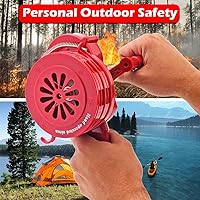
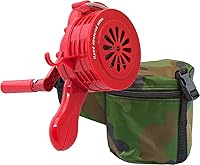
The Vixen Horns VXS-1000P Hand Crank Siren is a manual emergency signaling tool built for situations where batteries and power outlets simply aren't an option. Crank the handle and it pushes out 110 decibels of that instantly familiar air-raid wail, audible up to a quarter mile away under decent conditions — though wind, terrain, and ambient noise will all chip away at that range in practice. Vixen chose plastic over metal here deliberately, keeping weight down to 1.74 lbs at the cost of some robustness. It sits at a mid-range price point, competing with basic electric horns while undercutting the brand's own heavier metal variant.
Features & Benefits

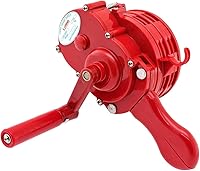
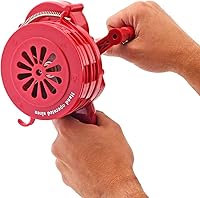
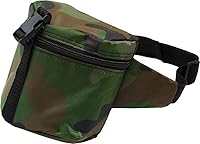
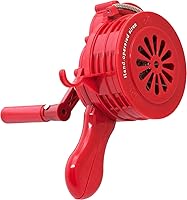
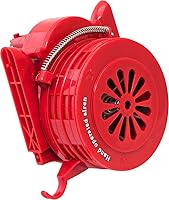
The handle and sound-adjusting lever both fold flat, letting this manual emergency siren tuck into the included waist pouch without much fuss — useful if you're already loaded down with gear on a trail. That sound-adjusting lever is a genuinely practical touch: you're not locked into full volume, which matters in situations where you want to signal without causing panic nearby. The plastic housing has metal reinforcement at stress points, so it doesn't feel purely cheap in hand. And because it runs entirely on human effort, there's no battery to die at the wrong moment. For off-grid reliability, that's a real, concrete advantage worth considering.

Best For

This hand crank siren makes the most sense for campers, hikers, and boaters who want a no-battery backup signal they can stuff in a bag and forget about until it's needed. It's also a reasonable fit for schools, community organizations, or rural camps that need a low-tech alert system when power goes out. Coaches and event organizers who just need something loud and reusable will find it works fine for that too. Buyers who are comparing this to the metal version should know upfront: if you plan to use it frequently or roughly, the plastic build may not hold up as well over time.

User Feedback

Across roughly 113 ratings, this manual emergency siren lands at 4.1 stars — a solid but not emphatic result that suggests most buyers are satisfied without being blown away. The most consistent praise centers on ease of cranking and the genuinely surprising loudness when you first use it in an open space. Durability is the main friction point: a portion of buyers flag concerns about the plastic housing after extended or rough use, and a few mention the metal variant as the smarter long-term buy. The waist pouch gets mixed reactions — handy for storage, but not everyone finds it practical to actually wear. Out-of-box quality appears consistent, with few reports of shipping damage.

Pros

  • Operates entirely without batteries or electricity — no dead cells when you actually need it most.
  • The air-raid wail is universally recognized, triggering faster responses than whistles or generic horns.
  • At under 1.75 lbs, this hand crank siren barely registers in a hiking pack or emergency kit.
  • Folds into a compact footprint that fits glove compartments, emergency bins, and side pockets.
  • The sound-adjusting lever lets you moderate volume, a feature most competing manual sirens skip entirely.
  • Easy enough to crank that children and older adults can operate it without assistance.
  • 110 decibels at the source is genuinely startling — effective for scaring wildlife or alerting nearby rescuers.
  • Included waist pouch provides practical storage and protects the unit from unfolding in transit.
  • No firmware, no charging port, no moving electronic parts — mechanically simple and hard to break through neglect.

Cons

  • Plastic housing shows stress and cracking under frequent or rough use faster than expected at this price.
  • Quarter-mile range claim is optimistic; wind, trees, and background noise cut effective distance significantly.
  • Sustained cranking causes arm fatigue quickly, which is a real problem in prolonged emergency scenarios.
  • The waist pouch attachment is basic and most users end up using it only as a storage sleeve.
  • Crank mechanism can stiffen after storage in cold or damp conditions without periodic maintenance.
  • Quality control appears inconsistent — some units arrive with cosmetic scuffs or handle play out of the box.
  • No locking mechanism on the folded position means the handle can spring open unexpectedly inside a bag.
  • Buyers comparing models often conclude the price gap to the metal version is smaller than expected, making the value case harder to justify for anything beyond light, infrequent use.

Ratings

The scores below reflect AI-driven analysis of verified global buyer reviews for the Vixen Horns VXS-1000P Hand Crank Siren, with spam, bot-submitted, and incentivized feedback actively filtered out before scoring. Ratings are calibrated to reflect real-world performance across a range of use cases — from trail emergencies to community alert systems — not just first-impression reactions. Both the genuine strengths and the recurring frustrations buyers report are transparently baked into every score you see here.

Sound Output & Range
83%
Most buyers are genuinely caught off guard by how loud this siren is the first time they crank it in an open field. The air-raid tone carries well across distance in calm conditions, and the near-universal recognition of that sound adds real practical value in emergency signaling situations.
At 110 decibels measured at the source, real-world range drops noticeably in windy or heavily wooded terrain. Several users note the quarter-mile claim feels optimistic in anything other than flat, open conditions, which matters if you're relying on it in dense forests or coastal environments.
Ease of Use
88%
Cranking this siren takes very little effort, even for younger users or those with limited hand strength. Multiple reviewers mention being able to hand it to a child or elderly family member without hesitation, which speaks to how intuitive the mechanism is right out of the box.
Extended cranking — say, signaling repeatedly over several minutes — does cause arm fatigue, which is worth acknowledging for anyone expecting hands-free or sustained operation. The crank action is smooth initially but a small number of users report it stiffening after prolonged storage in cold or damp conditions.
Build Quality
62%
38%
The reinforced plastic construction feels more substantial than pure budget-tier sirens, and the metal stress points at the handle joints give it a sturdier feel than the price might suggest. For occasional or emergency-only use, the build holds up adequately and inspires reasonable confidence.
This is the most divisive aspect of the product. Buyers who use it frequently — coaches, camp directors, event organizers — flag cracking or handle loosening after repeated sessions. The plastic body also draws direct unfavorable comparisons to the brand's metal variant, and for heavy-use scenarios, those concerns are well-founded.
Portability & Form Factor
91%
Folded down, this manual emergency siren fits into a surprisingly compact footprint, and at under 1.75 lbs it barely registers in a hiking pack or emergency kit bag. The folding handle and lever mechanism works smoothly and the overall silhouette once folded is genuinely backpack-friendly.
A handful of buyers find the folded dimensions still a touch bulky compared to compact personal alarms or air horns. The shape, even folded, is irregular enough that it doesn't sit neatly in standard side pockets, which can be mildly inconvenient when packing efficiently.
Volume Control & Adjustability
77%
23%
The dedicated sound-adjusting lever is a feature most buyers don't expect and genuinely appreciate once they discover it. Being able to dial back the volume — rather than relying entirely on crank speed — gives users meaningful control in situations where a full blast would be counterproductive.
The lever adjustment range is somewhat limited; it doesn't produce a truly quiet setting, only a relatively quieter one. Users hoping for fine-grained volume stepping will find the adjustment more binary than graduated, which reduces its precision in context-sensitive signaling situations.
Waist Pouch Utility
54%
46%
The included pouch does serve a real storage function — it keeps the siren protected in a bag and prevents the handle from unfolding during transport. For buyers who clip it to a pack or keep it in a vehicle emergency kit, the pouch adds a layer of organizational convenience.
Wearing the pouch on your waist as intended feels cumbersome to most adult users, and the belt attachment mechanism is basic at best. A meaningful portion of buyers treat the pouch as a storage sleeve rather than a carry solution, which suggests Vixen could meaningfully improve the accessory without touching the siren itself.
Value for Money
71%
29%
For buyers who need a reliable, no-power-required emergency signaling tool without committing to the cost of the metal version, this hand crank siren hits a reasonable middle ground. It delivers on its core function — making a very loud noise when you need it — which is ultimately the only job it has to do.
At its price point, the plastic construction starts to feel like a harder sell when the metal variant isn't dramatically more expensive. Buyers who do the math and compare the two versions often conclude the premium for metal is worth it, making this model's value proposition dependent heavily on weight and portability being a priority.
Reliability Without Power
93%
This is where the manual design genuinely outperforms electronic alternatives. There are no batteries to corrode, no charging ports to fail, and no firmware to glitch — crank it and it works, period. For emergency kits, disaster preparedness bags, and off-grid camps, that unconditional reliability is hard to put a price on.
The trade-off is that sustained, loud output requires continuous physical effort, which could be a real limitation for someone signaling during or after a physical emergency. If the user is injured or exhausted, the manual-only design becomes a constraint rather than an asset.
Noise Recognizability
89%
The classic air-raid wail this siren produces is one of the most deeply conditioned alert sounds in human experience. In an actual emergency, that familiarity triggers an immediate response in bystanders, which is a concrete advantage over novelty horns or whistles that can be confused with ambient noise.
In highly urban environments with heavy background noise — construction, traffic, crowds — even 110 decibels of siren tone can get partially masked. This isn't a flaw specific to this model but a real-world limitation buyers in city settings should weigh honestly.
Out-of-Box Experience
79%
21%
Most buyers report the siren arrives well-packaged and functional immediately, with no assembly learning curve. The unit feels ready to use, and the inclusion of the pouch adds a sense of completeness to the unboxing that slightly exceeds expectations for the category.
A small but notable cluster of reviews mentions cosmetic scuffs or minor play in the handle joint straight from the box. These appear to be quality-control inconsistencies rather than a systemic defect, but it does introduce some lottery-like uncertainty around first impressions.
Suitability for Youth & Group Use
81%
19%
The low cranking resistance and lightweight build make this one of the more accessible handheld sirens for youth groups, summer camps, and school safety drills. Group leaders consistently note that kids can operate it without supervision concerns, which broadens its practical use cases.
The plastic body does invite rougher handling from younger users, which accelerates the durability concerns noted elsewhere. If deployed in a camp or school setting where multiple children will use it repeatedly, the build quality concerns become more pressing than they would for single-owner emergency kit use.
Compactness for Travel & Packing
86%
Folded to roughly 5.5 inches tall, this siren fits in glove compartments, emergency bins, and backpack main compartments without dominating the space. Hikers and boaters especially appreciate that it doesn't require its own dedicated bag or case to travel safely.
The irregular folded shape means it can shift around inside larger bags, and without the pouch it can unfold unexpectedly. A simple locking mechanism on the folded position would solve this entirely, but as shipped, it requires a bit of mindful packing.
Longevity Under Regular Use
58%
42%
For infrequent or emergency-only deployment — stored in a kit and pulled out a handful of times a year — the siren holds up without notable degradation. Users who treat it as a backup tool rather than a daily-use device tend to report no durability issues over extended ownership periods.
Regular or repetitive use accelerates wear in ways the plastic housing wasn't clearly engineered to handle. Coaches and frequent users report the crank mechanism losing smoothness and the body showing stress marks well before what you'd expect from a metal-bodied equivalent, making longevity a genuine concern for high-frequency use cases.

Suitable for:

The Vixen Horns VXS-1000P Hand Crank Siren is built for anyone who needs a dependable, no-power emergency signal they can throw in a pack and forget about until it matters. Campers, hikers, and boaters are the most natural fit — people who operate in areas where cell service is spotty and batteries can't be trusted to last. It also makes a lot of sense for schools, community emergency plans, and rural camps that need a low-tech alert system capable of functioning during a power outage without any setup or charging. Parents leading youth outdoor groups will appreciate how light and intuitive it is, since even younger kids can operate it without instruction. If you just need something genuinely loud that works every single time you pick it up, this manual emergency siren delivers on that core promise reliably.
Not suitable for:

Buyers who plan to use a siren regularly and repeatedly — coaches running daily drills, event staff managing large crowds on a schedule — should think carefully before choosing the Vixen Horns VXS-1000P Hand Crank Siren over the brand's metal alternative. The plastic housing, while reinforced at key stress points, does show wear under frequent, sustained use in ways the heavier metal variant simply doesn't. Anyone expecting the full quarter-mile sound range in dense woods, coastal wind, or urban noise environments will likely find real-world performance falls short of that figure. This manual emergency siren also isn't the right tool for situations requiring one-handed operation or sustained signaling by someone who may be physically compromised, since it demands continuous cranking effort to produce sound. If weight is not a priority and longevity matters more than price, stepping up to the metal model is the more honest recommendation.
Specifications

  • Model: This siren is manufactured by Vixen Horns under the model designation VXS-1000P, identifying it as the portable plastic variant in the VXS-1000 product line.
  • Sound Output: The siren produces a maximum of 110 decibels at the source, measured under controlled conditions.
  • Maximum Range: Vixen rates the effective sound range at up to 0.25 miles (approximately 400 meters) in open, low-interference environments.
  • Power Source: Entirely human-powered via a manual hand crank mechanism — no batteries, electricity, or charging of any kind required.
  • Weight: The unit weighs 1.74 lbs (approximately 0.79 kg), making it one of the lighter options in the handheld emergency siren category.
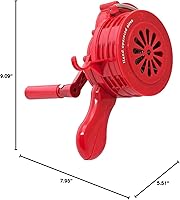
  • Active Dimensions: When fully deployed for use, the siren measures 9.09″ H x 5.51″ W x 7.95″ D.
  • Folded Dimensions: With the handle and lever folded for storage, the unit compacts to approximately 5.5″ H x 5.8″ W x 5″ D.
  • Construction: The housing is built from impact-resistant plastic with additional metal reinforcement at key structural stress points, including the handle joints.
  • Handle Design: Both the crank handle and the sound-adjusting lever fold flat against the body, enabling compact storage without tools or disassembly.
  • Volume Control: A dedicated sound-adjusting lever allows the user to regulate loudness independently of crank rotation speed, offering a degree of output control.
  • Siren Tone: The unit produces the classic air-raid oscillating wail tone, a sound universally associated with emergency alerts and warnings.
  • Color: Available in red, which aids visibility and quick identification in emergency kit environments.
  • Included Accessories: Each unit ships with a waist pouch designed to store the folded siren and allow belt carry when not in active use.
  • Material: Primary construction material is durable ABS-type plastic with metal support components — no rubber seals or weatherproofing membranes are specified.
  • Water Resistance: No IP or weather-resistance rating is officially stated by the manufacturer, so exposure to heavy rain or submersion is not recommended.
  • Noise Level Classification: At 110 decibels, this siren falls in the range that can cause hearing discomfort with prolonged close-range exposure, so caution is advised during extended testing indoors.
  • Manufacturer: Vixen Horns, a brand specializing in vehicle and portable horn and siren products, manufactures and warrants this unit.
  • Amazon Ranking: The product holds a Best Sellers Rank of approximately #660 in Security Horns and Sirens on Amazon, indicating moderate but consistent market presence.

Related Reviews

QWORK Hand Crank Siren Horn
79%
88%
Sound Output
83%
Build Quality
91%
Ease of Use
86%
Portability
79%
Volume Control
More
Vixen Horns VXS-9060C Electric Siren
86%
91%
Loudness and Range
88%
Build Quality and Durability
85%
Ease of Installation
92%
Value for Money
89%
Compactness and Design
More
Vixen Horns VXS-1450AR Industrial Air Raid Siren
79%
93%
Sound Output & Loudness
88%
Build Quality & Materials
84%
Installation Ease
61%
Duty Cycle & Continuous Operation
67%
Value for Money
More
Vixen Horns VXS-1050AR 116dB Air Raid Siren
78%
94%
Sound Output
88%
Range & Coverage
91%
Build Quality
83%
Ease of Installation
58%
Continuous Run Performance
More
Vixen Horns VXS4006 Electric Air Raid Siren
74%
88%
Sound Output & Volume
81%
Build Quality & Housing
91%
Ease of Installation
67%
Range & Coverage
73%
Tone & Sound Character
More
Rckskaya Condor 1 Emergency Hand Crank Radio
73%
88%
Power Source Versatility
72%
NOAA Weather Reception
83%
Flashlight Performance
67%
Phone Charging Capability
79%
SOS Alarm & Signaling
More
Esky 10000mAh Emergency Hand Crank Radio
84%
89%
Battery Life
94%
Power Options Flexibility
76%
Portability & Weight
85%
Build Quality
91%
SOS Alarm & Emergency Features
More
Pristar Hand Crank 10000mAh Emergency Weather Radio
71%
83%
Value for Money
76%
Build Quality
52%
Hand Crank Performance
78%
NOAA Reception
47%
Solar Charging
More
Givoust MD-107R Hand Crank Emergency Weather Radio
75%
83%
NOAA Reception Quality
78%
Battery Life
81%
Charging Versatility
57%
Hand Crank Efficiency
66%
Build Quality & Durability
More
GIDEZH H27 30000mAh Emergency Weather Radio
75%
82%
Battery Capacity
86%
NOAA Reception Quality
78%
Charging Versatility
88%
All-in-One Convenience
74%
Flashlight Performance
More

FAQ

No, not at all. The entire mechanism is driven by the hand crank — you turn the handle and it produces sound purely through mechanical action. There is nothing to charge, no batteries to replace, and no power source of any kind needed. That is genuinely one of its strongest practical selling points for emergency preparedness kits.

At the source it hits 110 decibels, which is legitimately startling in person. The quarter-mile range figure, however, is a best-case number measured in calm, open conditions. In practice — dense woods, coastal wind, or urban background noise — effective range will be noticeably shorter. Think of it as a realistic upper ceiling rather than a guaranteed everyday figure.

That depends entirely on how often you plan to use it. For emergency kits, camping trips, and occasional signaling, the plastic construction holds up fine. If you need it for daily use — coaching, event management, repeated drills — the metal VXS-1000M is the more honest recommendation. The plastic version prioritizes weight and portability; the metal version prioritizes longevity under heavy use.

Yes, the cranking resistance is low enough that children can use it without much difficulty. Multiple buyers specifically mention handing it to younger users during camping trips or safety drills without any issues. Just keep in mind that 110 decibels at close range is genuinely loud, so supervised use near young children's ears is advisable.

It is more useful as a storage sleeve than as a wearable carry solution. Most adults find wearing it on a belt awkward, but as a way to keep the siren protected and folded inside a bag or emergency kit, it does serve a real purpose. Do not buy this siren specifically because of the pouch, but do not dismiss it entirely either.

In most cases, yes. The Vixen Horns VXS-1000P Hand Crank Siren is designed for infrequent emergency use, and the mechanical simplicity works in its favor here — there are no electronics to degrade or batteries to corrode. A small number of users report the crank stiffening slightly after storage in cold or damp conditions, so giving it a test spin every few months is a reasonable habit.
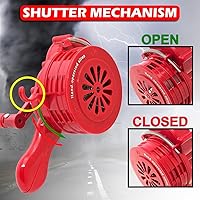
There is actually a dedicated sound-adjusting lever on the unit that lets you reduce the output volume beyond just slowing your crank speed. It does not give you precise step-by-step control, but it does allow for a meaningfully quieter setting when a full 110-decibel blast would be excessive for the situation.

Vixen does not assign any official IP water-resistance rating to this siren, so waterproof is not a claim you should rely on. Light rain during an outdoor emergency is probably fine in practice, but submerging it or leaving it exposed to heavy, sustained rain is not advisable. If wet-weather reliability is critical for your use case, factor that in before buying.

The main advantage this manual siren has over a canister air horn is that it never runs out — you are the power source. Canister horns are louder initially but go silent when the gas is depleted, which can happen faster than expected in cold temperatures. This hand crank siren trades some raw decibel punch for effectively unlimited use, which is a worthwhile trade for most emergency preparedness scenarios.

Unfortunately there is no dedicated locking mechanism to secure the folded position. The handle can unfold if the siren shifts around inside a bag. Using the included pouch helps manage this, but it is a minor design gap worth being aware of if you plan to carry it loose in a pack. Tucking it in snugly or securing it with a small bungee inside a kit bag is a practical workaround most buyers land on.

Where to Buy