Pristar Hand Crank 10000mAh Emergency Weather Radio
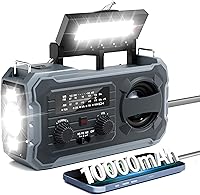
Pristar Hand Crank 10000mAh Emergency Weather Radio — image 1
Pristar Hand Crank 10000mAh Emergency Weather Radio — image 2
Pristar Hand Crank 10000mAh Emergency Weather Radio — image 3
Pristar Hand Crank 10000mAh Emergency Weather Radio — image 4
Pristar Hand Crank 10000mAh Emergency Weather Radio — image 5
Pristar Hand Crank 10000mAh Emergency Weather Radio — image 6
Pristar Hand Crank 10000mAh Emergency Weather Radio — image 7
Pristar Hand Crank 10000mAh Emergency Weather Radio — image 8
Pristar Hand Crank 10000mAh Emergency Weather Radio — image 9
71%
29%

Overview

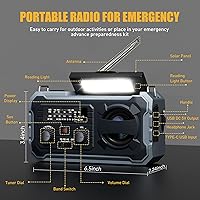
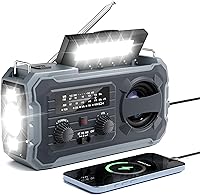
The Pristar Hand Crank 10000mAh Emergency Weather Radio is a compact, multi-function survival radio that Pristar launched in early 2025, clearly aimed at households and outdoor enthusiasts who want solid emergency preparedness without spending a fortune. At 6.5″ x 3.4″ x 2.24″ and just 1.17 lb, it genuinely fits in a go-bag without eating up space. It packs AM/FM/NOAA reception, a sizable battery bank, a solar panel, and a hand crank into one tidy unit that can sit in a drawer for years and still pull its weight when things go sideways. Reaching #34 in Weather Radios on Amazon is a decent early signal for a listing that only debuted in February 2025.

Features & Benefits

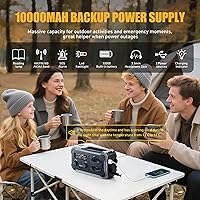
What stands out most about this hand-crank survival radio is the three-way charging system: you can top it up via Type-C USB before an emergency, let it trickle-charge under the sun, or crank it by hand when nothing else is available. That said, be realistic about the hand crank — a few minutes of cranking yields a modest boost, enough for a short radio session but not a full phone charge. The 10000mAh battery is the real workhorse here, capable of charging a modern smartphone twice over. Analog AM/FM/NOAA tuning covers all three bands, though you'll dial stations manually — no digital presets. The LED flashlight with three brightness settings and a headphone jack round out a genuinely practical feature set.

Best For

This multi-function weather radio fits a pretty specific buyer profile. If you're assembling a go-bag or 72-hour emergency kit and don't want to pack a separate radio, flashlight, and power bank, this covers all three in one unit. It also makes sense for campers and hikers who prioritize low weight and consolidated gear. People living in hurricane corridors, tornado alleys, or flood-prone areas get particular value from the NOAA weather alerts — knowing a storm is shifting direction before it hits matters. It would also work well as a practical gift for the outdoors-minded person in your life who actually wants useful gear. Those who need an occasional phone-charging backup during short outages will appreciate the built-in battery.

User Feedback

Buyers generally respond well to this emergency radio at its price point, with praise centered on solid build quality for what you pay — it doesn't feel hollow or cheap. The flashlight gets mentioned positively, and most users find the NOAA reception acceptable with the antenna extended. Criticism tends to cluster around two areas: analog tuning can be finicky in areas with crowded or weak signals, and solar charging under real-world conditions is slow — think of it as a trickle that maintains charge rather than restores it quickly. A few buyers also note that cranking for several minutes produces only modest power gain. The SOS alarm draws mixed reactions; it's loud enough to be noticed but some find the trigger awkward. Overall, buyers who set realistic expectations for the price tier tend to come away satisfied.

Pros

  • Three independent power sources — USB, solar, and hand crank — mean you are almost never completely out of options.
  • At just 1.17 lb and smaller than a paperback book, this emergency radio tucks into any bag without a second thought.
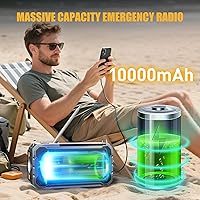
  • The 10000mAh battery can realistically recharge a modern smartphone twice, which covers most short outages comfortably.
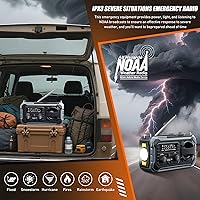
  • NOAA weather band coverage gives you access to real-time official alerts during hurricanes, tornadoes, and severe storms.
  • The LED flashlight with three brightness modes is a genuinely useful addition, not just a checkbox feature.
  • A built-in headphone jack lets you monitor weather alerts privately in shared shelter spaces without disturbing others.
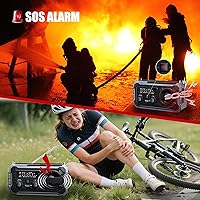
  • The SOS alarm adds a meaningful safety layer for solo hikers or anyone venturing into remote terrain.
  • Build quality consistently earns praise from buyers who expected something flimsier at this price tier.
  • The extendable antenna improves FM and NOAA reception meaningfully compared to fixed-antenna competitors at this price.
  • Comes ready to use out of the box with a USB cable, lanyard, and user manual included.

Cons

  • Hand cranking for several minutes delivers only a modest charge boost — enough for a radio session, not a phone top-up.
  • Solar charging is a slow trickle under ideal conditions; in overcast weather it is nearly negligible.
  • Analog tuning requires patience in areas with crowded or weak signals — station drift is a real annoyance.
  • No digital presets mean you have to re-tune manually every time you power the unit back on.
  • The SOS alarm trigger mechanism has drawn criticism for being awkward to activate quickly under stress.
  • AM band reception can be noticeably weak without careful antenna positioning, which is frustrating mid-emergency.
  • No shortwave band coverage limits usefulness for those who want broader international or amateur radio access.
  • USB charging output speed is modest, making it a poor fit as a primary power bank for tablets or multiple devices.
  • As a relatively new brand entry, long-term durability data is still thin compared to more established competitors.
  • The grey plastic casing, while functional, feels less premium than some rival units at a comparable price.

Ratings

The scores below reflect an AI-driven analysis of verified global buyer reviews for the Pristar Hand Crank 10000mAh Emergency Weather Radio, with spam, incentivized, and bot-flagged submissions actively filtered out before scoring. Each category is rated on real-world performance patterns drawn from confirmed purchases, capturing both what users genuinely praised and where the radio fell short of expectations. Nothing is glossed over — the numbers reflect honest aggregate sentiment, not marketing positioning.

Value for Money
83%
Buyers consistently express satisfaction when they weigh the feature count against the asking price. Getting a weather radio, flashlight, SOS alarm, and phone-charging power bank in a single compact unit for a budget-tier price is a combination that earns real goodwill, especially among emergency kit builders who are stretching their preparedness budgets.
A small but vocal segment of buyers feel the 10000mAh battery claim inflates expectations — real-world output, particularly via crank or solar, leaves some feeling the value proposition was slightly oversold. Those who expected performance on par with dedicated power banks found the USB output speed underwhelming.
Build Quality
76%
24%
For its price tier, this hand-crank survival radio draws consistent praise for feeling sturdier than expected. Buyers report that the casing does not flex or rattle, the crank handle turns smoothly, and the overall construction inspires more confidence than similarly priced competitors they had tried previously.
The plastic finish shows scuffs and surface marks relatively easily, and a few buyers noted that the antenna joint felt less robust after repeated extension and retraction cycles. Long-term durability data is still thin given the radio only launched in early 2025.
Hand Crank Performance
52%
48%
The hand crank does what it promises in a pure survival scenario — generating enough power to keep the radio running or add a small top-up to a phone in a genuine emergency. Buyers who understood its role as a last-resort backup rather than a primary charger rated this feature more favorably.
Buyers who expected meaningful phone charging from the crank were consistently disappointed. Several minutes of sustained cranking yields only a marginal battery percentage, which frustrates users who did not read the fine print. Arm fatigue during extended cranking sessions was also flagged repeatedly in reviews.
NOAA Reception
78%
22%
With the antenna fully extended, buyers in suburban and semi-rural areas report clean, stable NOAA weather channel reception across all seven frequencies. During active storm seasons, users in hurricane-prone states specifically praised the radio for delivering reliable alerts when other communication methods were unavailable.
In areas with naturally weak signal coverage or significant RF interference, the analog tuner requires careful repositioning to hold a clear channel. A handful of rural buyers reported persistent static on certain NOAA frequencies regardless of antenna angle, which is a real concern for the emergency use case.
Solar Charging
47%
53%
In ideal outdoor conditions — direct, unobstructed summer sunlight — the solar panel can provide a slow but real trickle that helps maintain battery level during extended off-grid use. Campers who left the radio face-up on a sunny day reported it held charge better than if left idle.
Most buyers found solar charging performance genuinely disappointing in anything less than peak sunlight. Overcast skies, partial shade, or indoor window light produce negligible results. Several buyers flatly described the solar panel as decorative under real-world conditions, which is a recurring and credible criticism at this price tier.
AM/FM Reception
69%
31%
FM reception is generally solid in urban and suburban environments with the antenna extended, and buyers in those settings report being able to pull in local stations clearly enough for comfortable listening during power outages. The headphone jack adds practical value for late-night monitoring without waking others.
AM performance draws more mixed feedback, with sensitivity varying noticeably by location. The analog dial can be tricky to land precisely on weaker AM stations, leading to frustrating drift, and there is no fine-tuning wheel to stabilize a signal once you find it.
LED Flashlight
81%
19%
The three-mode LED flashlight earns consistent praise as a genuinely useful addition rather than an afterthought. Buyers appreciate having a dedicated high-output mode for navigation and a low mode for reading or conserving battery, and the beam quality is described as clear and adequately bright for close-range tasks.
The flashlight is not particularly powerful at longer distances, and buyers hoping to use it as a primary outdoor torch for trail walking after dark were underwhelmed by the throw. Battery drain in high-brightness mode is also noticeably faster, which matters in a prolonged outage.
Portability
88%
At 1.17 lb and compact enough to slip into a side pocket of most hiking packs, this multi-function weather radio is one of the easier emergency devices to actually commit to carrying. Buyers who previously avoided packing a weather radio because of size and weight cited this unit as the one that finally made the cut.
The lanyard attachment point feels a bit thin for heavy daily carry, and a small number of buyers noted that the overall form factor, while compact, is still slightly bulkier than they expected based on the listed dimensions. It is not a shirt-pocket device.
SOS Alarm
61%
39%
In open outdoor environments, the SOS alarm produces enough volume to be heard at a meaningful distance, and buyers who tested it specifically for wilderness preparedness found it reassuring to have as a last-resort signaling option when paired with other survival tools.
The activation mechanism drew consistent criticism — finding and triggering the alarm quickly under stress proved difficult for many buyers during practice runs. Volume is also described as adequate rather than genuinely loud, falling short of users who compared it to dedicated personal safety alarms.
Battery Life (Radio Use)
77%
23%
Running the radio on its internal battery — without any additional charging — delivers several hours of continuous FM or NOAA listening, which satisfies most emergency use cases. Buyers who used it during extended power outages reported the battery lasted well through a full day of intermittent listening and occasional flashlight use.
Running the LED flashlight on high brightness simultaneously with the radio drains the battery noticeably faster than either function alone. A few buyers noted that the battery level indicator is basic and does not give reliable advance warning before power drops off suddenly.
Phone Charging Output
66%
34%
Using the 10000mAh internal battery as a USB power bank for smartphones is the most practically reliable off-grid charging option this radio offers. Buyers who plugged in a phone directly via USB confirmed being able to achieve at least one to two full charges from a fully loaded battery, which is useful in a real outage scenario.
Charging speed via USB output is on the slower end, and some buyers with newer flagship phones found the output wattage insufficient for fast charging. Using the radio functions and charging a device simultaneously accelerates overall battery drain faster than most buyers anticipated.
Ease of Use
73%
27%
First-time users report getting up and running within minutes without needing to consult the manual, which is a meaningful plus for emergency gear that may sit in a drawer for months before being needed. The physical controls are intuitive, and the included manual covers the basics clearly enough for non-technical users.
The analog tuning dial requires a gentle, practiced touch to land cleanly on stations — particularly on AM — and new users often overshoot their target frequency. Mode-switching between flashlight brightness levels also confused several buyers who expected a more obvious toggle sequence.
Packaging & Unboxing
71%
29%
Buyers generally describe the unboxing experience as clean and organized for a budget-tier product, with the components neatly arranged and the USB cable and lanyard bagged separately. The radio arrives with a partial charge in most reported cases, which is a small but appreciated touch.
The packaging itself is fairly minimal, making it feel less premium as a gift item compared to competing radios at similar price points. A small number of buyers reported the manual was printed in a very small font that was difficult for older users to read comfortably.

Suitable for:

The Pristar Hand Crank 10000mAh Emergency Weather Radio is a strong fit for anyone building a practical, budget-conscious emergency kit without wanting to juggle three separate devices. Households in hurricane corridors, tornado-prone regions, or flood-risk zones get the most direct value — having NOAA weather alerts available even when the grid is down can genuinely matter in those first critical hours of a storm. Campers and hikers who like to consolidate gear will appreciate carrying one unit that covers radio, flashlight, and phone-charging duty rather than packing all three separately. It also works well as a preparedness gift for outdoorsy friends or family members who wouldn't otherwise think to buy something like this themselves. Anyone who experiences occasional short-term power outages and just needs a reliable way to stay informed and keep a phone charged through the night will find this multi-function weather radio more than adequate for that job.

Not suitable for:

The Pristar Hand Crank 10000mAh Emergency Weather Radio is not the right call for buyers who need digital station presets, strong signal sensitivity in weak-coverage rural areas, or fast off-grid recharging. Analog tuning is inherently more rugged and simple, but if you're used to locking in stations with a button press, the manual dial will frustrate you quickly. The hand crank and solar panel are genuine backup options, but neither will rapidly restore a depleted battery — serious preppers planning for multi-day grid-down scenarios may want a more robust dedicated power solution alongside this radio. If you need a primary emergency power bank with high-speed USB output for charging tablets or multiple devices simultaneously, this hand-crank survival radio's output will likely feel limiting. Amateur radio enthusiasts or buyers who want shortwave bands will need to look elsewhere, as this covers AM, FM, and NOAA only.

Specifications

  • Brand: Manufactured by Pristar under model number 328XXL-WB-BG.
  • Dimensions: The unit measures 6.5″ long by 3.4″ wide by 2.24″ tall.
  • Weight: Fully assembled, the radio weighs 1.17 lb, making it suitable for pack-and-go use.
  • Battery Capacity: An internal rechargeable battery rated at 10000mAh powers the radio and USB charging output.
  • Power Sources: The battery can be charged via Type-C USB input, built-in solar panel, or hand crank generator.
  • Radio Bands: Covers AM (520–1710 kHz), FM (87–108 MHz), and NOAA weather channels (162.40–162.55 MHz).
  • Tuner Type: Uses analog tuning, requiring manual dial adjustment to lock onto AM, FM, or NOAA frequencies.
  • Antenna: Equipped with an extendable antenna designed to improve signal reception across all supported bands.
  • Flashlight: Built-in LED flashlight offers three selectable brightness modes for reading, navigation, or signaling.
  • SOS Alarm: Includes a built-in audible SOS alarm intended for emergency signaling in wilderness or disaster situations.
  • Headphone Jack: Features a 3.5mm headphone jack for private audio monitoring without disturbing others nearby.
  • USB Output: Provides a USB-A output port to charge smartphones, tablets, and other USB-powered devices.
  • Charging Input: Accepts 5V DC power via Type-C port for standard wall adapter or power bank top-up charging.
  • Color: Available in grey with a weather-resistant outer casing designed for rugged field use.
  • In the Box: Package includes the radio unit, one USB charging cable, one portable lanyard, and a user manual.
  • Radio Ranking: Ranked #34 in the Weather Radios category and #10,629 in Electronics on Amazon as of the listing date.
  • Availability Date: First made available for purchase on February 27, 2025.

Related Reviews
Esky 10000mAh Emergency Hand Crank Radio
73%
91%
Value for Money
84%
Radio Reception
72%
Battery Performance
47%
Hand Crank Charging
53%
Solar Panel Efficiency
More
DexScout Crank Emergency Weather Radio 10000mAh
86%
91%
Value for Money
88%
Battery Life and Charging
94%
Portability & Size
85%
Weather Alert Accuracy
90%
Build Quality and Durability
More
ZZMICHP 16000mAh Hand Crank Emergency Weather Radio
85%
92%
Battery Life & Power
87%
Ease of Use
68%
Portability & Size
85%
Durability & Build Quality
90%
Radio Performance
More
Rckskaya Condor 1 Emergency Hand Crank Radio
73%
88%
Power Source Versatility
72%
NOAA Weather Reception
83%
Flashlight Performance
67%
Phone Charging Capability
79%
SOS Alarm & Signaling
More
Aivica 10000mAh Emergency Crank Radio
83%
88%
Value for Money
83%
Battery Life
85%
Ease of Use
91%
Portability
80%
Durability
More
AXYEBI AB-US-107Y Emergency Weather Radio
75%
91%
Value for Money
82%
NOAA Signal Reception
88%
Flashlight Performance
63%
Build Quality & Durability
67%
Hand Crank Usability
More
GIDEZH H27 30000mAh Emergency Weather Radio
75%
82%
Battery Capacity
86%
NOAA Reception Quality
78%
Charging Versatility
88%
All-in-One Convenience
74%
Flashlight Performance
More
Givoust MD-107R Hand Crank Emergency Weather Radio
75%
83%
NOAA Reception Quality
78%
Battery Life
81%
Charging Versatility
57%
Hand Crank Efficiency
66%
Build Quality & Durability
More
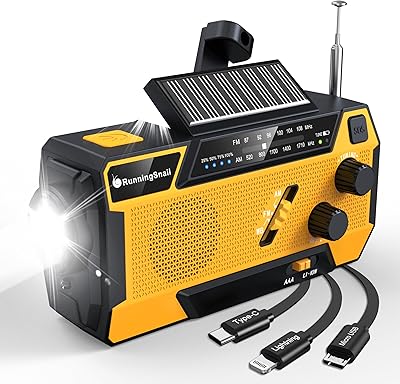
RunningSnail Emergency Crank Weather Radio
72%
88%
Value for Money
84%
Power Redundancy
91%
Built-in Cables
73%
NOAA Reception Quality
62%
Battery Capacity
More
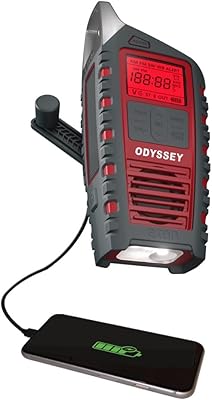
Eton Odyssey All-Band Emergency Weather Radio
68%
83%
NOAA Reception Quality
79%
AM/FM Reception
54%
Shortwave Performance
41%
Hand Crank Charging
38%
Solar Panel Effectiveness
More

FAQ

Realistically, a few minutes of cranking will give you a small boost — enough to run the radio for a short session or add a marginal percentage to your phone battery, but not enough to meaningfully charge a depleted smartphone on its own. Think of the hand crank as a last-resort backup to squeeze out a critical call or listen to a weather alert, not as a primary charging method. For phone charging, the built-in 10000mAh battery via USB is the far more practical option.

Solar charging on this type of compact radio is slow by nature — you are looking at a trickle rather than a proper top-up. In full direct sunlight, it can help maintain the battery level or recover a modest amount of charge over several hours. Treat it as a supplementary option to extend your battery life during a prolonged outage rather than a fast recovery solution.

The radio uses analog tuning, so you will need to manually dial to one of the NOAA frequencies (between 162.40 and 162.55 MHz) to pick up weather broadcasts. There is no automatic alerting feature or digital scanning — it does not wake itself up and alarm you the way dedicated NOAA alert radios with alarm functions do. That said, once you are tuned in, reception with the antenna extended is generally solid.

Yes, that is one of its more practical features. The 10000mAh internal battery outputs via USB-A, so you can plug in your phone and charge it just like you would with a standard power bank. In typical real-world use, you should be able to fully charge most modern smartphones at least twice before the battery runs low.

The listing describes a weather-resistant build, but it is not rated as fully waterproof. It is designed to handle the kind of incidental exposure you might encounter outdoors — light rain, humidity, splashing — but you should not submerge it or leave it in heavy downpours for extended periods. If water protection is a priority, store it in a zip-lock bag or dry pouch as part of your kit.

No, this multi-function weather radio covers AM, FM, and NOAA weather frequencies only. There is no shortwave band included. If you need shortwave access for international broadcasts or amateur radio monitoring, you would need a different device.

The SOS alarm is audible and designed to carry over background noise, but buyer feedback suggests the volume is moderate rather than ear-splitting. It should be effective in many emergency scenarios, but its practical range outdoors depends a lot on ambient noise levels and terrain. The trigger mechanism has drawn some criticism for not being the most intuitive to activate quickly, so it is worth familiarizing yourself with it before you actually need it.

Unfortunately, there are no digital presets on this radio. Analog tuning means you dial your way to a station by hand every time, and when you power the unit off, you lose your place on the dial. For people used to punching a button to jump to a saved station, this will feel like a step back. It is a known trade-off with analog tuners — simpler and more durable, but less convenient in daily use.

You get the radio unit itself, a USB charging cable, a portable lanyard for carrying or hanging the radio, and a printed user manual. The internal battery comes pre-installed. There is no wall adapter included, so you will need your own USB charger to do the initial full charge via Type-C.

It is actually a reasonable choice for that exact person. The controls are straightforward — a dial for tuning, a switch for the flashlight modes, and a crank handle that is hard to use incorrectly. The included lanyard and manual make it feel complete out of the box. The main thing to communicate to a less tech-savvy recipient is how to initially charge the battery fully via USB before storing it, so it is ready when it is actually needed.