Overview

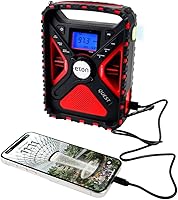
The Eton Quest All-Band Emergency Weather Radio is Eton's mid-to-premium answer to the growing demand for capable, all-in-one emergency communication gear. Eton has been a trusted name in this space for years, and this hand-crank weather radio reflects that experience — packing a wide feature set into a compact body measuring 5.8″ x 7.1″ x 2.3″ and weighing just over two pounds. It costs more than a basic storm radio, but the expanded capabilities make that gap feel reasonable. With over 3,700 ratings averaging 4.4 stars on Amazon, buyer reception has been genuinely strong since its May 2023 launch.
Features & Benefits

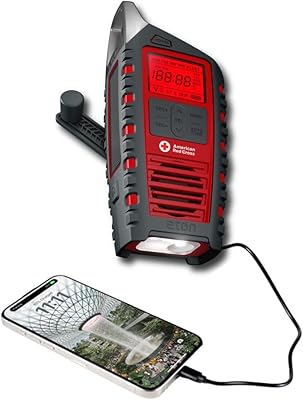
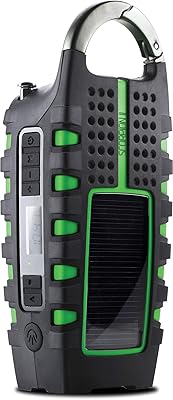
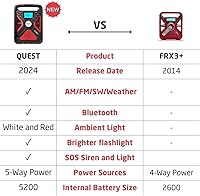
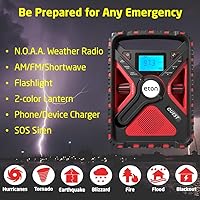
The Eton Quest covers AM, FM, Shortwave, and NOAA weather bands with RDS support — more range than most emergency radios at this price tier. Power is a real highlight: a 5,200 mAh battery, a solar panel, and a hand crank give you three ways to stay charged when the grid goes down. The USB output is genuinely useful, letting you top off a smartphone during an outage. Bluetooth streaming is a nice-to-have for everyday use. The backlit LCD display with a built-in clock is easy to navigate in the dark, and the combination of a high-output flashlight and a large ambient light panel with SOS mode rounds out an impressively practical package.

Best For

This emergency radio makes the most sense for people who want one piece of kit that handles multiple preparedness needs without hauling separate gear. Households in hurricane, tornado, or flood corridors will appreciate the reliable NOAA alerts and off-grid power options. Campers and hikers get real utility from the integrated lighting and device charging in a single bag-friendly unit. It also suits off-grid and van life setups where solar and hand-crank self-sufficiency matters. If you already own a basic storm radio and feel like it falls short — no Bluetooth, a small battery, limited bands — this hand-crank weather radio is a well-justified upgrade.

User Feedback

Buyers consistently praise sound clarity and battery endurance, with many noting the radio held up reliably during actual storm events and extended power outages. The ambient light panel earns frequent compliments for campsite use. That said, recurring criticism points to shortwave sensitivity being modest rather than exceptional — experienced shortwave listeners may find the reception underwhelming next to dedicated units. A few buyers questioned the hand crank's long-term durability under heavy use, and the solar panel, while functional, is best treated as a slow trickle charger rather than a primary source. Bluetooth audio quality gets mixed marks. Most reviewers still consider the Eton Quest worth the investment for the overall package.

Pros

  • Covers AM, FM, Shortwave, and NOAA bands in one compact device — rare at this size.
  • The 5,200 mAh battery is large for the category and holds up well during extended outages.
  • Three charging methods — solar, hand crank, and USB-in — give genuine off-grid flexibility.
  • USB output lets you charge a smartphone directly, which is a real lifeline during power outages.
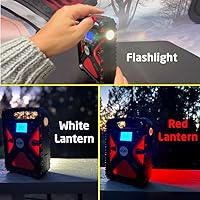
  • The ambient light panel in both white and red modes is genuinely useful for camping and emergencies.
  • Built-in SOS alarm adds a layer of safety that basic emergency radios simply do not offer.
  • Bluetooth streaming makes it practical for everyday use, not just emergencies.
  • Backlit LCD display with clock is easy to read and navigate in complete darkness.
  • Strong track record across thousands of real-world buyers, including reports of reliable use during actual storms.
  • RDS support displays station information clearly — a small but appreciated quality-of-life feature.

Cons

  • Shortwave sensitivity is mediocre; experienced listeners will find reception noticeably limited.
  • At 2.33 lbs, it is too heavy for ultralight hiking or minimalist pack setups.
  • Solar charging is extremely slow in practice — treat it as emergency trickle charging, not a real power source.
  • Hand crank durability has drawn concern from some buyers who use it frequently under stress.
  • Bluetooth audio quality is inconsistent and does not match what you would expect from a dedicated speaker.
  • The price is hard to justify if your needs are limited to basic storm alerts and nothing more.
  • No alkaline battery backup option means you depend entirely on the internal rechargeable cell.
  • At 5.8″ x 7.1″, it takes up more bag or shelf space than slimmer competing models.

Ratings

The Eton Quest All-Band Emergency Weather Radio earned its scores through AI-driven analysis of thousands of verified global buyer reviews, with spam, bot activity, and incentivized feedback actively filtered out before scoring. Categories reflect what real owners experienced across emergency preparedness, outdoor adventures, and everyday use — not manufacturer claims. Both the standout strengths and the genuine frustrations are weighted transparently in every score below.
Battery Life
88%
The 5,200 mAh internal battery is one of the most praised aspects across buyer feedback. Owners report using it through multi-day power outages without needing to recharge, and the ability to simultaneously power the radio and charge a smartphone made it feel like a true emergency lifeline.
A small number of buyers noticed gradual capacity degradation after roughly a year of regular use, which is expected for lithium cells but worth monitoring. Those who leave it stored uncharged for long periods between emergencies occasionally found the battery less responsive when they actually needed it.
NOAA Weather Alerts
91%
Alert reception is consistently singled out as reliable and clear by buyers in storm-prone states. During real hurricane and tornado warnings, users reported the audio and visual alerts triggered promptly, giving households crucial advance notice without needing a phone signal or internet connection.
A handful of buyers in rural or low-signal areas noted that weak NOAA transmitter coverage in their region affected alert reliability — an infrastructure issue rather than a hardware flaw, but worth knowing if you live far from a National Weather Service transmitter.
Multi-Source Charging
83%
Having three independent power inputs — USB charging, solar, and hand crank — gave buyers genuine confidence during extended off-grid situations. Campers and van lifers specifically appreciated not being entirely dependent on any single method, treating the combination as a practical safety net.
The solar panel charges frustratingly slowly in real-world conditions, and the hand crank requires sustained effort for minimal gain. Both backup methods work, but buyers who expected them to meaningfully restore battery in an emergency timeframe were often disappointed by how long the process takes.
AM/FM Reception
86%
FM reception with RDS earned consistent praise for clarity and station stability across urban and suburban environments. Buyers used it as a daily kitchen or workshop radio, appreciating the digital tuner's precision compared to analog alternatives they had owned previously.
AM reception quality dropped noticeably for some buyers in areas with significant electrical interference, which is a known challenge for compact digital radios. A few noted that the internal ferrite antenna for AM is adequate but not exceptional compared to larger tabletop radios.
Shortwave Reception
57%
43%
The shortwave bands do function and buyers with casual interest reported picking up strong international broadcasts without much difficulty. For someone who just wants to occasionally explore shortwave as a secondary feature, the coverage is a genuine bonus over radios that omit it entirely.
Dedicated shortwave hobbyists were notably underwhelmed. Sensitivity and selectivity on the upper shortwave bands are limited, and weak or distant stations that a purpose-built receiver would pull in clearly tend to get lost in noise. This is not a shortwave radio that happens to do other things — it is an emergency radio with shortwave added on.
Lighting Performance
89%
The dual-mode ambient light panel drew strong praise from campers who used it as a tent lantern throughout multi-night trips. The red mode was specifically appreciated by stargazers and anyone needing light without disrupting night vision, and the SOS flash mode added a safety layer that genuinely impressed buyers who tested it.
The flashlight beam, while bright, has a relatively narrow throw compared to dedicated outdoor flashlights. A couple of buyers found the transition between light modes slightly unintuitive at first, requiring a look at the manual before it became second nature.
Build Quality
74%
26%
The overall construction feels solid in hand and most buyers described it as durable enough for regular camping trips and shelf storage in an emergency kit. The chassis resists minor knocks and drops reasonably well for a device in this category.
The hand crank mechanism drew the most durability criticism — several buyers reported it feeling flimsy under repeated heavy use, and a small number experienced mechanical issues with the crank after extended deployment. For a component central to its emergency identity, this is a meaningful concern.
Bluetooth Audio
66%
34%
Pairing is quick and the connection is stable within normal room distances, making it a convenient option for casual background music at a campsite or around the house. Buyers who used it as an incidental Bluetooth speaker for outdoor lounging generally found it acceptable for the purpose.
Audio quality at higher volumes can sound thin and compressed compared to any dedicated portable speaker in a similar price range. Bluetooth range also disappointed buyers who tried to stream from more than about 20 to 25 feet away, with dropouts becoming common beyond that distance.
USB Device Charging
84%
The ability to charge a smartphone directly from the radio during a power outage was one of the most practically valued features in real-world emergency feedback. Buyers described it as an underrated feature that turned the radio into a two-in-one survival tool when their phones were running low during prolonged outages.
Charging speed is limited to standard USB output and will not satisfy users expecting fast-charge performance. The single USB-A port also means you can only charge one device at a time, which felt limiting to buyers with multiple devices to keep alive during a long outage.
Ease of Use
82%
18%
The backlit LCD display and digital tuner made navigating bands and frequencies straightforward for most buyers, including older users who appreciated not having to fiddle with a vague analog dial. The clock function and clear labeling on the interface were frequently mentioned as practical touches.
The initial setup for weather alert mode and some of the secondary functions requires consulting the manual, and a few buyers found the button layout mildly confusing until they spent time with it. The manual itself received mixed feedback — functional but not especially user-friendly for non-technical owners.
Portability
77%
23%
At under 7.1″ wide and fitting into most day-pack side pockets, the radio travels reasonably well for car camping, cabin trips, and emergency kit storage. Buyers who kept it in a go-bag reported it fitting without dominating the available space.
At 2.33 lbs it crosses into uncomfortable territory for ultralight hikers or anyone counting grams on a multi-day backcountry trip. Buyers who expected something closer to the weight of a pocket radio were surprised by how substantial it feels once fully loaded with its large battery.
Value for Money
71%
29%
Buyers who fully utilized the feature set — NOAA alerts, lighting, phone charging, and Bluetooth — generally felt the price was justified when compared to buying those capabilities across multiple separate devices. In the context of a serious emergency preparedness investment, the all-in-one value argument held up for this group.
Buyers with more modest needs found it difficult to justify the cost over simpler radios that cover NOAA and AM/FM at a fraction of the price. The shortwave reception, often cited as a premium differentiator, did not land as a meaningful value-add for the majority of purchasers who rarely used it.
Solar Charging
52%
48%
The solar panel provides a genuine trickle charge in direct sunlight and buyers on extended off-grid trips found it useful as a supplemental top-up over multiple sunny days. For van lifers who left it on a dashboard in regular sun exposure, the contribution was considered a helpful passive bonus.
Expectations consistently outpaced reality here. Most buyers described the solar input as too slow to be practically relied upon in a real emergency scenario, and several felt the feature was marketed more prominently than its real-world contribution warranted. On a cloudy day or indoors, it contributes almost nothing.
Display & Interface
81%
19%
The backlit LCD is easy to read in total darkness and the clock function proved genuinely useful during overnight camping and power outages when phones were conserved. Buyers appreciated having frequency, band, and RDS station info visible at a glance without squinting or guessing.
The display is not visible in bright direct sunlight without activating the backlight, which drains battery faster. A small number of buyers also found the text size slightly small for comfortable reading at arm's length, particularly for older users without reading glasses nearby.

Suitable for:

The Eton Quest All-Band Emergency Weather Radio is built for people who want one well-rounded device rather than a drawer full of single-purpose gear. It fits naturally into a household emergency kit for anyone living in storm-prone regions — think Gulf Coast hurricanes, Midwest tornado seasons, or areas prone to flash flooding — where reliable NOAA alerts and off-grid power matter. Campers and backpackers who want to consolidate will appreciate having weather reception, device charging, and a capable lantern without packing three separate items. Off-grid setups, whether a weekend cabin or a van build, benefit from the solar and hand-crank charging options that keep the radio functional even without wall power for extended stretches. It also makes sense for anyone currently running a bare-bones emergency radio who wants to step up to something with a larger battery, Bluetooth, and broader band coverage.
Not suitable for:

The Eton Quest All-Band Emergency Weather Radio is not the right pick for buyers whose primary interest is serious shortwave listening. The shortwave reception is functional but not competitive with dedicated shortwave receivers, so hobbyists chasing distant stations will likely feel the limitations quickly. At just over two pounds, it is also not ideal for ultralight backpackers or minimalist hikers where every ounce is scrutinized. Buyers on a tight budget who only need basic NOAA alerts during storms can find simpler, cheaper radios that do that one job reliably without paying for features they will never use. Anyone expecting the solar panel to meaningfully charge the device in a reasonable timeframe may also be disappointed — it works, but slowly, and should not be relied on as a primary charging method in a real emergency.
Specifications

  • Dimensions: The radio measures 5.8″ long by 7.1″ wide by 2.3″ deep, making it compact enough for a backpack but not ultralight.
  • Weight: It weighs 2.33 lbs, which is typical for a fully featured multi-function emergency radio in this category.
  • Battery Capacity: A built-in 5,200 mAh rechargeable lithium battery powers the unit and can also charge external devices via USB output.
  • Power Sources: The radio supports three charging inputs: a built-in solar panel, a manual hand crank, and USB charging via an external power source.
  • Radio Bands: Supported bands include AM, FM, Shortwave, and NOAA Weather, covering both everyday listening and emergency alert frequencies.
  • RDS Support: Radio Data System (RDS) is supported, allowing compatible FM stations to display station name and track information on the LCD screen.
  • Display: A large backlit LCD screen shows band, frequency, signal strength, clock, and RDS data, readable in low-light or dark conditions.
  • Connectivity: The unit connects wirelessly via Bluetooth for audio streaming and includes a 3.5mm auxiliary input and a USB output port for device charging.
  • Lighting: Two lighting modes are included: a high-intensity LED flashlight and a large ambient light panel that switches between white and red output.
  • SOS Alarm: An integrated SOS distress function combines a flashing light signal with an audible alarm to help attract attention in an emergency.
  • USB Output: The USB-A output port allows the radio to act as an external battery bank, charging smartphones and other small devices from its internal battery.
  • Model Number: The official Eton model number is NFRX5QUEST, which corresponds to the Quest variant in Eton's Adventure Series lineup.
  • Color Option: The unit is available in Red as the primary retail color option listed for this model.
  • Brand: Manufactured by Eton, a company with an established history in emergency communication and weather radio products sold in North America.
  • Release Date: The product was first made available in May 2023, making it a relatively recent addition to Eton's emergency radio lineup.
  • BSR Rank: It holds a Best Sellers Rank of number 69 in the Weather Radios category on Amazon as of available data.
  • Included Contents: The package includes the Eton Quest radio unit as part of the Adventure Series; a charging cable is expected but buyers should verify current box contents.
  • Tuner Type: The radio uses a digital tuner, which provides more precise frequency selection and stability compared to analog dial-based alternatives.

Related Reviews

Eton Odyssey All-Band Bluetooth Emergency Weather Radio
76%
83%
Radio Reception Quality
88%
NOAA Weather Alerts
78%
Power Versatility
74%
Build Quality
71%
Battery Performance
More
Eton Scorpion II Portable Emergency Weather Radio
74%
91%
Portability & Form Factor
83%
Hand Crank Functionality
88%
NOAA Weather Band Reception
79%
FM Radio Performance
58%
AM Radio Reception
More
FosPower A6 5200mAh Emergency Weather Radio
77%
91%
NOAA Reception
84%
Build Quality
67%
Power Bank Utility
53%
Hand Crank Efficiency
49%
Solar Charging
More
Roxicosly CR1009Ultra 12000mAh Emergency Weather Radio
74%
88%
Battery Life
91%
Charging Versatility
86%
NOAA Alert Performance
58%
Hand Crank Durability
44%
Solar Charging Speed
More
RAOUOEN 30000mAh Emergency Weather Radio
85%
89%
Battery Life & Charging
91%
Performance in Emergencies
75%
Portability & Weight
84%
Sound Quality & Reception
87%
Ease of Use
More
OnLyee CR1030 Emergency Weather Radio
76%
88%
Power Source Redundancy
83%
Hand Crank Durability
61%
Solar Charging Performance
79%
NOAA Reception Quality
67%
Battery Capacity & Phone Charging
More
TFTDOUP Emergency Weather Alert Radio
86%
88%
Overall Performance
85%
Battery Life
90%
Charging Options
80%
Ease of Use
87%
Build Quality
More
QAUYYW Emergency Weather Radio XSY330
86%
89%
Battery Life
85%
Ease of Use
92%
Portability
75%
Radio Reception
88%
Build Quality
More
Sttfaishen F20 Emergency Hand Crank Weather Radio
72%
82%
NOAA Alert Reception
54%
Battery Capacity & Honesty
61%
Hand Crank Usability
57%
Solar Charging Performance
83%
USB-C Charging Speed
More
Jazmm Digital AM FM Weather Band Radio
83%
88%
Sound Quality
93%
Portability
85%
Battery Life
80%
Ease of Use
78%
Durability
More

FAQ

The Eton Quest All-Band Emergency Weather Radio supports NOAA Weather Alert reception, meaning it can receive both visual and audio alerts broadcast by the National Weather Service. For automatic alerts to trigger, you typically need to enable the weather alert or scan mode on the radio so it monitors the NOAA frequencies in the background. Check the manual for the specific alert activation steps, as the setup is straightforward but requires a one-time configuration.
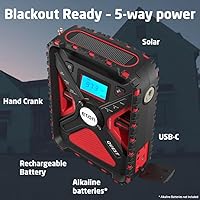
Honest answer: treat the solar panel as a slow trickle charger rather than a reliable primary source. In direct, bright sunlight it will add some charge over several hours, but it will not fully recharge the 5,200 mAh battery in a single day. It is best used as a supplemental option when you have no other charging available, not as your go-to method in a time-sensitive emergency.

Hand cranking provides a small emergency charge rather than a full recharge. A few minutes of cranking typically gives you enough power for a short listening session or a brief flashlight use. It is designed as a last-resort backup when all other power options have run out, so do not count on it to meaningfully refill a depleted battery.

Yes, Bluetooth pairing works for streaming audio from your phone, and it functions decently as a casual speaker for everyday use around the house or at a campsite. That said, the audio quality and Bluetooth range are not on par with a dedicated portable speaker — it is a capable secondary function rather than the main attraction.

It picks up shortwave bands, but experienced shortwave hobbyists should temper their expectations. The reception is adequate for casual listening and catching strong international broadcasts, but the antenna and tuner sensitivity are not in the same league as a purpose-built shortwave receiver. If shortwave is your primary interest, a dedicated unit would serve you better.

Based on available product information, the radio relies on its built-in rechargeable battery and does not appear to support standard alkaline AA or AAA batteries as a backup power source. This is worth factoring in for your emergency planning — keep the battery topped up regularly so you are not caught with a depleted unit when the grid goes down.

The ambient light panel is noticeably large for a radio of this size and puts out enough light to illuminate a tent interior or a small area around a campsite comfortably. It is not a replacement for a high-output dedicated lantern, but it is genuinely practical and the red mode is useful for preserving night vision. The SOS flash mode is an added safety feature most camping lanterns do not include.

Yes, the USB output port can charge a smartphone directly from the radio's internal 5,200 mAh battery, which is large enough to provide at least one full charge to most phones. It will not fast-charge devices, but it delivers a standard USB output sufficient for keeping essentials powered during an outage. Think of it as a modest power bank built into your emergency radio.

The radio is built for portability and outdoor use, but it is not rated as waterproof or water-resistant based on available product data. It is suited for camping and hiking in normal conditions, but you should protect it from direct rain or submersion. A simple dry bag or zip-lock sleeve adds peace of mind if you are taking it into wet environments.

Budget emergency radios typically cover NOAA and AM/FM bands with a small battery, basic hand crank, and a simple flashlight — and that is about it. This hand-crank weather radio adds shortwave reception, a much larger battery, Bluetooth, a phone charging output, an ambient light panel with SOS, and RDS. Whether that expanded feature set justifies the price difference depends entirely on how many of those extras you will actually use. If your needs are strictly storm alerts and nothing more, a simpler radio at a lower price point may be all you need.

Where to Buy