Overview

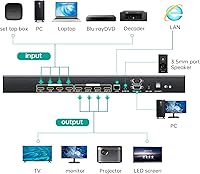
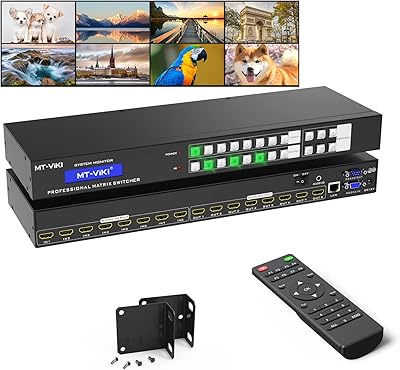
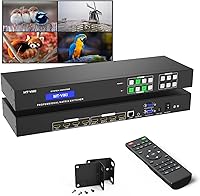
The MT-VIKI MT-HD44L-DE 4x4 HDMI Matrix Switch sits in a practical sweet spot for AV professionals who need reliable multi-source distribution without spending enterprise-level money. It handles four HDMI inputs and four outputs, supporting 4K resolution at 30Hz with HDR pass-through — enough for most modern display setups, though not the 60Hz ceiling some buyers hope for. The 1U rack-mount chassis slots neatly into a standard 19-inch cabinet, keeping installations clean and organized. A 3.5mm audio extractor on output 4 adds a useful bonus for zones requiring audio-only feeds, saving you the cost of a separate splitter device altogether.
Features & Benefits

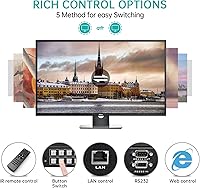
What makes this rack-mount matrix stand out is how many ways you can control it. Five control methods — front-panel buttons, IR remote, RS232 serial, LAN, and a web-based GUI — mean you are never stuck if one approach fails. The web GUI and companion app let you switch sources from any device on your local network, which is genuinely useful in rack installations where physical access is awkward. Built-in EDID management quietly handles handshake negotiations between sources and displays, reducing the blank-screen frustrations common with cheaper switches. Cable runs up to 15 meters per port give real flexibility in larger rooms, and 8KV ESD protection adds a layer of hardware safety worth having.

Best For

This HDMI matrix switch is a natural fit for anyone juggling multiple 4K sources — gaming consoles, Blu-ray players, streaming devices — across more than one display. It works well in home theater setups, small business conference rooms, and corporate AV racks where centralized distribution matters but a full enterprise system is overkill. The audio extractor on output 4 specifically benefits users feeding a zone amplifier or soundbar without adding another device to the chain. Integrators who rely on LAN-based remote control for scalable installations will appreciate the flexibility, and the rack-mount form factor makes it a clean fit for education and studio environments.

User Feedback

Buyers generally respond well to the MT-VIKI 4x4 switcher, with the web GUI drawing consistent praise for being straightforward to configure — even for users who are not deep into AV systems. The multi-control flexibility is frequently cited as a standout strength. On the flip side, the 4K at 30Hz ceiling draws criticism from buyers who assumed 60Hz support, so that distinction deserves attention before purchasing. A few users noted the 2–3 second switching delay as noticeable, though most find it acceptable. The included CD driver is a mild friction point for modern laptops without optical drives, and occasional questions arise around long-term LAN control reliability under continuous use.

Pros

  • Five control methods — buttons, IR, RS232, LAN, and web GUI — give you real operational flexibility across different installation types.
  • Built-in EDID management reduces blank-screen handshake failures that plague cheaper matrix switches.
  • The 1U rack-mount form factor integrates cleanly into standard 19-inch AV or server cabinets.
  • Supports a wide range of audio formats including Dolby AC3, DTS 5.1, DTS 7.1, and DSD for versatile AV routing.
  • The web GUI makes remote source-switching possible from any networked device without physical access to the rack.
  • 8KV ESD protection adds meaningful hardware-level safety for connected equipment.
  • The 3.5mm audio extractor on output 4 eliminates the need for a separate audio splitter in zone audio setups.
  • Cable runs of up to 15 meters per port give genuine flexibility for larger room installations.
  • Rack ears and all essential cables are included in the box, reducing immediate add-on costs.
  • At its price tier, the breadth of control options and EDID support is notably strong for prosumer use.

Cons

  • The 4K at 30Hz resolution cap is a real limitation for PC gamers or anyone outputting high-frame-rate 4K content.
  • Audio extraction is only available on output 4, not independently on all four outputs.
  • The 2–3 second switching delay is noticeable and may frustrate users who need near-instant source changes.
  • The included software requires a CD drive, which is absent on most modern laptops and thin-and-light machines.
  • Long-term reliability of LAN control under continuous, always-on use is not well established in buyer feedback.
  • The acrylic front-panel buttons feel less premium than the overall rack-mount aesthetic suggests.
  • No built-in support for 4K at 60Hz means the HDMI matrix switch will feel outdated sooner in high-performance environments.
  • Setup documentation could be clearer for first-time matrix switch users configuring RS232 or network control.
  • At 4.69 pounds, the unit is not heavy, but the chassis rigidity may feel modest compared to higher-end competitors.
  • No cloud-based or remote-outside-LAN control is available without additional networking configuration.

Ratings

Our AI rating engine analyzed verified global buyer reviews for the MT-VIKI MT-HD44L-DE 4x4 HDMI Matrix Switch, actively filtering out incentivized, bot-generated, and outlier feedback to surface what real users consistently experience. Scores reflect a balanced synthesis of genuine praise and recurring frustrations, so both the strengths and the trade-offs are represented honestly across every category below.

Control Flexibility
91%
Buyers repeatedly single out the five available control methods as a standout strength — being able to switch inputs from a browser on a laptop, a phone app, the front panel, or an RS232 terminal gives this switcher real operational resilience. Integrators especially appreciate that a failed IR remote does not paralyze the whole system.
A small number of users report that the web GUI can feel slightly sluggish on older routers or congested networks, requiring a page refresh before the input change registers. The companion app has also drawn occasional criticism for being less polished than the browser interface.
Web GUI & Remote Access
86%
For a device in this price tier, the browser-based interface is genuinely functional — most users get it configured within minutes of connecting it to their local network, with no software installation required for basic switching tasks. Conference room managers particularly appreciate being able to change sources from a desk without walking to the rack.
The GUI lacks advanced scheduling or macro features that more expensive control systems offer, which limits its appeal for complex automation workflows. A handful of users also noted the interface does not adapt well to mobile screen sizes, making phone-based control slightly fiddly.
EDID Management
84%
EDID handling is one of the less glamorous but most practically important aspects of any matrix switch, and this rack-mount matrix handles it well enough that most users never encounter the dreaded blank-screen handshake failure. Those migrating from basic splitters often note an immediate improvement in display detection reliability.
A minority of users with unusual display combinations — particularly older projectors mixed with modern 4K TVs — report occasional EDID negotiation quirks that require manual troubleshooting. The user manual's guidance on custom EDID profiles is thin and could benefit from clearer step-by-step instructions.
Video Signal Quality
82%
18%
Within its supported resolution envelope, the signal integrity is clean and consistent — buyers running Blu-ray players, streaming boxes, and presentation laptops report no visible degradation, artifacting, or color shift across 15-meter cable runs. HDR pass-through works reliably for supported content.
The 4K at 30Hz ceiling is the defining limitation here, and it genuinely frustrates buyers who discover it after purchase rather than before. Anyone feeding a PS5, Xbox Series X, or gaming PC at 4K 60Hz will need to cap the console output manually or accept a downgrade in frame rate.
4K Resolution Support
63%
37%
For streaming video, Blu-ray, and corporate presentation use cases, 4K at 30Hz is more than adequate, and the picture quality on compatible displays is sharp and stable. Users in education and conference room environments rarely push beyond this, so they find it perfectly sufficient for daily use.
The absence of 4K at 60Hz is the single most common complaint across buyer reviews, and it is not a minor omission for a growing share of users. Modern gaming consoles, high-refresh monitors, and even some streaming content now target 60Hz, making this switcher feel one specification cycle behind for forward-looking buyers.
Audio Extraction
71%
29%
Users who need to feed a zone amplifier or powered soundbar without running a separate audio extractor find real value in having the 3.5mm output built into the unit. It handles PCM and multi-channel formats including DTS 7.1 and Dolby AC3 cleanly, which is more than most budget-tier switchers offer.
The extractor being locked to Output 4 only is a meaningful constraint that catches some buyers off guard — if you need independent audio from multiple outputs, this unit requires additional external hardware. A few users also noted the 3.5mm output level can be slightly low when driving passive speakers without a pre-amplifier stage.
Build Quality
74%
26%
The metal chassis feels solid and the unit sits securely in a standard rack without flex or rattle. The LED-backlit front panel gives a professional appearance that holds up well in installed environments where clients or colleagues regularly see the equipment.
The acrylic button panel draws the most consistent criticism — the buttons feel plasticky relative to the otherwise metallic unit, and a few long-term users report the backlit labels beginning to wear after extended daily use. It is not a dealbreaker, but it is the most visible build compromise at this price point.
Installation Ease
78%
22%
Rack mounting is straightforward with the included ears and screws, and most users have the unit physically installed and passing signal within 20 to 30 minutes of unboxing. The inclusion of an RS232 cable alongside the IR remote and rack hardware means fewer immediate add-on purchases are needed.
Getting LAN control fully configured — particularly assigning a static IP or integrating into a managed network — adds friction for less experienced installers. The user manual covers the basics but leaves some network configuration steps underexplained, leading to forum-based troubleshooting for a portion of buyers.
Software & Driver Setup
61%
39%
For users who only need the web GUI and front-panel controls, the software situation is a non-issue — there is genuinely nothing to install for those use cases. The CD driver's RS232 software does work as described once running on a compatible system.
Shipping a CD driver in 2023 is a friction point that routinely draws buyer complaints, especially from users with ultrabooks or Mac setups that lack optical drives. The software itself is functional but visually dated, and finding a digital download alternative requires contacting the manufacturer directly rather than a link being included in the box.
Switching Speed
67%
33%
The 2-to-3-second switching time is consistent with what buyers observe in real installations, and for conference room presentations, home theater source changes, or digital signage rotation, most users adapt quickly and do not consider it a daily frustration.
Users coming from high-end matrix switches with near-instant switching find the delay jarring, particularly during live demonstrations or rapid source comparisons. A small segment of buyers in live event or production contexts cite the switching latency as a reason they ultimately returned the unit.
LAN Control Reliability
69%
31%
Day-to-day LAN control performs reliably for the majority of users in standard home and small business network environments, with input changes registering promptly over the local network. Users with stable, dedicated AV network segments report very few connectivity interruptions.
Long-term always-on LAN reliability is less well established in buyer feedback, with occasional reports of the network interface requiring a power cycle after extended periods. Users on more complex managed networks have also reported inconsistent behavior that took time to diagnose and resolve.
Value for Money
83%
Measured against what this rack-mount matrix delivers — five control methods, EDID management, audio extraction, rack-mount hardware, and a broad audio format range — buyers broadly feel the price is justified for the feature set. It consistently outpoints similarly priced competitors on control flexibility alone.
Buyers who purchase expecting 4K 60Hz support and discover the 30Hz ceiling post-purchase feel the value proposition collapses for their use case. For that specific buyer profile, paying more for a 60Hz-capable switch would have been the smarter spend from the outset.
Compatibility
79%
21%
The HDMI matrix switch handles a wide range of source devices without significant compatibility friction — game consoles, streaming sticks, laptops, Blu-ray players, and media servers all pass signal reliably within the supported resolution range. Mixed-brand display combinations also tend to co-exist without issue thanks to EDID management.
Compatibility concerns arise specifically at the resolution boundary: sources that default to 4K 60Hz or higher need to be manually reconfigured, which not all users realize upfront. HDR compatibility also depends on the source and display combination, and not all HDR formats behave identically through the switch.
Package Contents
77%
23%
The inclusion of rack ears, RS232 cable, IR remote, and power adapter means buyers can move from unboxing to installation without a separate accessories order in most cases. That completeness is genuinely appreciated in buyer feedback, particularly by first-time rack AV installers.
The printed user manual is serviceable but not thorough enough for complex configurations, and the CD driver feels anachronistic for a product launched in 2023. A downloadable quick-start guide or QR code linking to updated documentation would meaningfully improve the out-of-box experience.

Suitable for:

The MT-VIKI MT-HD44L-DE 4x4 HDMI Matrix Switch is a strong match for AV integrators, IT administrators, and technically inclined home theater builders who need to distribute multiple 4K sources across multiple displays without cobbling together a chain of separate switchers and splitters. If you are managing a conference room, a small studio, a school AV rack, or a home media room with four or more sources — think gaming consoles, Blu-ray players, streaming boxes, and a PC — this switcher handles the routing cleanly in a single 1U rack unit. The five available control methods mean you can operate it however your setup demands, whether that is walking up to the front panel, firing the IR remote, or switching inputs remotely from a laptop via the web GUI. The built-in EDID management is particularly valuable for integrators tired of chasing handshake failures across mixed display environments. Anyone who needs a dedicated audio feed from a zone amplifier or soundbar will also appreciate the 3.5mm extractor on output 4, which removes the need for a separate audio splitting device.
Not suitable for:

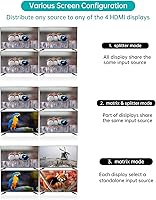
Buyers who need 4K at 60Hz — common for PC gaming, high-frame-rate content, or modern console output at full fidelity — should look elsewhere, because this rack-mount matrix tops out at 4K at 30Hz, and that is a hard ceiling worth understanding before committing. The MT-VIKI MT-HD44L-DE 4x4 HDMI Matrix Switch is also not the right tool if you only need to switch between two or three sources occasionally, as simpler and cheaper 2x2 or manual switchers would be more proportionate to that need. The audio extractor is limited to output 4 only, so if you need independent audio extraction from every output simultaneously, this unit will disappoint. Users without access to an optical drive may find the included CD-based software setup an annoyance, particularly on modern ultrabooks. Finally, anyone expecting plug-and-play simplicity with zero configuration should be prepared for a modest learning curve, especially when setting up LAN control or RS232 integration for the first time.
Specifications

  • Input Ports: The switch provides 4 HDMI input ports, each capable of accepting signals from sources such as gaming consoles, Blu-ray players, or streaming devices.
  • Output Ports: Four HDMI output ports allow simultaneous distribution of video signals to up to four independent display devices.
  • Max Resolution: Maximum supported resolution is 4K (3840x2160) at 30Hz with HDR pass-through; 4K at 60Hz is not supported.
  • Audio Extractor: A 3.5mm stereo audio extractor is available exclusively on Output 4, enabling analog audio feeds to amplifiers or soundbars.
  • Audio Formats: Supported audio formats include PCM, Dolby AC3, DTS 5.1, DTS 7.1, and DSD for broad compatibility with AV receivers and processors.
  • Control Methods: The unit supports five control methods: front-panel buttons, IR remote, RS232 serial, LAN port, and a browser-based web GUI.
  • ESD Protection: Built-in 8KV electrostatic discharge protection safeguards connected source and display equipment against static damage.
  • EDID Management: Integrated EDID management negotiates display capability data between sources and outputs to reduce handshake failures and blank-screen issues.
  • Switching Time: Input-to-output switching is completed in approximately 2 to 3 seconds under normal operating conditions.
  • Max Cable Run: Each input and output port supports cable runs of up to 15 meters, suitable for most room-scale AV installations.
  • Form Factor: The chassis is a standard 1U rack-mount design compatible with 19-inch server and AV equipment cabinets.
  • Dimensions: Physical dimensions measure 430.8 x 136.5 x 45mm (approximately 16.9 x 5.37 x 1.77 inches) including the rack-mount frame.
  • Weight: The unit weighs 4.69 pounds, which is typical for a metal-chassis 1U rack device of this class.
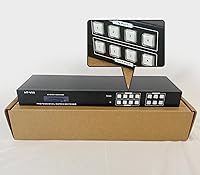
  • Front Panel: The front panel features acrylic crystal buttons with LED backlighting for input and output selection status indication.
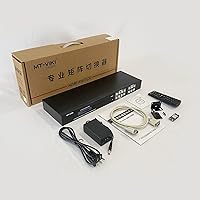
  • Accessories Included: The package includes an RS232 cable, IR remote control, rack ears with screws, power cable and adapter, CD driver disc, and a printed user manual.
  • Brand & Model: Manufactured by MT-VIKI under model number MT-HD44L-DE, released to the market in June 2023.
  • Chip Bandwidth: The internal switching chip operates at 3.4 Gbps bandwidth, which is consistent with the 4K at 30Hz maximum throughput specification.
  • Power Supply: The unit ships with a dedicated power adapter; the exact input voltage range should be verified in the user manual before use in non-standard regions.

Related Reviews

Yinker HD414 4x4 HDMI Matrix Switch
72%
83%
Signal Routing Reliability
78%
EDID Management
67%
4K Performance
74%
Ease of Setup
61%
IR Remote Usability
More
MT-VIKI MT-801HK-C 8-Port HDMI KVM Switch
78%
83%
Value for Money
88%
Ease of Setup
76%
Build Quality
69%
Switching Performance
71%
Display Quality
More
MT-VIKI 8x8 HDMI Matrix Switch
77%
91%
Routing Flexibility
88%
Control Method Variety
84%
Web GUI Usability
72%
4K Signal Quality
83%
EDID Management
More
MT-VIKI MT-1601HK-C 16-Port HDMI KVM Switch
80%
88%
Switching Reliability
81%
EDID Storage Performance
79%
Build Quality
62%
IR Remote Usability
86%
Value for Money
More
StarTech VS222HDQ 2x2 HDMI Matrix Switch
74%
88%
Build Quality
91%
Switching Reliability
83%
EDID Emulation
31%
4K and Resolution Support
86%
Ease of Setup
More
OREI BK-402A 8K eARC HDMI Matrix Switch 4x2
80%
88%
Signal Reliability & Handshake
84%
Audio Extraction Quality
91%
Routing Flexibility
82%
EDID Management
89%
Value for Money
More
OREI UHD-402D 4x2 HDMI Matrix Switch
78%
88%
Video Signal Quality
84%
Audio Extraction
71%
ARC Implementation
82%
EDID Management & Downscaling
86%
Setup & Ease of Use
More
MT-VIKI 460KL 4-Port VGA KVM Switch
80%
91%
Value for Money
93%
Ease of Setup
84%
Switching Reliability
78%
Build Quality
76%
Video Output Quality
More
OREI UHD-404R 4x4 HDMI Matrix Switcher
81%
88%
Signal Reliability
86%
4K Performance
91%
Downscaling Capability
79%
HDR & Audio Passthrough
84%
Setup & Ease of Use
More
OREI UHD48-EX230-K 4x4 HDMI Matrix Extender
78%
88%
Signal Stability
84%
4K & HDR Performance
61%
Installation Experience
82%
IR Control Functionality
79%
Build Quality & Enclosure
More

FAQ

No, it does not. The MT-VIKI MT-HD44L-DE 4x4 HDMI Matrix Switch tops out at 4K at 30Hz, which is a meaningful distinction if you are running a modern gaming PC or a PlayStation 5 at full resolution and frame rate. For 30Hz content — streaming video, Blu-ray playback, or presentation use — it works well, but 60Hz users will need to look at a higher-bandwidth model.
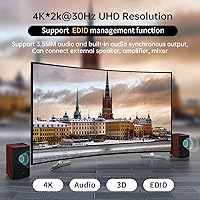
Just one, unfortunately. The 3.5mm audio extractor is only available on Output 4. If you need analog audio from multiple outputs simultaneously, this rack-mount matrix will not cover that use case without adding external audio splitters.

The web GUI runs in any browser on your local network, so there is nothing to install for basic remote switching. You point a browser at the switch's IP address and you can select inputs and outputs from there. The included CD contains the MatrixController software for more advanced RS232 and LAN control scenarios, but day-to-day web switching works without it.

For most users, no. The web GUI covers remote switching without the CD software, and IR and front-panel controls work out of the box. The CD becomes relevant mainly if you want to use the RS232 serial control or integrate the switch into an automation system. If that doesn't apply to you, the lack of an optical drive on your laptop shouldn't be a problem.

It will work, but with a caveat. Both consoles support 4K at 60Hz and 120Hz modes that this switch cannot pass through at full fidelity. You can configure the console to output at 4K 30Hz or 1080p 60Hz instead, and the switch will handle that fine. If you specifically bought a console for high-frame-rate gaming, the resolution trade-off is worth considering carefully.

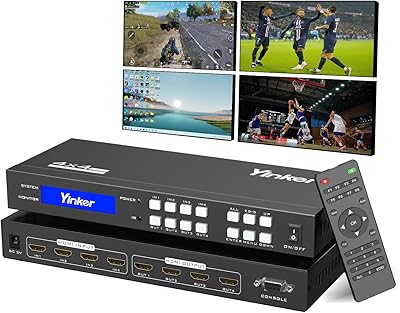
Yes, that is one of the core functions. You can mirror a single input across all four outputs simultaneously, or you can route different sources to each display independently — or any combination in between. That flexibility is what separates a matrix switch from a basic splitter.

That is one area where this switcher has a real advantage. You have four other control methods to fall back on: the front-panel buttons, the web GUI over LAN, RS232 serial from a connected control system, or the companion app. Losing the remote is inconvenient, but it will not leave you unable to operate the unit.

Yes, HDMI is platform-agnostic at the signal level, so you can mix Mac, Windows, Linux, consoles, and any other HDMI source across the four inputs without compatibility issues. EDID management helps each source correctly identify the display capabilities, which is particularly useful in mixed-source environments.

The product documentation does not specify active cooling, and user feedback does not commonly flag fan noise as a concern, suggesting passive cooling is used. That said, rack environments vary, and placing the unit near other heat-generating equipment in a sealed rack can affect operating temperature — adequate airflow around the unit is always a sensible precaution.

The specification lists 2 to 3 seconds, and buyer feedback generally aligns with that. It is not instantaneous, so if your use case involves rapid back-and-forth switching — live production, for instance — the delay will be noticeable. For conference room, home theater, and standard AV distribution use, most users find it perfectly acceptable.