Overview

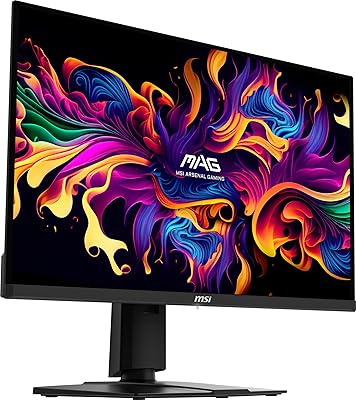
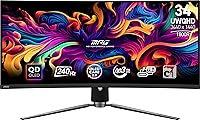
The MSI MPG 341CQPX 34-inch OLED Gaming Monitor sits in an interesting spot — premium enough to command serious attention, but not so stratospherically priced that it feels out of reach for dedicated enthusiasts. On a real desk, 34 inches of curved ultrawide is a genuine presence; coming from a flat 27-inch panel, the added horizontal real estate changes how games and workflows actually feel. What separates this ultrawide OLED from standard IPS or VA alternatives is the QD-OLED panel — quantum dot technology layered on OLED means richer, more saturated color alongside blacks that IPS simply cannot match. Gaming is the clear priority here, but multimedia and creative work benefit noticeably too.
Features & Benefits

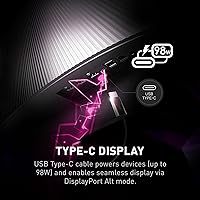
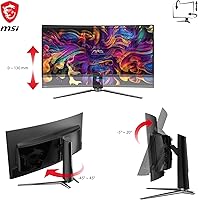
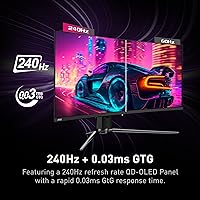
The 240Hz refresh rate is where this curved gaming display pulls away from mid-range competition — in fast shooters, motion feels crisp and immediate in a way that 144Hz panels cannot replicate. Pair that with a 0.03ms GtG response time and ghosting behind quick-moving objects becomes essentially a non-issue. OLED Care 2.0 runs pixel management quietly in the background, which genuinely matters if static content lingers on screen during long sessions. The stand handles both tilt and height adjustment, a small detail that adds up over extended use. The USB-C input is a practical addition as well — laptop users can run a single cable for both display signal and power delivery simultaneously.

Best For

This ultrawide OLED makes the most sense for PC gamers who rotate between competitive multiplayer and slower, story-driven titles — the 240Hz handles the former while the rich OLED color depth makes the latter feel genuinely cinematic. Those upgrading from a flat 27-inch 1440p setup will notice the shift immediately; the 21:9 curve creates immersion that flat panels in this size range cannot replicate. Content creators needing accurate, vibrant color alongside gaming performance will find this a capable dual-purpose display. One honest caveat: the physical footprint is substantial, so measuring your desk space before committing is worth doing rather than assuming it will fit.

User Feedback

Owners consistently highlight out-of-box color quality as a standout — the majority report the image looks impressive without any manual calibration. Burn-in anxiety comes up often in discussions, but most buyers feel meaningfully reassured once they understand how OLED Care 2.0 actively works in the background. The stand draws positive comments for its stability and straightforward assembly. Where sentiment gets more divided is the Gaming Intelligence software — some users find it intuitive, while others describe navigating it as unnecessarily clunky. A recurring note is that SDR brightness feels restrained compared to expectations, though HDR performance draws consistent praise. Overall, most buyers consider the price justified against competing ultrawide OLEDs at this tier.

Pros

  • QD-OLED panel produces deep, true blacks that IPS and VA panels at this size simply cannot match.
  • Out-of-box color accuracy is strong enough that most users will not need manual calibration.
  • 240Hz refresh rate keeps fast-paced shooters feeling immediate and fluid throughout long sessions.
  • The 0.03ms response time makes ghosting behind fast-moving objects a non-issue in practice.
  • OLED Care 2.0 runs quietly in the background, giving owners a genuine tool to manage long-term panel health.
  • USB-C connectivity lets laptop users run a single cable for both video and power, reducing desk clutter significantly.
  • The ergonomic stand offers real tilt and height adjustment, which adds up during extended daily use.
  • HDR performance consistently impresses owners, with contrast and color depth that justify enabling it.
  • The 21:9 ultrawide curve creates noticeable immersion in story-driven and open-world games.
  • Buyers consistently report the price feels justified when compared directly to competing ultrawide OLEDs.

Cons

  • SDR brightness feels underwhelming for bright rooms or users coming from high-nit LCD panels.
  • The Gaming Intelligence APP draws repeated criticism for a clunky, unintuitive navigation experience.
  • At nearly 32 inches wide, this curved gaming display requires a deep, spacious desk to sit comfortably.
  • OLED burn-in anxiety remains a real hesitation for users who display static content for long daily stretches.
  • Console users cannot fully exploit the 240Hz refresh rate, making the premium harder to justify.
  • The monitor weighs over 27 pounds, which makes repositioning or wall-mounting more involved than lighter alternatives.
  • No built-in speakers means adding external audio is a requirement, not an option.
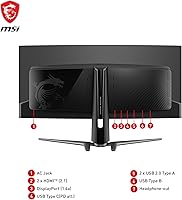
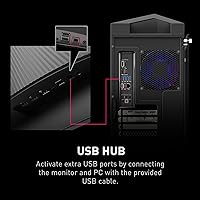
  • Port selection, while adequate, lacks the USB hub depth some users expect at this price point.

Ratings

Our AI rating system analyzed verified global user reviews for the MSI MPG 341CQPX 34-inch OLED Gaming Monitor, actively filtering out incentivized, bot-generated, and low-signal feedback to surface what real buyers actually experience over time. The scores below reflect a transparent synthesis of both standout strengths and recurring frustrations — nothing is glossed over. Where this ultrawide OLED earns high marks, it genuinely earns them; where it falls short of expectations, that is reflected plainly in the numbers.

Picture Quality
94%
The QD-OLED panel consistently draws praise as the single most impressive aspect of this curved gaming display. Owners describe colors as punchy and natural simultaneously, with blacks that make darker game environments feel genuinely three-dimensional rather than flat and muddy as on IPS panels.
A small but vocal group notes that the matte coating softens the absolute color vibrancy compared to glossy OLED alternatives. Side-by-side against a glossy panel, the difference is perceptible, though most users accept this trade-off given the glare reduction benefits.
Motion Performance
92%
At 240Hz with a sub-millisecond response time, fast-paced games feel noticeably cleaner than on 144Hz IPS displays — users playing competitive shooters consistently describe a tangible reduction in blur and smearing during rapid camera movements. The upgrade from a standard 144Hz panel is felt immediately.
The motion performance advantage is almost entirely a PC gaming benefit; users who also connect consoles report that the high refresh rate goes largely unused at console-standard 60Hz or 120Hz output. A few users also note that hitting 240fps consistently in demanding titles requires serious GPU investment.
HDR Experience
88%
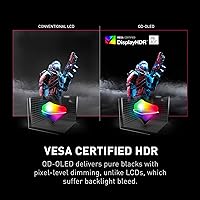
Per-pixel OLED dimming makes HDR content look genuinely different here compared to LCD-based HDR monitors — specific highlights in dark scenes pop in a way that edge-lit or full-array LCD panels cannot replicate at this size. Users gaming in darker rooms consistently rate HDR as a highlight.
True Black HDR 400 carries a lower peak brightness ceiling than premium mini-LED displays rated at 1000 nits or higher, which limits the absolute specular highlight intensity. In brightly lit rooms, some users feel the HDR impact is less dramatic than the specification suggests.
SDR Brightness
61%
39%
For typical gaming in controlled lighting, SDR brightness is sufficient and most users do not notice limitations during evening or night sessions. The matte coating also helps the image hold up better in moderate ambient light than a glossy panel at similar brightness levels would.
This is the most consistent technical complaint across user reviews — users coming from high-nit IPS monitors find SDR brightness underwhelming, especially in home offices with natural daylight. It is an inherent OLED constraint rather than a product defect, but it catches buyers off guard who do not research it in advance.
Build Quality
83%
The stand feels solid and well-engineered, drawing positive comments for its stability even on desks that experience some vibration. Assembly is generally described as straightforward, with the panel and stand connecting without requiring a second person or specialty tools in most cases.
At over 27 pounds, the monitor is on the heavier end for its class, and some users find repositioning it solo more cumbersome than expected. A handful of buyers also noted minor flex in the panel housing when adjusting height, though this does not appear to affect display performance.
Ergonomics
81%
19%
Both tilt and height adjustment work smoothly and hold their position reliably over time, which matters for users who share a desk between work and gaming sessions requiring different monitor heights. The height range is generous enough to accommodate both sitting and standing desk configurations comfortably.
There is no native swivel adjustment on the stand, which limits horizontal repositioning without physically moving the entire monitor. Users who want to angle the display toward a secondary chair or share viewing with someone beside them have to move the whole unit rather than just rotating the stand.
Connectivity
78%
22%
The combination of HDMI, DisplayPort, and USB-C covers the connectivity needs of most PC users and laptop owners cleanly. USB-C in particular is appreciated by those who connect a MacBook or Windows laptop and want a single-cable solution for both video and power.
The port selection lacks a built-in USB hub, which is a noticeable omission at this price tier — competing ultrawide OLEDs often include downstream USB-A ports for peripherals. Users with multiple devices on their desk find themselves reaching for a separate hub more often than expected.
Burn-in Risk
69%
31%
OLED Care 2.0 gives owners a more active layer of protection than older OLED monitors offered, and buyers who use the monitor primarily for gaming report feeling reasonably reassured after months of regular use. The pixel refresh cycles run unobtrusively and do not disrupt daily workflows.
Burn-in anxiety remains the single most discussed concern in user communities, and it is not entirely unfounded — users who leave static overlays, chat apps, or browser interfaces on screen for many hours daily do carry a measurable long-term risk. OLED Care 2.0 reduces but does not eliminate this concern for heavy static-content users.
Software Experience
58%
42%
The Gaming Intelligence APP provides genuine convenience for users who want to switch display modes or adjust settings without reaching for the physical OSD controls, and keyboard-driven access is faster than navigating monitor menus manually once the learning curve passes.
The app is the most consistently criticized aspect of the ownership experience — navigation is described as unintuitive and occasionally unresponsive, and updates have not resolved the core UX complaints to satisfaction. Many users ultimately abandon it and manage settings exclusively through the physical OSD instead.
Value for Money
76%
24%
The majority of buyers who compare this ultrawide OLED against competing QD-OLED panels in the same size class conclude that the pricing is competitive and the feature set justifies the outlay. The combination of 240Hz, QD-OLED, and a solid ergonomic stand at this price point is difficult to fault on paper.
Buyers who stretch their budget to reach this price tier and then discover SDR brightness limitations or software frustrations tend to feel the sting more acutely. It is not an overpriced monitor within its category, but it is priced at a level where every shortcoming gets scrutinized more heavily than it might on a cheaper panel.
Out-of-Box Setup
85%
The monitor arrives well-packaged and most users report having a working display within 20 minutes of opening the box. Default color settings are accurate enough that casual users can game immediately without diving into calibration menus, which is a genuine quality-of-life benefit.
The initial software prompt to install Gaming Intelligence APP creates friction for users who prefer lean setups, and dismissing it is not as obvious as it should be. A small percentage of users also reported needing to update firmware immediately out of box to resolve minor display initialization quirks.
Ultrawide Compatibility
79%
21%
The 21:9 aspect ratio is broadly supported across modern PC games, and most titles either natively support ultrawide or have community patches that enable it. For productivity users, the additional horizontal canvas genuinely reduces the need for a dual-monitor setup.
A meaningful number of older games and some live-service titles either black-bar or stretch to fill the ultrawide resolution, requiring workarounds. Users who play a specific catalog of older titles should check ultrawide compatibility for those games specifically before purchasing.
Curvature & Immersion
87%
The curve hits a practical sweet spot for a 34-inch panel — immersive enough that peripheral vision picks up on-screen content in wider games, but subtle enough that straight lines in productivity apps do not feel distorted during long work sessions. Most users adapt within a few days.
Users sitting farther than about 3 feet from the panel report that the curvature impact diminishes noticeably, reducing the immersive payoff. Those working in deep desks where monitor placement is pushed back to accommodate keyboards and other equipment may not experience the curvature benefit as intended.

Suitable for:

The MSI MPG 341CQPX 34-inch OLED Gaming Monitor is built for PC gamers who refuse to choose between competitive performance and visual richness — and that is a narrower group than marketing usually admits. If you split your time between fast-paced multiplayer titles and slower, visually demanding games, this curved gaming display rewards both equally well. The 21:9 ultrawide format also makes a genuine difference for multitaskers and productivity-minded users who want browser windows, documents, or video timelines open side by side without switching between apps. Content creators who need punchy, accurate color for photo or video work alongside their gaming setup will find this ultrawide OLED pulls double duty more convincingly than most gaming-labeled monitors. Anyone upgrading from a 27-inch flat IPS or VA panel should expect a substantial perceptual shift — more immersive, more vibrant, and noticeably faster in motion clarity.

Not suitable for:

The MSI MPG 341CQPX 34-inch OLED Gaming Monitor is not the right fit for every buyer, and being honest about that saves a lot of frustration. If your desk is compact or shared, 34 inches of curved panel at nearly 32 inches wide is a physical commitment that renders some workspaces genuinely impractical. Console gamers should take note that the high refresh rate advantage largely disappears when connected to a PlayStation or Xbox that outputs at 60Hz or 120Hz, so much of the premium goes unused. Users who leave static content — spreadsheets, chat apps, browser toolbars — on screen for many hours a day should weigh OLED burn-in risk carefully, even with OLED Care 2.0 in play. Those on a tight budget or prioritizing raw peak brightness for sun-lit rooms will likely find better value elsewhere, since SDR brightness is restrained and the price tier demands a clear upgrade rationale.
Specifications

  • Panel Type: Uses a QD-OLED panel, combining quantum dot color enhancement with OLED self-emissive technology for deep blacks and vivid saturation.
  • Screen Size: 34-inch diagonal curved display designed for ultrawide immersion in both gaming and productivity contexts.
  • Resolution: Native resolution of 3440x1440 (UWQHD), delivering sharp detail across the full 21:9 aspect ratio.
  • Refresh Rate: Runs at up to 240Hz, keeping motion fluid and responsive during fast-paced gaming sessions.
  • Response Time: Rated at 0.03ms GtG, which effectively eliminates visible ghosting in motion-heavy content.
  • HDR Support: Supports True Black HDR 400, leveraging OLED per-pixel dimming to achieve contrast levels that LCD-based HDR cannot replicate.
  • Aspect Ratio: 21:9 ultrawide aspect ratio provides expanded horizontal field of view compared to standard 16:9 monitors.
  • Connectivity: Includes HDMI, DisplayPort, and USB Type-C inputs, supporting flexible connection across PCs, laptops, and compatible consoles.
  • Screen Surface: Matte screen coating reduces glare and reflection, improving visibility in mixed-lighting environments.
  • Ergonomics: Stand supports both tilt and height adjustment, allowing comfortable positioning for users of varying desk heights and seating preferences.
  • Software: Ships with OLED Care 2.0 for panel longevity management and the Gaming Intelligence APP for on-the-fly display customization.
  • Dimensions: Measures 12.52 x 31.97 x 16.82 inches with stand attached, requiring a desk with adequate depth and width to accommodate the curved panel.
  • Weight: Weighs 27.4 pounds fully assembled, which should be considered when planning desk load capacity or potential wall-mount scenarios.
  • Color: Ships in black with a gaming-oriented aesthetic that integrates cleanly into most desk setups without aggressive styling.
  • Model Series: Part of MSI's MPG line, positioned as a high-performance gaming tier sitting above the MAG series in MSI's monitor hierarchy.

Related Reviews
MSI MAG342CQR 34″ Curved Gaming Monitor
73%
83%
Image Quality
87%
Gaming Performance
89%
Curvature & Immersion
74%
Build Quality
81%
Stand & Ergonomics
More
MSI MPG 491CQPX 49-inch QD-OLED Monitor
76%
96%
Image Quality
93%
HDR Performance
91%
Gaming Performance
88%
Color Accuracy
94%
Ultrawide Immersion
More
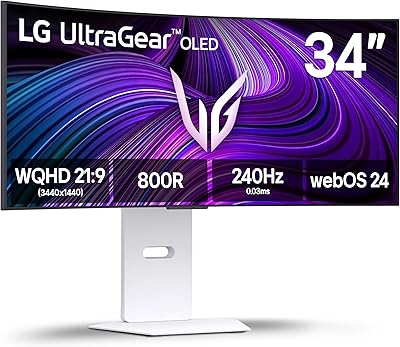
LG 34GX90SA-W 34-inch OLED Curved Gaming Monitor
81%
94%
Picture Quality
91%
Gaming Performance
88%
Immersion & Curvature
83%
Smart Platform (webOS)
93%
Contrast & Black Levels
More
Alienware AW3423DW 34-inch QD-OLED Gaming Monitor
83%
97%
Image Quality
94%
Motion Performance
96%
Contrast & Black Levels
89%
Color Accuracy
91%
Refresh Rate & Sync
More
LG 34GS95QE 34-inch OLED Curved Gaming Monitor
81%
96%
Image Quality
94%
Motion Clarity
97%
Contrast & Black Levels
91%
Refresh Rate Performance
88%
Immersion & Curve
More
MSI MAG 271QPX 27-inch QD-OLED Gaming Monitor
80%
94%
Image Quality
96%
Motion Clarity
88%
HDR Performance
93%
Refresh Rate & Smoothness
81%
Connectivity & Ports
More
Alienware AW3425DWM 34-inch Curved Gaming Monitor
82%
91%
Image Clarity & Sharpness
89%
Refresh Rate & Motion Performance
93%
Ultrawide Immersion
84%
Color Accuracy & Vibrancy
62%
HDR Performance
More
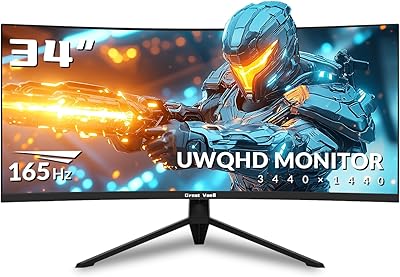
Gawfolk GF340H 34-inch Ultrawide Monitor
72%
84%
Value for Money
88%
Screen Real Estate
71%
Image Quality
78%
Color Accuracy
76%
Refresh Rate & Motion
More
Alienware AW2725DF 27-inch QD-OLED Gaming Monitor
86%
94%
Picture Quality & Contrast
96%
Motion Clarity & Response Time
92%
Refresh Rate Performance
86%
Color Accuracy for Creative Work
89%
HDR Performance
More
Samsung 34-Inch SJ55W Ultrawide Monitor
77%
88%
Picture Quality
91%
Contrast & Blacks
86%
Resolution & Sharpness
67%
Refresh Rate & Gaming Smoothness
93%
Ultrawide Productivity
More

FAQ

It is a legitimate consideration rather than pure myth, but the risk is manageable with normal usage habits. OLED Care 2.0 runs pixel refresh cycles and brightness management automatically, which meaningfully reduces the chances of permanent image retention. If you leave static desktop elements — taskbars, chat overlays, browser chrome — on screen for many hours daily over years, some risk exists. For typical gaming and mixed use, most owners find the built-in protections sufficient.

Yes, you can connect a console via HDMI, and the image quality will look excellent. The honest caveat is that current-gen consoles max out at 120Hz at best, so the 240Hz refresh rate advantage is largely unavailable on console. You are still getting a beautiful QD-OLED picture, but the high-refresh premium is really a PC gaming benefit.

Most buyers report the assembly is straightforward and takes around 15 to 20 minutes without needing additional tools. The stand attaches securely and the cable routing is reasonably clean. Initial software setup via Gaming Intelligence APP can feel a bit clunky, but the monitor itself works immediately out of the box at its default settings.

Yes, it supports adaptive sync technology, which eliminates screen tearing during gaming. It is compatible with AMD FreeSync Premium Pro and also works with NVIDIA G-Sync Compatible certification, so it covers both major GPU ecosystems without requiring a dedicated G-Sync module.

The USB-C port supports DisplayPort Alt Mode for video signal and also delivers power delivery, so in many cases a single cable handles both display output and laptop charging simultaneously. The exact power delivery wattage should be verified against your specific laptop's charging requirements, as higher-wattage laptops may charge more slowly than with their dedicated charger.

This is a fair concern since glossy OLED panels tend to look more vivid in controlled lighting. The matte coating on this ultrawide OLED does soften the absolute peak pop of colors compared to a glossy alternative, but the QD-OLED panel is vibrant enough that the practical difference is subtle for most users. The trade-off is significantly better usability in rooms with ambient light or windows nearby.

SDR brightness is one of the more honest limitations of this curved gaming display and OLED panels in general. It is adequate for typical office or gaming environments, but if your room gets a lot of direct sunlight or you are used to a bright IPS panel, the SDR output may feel restrained by comparison. HDR performance is where this panel genuinely shines, so calibrating your viewing environment helps.

Yes, UWQHD at 240Hz is a significant workload for any graphics card. To consistently reach high frame rates in demanding titles at this resolution, you will want at minimum an NVIDIA RTX 4070 or AMD RX 7800 XT class GPU. In less demanding or older games, the bar is lower, and competitive titles are generally much easier to drive at high frame rates than open-world games with heavy rendering loads.

With the stand, this curved gaming display spans just under 32 inches wide and sits about 16.8 inches deep. A desk that is at least 55 to 60 inches wide and 28 to 30 inches deep will give you comfortable room without the panel edges feeling cramped. Smaller desks can technically fit it, but the immersive curve works best when you are sitting roughly 2 to 3 feet from the screen center.

The monitor works perfectly fine without ever installing the software — all core display functions are accessible through the on-screen display menu and physical controls. The Gaming Intelligence APP adds convenience for remapping settings via keyboard and mouse, which some users appreciate, but those who find the software unintuitive can simply skip it and lose nothing essential in day-to-day use.