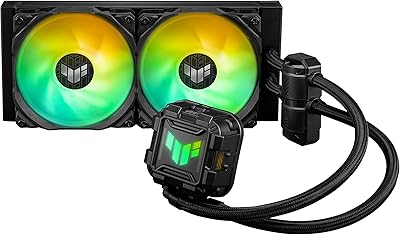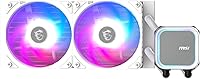
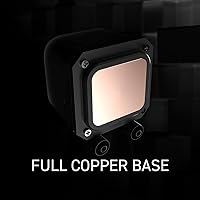

Overview

The MSI MAG Coreliquid A13 240 Liquid Cooler arrived in November 2024 as a mid-range AIO aimed at builders who want real cooling performance without sacrificing aesthetics. The all-white finish and ARGB lighting make it an obvious pick for anyone assembling a windowed or white-themed build — it looks genuinely sharp inside a case. Socket support is broad: LGA 1851 works out of the box, and compatibility stretches across current AMD AM4 and AM5 platforms too. That said, honest framing matters here. A 240mm radiator handles mid-range CPUs comfortably, but if you are running a high-TDP flagship chip under sustained workloads, you will want a 280mm or 360mm option instead.

Features & Benefits

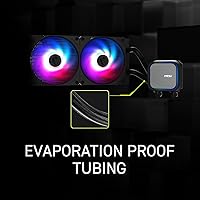
One of the more interesting engineering choices in this AIO cooler is the split-flow radiator with an integrated three-phase pump. Rather than mounting the pump separately, MSI built it directly into the radiator, which reduces mechanical resonance and keeps the overall noise profile lower over time. Ceramic bearings in the pump also matter: they outlast sleeve-bearing designs and contribute to that low 14.4 dB noise rating at everyday use. The dual 120mm ARGB fans spin up to 5200 RPM when needed, though at peak speed you will hear them. Tubing is triple-layered with reinforced mesh sheathing — genuinely solid construction for a cooler at this price point. Thermal paste and a universal mounting bracket are included, so you will not need to hunt for extras before your first build.

Best For

This MSI liquid cooler hits a specific sweet spot for white-build enthusiasts and platform-agnostic buyers. If you are on an LGA 1700, LGA 1851, AM4, or AM5 system running a mid-range CPU — think Core i5, Ryzen 5, or similar — the thermal headroom here is genuinely comfortable. It is also a strong entry point for anyone making the jump from air cooling for the first time; the install process is straightforward and the included hardware covers a wide range of sockets without adapter shopping. Where it is less compelling is on power-hungry chips pushing sustained 200W-plus loads. If your CPU runs hot under long workloads, the 240mm radiator size will eventually become the ceiling.

User Feedback

Buyers consistently highlight quiet idle performance and how painless the installation experience is — a recurring comment is that even first-timers got it mounted and running without issues. The ARGB lighting also draws strong praise, particularly in white builds where the effect is clean and visible. On the critical side, a portion of users report pump noise at high load, which is worth knowing if your CPU regularly hits heavy sustained workloads. There is also a dependency on MSI Center software to fully control the lighting, which some find limiting compared to standalone controllers. Buyers comparing it to similarly priced options from Deepcool or Arctic generally find the aesthetics favor the MAG Coreliquid A13 240, though thermal performance between them is relatively close.

Pros

  • Ceramic-bearing pump runs noticeably quieter than sleeve-bearing alternatives during everyday use.
  • ARGB lighting on both fans and pump head looks genuinely sharp in white or windowed builds.
  • Out-of-the-box LGA 1851 support means no waiting for bracket updates with current Intel platforms.
  • Wide socket compatibility across AMD and Intel removes the need for separate mounting kits.
  • Triple-layered reinforced tubing adds real long-term durability to a closed-loop system.
  • Thermal paste is included, so the box has everything needed to complete the install.
  • The integrated three-phase pump design reduces mechanical resonance compared to external pump setups.
  • Quiet idle behavior is a consistent highlight among real-world users across multiple platforms.
  • Installation is approachable enough for first-time AIO builders without prior liquid cooling experience.
  • At its price point, the build quality and feature set represent solid value for mid-range system builders.

Cons

  • Fan noise becomes noticeable when the dual 120mm fans ramp up toward their 5200 RPM ceiling.
  • Full lighting control requires MSI Center software, which adds an unwanted dependency for some users.
  • A 240mm radiator has real thermal limits — sustained heavy workloads on powerful CPUs will expose them.
  • The pump head may feel bulky in tighter cases or near tall VRM heatsinks on certain motherboards.
  • ARGB ecosystem integration works best within MSI setups; cross-brand sync can be inconsistent.
  • Some users have reported intermittent pump whine under peak load conditions.
  • No standalone lighting controller is included, so you are dependent on software or motherboard headers.
  • Tubing stiffness may complicate cable routing in smaller mid-tower cases with limited clearance.

Ratings

Our AI rating system analyzed verified global user reviews for the MSI MAG Coreliquid A13 240 Liquid Cooler, actively filtering out incentivized, bot-generated, and outlier feedback to surface what real buyers consistently experience. The scores below reflect both the genuine strengths that keep this AIO cooler competitive in its segment and the recurring pain points that buyers encounter in daily use. Nothing is glossed over — the numbers tell the honest story.

Thermal Performance
74%
26%
For mid-range CPUs like the Core i5 or Ryzen 5 and 7 class, this AIO cooler keeps temperatures comfortably in check during everyday gaming sessions and moderate productivity workloads. Users transitioning from air cooling consistently report a meaningful drop in peak temperatures under sustained load.
When paired with high-TDP processors pushing sustained all-core loads, the 240mm radiator hits its ceiling faster than buyers expect. Several users running flagship-class chips noted that thermal headroom disappears quickly during extended rendering or overclocking sessions.
Noise Level
82%
18%
At idle and during light tasks, this MSI liquid cooler is remarkably quiet — the ceramic-bearing pump and low baseline fan speeds keep the system nearly inaudible in a typical home or office environment. Most users report they cannot hear it at all during browsing or light gaming.
At peak load the dual 120mm fans ramp aggressively toward 5200 RPM, and the noise becomes clearly audible. A handful of users also reported occasional pump whine under sustained high-load conditions, which can be distracting in a quiet room.
Aesthetics & Lighting
91%
The all-white finish and ARGB implementation across both fans and the pump head make this one of the more visually polished options at its price point. Buyers building white-themed rigs with windowed cases consistently highlight how good it looks once installed and synced.
ARGB customization is tied to MSI Center software, which not everyone wants running in the background. Users outside the MSI ecosystem find that cross-brand lighting sync can be inconsistent, and the default lighting mode without software control is limited.
Installation Experience
88%
The universal mounting bracket and included thermal paste mean most buyers can go from unboxing to a running system without hunting for extra hardware. First-time AIO builders specifically praise how intuitive the process is, with multiple users saying it was easier than expected.
A few users with larger pump heads noted tight clearance near tall VRM heatsinks on certain motherboard layouts. The tubing can feel slightly stiff during initial routing, which makes positioning the radiator a minor challenge in smaller mid-tower cases.
Build Quality
83%
The triple-layered reinforced mesh tubing feels durable and purposeful — noticeably more substantial than the basic rubber tubing found on cheaper AIOs. The pump head housing and radiator construction give the unit a solid, well-assembled feel straight out of the box.
Some users find the pump head slightly bulky relative to competing designs, which can create fitment issues near components on denser motherboard layouts. The tubing stiffness, while a sign of quality, does reduce flexibility during cable management.
Socket Compatibility
93%
The breadth of socket support here is genuinely impressive — covering LGA 1851 out of the box alongside AM5, AM4, LGA 1700, and a long list of legacy sockets means this cooler works across nearly any current or recent build without adapter kits. Platform flexibility is a real strength.
While the compatibility list is wide, users have noted that the installation steps differ enough between Intel and AMD mounting systems that the manual needs to be read carefully. Switching the bracket between platforms requires fully disassembling the mounting hardware.
Fan Performance
77%
23%
The dual 120mm PWM fans offer a wide speed range that allows the motherboard to keep them nearly silent during light workloads while still ramping hard when cooling demand spikes. The ARGB implementation adds visual value without compromising airflow design.
At the top of their RPM range, the fans generate more noise than some buyers anticipate from a cooler marketed partly on quiet operation. Compared to aftermarket 120mm fans from brands like Noctua or Arctic, the stock fans are adequate but not class-leading for airflow-to-noise ratio.
Pump Reliability
79%
21%
The three-phase integrated pump design and ceramic bearings give this AIO cooler a durability edge over budget options using simpler pump assemblies. Most users report steady, consistent coolant flow with no gurgling or air-bubble sounds after initial setup.
A recurring complaint from a subset of buyers involves intermittent pump whine at high load, which suggests some unit-to-unit variation in pump assembly quality. While not a widespread issue, it appears often enough across reviews to be worth noting.
Software & Ecosystem
61%
39%
MSI Center provides a functional hub for managing fan curves, lighting profiles, and pump behavior in a single interface. For buyers already within the MSI ecosystem — pairing this cooler with an MSI motherboard — the integration works smoothly and requires minimal setup.
Users outside the MSI ecosystem consistently find MSI Center to be an unwanted dependency, particularly those who prefer lightweight or software-free setups. The application has drawn criticism for background resource usage and occasional stability issues that require reinstalling to resolve.
Value for Money
86%
Relative to what it delivers — ARGB aesthetics, broad socket support, ceramic-bearing pump, and solid mid-range thermal performance — the MAG Coreliquid A13 240 competes well with other 240mm AIOs in its price bracket. Buyers consistently feel they are getting more visual and build quality than expected.
When evaluated purely on thermal performance per dollar, competing options from Arctic and Deepcool at similar price points can edge it out. Buyers who do not care about aesthetics may find those alternatives offer a slightly better raw cooling value proposition.
Tubing Quality
84%
The triple-layered evaporation-proof construction with mesh sheathing is a practical durability feature that stands out at this price tier. Buyers who have owned cheaper AIOs notice the difference immediately — the tubing feels designed to last rather than to cut costs.
The same robust construction that makes the tubing durable also makes it less flexible than thinner alternatives. In smaller cases or builds with tight routing paths, the rigidity can make positioning the radiator slightly more fiddly than expected.
Out-of-Box Readiness
89%
Thermal paste, a universal bracket, and clear instructions mean this AIO cooler is genuinely ready to install the moment you open the box. This matters more than it might seem — not having to source extra hardware before a build day reduces friction considerably for new builders.
The instruction manual, while complete, could benefit from clearer diagrams for the LGA 1851 installation path specifically, as this is the newest supported socket and buyers are more likely to be unfamiliar with its mounting requirements.
Case Compatibility
71%
29%
The 390mm tube length handles most standard mid-tower cases without pulling tight, and the 240mm radiator size fits in the vast majority of cases that support a dual 120mm front or top mount. For typical builds, fitment is a non-issue.
Compact ITX cases and some tighter mATX enclosures may have real clearance problems, particularly given the pump head size and tubing stiffness. Buyers with smaller form-factor cases should carefully check radiator clearance and tube routing paths before purchasing.

Suitable for:

The MSI MAG Coreliquid A13 240 Liquid Cooler is a strong fit for PC builders who want a meaningful cooling upgrade over air without committing to a larger, more expensive 360mm AIO. It is particularly well-suited to white-themed or windowed builds where aesthetics carry real weight — the ARGB fans and clean white finish genuinely contribute to a polished final look. Buyers running mid-range CPUs like a Core i5, Ryzen 5, or Ryzen 7 will find the thermal performance comfortable for both everyday tasks and moderate workloads. The broad socket support — covering AM4, AM5, LGA 1700, and the newer LGA 1851 — means it works across a wide range of current and recent platforms without adapter headaches. First-time AIO buyers also have good reason to consider it: the included thermal paste, universal bracket, and straightforward mounting process lower the barrier to entry considerably.

Not suitable for:

The MSI MAG Coreliquid A13 240 Liquid Cooler is not the right tool if your build centers on a high-TDP processor — flagship chips like the Core i9-14900K or Ryzen 9 7950X pushing sustained heavy workloads will push a 240mm radiator to its thermal ceiling faster than most buyers expect. If you do most of your heavy lifting through long rendering sessions, continuous compilation, or extended overclocking runs, a 280mm or 360mm AIO will serve you considerably better. Buyers who prefer full RGB control without relying on manufacturer software should also think twice — lighting customization here is tied to MSI Center, which adds a software dependency that not everyone wants. If you are building in a compact ITX case with tight radiator clearances, the 390mm tube length and overall pump head footprint may also create fitment challenges worth checking against your case specs before purchasing.

Specifications

  • Radiator Size: The radiator measures 240mm in length, accommodating two 120mm fans in a standard dual-fan configuration.
  • Fan Size: Two 120mm ARGB PWM fans are included, each individually addressable for lighting and speed control.
  • Fan Speed: The included fans operate across a range up to a maximum of 5200 RPM under full PWM load.
  • Pump Speed: The integrated three-phase pump runs at speeds up to 3800 RPM during active cooling operation.
  • Pump Type: A three-phase pump is built directly into the radiator using a split-flow design to reduce mechanical resonance.
  • Bearing Type: Ceramic bearings are used in the pump assembly, offering longer operational life than traditional sleeve-bearing alternatives.
  • Noise Level: The rated noise output is 14.4 dB under typical operating conditions, placing it in a very quiet category for 240mm AIOs.
  • Tube Length: The cooling tubes measure 390mm and feature a triple-layered construction wrapped in reinforced mesh sheathing.
  • Power Connector: A 4-Pin PWM connector is used for fan control, providing full speed management via the motherboard header.
  • Wattage: Total system power draw is rated at 25 watts at a nominal operating voltage of 10 volts.
  • Intel Support: Compatible Intel sockets include LGA 1150, 1151, 1155, 1156, 1200, 1366, 1700, 1851, 2011, 2011-3, and 2066.
  • AMD Support: Compatible AMD sockets include AM5, AM4, AM3+, AM3, AM2+, AM2, FM2+, FM2, and FM1.
  • Lighting: Both fans and the pump head feature ARGB lighting, controllable through MSI Center or a compatible ARGB motherboard header.
  • Cooler Color: The unit ships in an all-white finish, designed to complement white-themed or windowed PC builds.
  • Package Weight: The complete package weighs 4.12 pounds including the radiator, fans, pump head, tubing, and all mounting hardware.
  • Package Dimensions: The retail box measures 13.5 x 10.47 x 5.75 inches, sized to house the radiator and accessories without extra bulk.
  • Included Accessories: Thermal paste and a universal mounting bracket supporting both AMD and Intel platforms are included in the box.
  • Release Date: This cooler was officially released in November 2024, with LGA 1851 support available out of the box at launch.

Related Reviews
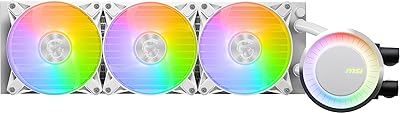
MSI MAG CoreLiquid E360 White AIO CPU Liquid Cooler
86%
94%
Cooling Performance
88%
Noise Levels
90%
RGB Lighting Customization
80%
Ease of Installation
91%
Build Quality
More
Cooler Master 240 Elite Liquid White CPU Liquid Cooler
85%
91%
Cooling Performance
84%
Noise Levels
92%
Ease of Installation
89%
Build Quality
88%
aRGB Lighting Effect
More
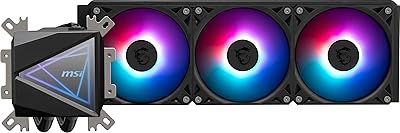
Cooler Master MasterLiquid Atmos 240 Liquid Cooler
82%
76%
Thermal Performance
88%
Noise Level
82%
Build Quality
84%
Pump Performance
91%
RGB & Lighting
More
MSI MAG CoreLiquid I360 360mm AIO Liquid Cooler
82%
88%
Cooling Performance
83%
Pump Noise & Vibration
67%
Fan Noise at Load
91%
Build Quality & Materials
94%
RGB & Aesthetics
More
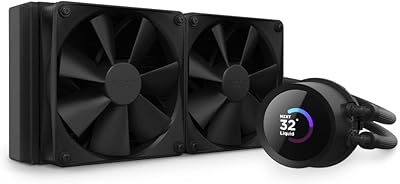
NZXT Kraken 240 AIO CPU Liquid Cooler
86%
92%
Cooling Performance
88%
Noise Level
90%
Ease of Installation
86%
Aesthetic Customization
80%
Radiator Size Compatibility
More
CORSAIR Nautilus 240 RS ARGB Liquid CPU Cooler
85%
89%
Cooling Performance
92%
Noise Level
85%
RGB Lighting
83%
Ease of Installation
90%
Build Quality
More
Thermalright Aqua Elite 240 V3 CPU Cooler
80%
83%
Thermal Performance
76%
Noise Level
92%
Value for Money
88%
Installation Experience
79%
Build Quality
More
Asus ROG RYUO 240 RGB AIO Liquid CPU Cooler
84%
94%
Cooling Performance
88%
Noise Levels
73%
Ease of Installation
90%
RGB Lighting and Visual Appeal
85%
Build Quality and Durability
More
ASUS ROG RYUO III 240 ARGB AIO Liquid CPU Cooler
88%
94%
Cooling Performance
88%
Noise Level
91%
Aesthetic Appeal
75%
Ease of Installation
92%
RGB Customization
More
ASUS TUF Gaming LC II 240 ARGB AIO Cooler
80%
76%
Thermal Performance
81%
Noise Levels
74%
Build Quality
88%
Installation Experience
69%
Pump Reliability
More

FAQ

Yes, it does. The MAG Coreliquid A13 240 ships with LGA 1851 support built in, so you will not need to source a separate mounting bracket or wait for an update kit. Everything required for that socket is already in the box.

The lighting will still function, but full customization depends on your setup. If your motherboard has a standard ARGB header, you can connect the fans there and control them through your motherboard software. For the deepest control — including pump head lighting sync — MSI Center works best, and that does tie you to MSI ecosystem software.

At idle and during light workloads, yes — the rated noise level of 14.4 dB is genuinely quiet. Where it gets louder is when the fans ramp up under sustained CPU load, particularly approaching their 5200 RPM ceiling. For everyday tasks, most people will barely notice it running.

Absolutely. AM4 is on the supported socket list and the included bracket handles it without any adapters. It is a good option if you are refreshing an older system and want liquid cooling without replacing everything else.

It is one of the more approachable options in the 240mm category. The bracket system covers a wide range of sockets with the same hardware, and the instructions are clear enough for a first-timer. Thermal paste is pre-included, so you are not making a last-minute store run. Most users report getting it mounted and running without issues on their first attempt.

It depends on how you use it. Under light to moderate workloads it will manage, but if you are running sustained heavy loads — long rendering jobs, continuous overclocking, or all-core stress — a 240mm radiator will eventually hit its thermal limit with high-TDP chips. For those processors, a 360mm AIO or a high-end air cooler is a safer long-term choice.

The tubes measure 390mm, which is sufficient for most standard mid-tower cases. You will generally have enough slack to mount the radiator at the top or front without the tubing pulling tight. That said, if you have an especially compact case, it is worth checking your case specifications against the tube length before purchasing.

It uses a three-phase integrated pump built directly into the radiator rather than a separate external pump block. This design reduces the mechanical vibration and resonance that can cause that low-frequency humming noise some AIO coolers are known for. Combined with ceramic bearings, it is engineered for quieter and more durable long-term operation.

You can connect the ARGB fans to a compatible motherboard header and manage them through your motherboard software instead. The trade-off is that the pump head lighting and fan lighting may not sync perfectly unless your motherboard software supports cross-device ARGB control. If you prefer staying completely software-free, the lighting will default to a basic mode based on your header settings.

At this price point, the competition is real. Arctic and Deepcool both offer strong 240mm performers that often edge this AIO cooler on raw thermal throughput. Where this MSI liquid cooler differentiates itself is aesthetics — the white finish, the ARGB implementation, and the overall visual package are noticeably stronger if your build has a window panel. If pure cooling performance per dollar is the only metric that matters, those competing options are worth a close look.

Where to Buy