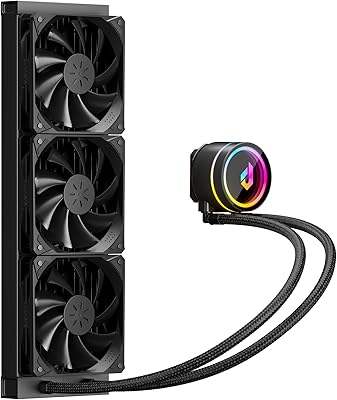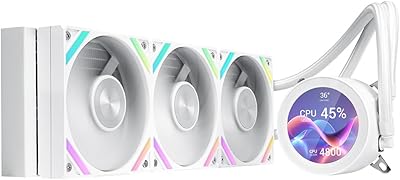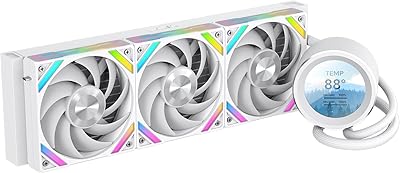


Overview

The MSI MAG CoreLiquid E360 AIO CPU Cooler sits in an interesting spot in the liquid cooling market — capable enough for demanding workloads, yet priced where enthusiast builders actually shop. What sets it apart from a typical AIO layout is the radiator-integrated pump, which moves the mechanical noise source away from your motherboard entirely. Socket compatibility is genuinely broad, covering everything from older Intel platforms up through LGA1851 and AMD AM5, so it won't feel outdated after a platform upgrade. The white colorway is a real design commitment — it looks cohesive in a light-themed build, but if your case is dark, that aesthetic advantage largely disappears.

Features & Benefits

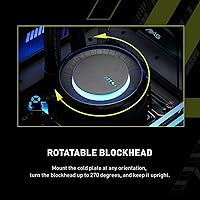
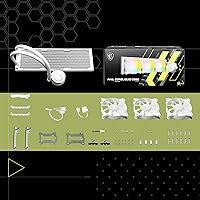
Three 120mm ARGB fans stretch across the full radiator, giving this AIO cooler plenty of surface area to shed heat from power-hungry processors without pushing fan speeds aggressively. The rotating pump cap is a genuinely useful detail — it lets you orient the logo correctly regardless of mounting direction, which sounds minor until you've fought with a misaligned head on a previous build. Because the pump lives inside the radiator rather than on the CPU block, vibration noise reaching your motherboard is noticeably reduced. The ceramic motor bearing carries a 100,000-hour rating, translating to roughly 11 years of continuous operation — a credible durability claim. ARGB lighting spans both fans and head unit, tunable through MSI Center software.

Best For

This 360mm liquid cooler makes the most sense for builders running high-TDP chips — Ryzen 9 or Intel Core Ultra processors that generate enough heat to make a mid-range air cooler struggle under sustained load. It's also a natural pick for anyone assembling a white-themed build, where matching fans, radiator, and pump head creates genuine visual cohesion rather than a patchwork look. Users already invested in MSI hardware will get the smoothest experience through unified software control. Beyond aesthetics, it's worth considering if you simply want a quiet, capable 360mm AIO without reaching into flagship pricing — the value proposition holds up well against comparable Corsair and NZXT alternatives.

User Feedback

Buyers consistently highlight how straightforward the installation process is, with the rotating cap design drawing particular praise from people who've wrestled with fixed-orientation pump heads on previous coolers. Quiet operation comes up repeatedly, even from users running sustained rendering or gaming sessions for hours. On the downside, some buyers express genuine frustration with MSI Center being the sole gateway to full fan curve and lighting customization — if you're on Linux or simply dislike manufacturer software, that's a real limitation. A handful of users note that tubing stiffness can complicate routing inside compact cases. Long-term pump reliability concerns are rare but worth keeping in mind given the unconventional radiator-mounted placement.

Pros

  • The rotating pump cap solves a genuinely frustrating installation problem, letting you orient the logo cleanly regardless of case layout.
  • Quiet operation at 18 dB makes this 360mm liquid cooler one of the less intrusive options for noise-sensitive workstations or bedroom setups.
  • Broad socket support spanning LGA1150 through LGA1851 and AM4 through AM5 means it survives at least one platform generation upgrade.
  • Placing the pump inside the radiator reduces motherboard vibration noticeably compared to traditional CPU-block pump designs.
  • The ceramic motor bearing and 100,000-hour rated lifespan suggest genuine long-term reliability rather than a spec sheet checkbox.
  • All three 120mm fans and the pump head share ARGB lighting, so the whole unit looks cohesive without mixing and matching components.
  • The white colorway is factory stock across every component, not a partial repaint that leaves mismatched greys or cream tones.
  • At this price tier, the MSI MAG E360 competes favorably against similarly priced Corsair and NZXT options on both features and build quality.
  • Installation feedback from real buyers consistently rates the mounting process as straightforward, even for first-time AIO builders.

Cons

  • Full fan curve and lighting control require MSI Center on Windows — Linux users and software-minimalists are effectively locked out.
  • The 5.25-pound weight and 360mm footprint make this AIO cooler impractical for compact ITX builds with limited radiator mounting options.
  • Tubing stiffness has been flagged by some buyers as a routing challenge inside smaller or mid-tower cases with awkward radiator positions.
  • MSI Center itself has a mixed reputation for stability, with some users reporting software bugs that affect fan speed responsiveness.
  • Thermal performance, while solid, does not consistently top independent benchmark charts against premium competitors at higher price points.
  • The white finish, while attractive in matching builds, may show dust accumulation and discoloration more visibly over time than darker alternatives.
  • Pump reliability concerns, though infrequent, do exist in long-term user reports — the unconventional radiator-mounted placement is less field-proven.
  • No third-party RGB ecosystem support is included out of the box, limiting lighting sync for builders using ASUS Aura or Gigabyte RGB Fusion setups.

Ratings

Our AI rating system analyzed thousands of verified global purchases of the MSI MAG CoreLiquid E360 AIO CPU Cooler, actively filtering out incentivized, bot-generated, and outlier reviews to surface what real builders consistently experience. The scores below reflect a transparent synthesis of both the genuine strengths and the recurring frustrations reported across diverse use cases, from high-TDP workstation builds to aesthetics-focused white PC assemblies. Every category score is weighted by how frequently and strongly that factor influenced buyer satisfaction or regret.

Thermal Performance
83%
Builders running Ryzen 9 and Intel Core Ultra chips under sustained workloads consistently report stable temperatures without throttling, even during hours-long rendering sessions or overnight encodes. The 360mm radiator surface area gives this AIO cooler a meaningful edge over 240mm alternatives when handling processors with high sustained power draw.
In head-to-head comparisons with top-tier competing AIOs from Corsair and Arctic, the MSI MAG E360 occasionally trails by a few degrees Celsius under extreme all-core overclocking scenarios. It performs solidly in typical use but is not the outright thermal champion at this price point.
Noise Level
91%
At 18 dB and a 1200 RPM fan ceiling, this 360mm liquid cooler is genuinely unobtrusive in real-world use — users regularly report being unable to hear it over ambient room noise during gaming or light workstation tasks. The radiator-mounted pump design eliminates the low-frequency buzz that plagues many CPU-block pump AIOs.
A small subset of users report audible pump noise during the first few minutes after a cold boot, typically caused by coolant bubbles that dissipate with warm-up. This is a known characteristic of sealed-loop AIOs broadly, not unique to this unit, but it does occasionally alarm first-time AIO owners.
Installation Experience
88%
The rotating pump cap is consistently praised as a practical solution to a real builder frustration — being able to correct the logo orientation after the block is already seated saves time and avoids remounting. Buyers across both Intel and AMD platforms describe the bracket hardware and mounting process as straightforward relative to competing AIOs.
A few users working in compact mid-tower cases note that the tubing, while flexible, can feel slightly stiff when routing across tight angles, requiring careful planning before final screw-down. The weight of the full assembly also means top-mount radiator positions need a sturdy case bracket to avoid any flex.
Build Quality
86%
The radiator frame, fan housings, and pump head all feel solid and consistent in finish quality — there is no obvious flex or creaking reported during installation. The white colorway is applied uniformly across all components, which buyers in matching builds specifically call out as a differentiator versus competitors whose white parts vary slightly in shade.
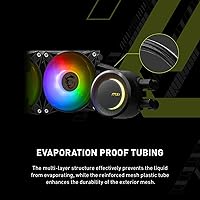
The tubing sleeving, while functional, is not the most premium feel in the category — some users compare it unfavorably to the braided tubing on higher-end Corsair units. Long-term discoloration of white plastic components from dust and UV exposure is a minor but recurring concern among buyers who keep their builds long-term.
Software & RGB Control
62%
38%
For users already running MSI motherboards and MSI Center, the unified dashboard for fan curves and per-channel ARGB lighting is a genuine convenience — everything controllable from one application without juggling multiple utilities. The default lighting patterns out of the box look polished and cycle smoothly without any configuration required.
MSI Center has a mixed reputation for stability, and buyers on non-MSI systems or those preferring lightweight setups find the software dependency frustrating — without it, fan curves are locked to automatic and lighting customization is unavailable. Linux users are effectively excluded from advanced control entirely, which is a meaningful limitation given the growing Linux gaming audience.
Compatibility
89%
Socket coverage spanning LGA1150 through LGA1851 on Intel and AM2 through AM5 on AMD means this AIO cooler will survive at least one major platform upgrade for most buyers, which is a practical long-term value argument. Users upgrading from older Ryzen or Intel 12th-gen systems to current platforms report the existing mounting hardware transfers without additional bracket purchases.
While socket compatibility is broad, a handful of AM5 users report that the contact pressure on certain Ryzen 9000 series chips feels slightly uneven without careful torque sequencing during mounting. This is not a widespread issue but worth being methodical about during installation.
Aesthetics
84%
In a white-themed build, the cohesive factory finish across radiator, fans, pump head, and tubing creates a genuinely clean visual result that buyers consistently photograph and share positively. The ARGB lighting on all three fans and the pump head produces even, bright illumination that holds up well in open-case display builds.
Outside of a white or neutral build scheme, the colorway actively works against aesthetic cohesion — there is no black variant in this specific model line, forcing dark-build enthusiasts to look elsewhere. White components also accumulate visible dust faster than darker alternatives, requiring more frequent cleaning to maintain the intended look.
Value for Money
78%
22%
Sitting at a mid-to-high price point rather than flagship territory, the MSI MAG E360 delivers a competitive feature set — rotating cap, ARGB fans, radiator-mounted pump — without the premium markup of top-shelf competitors. For builders who want 360mm cooling capability without stretching to a Corsair iCUE Elite or NZXT Kraken Elite, the price-to-performance balance is reasonable.
At this price, some buyers expect class-leading thermal performance, and independent benchmarks show it does not quite reach the top of the 360mm field. If aesthetics and software integration are not priorities, a budget-focused alternative like the Arctic Liquid Freezer III 360 can undercut it on both price and raw thermal numbers.
Pump Reliability
71%
29%
The ceramic motor bearing and its 100,000-hour rated lifespan give buyers genuine confidence in long-term durability, and most users report zero issues across one to two years of regular use. The radiator-integrated pump placement is a thoughtful design choice that reduces mechanical stress pathways compared to traditional CPU-block pump layouts.
The radiator-mounted pump is a less field-proven design compared to decades of data on conventional AIO pump placements, and a small but noticeable cluster of long-term users report performance degradation after two to three years of continuous operation. Because the pump is not user-serviceable, any failure requires full unit replacement.
Fan Performance
82%
18%
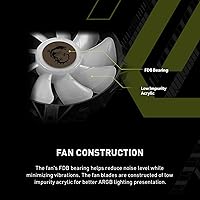
The three included 120mm ARGB fans produce meaningful static pressure and airflow at moderate RPM, keeping noise output low while maintaining effective heat transfer through the radiator fins. Users building in cases with restrictive front panels specifically appreciate that the fans pull air effectively without needing to push maximum RPM constantly.
At maximum 1200 RPM, the fans are tuned for quiet operation rather than maximum airflow, which means in very high ambient temperature environments or extreme overclocking situations, thermal headroom is tighter than with higher-RPM alternatives. Buyers wanting more aggressive fan performance would need to source aftermarket 120mm fans separately.
Case Compatibility
74%
26%
Standard 360mm dimensions mean this 360mm liquid cooler drops into the vast majority of full-tower and mid-tower cases with a 360mm radiator mount without modification. Both top-mount and front-mount orientations are well-supported, and the rotating cap removes the orientation frustration that typically complicates full-tower top-mount installs.
Compact mid-tower and micro-ATX cases with tight radiator clearances are a genuine concern given the 5.25-pound assembly weight and the somewhat stiff tubing behavior during tight routing. Buyers with smaller form factor cases should measure carefully and check case compatibility lists before purchasing.
Longevity & Durability
77%
23%
The ceramic bearing specification and sealed closed-loop design give reasonable confidence that the unit will operate reliably for five or more years under typical enthusiast workloads. Multiple users with over two years of daily use report no degradation in cooling performance or audible changes in pump behavior.
As with all sealed AIOs, coolant permeation through tubing over extended periods is an eventual reality, and there is no user option to refill or refresh the coolant. A minority of buyers report early pump noise onset in the 18-to-24-month window, suggesting some unit variance in pump longevity that quality control could improve.
Packaging & Unboxing
80%
20%
The retail packaging is well-organized, with the radiator, fans, and mounting hardware each separated in molded compartments that arrive without rattling or contact damage in the vast majority of reported cases. The inclusion of pre-applied thermal compound means builders can proceed directly to installation without a separate paste purchase.
Some buyers note that the instruction manual is not especially detailed for first-time AIO installers, relying heavily on diagrams that assume familiarity with bracket mounting sequences. A clearer step-by-step guide, particularly for AM5 and LGA1851 bracket differences, would reduce installation errors for less experienced builders.

Suitable for:

The MSI MAG CoreLiquid E360 AIO CPU Cooler is a strong match for enthusiast builders who are pushing high-TDP processors — think AMD Ryzen 9 7950X, Ryzen 9 9900X, or Intel Core Ultra 9 chips that generate serious sustained heat and need more thermal headroom than a mid-tower air cooler can reliably provide. If you're assembling a white-themed build, this AIO cooler is one of the more complete solutions available at this price point, since the radiator, fans, and pump head all ship in white from the factory rather than requiring aftermarket fan swaps. Gamers and content creators who leave their machines running under sustained load — long rendering jobs, overnight encodes, extended gaming sessions — will appreciate the low noise profile, which stays impressively subdued even when the system is working hard. Users already running MSI motherboards will get the most out of the software integration, with MSI Center offering a single dashboard for fan curves and ARGB lighting. It also makes practical sense for builders who want a capable 360mm AIO without committing to the premium pricing of top-tier competitors like the Corsair iCUE Elite or NZXT Kraken Elite.

Not suitable for:

The MSI MAG CoreLiquid E360 AIO CPU Cooler is not the right tool for every build, and it's worth being direct about where it falls short. If you're running Linux or prefer to avoid manufacturer software entirely, you'll hit a wall quickly — full fan curve control and ARGB customization are locked behind MSI Center on Windows, which is a genuine limitation rather than a minor inconvenience. Builders working with compact ITX or small mATX cases should measure carefully before committing, as a 360mm radiator demands significant mounting real estate and the tubing, while reasonably flexible, may create routing challenges in tighter enclosures. If your build uses a dark or black color scheme, the white aesthetic works against you rather than for you, and repainting or swapping components defeats the purpose. Buyers chasing absolute peak thermal performance at any cost may also find that some competing 360mm options from Corsair or Arctic outperform this AIO cooler in head-to-head CPU temperature benchmarks, particularly under extreme overclocking scenarios. Finally, those who prioritize plug-and-play simplicity without any software dependency should look elsewhere.

Specifications

  • Radiator Size: The radiator measures 360mm in length, accommodating three 120mm fans in a standard triple-fan configuration compatible with most full-tower and mid-tower cases.
  • Dimensions: Overall unit dimensions are 15.39 x 4.69 x 1.06 inches, so verify your case has adequate radiator mount clearance before purchasing.
  • Weight: The complete cooler assembly weighs 5.25 lbs, which is typical for a 360mm AIO and should be factored in when planning radiator top-mount versus front-mount installation.
  • Fan Specs: Three 120mm ARGB PWM fans are included, each spinning up to a maximum of 1200 RPM and drawing power through a standard 4-pin PWM connector.
  • Noise Level: At maximum operational load, the system produces approximately 18 dB of acoustic output, placing it among the quieter options in the 360mm AIO category.
  • Pump Location: The pump motor is housed inside the radiator rather than the CPU cold plate, a deliberate design choice intended to reduce vibration noise transmitted to the motherboard.
  • Pump Bearing: The pump uses a ceramic motor bearing, which MSI rates for up to 100,000 hours of continuous operation — roughly equivalent to over 11 years of around-the-clock use.
  • Power Draw: Total system wattage is rated at 35W at 12V DC, supplied via the included 4-pin PWM power connector.
  • Cooling Method: This is a closed-loop liquid cooling system; no user maintenance, refilling, or coolant replacement is required under normal operating conditions.
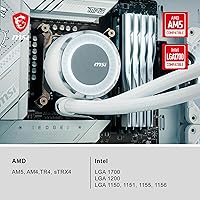
  • Intel Compatibility: Supported Intel sockets include LGA1150, LGA1151, LGA1155, LGA1156, LGA1200, LGA1366, LGA2011, LGA2011-3, LGA2066, and the current LGA1700 and LGA1851 platforms.
  • AMD Compatibility: Supported AMD sockets cover AM2, AM2+, AM3, AM3+, AM4, AM5, FM1, FM2, and FM2+, making it compatible with a wide range of modern and legacy Ryzen and Athlon platforms.
  • RGB Lighting: Both the three fans and the pump head unit feature ARGB lighting, with per-channel customization available through MSI Center software on Windows.
  • RGB Software: Lighting and fan curve control are managed through MSI Center, MSI's proprietary system management application; no native third-party RGB ecosystem support is included.
  • Rotating Cap: The pump head includes a rotating cap mechanism that allows the MSI logo orientation to be adjusted after mounting, accommodating any radiator position without logo inversion.
  • Colorway: The unit ships in an all-white finish across the radiator, fans, tubing, and pump head, designed specifically to suit white or light-themed PC builds.
  • Fan Type: All three included fans are ARGB PWM models, meaning both their rotational speed and lighting can be independently controlled through software or motherboard headers.
  • Voltage: The system operates at 12V DC, consistent with standard desktop PC power supply rails and compatible with typical ATX system configurations.
  • BSR Ranking: This cooler ranks within the top 200 in the Water Cooling Systems category on Amazon, reflecting a sustained level of buyer demand and market presence.

Related Reviews
Cooler Master MasterLiquid ML240L V2 AIO Cooler
77%
78%
Thermal Performance
91%
Installation Experience
63%
Pump Noise & Vibration
82%
Fan Performance
88%
ARGB Lighting
More
MSI MAG CoreLiquid I360 360mm AIO Liquid Cooler
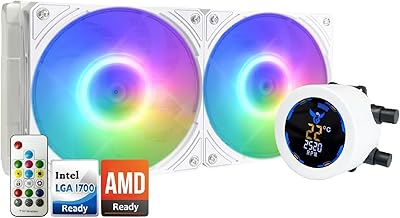
82%
88%
Cooling Performance
83%
Pump Noise & Vibration
67%
Fan Noise at Load
91%
Build Quality & Materials
94%
RGB & Aesthetics
More
greenDracaena Osprey 240mm AIO CPU Cooler
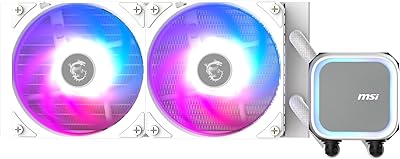
75%
74%
Thermal Performance
81%
Noise Level
78%
Build Quality
83%
Installation Experience
86%
Value for Money
More
upHere P360K 360mm AIO Liquid CPU Cooler
77%
78%
Thermal Performance
67%
Noise Level
71%
Build Quality
88%
Installation Experience
86%
Compatibility
More
AUSDOM S360 360mm AIO Liquid CPU Cooler
78%
83%
Thermal Performance
81%
Noise Level
76%
Build Quality
88%
Installation Experience
79%
RGB & Lighting Quality
More
MSI MAG Coreliquid A13 240 Liquid Cooler
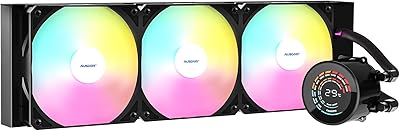
81%
74%
Thermal Performance
82%
Noise Level
91%
Aesthetics & Lighting
88%
Installation Experience
83%
Build Quality
More
SAMA Q70 360mm AIO Liquid CPU Cooler
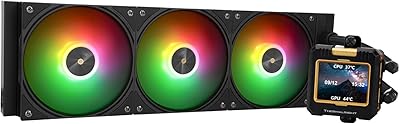
80%
83%
Cooling Performance
88%
LCD Display Quality
61%
Display Software & Setup
79%
Fan Noise Level
72%
Pump Noise & Reliability
More
SAMA Q60 360mm AIO Liquid CPU Cooler
82%
83%
Thermal Performance
79%
Noise Level
88%
LCD Display Quality
74%
Installation Experience
86%
Value for Money
More
NZXT Kraken 240 AIO CPU Liquid Cooler
81%
78%
Thermal Performance
81%
Noise Level
83%
LCD Display
52%
Software Experience
91%
Installation Ease
More
SAMA LD 240 AIO Liquid CPU Cooler
77%
88%
Value for Money
74%
Thermal Performance
83%
LCD Display Quality
71%
Noise Level
76%
Build Quality
More

FAQ

Yes, the MSI MAG CoreLiquid E360 AIO CPU Cooler officially supports LGA1851, which is Intel's current socket for Core Ultra 200 series processors. You should not need an additional mounting bracket for that platform.

The cooler will function and keep your CPU cool without MSI Center installed — the fans will run at default speeds and the ARGB lighting will cycle through a default pattern. However, if you want to set custom fan curves or lock the lighting to a specific color or effect, MSI Center on Windows is required. There is no standalone hardware button or onboard memory for custom profiles.

Out of the box, the lighting is designed to work through MSI Center, and native sync with ASUS Aura Sync or Gigabyte RGB Fusion is not guaranteed. Some users have had partial success using addressable RGB headers directly on compatible motherboards, but results vary and MSI does not officially certify cross-brand lighting sync for this unit.

It is genuinely useful in practice. When you mount a 360mm radiator at the top or front of a case, the orientation of the CPU block and tubing often results in the brand logo appearing upside down or sideways. The rotating cap lets you snap the logo to the correct orientation after mounting without disassembling anything, which is a small but real quality-of-life improvement over fixed-cap designs.

Most modern mid-tower cases with a 360mm radiator mount position will fit this cooler, but you should check your case specifications carefully. The radiator itself follows standard 360mm dimensions, but the overall unit weight of 5.25 lbs means top-mount installations require a case with solid radiator bracket support. Check for clearance between the radiator fans and RAM slots if you are doing a top-mount in a tighter mid-tower.

At peak fan speed the rated noise output is 18 dB, which is genuinely quiet for a triple-fan 360mm AIO. In practice, most users report that the cooler remains unobtrusive even during extended gaming or rendering sessions. If your case has good sound dampening, you may barely notice it at all.

Because the pump is integrated into the radiator rather than sitting on the CPU block, any pump vibration is absorbed by the radiator frame and case mount rather than being transmitted through the motherboard. User reports suggest pump noise is minimal on this AIO cooler, though individual units can vary. If you notice a rattling or grinding sound at startup, that is occasionally a coolant bubble that typically resolves within a few minutes of operation.

MSI pre-applies thermal compound to the cold plate, so you can install the cooler straight out of the box without purchasing paste separately. If you prefer to use a premium third-party compound, you can wipe the pre-applied paste off with isopropyl alcohol and apply your own, though most users will find the included compound adequate for typical workloads.

This 360mm liquid cooler has enough thermal capacity to handle most real-world overclocking scenarios on Ryzen 9 and Core Ultra processors. That said, if you are pushing an extreme overclock on a very high-TDP chip like a Ryzen 9 7950X running all-core at maximum power limits, some independent benchmarks show that top-tier competing AIOs can edge it out in sustained temperature performance. For the majority of enthusiast overclockers, it will perform well without thermal throttling.

MSI rates the ceramic pump bearing for 100,000 hours, which works out to well over a decade of continuous use. In practice, the weakest point on most closed-loop AIOs is coolant evaporation through the tubing over many years, which can eventually reduce cooling performance. Realistically, five to eight years of solid performance is a reasonable expectation under normal operating conditions, and many users get considerably longer.