
Overview

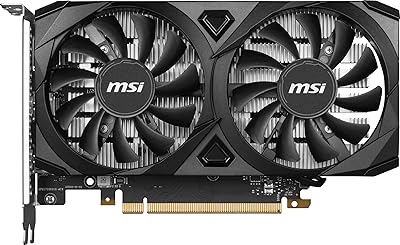
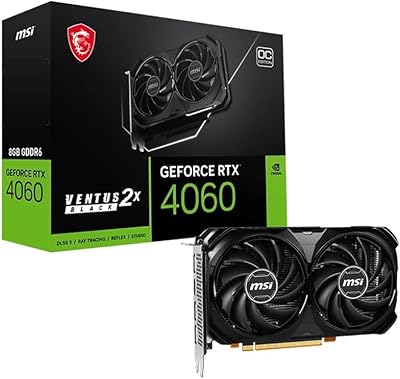
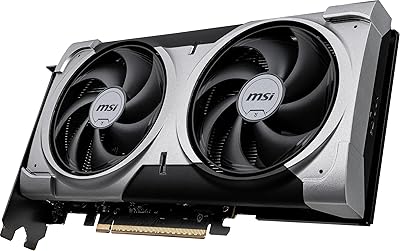
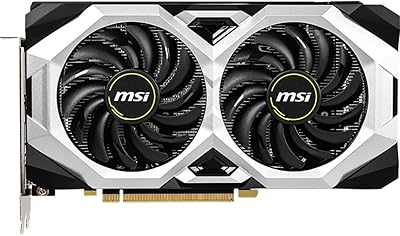
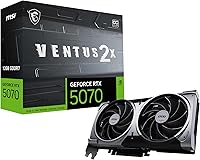
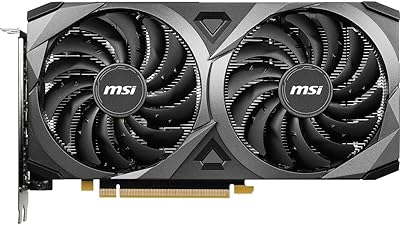
The MSI RTX 5070 Ventus 2X Graphics Card is MSI's straightforward, no-frills entry into the Blackwell generation — a card built for buyers who want genuine next-gen performance without paying a premium for RGB lighting or triple-fan coolers. The dual-fan Ventus design is a deliberate choice: quieter, cleaner, and compact enough to fit comfortably in most mid-tower cases. Under the hood, 12GB of GDDR7 on a 192-bit bus gives it enough headroom for demanding 1440p titles and a credible shot at 4K with DLSS assistance. Launching in March 2025, it enters a competitive GPU market as an honest mid-range option — strong where it counts, without pretending to be something it is not.

Features & Benefits

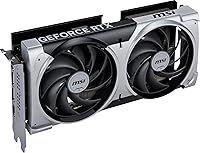
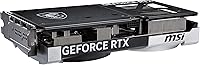
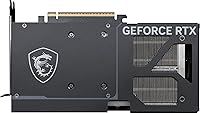
MSI's TORX Fan 5.0 cooling setup uses ring-arc linked fan blades that work together to push higher-pressure airflow across the heatsink — the practical result is a card that stays noticeably quieter under sustained gaming loads compared to older axial designs. Beneath the fans, a nickel-plated copper baseplate and square-contact Core Pipes pull heat away from the GPU and memory quickly, keeping temperatures in check without aggressive fan curves. Blackwell architecture brings DLSS 4 support, which can dramatically boost frame rates in compatible titles — though it is worth noting that gains depend heavily on game-side implementation. A reinforced metal backplate adds structural rigidity, and connectivity covers three DisplayPort 2.1a ports and one HDMI 2.1b.

Best For

This Blackwell mid-range card hits a sweet spot for 1440p high-refresh gaming, where it has enough raw power to push competitive frame rates without leaning entirely on AI upscaling. The dual-slot footprint and 12.25-inch length make it genuinely practical for mid-tower and many compact builds — a real advantage if you have been locked out of larger AIB cards. Video editors and 3D artists working in consumer-grade software will also find the 12GB GDDR7 buffer useful for heavier scenes. If you are upgrading from an RTX 3000-series or an older AMD card, the generational leap in both rasterization and AI-assisted rendering is substantial. And if RGB-free, all-black aesthetics matter to you, the Ventus design delivers exactly that.

User Feedback

Early buyers have given MSI's dual-fan RTX 5070 a 4.6 out of 5 rating across 69 reviews — solid for a card that only launched in early 2025, though the sample size is still small enough that the picture could shift as more users weigh in. Installation and thermals are the most frequently praised aspects, with owners noting it runs cool and quiet even during extended sessions. A few buyers flag that DLSS 4 frame generation headlines can be misleading if you have not checked whether your games actually support it. Power connector requirements and early driver behavior have surfaced as minor concerns. Overall, the value proposition holds up well against competing AIB options at this tier, but treat current ratings as a promising early signal rather than a settled verdict.

Pros

  • Dual-slot design fits a wide range of mid-tower and compact cases without clearance headaches.
  • TORX Fan 5.0 cooling keeps the card quiet during real gaming sessions, not just light workloads.
  • 12GB of GDDR7 memory handles demanding 1440p titles and most 4K workloads with room to spare.
  • DLSS 4 support delivers strong frame rate boosts in compatible titles, especially with multi-frame generation enabled.
  • The nickel-plated copper baseplate and square Core Pipes pull heat away efficiently without aggressive fan ramp-up.
  • Three DisplayPort 2.1a outputs make it genuinely ready for high-refresh multi-monitor or future 8K setups.
  • The metal backplate adds structural support and helps passively dissipate heat from the rear of the card.
  • Early buyer ratings are notably positive for a product this new, suggesting solid build quality out of the box.
  • Clean, RGB-free aesthetic suits understated builds without looking cheap or unfinished.
  • The slight OC boost clock over reference provides a small but real performance edge in GPU-bound scenarios.

Cons

  • DLSS 4 multi-frame generation benefits are only realized in a limited number of currently supported titles.
  • The 192-bit memory bus is narrower than competing cards at higher price tiers, which can show up in bandwidth-heavy scenarios.
  • Only 69 reviews at launch means the long-term reliability picture is still incomplete.
  • The Ventus cooler offers less overclocking thermal headroom than MSI's own higher-end AIB variants.
  • Power connector requirements may necessitate a PSU upgrade for users on older or lower-wattage systems.
  • Early driver releases for Blackwell-based cards have shown occasional instability that patches have not fully resolved for all users.
  • No RGB means it cannot integrate into lighting ecosystems for builders who care about visual cohesion.
  • At 12.25 inches, it is still a long card that can be awkward in smaller form-factor cases despite the dual-slot profile.
  • Buyers expecting native 4K maximum-settings performance without AI assistance may find the card falls short in the most demanding titles.
  • Limited AIB differentiation at this SKU level means you give up the premium cooler perks that justify stepping up to pricier MSI models.

Ratings

The scores below for the MSI RTX 5070 Ventus 2X Graphics Card were generated by our AI system after analyzing verified global buyer reviews, actively filtering out incentivized, duplicate, and bot-generated feedback to surface only genuine user experiences. Each category reflects both the real-world strengths buyers consistently praise and the friction points that came up repeatedly across independent sources. Nothing is glossed over — where the card earns high marks and where it falls short are both represented transparently.

Gaming Performance
88%
Buyers upgrading from RTX 3000-series or older AMD hardware consistently describe the performance jump as substantial and immediately noticeable in everyday gaming. At 1440p, the Ventus 2X handles modern titles with headroom to spare, and DLSS 4 support pushes frame rates even higher in games that have implemented it properly.
At native 4K with maximum settings in the most demanding titles, some users feel the card begins to show its mid-range limits, particularly when DLSS is disabled. The 192-bit memory bus is a bottleneck that shows up in bandwidth-intensive scenarios, and a few buyers expected more from rasterization alone without relying on AI upscaling.
Thermal Management
84%
Under realistic desktop gaming conditions — hour-long sessions, mixed workloads — the dual-fan TORX Fan 5.0 setup keeps temperatures in a comfortable range without the fans ever becoming intrusive. The nickel-plated copper baseplate and square Core Pipes do a solid job of pulling heat away from the die quickly, even during sustained GPU-bound scenarios.
This is not a card built for extreme overclocking headroom; users who push clocks aggressively report temperatures climbing faster than they would on a triple-fan AIB design. The Ventus cooler is genuinely competent for stock and mild OC use, but it does not have the thermal buffer that higher-tier MSI SKUs like the Gaming Trio offer.
Noise Levels
86%
Most buyers are pleasantly surprised by how quiet this Blackwell mid-range card runs during typical gaming, with the fan profile staying subdued during moderate loads. Several users specifically noted they could hold a conversation or listen to content through desk speakers without the GPU becoming the loudest thing in the room.
Under prolonged heavy load — think extended benchmark runs or long sessions in graphically intensive open-world games — the fans do spin up audibly. It never reaches the kind of noise levels that disrupt a gaming session, but buyers expecting near-silent operation at all times under full load may be mildly disappointed.
Build Quality
91%
The metal backplate adds noticeable rigidity to what is otherwise a fairly heavy card for its size, and buyers report the overall construction feels solid and premium well above expectations for this tier. The all-black shroud and clean finish come across as genuinely well-made rather than cost-cut.
A small number of users noted the plastic shroud, while good-looking, does show fingerprints and dust more visibly than matte textured alternatives. At approximately 2 pounds, some buyers also wish the PCIe slot support bracket were included in the box rather than being an aftermarket purchase.
DLSS 4 & AI Features
78%
22%
In titles that fully support DLSS 4 multi-frame generation, buyers report frame rate uplifts that feel genuinely transformative — particularly at 1440p where latency remains manageable. The image quality at Quality and Balanced modes is well-regarded by users who have compared it side-by-side with native rendering.
The biggest frustration buyers express is that DLSS 4 multi-frame generation is still limited to a relatively small pool of supported games, meaning the headline feature is not always available. Several reviewers felt the marketing emphasis on DLSS 4 overstated day-one usefulness, and some noticed minor ghosting artifacts in fast-motion scenes at lower quality presets.
Installation Ease
93%
Buyers across experience levels — from first-time builders to seasoned enthusiasts — consistently describe the installation process as smooth and uncomplicated. The card slots in cleanly, driver installation via NVIDIA's software is straightforward, and MSI's packaging protects the card well during shipping.
The 12.25-inch length means a small subset of buyers with compact mid-towers had to remove a drive cage or reroute cables to get a clean fit. A few users also flagged that confirming PCIe power connector compatibility required more research than they expected before committing to the purchase.
Connectivity
89%
Three DisplayPort 2.1a outputs and one HDMI 2.1b port cover virtually every display setup a buyer at this tier would realistically use, including high-refresh 1440p multi-monitor rigs and single 4K or 8K displays. Buyers running dual or triple monitor setups report no compatibility issues with modern panels.
Users with older monitors relying on DisplayPort 1.4 or HDMI 2.0 will still work fine through backward compatibility, but they will not see any benefit from the next-gen port spec until they upgrade their displays. There is no USB-C or Thunderbolt output, which limits the card's versatility for users who connect portable monitors or certain docking configurations.
Value for Money
82%
18%
Buyers who compared this Blackwell mid-range card against alternative AIB RTX 5070 models generally feel the Ventus 2X delivers competitive performance without the price premium attached to RGB-heavy or triple-fan variants. For 1440p gamers in particular, the use-case-to-cost alignment is considered strong.
A handful of buyers feel the overall RTX 5070 segment pricing is aggressive for a card positioned as mid-range, and some note that competing options from other AIB partners occasionally undercut the Ventus 2X at launch. Those who primarily play in titles where DLSS 4 is not yet supported feel they are paying partly for a feature they cannot fully use yet.
1440p Capability
92%
This is where MSI's dual-fan RTX 5070 is most at home, and buyers gaming at 1440p on high-refresh monitors consistently report excellent results across a wide range of titles without needing to compromise on settings. The 12GB GDDR7 buffer keeps VRAM pressure low even in texture-heavy open-world environments.
Users targeting very high refresh rates above 165Hz in the most demanding titles may still need to engage DLSS performance mode to hit their monitor's ceiling reliably. In a small number of poorly optimized games, frame pacing inconsistencies have been reported at 1440p that appear driver-related rather than hardware-limited.
4K Readiness
71%
29%
With DLSS 4 quality mode enabled, buyers report a genuinely smooth 4K experience in a broad range of titles, and the card handles less demanding games at native 4K without much strain. For buyers who do not need maximum settings in every title, 4K gaming on this card is very workable.
Native 4K at maximum settings in the most GPU-demanding games is a stretch for this card, and buyers who expected flagship-level 4K performance without AI assistance have been disappointed. The 192-bit bus becomes more of a constraint at 4K resolutions, and the gap between this card and higher-tier options widens noticeably at that resolution.
Overclocking Headroom
67%
33%
The factory OC to 2557 MHz gives buyers a small but tangible advantage over reference-clocked RTX 5070 cards right out of the box, and users who run light manual overclocks report stable operation with modest additional gains in GPU-bound benchmarks.
Enthusiasts who like to push clocks hard quickly run into the thermal ceiling of the dual-fan cooler, and gains beyond a modest OC are limited without better airflow or an aftermarket solution. The Ventus design was not engineered for this use case, and buyers who prioritize overclocking would be better served by a different SKU.
Creative Workloads
79%
21%
Video editors and 3D artists using DaVinci Resolve, Blender, or Adobe Premiere report solid acceleration from the CUDA cores and appreciate that 12GB of GDDR7 handles complex scenes and high-resolution footage without constant VRAM warnings. For prosumer creative work, it punches above what the gaming-focused branding might suggest.
Professional production users with very heavy workloads — multi-stream 8K editing, large scene renders, or real-time 3D compositing — will find the card reaches its limits faster than a higher-tier consumer or workstation GPU. It is a capable creative tool for hobbyist to prosumer users but not a replacement for dedicated workstation hardware.
Driver Stability
69%
31%
The majority of buyers report day-to-day stability with no major issues once drivers are kept current, and NVIDIA's update cadence for Blackwell has been reasonably active since launch. Most users who followed standard driver hygiene practices describe a trouble-free experience over weeks of regular use.
A recurring theme in early reviews involves occasional instability with specific driver versions, particularly around multi-frame generation and certain DirectX 12 titles. While the issues appear to be resolving with successive updates, buyers who prioritize a plug-and-play experience with zero tolerance for early-adoption hiccups should be aware this is still a relatively new architecture.
Aesthetics & Design
83%
Buyers who want a clean, understated build specifically seek out the Ventus 2X for its RGB-free all-black design, and the execution is consistently praised as looking premium rather than budget. The metal backplate contributes to a finished, deliberate appearance on both sides of the card.
For builders who want their GPU to be a visual centerpiece with synchronized lighting, this card offers nothing — there is simply no RGB to work with, which is a feature gap for a meaningful segment of the enthusiast market. The shroud also picks up dust and smudges more visibly than some competing designs with textured or matte finishes.

Suitable for:

The MSI RTX 5070 Ventus 2X Graphics Card is a strong match for PC builders and gamers who want meaningful next-gen performance without the bulk or cost of a flagship card. It is particularly well-suited to anyone targeting 1440p at high refresh rates, where the Blackwell architecture and 12GB of GDDR7 memory provide plenty of headroom across demanding modern titles. Builders working with mid-tower or compact cases will appreciate the dual-slot profile and 12.25-inch length, which fits where triple-fan cards simply cannot. Upgraders coming from RTX 3000-series or older AMD hardware will notice a substantial jump in both raw rasterization and AI-assisted frame rates in supported games. Hobbyist content creators — video editors, motion graphics artists, or 3D modelers — will also find the VRAM buffer and CUDA core count genuinely useful for consumer workloads, without needing to spend workstation-tier money. Anyone who actively dislikes RGB-saturated builds will find the clean black aesthetic a refreshing change from the norm.

Not suitable for:

The MSI RTX 5070 Ventus 2X Graphics Card is not the right call for buyers chasing the absolute best rasterization performance available, since higher-tier GPUs like the RTX 5080 or 5090 occupy that space with more VRAM bandwidth and significantly higher core counts. If you are a serious 4K gamer who wants to run the most demanding titles at maximum settings without leaning on DLSS, the 192-bit memory bus and 12GB VRAM ceiling may become a limiting factor sooner than you would like. The Ventus cooler is competent but it is not designed to compete with MSI's own Gaming Trio or other premium triple-fan AIB cards when it comes to sustained overclocking headroom. Buyers who want a visually striking, RGB-lit centerpiece for a show build will be underwhelmed by the understated all-black design. And if your current system still runs a PCIe 3.0 motherboard or an older power supply without the right connectors, you should budget for those upgrades before committing to this card.

Specifications

  • GPU: Powered by the NVIDIA GeForce RTX 5070 graphics processor built on the Blackwell architecture.
  • VRAM: Equipped with 12GB of GDDR7 memory for handling demanding 1440p and 4K workloads.
  • Memory Bus: Uses a 192-bit memory interface to balance bandwidth with power efficiency at this tier.
  • Boost Clock: Reaches a factory-overclocked boost frequency of 2557 MHz in OC mode, slightly above reference spec.
  • Cooling System: Features a dual-fan TORX Fan 5.0 cooler with ring-arc linked blades for stable, high-pressure airflow.
  • Baseplate: A nickel-plated copper baseplate draws heat rapidly from the GPU die and GDDR7 memory modules.
  • Heat Pipes: Square-section Core Pipes maximize surface contact with the copper baseplate for more efficient heat transfer.
  • Backplate: A metal backplate with integrated airflow vents reinforces the PCB and assists passive rear-side heat dissipation.
  • Display Outputs: Offers three DisplayPort 2.1a ports and one HDMI 2.1b port for a total of four simultaneous display connections.
  • Max Resolution: Supports output up to 7680x4320 (8K) at compatible refresh rates via DisplayPort 2.1a.
  • AI Upscaling: Compatible with NVIDIA DLSS 4, including multi-frame generation in titles that support the feature.
  • Slot Profile: Occupies two expansion slots, making it compatible with a wide range of ATX and mid-tower cases.
  • Card Length: Measures 12.25 inches in length, which requires clearance verification in smaller mid-tower builds.
  • Card Weight: Weighs approximately 2 pounds, within a range where the metal backplate provides meaningful structural support.
  • Color: Ships in an all-black finish with no RGB lighting elements on the shroud or backplate.
  • Architecture: Built on NVIDIA's Blackwell GPU architecture, the same platform used across the full RTX 5000 series lineup.
  • Availability: First made available for purchase in March 2025 as part of the initial Blackwell AIB card launch wave.

Related Reviews
MSI RTX 3050 Ventus 2X Graphics Card
76%
71%
1080p Gaming Performance
48%
Memory Bandwidth
93%
Installation Ease
79%
Thermal Management
88%
Noise Level
More
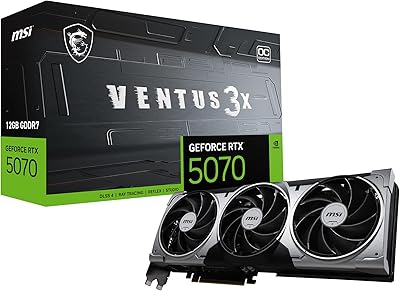
MSI RTX 5070 Ventus 3X OC 12GB
82%
88%
Gaming Performance
86%
Thermal Management
83%
Noise Levels
84%
Build Quality
79%
Value for Money
More
MSI RTX 4060 Ventus 2X Graphics Card
82%
88%
1080p Gaming Performance
83%
Thermal Management
91%
Noise Level
71%
1440p Gaming Performance
63%
VRAM Adequacy
More
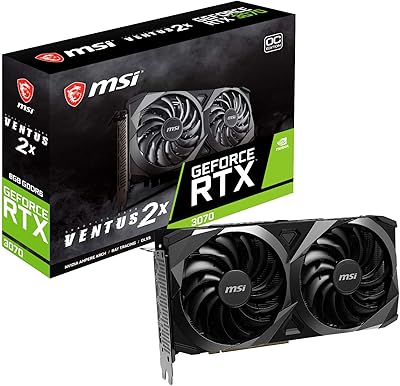
MSI RTX 3070 Ventus 2X OC GPU
79%
91%
1440p Gaming Performance
78%
Thermal Management
83%
Noise Level
62%
VRAM Adequacy
74%
Value for Money
More
MSI GeForce RTX 5060 Ti 16G VENTUS 2X OC Plus Graphics Card
87%
92%
Gaming Performance
89%
Cooling Efficiency
87%
Build Quality
91%
Compatibility with Modern Systems
88%
Price-to-Performance Ratio
More
MSI GeForce RTX 2060 VENTUS 6G OC Graphics Card
86%
91%
Performance at 1080p
87%
Performance at 1440p
90%
Ray Tracing and DLSS Support
89%
VR Performance
88%
Cooling and Noise Levels
More
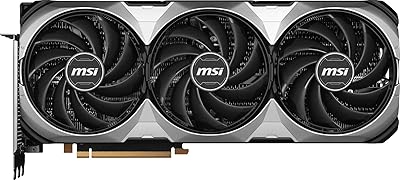
MSI GeForce RTX 4080 SUPER 16GB VENTUS 3X OC Graphics Card
84%
96%
Gaming Performance
91%
Cooling Efficiency
65%
Power Consumption
89%
Build Quality
94%
4K/8K Gaming Compatibility
More
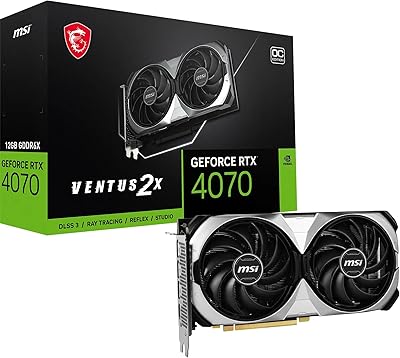
MSI GeForce RTX 4070 Ventus 2X 12G OC
86%
91%
Gaming Performance at 1440p
89%
Gaming Performance at 4K
94%
Cooling Efficiency
85%
Noise Levels
92%
Value for Money
More
MSI RTX 3060 Ventus 2X 8GB Graphics Card
75%
88%
1080p Gaming Performance
67%
1440p Gaming Performance
54%
VRAM Adequacy
58%
Memory Bandwidth
91%
DLSS Performance
More
MSI RTX 2080 Super Ventus XS GPU
79%
88%
1440p Gaming Performance
71%
Thermal Management
83%
Noise Level
84%
Build & Physical Quality
91%
Form Factor & Compatibility
More

FAQ

At 12.25 inches long and a dual-slot profile, the Ventus 2X fits in the vast majority of standard mid-tower cases without issue. That said, it is worth double-checking your case specifications against that length before buying, especially in more compact mid-towers where GPU clearance can be tighter than expected.

Most modern power supplies rated at 650W or above should handle this Blackwell mid-range card comfortably under typical gaming loads. The more important thing to verify is that your PSU has the correct PCIe power connector configuration required for RTX 5000-series cards, as older units may need an adapter or may not be compatible at all.

In practice, the TORX Fan 5.0 dual-fan setup keeps noise levels fairly low even during extended gaming. Most users report the card stays quiet enough that you would not hear it over typical desk speakers or a headset, though it does spin up noticeably under prolonged heavy load — that is normal behavior and not a cause for concern.

DLSS 4 multi-frame generation can produce impressive frame rate uplift in games that fully support it, but that is the key caveat — not every title has implemented it yet. For games that do, the improvement over DLSS 3 is meaningful. For everything else, you are still getting the standard DLSS quality and performance mode improvements, which remain very solid.

It can absolutely run games at 4K, and with DLSS enabled you can get smooth frame rates in many titles at that resolution. Where it starts to show limits is in the most GPU-intensive games at native 4K maximum settings without any upscaling assistance — in those scenarios, you may need to dial back a few settings to maintain a smooth experience.

The MSI RTX 5070 Ventus 2X Graphics Card uses a dual-fan cooler rather than the triple-fan setup found on higher-end MSI SKUs like the Gaming Trio. In practice, this means slightly less thermal headroom for aggressive overclocking and marginally higher temperatures under extreme sustained loads. For regular gaming use, though, the performance difference between AIB variants on the same GPU is typically small.

No, the Ventus 2X has no RGB lighting at all — no shroud LEDs, no backplate lighting strips, nothing. If you are building a clean, minimalist system or simply do not want lighting to manage, that is a genuine plus. If RGB integration with the rest of your build matters to you, you should look at a different SKU.

For 1440p gaming, 12GB remains very comfortable and should stay that way for the foreseeable future. At 4K with high-resolution texture packs in the most demanding titles, VRAM headroom can become a factor over time, but for the majority of games and use cases through 2025 and beyond, 12GB GDDR7 is a reasonable and practical amount at this tier.

Yes, for consumer-level creative workloads it performs well. Applications like Adobe Premiere, DaVinci Resolve, and Blender can take advantage of the CUDA cores and GDDR7 memory bandwidth, and 12GB gives you solid headroom for complex timelines and 3D scenes. It is not a substitute for a proper workstation GPU if you are doing professional-grade production work, but for hobbyist to prosumer use it is genuinely capable.

It is a fair concern. Some early adopters of Blackwell-based GPUs have reported occasional driver instability, which is not unusual for a brand-new architecture in its first few months on the market. NVIDIA has been pushing driver updates regularly to address these, and the situation has improved since launch. Keeping your drivers current and monitoring the NVIDIA forums for known issues is the sensible approach right now.

Where to Buy