Overview

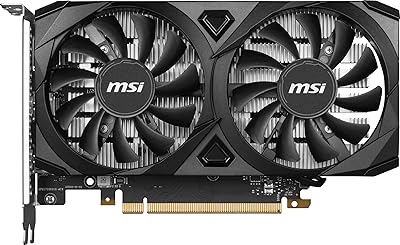
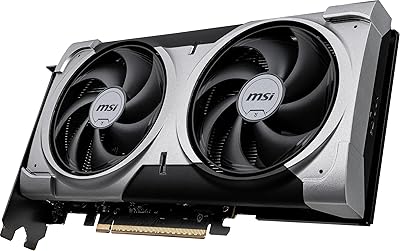
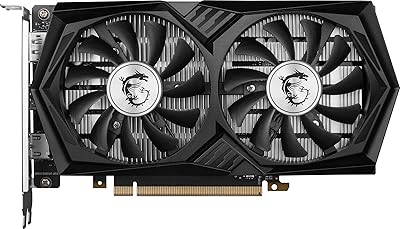
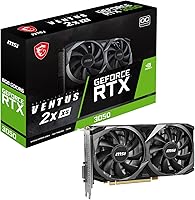
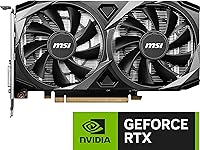
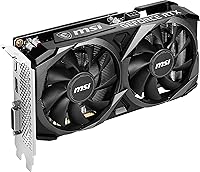
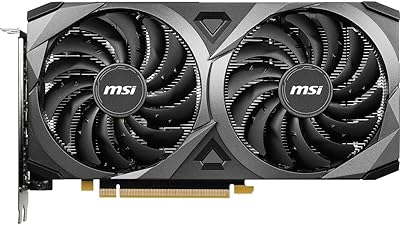
The MSI RTX 3050 Ventus 2X 8GB GPU sits in an interesting spot — it's NVIDIA's entry point into the Ampere RTX lineup, and the Ventus 2X series has always been about delivering that without unnecessary extras. No RGB, no triple-fan shroud, no inflated price tag. What you get is a compact, no-frills card measuring just over 8 inches long, which makes it genuinely useful for ITX and mATX builds where space is tight. The dual Torx fans keep things quiet under everyday gaming loads, and the overall package reflects a clear philosophy: give budget-conscious buyers access to ray tracing and DLSS without asking them to overpay for aesthetics they may not care about.

Features & Benefits

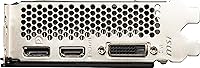
The Ventus 2X 8GB runs on 8GB of GDDR6 memory, which handles 1080p textures in titles like Cyberpunk 2077 or Elden Ring without much trouble at medium-to-high settings. The factory boost clock of 1807 MHz is a mild but welcome bump over the reference spec. DLSS and hardware ray tracing are genuinely useful here — DLSS in particular helps recover frame rates in GPU-demanding scenes. Display output covers DisplayPort 1.4a, HDMI 2.1, and DL-DVI-D, which is flexible. One thing worth stating plainly: the 128-bit memory bus is narrow for a modern card and does become a bottleneck in bandwidth-heavy scenarios. PCIe 4.0 support keeps it compatible with current-gen platforms.

Best For

MSI's compact GPU is a strong fit for anyone building a small form factor PC — the sub-8.5-inch length slots into cases where larger cards simply won't go. It's also a solid choice for 1080p gamers who play titles like Fortnite, Valorant, or older AAA games and don't need maximum eye candy. Upgraders coming from a GTX 970 or GTX 1060 will notice a meaningful jump, both in raw output and in gaining access to DLSS. For content creators doing light video editing or streaming, the NVENC encoder handles H.264 and HEVC encoding efficiently. Home theater builders benefit from the HDMI 2.1 output, which supports 4K at high refresh rates.

User Feedback

Buyers consistently praise the quiet fan operation — several note they can barely hear this RTX 3050 card during normal gaming sessions, which matters if your rig sits on your desk. Temperatures under load stay comfortable without aggressive fan curves kicking in. Installation is straightforward; modest power draw and a single connector make it approachable for first-time builders. On the downside, a recurring complaint involves narrow memory bandwidth, which shows up as stuttering or lower-than-expected frame rates in titles pushing high-resolution textures. Some buyers also point out that for a bit more money, cards like the RX 6600 or RTX 3060 offer notably better performance headroom, making the value case here somewhat dependent on finding a good deal.

Pros

  • Compact 8-inch length fits in ITX and mATX cases where most GPUs cannot.
  • Dual Torx fans run quietly under typical gaming loads, ideal for desktop-adjacent setups.
  • 8GB of GDDR6 VRAM handles 1080p textures without constant memory pressure.
  • DLSS support meaningfully recovers frame rates in supported titles, making the card punch above its raw spec.
  • HDMI 2.1 output enables 4K connectivity for home theater or multi-monitor use.
  • Low power draw and a single power connector make installation simple, even for first-time builders.
  • PCIe 4.0 compatibility keeps this card relevant on current and future platforms.
  • NVENC hardware encoder handles streaming and video export efficiently without tanking game performance.
  • Factory overclock at 1807 MHz boost offers a small but genuine performance uplift out of the box.
  • Ray tracing is available for supported titles, even if best used at lower RT settings.

Cons

  • The 128-bit memory bus creates bandwidth bottlenecks in texture-heavy or high-resolution scenarios.
  • Frame rates in demanding AAA titles at 1080p high settings can disappoint compared to similarly priced AMD alternatives.
  • No upgrade headroom for 1440p gaming — the card will struggle at that resolution in anything but older or less demanding titles.
  • Competing cards at a slightly higher price point offer substantially better rasterization performance.
  • Ray tracing performance is limited enough that enabling it in heavy titles will often require dropping to low RT settings.
  • No RGB or visual customization options, which may matter to builders focused on aesthetics.
  • Memory speed of 2560 MHz feels restrained compared to what wider-bus cards at a similar tier offer.
  • Resale value may depreciate faster than higher-tier cards as game requirements continue to climb.

Ratings

The MSI RTX 3050 Ventus 2X 8GB GPU earns a nuanced scorecard — our AI has processed verified buyer reviews from global markets, actively filtering out incentivized, bot-generated, and duplicate feedback to surface what real users actually experience day to day. Strengths around compact size, quiet operation, and accessible RTX features come through clearly, but so do recurring frustrations around memory bandwidth and competitive value. Both sides are reflected honestly below.

1080p Gaming Performance
73%
27%
For everyday 1080p gaming in titles like Apex Legends, Valorant, and older open-world games, buyers consistently report smooth, playable frame rates without needing to drop settings dramatically. The factory overclock gives it a slight edge over reference RTX 3050 cards in this exact workload.
In more demanding 1080p titles like Cyberpunk 2077 or Hogwarts Legacy at high settings, the 128-bit memory bus becomes a tangible bottleneck, causing frame dips that frustrate users who expected more headroom from a current-generation Ampere card.
Value for Money
66%
34%
Buyers who caught this card at competitive pricing generally feel it delivers fair RTX access for the cost, particularly those upgrading from GTX 900 or 1000 series cards who gain DLSS and ray tracing for the first time without a large outlay.
A recurring theme in critical reviews is that spending modestly more unlocks cards like the RX 6600 or RTX 3060 with meaningfully better performance per dollar. At full retail price, the value case for this RTX 3050 card feels thin to informed buyers.
Thermal Performance
81%
19%
Under typical 1080p gaming loads, users report GPU temperatures staying in a comfortable range — generally around 70–75°C — without the fans ramping to aggressive speeds. The compact heatsink handles the card's modest TDP without issue in well-ventilated cases.
In poorly ventilated small form factor cases, a handful of users noted temperatures climbing higher than expected. The heatsink is sized for the card's power draw, so there is limited thermal headroom if ambient temperatures are elevated.
Noise Level
84%
Quiet operation is one of the most consistently praised aspects of the Ventus 2X 8GB across buyer feedback. The dual Torx fans stay nearly inaudible during light gaming and web use, making it well suited for living room HTPCs or desk setups where noise matters.
At sustained full load — particularly in longer gaming sessions — the fans do become audible, though most users describe it as a soft hum rather than anything distracting. It is not completely silent under stress, which a small number of buyers found disappointing.
Build Quality
77%
23%
The card feels solid and well-assembled for its tier, with no reports of rattling fans or loose shroud components. MSI's Ventus line has a reputation for consistent manufacturing quality, and buyer feedback reflects that the card arrives and installs without physical issues.
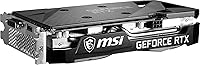
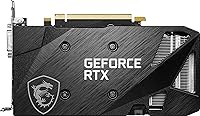
The plastic shroud and overall aesthetic read clearly as budget-tier hardware, and users expecting a premium feel are occasionally underwhelmed. It does the job structurally, but there is no metal backplate, which some builders feel the card is missing at this price.
Compact Form Factor
91%
The sub-8.5-inch length is a genuine differentiator — buyers building in cases like the NZXT H1, Cooler Master NR200, or similar ITX enclosures specifically sought this card out because larger RTX options simply would not fit. Several reviewers called the size the single deciding factor in their purchase.
The compact design is intentional and works well for its target audience, but buyers with standard mid-tower cases sometimes feel the small heatsink leaves thermal and overclocking potential on the table compared to larger triple-fan designs at a similar price.
Installation Ease
88%
Low power draw, a single 8-pin connector, and a lightweight 1.26-pound body make installation genuinely straightforward. First-time builders frequently mention this card in positive terms specifically because it did not complicate their build or require cable management gymnastics.
There are no meaningful installation complaints beyond the occasional user forgetting to connect the power connector — which is a user error, not a design flaw. A small number of buyers on older platforms noted minor driver installation friction, though this resolved with clean installs.
DLSS Support
79%
21%
DLSS is one of the clearest reasons to choose an RTX card at this price tier, and buyers who game in supported titles like Fortnite, Control, or Dying Light 2 report that enabling DLSS Quality mode provides a noticeable, sometimes dramatic frame rate boost with minimal visual cost.
DLSS support is only as useful as the game library — buyers who primarily play older titles or games without DLSS integration get limited benefit from this feature. A few users also noted that DLSS Performance mode at 1080p introduces visible softness.
Ray Tracing Capability
54%
46%
Hardware ray tracing is technically present and works in supported titles, which is more than previous-generation GTX cards could offer. Buyers who turn on subtle ray-traced shadows or reflections at low settings in lighter titles report the visual improvement is noticeable.
In practically any demanding title with ray tracing enabled at medium or high settings, frame rates drop to uncomfortable levels. Most experienced buyers quickly disable RT entirely to recover performance, and the general consensus is that RT on this card is a spec-sheet feature more than a daily-use one.
Memory Bandwidth
49%
51%
The 8GB GDDR6 pool is adequate for most 1080p gaming scenarios, and buyers using the card for light video editing or texture-moderate titles report no VRAM-related issues in day-to-day use.
The 128-bit bus is the most criticized technical aspect across all buyer feedback, and for good reason — bandwidth-limited performance shows up as microstutters and lower-than-expected frame rates in texture-heavy games. Compared to AMD alternatives at a similar price, this is a meaningful disadvantage that buyers feel in real gaming sessions.
Display Output Versatility
83%
Triple output support with HDMI 2.1, DisplayPort 1.4a, and DL-DVI-D covers a wide range of monitor and TV configurations. HTPC builders particularly value the HDMI 2.1 port for connecting to 4K televisions without adapters or compromises.
Only one DisplayPort and one HDMI port are available simultaneously alongside DVI, which limits high-refresh multi-monitor setups. Users trying to run two high-refresh DisplayPort monitors alongside a TV will find the output combination less flexible than they hoped.
Driver Stability
78%
22%
The vast majority of buyers report no driver-related issues after a clean installation of NVIDIA's standard driver package. The RTX 3050 is a mature platform with well-established driver support, and stability complaints are rare in the feedback pool.
A small but consistent group of users on specific AMD platform combinations reported occasional driver timeout or black screen events, particularly on first setup. These issues typically resolved after a DDU clean reinstall, but the troubleshooting step frustrated less experienced builders.
NVENC Encoding Quality
80%
20%
Buyers who stream via OBS or export video in DaVinci Resolve and Premiere report that NVENC handles H.264 and HEVC encoding efficiently without causing significant frame rate drops in their games. For casual streamers, it is a capable and largely transparent hardware feature.
Content creators working with 4K footage or complex multi-layer timelines find the card struggles with sustained encode performance compared to higher-tier GPUs. It is adequate for 1080p streaming but not a workstation-grade encoding solution.
Upgrade Longevity
58%
42%
PCIe 4.0 compatibility and DLSS support give this card a degree of forward compatibility, and buyers who game primarily in esports titles or older AAA games are likely to find it usable for several more years without feeling severely bottlenecked.
For buyers who expect to push newer titles at higher settings over a 3–4 year ownership window, the 128-bit bus and RTX 3050 chip tier are likely to feel increasingly limiting. Several reviewers who planned long-term upgrades expressed regret at not stretching their budget further.

Suitable for:

The MSI RTX 3050 Ventus 2X 8GB GPU is a solid pick for PC builders who need a capable 1080p card without spending a lot or sacrificing case compatibility. Its compact 8-inch footprint makes it one of the few RTX-capable cards that fits comfortably in tight ITX and mATX enclosures, which is a real advantage for small form factor enthusiasts. Gamers who play titles like Valorant, Apex Legends, Minecraft with shaders, or older AAA games at 1080p medium-to-high settings will find the performance entirely adequate for smooth, enjoyable play. Anyone upgrading from a GTX 970, 1060, or 1650 will see a noticeable improvement, plus gain access to DLSS and ray tracing that their old card simply could not offer. It also fits well in a home theater PC thanks to HDMI 2.1 output, and light content creators who rely on NVENC for video encoding will appreciate the hardware acceleration without needing a more expensive card.

Not suitable for:

Buyers chasing high-performance 1440p or competitive frame rates above 144fps in demanding titles should look elsewhere, as this card was not designed for that workload. The 128-bit memory bus is the core limitation here — in games like Fortnite at Epic settings or any title with high-resolution texture packs, bandwidth becomes a genuine constraint that no driver update will fix. If your budget stretches even modestly further, alternatives like the RX 6600 or RTX 3060 deliver significantly better performance per dollar and a wider memory bus. The MSI RTX 3050 Ventus 2X 8GB GPU is also not the right tool for 3D rendering, machine learning workloads, or professional GPU compute tasks where VRAM bandwidth and CUDA core counts matter far more. Streamers who want to game and encode simultaneously at high quality settings may also hit the limits of this tier faster than expected.

Specifications

  • GPU Chip: Built on NVIDIA's Ampere architecture using the GeForce RTX 3050 processor.
  • VRAM: Equipped with 8GB of GDDR6 video memory for handling 1080p gaming textures and light creative workloads.
  • Boost Clock: Factory overclocked to a boost clock of 1807 MHz, slightly above NVIDIA's reference specification.
  • Memory Interface: Uses a 128-bit memory bus, which is the primary bandwidth constraint on this card.
  • Memory Speed: GDDR6 memory operates at 2560 MHz, delivering adequate throughput for 1080p use cases.
  • Display Outputs: Provides one DisplayPort 1.4a, one HDMI 2.1, and one DL-DVI-D output for flexible multi-display support.
  • Max Resolution: Supports output up to 7680x4320 (8K) when connected to a compatible display via DisplayPort.
  • PCIe Version: Compatible with PCIe 4.0 slots while remaining backward compatible with PCIe 3.0 motherboards.
  • Cooling System: Cooled by two Torx fans mounted on a dual-slot heatsink shroud designed for low-noise operation.
  • Card Dimensions: Measures 8.07 x 1.77 x 4.41 inches, making it one of the more compact RTX-class cards available.
  • Card Weight: Weighs 1.26 pounds, light enough to avoid significant sag in most standard PCIe slots.
  • Power Connector: Requires a single 8-pin PCIe power connector, keeping cable management simple and power draw modest.
  • DLSS Support: Supports NVIDIA DLSS (Deep Learning Super Sampling) for AI-assisted frame rate recovery in compatible titles.
  • Ray Tracing: Hardware-accelerated ray tracing is supported via dedicated RT cores on the Ampere die.
  • NVENC Encoder: Includes NVIDIA's NVENC hardware encoder supporting H.264 and HEVC for streaming and video export tasks.
  • API Support: Supports DirectX 12 Ultimate, OpenGL 4.6, and Vulkan for broad game and application compatibility.
  • Series: Part of MSI's Ventus 2X XS OC lineup, which prioritizes compact size and value over premium aesthetics.
  • Brand: Manufactured by MSI, a Taiwanese hardware company with a long track record in discrete graphics cards.

Related Reviews
MSI GeForce RTX 3060 Ventus 2X 8GB OC
84%
89%
Performance at 1080p
75%
Gaming Performance at 1440p
92%
Cooling System (Noise & Effectiveness)
94%
Value for Money
85%
Installation & Setup
More
MSI GeForce RTX 3050 VENTUS 2X 6G OC Graphics Card
83%
89%
Gaming Performance (1080p/1440p)
92%
Cooling Performance
85%
Build Quality
91%
Price-to-Performance Ratio
88%
Ease of Installation
More
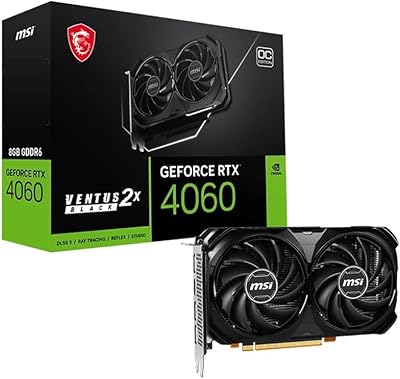
MSI RTX 4060 Ventus 2X Graphics Card
82%
88%
1080p Gaming Performance
83%
Thermal Management
91%
Noise Level
71%
1440p Gaming Performance
63%
VRAM Adequacy
More
MSI GeForce RTX 3070 Ventus 2X OC 8GB GDDR6 Graphics Card
86%
88%
Gaming Performance (1440p/4K)
85%
Ray Tracing and AI Features
91%
Cooling Efficiency
86%
Build Quality
80%
Installation and Setup
More
MSI GeForce RTX 5070 12G Ventus 2X OC
87%
94%
Gaming Performance (4K/8K)
91%
Cooling Efficiency
88%
Build Quality
85%
Setup/Installation Ease
92%
Value for Money
More
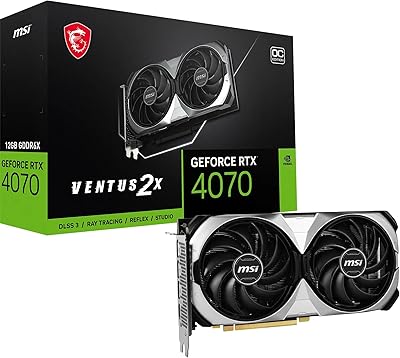
MSI GeForce RTX 4070 Ventus 2X 12G OC
86%
91%
Gaming Performance at 1440p
89%
Gaming Performance at 4K
94%
Cooling Efficiency
85%
Noise Levels
92%
Value for Money
More
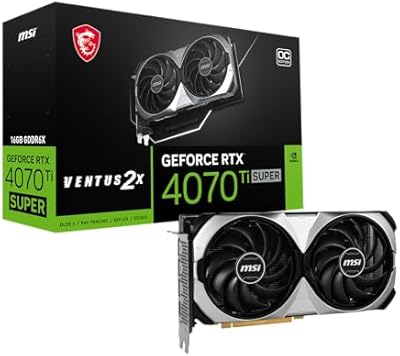
MSI GeForce RTX 4070 Ti Super 16GB Ventus 2X
89%
96%
Gaming Performance
94%
Rendering & Content Creation
91%
Thermals & Cooling
88%
Build Quality
85%
Power Efficiency
More
MSI GeForce RTX 5060 Ti 16G VENTUS 2X OC Plus Graphics Card
87%
92%
Gaming Performance
89%
Cooling Efficiency
87%
Build Quality
91%
Compatibility with Modern Systems
88%
Price-to-Performance Ratio
More
MSI RTX 3050 Gaming X 6G GPU
82%
78%
1080p Gaming Performance
84%
Thermal Management
71%
Value for Money
89%
Build & Physical Quality
93%
Form Factor & Compatibility
More
MSI GeForce RTX 2060 Super Gaming X 8GB
84%
93%
Gaming Performance (1080p/1440p)
90%
Cooling Efficiency
88%
Build Quality & Durability
92%
Noise Levels
84%
RGB Lighting Customization
More

FAQ

In most cases, yes. At just over 8 inches long, the Ventus 2X 8GB is specifically one of the shorter RTX cards on the market. That said, always check your case's maximum GPU length spec before buying — some ultra-compact ITX cases cap out below 8 inches.

A 550W PSU is generally sufficient for a system built around this RTX 3050 card. If you have a power-hungry CPU like a high-core-count Ryzen or Intel K-series chip, bumping to 650W gives you comfortable headroom.

Yes, PCIe 4.0 cards are fully backward compatible with PCIe 3.0 slots. You will not notice a meaningful performance difference at this GPU tier — the bandwidth difference between Gen 3 and Gen 4 only becomes relevant at much higher performance levels.

For 1080p gaming at medium to high settings, 8GB holds up reasonably well in most current titles. Where it can get tight is in games with very high-resolution texture packs or future titles with rising VRAM demands, so it is worth keeping in mind if you plan to hold onto this card for several years.

The dual Torx fans are notably quiet during typical gaming sessions. At full load the fans do spin up audibly, but most users report it stays well within acceptable noise levels — it is not the kind of card that will drown out your headset audio.

Yes. With one DisplayPort 1.4a, one HDMI 2.1, and one DL-DVI-D output, you can connect up to three displays simultaneously, which is a practical bonus for productivity setups or sim-racing rigs that do not need extreme GPU power.

Not really, if you want smooth frame rates in demanding titles. The combination of the RTX 3050 chip and the 128-bit memory bus means 1440p performance will be inconsistent and often disappointing in anything beyond older or less demanding games. This card was built for 1080p.

For light editing in DaVinci Resolve or Premiere Pro, it works fine — NVENC handles H.264 and HEVC export efficiently. Streaming while gaming is also feasible at modest settings. Just do not expect it to handle heavy 4K editing timelines with lots of effects layers.

The RTX 3050 and GTX 1660 Super trade blows in raw rasterization performance, with the 1660 Super actually holding its own or winning in some benchmarks due to its wider 192-bit memory bus. The RTX 3050 does pull ahead with DLSS and hardware ray tracing, which the 1660 Super lacks entirely — so the choice comes down to whether those features matter to you.

Just the standard NVIDIA driver package, which you can download from NVIDIA's website or let Windows Update handle. MSI Afterburner is optional if you want to monitor temperatures or tweak fan curves, but nothing extra is required for the card to work out of the box.

Where to Buy

B&H Photo-Video-Audio
In stock $249.95
SHI International
In stock $304.00
MSI Online Store
In stock $249.99
Beach Audio
In stock $296.57