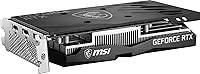
Overview

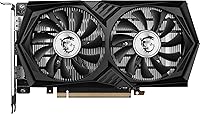
The MSI RTX 3050 Gaming X 6G GPU landed in February 2024 as a compact, no-frills discrete graphics card aimed at builders who want real gaming performance without spending a fortune. Built on NVIDIA's Ampere architecture with 6GB of GDDR6 memory, this MSI card sits comfortably in the budget-to-mid-range tier — not a powerhouse, but a meaningful upgrade over integrated graphics. The dual-fan cooling and an 8.1-inch PCB make it friendly to smaller builds. Expectations should be calibrated accordingly: solid 1080p gaming is the target, not maxed-out settings in demanding AAA titles.
Features & Benefits

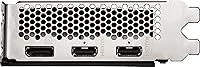
The RTX 3050 Gaming X runs on a 96-bit memory bus, which is the spec that tends to stir the most debate. In practical terms at 1080p, it's usually fine — textures load cleanly in games like Fortnite, Elden Ring at medium settings, or lighter indie titles — but push toward VRAM-heavy textures and that bandwidth ceiling becomes noticeable. The 1507 MHz boost clock is modest but consistent. DLSS support helps recover frames in compatible titles, partially compensating for the bus limitation. Connectivity is strong: two HDMI 2.1a ports plus a DisplayPort 1.4a output make a clean multi-monitor setup achievable without any adapter fuss.

Best For

This entry-level Ampere GPU makes the most sense for a fairly specific type of buyer. If you're running integrated graphics and want a real discrete card without committing to a high-end budget, it fits well. The compact PCB is genuinely useful for small form-factor builds — mini-ITX cases that reject full-length cards will have no issue here. Casual and indie gamers playing titles like Stardew Valley, Hades, or CS2 at 1080p will get reliable use out of it. First-time builders also benefit from MSI's driver maturity and Afterburner support. It's a poor match for anyone chasing ultra settings in modern open-world games.

User Feedback

Across 185 ratings averaging 4.7 stars, this MSI card earns consistently positive marks — but the praise clusters around specific qualities. Buyers frequently call out quiet operation at load, painless installation, and the fact that 1080p gaming performance holds up well for the price. Criticisms are predictable: a handful of reviewers flag that the 96-bit bus noticeably limits texture quality in more demanding modern titles, and a few question value compared to competing AMD options at a similar price point. MSI Afterburner compatibility and driver stability rarely come up as concerns, which is a quiet confidence-builder for anyone still on the fence.

Pros

  • Compact 8.1-inch PCB fits cleanly into mini-ITX and small form-factor cases with no clearance stress.
  • Quiet dual-fan cooling keeps noise levels low during typical gaming sessions at a normal desk distance.
  • DLSS support meaningfully recovers frame rates in compatible titles, a rare value-add at this price tier.
  • Plug-and-play installation — most buyers report being up and running within minutes of first boot.
  • Dual HDMI 2.1a outputs make a clean two-monitor setup straightforward without any adapter workarounds.
  • MSI Afterburner compatibility works flawlessly, giving tinkerers a stable platform for fan curve and minor OC adjustments.
  • Driver stability is consistently praised — no pattern of crashes or update-related conflicts reported by buyers.
  • Strong brand warranty support provides meaningful peace of mind for first-time discrete GPU buyers.
  • Handles 1080p in esports and indie titles with reliable, stutter-free frame rates at medium-to-high settings.

Cons

  • The 96-bit memory bus creates a bandwidth ceiling that becomes noticeable in texture-heavy modern titles.
  • Ray tracing is technically present but practically unusable in demanding games without severe frame rate loss.
  • Competing AMD cards at similar price points sometimes offer wider memory interfaces and stronger raw rasterization.
  • No low-profile bracket is included, limiting ultra-compact HTPC or slim-case compatibility out of the box.
  • Manual overclocking headroom is limited — Afterburner users report only modest gains before hitting thermal or stability limits.
  • VRAM headroom shrinks quickly when high-resolution texture packs are applied in newer open-world games.
  • Warranty support quality varies noticeably by region, with some international buyers reporting slower response times.
  • The plastic shroud feels slightly below expectations for a card carrying the GAMING X premium label.
  • Performance in GPU-heavy AAA titles at 1080p high settings can be inconsistent, especially in CPU-bottlenecked systems.

Ratings

The MSI RTX 3050 Gaming X 6G GPU earns a strong overall standing in its tier — our AI-generated scores are derived from deep analysis of verified global buyer reviews, with spam, bot-submitted, and incentivized feedback actively filtered out before scoring. What you see here reflects the honest consensus: where this entry-level Ampere card genuinely delivers, and where real-world frustrations tend to surface. Both the wins and the trade-offs are represented transparently across every category below.
1080p Gaming Performance
78%
22%
For everyday 1080p titles — think Fortnite, CS2, Elden Ring on medium settings, or most indie games — the RTX 3050 Gaming X holds up reliably. Buyers consistently report smooth, playable frame rates without needing to dig into settings menus to find compromises.
Push the resolution slider or load up a VRAM-hungry open-world game and the 96-bit bus starts to show its ceiling. Users chasing high-refresh-rate ultra settings in games like Cyberpunk 2077 will hit walls this card simply cannot climb.
Thermal Management
84%
The dual-fan cooling setup does its job quietly and efficiently under typical gaming loads. Multiple buyers note that the card barely gets loud even during hour-long sessions, which matters a lot in smaller cases where airflow is already compromised.
A handful of users in very compact mini-ITX builds with poor overall airflow report temperatures creeping higher than expected under extended load. It is not a dealbreaker, but case ventilation planning matters more with this card than with larger, more open setups.
Value for Money
71%
29%
At its price point, this MSI card offers a tangible step up from integrated graphics and older GT-class cards. For first-time discrete GPU buyers, the brand reputation and included DLSS support feel like meaningful value adds that cheaper alternatives lack.
Competing AMD options in the same price band — particularly Radeon RX 6600 variants on sale — sometimes offer wider memory buses and stronger rasterization performance, making value comparisons uncomfortable. Buyers who shop around before buying sometimes feel a little underserved.
Build & Physical Quality
89%
The card feels dense and well-constructed for its weight class. The 8.1-inch PCB is compact without feeling flimsy, and the dual-slot cooler sits flush without the sagging issues some longer, heavier cards cause in loose PCIe slots.
The shroud is plastic rather than metal, which some buyers feel does not quite match the GAMING X premium positioning. It is a minor cosmetic note, but buyers coming from higher-tier MSI cards may notice the step down in materials.
Form Factor & Compatibility
93%
The compact PCB length is one of the most consistently praised practical features. Buyers building in small Fractal or Cooler Master ITX cases specifically call out how stress-free installation was compared to longer cards they considered.
It is a dual-slot card, so single-slot or ultra-thin configurations are still off the table. A small number of buyers hoped for a true low-profile bracket option, which MSI does not include in the retail box.
Noise Level
86%
Quiet operation comes up repeatedly in buyer feedback without being prompted. Under light and moderate gaming loads, the fans are nearly inaudible from a normal desk distance, which makes this card comfortable in living-room or bedroom setups.
At sustained full load — rendering, long gaming sessions in warm environments — the fans do spin up noticeably. It never reaches obnoxious levels, but users expecting near-silent operation under all conditions may be mildly surprised.
Driver Stability & Software
88%
NVIDIA's driver ecosystem is mature, and buyers report that this card just works out of the box with no hunting for obscure fixes. MSI Afterburner compatibility is essentially universal, which gives tinkerers an easy path to minor voltage and fan curve adjustments.
A very small number of reviewers flag occasional driver conflicts post-Windows update, though this appears to be a broader NVIDIA ecosystem issue rather than specific to this card. Nothing that rises to the level of a pattern.
DLSS & Ray Tracing Capability
67%
33%
DLSS is a genuine differentiator at this price tier. In supported titles like Spider-Man Remastered or Control, enabling DLSS Quality mode recovers enough frames to make 1080p gaming noticeably smoother without a visible quality hit.
Ray tracing on a 96-bit entry-level card is best treated as a checkbox feature rather than a practical tool. Enabling it in demanding titles tanks frame rates to uncomfortable levels, and most buyers end up leaving it off entirely in favor of stable performance.
Connectivity & Output Options
91%
Two HDMI 2.1a ports alongside a DisplayPort 1.4a is an unusually strong output lineup for an entry-level card. Buyers running a gaming monitor plus a secondary productivity screen report zero headaches with the setup.
The lack of a second DisplayPort output is the only minor gripe some multi-monitor buyers raise. For the vast majority of users, the included outputs are more than enough, but video editors or traders running three-plus screens may want to plan ahead.
Installation Experience
94%
Ease of install is one of the loudest consistent positives across buyer reviews. First-time builders specifically mention that the card seated cleanly, drivers installed without intervention, and they were gaming within minutes of powering on.
There is little to fault here. The only marginal complaint is that the box contents are minimal — no adapter accessories, no printed quick-start guide — though that is increasingly standard across the industry at this price tier.
Memory & VRAM Headroom
62%
38%
Six gigabytes of GDDR6 is enough for clean 1080p gaming in most current titles when texture settings are kept at high rather than ultra. Buyers gaming at 1080p in games like Valorant, Apex Legends, or older RPGs report no VRAM-related stuttering.
The 96-bit interface means that the 6GB figure is somewhat misleading as a raw headline number — effective bandwidth is lower than competing cards with wider buses. Users who regularly play newer open-world titles with high-resolution texture packs will feel this limitation consistently.
Clock Speed & Raw Performance
74%
26%
The 1507 MHz boost clock is stable and consistent in everyday use. Buyers report that performance is predictable — no wild frame time variance or throttling during normal gaming sessions, which matters more than peak numbers for daily play.
The clock speed is conservative by current standards, and this card does not respond dramatically to manual overclocking. Buyers hoping to squeeze significant extra performance through Afterburner tweaks typically report modest gains at best.
Brand Reputation & Support
87%
MSI's reputation for warranty support and customer service is a genuine comfort factor for first-time GPU buyers. The GAMING X positioning — a tier above the baseline Ventus line — signals a consistent quality floor that buyers appear to trust.
A few international buyers note that warranty claim processes vary meaningfully by region, and MSI's response times outside North America and Western Europe draw occasional criticism. Something worth researching before purchasing based on location.

Suitable for:

The MSI RTX 3050 Gaming X 6G GPU is a natural fit for a fairly specific kind of builder, and it genuinely delivers for them. If you're coming from integrated graphics or a years-old budget card and want a clean, low-drama upgrade for 1080p gaming, this card handles that transition well. Casual gamers playing titles like Stardew Valley, Apex Legends, Hades, or CS2 will find it more than capable at medium-to-high settings without needing to constantly manage settings. The compact 8.1-inch PCB is a real advantage for anyone building in a mini-ITX case where longer cards simply won't fit — that alone narrows the competition considerably. Home office users who need basic GPU acceleration for creative work, light video editing, or multi-monitor productivity setups will also find the dual HDMI 2.1a outputs and stable driver ecosystem genuinely useful. First-time PC builders benefit from MSI's mature software support and straightforward installation, which removes a lot of the anxiety that often comes with a first discrete GPU purchase.
Not suitable for:

The MSI RTX 3050 Gaming X 6G GPU is the wrong card if your expectations exceed what an entry-level Ampere chip with a 96-bit memory bus can realistically deliver. Gamers who want to run modern open-world titles like Cyberpunk 2077 or Alan Wake 2 at high or ultra settings will consistently hit performance walls that no amount of driver tweaking will fix. The ray tracing checkbox exists, but treating it as a practical feature in demanding titles will tank your frame rates to uncomfortable levels — it works in lighter or older games, not as a rule. Buyers who have been comparing specs closely and are eyeing AMD Radeon RX 6600 cards in the same price range may find that competing options offer broader memory bandwidth for similar or lower cost, making value comparisons genuinely uncomfortable. Anyone building a high-refresh-rate competitive gaming rig targeting 144fps or beyond in GPU-heavy titles should look at least one tier higher. And if you need three or more monitors with diverse output types, the limited port variety may create planning headaches.
Specifications

  • GPU Architecture: Built on NVIDIA's Ampere architecture, which underpins all RTX 30-series cards and enables hardware-accelerated ray tracing and DLSS support.
  • Chipset: Powered by the GeForce RTX 3050 chipset, NVIDIA's entry-level discrete GPU targeting 1080p gaming workloads.
  • Video Memory: Equipped with 6GB of GDDR6 memory running at 14 Gbps, providing adequate bandwidth for 1080p gaming at medium-to-high texture settings.
  • Memory Interface: Uses a 96-bit memory bus, which is narrower than competing mid-range cards and represents the primary bandwidth trade-off at this tier.
  • Boost Clock: The GPU boosts to 1507 MHz under load, delivering stable and consistent frame pacing across supported titles at 1080p.
  • Display Outputs: Offers two HDMI 2.1a ports and one DisplayPort 1.4a port, supporting up to three simultaneous displays and resolutions up to 7680x4320.
  • Card Dimensions: The PCB measures 8.1 inches in length and 4.3 inches in height, making it compatible with mini-ITX and compact mid-tower cases.
  • Card Weight: Weighs 1.52 pounds, a manageable figure that reduces strain on the PCIe slot in most standard and compact motherboard configurations.
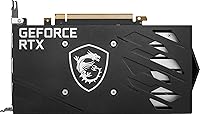
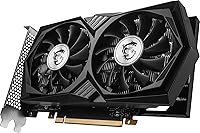
  • Cooling System: Features MSI's dual-fan TORX-style cooling solution, positioned within the GAMING X tier for quieter and more efficient thermal management than reference designs.
  • Form Factor: Dual-slot card with a compact PCB profile; does not include a low-profile bracket, so it is not suitable for slim or half-height cases.
  • Power Connector: Requires a single 8-pin PCIe power connector, with a rated TDP that fits comfortably within the output range of most entry-level and mid-range power supplies.
  • API Support: Supports DirectX 12 Ultimate, OpenGL 4.6, and Vulkan, covering the full range of APIs required by modern gaming and creative applications.
  • Ray Tracing: Includes first-generation hardware RT cores for real-time ray tracing, though practical use is best limited to lighter or older titles given the narrower memory bus.
  • DLSS Support: Supports NVIDIA DLSS 2.x, enabling AI-driven upscaling in hundreds of compatible titles to recover frame rates without significant visual quality loss.
  • Brand Tier: Sits in MSI's GAMING X lineup, positioned above the baseline Ventus series and below the flagship SUPRIM line in terms of cooling and factory tuning.
  • Launch Date: Made commercially available in February 2024, entering a competitive entry-level GPU market alongside AMD and Intel Arc alternatives at a similar price point.
  • Reseller Rank: Holds a top-110 position in the Computer Graphics Cards category on Amazon, reflecting consistent buyer demand relative to the broader GPU market.
  • Color & Finish: Ships in a black colorway with a dual-fan shroud featuring MSI's standard GAMING X aesthetic, designed to blend into most mid-range build themes.

Related Reviews
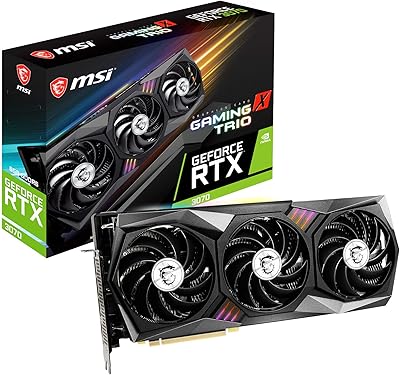
MSI RTX 3070 Gaming X Trio Graphics Card
76%
93%
Thermal Performance
91%
Noise Levels
89%
1440p Gaming Performance
88%
Build Quality
74%
Value for Money
More
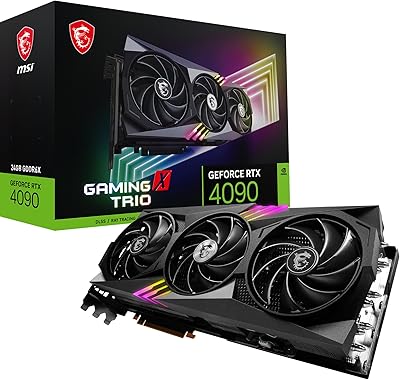
MSI RTX 4090 Gaming X Trio GPU
84%
93%
Thermal Performance
89%
Noise Levels
96%
Raw Gaming Performance
91%
VRAM & Memory
88%
Build Quality
More
MSI GeForce RTX 3060 Gaming X Trio 12G
84%
91%
Gaming Performance
94%
Cooling Efficiency
87%
Build Quality
89%
Value for Money
70%
Compatibility with Cases
More
MSI GeForce RTX 2080 Ti Gaming X Trio
87%
94%
Gaming Performance
91%
Ray Tracing Quality
88%
Thermals and Cooling
90%
Build Quality
65%
Noise Level Under Load
More
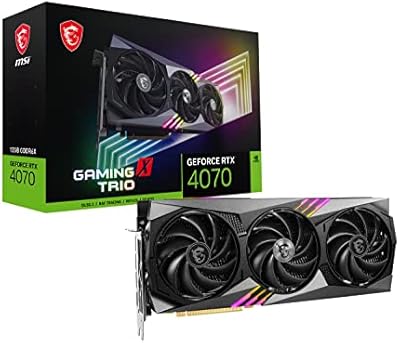
MSI RTX 4070 Gaming X Trio GPU
82%
92%
1440p Gaming Performance
93%
Thermal Performance
91%
Noise Levels
89%
Build Quality
71%
Value for Money
More
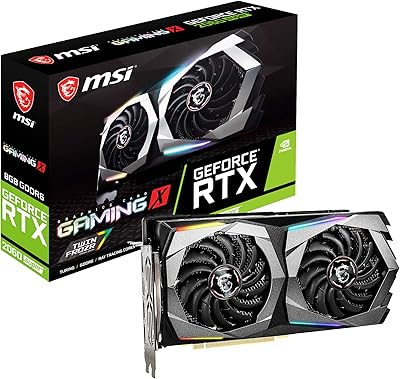
MSI GeForce RTX 2060 Super Gaming X 8GB
84%
93%
Gaming Performance (1080p/1440p)
90%
Cooling Efficiency
88%
Build Quality & Durability
92%
Noise Levels
84%
RGB Lighting Customization
More
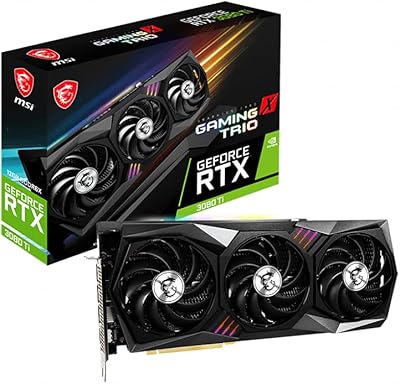
MSI GeForce RTX 3080 Ti Gaming X Trio 12G
86%
94%
Cooling Performance
92%
4K Gaming Performance
88%
Build Quality
91%
Noise Levels Under Load
85%
Installation and Setup
More
MSI RTX 3060 Ti X Trio GPU
77%
93%
Thermal Performance
91%
Noise Levels
88%
1440p Gaming Performance
89%
Build Quality
67%
Value for Money
More
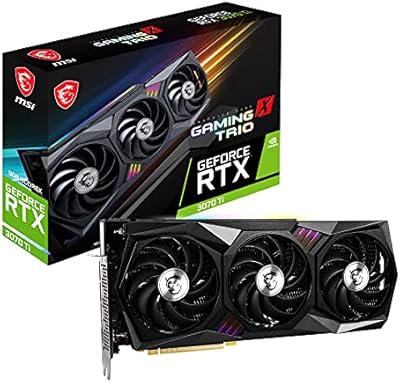
MSI GeForce RTX 3070 Ti Gaming X Trio 8GB
85%
92%
Gaming Performance
89%
Cooling Efficiency
88%
4K Gaming Experience
85%
RGB Customization
70%
Size & Compatibility
More
MSI GeForce RTX 3090 Ti Gaming X Trio 24GB
84%
94%
Gaming Performance
70%
Power Consumption
88%
Cooling Efficiency
65%
Size and Compatibility
92%
Overclocking Performance
More

FAQ

Most likely yes. The PCB is only 8.1 inches long, which clears the length restrictions of the majority of mini-ITX cases on the market. That said, always cross-check your specific case's maximum GPU length spec before ordering, since a few ultra-compact designs cap out below 8 inches.

Not particularly. The RTX 3050 Gaming X has a modest TDP and draws power through a single 8-pin connector. A quality 450W to 550W power supply is generally sufficient for a full system build, though pairing it with a higher-end CPU may push you toward the 550W end to be safe.

Technically yes, practically it depends. Hardware RT cores are present, so ray tracing is available in supported titles. In lighter games or older titles with RT support, you can enable it and maintain playable frame rates. In demanding modern games, enabling ray tracing will drop performance noticeably, so most users end up leaving it off.

Absolutely. The card has two HDMI 2.1a outputs plus a DisplayPort 1.4a, so a dual-monitor setup is simple and requires no adapters. All three outputs can be used simultaneously if you want a three-screen configuration.

It is a fair and common question. AMD alternatives like the RX 6600 sometimes offer a wider memory bus and stronger rasterization at a comparable price, which makes the head-to-head uncomfortable on pure spec sheets. The RTX 3050 Gaming X counters with DLSS support, NVIDIA's mature driver ecosystem, and slightly better software compatibility for creative applications — but if raw gaming performance per dollar is the only metric, AMD competes closely.

Yes, fully. MSI Afterburner works without issues on this card and lets you adjust fan curves, power limits, and clock offsets. Realistically, the overclocking headroom is modest — do not expect dramatic performance gains — but fan curve control alone is worth having for keeping temperatures in check.

Esports titles like CS2, Valorant, and Apex Legends will run smoothly at high settings with strong frame rates. Indie and mid-tier games like Hades, Elden Ring at medium settings, or Fortnite run well too. Where it struggles is in VRAM-intensive open-world games at ultra settings — think newer open-world RPGs with high-res texture packs enabled.

Generally yes, and it is one of the most consistently praised aspects in buyer reviews. Under typical 1080p gaming loads, the fans are barely audible from a normal sitting distance. During very long sessions or if your case has poor airflow, the fans do spin up more noticeably, but it never becomes intrusive for most users.

No, a low-profile bracket is not included in the box. The card is a standard dual-slot design intended for full-height PCIe slots. If you are building in a slim desktop or an HTPC chassis that requires low-profile cards, this one will not fit.

DLSS uses AI to render the game at a lower resolution and upscale it to your target resolution, recovering frames with minimal visible quality loss. On this card it is genuinely useful — enabling DLSS Quality mode in a supported title can add 20 to 40 percent more frames in some cases. It is one of the stronger arguments for choosing an NVIDIA card at this price tier over the AMD competition.

Where to Buy

SHI International
In stock $271.00