Overview

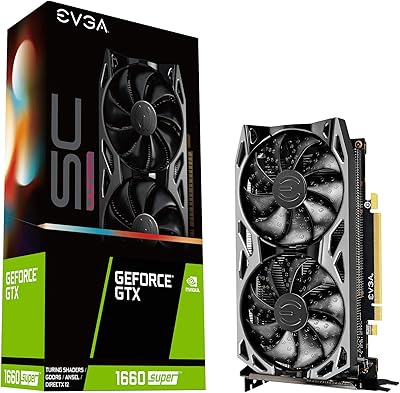
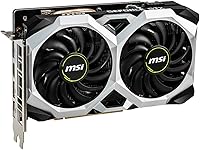
The MSI GTX 1660 Ti 6GB Graphics Card landed in early 2019 as a well-positioned mid-range option sitting between entry-level cards and the pricier enthusiast tier. MSI's Ventus XS variant kept the design compact and included a modest factory overclock, making it appealing for builders with tight case clearances or limited budgets. The 6GB GDDR6 memory paired with a 192-bit bus gave it a real bandwidth edge over GDDR5 competitors at launch. Today, this MSI Ventus XS still holds up as a used or refurbished pick for anyone who wants proven 1080p performance without paying for the latest generation.

Features & Benefits

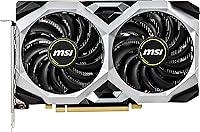
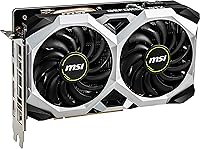
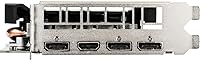
The dual-fan Ventus XS cooler is one of the more practical design choices here — at just 8.1 inches long, it fits where many bulkier cards simply won't. The factory overclock nudges the boost clock to 1830 MHz from a 1770 MHz base, a small but genuine improvement requiring zero manual tuning. What carries more weight is the GDDR6 memory running at 8 Gbps; compared to GDDR5 cards from the same era, bandwidth headroom at 1080p is noticeably stronger. Three DisplayPort 1.4 outputs plus HDMI 2.0b handle multi-monitor setups well, and a 120W power draw means a solid 450W PSU manages it without breaking a sweat.

Best For

This mid-range GPU is most at home pushing 1080p at high settings — esports titles run exceptionally well, and demanding AAA games deliver respectable frame rates without major compromise. Compact build enthusiasts will appreciate the shorter PCB slotting comfortably into mid-towers and even some smaller cases. Upgraders stepping up from a GTX 970, 1060, or similar older card will notice a meaningful performance jump. It also serves as a reasonable entry point for VR-capable builds on a budget. Home office rigs that double as casual gaming machines are another natural fit, especially where quiet operation and power efficiency matter alongside raw performance.

User Feedback

Backed by a 4.7-star average across more than 1,700 ratings, the GTX 1660 Ti card has clearly built real buyer confidence over time. Owners consistently highlight quiet fan behavior even under sustained gaming loads, and straightforward installation gets frequent praise from first-time builders. Long-term reliability comes up positively in extended reviews as well. That said, honest feedback points to real limitations: the 6GB VRAM ceiling grows noticeable in recent titles with demanding texture packs, and there is no ray tracing support at all. A number of buyers also acknowledge that newer budget GPUs have since narrowed the price-to-performance gap, making secondhand availability the main factor in whether this card still makes sense today.

Pros

  • Handles 1080p gaming at high settings with consistent, reliable frame rates across a wide range of titles.
  • The compact dual-fan cooler runs quietly under load, which real-world owners consistently highlight as a standout trait.
  • At just 8.1 inches long, this MSI Ventus XS fits cases where most competing dual-fan cards simply will not.
  • GDDR6 memory at 8 Gbps gave it a bandwidth edge over GDDR5 rivals and that advantage still holds up today.
  • A 120W TDP means a modest 450W PSU is all you need — no expensive power upgrades required.
  • VR-ready certification makes it a budget-friendly entry point for headset owners who do not need top-tier headroom.
  • Factory overclock is applied out of the box, so there is nothing to configure for a small free performance bump.
  • Over 1,700 ratings averaging 4.7 stars reflects genuine, long-term buyer satisfaction rather than launch-day hype.
  • Triple DisplayPort 1.4 outputs make multi-monitor productivity setups straightforward without any additional adapters.
  • Long-term driver stability and reliability come up repeatedly in extended ownership reviews.

Cons

  • No ray tracing support at all — this is a hard architectural limitation, not a driver issue.
  • 6GB VRAM runs tight in several post-2022 AAA titles, particularly at higher texture quality settings.
  • The factory overclock over reference clocks is small enough that most users will not notice it in practice.
  • No DLSS support, which is now a meaningful missing feature compared to RTX-series alternatives in a similar price range.
  • Resale and secondhand pricing can be inconsistent, making value assessment harder compared to buying new current-gen cards.
  • The 192-bit memory bus limits scalability if you ever push beyond 1080p or run memory-intensive workloads.
  • Newer budget GPUs have closed the performance gap significantly, so new-purchase justification requires careful price checking.
  • No hardware AV1 encode support, which matters for streamers and video editors using modern compression workflows.

Ratings

The MSI GTX 1660 Ti 6GB Graphics Card has been scored by our AI system after analyzing thousands of verified global buyer reviews, with spam, bot activity, and incentivized feedback actively filtered out before any scoring was applied. The result is an honest, balanced breakdown that reflects both what real owners genuinely appreciate and where the card falls short for certain use cases. Strengths and pain points are weighted equally, so the scores you see represent the full picture — not just the highlights.

1080p Gaming Performance
88%
Owners building 1080p rigs consistently report smooth, high-frame-rate experiences across a wide range of titles, from competitive shooters to open-world games at high settings. Esports players in particular find this mid-range GPU punches well above its class for fast-paced titles where raw frame rate matters most.
Performance starts to show strain in newer, more demanding AAA titles released after 2022, particularly when texture quality is pushed to ultra. Some users note occasional dips below their target frame rate in heavily populated scenes in open-world games.
Value for Money
71%
29%
At the right secondhand price, the GTX 1660 Ti card offers a meaningful performance jump for anyone upgrading from a GTX 970, 1060, or similar aging card, without requiring a full platform overhaul. Many buyers report feeling satisfied with the cost-per-frame ratio when sourced from the used market.
New-purchase value has eroded noticeably as newer budget GPUs have entered the market at competitive price points. Buyers who paid full retail near launch are more likely to feel the sting of that shifting landscape compared to those who picked it up later at a discount.
Thermal Management
84%
The dual-fan Ventus XS cooler handles sustained gaming loads without breaking a sweat in most mid-tower environments, keeping temperatures in a comfortable operating range even during extended sessions. Owners in moderate climates consistently report stable thermals with no throttling under typical gaming conditions.
In smaller or poorly ventilated cases, temperatures can climb higher than expected since the compact cooler has less room to exhaust heat effectively. A small number of users in hotter ambient environments report the fans ramping up more aggressively than they would like.
Noise Level
86%
This is one of the most frequently praised aspects of this MSI Ventus XS in real user feedback — the fans stay impressively quiet during regular gaming sessions, and at idle or light loads they stop spinning entirely. Buyers who game in quiet rooms or shared spaces specifically highlight how non-intrusive the card is compared to previous GPUs they owned.
Under fully sustained stress loads — such as extended benchmark runs or GPU-intensive rendering tasks — the fans do audibly spin up, though most users describe the noise as acceptable rather than bothersome. A small subset of owners report fan coil whine, which appears to be a unit-to-unit variation rather than a universal issue.
VRAM Adequacy
62%
38%
The 6GB GDDR6 allocation was genuinely competitive when the card launched in 2019, providing more usable bandwidth than GDDR5 alternatives and holding up well in most mainstream 1080p scenarios for several years. Games from 2020 and earlier rarely push it to its ceiling at standard 1080p settings.
Several recent AAA titles now recommend or effectively require more than 6GB for high-texture settings at 1080p, and owners are increasingly running into forced texture downscaling in games like Hogwarts Legacy or Starfield. Users who like to max out every graphical setting will hit this ceiling more often than they might expect.
Build & Physical Quality
83%
The card feels solidly constructed for its class, with a sturdy backplate and a cooler shroud that does not flex or creak when handled during installation. Owners doing their first GPU install specifically mention how straightforward the physical mounting process was.
The plastic shroud finish, while functional, does not have the premium tactile feel of higher-end MSI Gaming X or ASUS TUF variants. A small number of long-term owners have reported fan bearing noise appearing after two or more years of continuous use.
Driver Stability
81%
19%
NVIDIA's driver support for the Turing architecture has been mature and stable for years, and owners of the GTX 1660 Ti card rarely report driver-related crashes or compatibility issues with modern games. Long-term owners in particular appreciate that the card just works without requiring constant driver management.
A handful of users report occasional driver timeout errors when using certain combinations of DisplayPort cables and monitors at high refresh rates, though this appears infrequent. As NVIDIA shifts focus toward newer architectures, some buyers speculate that long-term driver optimization for GTX-series cards may gradually taper off.
Case Compatibility
89%
At 8.1 inches in length, this compact dual-slot card fits into a genuinely wide range of cases, including many Micro-ATX builds where longer cards are simply not an option. Builders who have struggled with fitment issues on previous GPU upgrades consistently call out the physical size as a major practical advantage.
The dual-slot width is standard, but users with very tight PCIe lane spacing or unusually positioned M.2 slots on compact motherboards occasionally report minor clearance awkwardness. It is not a universal fit for every ITX case, so checking case GPU clearance specs beforehand is still recommended.
Power Efficiency
82%
18%
A 120W TDP is genuinely low for the level of 1080p performance delivered, and owners upgrading from older high-draw cards like the GTX 1080 often remark on the drop in measured system power consumption. The modest PSU requirement also means most mid-range system builds do not need a power supply upgrade.
While efficient for its performance tier, the card does not approach the per-watt efficiency of newer architectures built on more advanced process nodes. Users measuring system-level power draw during extended gaming note it is not dramatically more efficient than some competing cards from the same generation.
Multi-Monitor Support
78%
22%
Three DisplayPort 1.4 outputs alongside an HDMI 2.0b port give users real flexibility for multi-monitor productivity setups without needing display adapters. Office users running dual or triple 1080p displays for work alongside light gaming report this configuration works reliably without any software configuration headaches.
Driving three monitors simultaneously at high refresh rates can put additional memory pressure on the 6GB VRAM allocation, and users running GPU-accelerated work across multiple displays may notice performance impacts. HDMI 2.1 is absent, which matters for users connecting to newer TVs that support 4K at high refresh rates.
VR Readiness
74%
26%
The card clears the minimum hardware bar for popular tethered VR headsets comfortably, and budget-conscious VR enthusiasts report satisfying experiences in moderate-intensity titles like Beat Saber, VRChat, and older SteamVR content. For buyers who simply want to try VR without a large investment, it is a workable starting point.
Graphically demanding VR titles — particularly newer releases that push high-resolution rendering — can expose the card's VRAM and raw compute limitations fairly quickly. Users who plan to run VR as a primary use case at high quality settings would be better served by an RTX-series card with more headroom.
Installation Experience
91%
Ease of installation ranks among the most consistently praised aspects in owner reviews, with first-time builders specifically highlighting the straightforward slot-in process and clear single 8-pin power connector requirement. The card's lighter weight compared to heavier premium GPUs also makes handling during installation noticeably easier.
A small subset of users reported needing to update their motherboard BIOS before the card was detected correctly on older platforms, which can be confusing for less experienced builders. Included accessories are minimal, so users needing DisplayPort-to-HDMI adapters or extension cables will need to source those separately.
Longevity & Future-Proofing
57%
43%
For users who lock in 1080p as a long-term resolution target and play a mix of older titles and less demanding newer games, the card can realistically serve another two or three years of regular use without major compromises. Driver support from NVIDIA remains active, so there are no immediate software abandonment concerns.
The absence of ray tracing, DLSS, and AV1 hardware encode means the card misses three increasingly standard features found even on entry-level current-generation GPUs. Buyers who anticipate upgrading to 1440p or want to stay current with graphical technology trends will likely feel the need to upgrade sooner than they originally planned.

Suitable for:

The MSI GTX 1660 Ti 6GB Graphics Card is a strong match for anyone building or upgrading a 1080p gaming rig without wanting to overspend on newer-generation hardware. Esports players in particular will find it handles titles like Valorant, CS2, and Apex Legends at high frame rates with ease, while casual AAA gamers can expect solid playable performance on reasonable settings. Its compact 8.1-inch footprint makes this MSI Ventus XS a practical choice for mid-tower and smaller cases where longer cards simply do not fit. Upgraders stepping off older GTX 900 or GTX 10-series cards will feel a genuine performance improvement at a fraction of flagship pricing. It also works well in secondary home-office builds where light gaming and everyday productivity share the same machine, and the low 120W power draw keeps system costs and noise levels sensibly low.

Not suitable for:

Buyers chasing modern graphical features should look elsewhere — the MSI GTX 1660 Ti 6GB Graphics Card has no hardware ray tracing support, which is increasingly standard on cards just one generation newer. Gamers targeting 1440p as their primary resolution will hit the limits of both the 6GB VRAM and the 192-bit memory bus more quickly than they might expect, especially in texture-heavy open-world titles released after 2022. If you are building a future-proof rig intended to last four or five more years at high settings, this mid-range GPU is not the right foundation for that goal. Content creators who rely on NVIDIA encoder performance for streaming or video work will also find newer budget options offer meaningfully better NVENC quality. Anyone currently comparing new-purchase options should weigh the GTX 1660 Ti card carefully against current budget GPUs, since the competitive landscape has shifted and newer alternatives often deliver better performance per dollar at today's market prices.

Specifications

  • Chipset: The card is built on the NVIDIA GeForce GTX 1660 Ti GPU, manufactured on a 12nm process node.
  • Video Memory: 6GB of GDDR6 memory provides faster bandwidth than GDDR5 alternatives from the same generation.
  • Memory Speed: Memory operates at 8000 MHz (8 Gbps), delivering strong throughput for 1080p and moderate 1440p workloads.
  • Memory Interface: The 192-bit memory bus balances bandwidth efficiency with the card's mid-range positioning.
  • Core Clock: The base core clock runs at 1770 MHz, with a factory boost clock reaching 1830 MHz out of the box.
  • Display Outputs: The card offers three DisplayPort 1.4 ports and one HDMI 2.0b port for a total of four simultaneous display connections.
  • Max Resolution: Officially supports output up to 7680x4320 (8K), though practical gaming performance is optimized for 1080p.
  • Power Draw: Total board power is rated at 120W TDP, making it one of the more efficient cards in its performance class.
  • PSU Requirement: MSI recommends a minimum 450W power supply unit for stable system operation with this card installed.
  • Card Dimensions: The card measures 8.1 inches in length, 1.7 inches in width, and occupies a standard dual-slot expansion bay.
  • Card Weight: The card weighs 1.47 pounds, which is typical for a compact dual-fan mid-range GPU.
  • Cooling System: A dual-fan Ventus XS cooler handles thermal management, designed to balance noise levels with adequate heat dissipation.
  • API Support: Full DirectX 12 support is included, along with OpenGL 4.6 and Vulkan compatibility for modern game engines.
  • VR Readiness: The card meets NVIDIA's VR Ready certification requirements for headsets such as the Oculus Rift and HTC Vive.
  • HDCP Support: HDCP is supported across all output ports, enabling playback of protected streaming and Blu-ray content.
  • Connector Type: The card requires one 8-pin PCIe power connector from the power supply.
  • Interface: The card connects to the motherboard via a PCIe 3.0 x16 slot, compatible with PCIe 4.0 motherboards as well.
  • Brand & Series: Manufactured by MSI under the GeForce GTX product line, model designation GTX 1660 Ti VENTUS XS 6G OC.

Related Reviews
SURALLOW GTX 1660 Ti 6GB Graphics Card
69%
78%
1080p Gaming Performance
61%
Value for Money
74%
Thermal Management
83%
Noise Level
57%
Build Quality
More
PNY GeForce GTX 1660 SUPER 6GB Graphics Card
84%
92%
Value for Money
91%
1080p Gaming Performance
88%
Cooling & Noise Levels
90%
Installation & Compatibility
87%
Graphics Rendering
More
ASUS TUF GTX 1660 Super 6GB GPU
79%
88%
1080p Gaming Performance
86%
Thermal Management
83%
Fan Noise & Acoustics
91%
Build Quality
79%
Value for Money
More
SRhonyra GTX 1050 Ti 4GB Graphics Card
74%
91%
Multi-Monitor Output
87%
Setup & Installation
83%
Driver Stability
71%
Resolution Performance
78%
Thermal Performance
More
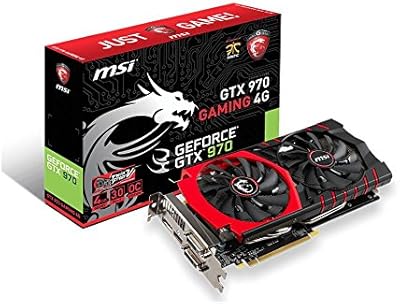
MSI NVIDIA GeForce GTX 970 Gaming 4GB Graphics Card
85%
88%
Gaming Performance (1080p/1440p)
93%
Cooling System Noise
91%
Price-to-Performance Ratio
85%
Installation Ease
72%
Driver Compatibility
More
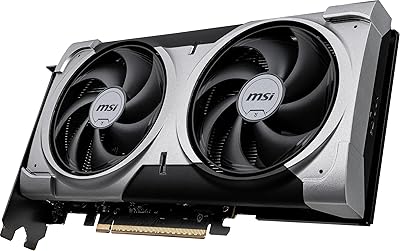
MSI GeForce GTX 1650 D6 AERO ITX 4GB Graphics Card
85%
85%
Performance at 1080p
88%
Noise Levels
87%
Cooling Efficiency
90%
Ease of Installation
79%
VR Performance
More
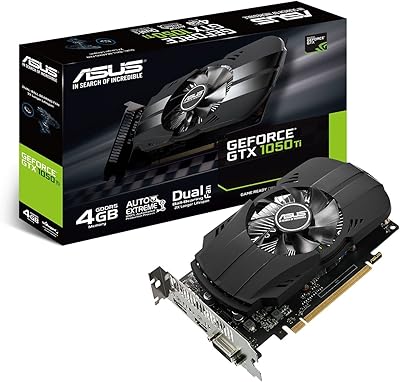
ASUS GTX 1050 Ti 4GB Graphics Card
82%
67%
Gaming Performance
93%
Power Efficiency
91%
Noise & Acoustics
88%
Thermal Management
86%
Build Quality
More
MSI GeForce RTX 5060 Ti 16G VENTUS 2X OC Plus Graphics Card
87%
92%
Gaming Performance
89%
Cooling Efficiency
87%
Build Quality
91%
Compatibility with Modern Systems
88%
Price-to-Performance Ratio
More
GPVHOSO GTX 750Ti 4GB Graphics Card
75%
71%
Value for Money
52%
Gaming Performance
89%
Power Efficiency
81%
Multi-Monitor Support
86%
Installation Ease
More
ZOTAC GeForce GTX 1660 6GB GDDR5
84%
88%
Performance at 1080p
92%
Value for Money
85%
Cooling & Noise
90%
Ease of Installation
78%
VR & 4K Gaming Performance
More

FAQ

For most 1080p gaming it still holds up well, especially in esports titles and older AAA games. Newer releases with aggressive texture requirements can push the 6GB VRAM closer to its limit, so you may need to dial back some texture settings in the most demanding recent titles. It is not a future-proof pick, but for a current 1080p build on a tight budget it remains functional.

MSI officially recommends a 450W PSU, and that figure is realistic for a typical mid-range gaming system. If your build includes a power-hungry CPU or multiple storage drives, stepping up to a 550W unit gives you a more comfortable headroom without adding much cost.

At 8.1 inches long, it fits comfortably in the vast majority of mid-tower cases and even some compact ATX builds. Before buying, just check your case's maximum GPU length spec — most mid-towers list 10 to 12 inches of clearance, so this card should have no trouble.

No, it does not. Ray tracing requires dedicated RT cores which are only available on NVIDIA's RTX-series cards. The GTX 1660 Ti uses the Turing architecture without those cores, so ray tracing is simply not an option regardless of driver or settings.

You can connect up to four monitors simultaneously using the three DisplayPort 1.4 outputs and the single HDMI 2.0b port. For a typical dual-monitor productivity and gaming setup, any combination of those ports works without needing adapters.

It meets the baseline VR Ready certification for tethered headsets, so it works with the Oculus Rift S, HTC Vive, and similar PC-tethered devices. For demanding VR titles at high graphical settings, you may find the 6GB VRAM slightly limiting, but for moderate VR use it is a practical and affordable entry point.

This is one of the areas where real-world owners give the card consistent praise. The dual-fan Ventus XS cooler stays notably quiet during typical gaming sessions, and the fans actually stop spinning entirely under light or idle loads, which keeps things silent during desktop use.

It can handle basic video editing tasks in software like DaVinci Resolve or Premiere Pro, but it lacks the newer NVENC encoder hardware found in RTX-series cards, which means streaming and export quality will not be as strong. For light editing and color grading work it is usable, but dedicated creators would be better served by a more current GPU.

Yes, PCIe is backward and forward compatible. The GTX 1660 Ti card runs on a PCIe 3.0 x16 interface natively, but it will seat and function correctly in a PCIe 4.0 slot on a newer motherboard — you just will not gain any additional performance from the faster slot since the card itself is PCIe 3.0.

At current market prices, the RTX 3050 generally offers a better deal for new purchases: it adds DLSS support, hardware ray tracing, and a more modern NVENC encoder with only a modest performance premium. The GTX 1660 Ti card can still make sense if you find it significantly cheaper on the used or refurbished market, but buying either card new at similar prices, the RTX 3050 is the more forward-looking choice.

Where to Buy