Overview

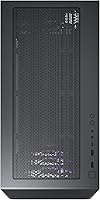
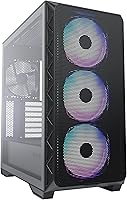
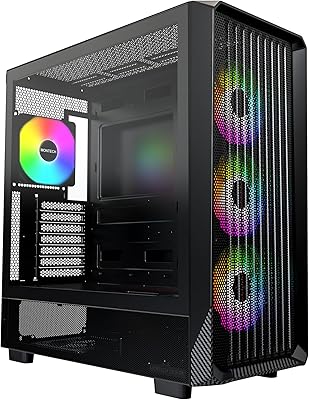
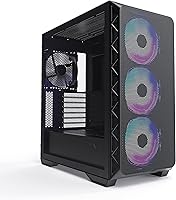
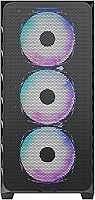
The Montech AIR 903 MAX Mid Tower Case positions itself as a genuinely competitive option in the mid-range segment, built around an airflow-first philosophy that you can see and feel the moment you unbox it. The mesh front panel with its 51% ventilation rate is the defining feature here — not decorative, but functional. Finding E-ATX support at this price point is legitimately rare; most cases in this bracket top out at standard ATX. Add four pre-installed fans and a tempered glass side panel, and you have a chassis that is practically ready to build in without spending another dollar on day one.
Features & Benefits

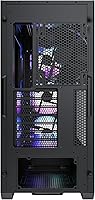
The front panel on the AIR 903 MAX does real work — that 51% open area moves air at a rate that closed-front cases simply cannot match, and the dust filter lifts off without tools, which anyone who cleans their rig regularly will appreciate. A four-fan setup runs through a single LED/PWM controller that manages both speed and 21 ARGB lighting modes, keeping wire clutter manageable. Dual 360mm radiator mounting positions, 180mm CPU cooler clearance, and GPU clearance up to 400mm in length mean high-end hardware fits comfortably. The front I/O includes USB Type-C alongside USB 3.0 and USB 2.0 ports, covering most modern peripheral needs.

Best For

This airflow case is built for people who push their hardware — if you're running an RTX 4080 or 4090, the combination of large fans and open front mesh keeps temperatures in check where high-TDP components would throttle in a less ventilated chassis. It's also a strong starting point for first-time builders, since having four fans pre-installed removes one of the most tedious sourcing decisions. Enthusiasts moving to an E-ATX platform will find this mesh mid tower handles the larger board size without the bulk of a full tower. That said, if acoustics are a priority, this case rewards some tuning — it breathes freely but is not built for silence.

User Feedback

The recurring theme in verified buyer reviews is that thermal performance holds up well in practice — people consistently mention lower CPU and GPU temps after switching to this chassis, which matches what the design suggests. Build quality gets solid marks, with most noting the materials feel more robust than expected at this price tier. The main complaint? Fan noise at higher RPMs comes up frequently; several buyers recommend setting a custom curve right away rather than letting the fans run at full speed under load. Cable management space behind the tray is functional but snug, and the assembly instructions drew criticism for being sparse — not a dealbreaker, but worth knowing.

Pros

  • Four 140mm fans come pre-installed, saving real money versus buying them separately after purchase.
  • E-ATX motherboard support is genuinely rare in a mid tower at this price point.
  • The 51% open mesh front delivers measurable airflow gains that show up in actual load temperatures.
  • GPU clearance up to 400mm in length fits triple-fan RTX 4090 cards without modifications.
  • Tool-free front dust filter removal makes regular cleaning quick and painless.
  • CPU cooler height clearance of 180mm accommodates the largest air coolers on the market.
  • Dual 360mm radiator positions at the front and top give AIO builders flexible mounting options.
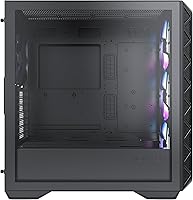
  • The tempered glass panel and matte black finish look considerably more premium than the price suggests.
  • A front USB Type-C port covers modern peripheral and device charging needs without reaching around to the rear.
  • The included PWM and ARGB hub keeps fan wiring consolidated and the interior tidy from day one.

Cons

  • Fans become noticeably loud under sustained load; a custom fan curve is almost mandatory at stock settings.
  • No noise dampening material anywhere in the chassis means silence-focused builders have no fallback.
  • The ARGB controller does not sync with popular RGB software ecosystems like Aura Sync or Mystic Light.
  • Included assembly instructions are sparse and poorly illustrated, frustrating less experienced builders.
  • The top panel has no dust filter, allowing accumulation over top-mounted fans or radiators.
  • Cable routing behind the motherboard tray is tight on E-ATX builds with multiple storage drives.
  • Only two 3.5-inch HDD bays limit storage expansion for anyone building a high-capacity system.
  • HDD trays lack vibration isolation, which can add a faint hum with spinning drives at idle.
  • The rear and top steel panels feel noticeably thinner than the front, with some sharp interior edges.
  • The USB 2.0 ports on the front I/O feel out of place given the otherwise modern connectivity options.

Ratings

The Montech AIR 903 MAX Mid Tower Case has been scored by our AI system after processing hundreds of verified global buyer reviews, with spam, bot submissions, and incentivized feedback actively filtered out before any scoring was applied. The results reflect a genuine cross-section of builder experiences — from first-time assemblers to seasoned enthusiasts running flagship GPUs — and both the standout strengths and the recurring frustrations are transparently represented in the scores below.
Airflow Performance
93%
Buyers running RTX 4080 and 4090 builds consistently report lower idle and load temperatures compared to their previous cases, and the 51% open mesh front is cited as the direct reason. Multiple reviewers noted they stopped worrying about thermal throttling after switching to this chassis.
The open design that makes airflow so effective also means dust accumulates faster than in closed-front cases, so users in dustier environments find themselves cleaning the filter more often than they anticipated.
Value for Money
89%
Getting four pre-installed 140mm fans, an ARGB controller, and E-ATX support at this price point is genuinely hard to match. Most buyers noted they would have spent significantly more sourcing equivalent fans separately, making the out-of-box package feel like a real deal.
A small segment of buyers felt the included fans, while adequate, do not perform at the level of premium aftermarket 140mm units, and factor in eventual fan upgrades when calculating the true long-term cost.
Build Quality & Materials
78%
22%
The steel frame feels solid for the price tier, and the tempered glass side panel arrived without damage for the vast majority of buyers. Several reviewers specifically praised the rigidity of the chassis compared to similarly priced competitors they had used before.
Thinner steel panels on the top and rear drew some criticism, and a handful of users noted sharp edges inside the case during installation — not uncommon at this price level, but worth wearing gloves during assembly.
Fan Noise Levels
61%
39%
At low and medium RPM curves, most builders describe the fans as acceptably quiet during everyday desktop use and light gaming sessions. Users who took the time to configure a custom fan curve in their BIOS or software reported a noticeably more comfortable acoustic experience.
At full speed, the four 140mm fans generate a level of noise that several buyers found distracting, particularly during sustained gaming loads. The consensus recommendation from the community is to dial in a manual fan curve immediately rather than relying on default settings.
GPU Clearance & Compatibility
91%
Supporting GPUs up to 400mm in length and 190mm in width means even triple-slot, triple-fan RTX 4090 cards drop in without any modification or bracket removal. Builders pairing this with high-end cards appreciated not having to double-check measurements obsessively before buying.
The 190mm width limit, while generous, did catch a couple of users with particularly wide custom-cooled cards off guard. It is not a common issue, but confirms that checking exact GPU dimensions before purchasing remains a smart habit.
ARGB Lighting & Controller
74%
26%
The included LED and PWM controller handles all four fans from a single hub, keeping the interior tidy and eliminating the need for a third-party ARGB controller for most builds. The 21 lighting modes offer enough variety that many buyers found a look they were happy with right out of the box.
The controller lacks software integration with popular sync ecosystems like ASUS Aura or MSI Mystic Light, which frustrated users who wanted unified RGB control across their entire build. The mode-cycling button approach also feels dated compared to app-driven alternatives.
Cable Management
67%
33%
There is enough depth behind the motherboard tray to route cables cleanly for most standard ATX builds, and the routing holes are positioned sensibly. Builders with modular PSUs and pre-sleeved cables reported clean results without excessive effort.
Users working with larger E-ATX boards and multiple storage drives found the rear channel tighter than expected, with some resorting to cable ties in cramped spots. PSU shroud depth was noted as limiting for longer cables, requiring some patience during finishing.
Radiator & AIO Support
88%
Front and top radiator support up to 360mm gives builders real flexibility when choosing an AIO cooler, and several reviewers confirmed a 360mm front radiator installed alongside three front fans without clearance conflicts on standard ATX builds.
With an E-ATX board installed, front radiator mounting can become tighter depending on the board layout and RAM height, so a compatibility check between the specific board and the intended AIO is worth doing before committing to that configuration.
Dust Filtration
82%
18%
The front mesh panel doubles as a dust filter and detaches without tools, which buyers who clean their systems every month or two genuinely appreciated. The bottom PSU filter also pulls out easily, and the overall filtration coverage is better than average for this class of case.
The top of the case lacks a dedicated filter over the fan or radiator mounting positions, which means dust can settle through the top fairly freely. Users who mount exhaust fans at the top tend to notice accumulation faster than those using it purely for exhaust.
CPU Cooler Clearance
86%
180mm of vertical clearance comfortably accommodates the largest air coolers on the market, including tall dual-tower designs that struggle in many competing mid towers. Builders who prefer big air over liquid cooling specifically flagged this as a reason they chose the AIR 903 MAX.
There are no meaningful complaints here for most users, though builders with very wide coolers that extend significantly toward the RAM slots should verify their specific cooler dimensions, particularly when pairing with tall DDR5 kits.
Assembly Experience
63%
37%
The case itself is logically laid out, and experienced builders generally found the physical assembly process straightforward. Standoffs are pre-installed for ATX and Micro-ATX boards, which saves time and reduces the chance of misalignment errors on common builds.
The included instruction manual received consistent criticism for being vague and poorly illustrated, particularly for first-time builders navigating the fan hub wiring and front panel connectors. Several buyers recommended watching a video walkthrough rather than relying on the printed guide.
Storage Options
71%
29%
Five 2.5-inch SSD bays and two 3.5-inch HDD trays cover the needs of most modern gaming and workstation builds comfortably. The SSD mounting positions are accessible without fully disassembling the case, which is convenient when adding drives after the initial build.
Builders running large media storage arrays with more than two hard drives will hit the ceiling quickly, and the HDD trays lack vibration dampening, which a few noise-sensitive users noticed at idle with spinning drives installed.
Front I/O Ports
76%
24%
Having a USB Type-C port on the front panel is genuinely useful for modern peripherals and flash drives, and the two USB 3.0 ports handle most day-to-day connectivity needs without reaching around to the rear. The port layout is clean and well-spaced.
The two USB 2.0 ports feel like leftover filler in 2024, and a second USB Type-C or an additional USB 3.2 Gen 2 port would have made the I/O panel more competitive. Users with multiple high-speed devices will likely still be routing to the rear.
Aesthetics & Exterior Finish
81%
19%
The combination of the mesh front, matte black steel body, and tempered glass side panel gives this case a clean, purposeful look that photographs well in build log posts. Buyers consistently described it as looking more expensive than the price tag suggests.
The black-only colorway at this trim level limits options for builders working with a white or light-themed build. The interior finish is mostly unpainted black steel, which looks fine with the glass panel on but feels less refined than cases with fully painted white or grey interiors.
Thermal Headroom for Future Upgrades
84%
The fan mounting flexibility and radiator support options mean this case has genuine room to grow with a build — adding fans, upgrading to a larger AIO, or installing a future GPU with even higher power draw are all realistic without needing a new case.
The lack of any noise dampening material means thermal headroom comes entirely at the cost of acoustics; there is no middle path here for users who want both quiet operation and upgrade flexibility without investing in aftermarket fan profiles or noise treatment.

Suitable for:

The Montech AIR 903 MAX Mid Tower Case is built for builders who want strong thermal performance without spending extra to get there. If you are pairing a high-TDP GPU like an RTX 4080 or 4090 with a powerful CPU, the open mesh front and four pre-installed 140mm fans give you the airflow headroom those components actually need. It is also a genuinely smart pick for first-time builders who want to skip the fan-sourcing headache — everything arrives ready to run, including an ARGB controller that handles lighting out of the box. Enthusiasts moving up to an E-ATX motherboard will find very few competing mid towers at this price that accommodate the larger form factor without forcing a jump to a full tower. Anyone who builds in a dusty room or cleans their rig regularly will also appreciate the tool-free removable front filter, which makes maintenance a two-minute job rather than a hassle.
Not suitable for:

The Montech AIR 903 MAX Mid Tower Case is not the right choice if acoustics are your top priority. The open mesh design that drives its thermal performance offers essentially no sound dampening, and at higher fan speeds the system becomes noticeably loud — a real concern for home office setups or living room builds where noise bleeds into the room. Builders invested in a unified RGB ecosystem, particularly ASUS Aura Sync or MSI Mystic Light, will find the included controller does not integrate with those platforms, which means managing lighting separately or replacing it entirely. If you are building a white or light-themed system, the black-only colorway at this trim level is a hard stop unless you are willing to look at the white variant of a different model. Builders with more than two hard drives will also hit the storage ceiling quickly, making this a poor fit for large media or NAS-adjacent workstation builds.
Specifications

  • Case Type: Mid Tower form factor designed to accommodate E-ATX, ATX, Micro-ATX, and Mini-ITX motherboards within a single chassis.
  • Dimensions: The case measures 18.82 x 9.05 x 19.41 inches (length x width x height), offering a substantial internal volume without crossing into full-tower territory.
  • Weight: Shipping weight is approximately 20.5 pounds, reflecting a steel-primary construction with a tempered glass side panel.
  • Front Panel: Metal mesh front panel with a 51% ventilation rate serves as both the primary air intake surface and an integrated dust filter that removes without tools.
  • Side Panel: Full tempered glass side panel on the left side provides an unobstructed view of the internal components and installed lighting.
  • Pre-installed Fans: Four HP140 fans come installed from the factory: three 140mm ARGB PWM units positioned at the front and one 140mm standard PWM fan at the rear.
  • Fan Controller: An included LED and PWM hub manages all four pre-installed fans, offering 21 selectable ARGB lighting modes via a front-mounted button.
  • Radiator Support: Supports radiators up to 360mm at both the front and top mounting positions, enabling dual 360mm AIO configurations for extreme cooling setups.
  • GPU Clearance: Graphics cards up to 400mm in length and 190mm in width are supported, covering triple-slot flagship cards including the NVIDIA GeForce RTX 4090.
  • CPU Cooler Height: Vertical CPU cooler clearance reaches 180mm, accommodating the tallest dual-tower air coolers currently available on the market.
  • Front I/O: Front panel connectivity includes one USB Type-C port, two USB 3.0 ports, and two USB 2.0 ports for peripheral and device access from the front of the desk.
  • Drive Bays: Internal storage support includes five 2.5″ SSD bays and two 3.5″ HDD trays, providing flexible options for mixed solid-state and spinning drive configurations.
  • PSU Support: The rear-mounted power supply bay supports standard ATX PSUs up to 240mm in length, covering the overwhelming majority of modern modular and semi-modular units.
  • Fan Mounting: Additional fan mounting positions support up to three 120mm or two 140mm fans at the top, three 120mm or three 140mm fans at the front, and one 120mm or 140mm fan at the rear.
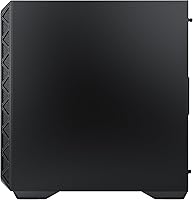
  • Material: Primary construction uses steel for the chassis frame with a tempered glass left side panel and a metal mesh front panel finished in matte black.
  • Color: Available in Black at this trim level, with a white variant offered separately under the AIR 903 MAX product line.
  • Motherboard Standoffs: Standoffs for ATX and Micro-ATX boards come pre-installed, reducing assembly steps and the risk of misalignment during the initial build process.
  • PSU Shroud: A full-length PSU shroud conceals the power supply and cable clutter along the bottom of the case, contributing to a cleaner interior appearance through the glass panel.

Related Reviews

Montech X5 ATX Mid-Tower Gaming PC Case
86%
88%
Build Quality
93%
Airflow & Cooling
87%
Aesthetics & Design
84%
Installation Ease
90%
GPU Compatibility
More
Montech KING 95 PRO ATX Mid-Tower PC Gaming Case
85%
91%
Cooling Performance
87%
Cable Management
88%
Build Quality
90%
Aesthetics
82%
Ease of Assembly
More
Thermaltake Tower 600 Mid-Tower ATX Case
79%
91%
Build Quality
93%
Aesthetic Design
88%
Cable Management
94%
Cooling Capacity
71%
Installation Experience
More
HYTE Y70 Mid-Tower ATX Gaming Case
80%
93%
Build Quality
96%
Aesthetic Design
78%
Cooling Potential
91%
Vertical GPU Mounting
88%
Cable Management
More
SAMA 3509 ATX Mid Tower PC Case
74%
88%
Value for Money
74%
Build Quality
81%
Airflow & Cooling Performance
67%
Pre-installed Fan Quality
86%
Tempered Glass Panel
More
SAMA V60 Mid Tower PC Case
80%
93%
Out-of-Box Cooling Value
78%
Airflow Performance
91%
AIO & Radiator Flexibility
88%
Tempered Glass & Aesthetics
71%
Build Quality & Materials
More
COUGAR MX330-X Mid Tower Case
85%
88%
Cooling Performance
91%
Ease of Installation
85%
Build Quality
90%
Airflow & Ventilation
65%
Cable Management
More
KEDIERS P6 Mid Tower ATX PC Case
75%
88%
Aesthetic Design
71%
Build Quality
84%
Included Fans & Lighting
78%
Airflow & Thermal Performance
81%
Radiator & Cooling Support
More
Cooler Master N400 Mid Tower PC Case
76%
88%
Airflow Performance
74%
Build Quality
86%
Value for Money
91%
Ease of Assembly
79%
Cooling Compatibility
More
HYTE Y40 Mid-Tower ATX Case
85%
89%
Design & Aesthetics
86%
Cooling Performance
91%
Cable Management
93%
Build Quality
72%
GPU Compatibility
More

FAQ

Yes, triple-fan RTX 4090 cards fit without any bracket removal or structural changes, provided the card length stays within 400mm and the width does not exceed 190mm. Most reference and custom 4090 designs fall well within those limits, but it is always worth double-checking your specific card's dimensions before ordering.

Absolutely. The Montech AIR 903 MAX Mid Tower Case supports 360mm radiators at both the front and top mounting positions simultaneously, so you have real flexibility in how you route your cooling loop. Front mounting is generally preferred for intake-based AIO setups since it pushes cool air directly over the GPU.
At low to medium speeds they are perfectly manageable for most people, but at full RPM they get noticeably loud. The strong advice from the builder community is to set a custom fan curve in your BIOS or motherboard software right after your first boot rather than leaving them on a default automatic profile — that alone makes a significant acoustic difference.

Unfortunately, no. The included LED and PWM controller operates independently and does not integrate with third-party RGB software ecosystems. You cycle through the 21 lighting modes using a physical button on the front panel. If unified RGB control across your whole system matters to you, you would need to replace the included hub with a compatible third-party ARGB controller.

Not at all — that is actually one of the better-designed aspects of this case. The front mesh panel pulls off without any tools and can be rinsed or brushed clean in under a minute. Given how open the front is, cleaning it every few weeks in a typical home environment is a good habit.

It is functional, and experienced builders will have no serious problems routing a clean build. The space behind the motherboard tray handles standard ATX builds well, but if you are working with an E-ATX board and several storage drives simultaneously, the rear channel can feel tight. Using flat or slim cables helps, and planning your routing before tightening anything down makes a real difference.

The 180mm height clearance is enough for the NH-D15 on most builds, but the combination of an E-ATX board and a wide dual-tower cooler that extends toward the RAM slots is worth verifying specifically. The cooler height itself is fine; the RAM clearance on certain NH-D15 configurations with tall memory kits is the factor to check against your specific board layout.

Honestly, the manual is one of the weaker points of this case. It covers the basics but lacks detail, particularly around wiring the fan hub and connecting front panel headers. If this is your first build, watching a YouTube walkthrough for this specific case before you start will save you frustration — the physical assembly is straightforward once you know what you are looking at.

Yes, there is room for additional fans at the top and additional positions can be populated at the front if you want to maximize airflow further. The top supports up to three 120mm or two 140mm fans, so there is room to expand. You would just need a separate fan controller or a motherboard header splitter if you run beyond what the included hub handles.

It depends on your priorities. If your workload puts consistent load on the CPU and GPU, the airflow performance will keep temperatures well managed throughout the day. The caveat is noise — if your desk is in a quiet room or shared space, the fans at higher speeds could become distracting. A well-tuned fan curve and a modest workload profile will keep things much quieter during typical productivity use.

Where to Buy