Overview

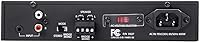
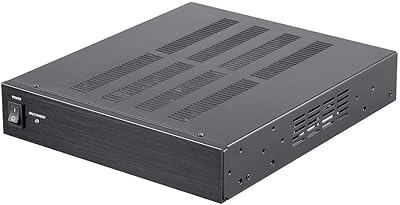
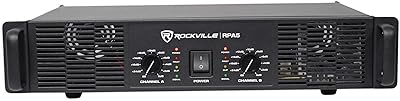
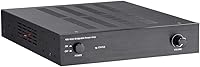
The Monoprice Unity 450W Power Amplifier sits comfortably in the budget-to-mid-range Class D amplifier space, where honest performance matters more than brand prestige. Monoprice has built a solid reputation for delivering functional, no-frills audio gear, and this rackmount amp follows that same pattern. That headline 450-watt figure applies only when the amp is bridged into mono, driving a single 8-ohm load; in stereo mode, you're looking at 150 watts per channel into 8 ohms, or 225 into 4 ohms — still plenty for most fixed installs or compact home theater setups. At just 3.6 pounds in a 1U rackmount chassis, it handles easily for its power class.
Features & Benefits

Class D amplification is what makes this rackmount amp practical for fixed installations. Unlike Class A/B designs that bleed energy as heat, Class D efficiency means the chassis stays cool under moderate loads and the internal fan doesn't have to work as hard. The bridgeable output is genuinely useful — bridging combines both channels into one mono signal, ideal when you need to push a single high-demand speaker or subwoofer. The Phoenix screw terminals are detachable and accept up to 12 AWG wire, making cable swaps clean and installer-friendly. Built-in protection circuits guard against thermal overload and short circuits, adding real confidence for unattended commercial installs. Sensitivity controls allow straightforward gain staging with most preamps or mixers.

Best For

The Unity amplifier makes the most sense for anyone building a fixed audio installation rather than chasing audiophile perfection. AV integrators will appreciate the included rackmount ears and no-fuss wiring. It's well-suited for background music setups in small commercial spaces — a restaurant, a retail floor, a conference room — where consistent, reliable output matters more than sonic nuance. DIY enthusiasts who want real amplification without the price of Crown or QSC will find it a reasonable fit. Bridged mono mode also makes it compelling for driving a single passive subwoofer. Just make sure your speakers are rated for 4 or 8 ohms to stay in its optimal load range.

User Feedback

Owners of this Class D stereo amp generally come away satisfied with clean consistent output at moderate listening levels and how easily it integrates into a rack. Setup complaints are rare. What does surface regularly is fan noise — even at idle, the cooling fan is audible enough to be distracting in a quiet bedroom or home theater environment. Some users also note that real-world output feels slightly shy of the rated spec, a common observation across the category. Long-term reliability seems solid for most, though a handful report occasional thermal shutoffs during extended high-volume sessions. Against similarly priced Dayton Audio or entry-level Crown options, the Unity holds its own without clearly pulling ahead.

Pros

  • Clean, consistent stereo output at moderate volumes suits background music installs well.
  • Bridgeable mono mode unlocks significantly more power for driving a single subwoofer or speaker.
  • The detachable Phoenix screw terminals make wiring changes fast and clean — no soldering required.
  • Built-in thermal and short-circuit protection adds real peace of mind in unattended commercial installs.
  • Rackmount ears are included out of the box, saving integrators an extra purchase.
  • Class D topology keeps the chassis cool and the unit light at just 3.6 pounds.
  • Compatible with standard preamps and mixers through straightforward sensitivity controls.
  • Accepts up to 12 AWG speaker wire, which is more than adequate for most fixed installations.
  • Monoprice's support and warranty record is generally reliable for this price tier.
  • Compact 1U form factor fits neatly into any standard equipment rack without sacrificing adjacent space.

Cons

  • The cooling fan produces audible noise even at idle, making it a poor choice for quiet listening rooms.
  • Rated wattage figures can be misleading — the 450W spec only applies in bridged mono, not stereo.
  • Real-world output is reported by some users to fall slightly short of the published power ratings.
  • Onboard controls are minimal, limiting fine-tuned gain management for complex signal chains.
  • Occasional thermal shutdowns have been reported during extended high-volume sessions.
  • Not designed for low-impedance speaker loads below 4 ohms, restricting some speaker pairings.
  • The Unity amplifier lacks balanced XLR inputs, which may be a drawback in professional signal environments.
  • No built-in DSP or crossover controls means additional outboard gear is needed for more complex setups.
  • Cosmetic build quality feels utilitarian — this is a working tool, not a showpiece for an open rack.
  • Competing options from Dayton Audio at a similar price point are worth comparing before committing.

Ratings

The scores below reflect AI-driven analysis of verified global user reviews for the Monoprice Unity 450W Power Amplifier, with spam, incentivized, and bot-generated feedback actively filtered out to ensure accuracy. Each category captures both the genuine strengths and the recurring frustrations real buyers have reported, giving you an honest picture of what this rackmount amp delivers in everyday use. No score has been softened to protect the brand — the weaknesses are as visible here as the wins.

Value for Money
88%
For buyers who need a functional, rack-ready power amp without the price tag of Crown or QSC, the Unity amplifier consistently over-delivers on perceived value. Integrators running background music installs especially appreciate getting bridgeable output, Phoenix connectors, and included rackmount ears at this price tier.
A handful of users feel the value proposition weakens once you factor in limitations like fan noise and the gap between rated and real-world output — at which point some comparable Dayton Audio options start to look more compelling on a cost-per-performance basis.
Power Output Accuracy
67%
33%
In typical stereo use at moderate volumes — background music in a restaurant, fill speakers in a conference room — the amp delivers clean, consistent output that satisfies most practical install requirements without strain.
The advertised 450-watt figure misleads buyers who expect that power in stereo mode; it only applies in bridged mono configuration. Several users report that even the per-channel figures feel optimistic under real-world listening conditions, particularly with demanding speakers.
Fan Noise
43%
57%
In rack closets, server rooms, or utility installations where ambient noise is already present, the fan is a non-issue and the active cooling clearly does its job keeping thermals in check during long operating sessions.
In quiet home environments or dedicated listening rooms, the continuously running fan is one of the most frequently cited complaints — audible at idle and disruptive enough to frustrate users who did not anticipate it. This single factor alone has driven multiple negative reviews from home theater buyers.
Build Quality
74%
26%
The chassis feels solid and purposeful for a unit at this price point — the steel enclosure does not flex under pressure, and the detachable Phoenix connectors feel robust enough for repeated field use by installers.
The overall finish is utilitarian at best; the matte black casing shows fingerprints easily and some users describe the front panel controls as feeling slightly plasticky compared to professional-grade competitors from more established brands.
Ease of Setup
86%
Most buyers — including first-time amp installers — report getting this rackmount amp up and running within minutes. The detachable screw terminals make wiring intuitive, and the sensitivity controls are straightforward for standard preamp or mixer connections.
Bridging setup can trip up less experienced users who expect a dedicated bridge mode switch; the manual provides guidance but some buyers feel it could be clearer, particularly around input configuration when switching between stereo and mono operation.
Thermal Management
61%
39%
The built-in thermal protection circuit reliably prevents permanent damage during overload events, and in well-ventilated rack installations the amp maintains stable operation through extended continuous-use shifts.
Thermal shutdowns during high-volume sessions have been reported by a notable subset of users, particularly in enclosed rack spaces with limited airflow. This is not a catastrophic failure, but repeated shutoffs in a commercial environment can be disruptive and erode confidence in the unit.
Rack Integration
91%
The included rackmount ears are a genuine convenience — no extra hardware, no compatibility guessing. At 1U and under 4 pounds, this Class D stereo amp slides into any standard 19-inch rack cleanly and leaves room for airflow above and below.
The unit depth of nearly 12 inches may be a tight fit in shallower rack enclosures, and the rear-mounted connectors require a bit of planning to avoid cable strain in compact rack builds.
Stereo Clarity
76%
24%
At moderate listening levels, the amp produces a clean, uncolored stereo image that suits background music applications well — speech intelligibility in conference room installs is consistently praised, and music playback is described as neutral and unfatiguing.
Pushed toward higher volumes, some listeners detect a slight hardness or compression in the upper midrange that separates it from more refined amplifiers. It is not objectionable in commercial settings, but critical listeners in a home audio context will notice the ceiling.
Bridging Functionality
79%
21%
For users driving a single passive subwoofer or a high-demand mono speaker load, the bridged configuration works as advertised and meaningfully expands what the amp can drive compared to a standard stereo mode.
The restriction to 8-ohm loads in bridged mode limits pairing flexibility, and the setup process is not as streamlined as on purpose-built mono amplifiers. Users who regularly switch between stereo and bridged operation find the reconfiguration mildly tedious.
Long-Term Reliability
72%
28%
The majority of owners who use this amp in fixed installations report stable, uneventful operation over one to three years, which is a reasonable indicator of dependability for a unit at this price tier.
A visible minority of reviewers report unit failures or persistent thermal issues after roughly 18 months of continuous use, suggesting quality consistency may vary between production runs — something worth noting for mission-critical commercial deployments.
Input Connectivity
68%
32%
Standard line-level inputs accommodate the vast majority of consumer and prosumer source devices — connecting a mixer, streaming preamp, or AV processor is typically plug-and-play without any adapter requirements.
The absence of balanced XLR inputs is a meaningful gap for professional signal environments where hum rejection over longer cable runs matters. Users in noisier electrical environments or those running long input cable runs have reported ground loop and interference issues.
Onboard Controls
58%
42%
The sensitivity controls do their core job adequately — allowing users to trim input gain to match their source device and avoid clipping in typical install scenarios.
Beyond basic gain adjustment, the control set is bare. There is no onboard EQ, no limiter, and no mute or standby function, which means any additional signal management requires outboard gear — a frustration for users expecting a more self-contained solution.
Packaging & Accessories
77%
23%
The inclusion of rackmount ears is a practical touch that competing units sometimes omit, and the Phoenix connector terminals ship already attached, making the unboxing-to-install process unusually quick.
The manual is thin and functional rather than comprehensive, and no signal cables are included — minor omissions that most installers overlook but that can frustrate first-time buyers expecting a more complete kit.
Speaker Compatibility
73%
27%
The dual impedance support — 8 ohms and 4 ohms in stereo mode — covers the overwhelming majority of passive speaker types used in home audio and commercial install scenarios, giving buyers reasonable flexibility in speaker selection.
The strict 8-ohm minimum in bridged mode and the absence of support for loads below 4 ohms in stereo mode restrict pairing options for users with certain speaker configurations, particularly those with multi-tap or 70V distribution systems.
Brand Support & Documentation
69%
31%
Monoprice's customer service is generally responsive for warranty claims, and replacement parts or units are typically processed without significant bureaucratic friction for buyers within the warranty window.
Technical documentation is limited — the manual covers basics but does not go deep enough for advanced configuration questions, and community support resources specific to this model are sparse compared to more established professional amp brands.

Suitable for:

The Monoprice Unity 450W Power Amplifier is a strong fit for AV integrators, installers, and practical-minded DIY enthusiasts who need dependable amplification without overspending on a brand name. If you are building a background music system for a restaurant, retail space, or conference room, this rackmount amp handles that kind of continuous, unattended operation well thanks to its built-in protection circuits. Home theater hobbyists who already own a preamp or AV processor and simply need a clean power stage will find the stereo output more than sufficient for a medium-sized room with efficient speakers. The bridgeable design also makes it a sensible choice for anyone needing to drive a single passive subwoofer or a high-demand mono speaker load from one compact unit. At 3.6 pounds and a standard 1U rack height, it slides into any equipment rack without the bulk or heat concerns that come with older Class A/B designs.
Not suitable for:

The Monoprice Unity 450W Power Amplifier is not the right tool for a quiet bedroom listening setup or a dedicated two-channel hi-fi system where ambient noise matters. The cooling fan runs audibly even at idle, which will irritate anyone sitting close to the rack in a silent room. Serious audiophiles chasing sonic transparency, wide soundstage, or low-noise-floor performance should look elsewhere — this amp is engineered for reliability and value, not high-fidelity subtlety. Buyers expecting 450 watts of clean stereo power will be disappointed; that figure only applies in bridged mono mode into a single 8-ohm load, and real-world output often falls slightly short of the rated spec under demanding conditions. It is also not well suited for driving low-impedance or complex speaker loads outside the 4 to 8 ohm range, and the limited onboard controls may frustrate users who need more precise gain management.
Specifications

  • Amplifier Class: This amplifier uses Class D topology, which converts power more efficiently than Class A/B designs, producing less heat and requiring a lighter chassis.
  • Stereo Output: In stereo mode, the amplifier delivers 150 watts per channel (RMS) into 8-ohm loads, or 225 watts per channel into 4-ohm loads.
  • Bridged Output: When configured in bridged mono mode, the amplifier combines both channels to deliver 450 watts into a single 8-ohm load.
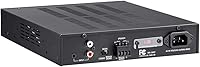
  • Speaker Connector: Speaker outputs use a 4-pole detachable Phoenix screw terminal, which accepts bare wire up to 12 AWG and can be removed without tools for easy cable management.
  • Input Voltage: The unit operates at a nominal AC input voltage of approximately 170V, suited for standard North American power environments.
  • Dimensions: The chassis measures 12.9 x 11.4 x 4.9 inches (L x W x H), conforming to a standard 1U rackmount profile.
  • Weight: The unit weighs 3.6 pounds, making it notably lightweight for an amplifier at this power level and easy to handle during solo installation.
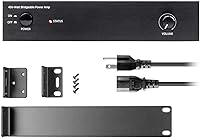
  • Rack Mounting: Rackmount ears are included in the box, allowing the amplifier to be fitted into any standard 19-inch equipment rack without additional hardware.
  • Protection Circuits: Built-in thermal overload and short-circuit protection automatically shut down the amp to prevent damage during fault conditions or prolonged high-heat operation.
  • Wire Gauge Support: The Phoenix screw terminals support speaker wire up to 12 AWG, which is appropriate for most fixed-installation and home audio runs of moderate length.
  • Cooling System: An internal fan provides active cooling for the amplifier, which runs continuously and may produce audible noise in quiet environments.
  • Model Number: The official Monoprice model number for this amplifier is 131027, useful for cross-referencing warranty claims and product documentation.
  • Brand: Manufactured and sold by Monoprice, a brand recognized for providing functional audio and AV gear at accessible price points.
  • Availability: This amplifier was first made available in November 2018 and has been a consistent catalog item in Monoprice's pro audio lineup since then.
  • Color: The unit ships in a matte black finish that blends cleanly into standard rack equipment setups and AV furniture.

Related Reviews

Monoprice Unity 200W Power Amplifier
76%
91%
Value for Money
78%
Sound Quality
72%
Build Quality
88%
Ease of Installation
74%
Trigger Functionality
More
LOXJIE A30
LOXJIE A30
79%
86%
Sound Quality
82%
Build Quality
91%
Value for Money
89%
Input Versatility
63%
Bluetooth Performance
More
Marantz MM7025 Stereo Power Amplifier
86%
94%
Power Output
91%
Sound Quality
88%
Build Quality
90%
Cooling System
87%
Connectivity Options (RCA/XLR)
More
Pyle PTAU23 Stereo Amplifier
74%
83%
Value for Money
89%
Input Versatility
91%
Ease of Setup
61%
Audio Quality
74%
Microphone Performance
More
Nobsound G2
Nobsound G2
80%
88%
Audio Clarity
74%
Build Quality
92%
Value for Money
71%
Ease of Setup
89%
Bass Performance
More
Pyle PT506BT Powered Amplifier
70%
78%
Value for Money
61%
Sound Quality
72%
Bluetooth Connectivity
74%
Microphone Performance
54%
Output Power
More
SMSL AO200 Mk II
SMSL AO200 Mk II
82%
88%
Sound Quality
91%
Power Output & Headroom
87%
Build Quality & Chassis
84%
Input Flexibility & Connectivity
93%
Noise Floor & Interference Rejection
More
SMSL A300
SMSL A300
80%
88%
Sound Quality
91%
Build Quality
93%
Power Output
89%
Value for Money
82%
Bluetooth Connectivity
More
DAJUNGUO S350HS
DAJUNGUO S350HS
77%
88%
Value for Money
81%
Audio Output Power
74%
Sound Quality
71%
Bluetooth Connectivity
69%
Build Quality
More
Dayton Audio APA150
Dayton Audio APA150
81%
88%
Sound Quality
83%
Build Quality
91%
Value for Money
89%
Noise Floor & Fan Operation
61%
Crossover Precision
More

FAQ

That 450-watt figure is the bridged mono output — meaning both channels are combined into one to drive a single speaker or subwoofer. In standard stereo mode, you get 150 watts per channel into 8-ohm speakers, or 225 watts per channel if your speakers are rated at 4 ohms. Most buyers find the stereo output more than adequate for a medium-sized room or a commercial background music setup.

Honestly, the fan is one of the most common complaints about this rackmount amp, and it is worth taking seriously. It runs continuously, even at low volumes or idle, and in a quiet bedroom or dedicated listening room it can become a distraction. If the equipment rack is in a closet, utility room, or behind a cabinet door, you likely will not notice it. But if the amp sits exposed in a quiet space, the fan noise may be a dealbreaker for you.

Yes, the Unity amplifier is designed to work downstream of a preamp, AV processor, or mixer — it does not have its own volume or source control. As long as your source device has a line-level output (most receivers and preamps do), you can connect it directly. The onboard sensitivity controls help you match gain levels between your source and the amp, which keeps the signal clean.

The amp is optimized for passive speakers rated at 4 or 8 ohms — the two impedance loads it is designed for. Avoid pairing it with speakers below 4 ohms, as that falls outside its rated operating range and could trigger protection shutdowns. Standard bookshelf speakers, ceiling speakers, and moderate-sensitivity floor-standers all pair well with it in stereo mode.

Not really. Bridging on the Monoprice Unity 450W Power Amplifier typically involves flipping a switch or reconfiguring the input and output connections per the manual, then connecting your speaker to the designated bridged output terminals. The manual walks through it clearly. Just make sure your speaker is rated for 8 ohms when bridged — connecting a 4-ohm load in bridged mode is not supported and can damage the amplifier.
It is actually one of the better use cases for this Class D stereo amp. The built-in thermal and short-circuit protection are there precisely for unattended, continuous-use scenarios. Plenty of owners report running it for extended daily shifts without issues. Just make sure there is adequate ventilation around the unit in the rack so the fan can do its job.

The rackmount ears are included in the box, so you do not need to purchase anything extra to mount it in a standard 19-inch rack. That is a small but genuinely appreciated detail for integrators who are already juggling hardware costs on a project.

At this price tier, the comparison usually comes down to specific features and use priorities. Dayton Audio amps often get praise for measured performance and value, while entry-level Crown models carry a more professional pedigree and are sometimes available refurbished for a similar price. The Unity amplifier holds its own in terms of clean output and build for the cost, but if your priority is the lowest possible noise floor or a proven commercial track record, it is worth comparing all three before deciding.

The Phoenix screw terminals accept wire up to 12 AWG, which covers the vast majority of home audio and commercial install scenarios. For shorter runs in a typical room, 14 or 16 AWG works fine. Only longer cable runs — say, over 50 feet — would really benefit from stepping up to the maximum 12 AWG.

Yes, 8-ohm ceiling speakers are well within the rated operating range for this rackmount amp and are actually a common pairing for distributed audio installs. Just keep in mind that the amp drives two speaker zones in stereo mode — if you need more zones or higher total power, you would need additional amplification or a dedicated multi-zone amp. For a two-room or two-zone install, though, this setup works cleanly.