Overview

The Gemini XGA-5000 has been a fixture in working DJ and PA rigs since 2009 — and that longevity alone says something about its reliability in the field. Gemini Sound built this rackmount amplifier to sit between entry-level hobby gear and true professional touring equipment, targeting semi-pro DJs, event producers, and sound reinforcement crews who need serious output without overspending. One thing worth stating plainly upfront: the 5000W peak figure is a marketing ceiling, not a working number. Real-world continuous output runs at 2x550W RMS into 4Ω per channel — still plenty for small-to-mid venues, but that distinction matters before you buy.

Features & Benefits

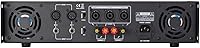
This Gemini amp covers its connectivity bases well. On the input side, you get XLR, 1/4-inch TRS, and RCA, so whether you're running a pro mixer, an audio interface, or a consumer source, something will fit without adapters. Outputs include Speakon connectors and 5-way banana binding posts, which handles most speaker cabinet configurations cleanly. Bridge mode consolidates both channels into roughly 1100W mono — useful if you're driving a single subwoofer or need a mono full-range fill. Protection circuitry covers limiter, short circuit, and DC output events, and the front-to-rear cooling fan keeps thermals manageable across long sessions. The metal 2U chassis adds about 25 pounds to your rack, but it feels solid.

Best For

The XGA-5000 makes the most sense for mobile DJs, small-venue event producers, and anyone building a fixed PA installation in a bar, house of worship, or rehearsal space. If you're upgrading from a passive speaker setup and want a dedicated amp without overspending, this rackmount amplifier fits that transition cleanly. Bridge mode makes it practical as a dedicated subwoofer driver in a two-amp rig. It also works well as a secondary or backup amplifier for sound techs who need something dependable in reserve. Buyers familiar with entry-to-mid-tier pro audio brands will feel at home here; those expecting touring-grade durability may want to budget higher.

User Feedback

Across nearly 900 ratings, this Gemini amp holds a 4.0-star average — respectable for a unit at this price tier. Owners frequently point to the metal build quality and easy rack integration as genuine strengths, and many appreciate the breadth of input and output options in one box. The most common criticism is less a flaw than a framing issue: the 5000W peak claim sets expectations the actual RMS output doesn't match, and buyers who skim the specs sometimes feel misled. Fan noise is another honest concern — it's audible at low volumes, which matters in quieter install environments. A smaller number of long-term users flag reliability after sustained heavy use, though outright failures appear to be the exception.

Pros

  • All-metal 2U rackmount chassis feels solid and survives real-world mobile rig transport well.
  • XLR, 1/4-inch TRS, and RCA inputs mean it integrates into almost any existing signal chain without adapters.
  • Bridge mode delivers roughly 1100W mono, making it genuinely useful as a dedicated subwoofer driver.
  • Speakon and 5-way binding post outputs cover the vast majority of passive speaker cabinet configurations.
  • Built-in limiter and DC output protection add a meaningful safety layer for connected speakers at high volumes.
  • Has remained in active production since 2009 — community knowledge, forum support, and compatibility info are widely available.
  • The front-to-rear fan keeps thermals stable across extended gigs without throttling or shutdown.
  • Represents strong hardware-per-dollar value for semi-pro users who buy with accurate RMS expectations.

Cons

  • The 5000W peak figure is a marketing number — working RMS output is far more modest and the gap misleads buyers.
  • Fan noise is audible at low volumes, making it a poor fit for quiet or acoustically sensitive install environments.
  • Internal components show wear faster than the sturdy exterior suggests under sustained heavy-duty use.
  • At over 25 pounds, it is noticeably heavier than Class-D competitors offering similar output in the same price range.
  • The included documentation is thin and unhelpful for users who need guidance on bridge mode wiring or gain staging.
  • Limiter engagement can feel aggressive, audibly compressing the signal before the amp reaches true clipping.
  • Long-term reliability reports from high-use owners are inconsistent enough to warrant caution for professional applications.
  • Gemini's direct customer support responsiveness is mixed, leaving some users dependent on community forums for troubleshooting.

Ratings

The Gemini XGA-5000 has accumulated hundreds of verified owner reviews across global markets, and our AI-driven analysis filters out incentivized, bot-generated, and outlier feedback to surface what real buyers consistently experience. Scores below reflect both the genuine strengths this rackmount amplifier delivers at its price tier and the recurring frustrations that show up across independent sources. Nothing has been smoothed over — the pain points are scored just as transparently as the wins.

Value for Money
83%
For working DJs and small-venue installers who need a two-channel amp with bridge capability without spending flagship money, this Gemini amp punches above what you'd expect at the price. Most buyers feel they got more hardware than their budget suggested, particularly given the metal chassis and range of connectors included out of the box.
The value perception takes a hit once buyers discover the real RMS output versus the advertised peak figure. Those who feel misled by the 5000W headline number tend to retroactively downgrade their satisfaction, even when the actual output would have been sufficient for their use case.
Power Output Accuracy
51%
49%
In real-world use, 2x550W RMS at 4Ω per channel is genuinely useful for small-to-mid venue reinforcement, and bridge mode's roughly 1100W into a single load handles subwoofer duty competently. Users running appropriately matched speakers report clean, consistent output at working volumes.
The 5000W peak marketing figure is the single most criticized aspect across all reviews. Buyers expecting anything close to that number in continuous operation are consistently disappointed, and the gap between advertised and actual power is wide enough that it skews trust in the brand's spec claims overall.
Build Quality
78%
22%
The all-metal 2U chassis is the feature owners mention most positively. It feels solid in hand, survives repeated loading and unloading from mobile rigs, and looks credible alongside more expensive rack gear. At this price point, a fully metal enclosure is not guaranteed, so buyers notice and appreciate it.
While the chassis holds up well for most users, a subset of long-term owners report build concerns after sustained heavy use — loose connectors, fan degradation, or intermittent issues that suggest the internal components don't quite match the sturdiness of the exterior shell.
Connectivity & I/O
86%
Having XLR, 1/4-inch TRS, and RCA inputs on a single amp at this price is genuinely practical. It means you can integrate this rackmount amplifier into almost any signal chain without hunting for adapters, and the Speakon plus 5-way binding post outputs cover the vast majority of passive speaker configurations in real DJ and install rigs.
The output section, while versatile, only includes three Speakon ports, which can feel limiting in multi-speaker installations where more simultaneous runs are needed. A few users also noted that the RCA inputs feel slightly less secure than the XLR jacks under repeated connection cycles.
Cooling & Thermal Management
69%
31%
The front-to-rear fan system does its job during extended gigs and keeps the unit from throttling or shutting down under sustained load. Users running long outdoor events or back-to-back sets report that the amp maintains stable output without noticeable heat-related performance drops.
Fan noise is the most consistently mentioned environmental concern. In quieter settings — a small wedding ceremony, a background music install in a restaurant, or a rehearsal room — the fan is audible enough to be distracting. It is not unusually loud for the class, but it is not subtle either.
Bridge Mode Performance
74%
26%
Bridge mode works reliably for users driving a single subwoofer or running a mono full-range fill, delivering a meaningful power increase over a single stereo channel. Mobile DJs who need a dedicated low-end driver without adding a second amp find this feature practically useful in compact rigs.
The roughly 1100W bridged output is solid but not exceptional compared to competing amps at similar prices, some of which offer more headroom in mono mode. Users expecting dramatic volume gains from bridging — especially those who took the 5000W headline at face value — often find the real-world result underwhelming.
Ease of Setup & Integration
81%
19%
Rack installation is straightforward, and the front-panel layout is logical enough that most users get it running without referring to the manual. The variety of input and output options means it drops into existing signal chains without significant reconfiguration, which working DJs and sound techs cite as a practical time-saver.
The manual itself is sparse and not particularly helpful for first-time users unfamiliar with bridge mode wiring or gain structure. A few buyers noted that the input gain controls lack fine enough resolution at the lower end, making quiet source matching slightly awkward.
Reliability Over Time
62%
38%
The majority of owners who use this amp for moderate-duty mobile or installed applications report years of problem-free operation. Its 15-plus-year presence in the market, with no discontinuation, suggests Gemini considers it a stable product with an established support history.
The durability picture is less consistent among users who push it hard — long outdoor seasons, continuous installation duty, or high-power bridged use. Fan bearing wear and connector looseness appear more frequently in reviews from users past the two-year mark, pointing to components that are adequate but not built for relentless professional use.
Protection Circuitry
77%
23%
The built-in limiter, short circuit protection, and DC output safeguards give users reasonable confidence that a miswired cabinet or accidental feedback spike won't immediately destroy connected speakers. In live DJ environments where signal surprises happen, having that safety layer active is genuinely reassuring.
A handful of users report that the limiter engages somewhat aggressively at higher volumes, audibly compressing the signal before true clipping occurs. This is a conservative tuning choice that protects gear but can frustrate users trying to extract maximum output from the amp.
Noise Floor & Signal Clarity
67%
33%
At moderate working volumes, the signal is clean and background noise is not a practical concern for most DJ and PA applications. Users running it in small bar installs and event setups describe the audio quality as perfectly acceptable for its intended purpose.
Audiophile-level transparency is not a realistic expectation here, and some users running sensitive speakers notice a faint noise floor at idle. For music-critical listening environments or high-sensitivity monitor applications, the noise performance falls short of what more expensive alternatives provide.
Weight & Portability
58%
42%
At 25.3 pounds in a 2U chassis, the amp is manageable for a single person to carry and fits standard rack bags and cases without issue. Mobile DJs who transport their full rack regularly generally accept the weight as normal for a unit this size.
For a 2U amplifier, 25-plus pounds is on the heavier side compared to newer Class-D competitors at similar price points, many of which deliver comparable or greater output at half the weight. Users building lightweight fly rigs or touring setups will notice the mass accumulates quickly in a full rack.
Aesthetics & Panel Layout
72%
28%
The front panel is clean and functional, with clearly labeled controls and a professional rack appearance that fits alongside other gear without looking out of place. Most users consider the visual presentation appropriate for the semi-pro tier it occupies.
The panel labeling can be small and difficult to read in low-light stage environments without a flashlight or rack lighting. The overall aesthetic is utilitarian rather than refined, which matters more to some buyers than others but is worth noting for visible front-of-house installations.
Documentation & Support
53%
47%
Gemini Sound has maintained this product for over 15 years, which means there is a reasonable body of community knowledge, forum posts, and third-party reviews available online to fill gaps the official documentation leaves. Replacement parts and basic support inquiries are generally addressable.
The included documentation is thin for a product targeting users who may be newer to rackmount amplification. Gemini's direct customer support responsiveness receives mixed feedback, and users who encounter technical issues outside warranty often find resolution depends more on community resources than official channels.

Suitable for:

The Gemini XGA-5000 is a practical choice for mobile DJs, small-venue event producers, and anyone building a cost-conscious but functional PA rig. If you're running a bar, a small house of worship, or a community rehearsal space where consistent amplification matters more than audiophile-grade transparency, this rackmount amplifier fits the brief well. Sound technicians looking for a dependable backup unit to keep in reserve — something that won't drain the equipment budget but will perform when called upon — will find it earns its rack space. It also works well for anyone upgrading from a passive speaker setup for the first time, particularly those who want to explore bridge mode for dedicated subwoofer duty without buying a separate mono amp. Buyers who are already familiar with mid-tier pro audio brands and have realistic expectations about working RMS output rather than peak figures will get the most satisfaction out of this unit.

Not suitable for:

Buyers expecting genuine 5000W continuous performance should look elsewhere — the Gemini XGA-5000 markets a peak figure that bears little resemblance to its working RMS output, and if that gap bothers you upfront, it will bother you more after purchase. Touring professionals or sound engineers running large venues with demanding speaker loads will quickly find the output ceiling limiting, and the long-term reliability picture under sustained heavy use gives pause for anyone whose livelihood depends on gear never failing mid-show. Quiet installation environments — upscale restaurants, corporate lobbies, acoustic music venues — are a poor match for this amp because the cooling fan produces audible noise at low volumes that is difficult to ignore in hushed settings. Weight-conscious buyers building lightweight fly rigs should also take note: at over 25 pounds, this rackmount amplifier adds meaningful mass compared to newer Class-D alternatives that deliver comparable power in a fraction of the weight. If your priority is clinical audio transparency or long-warranty professional support, the budget should stretch toward purpose-built touring or install-grade equipment.

Specifications

  • Brand: Manufactured by Gemini Sound, a pro audio brand with several decades of presence in the DJ and PA equipment market.
  • Model: The unit carries the model designation XGA-5000 and has been in continuous production since its introduction in 2009.
  • Peak Output: Rated at 5000W peak total output, which represents a maximum transient ceiling rather than a sustained operating figure.
  • RMS Output: Delivers 2x550W RMS per channel into 4Ω in stereo mode, reflecting the actual continuous working power available in typical use.
  • Bridged Output: In bridge mono mode, the amp combines both channels to deliver approximately 1100W into a single load for subwoofer or mono full-range applications.
  • Channels: Two-channel design supports independent stereo operation or combined bridge mono mode via front-panel or rear switching.
  • Inputs: Accepts XLR, 1/4-inch TRS, and RCA input connections, accommodating professional mixers, audio interfaces, and consumer-level source devices.
  • Outputs: Provides three Speakon connectors and 5-way banana binding posts, covering the most common passive speaker cabinet connection types.
  • Protection: Integrated limiter, short circuit protection, and DC output protection safeguard both the amplifier and connected speakers during abnormal signal or load conditions.
  • Cooling System: Uses a front-to-rear forced-air fan system to manage internal temperatures during sustained high-output or extended-duration operation.
  • Chassis Type: Built into a solid 2U rackmount metal enclosure designed for installation in standard 19-inch equipment racks or rack bags.
  • Dimensions: The unit measures 8 x 5 x 12 inches (L x W x H), occupying a standard 2U rack space footprint.
  • Weight: Weighs approximately 25.3 pounds, which is typical for a Class-AB amplifier at this power level but heavier than modern Class-D equivalents.
  • Voltage: Operates at 110V nominal with a supported input voltage range of 100–250V, making it adaptable for international use with appropriate power infrastructure.
  • Number of Channels: Specified as a 2-channel amplifier with the ability to operate in stereo, dual-mono, or bridged mono configurations.
  • Material: Enclosure and primary structural components are constructed from metal, contributing to the unit's durability and road-worthiness in mobile applications.
  • Mounting Type: Designed exclusively for rack-mount installation in standard 19-inch equipment rack enclosures, cases, or studio rack furniture.
  • Available Since: First listed for sale in July 2009, giving the XGA-5000 over 15 years of field use across DJ, live sound, and installed audio applications.

Related Reviews
Gemini XGA-4000 4000W 2-Channel Power Amplifier
85%
94%
Power Output
88%
Build Quality
91%
Cooling Performance
85%
Setup & Installation
87%
Connectivity & Compatibility
More
Gemini GLS-880 Bluetooth Speaker
84%
92%
Sound Quality
88%
Battery Life
70%
Portability
91%
Ease of Setup
85%
Build Quality
More
Gemini Sound TT-900 Turntable
81%
83%
Sound Quality
90%
Bluetooth Connectivity
88%
Ease of Setup
75%
Build Quality
92%
Value for Money
More
Winegard FL-5000 Indoor TV Antenna
85%
85%
Signal Strength
92%
Ease of Setup
88%
Design & Aesthetics
80%
Range Performance
90%
Build Quality
More
Gemini MPA-2400 Portable Bluetooth Speaker
86%
89%
Sound Quality
93%
Portability
85%
Battery Life
88%
Build Quality
91%
Ease of Use
More
Devialet Gemini II True Wireless Earbuds

84%
94%
Sound Quality
88%
Noise Cancellation
85%
Battery Life
81%
Comfort & Fit
90%
Build Quality
More
Epson PowerLite X49 3LCD XGA Classroom Projector
84%
88%
Brightness & Image Quality
91%
Ease of Setup
89%
Value for Money
93%
Lamp Life & Eco Mode
86%
Connectivity & Versatility
More
Gemini Sound GHSI-W525BT Outdoor Bluetooth Speakers
84%
88%
Sound Quality
90%
Ease of Installation
86%
Durability/Weatherproofing
78%
Bluetooth Connectivity
84%
Bass Performance
More
Simran THG-5000 Step Down Voltage Transformer 5000W
85%
91%
Build Quality & Durability
88%
Performance & Power Handling
85%
Ease of Use
68%
Portability
87%
Compatibility with Different Plug Types
More
Gemini GGO-230L Portable Bluetooth Boombox Speaker
84%
88%
Sound Quality
85%
Battery Life
80%
Portability
91%
Connectivity Options
82%
Durability
More

FAQ

The 5000W is a peak marketing figure, not a continuous working number. In real-world use, this Gemini amp delivers 2x550W RMS per channel into 4Ω in stereo mode — that is the number you should plan your speaker matching around. For most small-to-mid venue applications, 550W per channel is plenty, but going in with accurate expectations matters.

Yes, and this is actually one of the more practical uses for this rackmount amplifier. In bridge mode it combines both channels to produce roughly 1100W into a single load, which is enough to drive a typical passive subwoofer in a small to medium venue rig. Just make sure your subwoofer's impedance and power handling are compatible before bridging.

Honestly, the fan is audible — it is not unusually loud for an amp of this type, but it is not silent either. In a loud DJ or live sound context you will not notice it at all. However, if you are planning a quiet installation like a restaurant background system, a corporate space, or a ceremony audio setup, the fan hum could be distracting and is worth factoring into your decision.

Any passive speaker system with 4Ω or 8Ω impedance per channel will work, provided the speaker's RMS power handling is reasonably matched to the amp's output. Passive PA cabinets, mid-range DJ speakers, and passive subwoofers are all common pairings. Avoid connecting very low-impedance loads below 4Ω per channel as this can stress the output stage over time.

Yes, it accepts XLR, 1/4-inch TRS, and RCA inputs, so it connects directly to virtually any DJ mixer's main output without adapters. XLR is the most signal-stable choice for live sound use, but the RCA inputs are handy if you are running it alongside consumer-grade gear or a basic controller setup.

It can work well in those settings for moderate-duty use. The metal chassis holds up in fixed installations, and the variety of input and output options simplifies permanent wiring. The main caveat is fan noise in quieter environments and some long-term reliability questions raised by users who run the unit continuously at high output — for light to moderate install duty it tends to perform reliably.

It occupies 2U of standard 19-inch rack space. At 8 x 5 x 12 inches and about 25 pounds, make sure your rack case or furniture has adequate depth and weight capacity, especially if you are loading a full mobile rig.

Absolutely — stereo two-channel operation is the standard mode and what most users run day to day. Bridging is an option you engage specifically when you want to combine both channels into a single higher-power mono output. Running in stereo gives you independent level control per channel, which is useful for biamplified systems or left-right speaker configurations.

Class-D amps have improved significantly over the past decade and many now offer similar or greater output power at a fraction of the weight — some well under 10 pounds compared to this unit's 25-plus. Where this rackmount amplifier holds its own is in connectivity options and the reassurance of a long production history. If portability and weight are priorities, a modern Class-D alternative is worth comparing seriously before deciding.

The unit includes a limiter to prevent clipping damage to speakers, short circuit protection to handle wiring faults or accidental speaker shorts, and DC output protection to guard against component failure scenarios that could send damaging DC voltage to your cabinets. These are not substitutes for proper gain staging and impedance matching, but they do provide a meaningful safety net in unpredictable live environments.