Overview

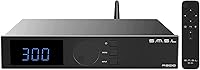
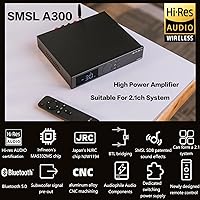
The SMSL A300 is a compact Class D integrated amplifier that punches well above its weight class for desktop audio setups. Built around Infineon's MA5332MS chip, it delivers 165W per channel into 4Ω — serious power for bookshelf speakers on a desk. The aluminum alloy chassis feels solid and looks sharp, with CNC machining giving it a refined edge you wouldn't expect at this price point. One important note for North American buyers: this unit is rated for 220V AC, so a step-up transformer is required. Released in early 2023, it has earned a steady reputation with a 4.4-star average across its early user base.

Features & Benefits

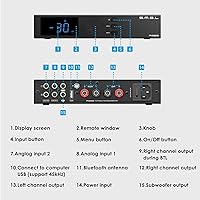
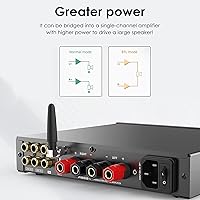
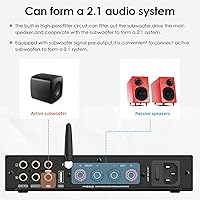
What sets this desktop amp apart from cheaper alternatives is the combination of genuine flexibility and solid measured performance. The BTL mode is worth understanding: rather than running two stereo channels, it bridges them into a single high-power mono output — 330W into 4–8Ω — handy for driving a demanding passive subwoofer or full-range speaker. Three inputs cover the basics: RCA for a source component, USB for a PC, and Bluetooth 5.0 for wireless streaming. A dedicated subwoofer pre-out with a 50Hz crossover makes assembling a 2.1 system straightforward. The NJRC NJW1194 volume chip keeps channel tracking accurate even at low listening levels, and the included remote means you're not constantly reaching across your desk.

Best For

This Class D amplifier is a natural fit for anyone building or upgrading a desktop audio system around a pair of bookshelf speakers. Coming from a Bluetooth speaker or a basic AV receiver, the step up in raw drive and audio cleanliness is immediately noticeable. It also suits listeners who want one box to handle a 2.1 setup — the subwoofer output removes the need for a separate crossover unit. Music streamers who occasionally plug in a turntable or CD transport will appreciate having both Bluetooth and RCA available on the same unit. That said, there is no headphone output, and buyers who need optical or coaxial digital inputs will need to look elsewhere.

User Feedback

Owners tend to praise the build quality and the neutral, clean sound — two things that often disappoint at this price. Bluetooth connectivity earns solid marks for reliability, with most users reporting stable pairing and no obvious latency during casual streaming. Where opinions split is on the SDB sound presets: some find the EQ options genuinely useful for tuning bright or bass-shy speakers, while others disable the feature entirely and prefer a flat response. A few users note the chassis gets warm under extended high-volume sessions, though not alarmingly so for Class D. Against similarly priced rivals like Fosi Audio or Topping, this desktop amp holds its own on measured performance but loses points for the missing headphone jack.

Pros

  • Impressive 165W per channel output drives most bookshelf speakers with real headroom to spare.
  • BTL mode enables 330W mono, making passive subwoofer integration genuinely powerful and flexible.
  • CNC-machined aluminum chassis feels premium and holds up well on a daily-use desktop.
  • Bluetooth 5.0 pairing is stable and fast for wireless streaming from phones or laptops.
  • Dedicated subwoofer pre-out with a built-in crossover simplifies 2.1 system setup considerably.
  • THD+N of 0.004% means background noise and distortion are essentially inaudible in real-world listening.
  • The included remote handles volume and input switching without reaching across the desk.
  • Three input types — RCA, USB, and Bluetooth — cover the most common desktop source combinations.
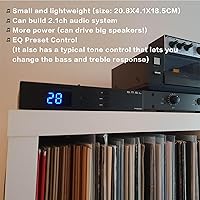
  • Eight EQ presets plus manual treble and bass controls offer useful tuning range for mismatched speakers.
  • Compact footprint takes up minimal desk space while delivering performance well above its size class.

Cons

  • The 220V-only power supply requires a step-up transformer for North American use, adding cost and inconvenience.
  • No headphone output at all — a real limitation for mixed speaker and headphone listening workflows.
  • RCA, USB, and Bluetooth are the only inputs; there is no optical or coaxial digital connection.
  • The fixed 50Hz subwoofer crossover cannot be adjusted, which may not suit all speaker-sub pairings.
  • SDB sound presets are divisive — some users find them artificial and wish the EQ section were simpler.
  • The chassis runs noticeably warm during extended high-volume sessions in confined desktop spaces.
  • IR remote requires fairly direct line-of-sight to the front panel for consistent response.
  • Volume knob has reported lateral play on some units, which feels inconsistent with the premium chassis.
  • With only 70 reviews collected to date, long-term reliability data is still limited compared to established rivals.
  • Topping and Fosi Audio competitors at similar prices offer headphone outputs and universal voltage supplies.

Ratings

Our scores for the SMSL A300 are generated by AI after systematically analyzing verified buyer reviews from global markets, with spam, incentivized, and bot-flagged submissions actively filtered out. The result is an honest snapshot of where this Class D desktop amplifier genuinely excels and where real-world owners have run into frustrations. Both sides of the picture are reflected in every category below.

Sound Quality
88%
Most owners describe the sound as clean, neutral, and surprisingly uncolored for the price — exactly what you want when your speakers are doing the heavy lifting. The low THD+N translates to an absence of that slightly grainy or congested quality that plagues cheaper amps, especially at moderate listening volumes during long work-from-home sessions.
A handful of listeners find the stock tuning a touch analytical or lean in the midrange, particularly with brighter bookshelf speakers. The SDB sound enhancement circuit is meant to address this, but its presets are polarizing — some users wish the tonal character had a bit more body straight out of the box.
Build Quality
91%
The CNC-machined aluminum alloy chassis is the first thing buyers comment on — it feels noticeably more substantial than plasticky rivals at similar price points. The anodized finish resists fingerprints well and the overall fit of panels and knobs inspires confidence that this is a unit built to last on a desktop.
A small number of users report that the volume knob has very slight play or wobble when pushed laterally, which does not affect function but feels inconsistent with the otherwise premium chassis. The ventilation slots on the underside can also collect dust quickly in typical desktop environments.
Power Output
93%
165W per channel into 4Ω is genuinely impressive for a unit this compact, and real-world listeners confirm it — driving moderately inefficient bookshelf speakers to satisfying volumes with headroom to spare is not an issue. BTL mode unlocking 330W mono is a meaningful bonus for anyone pairing it with a passive subwoofer.
The power advantage narrows noticeably with 8Ω loads, dropping to 85W per channel, which is still adequate but less of a headline figure. Buyers running particularly inefficient floor-standing speakers or low-sensitivity studio monitors occasionally note they push the volume control further than expected.
Value for Money
89%
For the combination of measurable performance metrics, input flexibility, and physical build quality, the A300 sits in a sweet spot that is hard to beat in its bracket. Buyers upgrading from budget mini-amps consistently describe the jump in audio clarity and drive as immediately obvious without spending significantly more.
North American buyers must factor in the cost of a step-up transformer for the 220V AC supply, which adds both expense and inconvenience that competitors designed for universal voltage do not carry. Once that extra cost is absorbed, the value proposition tightens somewhat against rivals like Fosi or Topping.
Bluetooth Connectivity
82%
18%
Bluetooth 5.0 pairing is described as fast and stable by most owners, with no chronic dropout complaints during typical desktop streaming distances of one to three meters. For casual Spotify or podcast listening from a phone or laptop, the wireless connection holds up reliably throughout a workday.
Audiophile-level Bluetooth performance is still a step below the RCA or USB input paths in terms of perceived detail, which is a known limitation of the codec rather than the amp itself. A few users also flag that re-pairing after power cycling can occasionally require manually selecting the device again rather than reconnecting automatically.
Input Versatility
74%
26%
Having RCA, USB, and Bluetooth 5.0 under one roof means most users can connect a turntable or CD player, a desktop PC, and a phone without ever touching a cable again. For a straightforward desktop setup, that triangle of inputs genuinely covers the majority of real listening scenarios.
There is no optical or coaxial digital input, which is a meaningful gap for anyone feeding the amp from a TV, game console, or DAC with only S/PDIF output. Compared to some rivals that include a TOSLINK port at a similar price, the A300 feels limited if your source lineup expands beyond its three supported connections.
EQ & Sound Tuning
71%
29%
Eight EQ presets plus manual treble and bass knobs give users a practical toolkit for dialing in the amp to their specific speakers and room — a feature absent on many stripped-down competitors. Owners pairing the A300 with warm, bass-heavy speakers find the treble lift presets useful for restoring clarity.
The SDB sound presets are consistently described as hit-or-miss; several users feel they add a processed or artificial character and simply leave them all disabled. The preset increments can also feel coarse, making it difficult to land on a subtle in-between setting without committing to a more dramatic tonal shift.
Subwoofer Integration
86%
The dedicated sub pre-out with a built-in 50Hz high-pass crossover removes a real integration headache — you plug in an active subwoofer and the crossover is already handled without external components. Users building compact 2.1 desktop systems consistently highlight this as a practical feature that punches above the product category.
The crossover frequency is fixed at 50Hz, which is a reasonable default but not adjustable. Listeners who prefer blending their sub higher — at 80Hz or 100Hz, as often recommended for desktop setups — either have to rely on their subwoofer's own crossover or accept the fixed point, which can leave a slight gap in some speaker-sub pairings.
Remote Control
83%
The included IR remote handles volume, input switching, and EQ adjustments without requiring users to reach across a desk, which is genuinely appreciated in shelf or rack placements. Build quality of the remote itself is decent — it feels solid rather than the hollow plastic units often bundled with budget gear.
IR range and angle sensitivity are average at best; a few users report needing fairly direct line-of-sight to the front panel for reliable response, which can be awkward depending on desk layout. The remote lacks backlit buttons, making it marginally less convenient in dim listening environments.
Heat Management
77%
23%
Class D topology keeps heat generation well below what you would see from a Class A or AB design, and most users report the chassis staying comfortably warm — not hot — during typical listening sessions. For a desktop environment where the amp is within arm's reach, this thermal behavior is generally considered acceptable.
Under sustained high-volume use, several owners note the top panel becomes noticeably warm to the touch, more than the class D reputation might suggest. While no one has reported heat-related shutdowns, users running the amp hard for extended periods in poorly ventilated spaces should allow adequate clearance around the unit.
Ease of Use
85%
Initial setup is straightforward — inputs are clearly labeled on the rear panel, and the front-panel display cycles through source and volume information legibly. Buyers who are not deeply technical appreciate that switching between Bluetooth, USB, and RCA is handled with a single button press rather than buried in menus.
The front-panel knob doubles as a push-button for certain functions, and a few users find the interaction model slightly ambiguous until they have spent time with the manual. The display is functional but not large, and input labels could be more descriptive, especially for users unfamiliar with audio equipment abbreviations.
Compact Form Factor
87%
At roughly 210 x 198 x 41mm and under 1.5kg, the A300 occupies a modest footprint on a desk and fits neatly beneath a monitor stand or beside a speaker. For users reclaiming desktop space from bulkier receivers, the slim profile is a genuine practical benefit rather than just an aesthetic one.
The low-profile chassis means internal component density is high, which partly explains the warmth under load. Users who prefer being able to stack components or position the amp vertically will find neither option is designed-for here, limiting flexibility in tight or unconventional desktop configurations.
Headphone Output
31%
69%
This is not a category where the A300 earns points, but to be fair to the product, it was never marketed as a headphone amplifier. For users who have a dedicated headphone amp or DAC-amp on their desk alongside this unit, the omission is irrelevant to their workflow.
There is simply no headphone jack — not even a basic one — which is a real limitation for mixed-use desktop listeners who switch between speakers and headphones throughout the day. Competitors at a similar price point, including several Topping and Fosi Audio models, include at least a basic headphone output, making this a clear gap for anyone who needs one.
Noise Floor & Background Silence
86%
The 103dB SNR translates into a genuinely quiet background in practice — when music stops, the speakers are silent rather than hissing, which matters for sensitive tweeters and quiet late-night listening. Owners with higher-efficiency bookshelf speakers, which tend to expose amplifier noise more readily, largely report a clean black background.
A small subset of users with very high-sensitivity speakers (95dB+) do report a faint noise floor audible at close range with no signal playing. It is not a widespread complaint, but it is worth noting for anyone pairing the amp with horn-loaded or highly efficient speaker designs where any residual hiss becomes more apparent.

Suitable for:

The SMSL A300 is a strong match for desktop listeners who want a meaningful upgrade from Bluetooth speakers or budget receivers without jumping into expensive separates. It particularly suits home office setups where a pair of bookshelf speakers is the primary listening system — the combination of solid clean power, Bluetooth 5.0 for casual streaming, and RCA for a turntable or CD player covers nearly every everyday source without needing additional hardware. Audiophiles who care about measured performance — low distortion, a quiet noise floor, accurate volume tracking — will feel at home here, since the A300 delivers on those fronts in a way that cheaper Class D amps simply do not. The built-in subwoofer pre-out with a fixed crossover makes it especially practical for anyone assembling a compact 2.1 desktop system on a budget, removing the need for an external crossover box. If your priority is getting the most clean, well-built amplification for a modest outlay, this desktop amp is one of the more honest value propositions in its bracket.

Not suitable for:

The SMSL A300 is a poor fit for North American buyers who have not budgeted for a step-up transformer — the 220V-only power supply is a genuine obstacle that adds cost and desk clutter that many rivals in this price range simply do not impose. Anyone who regularly switches between speakers and headphones will find this Class D amplifier frustrating; there is no headphone output at all, and that omission is hard to work around without adding a separate headphone amp to the chain. Listeners who depend on optical or coaxial digital inputs — from a TV, game console, or outboard DAC — will also find the input selection too narrow, since only RCA, USB, and Bluetooth are on offer. Buyers who want a neutral, flat amplification path with no tonal influence should be aware that the SDB presets can be polarizing, and while they can be disabled, some users feel they subtly color the sound even when nominally off. If your system requires a headphone jack, a universal power supply, or digital optical connectivity, there are better-matched alternatives to consider before committing here.

Specifications

  • Amplifier Class: The A300 uses Class D topology, which prioritizes energy efficiency and low heat output while still delivering high output power.
  • Output Power: Stereo mode produces 165W per channel into a 4Ω load, or 85W per channel into an 8Ω load.
  • BTL Output: In Bridge-Tied Load mono mode, the amplifier delivers up to 330W into a 4–8Ω load for single-channel applications.
  • THD+N: Total harmonic distortion plus noise is rated at 0.004%, indicating an exceptionally low level of audible coloration or distortion.
  • Signal-to-Noise Ratio: The SNR measures 103dB, meaning background noise is kept well below the level of the audio signal under normal listening conditions.
  • Channel Separation: Channel separation is specified at 85dB, reflecting good left-right isolation that preserves stereo imaging accuracy.
  • Amplifier Chip: The output stage is built around Infineon's MA5332MS digital high-power amplifier chip, known for high efficiency and thermal stability.
  • Volume Control Chip: A Japanese NJRC NJW1194 electronic volume control chip handles attenuation, providing precise tracking and low distortion at all volume levels.
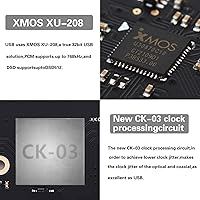
  • Inputs: Three input connections are available: analog RCA stereo, USB audio, and Bluetooth 5.0 wireless.
  • Subwoofer Output: A dedicated RCA subwoofer pre-output is included, with a fixed high-pass crossover set at 50Hz for 2.1 system integration.
  • EQ Presets: Eight built-in SDB EQ presets are available alongside manual treble and bass adjustment controls for speaker-matching flexibility.
  • Input Sensitivity: Input sensitivity is rated at 280mV with an input impedance of 22kΩ, compatible with standard consumer line-level sources.
  • Power Supply: The unit requires a 220V AC power supply; a step-up transformer is necessary for use in 110–120V regions such as North America.
  • Power Consumption: At normal listening volume, the amplifier draws approximately 40W from the mains, reflecting the efficiency of the Class D design.
  • Dimensions: The chassis measures 210.5 × 198 × 41mm (approximately 8.28 × 7.8 × 1.61 inches), providing a slim, low-profile desktop footprint.
  • Weight: The unit weighs 1.3kg (approximately 2.86 lbs), light enough to reposition easily on a desk without assistance.
  • Chassis Material: The enclosure is constructed from aluminum alloy with CNC precision machining and an anodized surface finish.
  • Remote Control: A full-function IR remote control is included in the box, covering volume, input selection, and EQ adjustments.
  • Headphone Output: There is no headphone output on this unit; it is designed exclusively for driving passive loudspeakers.
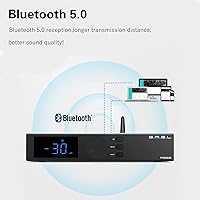
  • Bluetooth Version: Bluetooth 5.0 is implemented for wireless audio reception, offering improved connection stability and range over earlier Bluetooth standards.

Related Reviews
SMSL PL100 CD Player
87%
95%
Audio Quality
90%
Connectivity Options
80%
Ease of Use
88%
Build Quality
75%
Remote Control Usability
More
SMSL M300SE MQA Audio Decoder
87%
94%
Audio Quality
88%
Build Quality
90%
Connectivity Options
91%
Ease of Setup
72%
Bluetooth Range
More
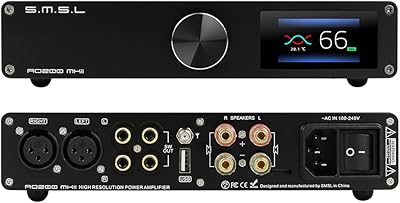
SMSL AO200 Mk II
SMSL AO200 Mk II
82%
88%
Sound Quality
91%
Power Output & Headroom
87%
Build Quality & Chassis
84%
Input Flexibility & Connectivity
93%
Noise Floor & Interference Rejection
More
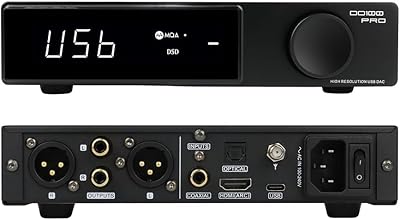
SMSL DO100 PRO HiFi Balanced DAC
87%
94%
Sound Quality
91%
Build Quality
89%
Versatility of Inputs
77%
Ease of Setup
85%
Bluetooth Performance
More
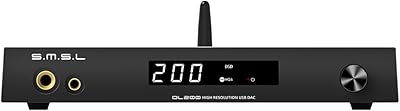
SMSL DL200
SMSL DL200
84%
93%
Audio Performance
88%
Headphone Amplifier Quality
96%
DAC Chip & Measurements
91%
Connectivity & Input Options
89%
Balanced Output Implementation
More

FAQ

Yes, you do. The SMSL A300 is rated for 220V AC only, which means it will not work safely on the 110–120V supply standard in North America without a step-up transformer. This is one of the most important things to sort out before purchasing if you are based in the US or Canada, as the transformer adds both cost and a small amount of desk clutter.

BTL stands for Bridge-Tied Load, and it essentially combines both stereo channels into a single, higher-power mono output — in this case up to 330W into a 4–8Ω load. It is most useful when you want to drive a single passive subwoofer or a full-range mono speaker with serious headroom. Just keep in mind that when BTL is active, you lose stereo playback on the main outputs.

Unfortunately, no. This desktop amp only accepts RCA analog, USB audio, and Bluetooth 5.0 — there is no optical (TOSLINK) or coaxial digital input. If your TV or console outputs only via optical, you would need an external optical-to-analog converter to bridge the gap before connecting to the RCA input.

For casual streaming — Spotify, podcasts, YouTube from your phone — the Bluetooth 5.0 connection is stable and sounds perfectly fine. If you are an analytical listener who picks apart fine detail, you will likely notice that the RCA or USB input paths sound a touch more resolved. The Bluetooth implementation here is above average for the category, but it is not a replacement for a wired connection when sound quality is the top priority.

No, the crossover is fixed at 50Hz and cannot be adjusted from the amp itself. For many desktop setups this works well enough, but if your main speakers roll off higher or your subwoofer needs to blend in above 80Hz, you will want to use your subwoofer's own built-in crossover control on top of this to fine-tune the transition between the two.

There is not — this is a speaker amplifier only and has no headphone output at all. If you regularly switch between headphones and speakers, you would need to add a separate headphone amp or a DAC-amp combo to your setup alongside this unit.

The Class D design runs considerably cooler than Class A or AB amplifiers, but the chassis does become noticeably warm to the touch during extended loud listening sessions. This is normal behavior and should not be a concern as long as you allow a few centimeters of clearance around the unit for airflow — avoid stacking things directly on top of it or enclosing it in a tight shelf space.

SDB is SMSL's proprietary sound enhancement circuit, essentially a set of eight pre-tuned EQ profiles designed to add warmth, bass boost, or brightness depending on the setting. Whether to use them is genuinely a matter of personal preference — some users find a particular preset improves a bright or thin-sounding speaker, while others find all of them too colored and simply leave the amp running flat. It is worth experimenting, but do not assume you need to use them for the amp to sound its best.

Almost certainly yes, for typical desktop use. At 165W per channel into 4Ω, this Class D amplifier has considerably more headroom than the vast majority of bookshelf speakers require for a normal-sized room or desk setup. Even 8Ω speakers receiving 85W per channel will play louder than most people listen at home. The only scenario where power might feel limiting is with unusually inefficient or large floor-standing speakers in a big room.

It is a competitive field. The A300 holds its own on measured specs — distortion, noise floor, and raw power — and the build quality is genuinely strong for the price. Where rivals like some Fosi Audio and Topping models pull ahead is in universal voltage support (no transformer needed) and the inclusion of a headphone jack. If those two features matter to you, it is worth comparing specific models directly before committing. If you are in a 220V region and only need speakers, this desktop amp stacks up very well against both.