Overview

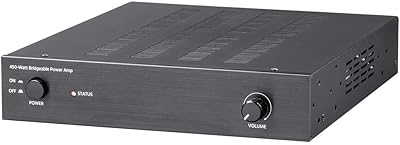
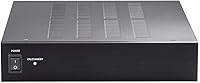
The Monoprice Unity 200W Power Amplifier is a compact Class-D stereo amp built with installed audio and home theater applications clearly in mind. One thing worth clarifying upfront: that 200W figure reflects the total potential output, not what each channel delivers. In stereo mode, you get 50 watts per channel into 8-ohm speakers, or 65 watts into 4-ohm loads — respectable numbers at this price tier. Bridge it into mono and it pushes 120 watts into a single 8-ohm load. The chassis is rack-mountable out of the box, making it genuinely practical for AV closets and custom installs rather than just sitting on a shelf.
Features & Benefits

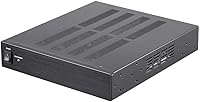
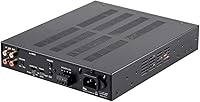
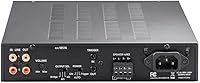
What makes this Class-D amp practical for rack installations is how little heat it generates compared to Class-A or AB designs — that efficiency really matters inside a closed AV cabinet. The 12-volt trigger system is a genuine time-saver; connect it to a compatible processor and the amp powers on and off automatically with the rest of your gear. A buffered loop output passes the signal to additional amps without loading the source, which is useful for multi-zone setups. Speaker connections use detachable Phoenix-style connectors that feel secure and accept wire up to 12 AWG. A rear-panel gain trim handles level matching without needing extra hardware in the chain.

Best For

The Unity power amp hits its stride in dedicated install scenarios — whole-home audio systems, multi-zone setups, or a rack in a finished home theater. It is also a smart pick for powering Atmos height speakers or rear surrounds where a receiver's amplifier section falls short. AV integrators on a tight budget will appreciate the trigger control and buffered loop, which simplify wiring without extra gear. This rack-mount amplifier is less suited to critical two-channel hi-fi listening, where audiophiles may want more headroom or a different topology. Conference rooms and small installed venues are equally solid use cases worth considering.

User Feedback

Buyers who put this Class-D amp to work in real installs tend to highlight clean, quiet output as a standout quality, particularly impressive at this price tier. The rack ears and compact footprint earn consistent praise from integrators. On the other side, a handful of users mention that the rear-panel gain knob is recessed and awkward to adjust without a small flathead screwdriver. Some reviewers have raised questions about long-term reliability under continuous heavy loads, though these reports remain a minority. Trigger behavior is mostly well-regarded, with occasional compatibility complaints involving certain third-party control systems. Overall, value for money is the phrase that surfaces most in buyer comments.

Pros

  • Clean, quiet output that punches well above its price tier in home theater applications.
  • 12-volt trigger in and out makes rack automation genuinely simple with compatible processors.
  • Bridgeable mono mode delivers 120 watts into 8 ohms for channels that need extra headroom.
  • Buffered loop output allows daisy-chaining additional amps without degrading the source signal.
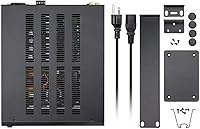
  • Rack ears are included and sized to fit two units side by side in a standard bay.
  • Class-D efficiency keeps the unit cool enough for enclosed cabinetry without active ventilation.
  • Detachable Phoenix connectors make wiring cleaner and faster than traditional binding posts.
  • Compact footprint fits easily into tight AV closets or wall-mount rack enclosures.
  • Built-in thermal and short-circuit protection provides peace of mind during unattended operation.

Cons

  • The 200W headline figure refers to combined or bridged output — per-channel stereo power is 50 watts, which surprises some buyers.
  • Gain control is recessed and requires a small flathead screwdriver, an annoyance in a fully cabled rack.
  • No balanced XLR input limits compatibility with pro-grade sources and longer cable runs.
  • A subset of users report inconsistent 12-volt trigger behavior with certain third-party control systems.
  • Long-term reliability under continuous heavy load has been questioned by a meaningful number of reviewers.
  • Front panel aesthetics feel utilitarian and may not suit installs where the equipment is client-visible.
  • Customer support quality for technical issues has been described as inconsistent by multiple buyers.
  • No remote level control or DSP onboard, requiring external hardware for more complex signal management.

Ratings

The Monoprice Unity 200W Power Amplifier has been evaluated by our AI rating system after analyzing verified buyer reviews from global markets, with spam, bot activity, and incentivized feedback actively filtered out. The scores below reflect a candid synthesis of real installer and enthusiast experiences — strengths and frustrations included. Whether this rack-mount amp fits your setup depends heavily on use case, and the breakdown below addresses exactly that.
Value for Money
91%
Among budget-conscious AV installers and home theater builders, the price-to-performance ratio is the single most cited reason for buying this amp. Getting usable stereo power, trigger control, and rack-mount hardware at this price tier is genuinely difficult to match with competing brands.
A few buyers feel the savings show up in the finishing details — the recessed gain knob and basic front panel give it a utilitarian feel that more polished amps at a moderate price step-up avoid. For professional install clients who see the gear, that matters.
Sound Quality
78%
22%
For an amp at this price point using Class-D topology, buyers report a clean, quiet background with no noticeable hiss during quiet passages. Driving surround channels or height speakers in a home theater, most users describe the output as transparent and accurate enough for the task.
Critical two-channel listeners occasionally flag that the Unity power amp lacks the warmth and staging depth they expect from Class-A or Class-AB designs. It is competent rather than impressive when used as a primary stereo amp for serious music listening.
Build Quality
72%
28%
The chassis feels solid enough for rack duty and the Phoenix-style speaker connectors have a reassuringly secure grip once wired. Rack ears are included and align cleanly, which installers appreciate when mounting two units side by side in a tight bay.
The overall construction reads as functional rather than premium — the gain control feels flimsy compared to higher-end amps, and some users note the faceplate finish shows scratches easily during installation handling. It is built to a budget, and that is apparent up close.
Ease of Installation
88%
The detachable Phoenix connectors make wiring runs significantly cleaner inside a rack compared to binding posts, and the included rack ears mean no extra hardware purchases. Integrators running multi-zone jobs report being able to get this amp up and running in well under 30 minutes.
The rear-panel gain trim is recessed deeply enough that a standard flathead screwdriver is needed, which is an annoyance during initial level-matching. First-time installers unfamiliar with Phoenix connectors may also need a moment to sort the correct polarity orientation.
Trigger Functionality
74%
26%
The 12-volt trigger input and output work reliably with most mainstream processors and control systems, letting the amp power cycle automatically with the rest of a rack — exactly what integrators need in a hands-off installed system. Response time is quick and consistent in standard configurations.
A minority of users have reported inconsistent trigger behavior when pairing with certain third-party control systems or processors that output slightly off-spec trigger voltages. Diagnosing the issue can take time, and Monoprice support responses on this topic have been mixed.
Thermal Management
86%
Class-D efficiency keeps this rack-mount amplifier running noticeably cooler than comparable Class-AB units, which is a real advantage in enclosed AV cabinetry where heat buildup is a constant concern. Most installers report it barely gets warm even during extended use.
A small number of users running the amp at or near full load in bridged mode for prolonged periods have noted it gets warmer than expected. The built-in thermal protection kicks in appropriately, but those pushing maximum output continuously should ensure the rack has some ventilation.
Long-Term Reliability
63%
37%
The majority of buyers who use this amp in standard home theater or multi-zone applications report months or years of trouble-free operation. Built-in short-circuit and thermal protection circuits add a layer of hardware safety that gives most users confidence in day-to-day deployment.
A consistent subset of reviews raises concerns about longevity under demanding or continuous-load conditions — some units have developed channel imbalance or failed outright within the first year. The pattern is not widespread, but it is notable enough to factor into any professional installation decision.
Signal Integrity
83%
The buffered loop output is a practical feature that passes the source signal cleanly to additional amplifiers without noticeable degradation, making it genuinely useful in daisy-chained multi-room setups. Users running three or four amps off a single source report no audible signal loss.
At very high gain settings, a small number of users have detected minor coloration in the signal path compared to leaving the gain trim at unity. For most home theater use this is inaudible, but it can be a concern in more critical listening environments.
Power Output Accuracy
69%
31%
For driving secondary theater channels — surrounds, heights, or overheads — the real-world output is sufficient and well-matched to typical 8-ohm home theater speakers. Bridging into mono for a subwoofer or center channel delivers noticeably more headroom.
The product name implies 200 watts, which sets expectations some buyers feel are not met in practice. The 200W figure refers to combined or bridged potential, and the per-channel stereo output at 50 watts into 8 ohms can feel modest when buyers expected something closer to the headline number.
Connectivity & Compatibility
81%
19%
The combination of trigger in, trigger out, and buffered loop output covers most integration scenarios an installer will encounter in residential or light commercial work. Compatibility with common processors from major brands is reliable in the majority of deployments.
There is no balanced XLR input, which limits direct compatibility with professional-grade source equipment or longer cable runs where noise rejection matters. Users coming from a pro-audio background will find the unbalanced input a limiting factor in certain environments.
Rack Integration
89%
The included rack ears are a practical touch that many budget amps skip or sell separately. Two units can mount side by side in a standard 2U rack bay, which saves space in tightly packed AV closets — a detail installers notice and appreciate immediately.
At 13 inches deep the unit fits most rack enclosures, but buyers with shallower wall-mount racks have reported clearance issues at the rear. Double-checking rack depth before ordering is worth doing, especially for in-wall or flush-mount cabinet builds.
Gain Control Usability
54%
46%
Having an on-board gain trim at all is a convenience at this price — it allows basic level matching between sources or zones without adding an external attenuator. For straightforward single-source setups, it does the job once set and forgotten.
The recessed design of the gain pot is a recurring complaint, requiring a small flathead screwdriver for any adjustment. In a fully populated rack with tight cable management, accessing it after installation can be genuinely frustrating, and the control itself offers limited tactile feedback.
Documentation & Support
58%
42%
The basic setup documentation covers the fundamentals well enough for experienced installers to get running quickly. Monoprice's product pages provide specification details that match real-world behavior closely, which reduces surprises during first installation.
Users who have contacted Monoprice support for technical issues — particularly around trigger compatibility or channel faults — report inconsistent response quality. The manual lacks depth for less experienced users, and there is minimal online community documentation compared to established audio brands.

Suitable for:

The Monoprice Unity 200W Power Amplifier is a strong fit for anyone building or expanding an installed audio system where rack space, automation, and clean power delivery matter more than audiophile prestige. Home theater enthusiasts who need dedicated amplification for surround, height, or Atmos channels — rather than relying on a receiver's often underpowered built-in sections — will find it a practical and cost-effective upgrade. AV integrators handling residential multi-zone installs will appreciate the 12-volt trigger passthrough and buffered loop output, both of which simplify wiring and reduce the need for additional signal distribution hardware. It also makes sense for IT managers or facilities coordinators outfitting conference rooms or small meeting spaces with background audio on a tight budget. If your goal is functional, reliable amplification in a tidy rack environment without spending heavily, this Class-D amp covers that ground well.
Not suitable for:

Buyers approaching this as a primary two-channel stereo amplifier for serious music listening are likely to come away disappointed. The Monoprice Unity 200W Power Amplifier is designed for installation utility, not critical listening, and while the sound is clean enough for home theater work, it lacks the dynamic nuance and tonal richness that dedicated hi-fi amplifiers at a comparable or modest step-up price can offer. Audiophiles already skeptical of Class-D topology will not find anything here to change their minds. The absence of balanced XLR inputs also makes it a poor match for professional or semi-professional audio environments where longer cable runs and noise rejection are priorities. Anyone planning to run the amp at maximum load continuously — powering a high-demand commercial sound system for hours on end — should also weigh the minority-but-real reliability concerns raised by some long-term users before committing.
Specifications

  • Amplifier Class: Uses Class-D topology, which prioritizes power efficiency and low heat output over the warmer character of Class-A or Class-AB designs.
  • Stereo Output: Delivers 50 watts per channel into 8-ohm loads, or 65 watts per channel into 4-ohm loads, in standard two-channel stereo mode.
  • Bridged Output: When bridged to mono, the amp drives a single 8-ohm speaker load with up to 120 watts of continuous power.
  • Trigger Input: Accepts a 12-volt DC trigger signal to power the unit on or off automatically as part of a larger AV system.
  • Trigger Output: Passes a 12-volt DC trigger signal downstream to control compatible amplifiers or other devices in the same rack.
  • Loop Output: Includes a buffered signal loop output that passes the source signal to additional amplifiers without loading or degrading it.
  • Speaker Connectors: Uses detachable 4-pole Phoenix-style screw connectors that accommodate speaker wire up to 12 AWG per channel.
  • Gain Control: Features a recessed rear-panel gain trim pot for adjusting output level to match source equipment or zone requirements.
  • Protection Circuits: Built-in thermal shutdown and short-circuit protection are active at all times to guard against damage from overheating or wiring faults.
  • Rack Mount: Ships with rack-mount ears that allow a single unit or two units side by side to be installed in a standard equipment rack.
  • Dimensions: The chassis measures 13″ long by 11.5″ wide by 5″ tall, fitting a standard rack bay with modest depth requirements.
  • Weight: The unit weighs 6.31 pounds, making it light enough for single-person rack installation without assistance.
  • Input Voltage: Operates on a standard AC mains supply; the 12-volt specification referenced in product details refers to the trigger signal voltage, not the power supply.
  • Manufacturer: Designed and sold by Monoprice, a US-based electronics brand known for value-oriented AV accessories and installation hardware.
  • Model Number: The official Monoprice model number for this amplifier is 118514, useful for referencing warranty claims or replacement parts.

Related Reviews

Monoprice Unity Power Amplifier 450W
87%
94%
Power Output
87%
Build Quality
90%
Ease of Setup
82%
Heat Management
88%
Reliability
More
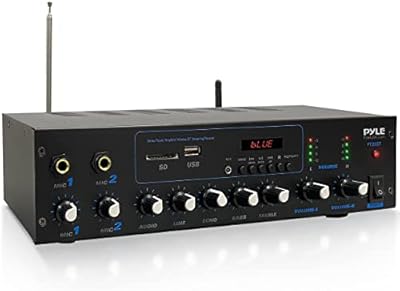
Pyle PT260A 200W Home Audio Power Amplifier
82%
84%
Sound Quality
88%
Ease of Use
92%
Value for Money
78%
Build Quality
91%
Mic Effects
More
Facmogu M6 Mini Bluetooth Amplifier
79%
91%
Value for Money
78%
Sound Quality
83%
Build Quality
67%
Bluetooth Performance
74%
Ease of Use
More
UWAYKEY 200W Bluetooth 5.0 Stereo Power Audio Amplifier Board
83%
88%
Sound Quality
74%
Bluetooth Connectivity
92%
Value for Money
78%
Ease of Use
80%
Build Quality
More
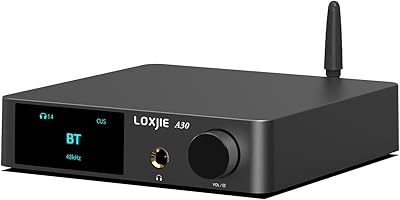
LOXJIE A30
LOXJIE A30
79%
86%
Sound Quality
82%
Build Quality
91%
Value for Money
89%
Input Versatility
63%
Bluetooth Performance
More
Pyle PT506BT Professional Powered Amplifier
85%
86%
Sound Quality
72%
Bluetooth Connectivity
92%
Build Quality
88%
Portability
91%
Ease of Use
More
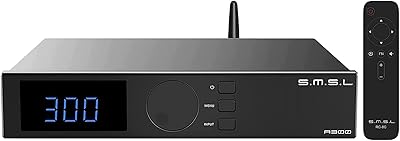
SMSL A300
SMSL A300
80%
88%
Sound Quality
91%
Build Quality
93%
Power Output
89%
Value for Money
82%
Bluetooth Connectivity
More
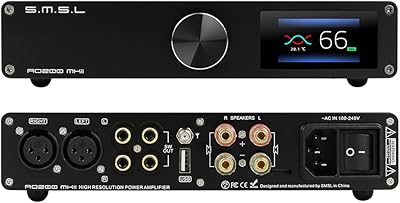
SMSL AO200 Mk II
SMSL AO200 Mk II
82%
88%
Sound Quality
91%
Power Output & Headroom
87%
Build Quality & Chassis
84%
Input Flexibility & Connectivity
93%
Noise Floor & Interference Rejection
More
Marantz MM7025 Stereo Power Amplifier
86%
94%
Power Output
91%
Sound Quality
88%
Build Quality
90%
Cooling System
87%
Connectivity Options (RCA/XLR)
More
DAJUNGUO S350HS
DAJUNGUO S350HS
77%
88%
Value for Money
81%
Audio Output Power
74%
Sound Quality
71%
Bluetooth Connectivity
69%
Build Quality
More

FAQ

It is a bit misleading if you go in expecting 200 watts per channel. The Monoprice Unity 200W Power Amplifier puts out 50 watts per channel into 8-ohm speakers in standard stereo use, or 65 watts into 4-ohm loads. The 200-watt figure reflects the combined or peak bridged potential across configurations, not the per-channel stereo rating. Set your expectations around the 50-watt figure for typical use and you will not be caught off guard.
Yes, bridging it to mono is a legitimate option and gives you around 120 watts into a single 8-ohm load, which is adequate for a passive subwoofer in a home theater setup. Just make sure your subwoofer is rated for 8 ohms in bridged mode — running a 4-ohm sub in bridged configuration is generally not recommended and can stress the amp.

You connect a 3.5mm mono cable from the trigger output of your AV processor or receiver to the trigger input on this Class-D amp. When your processor powers on and sends that 12-volt signal, the amp wakes up automatically. There is also a trigger output on the amp itself, so you can daisy-chain additional components in the same rack to do the same thing downstream.

In most cases, yes. The unit is 13 inches deep and ships with rack-mount ears, so it drops right into a standard 19-inch equipment rack. The main thing to check is rack depth — if you have a shallow wall-mount enclosure, measure carefully before ordering, as some users with compact rack cabinets have reported tight clearance at the rear.

Two units can be mounted side by side using the included ears, which is a genuinely useful feature for multi-zone installs where space is tight. That said, check whether your specific rack bay is wide enough for the dual-mount configuration, and make sure there is enough airflow between units during extended use.

For most residential multi-zone setups, yes. The buffered loop output lets you pass the source signal from one amp to the next without the impedance loading issues you get from a simple Y-splitter. Users running three or four amps off a single source report clean results. If you are running a very long chain or have extremely sensitive source equipment, you may want a dedicated distribution amplifier, but for typical installs the loop output handles the job well.

It is genuinely awkward. The trim pot is recessed into the rear panel, which means you need a small flathead screwdriver to reach it — and if your rack is already cabled up, getting to it can be frustrating. The flip side is that once you set the level during initial installation, you rarely need to touch it again. Just plan to dial it in before finalizing your cable management.

Probably not as your primary amp if you care deeply about sonic character. The Unity power amp is clean and quiet, but Class-D designs in this price range tend to prioritize efficiency over the tonal richness that dedicated stereo listeners expect. It is well-suited to home theater duty and background audio, but if you are building a listening room for critical music playback, a Class-AB amp at a comparable or slightly higher price will likely serve you better.

Most mainstream AV processors and receivers that output a standard 12-volt trigger work without issues. The complaints worth noting involve a minority of third-party control systems or processors that output trigger voltages slightly outside spec, which can cause inconsistent power-on behavior. If you are using a well-known brand processor in a straightforward setup, you are unlikely to run into problems. For complex control system integrations, it is worth verifying trigger voltage compatibility before finalizing the install.

For standard home theater or light multi-zone use, the majority of owners report reliable long-term performance. The built-in thermal and short-circuit protection adds a sensible safety net. The reliability concern that surfaces in reviews is more specific to continuous heavy-load operation — running the amp near full output for extended periods. If your use case involves that kind of sustained demand, make sure the rack has reasonable ventilation and consider whether a more robust amp might be a better long-term fit.