Overview

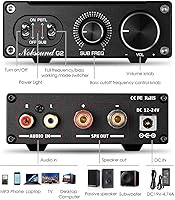
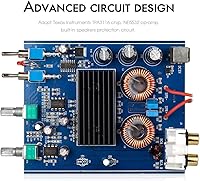
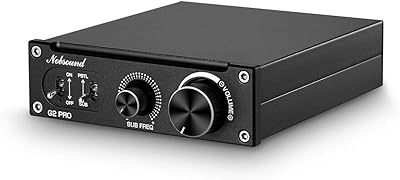
The Nobsound G2 is a compact mono amplifier that does considerably more than its small footprint suggests. Built around Texas Instruments' TPA3116 chip paired with an NE5532 op-amp, this mini sub amp delivers a notably clean, low-noise signal that you wouldn't expect at this price point. A physical toggle lets you switch between SUB and PBTL/BTL bridge modes, making it genuinely versatile for different setups. The aluminum chassis is light — under 305 grams — but feels solid enough to sit on a shelf without concern. Crucially, it ships with a 19V power supply included, which removes one potential compatibility headache and saves you an extra purchase right out of the box.

Features & Benefits

What sets the G2 amplifier apart from similarly priced competition is the combination of practical controls and solid measured performance. The four-step gain selector lets you match output to your specific driver and room without reaching for a separate preamp. The variable low-pass filter sweeps from 40 Hz all the way up to 300 Hz, broad enough to suit everything from a sealed 10-inch sub to a ported cabinet. Distortion stays extremely low even when pushing the amp hard, and the signal-to-noise ratio is impressive enough that you genuinely won't hear any hiss at the listening position. A built-in speaker protection circuit adds a layer of security that budget amps frequently skip entirely.

Best For

This mono amp is a natural fit for anyone building or upgrading a home theater setup around a passive subwoofer, particularly where space is limited and you don't want a full-size receiver handling bass duties alone. It works equally well on a desk beside bookshelf speakers where you need tight, controlled low end without a large footprint. Budget-conscious audiophiles who care about actual measured performance rather than brand names will find real value here. Running dual-mono configurations with two units bridged gives channel separation that most integrated amps simply can't match. Hobbyists building custom speaker cabinets or experimenting with unconventional drivers indoors will also appreciate how flexible this little unit turns out to be.

User Feedback

Owners of the G2 amplifier tend to be genuinely satisfied over the long haul, with the most repeated praise going to the near-silent noise floor — even at higher gain settings, there's no audible hiss creeping in at idle. Pairing it with larger passive woofers, particularly 8 to 12-inch drivers, gets consistently positive mentions. That said, not everything is perfect. The gain adjustment uses discrete steps rather than a smooth pot, which frustrates users who want finer control. A few buyers reported the RCA input feeling loose on arrival, hinting at some quality control variation between units. The SUB versus PBTL mode toggle also trips up newcomers who skip the manual. Minor issues overall, but worth knowing before you commit.

Pros

  • Near-silent noise floor makes it suitable even for sensitive nearfield listening setups.
  • Includes a matched power supply in the box, saving you a separate purchase and compatibility guesswork.
  • Variable low-pass filter sweeps a wide enough range to suit most passive subwoofer cabinet types.
  • BTL bridge mode enables clean dual-mono configurations with virtually zero channel crosstalk.
  • Aluminum chassis holds up reliably through months of daily use without thermal complaints from long-term owners.
  • Wide operating voltage range gives hobbyists flexibility to power it from existing bench or laptop supplies.
  • Distortion levels are measurably low, performing well above what the price tag typically implies.
  • Compact dimensions open up installation spots that full-size sub amps simply cannot fit into.
  • Speaker protection circuit reduces the risk of driver damage during power-on and fault conditions.
  • Compatible with drivers down to 2 ohms, broadening options for unconventional speaker pairings.

Cons

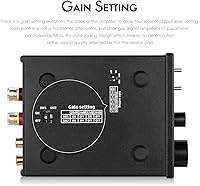
  • Gain adjustment uses four fixed steps only — no smooth pot means you may not hit your ideal output level.
  • RCA input jack arrives feeling loose on some units, pointing to inconsistent factory assembly.
  • No high-level speaker input limits compatibility with sources that lack a dedicated line output.
  • The -12 dB per octave filter slope is too gentle for setups that need a sharp, clean crossover cutoff.
  • Mode switching between SUB and PBTL is easy to misconfigure and the labeling offers minimal guidance.
  • No ventilation slots on the chassis can cause heat buildup in enclosed or low-airflow cabinet installations.
  • No RCA cable or speaker wire is included, so first-time builders face extra purchases before first use.
  • The closely spaced terminals make cable management awkward when using thick wire or large connectors.

Ratings

The Nobsound G2 has been evaluated by our AI system after processing verified buyer reviews from multiple global markets, with spam, bot activity, and incentivized feedback actively filtered out. The scores below reflect a balanced picture of where this mini sub amp genuinely excels and where real users have run into friction. Strengths and shortcomings are weighted equally so you can make a confident, informed decision.

Audio Clarity
88%
Buyers repeatedly describe the background as dead quiet, even when the gain is cranked up — a meaningful achievement for a class-D amp at this price tier. Listeners using it with bookshelf subwoofers in small rooms report clean, well-defined bass without the muddy coloration common in budget alternatives.
At the two highest gain steps, a small number of users with highly sensitive drivers detected faint distortion at peak volume. This is an edge case rather than a widespread issue, but worth noting for those running high-efficiency speakers.
Build Quality
74%
26%
The aluminum shell feels noticeably more substantial than the plastic housings found on comparable units, and long-term owners consistently report zero structural issues after months of daily use. For a compact amp that often lives on a shelf or inside a cabinet, the rigidity is genuinely reassuring.
A recurring complaint involves the RCA input jack, which arrives feeling slightly loose on some units — suggesting inconsistent assembly tolerances. The physical mode toggle also feels plasticky compared to the rest of the chassis, which undermines an otherwise decent build impression.
Value for Money
92%
Few amps at this price point ship with a matched power supply included, which immediately removes a common compatibility frustration and adds tangible real-world value. When you factor in the measured distortion figures and the noise floor performance, the cost-to-performance ratio is hard to beat in this category.
Buyers who need analog volume control via a smooth potentiometer rather than stepped gain will likely need to add a separate preamp, which erodes the value proposition somewhat. For a fully passive setup, that extra spend is worth budgeting for upfront.
Ease of Setup
71%
29%
Connecting this mono amp to a passive subwoofer is genuinely straightforward — one RCA input, one speaker output, power in, done. The included power supply means there is no hunting for a compatible adapter, which is a small but appreciated convenience for first-time builders.
The SUB versus PBTL mode switcher causes real confusion among newcomers who have not read the manual carefully. Several reviewers admitted they ran the unit in the wrong mode for days before noticing, which affected their initial impressions of the sound significantly.
Bass Performance
89%
The variable low-pass filter covers a wide enough range to suit both a sealed 8-inch subwoofer and a larger ported cabinet, giving users meaningful tuning flexibility without additional hardware. Owners pairing this with 10 to 12-inch passive woofers in home theater setups consistently describe the bass as tight and controlled rather than boomy or loose.
The filter slope of -12 dB per octave is on the gentler side, so users who need a sharper cutoff to prevent mid-bass bleed into a full-range speaker may find it insufficient. A steeper 24 dB slope option would have made this far more versatile in demanding crossover scenarios.
Gain Control Precision
61%
39%
Having four fixed gain steps at least gives users a repeatable, reliable reference point — once you find the right setting for your driver, it stays there without drift. For most passive subwoofer applications, one of the four steps will land close enough to the ideal output level.
The stepped nature of the gain control is a genuine frustration for users with specific output targets. The jumps between steps are wide enough that some setups end up either slightly too loud or slightly too soft, with no way to split the difference without an external volume control.
Thermal Management
83%
Long-term owners who run this mono amp for extended home theater sessions — several hours at a stretch — report that the chassis stays warm but never alarmingly hot. The TPA3116 chip is inherently efficient, which keeps heat generation low even during sustained output.
There are no ventilation slots or a heatsink visible on the exterior, so in enclosed cabinet installations with restricted airflow, temperatures can climb more than expected. Users mounting this inside a tight AV rack should leave adequate clearance around the unit.
Versatility
81%
19%
The ability to flip between subwoofer mode and mono bridge mode from a single physical switch makes this amp genuinely useful across a range of projects — from a dedicated home theater sub to a custom single-driver speaker cabinet or even a DIY car audio build with an appropriate power source.
The RCA-only input limits compatibility with sources that output via balanced XLR or speaker-level signals, which rules it out for certain professional or automotive applications without additional adapters. A high-level input option would have broadened the appeal considerably.
Noise Floor
91%
The signal-to-noise performance here is a genuine standout at this price point. Even users with sensitive in-room monitoring setups — the kind where hiss from lesser amps becomes immediately obvious — describe this G2 amplifier as effectively inaudible at idle, which is exactly what you want from a dedicated sub amp.
A very small number of reviewers reported a faint hum tied to their specific power source or grounding situation rather than the amp itself. This appears to be a system-level interaction rather than an inherent flaw, but it is worth testing with your actual setup before final installation.
Power Output Realism
68%
32%
For typical home use — a living room sub running at moderate to moderate-high listening levels — the output is more than sufficient. Users with 8-ohm passive woofers in rooms up to around 25 square meters report no shortage of headroom for music and movie content alike.
The 100W figure is a peak rating under bridged conditions, not a continuous real-world number, and a handful of buyers expressed disappointment when the amp struggled to pressurize a larger room with a less efficient driver. Managing expectations around this figure is important before purchasing.
Compatibility
77%
23%
The wide operating voltage range means this mini sub amp can draw power from a variety of sources beyond the included adapter, which is useful for hobbyists repurposing laptop bricks or bench supplies they already own. Speaker impedance compatibility down to 2 ohms also opens the door for some unconventional driver pairings.
The single RCA input means it is strictly a line-level device, so anyone hoping to tap directly off speaker terminals from an existing amp will need a speaker-to-line converter. That extra step is simple but adds cost and a potential weak link in the signal chain.
Package Contents
84%
Shipping the amp with a quality 19V power supply already matched to the unit is the kind of practical decision that saves buyers real time and money. It removes a common point of failure — mismatched third-party adapters — and means you can be up and running within minutes of opening the box.
Beyond the power supply, the package is minimal. There is no RCA cable, no speaker wire, and only a basic instruction sheet. For a first-time builder, that means additional purchases before the first listening session, which slightly undercuts the otherwise strong out-of-box experience.
Size & Portability
86%
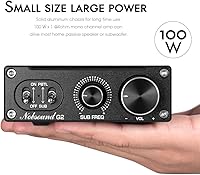
At under 120mm deep and weighing next to nothing, the G2 amplifier fits in spots that a conventional sub amp simply cannot — behind a bookshelf speaker, inside a custom cabinet cutout, or mounted discreetly under a desk. The small footprint is one of the most cited practical advantages among buyers with limited installation space.
The compact size does come with a tradeoff: connection points are closely spaced, which makes cable management slightly fiddly, especially if you are using bulkier RCA plugs or thick speaker wire terminated with large spade connectors.

Suitable for:

The Nobsound G2 is a strong match for DIY home theater enthusiasts who already own a passive subwoofer and need a dedicated, low-footprint amp to drive it properly without buying a full receiver. It also suits desk and bookshelf setups where cabinet space is genuinely limited but audio quality still matters — the near-silent noise floor means it won't introduce any unwanted hiss into a nearfield listening environment. Budget-conscious audiophiles who care about what the measurements actually say, rather than just brand reputation, will find the distortion and signal-to-noise figures genuinely competitive for the price tier. Builders running dual-mono configurations will appreciate the BTL bridge mode, which lets two units operate as matched, channel-isolated amplifiers — a practical solution that most integrated amps cannot replicate cleanly. Hobbyists tinkering with custom speaker cabinets, whether for a home project or a compact car audio build, will also get real mileage out of the flexible voltage range and wide impedance compatibility.

Not suitable for:

Buyers expecting plug-and-play simplicity right out of the box may hit a learning curve with this mono amp, particularly around the SUB versus PBTL mode toggle, which is easy to misconfigure without reading the documentation first. Anyone who needs smooth, continuous volume control — rather than jumping between four fixed gain steps — will likely find the experience frustrating and may need to budget for an additional inline preamp to compensate. The RCA-only input is a genuine limitation for users whose source components output a balanced or speaker-level signal, requiring adapters that add both cost and potential signal degradation. Buyers hoping to pressurize a large room or run an inefficient, power-hungry subwoofer driver at high levels should also temper their expectations, since the peak power rating reflects bridged conditions rather than sustained real-world output. Finally, anyone prioritizing a fully finished, premium aesthetic for a visible AV setup may find the utilitarian styling of the G2 amplifier a mismatch for their environment.

Specifications

  • Amplifier Chip: The unit is built around the Texas Instruments TPA3116 Class-D amplifier IC, known for high efficiency and low heat output in compact designs.
  • Op-Amp: An NE5532 op-amp handles the input stage, contributing to the low noise floor and clean signal path before amplification.
  • Max Output Power: Peak output reaches 100W under PBTL/BTL bridge conditions with a matched load, though real-world continuous output will be lower depending on impedance and supply voltage.
  • THD: Total harmonic distortion measures at or below 0.03% at 1W output, placing it well within the range considered transparent for typical home listening.
  • Signal-to-Noise: The signal-to-noise ratio is rated at 106 dB or above, meaning background noise is effectively inaudible in normal listening environments.
  • Gain Settings: Four discrete gain levels — 20, 26, 32, and 36 dB — are selectable via an onboard switch to match the amp's output to your specific driver sensitivity.
  • Low-Pass Filter: The built-in bass cutoff filter is continuously variable between 40 Hz and 300 Hz with a -12 dB per octave attenuation slope.
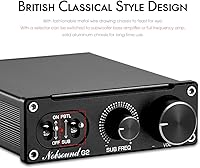
  • Operating Modes: A physical toggle switches between SUB mode for dedicated subwoofer use and PBTL/BTL bridge mode for running the unit as a single high-power mono channel.
  • Input Connector: Signal input is via a single RCA jack, compatible with standard line-level outputs from preamplifiers, receivers, or source components.
  • Speaker Impedance: The amp is rated to drive passive speakers or subwoofers with impedance between 2 and 8 ohms, covering the majority of home and DIY driver options.
  • Working Voltage: The unit accepts DC supply voltages from 12V to 24V, allowing use with a range of power adapters or bench supplies beyond the included one.
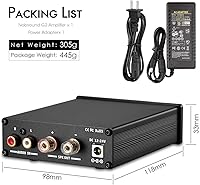
  • Included Power Supply: A 19V 4.74A switching power supply is included in the box, pre-matched to the amplifier for reliable performance without sourcing a separate adapter.
  • Dimensions: The chassis measures 118.5 × 98 × 33 mm (approximately 4.65 × 3.74 × 1.30 inches), making it one of the more compact mono amps in its class.
  • Net Weight: The amplifier unit itself weighs 305 g (approximately 0.67 lb), light enough to mount discreetly inside a cabinet or behind a speaker enclosure.
  • Chassis Material: The outer shell is formed from aluminum, which aids passive heat dissipation and provides a more durable enclosure than the plastic housings common at this price point.
  • Speaker Protection: A built-in speaker protection circuit is active during normal operation to guard against DC offset and power-on transients that could damage connected drivers.
  • Frequency Response: Full-range frequency response is specified at 20 Hz to 20 kHz within ±3 dB, though in SUB mode the onboard low-pass filter will limit the upper end of the output.
  • Package Weight: The complete package including power supply and packaging weighs approximately 445 g (0.98 lb), keeping shipping and handling straightforward.

Related Reviews
Nobsound G2 PRO

Nobsound G2 PRO
79%
88%
Bass Output Performance
91%
Value for Money
74%
Build Quality
87%
Ease of Setup
83%
Signal-to-Noise Ratio
More
Gleetour G2 4K Dash Cam
84%
92%
Video Quality (4K Front, 1080P Rear)
88%
Night Vision Performance
75%
Ease of Setup and Installation
80%
Mobile App Performance
90%
Parking Mode Effectiveness
More
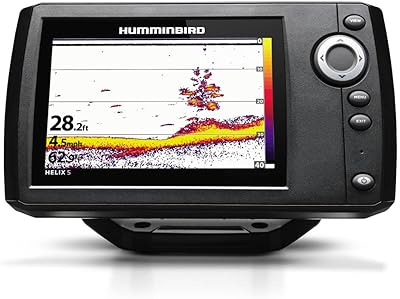
Humminbird Helix 5 Sonar G2
86%
88%
Ease of Setup
91%
Sonar Clarity and Accuracy
90%
Build Quality
85%
Display Quality
87%
Portability
More
Faro G2 ANR Aviation Headset
85%
93%
Noise Reduction
88%
Comfort for Long Flights
90%
Microphone Quality
85%
Battery Life
80%
Build Quality
More
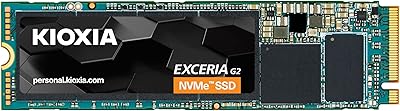
KIOXIA EXCERIA G2 SSD 1TB
83%
90%
Performance
87%
Value for Money
92%
Installation Ease
89%
Transfer Speed
84%
Build Quality
More
LEVO G2 Deluxe Adjustable Laptop Stand
86%
91%
Ergonomics & Comfort
87%
Portability
90%
Build Quality
88%
Ease of Adjustability
80%
Stability
More
Celestron UpClose G2 10-30x50 Binoculars
70%
83%
Image Clarity at Low Magnification
52%
Image Clarity at High Magnification
61%
Zoom Mechanism
74%
Build Quality & Durability
81%
Value for Money
More
Nobsound DJ417F
Nobsound DJ417F
83%
93%
Build Quality
88%
Audio Warmth
91%
Value for Money
86%
Input Versatility
84%
Volume Control Precision
More
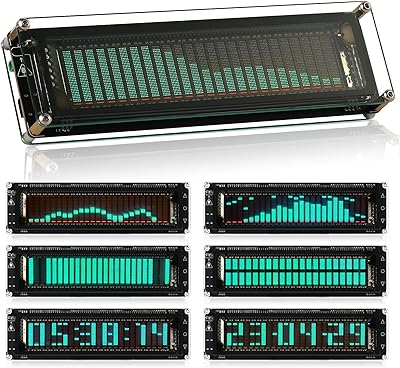
Nobsound AK2515
Nobsound AK2515
88%
96%
Display Sharpness
88%
Ambient MIC Sensitivity
92%
Customization Depth
87%
AGC Performance
93%
Clock Precision
More
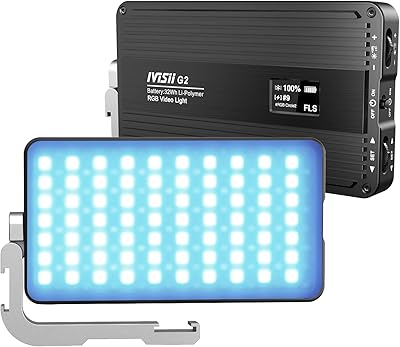
IVISII G2 RGB LED Video Light
79%
93%
Color Accuracy
71%
Battery Life
94%
Portability & Size
67%
Build Quality
88%
RGB & Creative Modes
More

FAQ

It works with most passive subwoofers rated between 2 and 8 ohms impedance, which covers the vast majority of home theater and DIY drivers on the market. Just make sure your subwoofer is passive — meaning it has no built-in amplifier — and that its power handling is reasonable for the output this amp can deliver at your chosen supply voltage.

SUB mode configures the amp specifically for subwoofer use, activating the low-pass filter so only bass frequencies pass through to your speaker. PBTL mode bypasses that filter and runs the amplifier as a full-range mono channel at higher output power, which is useful if you want to drive a single mid-range or full-range speaker. If you are connecting a dedicated bass driver, use SUB mode. If you are running a standard speaker as a mono channel, use PBTL.

One is included in the box — a 19V 4.74A adapter that is already matched to the amp. This is genuinely useful because sourcing the right supply separately is a common frustration with budget class-D amps. You can plug in and test immediately without any extra shopping.

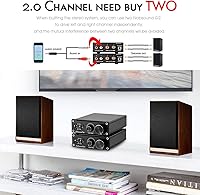
Yes, and this is actually one of the more practical use cases for this mini sub amp. You would run one unit per channel in PBTL mode, each fed its own line-level signal from a stereo preamp or receiver. Because the channels are completely isolated between the two units, there is no crosstalk at all — which is an advantage over integrated stereo amps where both channels share the same power supply.

For most setups it works fine, since one of the four levels will typically land close enough to your target volume. That said, if you need fine-grained output control — for example, to precisely match a subwoofer level to the rest of a speaker system — you may want to add a simple inline RCA volume control or a line-level preamp ahead of the amp. It is a known limitation and worth planning for if precise level matching matters to you.

The Nobsound G2 is one of the quieter options at this price point, and a large number of buyers specifically mention the near-silent background as a standout quality. Most users report hearing nothing at the listening position even with gain set high. The occasional hum that a small number of reviewers mention tends to trace back to grounding issues in their broader system rather than the amp itself.

In normal open-air placement it stays warm but not concerning — the TPA3116 chip is inherently efficient and generates much less heat than older Class-AB designs. If you plan to install it inside a sealed cabinet with restricted airflow, leave some clearance around the unit to allow passive cooling, especially during longer listening sessions.

Unfortunately it is a known quality control inconsistency reported by a minority of buyers. In most cases the connection is still electrically solid and the amp performs normally; the looseness is more mechanical than functional. If the connector is so loose that you are getting intermittent signal dropout, that would warrant contacting the seller for a replacement.

Technically yes — the amp accepts DC input from 12V up to 24V, so a 12V lead-acid or lithium car battery falls within spec. Keep in mind the output power will be lower at 12V than at the rated 19V, so expect reduced headroom compared to the figures quoted in the product listing. For a DIY car audio or van build this can still be a perfectly workable solution.

Buyers report the best results with passive subwoofer drivers in the 8 to 12-inch range, which aligns with what the output capability can realistically drive at home listening levels. Smaller 6 or 6.5-inch drivers work well too. Very large, inefficient 15-inch drivers in large enclosures may leave you wanting more headroom, particularly in bigger rooms — in that scenario a higher-powered amp would be a better fit.