Overview

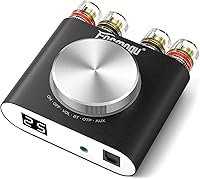
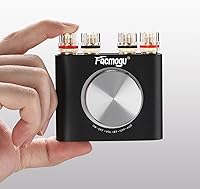
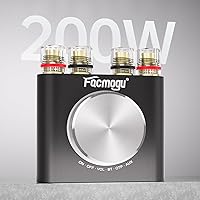
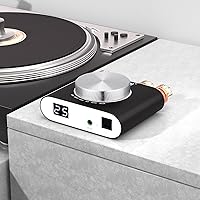
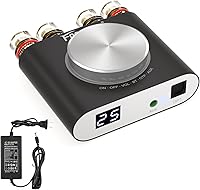
The Facmogu M6 Mini Bluetooth Amplifier is a compact class D stereo amp that punches well above its size for budget-focused home audio setups. Built around the TPA3221 chip, it pushes 100 watts per channel into 4–8 ohm speakers — enough to fill a small room without much effort. The black alloy chassis feels surprisingly solid, and the whole unit is small enough to sit unobtrusively on a shelf or desk. It ships with a 24V 3A power supply included, so you can plug in and start listening right away. One knob handles everything: power, input selection, and volume control.

Features & Benefits

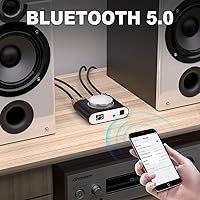
The M6 amplifier covers three input types — Bluetooth 5.0, a 3.5mm AUX jack, and an optical TOSLINK port — which makes it versatile for a device this size. Connecting a TV via optical while keeping your phone paired over Bluetooth is straightforward, and switching between them takes just a short press of the knob. The TPA3221 class D chip runs efficiently, staying reasonably cool during extended listening sessions. A wide operating voltage range of 9V to 24V DC means you are not locked into one power source, which is handy if you want to move the unit between rooms or use it in different locations.

Best For

This compact stereo receiver is a natural fit for anyone putting together their first bookshelf speaker system on a modest budget. It also works well as a desktop amp where a full-size receiver would simply take up too much space. Secondary listening rooms — a bedroom, home office, or garage — are another strong use case. If you want wireless streaming without giving up the option to plug in a TV or computer, the three-input setup handles it well. Worth noting: this is a 2.0 stereo-only configuration, so anyone planning a surround sound or subwoofer-driven system will need to look at other options.

User Feedback

Buyers consistently point to strong value as the standout quality here — most are genuinely surprised by how much volume and presence this mini amp produces from a box that fits in one hand. Sound clarity at moderate listening levels earns particular praise, especially from those pairing it with decent bookshelf speakers. On the downside, Bluetooth range draws the most consistent criticism: the 5-meter limit without walls in the way is a real-world constraint, not a worst-case scenario. Some users also find input switching via the single knob unintuitive at first. It is also worth knowing upfront that this unit is not compatible with Amazon Echo devices or Bose speakers.

Pros

  • Outstanding value — most buyers are genuinely surprised by the output quality relative to the price.
  • All three inputs (Bluetooth, AUX, optical) covered in a chassis smaller than a paperback book.
  • The alloy shell feels noticeably more solid than plastic-bodied rivals at the same price point.
  • Ships with a 24V power supply included, so you can plug in and play immediately with no extras to buy.
  • Wide 9V–24V operating voltage makes this compact stereo receiver easy to move and use across different setups.
  • Class D efficiency keeps heat manageable during normal listening sessions over several hours.
  • Bluetooth 5.0 pairs quickly and holds a stable connection when the source device is close by.
  • Single-knob control keeps the desk or shelf clean and uncluttered once you learn the short-press pattern.

Cons

  • Bluetooth range collapses quickly through walls — the 5-meter limit is a real ceiling, not a conservative estimate.
  • Input switching via a single knob is unintuitive at first and easy to fumble in low-light conditions.
  • Rated power figures reflect peak lab conditions; real-world sustained output is noticeably lower.
  • Spring-loaded speaker terminals limit usable wire gauge and make thicker audiophile cables awkward to connect.
  • No visual display means there is no quick way to confirm which input is currently active.
  • Some units show early signs of Bluetooth degradation or knob unresponsiveness after six to twelve months of regular use.
  • Not compatible with Amazon Echo or Bose speaker products — a detail that catches some buyers off guard post-purchase.
  • No remote control included, requiring physical access to the unit every time you need to change inputs or power it off.

Ratings

The Facmogu M6 Mini Bluetooth Amplifier has been scored by our AI system after processing verified buyer reviews from multiple global markets, with spam, bot activity, and incentivized feedback actively filtered out. The ratings below reflect a balanced picture — genuine strengths are recognized alongside the real friction points that show up repeatedly in honest user accounts. No category has been softened or inflated.

Value for Money
91%
This is where the M6 amplifier consistently wins people over. Buyers repeatedly express surprise at how much usable output and build integrity they get at this price point, especially when pairing it with entry-level bookshelf speakers for a first home audio setup.
A small number of users feel the value equation shifts if the unit develops issues after the warranty window, since repair or replacement at this tier is rarely cost-effective. Long-term durability questions slightly temper the otherwise strong score here.
Sound Quality
78%
22%
At moderate listening volumes, most buyers describe the stereo output as clean and well-separated — particularly when fed a good optical signal from a TV or a lossless stream via Bluetooth. For casual listening in a bedroom or home office, it holds up well.
Push the volume past the midpoint and some users notice audible compression and a slight hardness to the high frequencies. This is a class D budget chip doing its best, so expectations need to be calibrated accordingly — it is not competing with a dedicated HiFi receiver.
Build Quality
83%
The black alloy shell gives this mini amp a noticeably more substantial feel than plastic-bodied competitors in the same price range. Most buyers comment that it feels dense and well-finished for a device this small, which builds confidence in daily handling.
The input and output ports on some units have drawn minor complaints about feeling slightly loose after repeated cable swapping. It is a small thing, but worth noting if your setup involves frequent connection changes rather than a fixed installation.
Bluetooth Performance
67%
33%
Bluetooth 5.0 delivers a stable connection when the source device is within close range and has a clear line of sight. Users in studio apartment setups or at a desk report reliable pairing with phones and laptops without frequent dropouts under those conditions.
The real-world range is genuinely limited — a single wall between your phone and the amp is often enough to introduce stuttering. The 5-meter open-air spec is not marketing pessimism; it is an accurate ceiling. Anyone expecting to stream from across a medium-sized room will be frustrated.
Ease of Use
74%
26%
Once you spend a few minutes learning the single-knob system, everyday operation becomes second nature. Adjusting volume while music is playing is instant and tactile, and the long-press power toggle feels deliberate enough that accidental shutoffs are rare.
Switching between inputs via short presses is less intuitive, especially in a dimly lit room where there is no visual display to confirm which source is active. Several users mention cycling through inputs accidentally during what they thought was a simple volume adjustment.
Input Versatility
86%
Having Bluetooth, AUX, and optical TOSLINK on a device this compact is a legitimate advantage. It lets this compact stereo receiver serve a TV, a desktop PC, and a mobile phone from a single fixed installation without rewiring anything.
There is no RCA input, which some buyers with older source components find limiting. The AUX port is also a 3.5mm jack rather than a full-size phono input, so an adapter is required for certain legacy audio equipment.
Power Output
72%
28%
For a typical 8-ohm bookshelf speaker in a room under 150 square feet, the output is genuinely sufficient. Users running mid-sensitivity speakers report filling a small living room or bedroom without the amp straining.
The 100W-per-channel rating reflects peak conditions the TPA3221 rarely sustains in practice. Real-world usable power is meaningfully lower, and buyers pairing this with low-sensitivity or large floor-standing speakers are likely to hit the ceiling faster than expected.
Heat Management
79%
21%
Class D efficiency means the M6 amplifier stays only mildly warm during normal listening sessions, which is reassuring for users who run audio for hours at a stretch. Placing it in an enclosed cabinet does not appear to cause issues at moderate volumes.
Extended high-volume sessions do produce noticeable warmth on the top surface, and a handful of users have flagged concerns about longevity under those conditions. It does not run dangerously hot, but ventilation around the unit is still advisable.
Setup & Installation
88%
The included 24V 3A power supply means there is nothing extra to buy to get started. Speaker terminals accept bare wire cleanly, and most buyers report being up and running within ten minutes of opening the box — even those with no prior amplifier experience.
The speaker terminal connectors are push-spring type rather than binding posts, which limits wire gauge options and makes some audiophile-grade speaker cables difficult to terminate without trimming them down significantly.
Compact Design
93%
At under 15 ounces and with a footprint smaller than a hardcover book, this mini amp genuinely disappears into a shelf or desk setup. It is one of the few products in this category where the size claim in the listing actually matches the real-world impression.
The compact form factor means no remote control is included, and given the single-knob interface, physical access to the unit is always required. If your amp will live inside a cabinet or behind other gear, that becomes a minor but recurring inconvenience.
Compatibility
69%
31%
Works reliably with a wide range of Android and iOS devices, Windows PCs, and most smart TVs over optical. The wide DC input voltage range also makes it adaptable to different power sources across different rooms or households.
Compatibility with Amazon Echo and Bose speaker ecosystems is explicitly not supported, and some users have discovered this only after purchase. There is also occasional pairing friction reported with certain older Bluetooth implementations on budget Android devices.
Long-Term Reliability
63%
37%
Many buyers have reported months of trouble-free daily use, which speaks reasonably well to the build consistency coming out of the factory. For a secondary or casual-use system, the failure rate appears acceptable relative to the price tier.
There is a visible tail of user reports describing unit failures — particularly Bluetooth connectivity degrading or the knob becoming unresponsive — after six to twelve months of regular use. It is not a majority experience, but it is frequent enough to register as a pattern.
Portability
81%
19%
The wide 9V–24V operating range makes it genuinely easy to move this compact stereo receiver between locations without hunting for a matching power supply. Its light weight means tossing it in a bag for use at a friend's place or a second property is entirely practical.
There is no carrying case or protective sleeve included, and the alloy chassis, while sturdy, can pick up scratches during transport. Users who move it frequently may want to source a small padded pouch separately.

Suitable for:

The Facmogu M6 Mini Bluetooth Amplifier is a strong fit for anyone building their first 2.0 bookshelf speaker system on a tight budget and without a lot of space to work with. If you want to bring a pair of passive speakers to life in a bedroom, home office, or smaller living area, this mini amp delivers enough real-world output to fill those rooms comfortably without the bulk and cost of a full-size receiver. It works particularly well as a desktop audio hub — connect a TV via optical, keep your phone paired over Bluetooth, and switch between them without touching a cable. Students setting up a dorm room, renters who move frequently, or anyone wanting a portable, low-voltage amp that can travel between locations will also find it a practical choice. The included power supply and simple setup mean virtually no learning curve, which is a genuine advantage for buyers new to passive speaker systems.

Not suitable for:

The Facmogu M6 Mini Bluetooth Amplifier is not the right tool for buyers who need reliable whole-room Bluetooth coverage — the effective range drops significantly the moment a wall enters the picture, so if your source device lives in a different room, expect frustration. Serious audio enthusiasts who want accurate, dynamic sound at higher volumes will also find the TPA3221 chip running at its limits before the listening experience becomes truly satisfying; this is a budget class D device, and it sounds like one when pushed hard. It does not support subwoofer output, so anyone building a 2.1 or surround system needs to look elsewhere. Buyers with Amazon Echo devices or Bose speakers should also know upfront that compatibility with those ecosystems is not supported. Finally, if long-term durability over several years of heavy daily use is a priority, the price tier this sits in carries a real trade-off in component longevity.

Specifications

  • Audio Chip: Powered by the TPA3221 class D amplifier chip, which prioritizes power efficiency and low heat output over raw headroom.
  • Output Power: Rated at 100W per channel into 4–8 ohm loads, though sustained real-world output under typical listening conditions will be lower than this peak figure.
  • Channels: 2.0 stereo configuration with two independent output channels; no dedicated subwoofer or center channel output is provided.
  • Speaker Impedance: Compatible with passive speakers rated between 4 and 8 ohms; speakers outside this range may perform poorly or risk damaging the amp.
  • Inputs: Three audio inputs are available: Bluetooth 5.0 (wireless), 3.5mm AUX (analog), and optical TOSLINK (digital); all three are selectable via the front knob.
  • Bluetooth Version: Bluetooth 5.0 is used for wireless audio streaming, offering improved connection stability compared to older Bluetooth standards at close range.
  • Bluetooth Range: Maximum effective wireless range is approximately 16.4ft (5m) in open air with no walls or obstructions between the source device and the amp.
  • Signal-to-Noise: SNR is rated at 89dB or higher, which is adequate for casual home listening but audible background hiss may be noticeable with high-sensitivity speakers at low volume.
  • Operating Voltage: Accepts DC input between 9V and 24V, giving flexibility to use alternative power sources beyond the included adapter.
  • Power Supply: A 24V 3A DC power adapter is included in the box, providing sufficient current for the amp to reach its rated output under normal conditions.
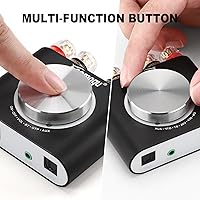
  • Control Interface: A single multi-function rotary knob handles all user controls: long-press to power on or off, short-press to cycle through inputs, and rotate to adjust volume.
  • Chassis Material: The outer shell is constructed from black-anodized alloy, which contributes to both the unit's structural rigidity and its ability to dissipate heat passively.
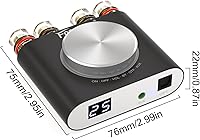
  • Dimensions: Package dimensions measure 6.34 x 5.59 x 2.24 inches, making the unit compact enough to fit on most desks or inside standard AV furniture.
  • Weight: The unit weighs 14 ounces, light enough to transport easily between locations without dedicated carrying equipment.
  • Certifications: Carries FCC certification, confirming it meets US regulatory requirements for electromagnetic interference and radio frequency emissions.
  • Compatibility Notes: Explicitly not compatible with Amazon Echo devices, Alexa-enabled products, or Bose speaker systems; these should not be used as source or output devices with this amp.
  • Speaker Terminals: Speaker connections use spring-loaded push terminals, which accept bare wire ends but may be incompatible with banana plugs or thicker gauge audiophile cables without modification.
  • Configuration: Designed strictly as a 2-channel stereo receiver with no onboard equalizer, tone controls, or DSP processing of any kind.

Related Reviews
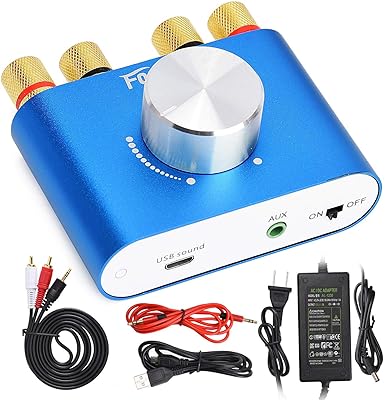
Facmogu F900S Mini Bluetooth Amplifier
76%
83%
Sound Clarity
91%
Value for Money
77%
Build Quality
92%
Ease of Setup
84%
Bluetooth Connectivity
More
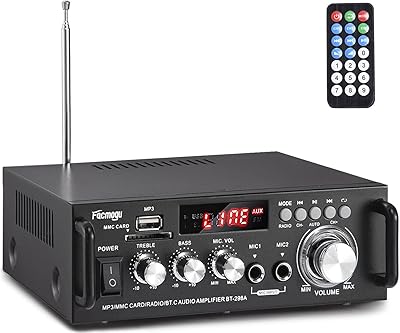
Facmogu 298A Bluetooth Audio Amplifier
87%
85%
Sound Quality
90%
Ease of Use
88%
Connectivity Options
80%
Build Quality
87%
Remote Control Functionality
More
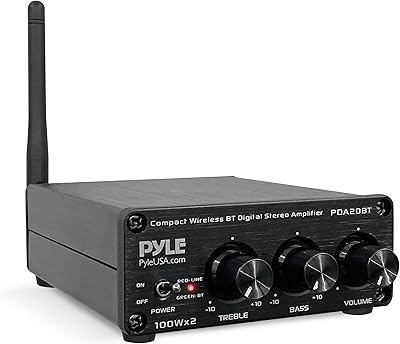
Pyle PDA20BT Bluetooth Mini Audio Amplifier
83%
83%
Sound Quality
74%
Bluetooth Connectivity
89%
Build Quality
88%
Ease of Setup
80%
Versatility
More
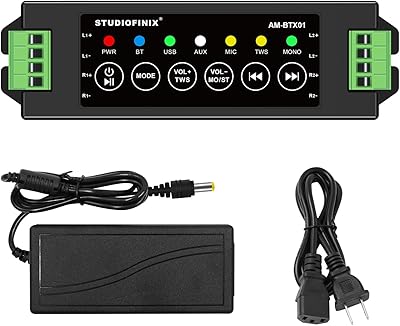
STUDIOFINIX ST-68 4-Channel Mini Bluetooth Amplifier
73%
88%
Ease of Installation
83%
Bluetooth Connectivity
71%
Sound Quality
58%
Power Output Accuracy
62%
Build Quality
More
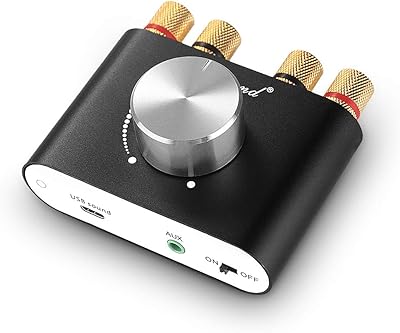
Nobsound NS-01G PRO
Nobsound NS-01G PRO
79%
88%
Value for Money
74%
Sound Quality
67%
Build Quality
71%
Bluetooth Performance
91%
USB Sound Card Function
More
Facmogu S-299
Facmogu S-299
78%
83%
Sound Clarity
89%
Value for Money
91%
Ease of Setup
76%
Bluetooth Performance
88%
Multi-Zone Volume Control
More
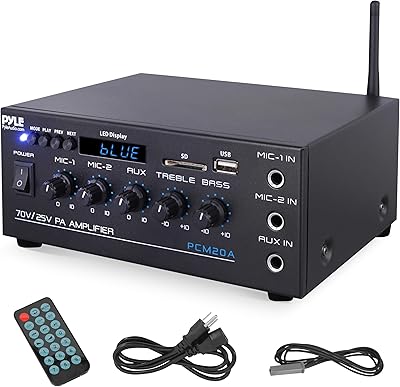
Pyle PCM20A
Pyle PCM20A
74%
88%
Value for Money
91%
Ease of Setup
86%
Talkover / Mic Priority
61%
Bluetooth Reliability
58%
Build Quality
More
S.M.S.L A100 Bluetooth 5.0 Stereo Audio Mini Amplifier
86%
88%
Sound Quality
90%
Bluetooth Connectivity
85%
Ease of Setup
80%
Build Quality
89%
Input Options
More
Romicta 4.1-Channel Bluetooth Mini Amplifier

75%
81%
Value for Money
74%
Audio Quality
67%
Bluetooth Performance
72%
Subwoofer Integration
88%
Ease of Setup
More
Sunbuck AS-22 Mini Amplifier
85%
87%
Sound Quality
74%
Bluetooth Range
91%
Ease of Use
80%
Build Quality
93%
Setup & Installation
More

FAQ

It is honest to say the 100W figure reflects peak conditions that are unlikely in normal home use. The TPA3221 chip is capable of hitting that number briefly at low impedance under ideal lab conditions, but sustained real-world output at 8 ohms will be noticeably lower. For a small or medium room with reasonably sensitive bookshelf speakers, there is plenty of usable volume — just do not expect it to behave like a 100W hi-fi amplifier from a dedicated audio brand.

No — the Facmogu M6 Mini Bluetooth Amplifier is explicitly listed as incompatible with Amazon Echo and Alexa-enabled products, as well as Bose speakers. This is worth knowing before you buy, because pairing attempts with these devices can result in failed connections or audio issues that are not fixable through settings.

A short press of the single front knob cycles through the available inputs in order: Bluetooth, AUX, and optical. There is no display to confirm which input is currently selected, so you may need to cycle through once or twice to land on the right one, especially if you are not sure where in the sequence the amp currently is. It takes a little getting used to, but most users find it becomes automatic after a few days.

Almost certainly yes. The rated range of around 5 meters applies to open-air conditions with no obstructions. A single interior wall is typically enough to introduce dropouts or cause the connection to become unstable. If your source device lives across the room or in an adjacent space, a wired AUX or optical connection will be far more reliable.

Any passive speakers with an impedance rating between 4 and 8 ohms will work. This covers the vast majority of bookshelf and compact floor-standing speakers. Avoid connecting speakers rated below 4 ohms, as this can stress the amplifier chip and shorten its lifespan. The amp does not have a subwoofer output, so it is a 2.0 stereo-only setup.

It runs warm rather than hot during normal listening sessions, which is typical for class D designs. Sustained high-volume playback over several hours will produce more noticeable heat on the top surface, so it is a good idea to leave some clearance around the unit rather than boxing it in tightly inside a closed cabinet. For everyday moderate-volume use, heat is not a serious concern.

Yes, the wide 9V–24V DC operating range makes this mini amp quite flexible. As long as your power source delivers a stable DC voltage within that window and provides enough current (the included 24V 3A adapter gives you a sense of what is needed at full power), it should work. Just make sure the polarity is correct on the DC input jack before connecting anything other than the supplied adapter.

Not directly. The M6 amplifier is a 2-channel stereo device with no dedicated subwoofer output or low-frequency output channel. If you want to add a subwoofer, you would need either a powered sub with speaker-level inputs that can be bridged off the existing speaker terminals, or a separate crossover solution — neither of which is a simple plug-and-play setup at this price tier.

A 24V 3A power supply is included in the box, so you can plug it in and connect speakers right away. The only thing you need to bring is your speakers and the appropriate speaker wire. If you plan to use optical or AUX, you will need the relevant cable, but those are not included.

For casual or moderate daily use, many owners report months of trouble-free operation. That said, there is a recurring pattern in user feedback where some units begin showing issues — particularly Bluetooth instability or knob unresponsiveness — somewhere in the six-to-twelve month range. It is not the majority experience, but it is consistent enough to be worth knowing. If you are looking for something to run hard every day for years, tempering expectations at this price point is reasonable.