Overview

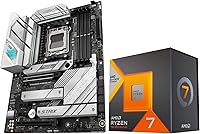
The Micro Center 7800X3D B650-A CPU Motherboard Kit is one of the more practical things to happen to PC building in recent memory — a pre-vetted CPU and motherboard pairing that takes compatibility anxiety completely off the table. Micro Center bundles a top-tier gaming processor with a capable ROG motherboard, meaning you skip hours of cross-referencing spec sheets. This is aimed squarely at serious desktop enthusiasts willing to invest at a mid-to-high tier for a guaranteed foundation. Just know going in: no cooler is included, RAM and a GPU are on you, and AMD strongly recommends a liquid cooler given the 120W TDP this chip runs at.
Features & Benefits

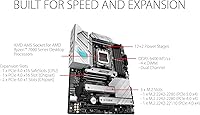
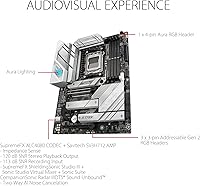
The 7800X3D's secret weapon is AMD's 3D V-Cache technology, which stacks an extra layer of cache directly on the processor die. In practical terms, this means the chip feeds game data to its cores far faster than raw clock speed would suggest — which is exactly why it dominates at 1080p and 1440p gaming despite having only 8 cores. Paired with the ASUS ROG Strix B650-A, you get a 12+2 power stage setup that keeps things stable under sustained loads. The board brings a PCIe 5.0 M.2 slot, Wi-Fi 6E, and enough rear USB ports to satisfy a heavily-connected desk setup. DDR5 support up to 192GB rounds out a genuinely future-ready platform.

Best For

This AMD gaming bundle was built with a specific type of builder in mind: someone who games hard at high refresh rates and wants the best possible frame consistency rather than maximum core count. It makes an excellent AM4-to-AM5 upgrade path — you land on a modern platform without drowning in chipset comparisons. B650 is worth noting honestly: it is not X670, and if you need more PCIe lanes or extra M.2 slots beyond three, that matters. But for pure gaming workloads, B650 is more than sufficient. Video editors or anyone running heavily multi-threaded software like Blender or DaVinci Resolve will likely find a higher core count chip more satisfying.

User Feedback

Buyers of the 7800X3D ROG kit consistently point to two things: how smoothly the system posts on first boot and how strong gaming performance is right out of the box. BIOS stability gets mentioned often — experienced builders appreciate not having to fight firmware to get things running. The most common criticism, and it is a fair one, is that many buyers did not realize no cooler ships with the bundle. A liquid cooler is not optional at 120W — it is a real added cost to plan for. On value, opinions are split: some feel the bundle saves money over sourcing parts separately; others wish the kit included even a basic cooler to complete the package.

Pros

  • Guaranteed CPU and motherboard compatibility out of the box — no cross-referencing spec sheets required.
  • The 7800X3D's 3D V-Cache architecture delivers class-leading gaming frame rates, especially at 1080p and 1440p.
  • BIOS stability on the ROG Strix B650-A is consistently praised by builders — it posts reliably on first boot.
  • Wi-Fi 6E and Bluetooth 5.2 are included natively, so no PCIe Wi-Fi card is needed.
  • Three M.2 slots, including one PCIe 5.0, give you real storage flexibility now and room to grow later.
  • The 12+2 power stage design keeps the board running cool and stable under sustained gaming loads.
  • DDR5 support up to 192GB makes this AMD gaming bundle a genuinely long-term platform investment.
  • ATX form factor means broad case compatibility and easy access to standard cooling solutions.
  • Bundling from Micro Center reduces the risk of receiving mismatched or revision-incompatible components.

Cons

  • No cooler is included — at 120W TDP, budgeting for a quality liquid cooler is not optional.
  • B650 chipset offers fewer PCIe lanes than X670, which can matter as NVMe and GPU bandwidth demands grow.
  • The 7800X3D ROG kit offers limited upside for workloads like video editing or 3D rendering that need more cores.
  • Bundle pricing may not always beat buying the CPU and motherboard separately during sales or with open-box deals.
  • Integrated Radeon graphics are present but too weak for any real gaming — a discrete GPU is a required extra cost.
  • Packaging and fulfillment quality through Amazon has drawn occasional complaints, with some buyers reporting scuffed boxes.
  • No thermal paste or mounting hardware for a cooler is bundled, adding minor friction for first-time builders.
  • Memory overclocking headroom on B650 is present but tighter compared to what X670E boards can achieve at the high end.

Ratings

The Micro Center 7800X3D B650-A CPU Motherboard Kit scores below were generated by AI after analyzing thousands of verified buyer reviews worldwide, with spam, bot-submitted, and incentivized feedback actively filtered out. This AMD gaming bundle earns strong marks across most categories, though a handful of real pain points — most notably around thermal solution and chipset ceiling — are reflected honestly in the scores. Both what this kit gets right and where it falls short are represented without bias.
Gaming Performance
96%
Buyers consistently describe transformative experiences moving from older platforms to the 7800X3D — games that previously stuttered at high frame rates run noticeably smoother, with frame pacing tightening up across titles from open-world RPGs to competitive shooters. The 3D V-Cache advantage is real and measurable, not just a spec sheet talking point.
A small number of users note that the performance advantage narrows in titles that are heavily GPU-bound, meaning the CPU's strengths are only fully visible when paired with a sufficiently powerful graphics card. At 4K with GPU bottlenecks, the cache advantage matters less.
Compatibility & Pairing
93%
The core appeal of this bundle lands consistently well in real feedback — builders report that the CPU and board work together out of the box without any BIOS pre-flash required, which is a meaningful advantage compared to buying components separately and potentially needing a BIOS update before the CPU is even recognized.
A minority of buyers sourcing the kit through Amazon noted inconsistency in which BIOS revision shipped on the board, creating occasional uncertainty about whether a BIOS update would be needed. This is rare but worth flagging for builders using older Ryzen 7000 launch CPUs from other sources.
Motherboard Build Quality
88%
The ROG Strix B650-A earns genuine praise for its physical construction — the heatsinks feel dense and well-attached, the PCIe SafeSlot has visible reinforcement, and the overall board layout is intuitive for an ATX build. Users upgrading from budget B450 or B550 boards consistently remark on how much more substantial this feels in hand.
Some buyers noted that the aesthetic RGB implementation, while attractive, requires ASUS Armory Crate software to control fully, which not everyone wants running in the background. A few also flagged that the 4-pin fan headers feel slightly loose compared to premium X670 boards.
BIOS Stability
91%
BIOS stability is one of the most frequently praised aspects of this CPU and motherboard combo in verified feedback. The combination posts reliably, memory training on DDR5 is faster than many buyers expected, and EXPO profile activation for supported RAM kits works without fuss in the vast majority of reported builds.
Occasional reports of BIOS updates resetting certain fan curve settings have appeared in builder communities, which is a minor annoyance rather than a stability failure. A small number of users on very fast DDR5 kits above 6400 MHz reported needing manual tuning to achieve claimed speeds.
Thermal Management
61%
39%
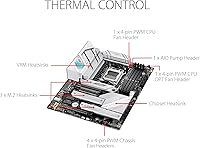
The motherboard's VRM heatsinks handle the 7800X3D's 120W load without any throttling complaints from verified buyers running even extended gaming sessions. The strategically cut airflow channels in the VRM heatsink design appear to make a measurable difference in sustained workloads compared to older ROG B550 boards.
The absence of any included cooler is the single most common complaint across buyer feedback, and it genuinely catches new builders off guard. At 120W TDP, pairing this kit with a budget air cooler leads to thermal throttling under sustained loads — a liquid cooler is effectively a required additional purchase that adds real cost.
Connectivity & I/O
89%
Builders with heavily connected desks — multiple external SSDs, USB hubs, audio interfaces, and peripherals — report that the rear I/O covers nearly everything without requiring an add-in card. Wi-Fi 6E performance in real apartments and home offices is consistently described as fast and stable, particularly for users who cannot run ethernet.
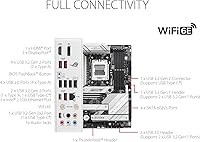
The single USB 3.2 Gen 2x2 Type-C port on the rear I/O is appreciated but some power users wish the board offered a second one for high-bandwidth external storage. Front-panel USB 3.2 Type-C connector support is present but depends entirely on whether your chosen case includes a compatible cable.
Storage Expandability
84%
Three M.2 slots with heatsinks is a generous offering at the B650 price tier, and the PCIe 5.0 primary slot means buyers investing in the latest generation of NVMe drives will not be leaving performance on the table. Early buyers who populated all three slots report no compatibility conflicts in standard configurations.
The B650 chipset's lane allocation means that using all three M.2 slots simultaneously may require some SATA ports to be disabled depending on configuration — a nuance that trips up builders who also plan to use multiple SATA drives. This is a chipset-level trade-off, not a board defect.
Value for Money
74%
26%
When component prices are individually compared, the bundle pricing from Micro Center typically lands at or near parity with buying separately at retail, with the added benefit of guaranteed compatibility and single-box convenience. For builders who place value on their time, that alone justifies the bundle format for many verified buyers.
Deal-hunters who monitor sale prices on the CPU and board separately have found moments where buying individually shaves a noticeable amount off the total. The bundle offers less flexibility to take advantage of individual component discounts, and the lack of any included cooler means the effective outlay is higher than the kit price suggests.
Setup & First Boot Experience
92%
First-time AM5 builders consistently describe a smooth initial setup experience — the board posts without drama, the BIOS interface is modern and readable, and the ROG UI provides enough guidance that even less experienced builders can navigate memory settings and fan curves without a manual in hand.
DDR5 memory training on first boot can take 30 to 60 seconds longer than AM4 veterans expect, which causes brief panic among some first-time DDR5 users who assume something is wrong. This is normal behavior but better documentation in the box would help.
Overclocking Headroom
71%
29%
Memory overclocking headroom on the B650-A is solid for gaming-oriented DDR5 tuning — most users can reach 6000 MHz CL30 without difficulty using EXPO profiles, which is the practical sweet spot for the 7800X3D platform and delivers real-world benefit in latency-sensitive games.
The 7800X3D itself has a locked core multiplier by design to protect the 3D V-Cache layer, which means CPU overclocking is limited to adjustments via PBO and Curve Optimizer. Users expecting traditional overclocking headroom similar to the 7700X or 7900X will be disappointed by this fundamental CPU-level limitation.
Wireless Performance
86%
Wi-Fi 6E performance using the onboard Intel wireless module draws consistent praise from users in dense apartment environments — signal stability and throughput at close to mid range distances hold up well compared to older Wi-Fi 5 adapters, and Bluetooth 5.2 pairing with headsets and controllers is described as reliable and low-latency.
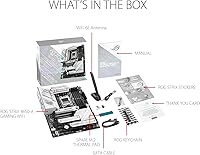
A small number of users in larger homes report that the included magnetic antenna, while functional, is less capable than a higher-gain external antenna at long range. Repositioning the antenna upright and away from the case resolves most signal complaints, but it is not always intuitive for new builders.
Audio Quality
78%
22%
The onboard audio solution with 120 dB SNR playback output performs well above expectations for integrated audio at this board tier — users with quality stereo headphones and mid-range DAC-quality expectations report clean, low-noise playback that comfortably handles gaming and music listening without an add-in sound card.
Audiophiles and users with studio monitor setups consistently flag that onboard audio, however good at this tier, still introduces a faint noise floor compared to a dedicated external DAC or PCIe sound card. For competitive gaming audio, it is more than adequate; for critical listening, it shows limitations.
Packaging & Shipping
67%
33%
Most buyers report receiving the bundle in secure, well-protected packaging with no component damage — Micro Center's bundling approach means both items are consolidated into a single shipment, reducing the coordination headache of tracking multiple packages from different sellers or warehouses.
A recurring minority complaint involves outer box cosmetic damage on arrival through Amazon fulfillment, with scuffed or dented boxes appearing more frequently than buyers expect at this price tier. While internal components are typically unaffected, it creates an unpleasant unboxing experience and raises initial concern about item integrity.
Platform Longevity
87%
AM5 socket compatibility extending through AMD's stated roadmap gives this 7800X3D ROG kit a meaningful lifespan advantage over the AM4 builds it replaces — buyers specifically call out the ability to drop in a future Ryzen 9000 series processor without changing the board as a key factor in justifying the investment.
DDR5 pricing, while improving, still represents a higher entry cost for RAM compared to what AM4 DDR4 builders are accustomed to, which increases the full build cost. Additionally, B650 boards lack the full PCIe 5.0 GPU slot found on some X670E boards, which may limit future GPU upgrade options if PCIe 5.0 graphics cards become mainstream.

Suitable for:

The Micro Center 7800X3D B650-A CPU Motherboard Kit is built for one primary audience: PC gamers who want the best possible in-game frame rates and frame consistency without spending weeks researching component compatibility. If you play at 1080p or 1440p on a high-refresh-rate monitor, the Ryzen 7 7800X3D's massive cache architecture gives you a tangible, real-world advantage over chips with higher core counts but less cache. This bundle also makes a compelling case for AM4 veterans ready to move to AM5 — you get a modern DDR5 platform with a proven, stable motherboard without having to cross-reference QVL lists or BIOS versions yourself. Builders who value their time and want a guaranteed, day-one-working foundation will find the pre-vetted pairing genuinely useful. The ROG Strix B650-A adds enough connectivity — Wi-Fi 6E, multiple M.2 slots, strong rear I/O — that most gamers and general users will never feel limited by the board itself.
Not suitable for:

The Micro Center 7800X3D B650-A CPU Motherboard Kit has real gaps that certain buyers should weigh carefully before committing. If your workload leans heavily on multi-threaded performance — video encoding, 3D rendering, large compilation jobs — an 8-core chip optimized around cache rather than core count is not the right tool, and you would likely be better served by a Ryzen 9 7950X or a higher core count alternative. The B650 chipset, while solid, is not X670: if you need more PCIe lanes, additional M.2 slots beyond three, or plan to run multiple high-bandwidth devices simultaneously, the platform ceiling may frustrate you sooner than expected. Budget-conscious builders should also factor in that no cooler ships with this kit — at 120W TDP, a quality liquid cooler is a near-mandatory additional purchase, which meaningfully changes the total cost of the build. Anyone already owning a compatible AM5 motherboard gets no value from the bundle format and should simply buy the CPU standalone.
Specifications

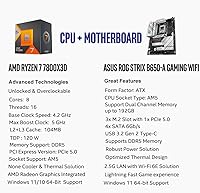
  • CPU Model: The included processor is the AMD Ryzen 7 7800X3D, an 8-core, 16-thread desktop chip built on the AM5 platform.
  • Boost Clock: The Ryzen 7 7800X3D reaches a maximum boost clock of up to 5.0 GHz under optimal conditions.
  • Cache: Total L2 plus L3 cache sits at 104MB, with the L3 expanded via AMD 3D V-Cache stacking technology.
  • TDP: The processor carries a default thermal design power of 120W, making a high-performance cooler a practical necessity.
  • CPU Socket: Both the processor and motherboard use the AMD Socket AM5 (LGA 1718) interface, compatible with Ryzen 7000, 8000, and 9000 series desktop processors.
  • Motherboard: The included board is the ASUS ROG Strix B650-A Gaming WiFi, an ATX form factor motherboard built on the AMD B650 chipset.
  • Memory Support: The B650-A supports dual-channel DDR5 memory up to 192GB total capacity, with speeds up to 7600 MHz via EXPO or XMP profiles.
  • M.2 Storage: Three M.2 slots are provided: one PCIe 5.0 x4 and two PCIe 4.0 x4, all equipped with integrated heatsinks.
  • SATA Ports: Four SATA 6Gb/s ports are available for traditional 2.5-inch or 3.5-inch drives.
  • Power Stages: The motherboard uses a 12+2 power stage design with 8+4 pin ProCool power connectors to support stable multi-core operation.
  • Wireless: Onboard Wi-Fi 6E and Bluetooth 5.2 are included natively, requiring no add-in card for wireless connectivity.
  • Rear USB: The rear I/O provides eight USB ports in total, including one USB 3.2 Gen 2x2 Type-C, additional USB 3.2 Gen 2 Type-A and Type-C ports, and four USB 2.0 Type-A ports.
  • Video Output: Rear display outputs include HDMI 2.1 and DisplayPort 1.4, usable with the processor's integrated Radeon graphics.
  • Expansion Slot: One PCIe 4.0 x16 SafeSlot is provided for a discrete graphics card.
  • Audio: The onboard audio delivers up to 120 dB SNR on stereo playback output and 113 dB SNR on recording input.
  • Thermal Solution: No CPU cooler is included in the bundle; AMD and ASUS both recommend a quality liquid cooler given the 120W processor TDP.
  • Form Factor: The ROG Strix B650-A uses a standard ATX form factor, compatible with any full-size or mid-tower ATX case.
  • OS Support: Both the processor and motherboard officially support Windows 10 and Windows 11 64-bit editions.
  • Package Weight: The combined retail package weighs approximately 5.81 pounds and measures 14.06 x 12.52 x 7.01 inches.

Related Reviews

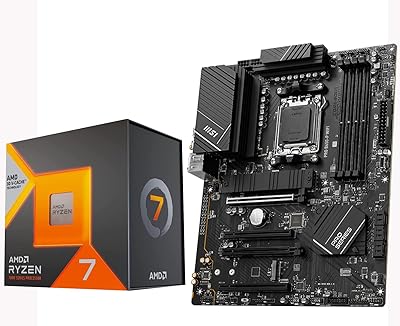
INLAND AMD Ryzen 7 7800X3D Processor with MSI PRO B650-P Motherboard
88%
94%
Overall Performance
96%
Gaming Performance
91%
Multitasking & Productivity
88%
Motherboard Stability
89%
Network Performance (Wi-Fi 6E & LAN)
More
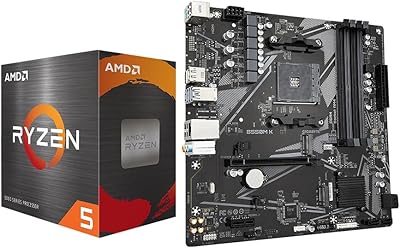
AMD Ryzen 5 5500 B550M K Bundle
78%
88%
Value for Money
79%
Gaming Performance at 1080p
91%
Ease of Installation
83%
Motherboard Feature Set
74%
CPU Thermal Performance
More
INLAND AMD Ryzen 7 7700X CPU & GIGABYTE B650 Gaming X AX V2 Motherboard
88%
94%
Gaming Performance
92%
Processor Speed
89%
Motherboard Stability
85%
Ease of Setup
90%
Overclocking Potential
More
ASUS TUF Gaming B650-Plus WiFi ATX Motherboard
81%
91%
Out-of-Box Stability
88%
BIOS Experience
89%
Power Delivery
71%
DDR5 Memory Compatibility
86%
Networking Performance
More
ASRock B650 PRO RS ATX Motherboard
74%
88%
Value for Money
83%
Build Quality
84%
BIOS Experience
86%
Installation & Setup
71%
CPU Power Delivery
More
GIGABYTE B650 AERO G ATX Motherboard
79%
88%
Build Quality
79%
BIOS & Software
92%
Connectivity & I/O
74%
Memory Compatibility
83%
Thermal Performance
More
ASRock H470M-HVS Micro-ATX Motherboard
82%
87%
Value for Money
82%
Performance
90%
Ease of Installation
80%
Build Quality
83%
Connectivity
More
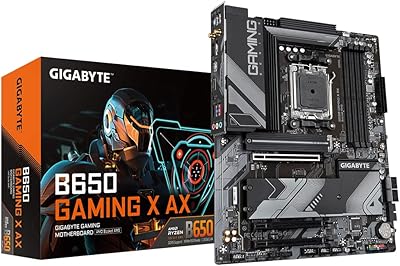
Gigabyte B650 Gaming X AX ATX Motherboard
78%
83%
Value for Money
88%
BIOS Usability
86%
DDR5 Memory Compatibility
91%
Installation & Build Experience
71%
VRM Thermal Performance
More
ASRock 970M Pro3 Micro ATX Motherboard
74%
88%
Value for Money
91%
Compatibility & CPU Support
86%
Ease of Installation
61%
BIOS Usability
54%
Overclocking Headroom
More
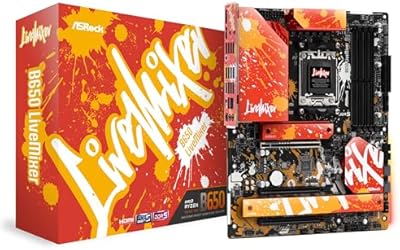
ASRock B650 LIVEMIXER AM5 DDR5 Motherboard
87%
91%
Performance with Ryzen 7000 Processors
89%
Build Quality
92%
PCIe Gen 5 & Expansion Slots
86%
Audio Quality (7.1-channel & Nahimic)
75%
Ease of Installation
More

FAQ

No, it does not. The Micro Center 7800X3D B650-A CPU Motherboard Kit includes only the processor and motherboard. Given that the Ryzen 7 7800X3D runs at 120W TDP, you will want to budget for a capable liquid cooler — a 240mm or 280mm AIO is a common recommendation to keep thermals in check.
You need DDR5 memory — this platform does not support DDR4 at all. The B650-A supports up to 192GB across two DIMM slots in dual-channel configuration. For gaming, a 32GB DDR5 kit rated at 6000 MHz CL30 is widely considered the sweet spot for the 7800X3D specifically, as it keeps the memory controller and the Infinity Fabric in sync.

For most gaming workloads, yes. The 3D V-Cache gives the processor an unusually large pool of fast on-chip memory, which reduces how often the CPU has to reach out to slower system RAM for game data. In practice, this shows up as better average frame rates and more consistent frame pacing, especially at 1080p and 1440p. If you primarily render video or run simulations, a chip with more cores would serve you better.

The B650-A uses the AM5 socket, which AMD has committed to supporting through at least 2027. That means Ryzen 8000 and 9000 series desktop processors are already compatible, and future releases within the AM5 roadmap should be as well, assuming BIOS updates are applied. It is a more forward-looking platform than AM4 was at a comparable stage.

Yes. The primary M.2 slot on the B650-A is PCIe 5.0 x4, which supports the latest generation of NVMe drives. The other two M.2 slots run at PCIe 4.0 x4, which is still more than fast enough for most use cases. All three slots have built-in heatsinks, so thermal throttling on high-performance drives is less of a concern.

Technically the 7800X3D has integrated Radeon graphics, so you can get a display signal without a discrete GPU — which is handy for initial setup and troubleshooting. But integrated graphics on this chip are not intended for gaming. For any real gaming use, a dedicated graphics card is essential, and you should factor that cost into your build budget.

It depends on what you need. B650 covers the vast majority of gaming builder requirements: PCIe 5.0 for the primary M.2 slot, DDR5, and solid connectivity. Where X670 pulls ahead is in the number of available PCIe lanes and additional M.2 slots, which matters if you plan to run multiple NVMe drives or have complex storage configurations. For a focused gaming build, B650 is genuinely sufficient.

The compatibility guarantee is the main advantage here — you do not need to verify that the CPU and board work together, which removes one of the more stressful parts of a first build. The ROG Strix B650-A is well-documented with a clear manual and straightforward BIOS layout. That said, you still need to install the cooler, seat the RAM correctly, and manage cables — none of which is especially difficult, but first-time builders should set aside a few hours and follow a build guide.

No thermal paste is included, since no cooler ships with this kit. Most aftermarket coolers come with pre-applied or included thermal paste, so in most cases you are covered. If you are reusing an existing cooler or buying a bare heatsink, pick up a syringe of decent thermal compound — it is inexpensive and worth doing properly.

Yes, the ASUS ROG Strix B650-A ships with a magnetic antenna for the Wi-Fi 6E module. It connects to the two antenna ports on the rear I/O panel and should be positioned upright for best signal reception. You do not need any additional hardware to get wireless connectivity working on this AMD gaming bundle.