Overview

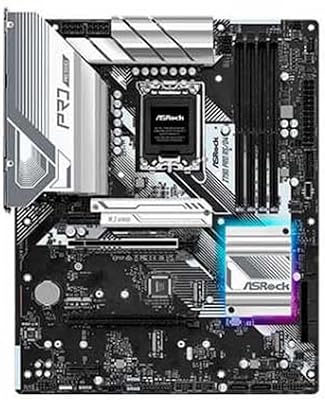
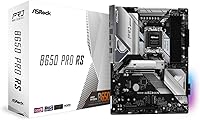
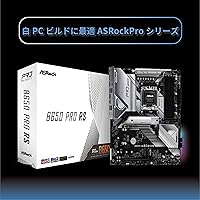
The ASRock B650 PRO RS ATX Motherboard landed in late 2022 as a practical answer to a question many builders were asking: how do you get onto AMD's AM5 platform without paying X670 prices? The B650 chipset sits a comfortable tier below the flagship, trading some PCIe lane flexibility and premium extras for a notably lower cost of entry. Standard ATX dimensions mean it fits into virtually any mid-tower without issue. This is not a board for chasing benchmark records — it's for the builder who wants a stable, capable DDR5 foundation and has no interest in paying for features they'll never actually use.
Features & Benefits

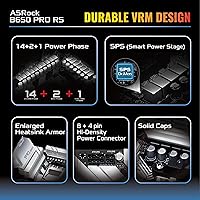
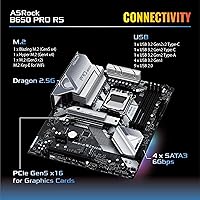
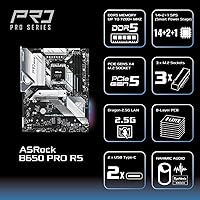
The power delivery runs on a 14+2+1 phase design — plenty for mainstream Ryzen 7000 chips, though it's not built to handle the continuous demands of something like a Ryzen 9 7950X indefinitely. Memory support tops out at DDR5-6200 in overclocked mode across four slots, with a ceiling of 128GB — solid headroom for multitasking builds. For expansion, you get a PCIe 4.0 x16 primary slot for graphics, a secondary PCIe 3.0 x16, and a PCIe 4.0 x1. Worth noting: the board includes an M.2 Key-E slot for a WiFi add-in card, but nothing is bundled — wireless access costs extra. Dual video outputs handle iGPU users on the rear I/O.

Best For

This mid-range AM5 motherboard is a natural fit for anyone putting together their first Ryzen 7000 build with a sensible budget in mind. It pairs particularly well with CPUs like the Ryzen 5 7600 or Ryzen 7 7700 — enough board to support them without unnecessary overhead. It's also a smart pick for builders upgrading from AM4 who want to step into DDR5 without committing to a flagship chipset price. Where it falls short: sustained workloads from high-TDP processors will push the VRM closer to its ceiling than most enthusiasts would prefer. Think of this as the practical choice, not the spec-sheet showstopper.

User Feedback

Across close to 100 ratings, this B650 board holds a 4.4-star average — a score that reflects genuine satisfaction from value-focused buyers rather than hype. The most repeated positives are a straightforward BIOS, easy installation, and build quality that feels solid for the price. On the flip side, the limited rear USB 2.0 count draws regular complaints from users with older peripherals, and the lack of built-in WiFi catches first-time buyers off guard more often than it should. A handful of reviewers flagged that the board performs confidently with mainstream chips but starts to feel constrained under heavier processor loads. No consistent hardware failures or compatibility problems showed up in the review pool.

Pros

  • Solid entry price for a genuine DDR5-capable AM5 platform with no major compromises for mainstream builds.
  • Four DIMM slots with support for up to 128GB of DDR5 gives real headroom for multitaskers and future upgrades.
  • The BIOS is consistently praised for being intuitive, even for builders setting up their first AMD system.
  • Standard ATX form factor means it drops into any typical mid-tower without fitting concerns or special mounting.
  • PCIe 4.0 x16 primary slot keeps current GPU performance fully unlocked without any bandwidth bottleneck.
  • Both HDMI and DisplayPort outputs on the rear I/O make iGPU setups genuinely usable for office or light tasks.
  • Build quality feels solid and well-matched to the price point, with no reported widespread hardware failures.
  • Memory overclocking up to DDR5-6200MHz is accessible for users who want to tune performance without a premium board.
  • The M.2 Key-E slot for WiFi at least leaves the door open for wireless connectivity without requiring a PCIe adapter card.

Cons

  • Only two rear USB 2.0 ports is a real inconvenience for anyone still running older keyboards, mice, or dongles.
  • WiFi is not included — buyers who skim the spec sheet will discover this only after unboxing, which is frustrating.
  • The VRM setup is adequate for typical Ryzen 7000 chips but runs out of headroom under high-TDP or overclocked flagship CPUs.
  • No X670-style full PCIe 5.0 support, so builders planning next-gen GPU or storage upgrades may need to reconsider.
  • Secondary PCIe slot runs at PCIe 3.0 speeds, which limits multi-GPU or high-bandwidth peripheral configurations.
  • No integrated Thunderbolt or USB4 support, which will matter to creators and professionals with modern peripherals.
  • The board offers relatively modest onboard audio compared to competitors at a similar price in the B650 segment.
  • Lacks some of the fan header and RGB header density that competing B650 boards offer at comparable pricing.

Ratings

The ASRock B650 PRO RS ATX Motherboard has been scored by our AI system after analyzing verified global buyer reviews, with spam, bot-submitted, and incentivized feedback actively filtered out before any scoring was applied. The results reflect a genuinely balanced picture — where this mid-range AM5 board earns real praise and where it falls short of buyer expectations. Both strengths and recurring pain points are represented transparently in every category below.
Value for Money
88%
Buyers consistently feel they are getting a fair deal for an AM5 DDR5 platform entry point. Compared to pricier X670 options, the ASRock B650 PRO RS delivers the features most mainstream builders actually need without padding the bill with extras they will never use.
A handful of reviewers noted that a few competing B650 boards at similar prices include integrated WiFi, making the omission here feel like a cost-cutting move that slightly undermines the overall value proposition.
Build Quality
83%
The board feels solid in hand, with reinforced PCIe slots and a layout that does not feel flimsy during GPU installation. Multiple buyers noted that component placement is logical and the board holds up well after extended months of daily use.
Some users felt the heatsink coverage on the VRM area was modest compared to higher-end boards, and a few noted the overall aesthetic is plain — functional but not something that looks impressive in a windowed case build.
BIOS Experience
84%
First-time AM5 builders frequently highlighted how approachable the BIOS felt — enabling XMP profiles, adjusting fan curves, and checking boot order are all straightforward tasks. The interface does not punish newer builders with confusing terminology or buried menus.
A small number of users reported needing a BIOS update to achieve compatibility with certain Ryzen 7000 CPUs out of the box, which can be tricky without a spare compatible chip to perform the update.
Installation & Setup
86%
The standard ATX layout and clear silkscreen labeling on headers make physical installation noticeably smooth. Builders working in mid-towers reported the whole process — from mounting to first POST — going faster than expected, even for those doing their first AM5 build.
Documentation bundled in the box was described as thin by some buyers, leaving a few to rely on online resources for guidance on more nuanced setup steps like memory overclocking profiles.
CPU Power Delivery
71%
29%
For mid-range Ryzen 7000 chips running at stock or mildly tuned settings, the 14+2+1 phase design keeps voltages stable and temperatures on the VRM area reasonable during everyday workloads like web browsing, office tasks, and light gaming.
Users running demanding processors under sustained multi-threaded loads noted that the VRM runs noticeably warm. Pairing this board with any high-TDP flagship CPU is genuinely inadvisable for workloads that keep the chip under load for extended periods.
Memory Compatibility
79%
21%
DDR5 support up to 6200MHz gives builders room to push memory performance beyond base JEDEC speeds without needing a premium board. Most popular DDR5 kits from major brands were reported as working correctly after enabling XMP in the BIOS.
Some buyers experienced initial instability with higher-frequency DDR5 kits until a BIOS update resolved the issue. Achieving 6000MHz or above required more tuning effort than some users anticipated coming from AM4 DDR4 builds.
Connectivity & I/O
63%
37%
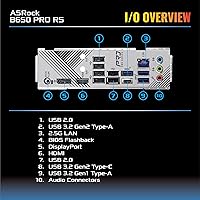
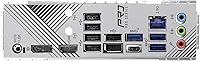
The dual video outputs on the rear I/O are a genuine convenience for users who want to run integrated graphics during initial setup or in light-use office builds. The presence of both HDMI and DisplayPort means compatibility across monitor types is not a concern.
Two rear USB 2.0 ports is the most commonly cited frustration in user reviews. Builders with wireless receivers, older external drives, and USB hubs quickly fill those slots, and the overall rear port density feels behind the curve for a board sold in this era.
WiFi & Networking
47%
53%
The M.2 Key-E slot at least provides a clean internal solution for adding wireless connectivity rather than requiring an external PCIe adapter card, which would consume an expansion slot and add cable clutter to the build.
No WiFi is included, and this catches buyers off guard more than almost any other feature gap on this board. For a platform launched in 2022, the absence of even a basic integrated wireless module is a meaningful omission that adds cost and friction to any wireless build.
PCIe Expansion
74%
26%
The primary PCIe 4.0 x16 slot handles any current-generation GPU without bandwidth limitations, and the additional PCIe 3.0 x16 and PCIe 4.0 x1 slots give builders enough room for capture cards, sound cards, or other peripherals.
The secondary x16 slot running at PCIe 3.0 speeds limits its usefulness for high-bandwidth applications, and buyers who want PCIe 5.0 support for next-generation GPUs or NVMe drives will need to look at a higher-tier platform.
Thermal Management
72%
28%
Fan header placement is practical and covers the main airflow zones adequately. Users building productivity rigs reported consistent and quiet thermal behavior under normal workloads, with temperature readings staying predictable over long sessions.
The heatsink solution covering the VRM area is on the minimal side, and builders running warm cases or environments without strong airflow noted slightly elevated VRM temperatures during extended use, particularly with more capable Ryzen 7000 chips.
Overclocking Support
67%
33%
For memory overclocking, the board performs reasonably well and gives DDR5 tuning enthusiasts a usable starting point. Enabling XMP and nudging frequencies upward is accessible even for those without deep overclocking experience.
CPU overclocking headroom is limited by the VRM configuration, and the board is not designed to sustain aggressive all-core boosts on higher-end chips. Dedicated overclocking builders will find the ceiling frustratingly low compared to X670 alternatives.
Compatibility & Platform
81%
19%
AM5 socket compatibility covers the full Ryzen 7000 lineup, and AMD's commitment to AM5 longevity gives buyers reasonable confidence that future CPU upgrades will not immediately demand a new board as well.
Some users noted that out-of-box compatibility with certain Ryzen 7000 SKUs required a BIOS flash, and the AM5 platform exclusively supports DDR5 — meaning buyers cannot reuse DDR4 kits from previous builds, adding to total upgrade costs.
Aesthetics & Design
58%
42%
The layout is clean and practical, with a no-nonsense dark color scheme that blends into most build aesthetics without clashing. For builders who prioritize function over appearance, the understated design is a non-issue.
RGB lighting is minimal to nonexistent, and the overall visual design is plainly utilitarian. Builders putting together a showcase windowed build will likely find this board underwhelming compared to competitors that offer more visual personality at similar price points.
Long-Term Reliability
77%
23%
Across the reviewed dataset, there were no widespread or consistent reports of dead-on-arrival units or early failures, which is an encouraging signal for a board at this price tier. Most buyers reported smooth, uninterrupted operation over months of regular use.
The long-term reliability picture for AM5 boards at this price tier is still developing given the platform's relatively recent launch, and a small number of users did report component issues after extended use — though these appear to be isolated rather than systemic.

Suitable for:

The ASRock B650 PRO RS ATX Motherboard is the kind of board that makes the most sense for builders who want a clean, reliable entry into the Ryzen 7000 platform without stretching their budget toward features they genuinely do not need. If you are pairing a mid-range CPU like the Ryzen 5 7600 or Ryzen 7 7700 with a single GPU and a couple of NVMe drives, this board covers every base without complaint. It also works well for home office and productivity-focused machines where the priority is stable daily performance rather than pushing hardware limits. Upgraders coming from AM4 who want to step into DDR5 territory will find the transition straightforward, particularly given the accessible BIOS and standard ATX layout that fits any conventional mid-tower case. First-time PC builders will appreciate that nothing here is unnecessarily complicated.
Not suitable for:

The ASRock B650 PRO RS ATX Motherboard is not the right call if you are planning to run a high-TDP processor like the Ryzen 9 7950X under sustained workloads — the 14+2+1 phase power design handles mainstream chips comfortably, but it was not built for that kind of continuous thermal demand. Enthusiasts who want to push aggressive overclocks or need the expanded PCIe lane count of an X670 board should look further up the product stack. If you rely heavily on legacy USB peripherals, the limited rear USB 2.0 port count will likely frustrate you sooner rather than later. Buyers expecting integrated WiFi should also know going in that wireless connectivity requires purchasing a separate M.2 Key-E add-in card — it is not included. Content creators or power users who need multiple high-bandwidth storage devices simultaneously may find the connectivity options tighter than they would like.
Specifications

  • Chipset: Built on the AMD B650 chipset, targeting mainstream Ryzen 7000 series builds without the premium cost of X670.
  • CPU Socket: Uses the AM5 (LGA1718) socket, compatible exclusively with AMD Ryzen 7000 series processors.
  • Form Factor: Standard ATX form factor measuring 15.04 x 12.56 inches, fitting the vast majority of mid-tower and full-tower cases.
  • Memory Type: Supports DDR5 memory exclusively across four DIMM slots, with a maximum capacity of 128GB.
  • Memory Speed: Official DDR5 speeds are supported up to 6200MHz in overclocked mode, providing solid headroom beyond standard JEDEC profiles.
  • Power Design: Features a 14+2+1 phase power delivery configuration, designed to provide stable voltage to mainstream and mid-range Ryzen 7000 CPUs.
  • Primary PCIe: One PCIe 4.0 x16 slot handles the primary graphics card with full bandwidth for current-generation GPUs.
  • Secondary PCIe: A secondary PCIe 3.0 x16 slot is available for additional cards such as capture cards or secondary GPUs at reduced bandwidth.
  • PCIe x1 Slot: One PCIe 4.0 x1 slot is included for smaller expansion cards such as sound cards or USB controllers.
  • WiFi Support: An M.2 Key-E slot is present for a WiFi add-in card, but no wireless card is included in the box.
  • Video Outputs: The rear I/O provides one HDMI port and one DisplayPort output for use with processors featuring integrated graphics.
  • USB Rear Ports: The rear I/O includes 2 USB 2.0 ports among its connectivity options, which may be limiting for users with multiple legacy peripherals.
  • Storage Battery: One CR2032 coin cell battery is required and included to maintain BIOS settings and the real-time clock when the system is unpowered.
  • Board Weight: The board weighs 2.64 pounds, typical for a full ATX motherboard of this class.
  • Compatible CPUs: Designed specifically for AMD Ryzen 7000 series desktop processors and is not backward compatible with AM4 CPUs.

Related Reviews

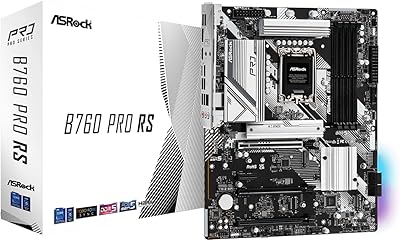
ASRock B760 Pro RS ATX Motherboard
80%
83%
Value for Money
88%
Feature Set
91%
CPU Compatibility
74%
Memory Performance
76%
VRM & Power Delivery
More
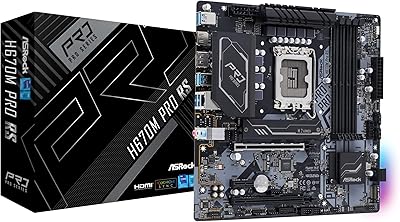
ASRock H670M PRO RS Motherboard
83%
84%
Performance
91%
Value for Money
88%
Ease of Installation
90%
Compatibility with Intel 12th Gen
85%
Gaming Performance
More
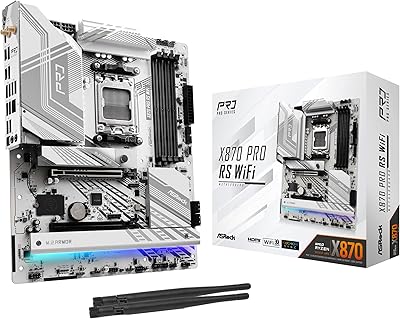
ASRock X870 Pro RS WiFi Motherboard
84%
91%
Performance
95%
Connectivity Options
88%
Stability and Overclocking
70%
Ease of Setup
94%
DDR5 Compatibility
More
ASRock Z790 Pro RS/D4 Motherboard
86%
91%
Performance
88%
Overclocking Stability
89%
Power Delivery & Stability
85%
Build Quality
80%
Ease of Setup
More
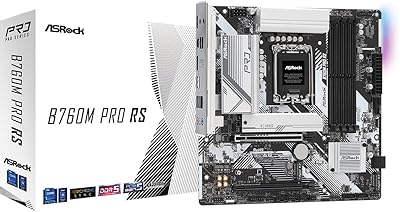
ASRock B760M Pro RS Motherboard
78%
88%
Value for Money
91%
BIOS Experience
86%
DDR5 Compatibility
89%
Installation Ease
83%
CPU Power Delivery
More
ASRock B650 Steel Legend WiFi 6E ATX Motherboard
87%
91%
Performance
89%
Stability
88%
Overclocking Capability
92%
WiFi 6E Connectivity
85%
Ease of Installation
More
ASRock H81 PRO BTC Motherboard
77%
91%
Value for Money
88%
Performance in Mining Rigs
86%
Build Quality
85%
Ease of Setup
82%
Connectivity Options
More
MSI PRO B650-S WIFI Motherboard
84%
94%
Performance with Ryzen 7000 Processors
89%
Wi-Fi 6E Connectivity
88%
Cooling Efficiency
72%
Setup and Installation Ease
91%
PCIe 4.0 Expansion Support
More
ASRock A520M Pro4 Micro ATX Motherboard
83%
92%
Value for Money
89%
Processor Compatibility
86%
Performance Stability
84%
Build Quality
88%
Ease of Setup
More
ASRock 970M Pro3 Micro ATX Motherboard
74%
88%
Value for Money
91%
Compatibility & CPU Support
86%
Ease of Installation
61%
BIOS Usability
54%
Overclocking Headroom
More

FAQ

No, it does not. The ASRock B650 PRO RS ATX Motherboard includes an M.2 Key-E slot where you can install a compatible WiFi card, but nothing is bundled in the box. If wireless connectivity matters to your build, you will need to budget for a separate WiFi module or use a PCIe WiFi adapter.
Yes, and honestly that is exactly what this board was designed around. Mid-range Ryzen 7000 chips like those are a natural pairing — the power delivery handles them without stress, and you are not paying for chipset features those CPUs would never take advantage of.

Technically it will boot and run, but the 14+2+1 phase VRM is not really built for sustained workloads from a high-TDP chip like that. Under heavy multi-threaded loads you may see thermal throttling on the power stages. If you are specifically buying a 7950X or similarly demanding processor, a board with a beefier VRM is the safer long-term choice.

DDR5 only. The AM5 platform as a whole dropped DDR4 support, so all AM5 boards including this one require DDR5 memory. Make sure your RAM purchase reflects that before you order.

The board includes M.2 slots for NVMe storage in addition to the M.2 Key-E slot reserved for WiFi. Refer to the official ASRock product page or manual for the exact M.2 storage slot count and their respective PCIe lane configurations, as these details are not fully specified in the standard listing.

Multiple buyers have specifically called this out as a strong point. The BIOS interface is clean and logically organized, and basic things like enabling XMP for faster RAM or checking boot order are easy to find without digging through nested menus. It is not intimidating for someone building their first AMD system.

Yes. It uses a standard ATX footprint, which is the most common size supported by mid-tower and full-tower cases. As long as your case lists ATX support — and most do — this board will fit without any modification.

Yes, both outputs are functional with Ryzen 7000 processors that include integrated graphics. This is useful for initial setup, troubleshooting, or light-use builds that do not need a dedicated GPU. Just keep in mind that some Ryzen 7000 SKUs do not include integrated graphics, so check your specific CPU before relying on this.

For most modern setups it is adequate, but users with several older peripherals may find the two USB 2.0 rear ports limiting. This is one of the more frequently mentioned frustrations in buyer reviews. If you have a keyboard, mouse, and several USB dongles or older devices, a USB hub is worth considering.

It does support DDR5 overclocking up to 6200MHz via XMP or manual tuning in the BIOS. Enabling an XMP profile is as simple as selecting it in the BIOS — no advanced knowledge required. Going beyond that into manual tuning is possible but becomes more trial-and-error territory, which is fairly standard across B650 boards at this price.

Where to Buy