Overview

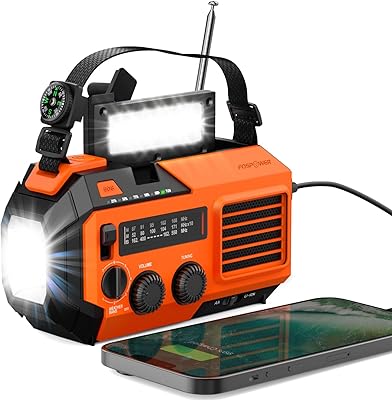
The MangePagar MA-091 4000mAh Emergency Weather Radio entered a crowded market in April 2025, positioning itself as a practical, budget-conscious option for households and outdoor enthusiasts who want real emergency preparedness without a steep investment. The core appeal is straightforward: multiple power sources, NOAA weather reception, and a compact form factor — all in one unit. The orange colorway is a deliberate choice, making it easier to spot in a dark closet or a chaotic situation. This is not a professional-grade device with SAME alerting or advanced scanning, but it was never meant to be. For what it costs, the value proposition is genuinely solid.
Features & Benefits

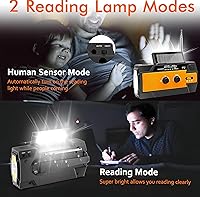
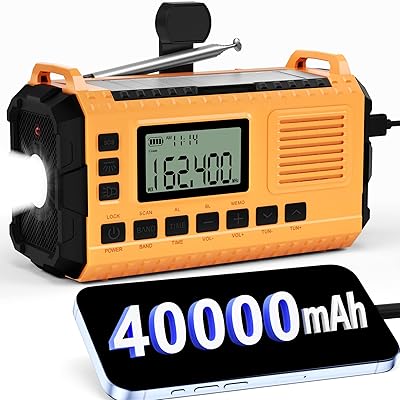
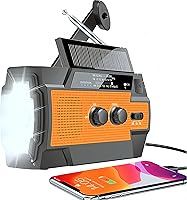
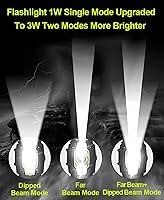
Where this emergency radio stands out is the combination of four charging methods — solar, hand crank, micro USB, and the built-in Li-ion battery. The 4000mAh capacity is genuinely impressive at this price tier; it holds enough reserve to top off a smartphone at least once, which matters when the power grid is down for days. NOAA coverage spans all seven standard weather channels, and AM/FM reception handles everyday listening too. The three-mode flashlight and motion-activated reading lamp are thoughtful additions — the kind you actually reach for during a blackout. One honest note: solar and crank charging are supplemental power sources, not fast chargers. They will keep the radio alive, but don't expect them to rapidly refill a depleted battery.

Best For

The MangePagar crank radio makes the most sense for people building or updating a home emergency kit without a large budget. It's a natural fit for hurricane season preparedness, where NOAA access is non-negotiable and a backup phone charge can genuinely matter. Campers and backpackers will appreciate having a radio, flashlight, reading lamp, and phone charger consolidated into one 10.6-ounce unit instead of several. It also works well as a practical, easy-to-understand gift for parents or anyone who wants to be better prepared but isn't especially tech-savvy. If you already own a dedicated high-end weather radio, this is probably a redundancy — but as a first preparedness device, it covers the basics confidently.

User Feedback

Because this weather radio only launched in April 2025, verified buyer feedback is still accumulating — keep that in mind when weighing any star ratings. Early impressions suggest the speaker volume and NOAA reception quality are well-received, particularly in suburban and rural areas where signal strength is sufficient. Some buyers note that crank charging feels slow, which is expected for this category — it's a backup method, not a primary one. Build quality feedback is mixed; the plastic housing feels adequate for the price but not rugged. The motion-sensor lamp earns consistent praise for nighttime outages. On the downside, a few users flag that solar charging speed is similarly sluggish in low-light conditions. Overall sentiment leans positive, but the sample size remains modest.

Pros

  • Four independent power sources mean you are rarely completely without options, even after days off the grid.
  • The 4000mAh battery is unusually large for this price tier and can genuinely top off a smartphone in an outage.
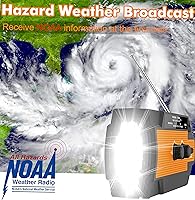
  • All seven standard NOAA weather channels are covered, handling real emergency alert monitoring reliably.
  • The motion-sensor reading lamp is a surprisingly practical touch during night-time blackouts.
  • At just over 10 ounces, this emergency radio fits naturally into a go-bag or emergency kit without adding noticeable weight.
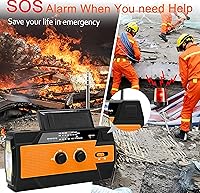
  • The SOS alarm adds an audible distress option that pure radios in this category simply do not offer.
  • Setup requires no technical knowledge — most users are operational within minutes of opening the box.
  • The orange housing is a deliberate, functional choice that makes the unit easy to locate quickly in low light.
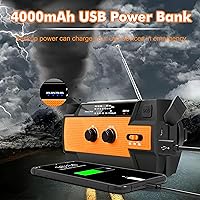
  • USB phone charging output works as a genuine backup, not just a spec-sheet checkbox.

Cons

  • Hand crank charging is slow and tiring — it sustains the radio in a pinch but will not meaningfully refill the battery.
  • Solar panel performance drops sharply on cloudy days or indoors, making it unreliable as a regular charging method.
  • No SAME alerting means you cannot filter emergency broadcasts to your specific county or region.
  • AM and NOAA reception can be inconsistent in urban areas with high signal interference.
  • The plastic build feels adequate but not confidence-inspiring, particularly the crank mechanism under repeated use.
  • The included manual is thin and leaves some features, like the motion sensor behavior, underexplained.
  • USB charging output is slow enough that it struggles to keep pace with active smartphone use.
  • As a product launched in 2025, long-term durability data simply does not exist yet — buyer history is limited.
  • The SOS alarm has no volume control, making it too jarring in small enclosed spaces.

Ratings

Our AI-generated scores for the MangePagar MA-091 4000mAh Emergency Weather Radio are based on analysis of verified global buyer reviews, with spam, bot, and incentivized feedback actively filtered out before scoring. Because this unit only launched in April 2025, the review pool is still growing — scores will sharpen over time, but current data already reveals clear strengths and honest weak spots. Both are reflected transparently below.
Value for Money
88%
Buyers consistently note that the combination of NOAA reception, phone charging capability, flashlight, and multiple power inputs at this price is hard to match with a single competing device. For households putting together a first emergency kit, the per-feature cost feels genuinely fair.
A small segment of buyers feel the plastic construction does not quite justify even the modest asking price when compared to slightly pricier options with sturdier builds. Expectations need to be calibrated to the budget tier.
NOAA Reception Quality
82%
18%
In suburban and rural settings, users report clean, reliable reception across all seven NOAA weather channels with minimal tuning effort. During active weather watches, several buyers specifically praised how clearly emergency alerts came through without static interruption.
Urban buyers in dense environments report more inconsistent performance, with some channels requiring careful antenna positioning. The fixed antenna design limits what you can do to improve signal in challenging locations.
Battery Capacity & Runtime
84%
The 4000mAh cell punches well above what most devices in this category offer, and buyers running the radio continuously during multi-day outages report it lasting significantly longer than expected. The ability to charge a smartphone via USB port mid-emergency is a frequently cited real-world win.
A few users note that actual runtime under heavy use — flashlight on, radio playing at high volume — drains the battery faster than the spec sheet implies. Managing which features run simultaneously is worth keeping in mind.
Hand Crank Charging
61%
39%
The hand crank functions as a genuine last-resort power source, and buyers stranded without any other power option appreciate having it available at all. Short cranking sessions are enough to keep the radio alive for basic listening.
This is the most common complaint category: sustained cranking produces only modest charge gains, and several users describe arm fatigue before seeing any meaningful battery percentage increase. It is a backup method, not a recovery tool, and some buyers arrive expecting more than it can realistically deliver.
Solar Charging Performance
57%
43%
In strong, direct sunlight during camping trips, the solar panel does contribute a slow but steady trickle of charge that can extend runtime meaningfully over a full day outdoors. Buyers who set it on a sunny windowsill during a sunny afternoon report modest but real gains.
Cloudy days or indirect light render the solar panel nearly ineffective, and even in ideal conditions charging is slow. Several buyers express frustration that indoor lighting produces no measurable charge whatsoever, which catches those new to solar accessories off guard.
AM/FM Radio Performance
76%
24%
AM and FM reception is generally well-received for a device at this price point, with buyers in areas with strong broadcast infrastructure reporting clear audio and easy station locking. The tuner handles everyday listening without complaints from most users.
Sensitive listeners and those in weaker signal areas notice more static and channel drift than they would from a dedicated FM radio. The tuner is functional but not refined, and audio quality on AM is noticeably compressed at higher volumes.
LED Flashlight Utility
81%
19%
The three-mode flashlight earns consistent praise during power outages, with buyers describing the high mode as bright enough to navigate a dark house or yard comfortably. The SOS strobe mode is a practical safety feature that adds real value for outdoor use.
The 1W output, while adequate for close-range use, falls short for users expecting a long-throw beam comparable to a dedicated flashlight. At longer distances the illumination drops off noticeably.
Motion Sensor Reading Lamp
78%
22%
This feature surprises buyers in the best way — automatically activating when you enter a dark room or reach for the unit during a blackout is genuinely useful without requiring fumbling for a switch. Parents with young children during night outages mention it specifically as a standout detail.
The motion sensitivity is not adjustable, and a few users note it triggers too easily, switching on unexpectedly when the radio is stored in a bag or on a busy shelf. A sensitivity control would make this feature considerably more polished.
Build Quality & Durability
63%
37%
For a budget-tier device, the overall assembly is acceptably solid — nothing rattles, the buttons have reasonable tactile feedback, and the unit feels dense enough in hand to inspire basic confidence. The rubberized grip areas add a small but appreciated layer of handling quality.
The plastic housing shows its cost origins under scrutiny: button travel feels shallow on some units, and the crank mechanism has a slightly hollow feel that gives some buyers pause about long-term reliability. It is not a device you would want to drop repeatedly on hard surfaces.
Portability & Form Factor
85%
At 10.6 ounces and roughly the size of a large paperback book, this weather radio slips easily into a backpack, go-bag, or emergency kit without adding noticeable bulk. Buyers specifically commend how much functionality is packed into such a manageable footprint.
The dimensions, while compact for everything included, still make it slightly bulky for vest or hip-pack carry during hiking. Ultralight backpackers may find lighter single-purpose radios more practical for extended trail use.
Water Resistance (IPX3)
59%
41%
IPX3 protection is enough to survive a rain shower or an accidental splash, and buyers who have used it in light rain during camping confirm it handled the exposure without issues. For typical outdoor preparedness scenarios, this level of protection is usually sufficient.
A meaningful number of buyers assume IPX3 means the unit is waterproof, leading to disappointment after exposure to heavier rain or near-water activities. This is not a device for boating, flood-zone use near standing water, or heavy downpours.
SOS Alarm
74%
26%
The audible SOS alarm is loud enough to be heard at a distance, and buyers who tested it outdoors confirm it carries well in open environments. Having an audio distress signal independent of the radio function adds a layer of utility that single-purpose radios lack.
The alarm tone is a simple repeating pattern with no volume adjustment, which some users find either too piercing in enclosed spaces or, paradoxically, not distinctive enough to stand out in a noisy environment. A multi-tone option would strengthen this feature.
Ease of Use
86%
The button layout and basic controls are intuitive enough that buyers report non-technical family members — including older adults — figuring out the core functions without consulting the manual. That accessibility is a genuine selling point for a household emergency device.
The manual itself receives mixed reviews, with some buyers noting it is brief to the point of being unhelpful for understanding more nuanced features like the motion lamp sensitivity or optimal solar charging positioning. A better quick-start guide would help new users.
USB Phone Charging Output
72%
28%
The USB output works reliably as a backup phone charger, and buyers who used it during multi-day outages report successfully keeping phones at usable charge levels by combining radio battery reserves with periodic top-ups. It is a practical feature that justifies carrying one device instead of two.
Charging speed via USB is slow by modern standards — fine for emergencies but not a replacement for a proper power bank in non-crisis use. Output current is limited, and users with power-hungry flagship phones note it barely keeps pace with active phone use.

Suitable for:

The MangePagar MA-091 4000mAh Emergency Weather Radio is a strong fit for households that want a practical, ready-to-go emergency kit staple without spending heavily on a single-purpose device. If you live in a region that sees annual hurricane seasons, tornado watches, or serious winter storms, having reliable NOAA access alongside a built-in phone charging backup is a genuinely useful combination during multi-day outages. Campers and weekend hikers who prefer to consolidate gear will appreciate carrying one unit instead of separate radios, flashlights, and power banks. It also makes an excellent gift for parents, older relatives, or anyone who wants to be better prepared but finds technical gadgets intimidating — the controls are straightforward and the orange housing is hard to misplace in a dark closet or cluttered gear bag. First-time preparedness buyers, in particular, will find it covers the essential bases at a price that does not require much deliberation.

Not suitable for:

The MangePagar MA-091 4000mAh Emergency Weather Radio is not the right choice for buyers who need advanced alerting capabilities like SAME (Specific Area Message Encoding), which filters emergency alerts by county and is standard on higher-end weather radios. If you live in a densely built urban environment, be aware that AM and NOAA reception can be inconsistent without careful antenna placement, which may be frustrating in a real emergency. This is also not the device for serious outdoor adventurers who encounter sustained heavy rain or near-water conditions — IPX3 splash resistance is not waterproofing, and confusing the two could result in a damaged unit at the worst possible moment. Anyone expecting the solar panel or hand crank to rapidly recharge a depleted battery will be disappointed; those features keep the radio barely alive in a pinch, not restore it to full power. If you already own a dedicated, name-brand emergency radio with SAME alerts, this weather radio offers little upgrade value.
Specifications

  • Brand & Model: Manufactured by MangePagar under model number MA-091.
  • Dimensions: The unit measures 7.48″ long by 2.2″ wide by 3.15″ tall.
  • Weight: The radio weighs 10.6 ounces, making it practical for go-bags and backpacks.
  • Battery: A built-in 4000mAh (14800mWh) rechargeable lithium-ion cell powers the device and doubles as a USB power bank.
  • Charging Inputs: Four input methods are supported: solar panel, hand crank, micro USB cable, and the internal Li-ion battery.
  • USB Output: A single USB-A output port allows the unit to charge external devices such as smartphones.
  • Radio Bands: Receives AM, FM, and all 7 standard NOAA weatherband (WB) channels for emergency broadcast monitoring.
  • Flashlight: A 1W LED flashlight offers three modes: high, medium, and SOS strobe.
  • Reading Lamp: A secondary motion-sensor activated lamp engages automatically when movement is detected in low-light conditions.
  • SOS Alarm: A built-in audible SOS alarm provides a distress-signaling function independent of radio operation.
  • Water Resistance: Rated IPX3, the unit can withstand light splashing and brief rain exposure but is not submersion-rated or waterproof.
  • Color: Available in orange, chosen to maximize visibility during emergency situations or when stored in gear bags.
  • In the Box: Each unit ships with the radio, a micro USB charging cable, and a printed owner's manual.
  • Power Sources: The device operates via corded Li-ion battery, solar energy, or manual hand crank generation.
  • Tuner Type: FM/AM WB analog tuner supporting standard terrestrial and weatherband frequencies.
  • BSR Ranking: Ranked #125 in Weather Radios and #50,321 in Electronics on Amazon as of its early sales period.
  • Launch Date: First made available for sale on April 16, 2025.
  • Style: Described as modern in profile, with a compact rectangular form factor and integrated grip areas.

Related Reviews
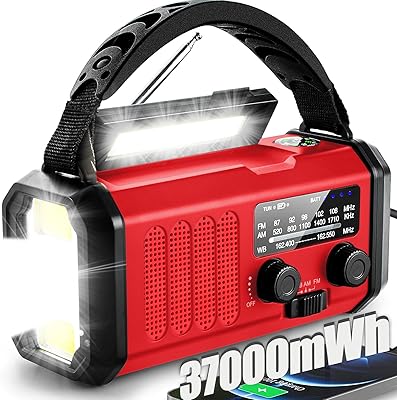
Roxicosly CR1009Ultra 12000mAh Emergency Weather Radio
74%
88%
Battery Life
91%
Charging Versatility
86%
NOAA Alert Performance
58%
Hand Crank Durability
44%
Solar Charging Speed
More
Sttfaishen F20 Emergency Hand Crank Weather Radio
72%
82%
NOAA Alert Reception
54%
Battery Capacity & Honesty
61%
Hand Crank Usability
57%
Solar Charging Performance
83%
USB-C Charging Speed
More
RAOUOEN 30000mAh Emergency Weather Radio
85%
89%
Battery Life & Charging
91%
Performance in Emergencies
75%
Portability & Weight
84%
Sound Quality & Reception
87%
Ease of Use
More
TFTDOUP Emergency Weather Alert Radio
86%
88%
Overall Performance
85%
Battery Life
90%
Charging Options
80%
Ease of Use
87%
Build Quality
More
QAUYYW Emergency Weather Radio XSY330
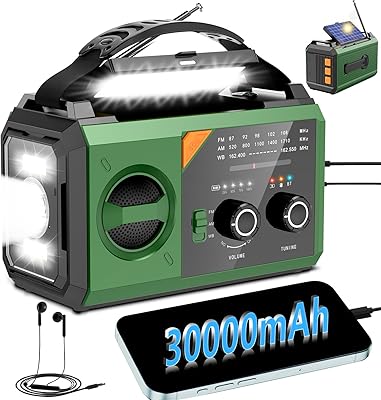
86%
89%
Battery Life
85%
Ease of Use
92%
Portability
75%
Radio Reception
88%
Build Quality
More
FosPower A6 5200mAh Emergency Weather Radio
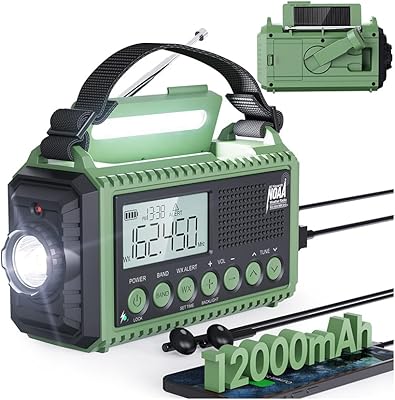
77%
91%
NOAA Reception
84%
Build Quality
67%
Power Bank Utility
53%
Hand Crank Efficiency
49%
Solar Charging
More
OnLyee CR1030 Emergency Weather Radio
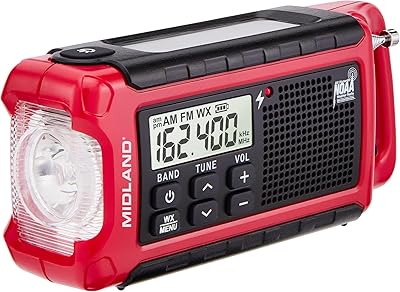
76%
88%
Power Source Redundancy
83%
Hand Crank Durability
61%
Solar Charging Performance
79%
NOAA Reception Quality
67%
Battery Capacity & Phone Charging
More
Lanshanchu XG-098 Emergency Weather Radio
86%
95%
Battery Life & Charging Options
92%
NOAA Alert Accuracy
89%
Radio Reception Quality
88%
Portability & Size
90%
LED Flashlight & SOS Function
More
AXYEBI AB-US-107Y Emergency Weather Radio
75%
91%
Value for Money
82%
NOAA Signal Reception
88%
Flashlight Performance
63%
Build Quality & Durability
67%
Hand Crank Usability
More
Midland ER210 Emergency Weather Radio
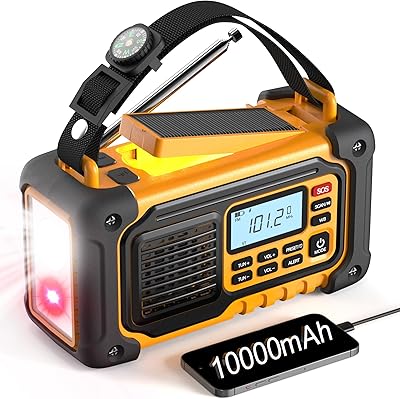
75%
91%
NOAA Reception Quality
83%
Power Source Versatility
78%
Battery Life
89%
Ease of Use
67%
Flashlight Performance
More

FAQ

Yes, the radio picks up all 7 standard NOAA weatherband channels, which covers the full range of US National Weather Service broadcasts including alerts for hurricanes, tornadoes, and floods. It does not support SAME (Specific Area Message Encoding), so you will receive alerts for your broader region rather than being able to filter by specific county.

It works, but you should set realistic expectations. Cranking for several minutes will generate enough power to keep the radio running or add a small amount of charge — it is genuinely useful as a last-resort option when all other sources are unavailable. It is not a practical way to fully recharge the 4000mAh battery; think of it as a trickle source rather than a recovery tool.

Yes, the USB-A output port lets you charge a smartphone directly from the radio's internal battery. The output is relatively slow compared to a modern wall charger, so it works best for top-up charging rather than fast recovery. That said, during a power outage it is a meaningful backup option, and the 4000mAh cell has enough capacity to meaningfully charge most phones at least once.

Not fully — it carries an IPX3 rating, which means it can handle light rain and incidental splashing without damage. It is not designed for submersion, heavy downpours, or use near standing water. If you are camping in a rainy environment, keeping it under a rain fly or pack cover is a sensible precaution.

Honestly, not very well. Solar charging on this radio performs best in strong, direct sunlight — a full sunny day outdoors will add a meaningful trickle of charge. On overcast days or near indoor windows, the contribution drops to near zero. Treat the solar panel as a supplementary feature for sunny outdoor use, not a reliable daily charging method.

Absolutely — that is one of its primary use cases. The pre-charged internal battery will run the radio and flashlight for extended periods without any external power. The motion-sensor reading lamp is particularly handy for navigating dark rooms at night without waking others or hunting for a light switch.

In suburban and rural areas with decent signal strength, most users find AM and FM reception clear and easy to tune. In dense urban environments or areas with significant signal interference, you may need to adjust the antenna carefully to reduce static. The built-in antenna is fixed, so there is a ceiling on how much you can improve reception in challenging locations.

It is actually a great starting point. The controls are straightforward, there are no complex menus to navigate, and the bright orange housing makes it easy to locate when you need it in a hurry. Someone who wants dependable NOAA access and a built-in flashlight without a steep learning curve will find this weather radio easy to get up and running in minutes.

The housing is plastic, which is typical for this price tier, and it feels adequately solid for occasional camping use and home storage. The buttons have reasonable tactile feedback, though the crank mechanism feels a bit lightweight under sustained use. It is not a rugged, drop-proof device, so handling it with some care is advisable — especially outdoors on rocky terrain.

The lamp activates when it detects motion and is designed to switch off after the triggering motion stops, conserving battery. The sensitivity is fixed and cannot be manually adjusted, which means it can occasionally activate if the radio is stored in a bag with other moving items. For home emergency use and camping it works well; just be mindful of storage positioning to avoid unnecessary battery drain.