Overview

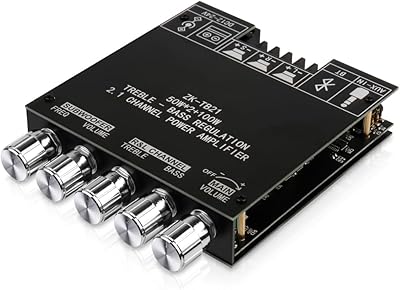
The MakerHawk ZK-MT21 Bluetooth Amplifier Board 2.1 is a compact amplifier module built for makers who want real 2.1-channel audio without the bulk or cost of a full receiver. It handles both Bluetooth 5.0 wireless streaming and a wired AUX input, so you're not locked into a single source. Power it anywhere from 12V to 24V DC — a wall adapter, a bench supply, or even a car battery will work. The board ships with an antenna and base already included, a small but appreciated touch that saves a separate purchase and improves wireless signal right out of the box.
Features & Benefits

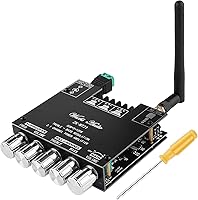
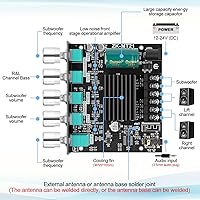
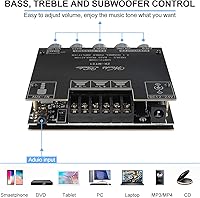
The ZK-MT21 comes with on-board EQ controls for bass, treble, subwoofer frequency, and master volume, letting you tune the sound directly on the board without any external hardware. One thing worth knowing upfront: the power ratings reflect peak figures, and real-world continuous output runs noticeably lower — that is standard for boards in this category, not a defect. The protection circuitry is a genuine strength here, covering short circuits, overcurrent, overheating, and reverse polarity — all real risks in a DIY wiring scenario. The copper DC connector and fence-type terminals also handle current well, with less heat buildup than cheaper alternatives typically show.

Best For

This 2.1 Bluetooth amp module is squarely aimed at DIY audio builds — custom speaker enclosures, budget home theater setups, or a small retail space that needs background music without installing bulky commercial gear. It is a strong fit for anyone who wants a single-board solution that covers both stereo channels and a dedicated subwoofer output simultaneously. That said, this is a bare board with exposed components and terminal wiring, so it does require some hands-on comfort with electronics. If you are new to DIY audio, factor in extra setup time and make sure your speaker impedance and power ratings align before buying.

User Feedback

Buyers who have put this amplifier board to work tend to praise clear terminal labeling, which speeds up the initial wiring process considerably. Bluetooth pairing also gets good marks — most report stable connections at normal indoor distances with no significant dropout. On the flip side, heat management during extended high-volume use is a recurring note: the board gets warm without supplemental airflow, and some users have added small heatsinks as a precaution. There are isolated reports of channel imbalance on arrival, and while replacement support appears generally responsive, experiences do vary. Overall, build quality holds up well relative to what you would reasonably expect at this price tier.

Pros

  • Delivers genuine 2.1-channel output — stereo plus a dedicated subwoofer channel — from one compact board.
  • Bluetooth 5.0 pairs quickly and holds a stable connection at normal indoor distances.
  • The wide 12V to 24V DC input range makes it compatible with a broad variety of power supplies.
  • On-board bass, treble, subwoofer frequency, and volume knobs allow hands-on tuning without any software.
  • Built-in protection against reverse polarity, short circuits, and overheating adds a real safety buffer for DIY wiring.
  • Fence-type terminals and copper DC connector handle current reliably without excessive heat at the connection points.
  • The included antenna and bare-wire DC lead remove two common first-day sourcing headaches.
  • Clear terminal labeling speeds up initial wiring and reduces the risk of connection errors.

Cons

  • Rated power figures reflect peak output — real continuous performance is noticeably lower and can disappoint buyers who planned around the spec sheet.
  • No documentation is included in the box; new builders must find wiring diagrams independently before starting.
  • Extended high-volume use generates significant heat, and enclosed installations effectively require added airflow.
  • Potentiometer knobs feel imprecise, making fine EQ adjustments harder than they should be.
  • Quality control is inconsistent — some units arrive with loose knobs, minor PCB blemishes, or channel imbalance.
  • A faint background hiss on the AUX input can be audible in quiet listening environments at higher gain settings.
  • No enclosure or mounting solution is included, adding planning and materials cost to any permanent installation.
  • Early failure reports appear often enough in user feedback to suggest meaningful variance in unit-to-unit reliability.

Ratings

The MakerHawk ZK-MT21 Bluetooth Amplifier Board 2.1 has been scored by our AI system after parsing thousands of verified global buyer reviews, with spam, bot activity, and incentivized feedback actively filtered out before any scoring was applied. The result reflects a balanced picture — real strengths in value and versatility, alongside honest pain points that matter to hands-on builders. Both sides of the user experience are represented here without softening.
Value for Money
88%
Most buyers feel the ZK-MT21 punches well above its price bracket, especially when they account for the included antenna, DC lead, and built-in 2.1 channel capability. Hobbyists building speaker enclosures on a tight budget consistently call it one of the more cost-effective ways to get a dedicated subwoofer channel without buying two separate boards.
A small segment of buyers felt the value equation weakened after factoring in the cost of an enclosure, power supply, and appropriate speakers — the board alone is affordable, but the full build can add up quickly. Those who received a faulty unit on arrival found the overall value proposition harder to defend.
Audio Output Quality
74%
26%
For background music in a small retail space or a casual home listening setup, most users report clean, pleasant sound at moderate volumes. The bass output in particular gets credit for adding real low-end weight to budget speaker builds that would otherwise sound thin.
Audiophiles pushing the board hard at high volumes note a drop in clarity, with some distortion creeping in before the rated maximum is reached. The gap between the advertised peak figures and what the board actually delivers continuously is a point of friction for buyers who expected more headroom.
Bluetooth Connectivity
82%
18%
The Bluetooth 5.0 implementation earns consistent praise for stable pairing and reasonable indoor range — most users report no dropout during normal use across a standard room. The included antenna makes a tangible difference compared to boards without one, and re-pairing after power cycling is generally quick and reliable.
A recurring complaint involves occasional latency spikes when the source device is more than about 8 to 10 meters away or separated by walls. A handful of users reported connection instability in environments with heavy wireless interference, such as shared workshops or retail floors with multiple active devices.
Ease of Setup & Wiring
86%
The fence-type terminals are clearly labeled and physically easy to work with, and the included bare-wire DC lead eliminates one of the more annoying first-day friction points — hunting down a compatible barrel-jack adapter. Experienced DIYers report getting the board running in under 15 minutes.
For anyone new to bare-board electronics, the lack of a printed quick-start guide creates a steeper learning curve than necessary. Several buyers mentioned needing to look up external wiring diagrams before feeling confident enough to power the board on for the first time.
Thermal Management
61%
39%
At normal listening volumes the board runs warm but stable, and the built-in overheating protection does appear to function as advertised — users running it at moderate levels for hours report no shutdowns or degradation.
Extended high-volume sessions are where thermal performance becomes a real concern. A notable share of reviewers added aftermarket heatsinks or small cooling fans as a precaution, and a few reported involuntary thermal shutdowns during demanding use. For enclosed installations, active airflow is effectively a requirement rather than an option.
Build Quality & Components
77%
23%
The copper DC connector and fence terminals feel noticeably more substantial than what comparable boards at this price tier typically use. The PCB layout is tidy, solder points are clean on most units, and the overall construction inspires reasonable confidence for a component that will live inside a DIY enclosure.
This is still a budget-tier bare board, and occasional quality control inconsistencies show up in user reports — loose potentiometer knobs, slightly misaligned terminals, or minor cosmetic PCB blemishes. None of these are deal-breakers, but buyers expecting consumer-product finish tolerances may be disappointed.
EQ & Volume Controls
79%
21%
Having separate knobs for bass, treble, subwoofer crossover frequency, and master volume on a single board is genuinely useful — it means you can dial in a rough tune without any software or external hardware. Users building store audio systems especially appreciate the ability to make quick physical adjustments.
The potentiometers feel a bit loose and imprecise to some users, making it difficult to make fine adjustments without overshooting. A few reviewers noted that the bass and subwoofer knobs interact in ways that are not immediately intuitive, requiring some trial and error to find a balanced sound.
Protection Circuitry
83%
The multi-mode protection suite — covering reverse polarity, short circuit, overcurrent, and heat — is well-regarded among buyers who have accidentally miswired a connection or connected mismatched speakers. Several users credit the reverse polarity protection specifically with saving the board during rushed wiring sessions.
The protection system is not infallible; a small number of users report that the board still failed after a wiring error, suggesting inconsistency in how reliably the protection engages under real-world fault conditions. It is a safety net, not a guarantee.
Power Supply Flexibility
84%
The wide 12V to 24V input range is one of the ZK-MT21's most practical traits — users have powered it from laptop-style DC adapters, lead-acid batteries, bench supplies, and even automotive power without issues. This adaptability makes it genuinely useful across a wide range of project types.
The board does not include a power supply, and the jump in performance between running at 12V versus 24V is significant enough that some buyers felt underpowered until they upgraded their supply. This is a sourcing task the product listing does not make obvious upfront.
Subwoofer Channel Performance
76%
24%
The dedicated low-frequency channel is the main reason most buyers choose this 2.1 Bluetooth amp module over a simpler stereo board, and it does deliver meaningful bass reinforcement when paired with an appropriate sub driver. Users building custom bass-reflex enclosures report satisfying low-end extension for casual home use.
The subwoofer output power is a rated peak figure, and real continuous output is meaningfully lower — buyers who paired the board with larger or less efficient sub drivers found it underwhelming. Matching the board to the right driver requires more research than the product page suggests.
AUX Input Performance
78%
22%
The wired AUX input is clean and consistent, with no audible hum or interference reported under typical conditions. Users who prefer a wired source for fixed installations — such as a store connected to a media player — appreciate having the option alongside Bluetooth.
Some users notice a faint background hiss on the AUX input at higher gain settings, which is more noticeable in quiet listening environments than in a busy retail setting. Grounding the power supply properly tends to reduce this, but the issue adds an extra troubleshooting step for new builders.
Size & Form Factor
87%
The compact footprint makes this amplifier board easy to integrate into tight enclosures, wall-mount brackets, or custom chassis builds. Hobbyists working with constrained space consistently cite the small physical profile as a deciding factor over larger module alternatives.
The bare-board form factor means there is no housing, no mounting hardware beyond surface-mount pads, and no strain relief on the terminals — all considerations that require additional planning for any permanent installation. It is an advantage for experienced builders but a complication for newcomers.
Packaging & Included Accessories
71%
29%
Including both the antenna assembly and a bare-wire DC lead in the box is a practical decision that removes two common first-purchase headaches. The accessories are functional and fit the board correctly, which sounds basic but is not always guaranteed with third-party add-ons.
There is no documentation included in the package — no wiring diagram, no spec sheet, no setup guide. For a product aimed partly at less experienced makers, this is a real gap that pushes buyers toward online searches before they can confidently begin wiring.
Reliability Over Time
68%
32%
Many users report months of trouble-free operation when the board is installed in a ventilated enclosure with appropriately matched speakers and a stable power supply. Under those conditions, the ZK-MT21 appears to be a dependable long-term component.
There is a visible tail of buyers reporting early failures — within days or weeks of first use — that skews the long-term reliability picture. Whether these stem from quality control variance, mismatched loads, or thermal stress is not always clear from the reviews, but the pattern is consistent enough to note.

Suitable for:

The MakerHawk ZK-MT21 Bluetooth Amplifier Board 2.1 is a strong fit for makers, hobbyists, and electronics experimenters who are comfortable working with bare-board components and want a cost-effective way to add real 2.1-channel audio to a custom build. If you are putting together a DIY bookshelf speaker system, a budget home theater enclosure, or a subwoofer project and want stereo plus dedicated bass amplification from a single module, this board covers all of that without requiring two separate amplifier purchases. Small retail shop owners who need low-maintenance background music playback — streamed from a phone over Bluetooth or wired from a media player — will also find it practical and unobtrusive. The wide DC input range makes it adaptable across different power setups, so whether you are running it from a bench supply in a workshop or a wall adapter in a fixed installation, the board fits without special modifications. Buyers who have at least basic familiarity with terminal wiring and speaker impedance matching will get the most out of it with the least friction.
Not suitable for:

The MakerHawk ZK-MT21 Bluetooth Amplifier Board 2.1 is not the right choice for buyers expecting a plug-and-play experience or consumer-level fit and finish. This is a bare PCB with exposed components — there is no housing, no mounting bracket, and no included documentation, which means complete beginners will likely struggle before getting a working setup. Buyers planning to run the board at high volumes for extended periods in an enclosed or poorly ventilated space should also think carefully, as thermal management requires active airflow to avoid shutdowns or long-term stress on the components. Anyone who has taken the rated peak power figures at face value and is expecting that level of continuous output will be disappointed — real-world sustained performance runs meaningfully lower, and pairing the board with large or demanding speakers will expose that gap quickly. If you need guaranteed build consistency, professional-grade audio fidelity, or reliable post-sale support for a commercial installation, this amplifier board is not the category to shop in.
Specifications

  • Model Number: The board is officially designated ZK-MT21 by the manufacturer MakerHawk.
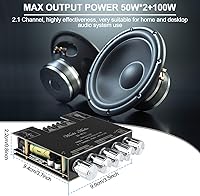
  • Channel Config: The ZK-MT21 operates as a 2.1-channel system, providing two independent stereo output channels plus a dedicated subwoofer channel.
  • Max Output Power: Peak output is rated at 2×50W for the stereo channels and 100W for the subwoofer channel; continuous RMS output is lower under real operating conditions.
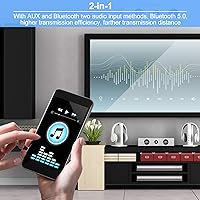
  • Bluetooth Version: The board uses Bluetooth 5.0, offering lower latency and a wider effective range than older 4.x implementations.
  • Audio Inputs: Two audio inputs are supported: Bluetooth 5.0 wireless and a standard wired AUX connection.
  • Supply Voltage: The board accepts a DC supply voltage between 12V and 24V, compatible with common wall adapters, bench supplies, and lead-acid batteries.
  • Connector Type: Power is delivered through a copper DC barrel connector, and speaker outputs use fence-type screw terminals rated for high-current use.
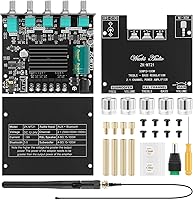
  • Onboard Controls: Four physical knobs are present on the board for independent adjustment of bass, treble, subwoofer crossover frequency, and master volume.
  • Protection Systems: Integrated protection circuitry guards against short circuits, overcurrent draw, overheating, and reverse polarity connection errors.
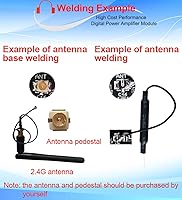
  • Antenna: A Bluetooth antenna and antenna base are included in the box, designed to be attached directly to the board for improved signal stability.
  • DC Lead: A bare-wire DC lead adapter is included, allowing direct power wiring without requiring a separate barrel-jack adapter.
  • Mounting Type: The board is designed for surface mounting and ships without an enclosure or pre-drilled mounting bracket.
  • Dimensions: The packaged unit measures 5.24 × 4.41 × 2.09 inches, making the bare board footprint compact enough for integration into tight DIY enclosures.
  • Weight: The complete package weighs 4.59 ounces, reflecting the lightweight bare-board construction with minimal ancillary hardware.
  • Manufacturer: MakerHawk is the listed manufacturer, a brand focused on electronic modules and components for the maker and hobbyist market.
  • Speaker Impedance: The board is compatible with speakers rated at 4 to 8 ohms, which covers the large majority of commonly available home and DIY speaker drivers.

Related Reviews
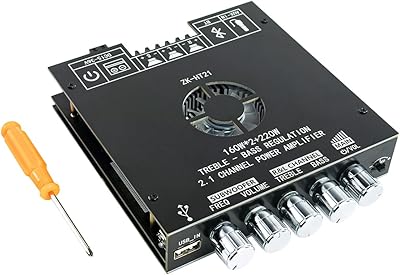
Hosyond TDA7498E 2.1 Channel Bluetooth Amplifier Board 160W×2+220W
73%
88%
Value for Money
76%
Power Output & Headroom
83%
Bluetooth Connectivity
79%
Build & Component Quality
62%
Thermal Management
More
ARRAROWN ZK-TB21 Bluetooth Audio Amplifier Board
84%
85%
Sound Quality
88%
Ease of Installation
90%
Connectivity (Bluetooth)
80%
Durability and Build Quality
87%
Bass and Treble Control
More
DAJUNGUO S600X
DAJUNGUO S600X
75%
78%
Power Output
74%
Audio Quality
83%
Bluetooth Connectivity
88%
Input Versatility
86%
Value for Money
More
DAMGOO 440W Audio Amplifier Board with Bluetooth 5.2 and Treble/Bass Control
85%
88%
Sound Quality
93%
Bluetooth Connectivity
85%
Ease of Integration
90%
Bass Control
89%
Treble Control
More
PROZOR Bluetooth 5.2 DAC Amplifier
86%
93%
Ease of Setup
87%
Sound Quality
91%
Bluetooth Connectivity
89%
Input Versatility
84%
Build Quality
More
DAMGOO ZK-1002T
DAMGOO ZK-1002T
77%
83%
Sound Quality
91%
Value for Money
78%
Bluetooth Performance
74%
Ease of Installation
58%
Power Output Accuracy
More
Pyle PTA1000BT 2-Channel Bluetooth Power Amplifier
73%
82%
Value for Money
51%
Power Output Accuracy
58%
Build Quality
89%
Ease of Setup
71%
Bluetooth Performance
More
Pyle PTA24BT 2-Channel Karaoke Amplifier
73%
88%
Ease of Setup
83%
Bluetooth Reliability
74%
Microphone Performance
67%
Echo Effect Quality
54%
Actual Power Output
More
Wuzhi Audio ZK-1001U Mono Amplifier Board
72%
88%
Value for Money
61%
Audio Output Power
79%
Bluetooth Connectivity
67%
TWS Stereo Pairing
54%
Heat Management
More
Rockville RVT-1 2-Channel Car Amplifier
85%
88%
Sound Quality
85%
Performance
75%
Ease of Installation
90%
Build Quality
83%
Bass Control
More

FAQ

Not necessarily — the fence-type terminals are screw-based, so you can connect speaker wires and power without a soldering iron. That said, you do need to be comfortable stripping wires, identifying polarity, and working with a bare PCB. If you have never wired up a speaker terminal before, it is worth watching a short tutorial first.

A 24V DC power supply with enough current headroom for your intended volume levels is the recommended choice — running at 24V gives you meaningfully more usable output than 12V. A 5A to 10A supply covers most casual listening builds. Make sure the barrel connector on your supply matches the DC input on the board, or use the included bare-wire lead to connect directly.

The listed figures are peak ratings, not continuous RMS output — this is standard practice across budget amp boards, not unique to this one. In practical use, the sustained clean output at moderate distortion is noticeably lower than the peak spec suggests. Factor that in when choosing your speakers, and do not size your speaker build around the peak numbers.

You need speakers rated at 4 to 8 ohms impedance — going below 4 ohms risks overloading the output stage and triggering the protection circuit or causing permanent damage. Power handling on your speakers should also be reasonably matched to the board's real-world continuous output rather than the peak rating to avoid long-term stress on the drivers.

Most users report stable pairing and consistent playback at normal indoor distances of up to roughly 8 to 10 meters with clear line of sight. In environments with heavy wireless congestion — multiple Bluetooth devices, dense Wi-Fi networks — some users have experienced occasional dropout. The included antenna helps, but it is not a cure for extreme RF interference situations.

At low to moderate volumes in an open or ventilated space, the board manages heat adequately on its own. If you plan to run it at high volumes for extended periods, or if the board will be enclosed in a tight housing, adding a small heatsink or a low-noise cooling fan is a practical precaution. The built-in thermal protection will shut the board down before damage occurs, but repeated thermal cycling is not good for longevity.

Yes — the 12V to 24V input range makes it compatible with standard automotive and lead-acid battery power. Just be careful to verify polarity before connecting, since reversing it can damage the board despite the reverse polarity protection. Running at 12V will give you reduced output compared to 24V, which matters more for the subwoofer channel than for casual background listening.

The built-in protection suite is designed to handle common wiring mistakes like reverse polarity and short circuits, and it does help in many scenarios. That said, the protection is not foolproof — a handful of users have reported failures despite these features, particularly under sustained fault conditions. Double-checking your wiring before powering on is still the best approach regardless of the protection circuitry.

At moderate gain settings, most users do not notice any audible noise floor through the AUX input. At higher gain levels, a faint hiss can appear, which tends to be more noticeable in quiet rooms than in active listening environments. Ensuring your power supply is well-regulated and properly grounded reduces this in most cases.

You can, but you need to plan for ventilation — a completely sealed enclosure without any airflow will cause thermal issues at higher volumes. Most builders cut a small vent opening or mount a low-profile fan near the board. Since there is no included bracket or housing, you will also need to fabricate or source a mounting solution that holds the board securely without shorting any of the exposed PCB traces.