Overview

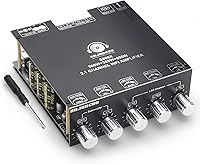
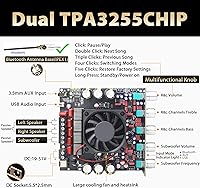
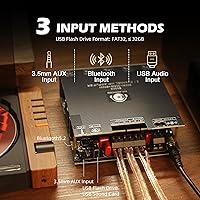
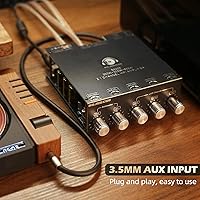
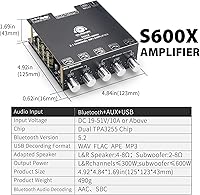
The DAJUNGUO S600X is a compact 2.1 channel amplifier board built for DIY audio enthusiasts who want serious output without a serious price tag. Running on dual TPA3255 chips, it operates as a high-efficiency Class D design — capable of real power when paired with the right supply. The board handles a wide DC input range of 19–51V, giving builders flexibility in choosing a power source. Throw in Bluetooth 5.2, AUX, USB flash drive, and USB sound card support, and this amp board covers most connection scenarios a hobbyist could realistically need.

Features & Benefits

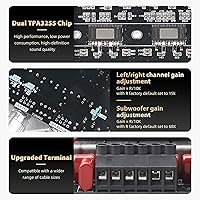
The power figures — peak output of 300W per stereo channel and 600W for the sub — are maximums, not continuous RMS ratings, so calibrate your expectations accordingly. That said, the dual TPA3255 chips genuinely deliver when given adequate voltage and current. The gold-plated DC socket is a thoughtful touch, reducing the sparking that can occur when connecting power supplies. Built-in protection circuits cover over-heat, over-current, short-circuit, and reverse-polarity scenarios, giving less experienced builders a useful safety net. The combined heatsink and fan cooling keeps the board running stably even during extended, high-volume sessions.

Best For

This 2.1 channel amplifier suits DIY cabinet builders who want to drop a capable amp into a custom enclosure without sourcing separate stereo and subwoofer amplifiers. It also fits well in compact desktop or home theater setups where a dedicated subwoofer channel is needed. The USB flash drive input adds a practical bonus — you can play audio directly from the board without any connected device. Anyone upgrading a pair of passive speakers on a tighter budget, and who wants Bluetooth built in from the start, will find this amp board worth serious consideration.

User Feedback

Sitting at 4.1 out of 5 across nearly 100 reviews, the S600X board has a generally positive track record. Buyers frequently praise the output-to-size ratio and note that audio quality holds up well at moderate volumes. The criticism worth taking seriously: documentation is thin, and first-time builders may find setup confusing without prior experience. Fan noise under heavy load is a recurring mention — it is not whisper-quiet when pushed hard. Critically, the power supply is not included, and underpowering this board is the most common reason buyers do not get the performance they expected.

Pros

  • Dual TPA3255 chips deliver genuine headroom for both stereo and subwoofer channels in a single compact board.
  • Bluetooth 5.2 pairs quickly and holds a stable connection across a room without dropouts.
  • Wide 19–51V DC input range lets builders repurpose compatible power supplies they already own.
  • The S600X board packs AUX, Bluetooth, USB flash drive, and USB sound card inputs — rare versatility at this tier.
  • USB flash drive playback is genuinely handy for workshop or garage setups where no phone or laptop is nearby.
  • Gold-plated DC socket reduces connection arcing, a small but meaningful quality-of-life improvement over cheaper boards.
  • Built-in short-circuit, over-heat, and reverse-polarity protection gives first-time builders a useful safety margin.
  • At roughly six inches across and just over a pound, this amp board fits into tight custom enclosures with ease.
  • Strong real-world user ratings across nearly 100 verified reviews signal consistent satisfaction with core performance.

Cons

  • Power supply is not included, and a quality high-current adapter meaningfully raises the total project cost.
  • Advertised wattage figures are peak ratings, not RMS — continuous output is significantly lower in real use.
  • Fan noise under sustained high-volume load is noticeable and can be distracting in quiet listening environments.
  • Subwoofer crossover point is fixed on the board, offering no adjustment for different driver characteristics.
  • Setup documentation is thin and leaves first-time builders without clear guidance on wiring or fault diagnosis.
  • No confirmation of aptX or LDAC support limits wireless audio fidelity for high-resolution source files.
  • The board does not reliably remember the last paired Bluetooth device after a full power cycle.
  • USB flash drive compatibility is inconsistent — only FAT32 formatted drives work reliably across all tested scenarios.
  • Long-term durability at sustained high-power loads remains unproven given the board has limited market history.

Ratings

The DAJUNGUO S600X has been evaluated by our AI rating system after analyzing verified buyer reviews from global marketplaces, with spam, bot-generated, and incentivized feedback actively filtered out. The result is an honest scorecard that reflects both what this amp board genuinely delivers and where it falls short for real-world users. Strengths and pain points are weighted equally so you can make an informed call before buying.

Power Output
78%
22%
For a board this size, the dual TPA3255 chip configuration pushes impressive peak figures — users building desktop subwoofer setups regularly report the low-end punch exceeds what they expected at this price tier. When fed a proper power supply, headroom is noticeable.
The advertised 300W+300W+600W figures are peak values, not RMS, and buyers who missed that distinction felt misled after comparing to other amps. Real-world continuous output is meaningfully lower, which matters if you are sizing speakers for a dedicated listening room.
Audio Quality
74%
26%
At moderate listening volumes, clarity across the stereo channels is solid for a Class D design at this price point. Users building bookshelf enclosures noted clean reproduction without obvious distortion or muddiness in the midrange.
At higher volumes, some buyers detected a slight harshness creeping into the highs — a known characteristic of budget Class D implementations. The subwoofer channel, while punchy, lacks the tightness audiophiles would want from a precision build.
Bluetooth Connectivity
83%
Bluetooth 5.2 delivers a noticeably stable connection compared to older 4.x implementations. Users streaming from phones across a room reported minimal dropouts, and initial pairing was quick enough that even less technical buyers found it straightforward.
There is no aptX or LDAC codec support confirmed, which limits wireless audio fidelity for listeners using high-resolution source files. A few users also noted that the board does not remember the last paired device after a full power cycle.
Input Versatility
88%
Having AUX, Bluetooth, USB flash drive, and USB sound card inputs on one board is genuinely practical. The USB flash drive option is particularly useful for garage or workshop setups where you want music playing without leaving a phone or laptop connected.
Input switching is not automatic — users must manually select the source, which can be mildly inconvenient when toggling between a TV and a phone. No optical or coaxial digital input is available, which rules this out for some home theater configurations.
Value for Money
86%
The combination of dual TPA3255 chips, 2.1 channel output, and multi-input support at this price is hard to replicate with separately sourced components. DIY builders consistently cite this as one of the more cost-efficient boards available for passive speaker projects.
The power supply is not included, and a quality 36V 8A adapter adds meaningful cost to the total. Factor that in before assuming the board price reflects your full project budget — some buyers felt the all-in cost was less competitive than the listing implied.
Build & Component Quality
71%
29%
The gold-plated DC socket is a standout detail — it reduces the arcing that cheaper boards often produce during power connection, and it signals that at least some component selection was deliberate. The PCB layout looks clean for the price tier.
The overall chassis feel is functional rather than refined. A few buyers noted that the board feels lightweight in a way that raises long-term durability questions, particularly for installations where vibration from subwoofers could stress solder joints over time.
Thermal Management
69%
31%
The combination of a large passive heatsink and an active fan keeps the board from throttling during extended high-volume use. Users running the board for hours in warm enclosures reported no unexpected shutdowns thanks to the onboard thermal protection.
The fan is audible under sustained load — not disruptively loud, but noticeable in a quiet room. For desktop setups where the amp sits close to the listener, fan noise during demanding passages can become a real distraction that passive cooling alone cannot solve.
Protection Circuitry
82%
18%
Short-circuit, over-current, over-heat, and reverse-polarity protection give less experienced builders a meaningful safety net. Users who accidentally wired speakers incorrectly during initial setup appreciated that the board survived the mistake without damage.
When a protection event trips, the board does not always give clear feedback on what caused it. Users reported frustration diagnosing whether a shutdown was thermal, current-related, or a wiring issue, especially without more detailed documentation to guide troubleshooting.
Setup & Documentation
52%
48%
The physical connections are logically laid out, and experienced builders will have the board running within minutes. Terminal labeling is adequate for anyone who has assembled an amplifier project before and knows what they are looking for.
For first-time builders, the included documentation is genuinely thin. Multiple buyers specifically flagged that the manual does not adequately explain power supply requirements, subwoofer wiring configurations, or what to do when the board enters a protection state.
Connectivity Reliability
76%
24%
Wired connections via AUX remain stable without interference or channel imbalance under normal use. The upgraded DC socket design specifically addresses the arcing issue common on cheaper boards, making power connection more reliable day to day.
A handful of users reported intermittent USB flash drive recognition issues depending on the drive format and capacity. FAT32 drives worked consistently, but exFAT or NTFS formatted drives caused playback failures that required reformatting to resolve.
Compact Footprint
85%
At just over six inches across and weighing barely over a pound, this amp board fits into tight custom enclosures where a full chassis amplifier simply would not. Cabinet builders working with constrained internal dimensions consistently highlight this as a key advantage.
The compact size does create some installation challenges — terminal spacing is tight, and running heavier gauge speaker wire can be awkward in confined builds. Users working with 12 AWG or thicker wire noted the terminals required extra effort to secure properly.
Subwoofer Channel Performance
73%
27%
The dedicated 600W peak subwoofer channel gives this board real versatility for 2.1 builds. Desktop users pairing it with a ported subwoofer cabinet described noticeably improved bass impact compared to running a stereo-only amp with a passive crossover.
The internal crossover point and slope are not user-adjustable on the board itself, which limits fine-tuning for different subwoofer driver characteristics. Builders with specific crossover requirements may find this inflexibility frustrating compared to external DSP solutions.
Power Supply Compatibility
67%
33%
The wide 19–51V DC input range is genuinely flexible — users have successfully run this board on repurposed laptop bricks, server PSUs, and dedicated audio power supplies without issues. That headroom makes sourcing a compatible supply relatively straightforward.
The board ships with no power supply, and achieving anything close to rated output demands a high-current supply in the 36V 8A range minimum. Buyers who grabbed a cheaper or underpowered adapter were disappointed by the output and incorrectly blamed the board.
Long-Term Reliability
63%
37%
The onboard protection stack reduces the likelihood of catastrophic failure from common wiring mistakes. Early adopters who have been running the board for several months in home audio builds have not widely reported component failures or degradation in output quality.
With a relatively short market history and limited long-term user data, durability over years of continuous use remains an open question. The lightweight construction and budget component tier mean real-world longevity at sustained high-power loads is genuinely unproven.

Suitable for:

The DAJUNGUO S600X is a strong match for DIY audio enthusiasts who enjoy building their own speaker cabinets and want a single board that handles both stereo and subwoofer channels without sourcing separate amplifiers. If you are putting together a desktop 2.1 system, a garage workshop speaker build, or a budget home theater setup around passive drivers, this amp board fits that brief well. The wide DC input range means you can often repurpose a power supply you already own, which keeps total project costs down. Bluetooth 5.2 makes it genuinely convenient for casual listening — stream from your phone, switch to AUX for the TV, or plug in a USB drive for standalone playback without any connected device. Hobbyists who have done at least one amplifier project before will find the setup manageable, and the built-in protection circuitry gives newer builders a reasonable safety net against basic wiring errors.

Not suitable for:

The DAJUNGUO S600X is not the right choice for buyers expecting plug-and-play simplicity straight out of the box. There is no included power supply, and sourcing an adequate one — typically a 36V 8A unit at minimum — adds real cost and effort that some buyers do not anticipate. If you are sensitive to fan noise, be aware that the active cooling becomes audible under sustained high-volume loads, which can be distracting in a quiet listening room or bedroom setup. Audiophiles chasing precise, adjustable crossover control for their subwoofer will also find this board limiting, since the crossover point is fixed and not user-configurable. Anyone who needs optical or digital audio inputs, or who wants to confirm aptX or LDAC Bluetooth codec support for high-resolution wireless streaming, should look elsewhere. Finally, buyers with no prior experience in amplifier wiring or electronics should approach this board cautiously — the documentation is thin, and the learning curve is real.

Specifications

  • Amplifier Chips: The board uses two TPA3255 Class D chips operating in tandem to drive the 2.1 channel output configuration.
  • Channel Config: The board is configured as 2.1 channels, providing two stereo outputs and one dedicated subwoofer output channel.
  • Peak Power Output: Peak power output is rated at 300W per stereo channel and 600W for the subwoofer channel — these are peak, not continuous RMS figures.
  • Input Voltage: The board accepts a wide DC input range of 19V to 51V, allowing compatibility with a variety of third-party power supplies.
  • DC Socket: The power input uses a gold-plated 5.5×2.5mm DC barrel socket designed to minimize arcing during connection and disconnection.
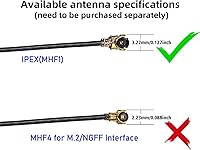
  • Bluetooth Version: Bluetooth 5.2 is integrated, providing stable wireless audio streaming with lower latency than older Bluetooth generations.
  • Input Methods: The board supports four input methods: Bluetooth 5.2, analog AUX, USB flash drive, and USB sound card.
  • USB Compatibility: USB flash drive playback works reliably with FAT32 formatted drives; compatibility with exFAT or NTFS formatted drives is not guaranteed.
  • Cooling System: Thermal management is handled by a combination of a large passive heatsink and an active fan that engages under sustained load.
  • Protection Features: The board includes short-circuit, over-current, over-heat, and reverse-polarity protection, with fault reporting to the onboard processor.
  • Dimensions: The board measures 6.54 × 6.26 × 2.13 inches, making it compact enough to fit into custom-built speaker enclosures with moderate internal space.
  • Weight: The assembled board weighs 1.09 pounds, keeping the overall footprint light for integration into DIY cabinet or rack builds.
  • Manufacturer: The S600X is manufactured by DAJUNGUO, a Chinese audio electronics brand focused on amplifier boards and related components.
  • Model Number: The official model designation for this board is S600X, as labeled by the manufacturer on the unit and packaging.
  • Power Supply: No power supply is included in the package; a separate DC power supply capable of at least 36V at 8A is recommended for full performance.
  • Mounting Type: The board is designed for surface mount installation, suitable for embedding inside enclosures or mounting to flat surfaces within a build.
  • Release Date: This board first became available for purchase in December 2024, making it a relatively recent release with limited long-term field data.
  • ASIN: The Amazon Standard Identification Number for this product is B0DPZ3RRVB, which can be used to locate the listing directly.

Related Reviews
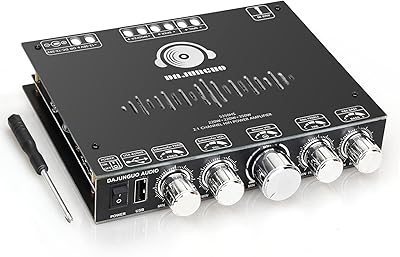
DAJUNGUO S350HS
DAJUNGUO S350HS
77%
88%
Value for Money
81%
Audio Output Power
74%
Sound Quality
71%
Bluetooth Connectivity
69%
Build Quality
More

FAQ

No, the power supply is sold separately. To get anywhere close to the rated output, you will need a DC supply in the 36V 8A range minimum — something like a 36V 10A adapter is a popular pairing. Factor that cost into your budget before buying.

Those figures are peak power ratings, not continuous RMS output. In real-world listening, the usable continuous power will be noticeably lower. Think of peak ratings as the ceiling the board can momentarily reach under ideal conditions, not what it sustains during normal playback.

It is manageable, but not effortless. The board is straightforward once you understand the basics of amplifier wiring and power supply requirements, but the included documentation is minimal. If you have never wired a speaker system before, plan to spend extra time researching setup guides before you start.

At moderate volumes, the fan is barely noticeable. Under sustained high-volume operation — particularly with the subwoofer channel working hard — it becomes audible. In a quiet room or a desktop setup where the board is close to you, some users find it distracting. If near-silent operation is a priority, this is worth thinking about carefully.

A 36V 8A supply is the minimum practical recommendation, and a 36V 10A or even a 48V 8A supply gives you more headroom and tends to produce cleaner output. Underpowering this board is the single most common reason buyers are disappointed with how it performs.

The TPA3255 chip is rated to handle 4-ohm and 8-ohm speaker loads, so yes, standard 4-ohm passive drivers are compatible. That said, lower impedance loads draw more current, so pairing 4-ohm speakers with this board makes a capable, high-current power supply even more important.

Not reliably. Several users have noted that after a full power cycle, the board does not automatically reconnect to the last paired device and requires re-pairing. It is a minor but genuine inconvenience for setups where you always stream from the same source.

No, the crossover point is fixed internally and cannot be adjusted by the user. If precise crossover control matters for your subwoofer driver, you would need to add an external DSP or active crossover unit in-line, which adds cost and complexity to the build.

FAT32 formatted drives work consistently. Drives formatted as exFAT or NTFS have caused playback failures for a number of users. If you plan to use the USB playback feature, format your drive as FAT32 before loading audio files onto it.

The reverse-polarity and short-circuit protection should prevent damage from common wiring mistakes. The board will detect the fault, report it to the processor, and shut down rather than burn out. That said, protection circuits are a safety net, not a substitute for wiring carefully — always double-check connections before powering on.