Overview

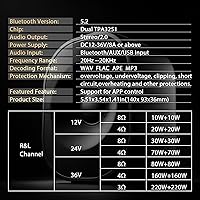
The DAMGOO TPA3251 440W Bluetooth Stereo Amplifier Board is a compact Class D amp board built around two TPA3251 chips, each rated at 220W, aimed squarely at DIY audio builders who want serious power without assembling a circuit from scratch. It accepts DC input anywhere from 12 to 36 volts, which opens it up to everything from a regulated bench supply to a car battery — genuinely useful flexibility for workshop and vehicle builds alike. At its size — just over five and a half inches long and under an inch and a half tall — this amplifier board slots neatly into custom enclosures or repurposed speaker cabinets without much fuss, bridging the gap between entry-level hobby boards and something worth taking seriously.
Features & Benefits

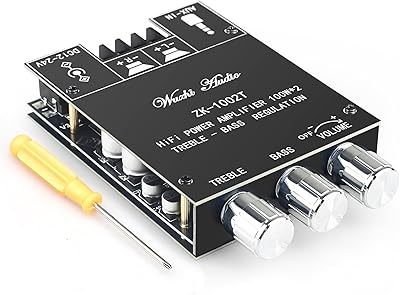
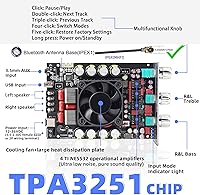
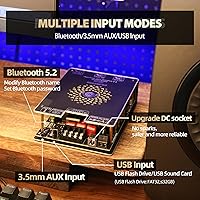
Connectivity is one of the stronger suits on this DIY amp board. Bluetooth 5.2 pairs without a password, which sounds minor but matters when you're showing a build to someone who just wants to hit play. Beyond wireless, you also get AUX, a USB sound card input, and a USB flash drive slot — so you can pull audio from nearly any source without adapters. Three physical knobs handle treble, bass, and volume independently, and the volume knob doubles as a playback controller: press to pause, hold to skip tracks. That convenience saves you from wiring up a separate preamp. The board also carries protection circuitry covering short circuits, voltage swings, overheating, and clipping — genuinely important on a bare board you're fitting inside a wooden box.

Best For

This amplifier board is an especially good match for hobbyists converting passive speakers — bookshelves, old PA cabs, or vintage hi-fi enclosures — into self-powered Bluetooth units. If your goal is a clean, working active speaker without designing around discrete transistors or sourcing op-amps separately, this is a much faster route. Workshop or garage setups benefit as well, since the wide voltage range means you can run it off a 24V bench supply or even a car battery during a mobile build. It also suits anyone who wants tone shaping on-board rather than adding a separate EQ stage. Just keep in mind you will need to source your own DC power supply — it does not ship in the box.

User Feedback

Early impressions from buyers are cautiously positive — the DAMGOO TPA3251 board holds a 4.3-star average, though with only seventeen ratings so far, it would be premature to treat that as a settled verdict. Users mention that Bluetooth pairing is quick and fuss-free, and several note that audio sounds clean and well-balanced at moderate listening volumes. Where expectations need managing is around power output: like most Class D designs, real-world wattage depends heavily on supply voltage and speaker impedance, so don't count on hitting the full rated figure from a modest supply. A practical note that no power adapter is included also surfaces repeatedly — factor that added cost into your build budget before ordering.

Pros

  • Bluetooth 5.2 pairs quickly without any password, making wireless setup genuinely hassle-free.
  • Four input types — Bluetooth, AUX, USB drive, and USB sound card — cover almost any audio source.
  • The 12–36V input range gives builders real flexibility across bench, home, and vehicle power setups.
  • Independent treble and bass knobs eliminate the need for a separate preamp in most DIY builds.
  • The multifunctional volume knob also handles pause and track skipping, which is a genuinely useful convenience.
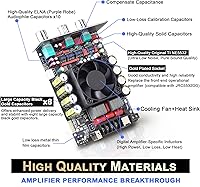
  • Built-in protection circuitry guards against common faults like overheating, clipping, and voltage spikes.
  • The compact footprint fits neatly inside tight custom enclosures without much engineering around it.
  • Lifetime technical support from the manufacturer is a reassuring safety net for first-time builders.
  • Early buyers consistently praise clear, balanced sound at moderate volumes.

Cons

  • No power adapter is included, and sourcing a quality DC supply adds cost and planning time.
  • Rated wattage is an ideal-condition figure; real output will be lower depending on your supply and speaker load.
  • Only 17 reviews exist at time of writing, so long-term reliability data is essentially unavailable.
  • The board ships without an enclosure, meaning extra fabrication work before it is usable in any finished build.
  • Bluetooth range and stability in electrically noisy workshop environments has not been widely tested by users yet.
  • No remote control is included, so physical access to the knobs is required for tone adjustments.
  • USB flash drive playback is a useful feature but offers no screen or display, making track navigation blind.
  • Buyers unfamiliar with Class D amplifier behavior may be surprised or confused by the gap between rated and real power.

Ratings

Our editorial team fed verified purchase reviews for the DAMGOO TPA3251 440W Bluetooth Stereo Amplifier Board through an AI analysis pipeline that actively filters out incentivized, bot-generated, and duplicate submissions, then mapped the genuine signal into the category scores below. With a relatively small early review pool to work from, these ratings reflect the honest balance of what real builders praised and where they ran into friction — no glossing over the rough edges.
Sound Quality
83%
Buyers building bookshelf speaker enclosures consistently describe the output as clean and well-balanced at moderate listening volumes, with no obvious coloration from the amplifier stage itself. The TPA3251 chip has a solid reputation in the DIY community for low distortion at sensible power levels, and that holds up in early user impressions.
At higher volumes — particularly when driven from a lower-voltage supply — some users note a loss of clarity and tighter bass definition. The on-board tone controls help compensate, but the board is not going to satisfy critical listening expectations at or near its power ceiling.
Bluetooth Connectivity
86%
The password-free Bluetooth 5.2 pairing is a genuine convenience that several builders specifically called out, especially when demonstrating a finished speaker build to others who just want to connect and play. Connection speed is quick, and stable performance within a typical room is widely reported.
A handful of users flag that reconnection after power cycling can occasionally require re-pairing on some devices, which becomes mildly frustrating in a workshop environment where the board is switched on and off frequently. Range in electrically noisy spaces has not been stress-tested by enough users to draw firm conclusions.
Power Output (Real-World)
67%
33%
For workshop audio, garage music, or a mid-sized active speaker cabinet, this DIY amp board delivers more than enough volume and punch when paired with an adequate DC supply in the 24–32V range. Users who set expectations correctly report being pleasantly surprised by how loud a well-matched build gets.
The 440W total rating is a peak figure under ideal lab conditions, and real-world output is substantially lower depending on supply voltage and speaker impedance. Buyers who purchased expecting near-rated power from a 12V supply were disappointed, and this misalignment is the most common source of negative feedback.
Value for Money
88%
Relative to what it would cost to source dual TPA3251 chips, supporting components, and a PCB separately, this amplifier board represents a practical shortcut that builders with tight project budgets appreciate. The inclusion of tone controls and multi-source input at this price tier is genuinely competitive.
The omission of a power adapter stings a little at this price point, since a quality 24V supply capable of sustaining the board at higher outputs can add meaningful cost to the total build. Buyers who did not factor this in felt the overall outlay was less attractive than the board price alone suggested.
Ease of Setup
79%
21%
Builders with even modest electronics experience report a straightforward wiring process: connect DC power, attach speaker terminals, select your input, and you are essentially done. The included screwdriver covers the terminal connections, and the instruction sheet is adequate for anyone who has worked with amp boards before.
True beginners with no prior experience wiring speaker components may find the bare-board format intimidating, and the instructions are not detailed enough to hand-hold someone through their very first build. The absence of any enclosure means extra fabrication steps before the board is actually usable.
Input Versatility
91%
Having four discrete input options — Bluetooth, AUX, USB sound card, and USB flash drive — on a board this compact is legitimately uncommon at this tier, and builders consistently praise the flexibility it gives a finished speaker project. Switching between a phone and a laptop without re-wiring is a practical benefit in daily use.
The USB flash drive input works reliably for continuous playback, but the lack of any display makes track navigation clunky. Users who want to browse a large music library from a drive will find the knob-only interface limiting compared to even a basic remote-controlled system.
Tone Controls
82%
18%
Independent hardware treble and bass knobs are something many competing boards skip entirely, forcing builders to add an external preamp stage. Users building into speaker enclosures with particular bass tuning characteristics found these controls genuinely useful for compensating without adding components.
The controls offer broad adjustment rather than fine-tuned parametric shaping, so audiophiles wanting precise EQ curves will still need an external processor. At extreme positions, a small number of users reported mild signal artifacts, though this was not a widespread complaint.
Build Quality (PCB)
76%
24%
The PCB layout is tidy by budget-board standards, and the solder joints on the units reviewed by early buyers appear consistent and solid. The physical knobs feel secure, and the terminal blocks grip wiring without much play.
Component selection around the power stage is functional rather than premium, and the board lacks the heavier copper pours and higher-grade capacitors found on more expensive designs. Long-term durability under sustained high-power use remains an open question given the early stage of the review pool.
Thermal Management
71%
29%
Class D topology keeps heat output inherently lower than Class AB designs, and the onboard thermal protection adds a practical safety layer for builds where the board sits inside a sealed enclosure. Users running the board at moderate volumes in open-air builds report it staying comfortably cool.
There is no heatsink included, and sustained high-volume use in a tight enclosure without active ventilation can trigger the thermal protection cutout. Builders enclosing the board in wood or plastic should plan ventilation into their design rather than relying entirely on the protection circuit.
Protection Circuitry
84%
The multi-mode protection covering short circuits, voltage extremes, clipping, and overheating is a meaningful inclusion on a bare board that will frequently end up inside a wooden speaker cabinet. Early users who accidentally triggered it during wiring tests appreciated that the board recovered cleanly rather than failing permanently.
A few users found the under-voltage protection trips earlier than expected when running from a supply at the lower end of the input range, cutting out at volumes that should theoretically still be within spec. Matching your supply carefully to the load you intend to drive reduces this risk significantly.
Multifunctional Knob
80%
20%
Consolidating volume control, playback pause, and track skipping into a single knob is a smart space-saving decision that builders specifically appreciated when mounting the board in a compact enclosure with limited panel real estate. It works reliably over Bluetooth and removes the need for a separate control board.
Without tactile differentiation between a short press and a long press, users occasionally skipped tracks when they meant to pause, particularly during early use before the press sensitivity became familiar. The knob offers no visual feedback, so control relies entirely on learned muscle memory.
Compact Footprint
89%
At just over five and a half inches long and under an inch and a half tall, this DIY amp board fits into enclosures and project boxes where a full-sized receiver or module would never work. Builders repurposing vintage speaker cabinets frequently cite the small profile as a key reason they chose it.
The compact layout means component spacing is tighter than on larger boards, which can make soldering modifications or adding external connectors fiddly for builders with less precise tools or larger hands.
Manufacturer Support
77%
23%
The offer of lifetime technical support is an unusual commitment for a product at this price tier, and several early buyers confirm that pre-purchase questions were answered promptly and helpfully. For first-time builders who hit a wall mid-project, having a direct line to the manufacturer has real value.
Support quality for complex hardware faults beyond initial setup questions is harder to verify given the limited review volume so far. Responses may also involve language translation friction depending on the buyer’s location, which can slow down troubleshooting on time-sensitive builds.
Documentation & Instructions
62%
38%
The included instruction sheet covers the basic wiring connections and input switching clearly enough for someone who already has a working understanding of amplifier boards. For experienced DIY builders it is a sufficient quick-reference.
The documentation is thin for anyone approaching this as a first electronics project, with no guidance on selecting an appropriate power supply, choosing speaker impedance, or ventilation planning. Beginners will likely need to supplement it with forum research or community tutorials before their build is finished.

Suitable for:

The DAMGOO TPA3251 440W Bluetooth Stereo Amplifier Board is built for the kind of person who has a pair of passive speakers sitting in the garage and a genuine itch to turn them into something active and wireless. It hits a sweet spot for DIY builders who understand basic electronics enough to wire up a speaker and source a power supply, but don't want to spend weeks designing an amplifier stage from scratch. The wide input voltage range — anything from 12 to 36 volts DC — makes it practical for both a tidy bench-powered home build and rougher workshop or vehicle setups running off a car battery or a salvaged laptop brick. Makers who want tone shaping without bolting on a separate preamp will also appreciate having treble and bass controls right on the board. If your goal is a functional, reasonably powerful active speaker that accepts Bluetooth and wired audio from a variety of sources, this DIY amp board delivers a lot of capability for its price tier.
Not suitable for:

Buyers expecting a plug-and-play audio solution should look elsewhere — the DAMGOO TPA3251 440W Bluetooth Stereo Amplifier Board is a bare board, not a finished product, and it requires a separate DC power supply, a suitable enclosure, and at least a basic understanding of how to connect speaker terminals safely. Anyone chasing the full rated wattage from a modest supply will likely be disappointed, since real-world output on Class D designs is highly dependent on the supply voltage and the impedance of the speakers being driven. Audiophiles expecting hi-fi grade signal quality at high listening levels may find the limitations of a budget-tier amplifier chip become apparent under scrutiny. This is also not a suitable pick for anyone who wants a rack-mounted or finished amplifier unit for a living room setup — it is a builder’s component, and it looks like one. Buyers with no appetite for light electrical work or sourcing compatible accessories should choose a more integrated solution.
Specifications

  • Brand: This board is manufactured by DAMGOO under model number T220HS.
  • Amplifier Class: The board operates as a Class D amplifier, which prioritizes high efficiency and low heat output compared to Class A or AB designs.
  • Amplifier Chips: Two Texas Instruments TPA3251 chips are used, one dedicated to each stereo channel.
  • Output Power: Rated output is 220W per channel into an appropriate load, totaling 440W across both channels under ideal conditions.
  • Input Voltage: The board accepts DC power anywhere between 12V and 36V, giving builders flexibility across a wide range of power supplies.
  • Audio Inputs: Four input methods are supported: Bluetooth 5.2, a 3.5mm AUX jack, a USB flash drive slot, and a USB sound card input.
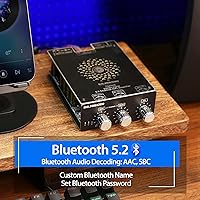
  • Bluetooth: Bluetooth 5.2 is built in with no pairing password required, compatible with smartphones, tablets, and laptops.
  • Channels: The board outputs 2.0 stereo, meaning two independent full-range channels with no dedicated subwoofer output.
  • Tone Controls: Two dedicated physical knobs allow independent adjustment of treble and bass frequencies without software or an external preamp.
  • Volume Knob: The multifunctional volume knob also handles playback control, including pause and track skip, when connected via Bluetooth.
  • Protection: Onboard protection circuitry covers short circuits, over-voltage, under-voltage, overheating, and output clipping events.
  • Dimensions: The board measures 5.51″ long by 3.54″ wide by 1.41″ tall, making it compact enough for tight custom enclosures.
  • Weight: The board weighs 13.12 oz, which is typical for a bare PCB of this output class.
  • Power Adapter: No power adapter is included in the package; buyers must source a compatible DC 12–36V supply independently.
  • Package Contents: The package includes the amplifier board, one small screwdriver, and a printed instruction sheet.
  • After-Sales Support: DAMGOO offers lifetime technical support for this board, covering both pre-sale questions and post-purchase troubleshooting.

Related Reviews

UWAYKEY ZK1002T Bluetooth Stereo Amplifier Board
75%
86%
Value for Money
82%
Bluetooth Performance
58%
Output Power (Real-World)
63%
Build Quality
61%
Heat Management
More
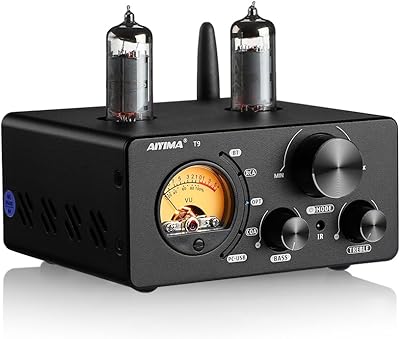
AIYIMA T9
AIYIMA T9
77%
83%
Sound Quality
88%
Value for Money
91%
Connectivity & Input Variety
67%
Bluetooth Performance
74%
Build Quality & Materials
More
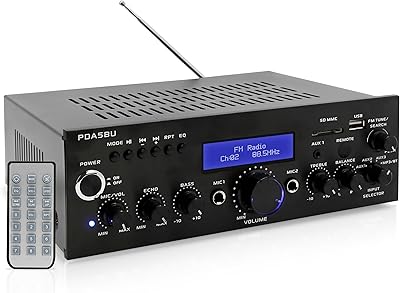
Pyle PDA5BU Bluetooth Stereo Amplifier
72%
83%
Value for Money
88%
Input Versatility
79%
Karaoke Performance
71%
Bluetooth Reliability
46%
Power Output
More
Pyle PDA69BU Stereo Amplifier Receiver
75%
83%
Bluetooth Connectivity
74%
Sound Quality
79%
Build Quality
86%
Value for Money
88%
Input Versatility
More
Moukey MK0153 Karaoke Amplifier
73%
88%
Value for Money
91%
Ease of Setup
72%
Microphone Performance
78%
Bluetooth Connectivity
58%
Audio Output Power
More
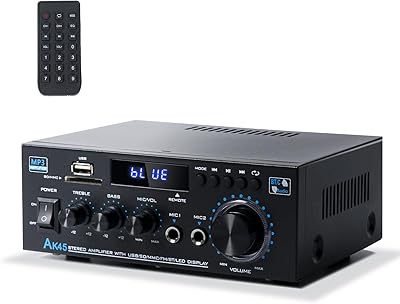
NEOHIPO AK45 Bluetooth Stereo Receiver Amplifier
73%
83%
Value for Money
91%
Ease of Setup
71%
Sound Quality
88%
Input Versatility
67%
Bluetooth Stability
More
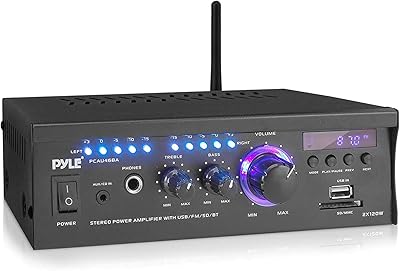
Pyle PCAU46BA Bluetooth Stereo Amplifier
73%
83%
Value for Money
67%
Sound Quality
91%
Ease of Setup
68%
Bluetooth Performance
54%
Build Quality
More
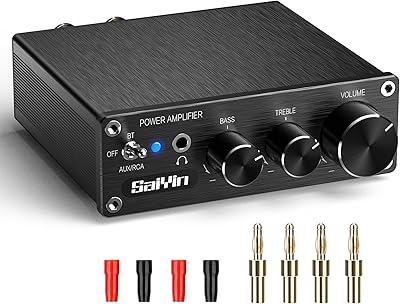
Saiyin PA300H Stereo Bluetooth Power Amplifier
74%
76%
Sound Quality
79%
Bluetooth Performance
58%
Build Quality
83%
Value for Money
91%
Ease of Setup
More
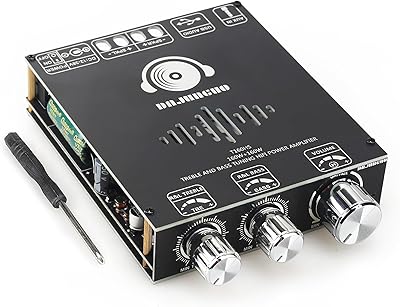
DAMGOO T160HS Stereo Amplifier Board
79%
91%
Value for Money
88%
Ease of Setup
74%
Audio Quality
52%
Power Output Accuracy
78%
Build Quality
More
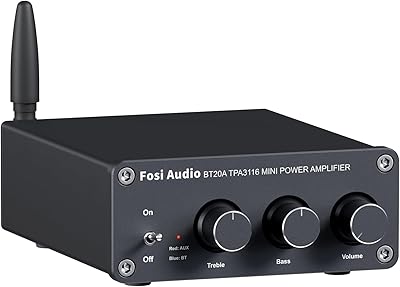
Fosi Audio BT20A
Fosi Audio BT20A
80%
93%
Value for Money
84%
Sound Quality
81%
Build Quality
96%
Ease of Setup
72%
Bluetooth Performance
More

FAQ

No, it does not. You will need to source a DC power supply separately that outputs anywhere between 12V and 36V. For best performance and higher output power, a supply in the 24–32V range at sufficient amperage is generally recommended by the DIY audio community.

The DAMGOO TPA3251 440W Bluetooth Stereo Amplifier Board is rated at 220W per channel, but that figure reflects ideal test conditions. In practice, real-world output depends on your supply voltage, the impedance of your speakers, and how much headroom your power supply can deliver. Running it from a 24V supply into 4-ohm speakers will get you noticeably less than the rated peak, which is normal behavior for any Class D board in this category.
The TPA3251 chip is generally rated to drive 4-ohm and 8-ohm speakers. Four-ohm loads will draw more current and produce higher output, but you will need a power supply capable of sustaining that current without voltage sag. Avoid dropping below 4 ohms, as that can stress the output stage and trigger the protection circuit.

Yes, and it pairs without a password, so there is no code to enter. Just enable Bluetooth on your phone, find the device, and tap to connect. It uses Bluetooth 5.2, so range and connection stability are generally solid compared to older Bluetooth versions.

Yes, the board includes a USB slot that reads audio files from a flash drive. Keep in mind there is no screen or display on the board, so navigating tracks is done using the multifunctional knob rather than browsing a visual list. It works well for continuous playback but is less convenient for quickly jumping between specific tracks.

If you have a basic understanding of speaker wiring and DC power connections, the setup is fairly straightforward. You connect your DC supply to the power terminals, wire your speakers to the output terminals, and choose your audio input. The included screwdriver covers the terminal connections. That said, if you've never worked with bare amplifier boards before, take time to read the instruction sheet carefully and double-check your polarity before powering on.

The board has built-in protection that responds to short circuits, voltage that is too high or too low, overheating, and signal clipping. In most cases it will shut down or reduce output rather than fail hard. That said, protection circuits are a safeguard, not a substitute for correct wiring and an appropriately rated power supply.

Yes, a standard 12V car electrical system falls within the board's input range, though output power at 12V will be significantly lower than at higher voltages. If you are running this in a vehicle, a clean, regulated 12V supply is preferable to connecting directly to a battery without any filtering, since vehicle electrical systems can carry noise and voltage spikes.

No, this is a 2.0 stereo board with two full-range channels. There is no dedicated subwoofer or LFE output. If you want a sub in your build, you would need to add an active crossover or a separate subwoofer amplifier driven from the speaker outputs or a line-level signal.

DAMGOO advertises lifetime technical support, which is an unusually generous promise for a budget-tier component. Early buyers report that the manufacturer is responsive, particularly for setup and configuration questions. For complex hardware faults, your experience may vary, but having a direct contact for technical help is genuinely useful when you are mid-build and stuck.