Overview

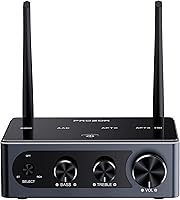
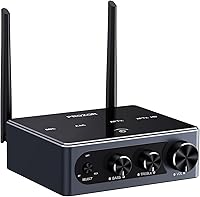
The PROZOR Bluetooth 5.2 DAC Stereo Amplifier is a compact Class D amp that punches above its price tier by combining wireless and wired connectivity in a single, unfussy box. Most budget amps force you to choose — Bluetooth or optical. This one handles both, along with RCA and 3.5mm AUX, without requiring a separate DAC or preamp. The brushed aluminum chassis with its acrylic top panel looks noticeably more considered than the plastic-heavy competition. It won't fool anyone into thinking it's a high-end unit, but it doesn't look cheap sitting on a shelf either. The pitch is simple: plug and play, and it works.
Features & Benefits

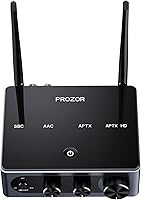
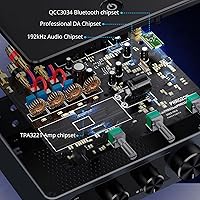
The heart of this compact stereo amp is the Qualcomm QCC3034 chipset, which supports aptX-HD, aptX, AAC, and SBC. What makes this genuinely useful is the real-time codec display — a small LED indicator that shows exactly which format your device negotiated. No guessing whether your phone is actually streaming in HD. The TI TPA3221 Class D chip drives up to 100W per channel into 4Ω loads, though real-world output into 8Ω speakers will be meaningfully lower — keep that in mind if you're pairing standard 8Ω bookshelf speakers. The built-in 192kHz DAC handles optical sources cleanly, and basic bass and treble controls let you nudge the sound without reaching for external gear.

Best For

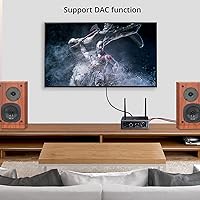
This Bluetooth DAC amplifier is a natural fit for anyone building a simple living room or desktop audio setup around passive bookshelf speakers. If you're constantly switching between your phone, laptop, and TV, the four input options mean you won't be swapping cables every time. It also works well for people with older gear — a turntable or CD player — who want to add wireless streaming capability without replacing everything. What it isn't is a powerhouse for large rooms or demanding speakers. Think near-field listening and modest room sizes. If the idea of configuring a full AV receiver feels like overkill for your needs, this compact stereo amp offers a much simpler path to decent sound.

User Feedback

Buyers consistently highlight how straightforward the setup is — unbox, connect speakers, pair a phone, done. The value-to-price ratio gets frequent praise, especially among first-time passive speaker owners. On the flip side, some users report that Bluetooth occasionally drops during codec negotiation, particularly when switching between devices. A handful of reviews note optical input quirks with certain TVs requiring manual PCM configuration that isn't obvious from the manual. Build quality opinions split: the aluminum housing reads as premium at first glance, but the unit feels lighter than expected when picked up. No widespread reports of early hardware failure, though a few buyers mention slow customer support when issues arose.

Pros

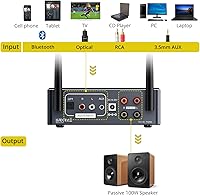
  • Four inputs — Bluetooth, optical, RCA, and AUX — cover virtually every common source device in one box.
  • The aptX-HD codec support delivers noticeably cleaner wireless audio than standard Bluetooth amps in this price range.
  • A real-time LED codec display tells you exactly what your device is streaming, which is a rare and genuinely useful touch.
  • Setup takes under five minutes: connect speakers, power on, pair your phone, and it just works.
  • The built-in DAC means optical TV connections work without buying a separate converter.
  • Startup memory restores your last-used input automatically, so you're never hunting for the selector on power-on.
  • The brushed aluminum housing looks more refined than typical budget amp plastic, holding up well on a desk or shelf.
  • Bass and treble controls handle light sound shaping without needing an external equalizer.
  • Dual external antennas provide noticeably more stable Bluetooth range than single-antenna competitors at similar prices.
  • Includes an optical cable in the box, which is a small but appreciated cost-saving detail.

Cons

  • Rated power drops significantly when driving standard 8Ω speakers, so the 100W-per-channel spec can mislead buyers.
  • Bluetooth occasionally stutters during device switching, requiring a manual reconnection to resolve.
  • Some TVs require a manual PCM audio output setting to work with the optical input, and the manual does not explain this clearly.
  • The unit feels lighter and less substantial than the aluminum exterior suggests, which bothers some buyers.
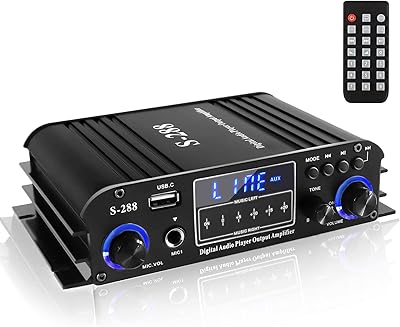
  • No remote control is included, meaning input switching requires physically pressing buttons on the unit.
  • Customer support response times have been slow for some buyers dealing with warranty or defect issues.
  • Optical input is stereo PCM only — no Dolby Digital or DTS passthrough for home theater use cases.
  • No subwoofer pre-out limits integration with a 2.1 speaker setup.

Ratings

The scores below reflect an AI-driven analysis of verified global buyer reviews for the PROZOR Bluetooth 5.2 DAC Stereo Amplifier, with spam, incentivized, and bot-generated feedback actively filtered out before scoring. Each category is rated on the full 0–100 scale, drawing equally from praise and criticism so the results tell the complete picture. Whether this compact stereo amp is a smart buy for your setup — or the wrong tool for the job — the ratings below are designed to make that call easier.

Value for Money
83%
Most buyers feel this Bluetooth DAC amplifier punches well above its price tier, especially given that it replaces what would otherwise be a standalone amp, a Bluetooth receiver, and a DAC. The inclusion of an optical cable in the box is a small but appreciated detail that reinforces the sense of getting a complete package.
A portion of buyers feel the 100W-per-channel headline is misleading when real-world output into 8Ω speakers proves noticeably lower, which chips away at the perceived value for anyone who bought it expecting full-power performance with standard bookshelf speakers.
Ease of Setup
91%
Setup is genuinely one of this amp's strongest points. The majority of users report being up and running — speakers connected, phone paired, music playing — within five minutes or less, with no app downloads, driver installs, or configuration menus to navigate.
The main exception is the optical input, where some TV owners hit a wall because their device defaulted to Dolby Digital output rather than PCM. The manual does not explain this clearly, leaving some buyers to troubleshoot on their own before the optical connection works.
Bluetooth Performance
74%
26%
For a budget-tier amp, the QCC3034 chipset delivers a noticeably stable Bluetooth connection in normal domestic environments, and the dual antennas do appear to reduce dropout compared to single-antenna competitors. Users with aptX-HD-capable Android phones consistently note that wireless audio sounds clean and detailed.
Codec negotiation hiccups are a recurring complaint, particularly when switching between two paired devices — the amp sometimes fails to automatically select the best codec, requiring a manual disconnect and reconnect cycle. A small number of users also report intermittent dropouts in environments with heavy 2.4GHz interference.
Power & Headroom
61%
39%
For desktop or near-field listening with efficient bookshelf speakers in smaller rooms, the available output is more than sufficient — users in apartments and home offices consistently report clean, distortion-free sound at comfortable listening volumes.
The 100W-per-channel spec is measured at 4Ω, and real-world continuous output into typical 8Ω passive speakers lands considerably lower. Buyers who expected concert-level headroom or tried to power larger floor-standers were frequently disappointed, and this is the single most common source of negative reviews.
Build Quality
69%
31%
The brushed aluminum chassis makes a strong first impression and looks noticeably more refined than the plastic enclosures common at this price point. Buyers who display the unit on a shelf or desk consistently remark that it looks more expensive than it cost.
Picking it up quickly changes the perception — the unit is lighter than most buyers expect from an aluminum-bodied amp, which reads as flimsiness to some. A handful of users also noted that the acrylic top panel scratches more easily than expected over time.
Input Versatility
88%
Having Bluetooth, optical, RCA, and 3.5mm AUX all in one box is a genuine differentiator at this price. Users who regularly switch between a TV, a turntable, and a smartphone consistently highlight this as the primary reason they chose this amp over cheaper single-input alternatives.
There is no automatic input switching — the amp does not detect a new signal and switch to it, so users who wanted hands-free source management have to rotate the front-panel selector manually every time. For some setups this is a minor irritation; for others it is a daily annoyance.
Codec Display
86%
The real-time LED codec indicator is a feature usually found on more expensive Bluetooth receivers, and users who understand what it does genuinely appreciate it. Knowing at a glance whether your phone negotiated aptX-HD or fell back to AAC removes a layer of uncertainty that plagues most budget wireless audio gear.
For casual listeners who do not know or care about codec differences, the display is essentially invisible as a benefit. A few users also noted that the indicator labeling is small and requires being close to the unit to read clearly, which limits its usefulness in a living room setup.
Sound Quality
77%
23%
Within its intended use case — driving efficient bookshelf speakers in a small-to-medium room at moderate volumes — the PROZOR amp produces clean, balanced audio with no obvious coloration at normal listening levels. The bass and treble controls are functional enough for light tuning without needing an external EQ.
Critical listeners note that the noise floor becomes audible during quiet passages at higher volume settings, and the tone controls feel coarse compared to a dedicated parametric EQ. This is not a device for audiophile-grade critical listening, and users who approached it that way came away underwhelmed.
Optical DAC Performance
79%
21%
For TV-to-speaker setups, the built-in DAC performs reliably and sounds notably cleaner than the headphone output on most televisions. Gaming console users running PS4 optical output through this amp into bookshelf speakers report a significant upgrade over TV built-in audio.
The DAC only handles stereo PCM, which means any TV or console that cannot output a plain stereo PCM signal over optical — or where this setting is buried in the audio menus — hits an immediate compatibility wall. Users coming from a home theater background expecting multi-channel support are invariably disappointed.
Startup Memory
82%
18%
The amp remembers its last input source and volume level on every power cycle, which sounds minor but proves genuinely convenient in practice. Users who always listen via the same input — say, Bluetooth from a phone each morning — never have to touch the selector knob.
A small number of users report that the memory function occasionally resets after a power outage or surge, forcing them to re-establish their preferred settings. This is not a widespread issue but is worth noting for users in areas with unstable power.
Wireless Range
72%
28%
In typical home environments — same room, no walls between phone and amp — the dual-antenna design holds a solid connection and most users report reliable performance throughout a normal listening session at distances of up to about 30 feet.
Range degrades more than expected once walls or multiple obstacles come into play, and a few users note that placing the amp inside a media console or enclosed shelf significantly weakens the signal despite the external antennas. It performs best in open, unobstructed placements.
Thermal Management
84%
Class D efficiency means the amp stays comfortably warm rather than hot even after extended listening sessions, which is reassuring for users leaving it powered on for hours at a time. No buyers have reported thermal shutdown or heat-related performance throttling under normal use conditions.
Users who place the unit in poorly ventilated enclosures or stack other equipment on top do report warmer operating temperatures than expected. While not a safety concern in normal setups, it is worth leaving some clearance around the unit if it lives in a confined space.
After-Sales Support
54%
46%
Some buyers report satisfactory resolutions to defective unit claims, and PROZOR does appear to honor warranty requests in straightforward cases. Users with clear hardware failures on arrival generally managed to get replacements after making contact.
Response times from customer support are a consistent sore point in negative reviews, with multiple users reporting waits of several days or more to receive even an initial reply. The support experience appears inconsistent, and buyers dealing with nuanced issues — rather than clear-cut dead-on-arrival units — often describe the process as frustrating.

Suitable for:

The PROZOR Bluetooth 5.2 DAC Stereo Amplifier is a strong fit for anyone who wants to breathe new life into a pair of passive bookshelf speakers without navigating a complicated setup. It works especially well in apartments, bedrooms, or home offices where space is limited and simplicity matters more than raw power. If your audio life involves switching between a smartphone, a laptop, and a TV on a regular basis, the four input options genuinely reduce daily friction — no unplugging, no adapters. People with older hi-fi gear like a CD player or turntable will also appreciate how easily this compact stereo amp slots in alongside legacy equipment while adding modern wireless streaming. First-time passive speaker owners who have never used a standalone amplifier before will find the plug-and-play approach particularly accessible, since there's no configuration software, no driver installation, and no manual codec selection required.
Not suitable for:

Buyers expecting true high-output performance for larger rooms or more demanding speakers should think carefully before purchasing, because the PROZOR Bluetooth 5.2 DAC Stereo Amplifier's 100W-per-channel rating is measured at 4Ω — real-world continuous output into standard 8Ω speakers will be noticeably lower. If you're planning to drive floor-standing speakers or fill a living room larger than about 150 square feet, this compact stereo amp will likely run out of headroom before you do. Dedicated audiophiles who prioritize signal purity, low noise floors, or high-resolution wired streaming will also find the feature set limiting compared to separates at a higher price point. Users whose TV or console outputs only Dolby Digital or DTS over optical — rather than PCM — will hit an immediate compatibility wall, since the DAC only decodes stereo PCM signals. Finally, anyone who needs more than two speaker channels, a subwoofer pre-out, or remote control operation will need to look elsewhere.

Specifications

  • Bluetooth Version: Uses Bluetooth 5.2 powered by the Qualcomm QCC3034 chipset for stable wireless pairing and automatic codec negotiation.
  • Supported Codecs: Supports aptX-HD, aptX, AAC, and SBC, with the active codec shown in real time via an onboard LED indicator.
  • Power Output: Delivers up to 100W per channel into 4Ω loads using a TI TPA3221 Class D amplifier; output is lower when driving standard 8Ω speakers.
  • DAC Resolution: The built-in digital-to-analog converter supports PCM signals up to 192kHz for clean optical-to-analog conversion.
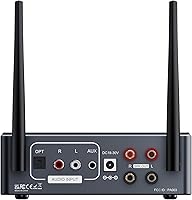
  • Inputs: Accepts audio from four sources: Bluetooth 5.2 wireless, Optical (SPDIF), stereo RCA, and 3.5mm AUX.
  • Speaker Impedance: Compatible with passive speakers rated between 3Ω and 8Ω; do not connect speakers outside this impedance range.
  • Tone Controls: Includes independent bass and treble rotary controls on the front panel for basic sound shaping without external equipment.
  • Power Supply: Operates on an included 24V / 4.5A DC power adapter with an AC power cord; no third-party power supply required.
  • Dimensions: The unit measures 12.24 × 9.45 × 3.31 inches, making it compact enough for a desktop shelf or media console.
  • Weight: Weighs 2.87 pounds, which is light for a stereo amplifier at this output rating.
  • Body Material: Encased in a brushed aluminum shell with an acrylic top panel, providing a more refined appearance than typical budget plastic housings.
  • Antennas: Equipped with two external rotating Bluetooth antennas to improve wireless signal stability and usable range.
  • Startup Memory: Automatically restores the last-used input source and volume state each time the unit is powered on.
  • Amplifier Class: Uses Class D amplification technology, which runs cooler and more efficiently than Class A/B designs at this power level.
  • Optical Compatibility: Works with TVs, PS4, and Xbox One via optical input, provided the source device is set to output PCM or LPCM audio.
  • Input Selector: A dedicated front-panel rotary selector allows manual switching between all four input sources without navigating menus.
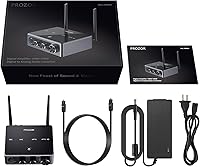
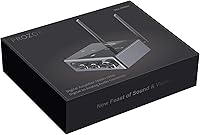
  • Box Contents: Package includes the amplifier unit with rotating antenna, a 24V/4.5A power supply, an AC power cord, a 2m optical cable, and a user manual.
  • Amplifier IC: Built around the Texas Instruments TPA3221 integrated circuit, a well-regarded Class D chip used across multiple consumer amplifier products.

Related Reviews
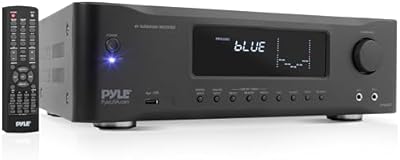
Pyle PT694BT 5.2-Channel Home Theater Receiver
66%
78%
Value for Money
83%
Ease of Setup
63%
Audio Performance
67%
Bluetooth Reliability
54%
Build Quality
More
Romicta 4-Channel Bluetooth 5.0 Stereo Amplifier

76%
88%
Value for Money
91%
Ease of Setup
83%
Bluetooth Connectivity
71%
Sound Quality
54%
Power Output Accuracy
More
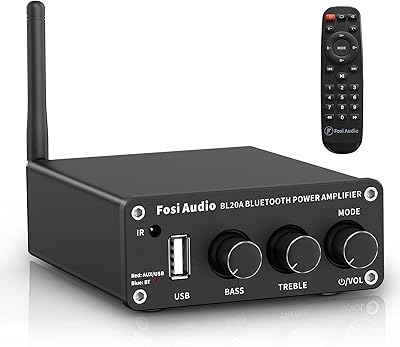
Fosi Audio BL20A
Fosi Audio BL20A
80%
86%
Sound Quality
91%
Value for Money
67%
Bluetooth Performance
78%
Build Quality
89%
Input Versatility
More
Khadas Tea
Khadas Tea
82%
88%
Sound Quality
91%
Build Quality
93%
Portability & Form Factor
86%
MagSafe Integration
79%
Bluetooth Performance
More
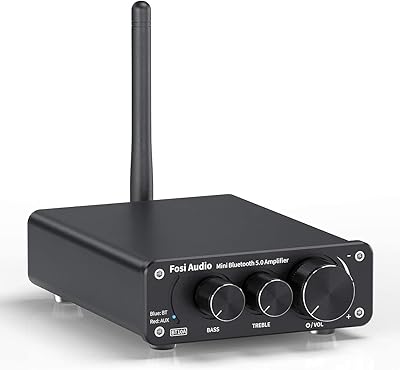
Fosi Audio BT10A
Fosi Audio BT10A
81%
93%
Value for Money
82%
Sound Quality
91%
Noise Floor
84%
Bluetooth Performance
67%
Power Output
More
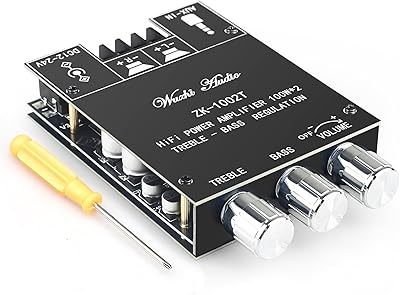
UWAYKEY ZK1002T Bluetooth Stereo Amplifier Board
75%
86%
Value for Money
82%
Bluetooth Performance
58%
Output Power (Real-World)
63%
Build Quality
61%
Heat Management
More
Fosi Audio BT30D
Fosi Audio BT30D
78%
83%
Sound Quality
88%
Subwoofer Performance
81%
Bluetooth Connectivity
91%
Value for Money
62%
Build Quality
More
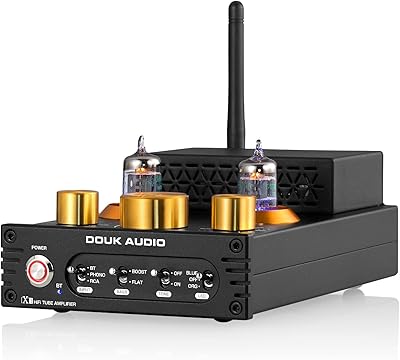
Douk Audio X1
Douk Audio X1
78%
78%
Sound Quality
71%
Phono Stage Performance
84%
Bluetooth Performance
83%
Power Output & Speaker Driving
76%
Build Quality
More
DAMGOO TPA3251 440W Bluetooth Stereo Amplifier Board
80%
83%
Sound Quality
86%
Bluetooth Connectivity
67%
Power Output (Real-World)
88%
Value for Money
79%
Ease of Setup
More
SMSL A100 Stereo Class D Amplifier
78%
83%
Sound Quality
79%
Bluetooth Performance
86%
Input Versatility
71%
USB Audio Reliability
63%
Build Quality
More

FAQ

It works with most passive speakers rated between 3Ω and 8Ω, which covers the vast majority of bookshelf and floor-standing passive speakers sold today. Just make sure your speakers are passive — meaning they have no built-in amplification and require bare wire or banana plug connections to an external amp. Active or powered speakers are not compatible.

Yes, but there is one important setting to check first. Your TV must be configured to output PCM or LPCM audio over optical, not Dolby Digital or DTS. Most TVs allow you to change this in the audio settings menu, usually labeled something like audio output format or digital audio output. Once set to PCM, the optical connection works without any additional hardware.

That is exactly what the onboard LED codec display is for. When you pair your phone and start playing audio, the indicator will show which codec your device negotiated — aptX-HD, aptX, AAC, or SBC. Android phones with Qualcomm chipsets typically support aptX-HD, while iPhones max out at AAC. It removes all the guesswork from wireless audio quality.

It depends heavily on your speaker efficiency and room size. The 100W figure is measured at 4Ω, so if you are running standard 8Ω bookshelf speakers, the practical output will be meaningfully lower — closer to 50–60W in real use. For a bedroom, apartment living room, or desktop setup that is more than adequate. For a large open-plan space with low-sensitivity speakers, you may hit the limits of this compact stereo amp.

Only if your turntable has a built-in phono preamp, which many modern turntables do. If your turntable outputs a raw phono-level signal, you will need a separate phono preamp between the turntable and the RCA input on this amp. Check your turntable specs — it will usually say line-level output or phono output in the documentation.

No, there is no remote control included or available as an accessory. All input switching, volume adjustment, and power control are handled via the physical buttons and knobs on the unit itself. If remote operation is important to your setup, that is a real limitation worth considering before purchasing.

The amp pairs with one device at a time. To switch from your phone to a laptop, you would need to disconnect the current device and pair the new one manually. Some users find this mildly inconvenient if they switch sources frequently throughout the day, though the process itself is quick once you are used to it.

Class D amplifiers run significantly cooler than Class A or A/B designs because they are far more efficient — typically 90% or more of input power is converted to audio output rather than heat. During normal listening sessions this amp stays warm but not hot to the touch. Leaving it powered on for long periods in a poorly ventilated enclosure is still not recommended, though.

The input selector on the front panel determines which source is active. Only one input plays at a time, so you can have multiple sources physically connected and just rotate the selector to choose which one you want. The amp does not automatically switch inputs when a new signal arrives, which keeps things predictable but means you manage source selection manually.

For most people, it genuinely is that straightforward: connect your speaker wire, plug in the power supply, and pair your phone. The main exception is the optical input, which requires the PCM audio output setting on your TV as mentioned earlier. Beyond that, there is no app, no firmware update on first run, and no account to create. It is one of the more genuinely plug-and-play setups in this product category.