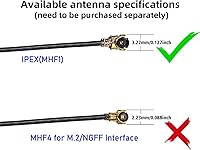
Overview
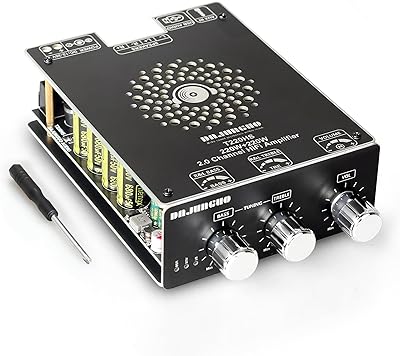
The DAMGOO ZK-1002T is a compact Class D stereo amplifier board built for DIY audio enthusiasts who want real functionality without overspending. It ships as a bare PCB board — no enclosure, no power supply, no speakers included — so if you're expecting something plug-and-play, look elsewhere. What you get is a well-specified foundation for a custom speaker build, with both Bluetooth 5.0 and a 3.5mm AUX input already onboard. DAMGOO is a small brand focused squarely on this niche, and this amp board reflects that focus: practical, no-frills, and genuinely useful for the right kind of builder.
Features & Benefits
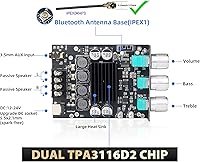
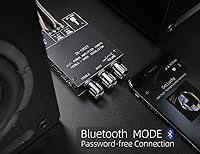
The heart of this DIY amplifier module is the TPA3116D2 chip, a well-regarded Class D controller rated at 100W per channel — though that figure is peak power, not continuous RMS output, which runs noticeably lower depending on your power supply and speaker load. The board accepts DC 9–24V input, so a standard laptop-style adapter works. Bluetooth 5.0 covers connections up to about 49 feet in open space, with no pairing password required. Physical treble and bass knobs let you dial in EQ on the fly, and built-in protection handles overheat, overvoltage, undervoltage, and short-circuit situations — solid coverage at this price point.
Best For
This amp board is squarely aimed at builders and makers — people repurposing old bookshelf speakers, assembling a garage audio setup, or experimenting with Class D amplification for the first time. The compact footprint, roughly 4.6 by 3.6 inches, tucks easily inside a custom enclosure, and having Bluetooth built in means no separate wireless receiver module cluttering your project. It also suits small desktop near-field builds well. If you're a casual buyer expecting a finished product, this isn't the right fit. But for the hobbyist comfortable sourcing a power supply and designing an enclosure, the ZK-1002T delivers real value.
User Feedback
Across hundreds of reviews, this DIY amplifier module holds a strong 4.5-star average. Buyers consistently highlight clean audio at moderate listening levels and straightforward Bluetooth pairing as standout positives. The onboard tone controls get genuine appreciation from users who wanted hands-on EQ without bolting on extra hardware. That said, the heat sink runs warm under sustained high-volume use, so ventilation inside your enclosure matters. A recurring frustration is sourcing a compatible power supply — a 19V, 4–5A adapter is a reasonable starting point. A small number of buyers were caught off guard by the peak power rating versus real-world continuous output, so set expectations accordingly.
Pros
- Bluetooth 5.0 and AUX input are both built in, eliminating extra modules in a DIY build.
- Password-free pairing makes reconnecting source devices fast and effortless.
- Physical treble and bass knobs let you tune sound on the fly without any software.
- Wide DC 9–24V input range means most laptop-style power adapters work out of the box.
- Onboard protection covers overheat, overvoltage, undervoltage, and short-circuit scenarios.
- Compact footprint fits neatly inside custom speaker enclosures without crowding other components.
- TPA3116D2 chip is well-documented with a large DIY community offering wiring guides and project support.
- At this price point, the feature set — wireless, tone controls, stereo power — is genuinely hard to match.
- Clean, distortion-free sound at moderate volumes satisfies casual and workshop listening environments.
Cons
- The 100W per channel spec is peak power — continuous RMS output is significantly lower under real conditions.
- No power supply is included, and sourcing the right adapter adds cost and research time to the project.
- The heat sink runs hot during sustained high-volume use, making ventilation planning mandatory.
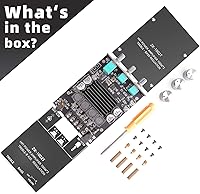
- Zero documentation in the box; first-time builders will need to hunt down wiring guides independently.
- Bluetooth compression is noticeable for critical listeners — this is not a lossless audio solution.
- No RCA, optical, or USB inputs limit compatibility with TVs, turntables, or other common source devices.
- Noise floor is sensitive to power supply quality; a cheap or unregulated adapter will introduce audible hum.
- No dial detent on tone knobs makes returning to a neutral flat EQ position a matter of guesswork.
Ratings
The DAMGOO ZK-1002T has been evaluated by our AI rating engine after processing hundreds of verified global buyer reviews, with spam, bot-generated, and incentivized feedback actively filtered out. Scores reflect how real DIY builders and hobbyists experienced this amp board across a wide range of home audio projects — strengths and frustrations alike are represented honestly.
Sound Quality
Value for Money
Bluetooth Performance
Ease of Installation
Power Output Accuracy
Build Quality
Thermal Management
Connectivity Options
Tone Controls
Compact Form Factor
Protection Circuitry
Power Supply Compatibility
Wireless Range
Noise Floor
Suitable for:
The DAMGOO ZK-1002T is a strong match for DIY audio hobbyists who enjoy building things from scratch and are comfortable sourcing enclosures, power supplies, and speaker drivers independently. If you have a pair of old bookshelf speakers sitting in a closet and want to breathe new life into them with a modern wireless-capable amplifier, this amp board is one of the most cost-effective ways to do it. Makers building custom garage or workshop speakers will appreciate having Bluetooth 5.0 and physical tone controls already integrated, eliminating the need for extra modules in the signal chain. It also works well for compact desktop near-field builds where board size matters and the listening environment is a single room. Entry-level builders experimenting with Class D amplification for the first time will find the TPA3116D2 chip a forgiving and well-documented starting point with a supportive online community around it.
Not suitable for:
The DAMGOO ZK-1002T is the wrong choice for anyone expecting a finished, ready-to-use product — this is a bare PCB, and treating it otherwise will lead to frustration fast. Buyers who want audiophile-grade sound quality or bit-perfect wireless audio should look at higher-tier amplification solutions, as Bluetooth compression and the limitations of budget Class D output are both real factors here. If you plan to run the board at high volumes continuously for extended periods, the small onboard heat sink and compact design make thermal management a genuine concern, particularly inside sealed enclosures. The advertised 100W per channel is a peak figure, so anyone dimensioning a system around that number for serious acoustic output will be disappointed by the actual continuous performance. Finally, buyers without experience wiring speaker terminals, selecting a power supply, or working with bare electronics boards should be aware that the product ships with minimal documentation, and the learning curve is real without prior hands-on experience.
Specifications
- Amplifier Chip: Powered by the TPA3116D2, a widely used Class D amplifier IC known for efficient power delivery and low heat generation at moderate output levels.
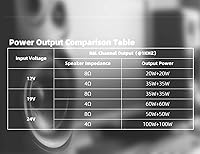
- Power Output: Rated at 100W per channel (2.0 stereo) at peak conditions; continuous RMS output is lower and depends on the power supply voltage and speaker impedance used.
- Input Voltage: Accepts DC 9–24V input, giving builders flexibility to use common laptop-style power adapters or regulated bench supplies within that range.
- Channels: 2.0 stereo configuration with fully independent left and right channel amplification — no subwoofer channel is included on this board.
- Bluetooth Version: Bluetooth 5.0 with a rated open-air transmission range of up to 49 feet and no pairing password required for device connection.
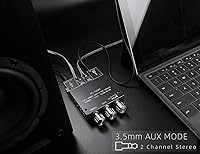
- AUX Input: Accepts wired audio via a standard 3.5mm headphone jack, allowing connection from any device with a headphone or line output.
- Speaker Compatibility: Designed to work with speakers rated between 20–200W at 4–8 ohms impedance; driving speakers outside this range is not recommended.
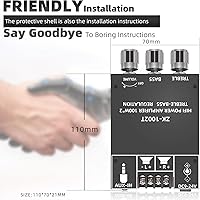
- Tone Controls: Onboard rotary knobs for independent treble and bass adjustment are included; there is no mid-range control or digital EQ on the board.
- Dimensions: The PCB measures approximately 4.64 x 3.55 x 1.18 inches (including the onboard heat sink), making it suitable for compact custom enclosures.
- Weight: The bare board weighs 3.92 ounces, keeping the overall project weight minimal when integrated into a lightweight speaker cabinet.
- Heat Sink: An onboard passive heat sink measuring 36 x 25 x 10mm is bonded to the amplifier chip to assist with thermal dissipation during operation.
- Protections: Built-in safeguards include overheat shutdown, overvoltage protection, undervoltage protection, and short-circuit protection on both output channels.
- Bluetooth Pairing: The board operates in password-free pairing mode, meaning any Bluetooth-enabled device can connect without entering a PIN or confirmation code.
- Form Factor: Ships as a bare PCB with no enclosure, no power supply, and no speaker terminals pre-wired — additional components must be sourced separately by the builder.
- Manufacturer: Produced by DAMGOO, a manufacturer specializing in compact DIY audio amplifier modules and related electronics components.
- Max Supply Voltage: The maximum recommended DC supply voltage is 24V; exceeding this risks triggering protection circuits or damaging the board permanently.
- Input Modes: The board supports two input modes — Bluetooth wireless and 3.5mm AUX — with no optical, RCA, or USB input options available.
Related Reviews
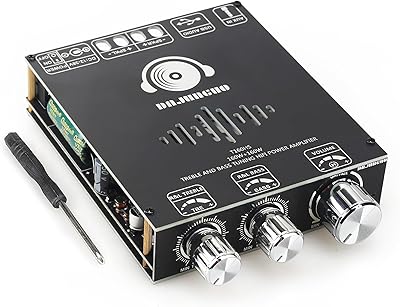
DAMGOO T160HS Stereo Amplifier Board
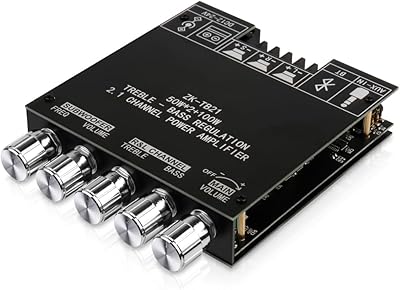
ARRAROWN ZK-TB21 Bluetooth Amplifier Board
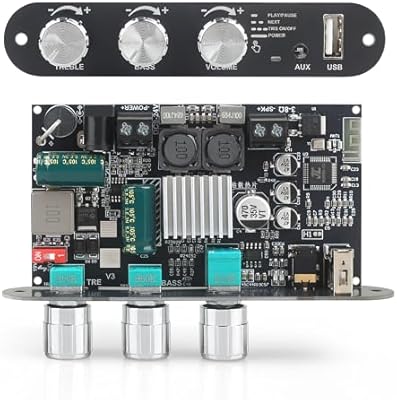
Wuzhi Audio ZK-1001U Mono Amplifier Board
MakerHawk ZK-MT21 Bluetooth Amplifier Board 2.1