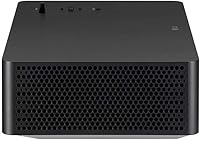
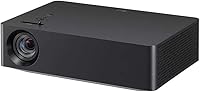
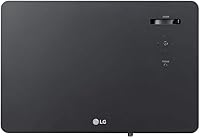
Overview

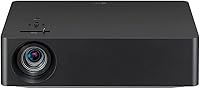
The LG CineBeam HU70LAB 4K UHD Projector sits in a relatively rare category: a ceiling-mountable, LED-powered home theater projector built for enthusiasts who want more than a traditional lamp-based setup. Unlike conventional DLP projectors that rely on a spinning color wheel and a bulb you will eventually need to replace, this one uses a wheel-less LED light engine that changes the long-term ownership math considerably. WebOS is baked in alongside Google Assistant and Alexa, so it functions as a complete smart display without any extra hardware. One honest caveat worth stating upfront: at 1,500 lumens, it needs a genuinely dark room to look its best.

Features & Benefits

The image quality starts with XPR pixel-shifting, which moves the DLP chip's pixels to produce finer detail than its native panel would suggest — on a large screen, the difference compared to 1080p is real and noticeable. What truly separates this LED 4K projector from older DLP designs is its four-channel LED system combining RGB and Dynamic Green, meaning no color wheel and no rainbow effect, with consistently richer color accuracy. The Remote Focus feature lets you dial in the lens and zoom from your seat without repositioning the unit, which is a practical win for ceiling-mount installations. HDR10 with Dynamic Tone Mapping and TruMotion add cinematic polish across a broad range of content.

Best For

This home theater projector suits buyers who have already committed to a dedicated viewing space — ideally a room where ambient light can be controlled. At 1,500 lumens, it will underwhelm in a bright living room, but in a dimmed or blacked-out environment it rewards you with large-screen impact that few flat-panel TVs can match. The ceiling-mount design, Remote Focus flexibility, and built-in smart platform make the HU70LAB particularly appealing to cord-cutters wanting a clean, self-contained setup. It also makes strong sense for anyone tired of replacing projector bulbs — the LED light source is rated to outlast most conventional lamp-based models by a considerable margin.

User Feedback

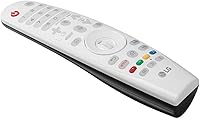
Owners consistently highlight color accuracy and reliability as standout strengths, with many noting the picture feels more natural and saturated than lamp-based models they previously owned; the built-in smart platform also draws frequent praise for convenience. On the flip side, brightness limitations come up repeatedly — buyers who expected this to pull double duty in a bright room tend to be disappointed. Fan noise at higher settings is another recurring mention worth knowing about. Setup divides opinion: technically comfortable users find ceiling-mount calibration manageable, while others describe it as more involved than expected. The Magic Remote works well for most, though occasional Bluetooth hiccups appear in longer-term reviews. A 4.1-star average signals solid satisfaction, not unanimous enthusiasm.

Pros

  • Wheel-less LED light source eliminates the rainbow effect common in traditional DLP projectors.
  • The four-channel RGB and Dynamic Green LED system produces noticeably richer, more accurate colors than lamp-based rivals.
  • A 30,000-hour LED lifespan means years of ownership without worrying about bulb replacements or added running costs.
  • Remote Focus lets you adjust zoom and lens focus from your seat — genuinely useful for ceiling-mounted installations.
  • Built-in webOS with Google Assistant and Alexa makes this a self-contained smart display without extra hardware.
  • HDR10 with Dynamic Tone Mapping handles a wide range of content well, preserving highlight and shadow detail frame by frame.
  • Supports screen sizes from 60″ to 140″, giving real flexibility depending on your room size and seating distance.
  • At 7.1 pounds, the HU70LAB is compact and light enough to ceiling-mount without heavy structural support.
  • The 150,000:1 contrast ratio delivers deep blacks that help compensate for the modest brightness in dark room conditions.
  • TruMotion frame interpolation smooths fast motion noticeably, which sports and action content viewers will appreciate.

Cons

  • 1,500 ANSI lumens is modest — any ambient light in the room visibly degrades image quality.
  • Fan noise at higher brightness settings is a recurring complaint that can distract during quiet scenes.
  • Ceiling-mount setup and focus calibration can be genuinely involved, especially for less technical users.
  • Bluetooth pairing with the Magic Remote occasionally drops or fails to reconnect, requiring manual troubleshooting.
  • The 1.25x optical zoom range is narrow, limiting placement flexibility if your room dimensions are unusual.
  • No lens shift feature means precise physical positioning of the projector matters more than it might with competing models.
  • The premium price tier invites direct comparison with brighter, laser-based competitors that some buyers may find more versatile.
  • WebOS app availability, while solid, is narrower than what a dedicated streaming stick like a Fire TV or Roku would offer.

Ratings

The scores below reflect an AI-driven analysis of verified global user reviews for the LG CineBeam HU70LAB 4K UHD Projector, with spam, bot-generated, and incentivized feedback actively filtered out to ensure accuracy. Every category is scored to reflect the real balance of owner sentiment — where this home theater projector earns genuine praise and where recurring frustrations pull the numbers down. Nothing has been softened or inflated.

Image Quality
88%
Owners consistently describe the picture as vivid and cinematic, particularly when watching 4K HDR content in a properly darkened room. The four-channel LED system produces color that feels more natural and saturated than what most lamp-based rivals at a similar price deliver, and the absence of rainbow artifacts is a genuine improvement for sensitive viewers.
XPR pixel-shifting produces impressive results but falls slightly short of a true native 4K panel in fine detail resolution when viewed up close on larger screen sizes. A handful of users also noted some edge softness at the outer corners of the image, particularly at wider zoom settings.
Brightness & Ambient Light
58%
42%
In a fully darkened or near-dark room, 1,500 lumens is workable and the picture holds up respectably well for evening movie sessions. Buyers who already had a dedicated home theater space with blackout curtains reported being satisfied with brightness under those controlled conditions.
This is the single most common complaint across owner reviews — any meaningful ambient light, whether daylight through curtains or even a lamp left on across the room, noticeably degrades the image. Users who expected this to function well in a typical living room during daytime hours were consistently disappointed, and at this price tier that frustration is understandable.
Color Accuracy
91%
The LED light engine's wide color gamut is one of the HU70LAB's most praised attributes, with owners noting that skin tones, nature scenes, and vibrant animation all look remarkably true-to-life without the oversaturated artificiality that plagues cheaper projectors. Cinephiles watching color-graded films in HDR consistently single this out as a highlight.
Out-of-box calibration is not perfect for everyone — some technically savvy users reported spending time manually adjusting color temperature and white balance to achieve accurate results. Those who use the default picture modes without calibration may not experience the full color fidelity the hardware is capable of.
Setup & Installation
63%
37%
The Remote Focus feature is a meaningful quality-of-life improvement for ceiling-mount users, letting you refine zoom and lens focus from your chair rather than climbing a ladder repeatedly. At 7.1 pounds the unit is light enough that most standard ceiling-mount brackets handle it without special hardware.
Initial installation draws some of the most polarized feedback in the review pool — buyers with prior AV experience found it manageable, while first-time projector owners described the alignment, keystone correction, and focus calibration process as genuinely frustrating. The lack of motorized lens shift means physical positioning has to be close to correct from the start.
Smart Platform & Apps
79%
21%
WebOS is a mature, responsive smart TV platform and most owners appreciate having Netflix, YouTube, and other major streaming services built in without needing an external stick or box. Google Assistant and Alexa integration works reliably for playback control, volume, and basic smart home commands.
The webOS app library is notably narrower than what a dedicated streaming device like a Roku or Fire TV offers, and a few niche apps that users expected to find simply are not available. Updates to the app ecosystem are slower than on third-party streaming hardware, which some owners flagged as a growing concern over time.
Remote Control
74%
26%
The Magic Remote's point-and-click interface is intuitive for navigating webOS menus and streaming apps, and most users picked it up quickly without needing to read a manual. Voice input via the built-in microphone works consistently for search and playback commands.
Bluetooth pairing drops are a recurring complaint among longer-term owners, with the remote occasionally failing to reconnect automatically after the projector is powered off and back on. While a manual re-pair resolves it, the issue appears frequently enough across different users to suggest it is a firmware or hardware consistency problem rather than isolated incidents.
LED Longevity & Lamp Cost
93%
The 30,000-hour LED rating genuinely resonates with buyers who have previously owned lamp-based projectors and experienced the cost and inconvenience of bulb replacement every few years. Owners frame this less as a spec and more as peace of mind — knowing the light source will likely outlive the projector itself removes a recurring anxiety from ownership.
A small number of users questioned whether the LED output noticeably dims before the rated lifespan is reached, which is a legitimate long-term concern that is difficult to evaluate from shorter ownership windows. No significant failure data exists yet given the product's age, but it remains an open question for buyers thinking about decade-long ownership.
Fan Noise
61%
39%
At standard operating brightness in a cooler room, the fan is quiet enough that it goes unnoticed during typical movie dialogue and moderately loud scenes. Some owners running the projector in well-ventilated spaces reported no meaningful noise issues during extended viewing sessions.
Fan noise during demanding content — bright wide shots, complex action sequences — draws consistent criticism, particularly from users watching in a silent, dedicated theater environment. The noise becomes more apparent during quiet dramatic scenes and has been described by multiple reviewers as one of the more persistently annoying aspects of long-term ownership.
HDR Performance
83%
Dynamic Tone Mapping processes HDR on a frame-by-frame basis rather than applying a single static exposure setting, and the difference shows in well-mastered HDR films — highlights are preserved without blowing out, and shadow gradations retain visible detail. Owners watching UHD Blu-ray content through HDMI regularly highlight HDR rendering as a strength.
With only 1,500 lumens available, the projector cannot fully realize the peak brightness potential of HDR the way a high-nit laser projector or a premium OLED TV can. The Dynamic Tone Mapping does compensate intelligently, but buyers upgrading from a high-brightness display will notice the ceiling on specular highlights.
Motion Handling
77%
23%
TruMotion frame interpolation performs well for sports broadcasts and action-heavy films, reducing the judder and motion blur that can make fast movement look unpleasant on projectors. Several owners who use the HU70LAB for live sports specifically praised how smooth the output looks at the right settings.
Like most frame interpolation systems, TruMotion can introduce the so-called soap opera effect on cinematic content if left at its default strength, making films look artificially smooth in a way that bothers purists. The setting needs to be manually adjusted per content type, which casual users may not realize or bother to do.
Build Quality & Design
81%
19%
The chassis feels solid and purposefully designed for a permanent ceiling installation — it does not feel like a portable consumer projector that happens to be ceiling-mountable. The compact footprint and clean aesthetic mean it blends into a theater room without drawing attention to itself.
A few owners noted that the matte plastic housing shows fingerprints and light scuffs during handling and installation, which matters if the unit is going into a visible position. The ventilation design, while functional, is not particularly refined, and the exhaust placement can occasionally direct warm air toward the audience in certain ceiling orientations.
Connectivity
72%
28%
HDMI, USB, and Bluetooth cover the standard connection needs for most home theater setups, and pairing external speakers via Bluetooth works reliably for users who want to avoid running audio cables. The HDMI input handles 4K HDR sources from consoles and Blu-ray players without compatibility complaints.
The port selection is lean for a premium-tier projector — only a single HDMI input means users with multiple HDMI sources will need an external switch, which adds cost and complexity. There is no optical audio output, which limits integration options for buyers with older AV receiver setups.
Value for Money
67%
33%
The combination of LED longevity, 4K image quality, and built-in smart platform does make a reasonable case for the price when compared directly to other LED-based 4K projectors with similar feature sets. Buyers coming from lamp projectors who factor in the elimination of bulb replacement costs tend to feel the value proposition holds up over a multi-year ownership window.
At this price tier, buyer expectations are high and the brightness limitation is a hard pill to swallow — competing laser projectors offer significantly more lumens for comparable or lower investment. Users who discover post-purchase that their room is not dark enough to justify the price tend to leave the harshest value assessments in the review pool.

Suitable for:

The LG CineBeam HU70LAB 4K UHD Projector is built for a specific kind of buyer: someone who has a dedicated home theater room or a living space where controlling ambient light is genuinely possible. If you have blackout curtains, a basement cinema setup, or a media room designed around a large screen, this projector fits naturally into that environment. Ceiling-mount enthusiasts will appreciate the Remote Focus system, which removes the frustration of physically repositioning the unit every time you adjust screen size. Cord-cutters also get a lot of value here since webOS, Google Assistant, and Alexa are all built in, eliminating the need for an external streaming stick or box. Cinephiles who prioritize rich, accurate color reproduction and smooth HDR rendering over sheer peak brightness will find the LED-powered image quality genuinely satisfying. Finally, anyone burned by the recurring cost and hassle of replacing projector bulbs will feel the 30,000-hour LED lifespan as a real, practical relief.

Not suitable for:

The LG CineBeam HU70LAB 4K UHD Projector is a harder sell for buyers who want a versatile, room-agnostic display that works equally well in bright and dark conditions. At 1,500 ANSI lumens, this is not a projector you can comfortably run in a sunlit living room or even a moderately lit space — the image washes out noticeably, and that is a genuine limitation at this price tier. Buyers expecting plug-and-play simplicity from a ceiling-mounted setup may also be frustrated; getting the focus, alignment, and zoom calibrated properly takes patience and some technical comfort. If your priority is maximum raw brightness for large-venue or commercial use, there are competing projectors at similar price points that outperform the HU70LAB significantly in lumens. Those who watch a lot of content in mixed lighting conditions, or who share a space where light control is impractical, will likely feel underserved by this home theater projector over time.

Specifications

  • Display Type: Uses DLP projection technology with LG's XPR pixel-shifting to produce a sharper, more detailed image than the native chip resolution alone would deliver.
  • Resolution: Native 4K UHD at 3840x2160 pixels, delivering four times the pixel density of a standard 1080p Full HD projector.
  • Brightness: Rated at up to 1,500 ANSI lumens, which is adequate for dark or well-controlled rooms but insufficient for spaces with significant ambient light.
  • Contrast Ratio: Specified at 150,000:1, supporting deep blacks and strong shadow detail particularly noticeable in dark-room cinematic content.
  • Light Source: A 4-channel LED system combining Red, Green, Blue, and Dynamic Green eliminates the color wheel found in conventional DLP projectors, removing the rainbow effect entirely.
  • Lamp Life: The LED light source is rated for up to 30,000 hours of use, which vastly exceeds the typical 3,000–5,000-hour lifespan of traditional projector bulbs.
  • Screen Size: Projects images ranging from 60″ to 140″ diagonally, depending on throw distance and zoom setting.
  • Optical Zoom: Equipped with a 1.25x optical zoom lens and a Remote Focus feature that allows lens and zoom adjustment from a seated position without physically moving the unit.
  • HDR Support: Supports HDR10 with Dynamic Tone Mapping, which optimizes brightness and contrast on a frame-by-frame basis rather than applying a static global setting.
  • Motion Tech: TruMotion frame interpolation generates intermediate frames between existing ones to reduce motion blur, particularly useful for sports and fast-action content.
  • Smart Platform: Runs LG's webOS smart TV platform with built-in Google Assistant and Amazon Alexa, enabling voice control and access to streaming apps without external devices.
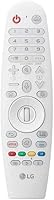
  • Remote: Includes the LG Magic Remote, which supports Bluetooth connectivity, point-and-click navigation, and voice input via the integrated microphone.
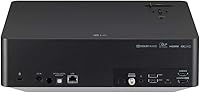
  • Connectivity: Offers HDMI, USB, and Bluetooth connections for external devices, audio systems, and wireless peripherals.
  • Dimensions: The projector body measures 8.3 x 12.4 x 3.7 inches, making it compact enough for most standard ceiling-mount brackets.
  • Weight: Weighs 7.1 pounds, which is light enough for ceiling installation without requiring heavy-duty structural reinforcement in most home settings.
  • Mount Type: Designed to be ceiling-mountable, with a form factor and lens placement optimized for overhead installation in dedicated theater rooms.
  • Batteries: The LG Magic Remote requires two AAA batteries, which are included in the box at purchase.
  • Manufacturer: Designed and manufactured by LG Electronics, a South Korean multinational with an established track record in consumer display and projector technology.

Related Reviews
LG CineBeam Q 4K Portable Projector
77%
91%
Image Quality
61%
Brightness & Ambient Light Performance
88%
Portability & Form Factor
86%
Auto Setup & Ease of Use
93%
Color Accuracy
More
LG HU810PW 4K Dual Laser CineBeam Projector
77%
94%
Picture Quality
92%
Color Accuracy
88%
Contrast & Black Levels
71%
Brightness & Ambient Light Handling
86%
HDR Performance
More
Optoma UHD38X 4K UHD Projector
86%
93%
Display Quality
91%
Gaming Performance
88%
Brightness
90%
Color Accuracy
92%
Input Lag
More
Optoma UHZ66 4K UHD Laser Projector
86%
94%
Image Quality
92%
Brightness Performance
76%
Ease of Setup
90%
Build Quality
89%
Gaming Performance
More
GooDee GD500PLUS 4K Google TV Smart Projector
73%
88%
Smart Platform & App Ecosystem
71%
Picture Quality
58%
Brightness & Ambient Light Performance
79%
Auto Focus & Keystone Correction
66%
Built-in Audio
More
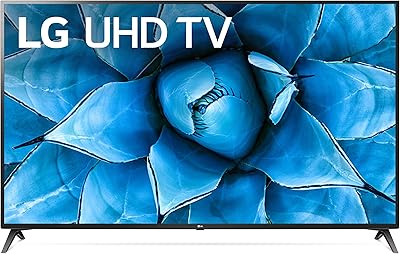
LG 70UN7370PUC 70-inch 4K UHD TV
86%
94%
Picture Quality
91%
Color Accuracy
72%
Motion Handling
88%
Smart Platform Usability
90%
Connectivity Options
More
LG 85 Series 82-inch 4K Smart TV
76%
83%
Picture Quality
88%
Motion Handling
84%
Smart Platform
86%
Remote & Controls
67%
Gaming Performance
More
LG 32SQ780S 32-Inch 4K UHD Monitor
82%
91%
Display Quality
87%
Ergonomics and Adjustability
83%
Smart Features (webOS & ThinQ)
89%
Connectivity Options
78%
Ease of Setup
More
LG 86UN8570PUC 86-inch 4K UHD TV
86%
91%
Display Quality
93%
Picture Clarity
85%
Sound Quality
88%
Gaming Performance
80%
Smart Features & Usability
More
BenQ TK800M 4K UHD Home Theater Projector
86%
93%
Picture Quality
89%
Brightness
91%
Gaming Performance (Low Input Lag)
85%
Ease of Setup
88%
Connectivity Options
More

FAQ

Honestly, it is not well suited for that. At 1,500 ANSI lumens, the HU70LAB is designed for dark or dimly lit spaces. In a room with meaningful ambient light — even just filtered daylight — the image will look washed out and low-contrast. If your room has blackout curtains or you primarily watch in the evenings, you will be fine. Otherwise, you would want to look at a brighter projector.

No, and that is one of the more compelling practical arguments for the LED light source inside this home theater projector. The LED is rated for up to 30,000 hours, which at typical usage could mean well over a decade before any degradation becomes noticeable. There is no bulb to order, no scheduled replacement, and no sudden burn-out mid-movie — it simply keeps running.

It depends on your comfort level with AV installs. The physical mounting itself is manageable since the unit is relatively light at 7.1 pounds, and most standard ceiling-mount brackets will accommodate it. The trickier part is getting the image dialed in — zoom, focus, and keystone correction take some patience. The Remote Focus feature helps a lot since you can make lens adjustments from your chair rather than climbing a ladder repeatedly. That said, buyers who have never done a projector install before may find the initial calibration more involved than expected.

It works as a standalone smart device. WebOS is built in along with Google Assistant and Alexa, and you get access to the major streaming apps directly. The included Magic Remote handles navigation well. You do not need a Fire Stick or Chromecast unless you specifically want an app that is not available in the webOS ecosystem, which is a narrower library than what dedicated streaming sticks offer.

The rainbow effect is a visual artifact that appears on traditional DLP projectors — you sometimes see brief flashes of red, green, and blue streaks when your eyes move across a bright image. It happens because those projectors use a spinning color wheel. The LG CineBeam HU70LAB 4K UHD Projector eliminates this entirely by using a wheel-less LED light source, so the color is produced simultaneously across channels rather than sequentially. Sensitive viewers who have struggled with rainbow artifacts on other DLP projectors should not see that issue here.

The HU70LAB can project between 60″ and 140″ depending on how far back the projector is placed and where you set the zoom. At roughly 8 to 10 feet, you are looking at a screen in the 80″ to 100″ range under most conditions. The 1.25x optical zoom gives you some flexibility without having to physically reposition the unit, which is a genuine convenience especially once it is ceiling-mounted.

It shows up as a complaint often enough in owner reviews to be worth flagging. At standard brightness settings the fan is relatively quiet, but when the projector works harder — during bright, complex scenes or in warmer room conditions — the fan can become audible during quiet passages in a film. It is not described as disruptively loud by most users, but if you are particularly sensitive to background noise in a silent home theater, it is something to be aware of.

Occasionally, yes. The majority of owners use it without significant problems, but a recurring theme in longer-term reviews is Bluetooth dropping out or the remote failing to re-pair smoothly after the projector has been powered off and back on. It tends to resolve with a manual re-pairing, but it can be a minor annoyance if it happens repeatedly. LG has addressed similar remote issues through firmware updates on other models, so checking for updates after setup is worth doing.

Yes, straightforwardly. The HDMI input handles both gaming consoles and Blu-ray players without issue. HDR10 support means HDR-graded game titles and UHD Blu-ray discs will display with proper tone mapping. Keep in mind that at this brightness level and with the inherent processing overhead of DLP projection, input lag may not be low enough for competitive gaming, but for casual or single-player gaming on a large screen the experience is generally very enjoyable.

It can be a rewarding upgrade in the right context, but it is a fundamentally different viewing experience rather than a straight swap. A large flat-screen TV will outperform this LED 4K projector in a bright room by a wide margin, and the setup process is more involved than hanging a display on a wall. Where the projector wins is in sheer scale — a 100″ or 120″ image at this quality level is something a TV simply cannot replicate. If you are converting a dedicated room and are prepared for the installation process, the jump in screen size alone tends to convert skeptics quickly.

Where to Buy