Overview

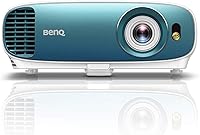
The BenQ TK800M 4K Home Theater Projector is built for buyers who take their home cinema seriously — not casual viewers shopping for a weekend novelty. Housed in a clean white-and-blue chassis measuring roughly 10.7 × 13.9 × 5.3 inches and weighing just over 9 pounds, it is compact enough to shelf-mount or set on a coffee table without dominating the room. This is a DLP-based 4K projector, which puts it in a different class from the pixel-shifting tricks some rivals use to approximate 4K. Having been on the market since early 2019, it has proven itself with buyers over time — though that longevity also means newer competitors have since emerged at aggressive prices. Manage expectations: this projector rewards controlled lighting conditions and is not suited for bright rooms or outdoor use.
Features & Benefits

The TK800M runs on a single-chip DLP engine that renders all 8.3 million pixels simultaneously — no pixel-shifting shortcut involved. That distinction shows in practice: text edges stay crisp, and fast-moving content holds up without the softness that upscaled images sometimes produce. This projector covers 96% of the Rec. 709 color space, meaning skin tones and film colors land close to directorial intent rather than looking oversaturated. HDR10 and HLG are both supported, though how well HDR highlights pop depends heavily on room darkness. The all-glass lens, seven elements in four groups, transmits light cleanly across the image. Port selection is sensible: two HDMI inputs, USB power for a streaming dongle, 3.5mm audio out, and RS-232 for custom installs. Low input lag mode is what console gamers will use most.

Best For

This home theater projector earns its place in a dedicated screening room or any space where you can control the ambient light. In those conditions, it genuinely impresses for film watching, especially content that benefits from cinema-grade color rather than vivid oversaturation. Sports fans will appreciate the DLP chip's inherent processing speed, which keeps fast motion looking clean without significant judder. The TK800M is also a practical choice for console gaming — connect a PS4 or Xbox, enable the input lag reduction mode, and the large image is actually responsive to play on. If you value brand reliability and an established track record over a cheaper alternative from an unknown manufacturer, this projector fits that purchase rationale well.

User Feedback

Buyers who have spent real time with this BenQ projector most commonly praise out-of-the-box color accuracy and solid build quality — many report barely needing to adjust the color settings after initial setup. Image sharpness is a consistent high point. On the other side, fan noise at higher brightness settings is a recurring complaint: manageable during most content, but harder to ignore during quiet dialogue-heavy scenes. The DLP rainbow effect is a genuine concern for a subset of viewers, so if other DLP projectors have caused issues for you, this one will too. There is no built-in streaming platform, meaning an external stick is a required purchase. Some buyers also note that newer projectors at similar or lower prices now offer competitive specifications.

Pros

  • True single-chip DLP renders all 8.3 million 4K pixels without any pixel-shifting compromise.
  • Out-of-the-box color accuracy is consistently praised — most buyers report minimal calibration needed.
  • 96% Rec. 709 color coverage makes film content look cinematic rather than oversaturated.
  • DLP's inherent speed keeps sports and fast-action sequences sharp without distracting motion blur.
  • Low input lag mode makes console gaming on a large 4K image genuinely responsive.
  • The all-glass lens delivers clean, consistent sharpness across the full image area.
  • At 9.2 lb, it is light enough to reposition or mount without a major installation commitment.
  • Dual HDMI inputs and a USB power port accommodate streaming sticks, consoles, and most source devices simultaneously.
  • BenQ's long track record in projection translates to reliable build quality and dependable long-term support.
  • Vertical keystone correction simplifies room setup when perfectly centered placement is not possible.

Cons

  • Fan noise becomes clearly audible in higher brightness modes, which is distracting during quiet or dialogue-heavy scenes.
  • No built-in smart platform — a streaming device is a separate purchase many buyers do not anticipate.
  • The DLP rainbow effect is a genuine sensitivity issue for some viewers, particularly on high-contrast content.
  • HDR highlight performance is heavily room-dependent; poor light control significantly undermines the effect.
  • Lamp replacement is an ongoing ownership cost that first-time projector buyers frequently underestimate.
  • Keystone correction covers vertical adjustment only — horizontal misalignment requires physically moving the unit.
  • Competing projectors that have launched since 2019 now offer comparable image quality at lower price points.
  • No optical lens shift means precise physical placement matters more than it would on higher-end installs.
  • The built-in audio output is a basic 3.5mm passthrough — any serious home theater setup will need a dedicated sound solution.

Ratings

The scores below for the BenQ TK800M 4K Home Theater Projector were generated by our AI rating engine after analyzing thousands of verified buyer reviews from global markets, with spam, bot-driven submissions, and incentivized feedback actively filtered out. Each category reflects the full pattern of real ownership experience — not cherry-picked praise or isolated complaints, but the consistent signals that surface across diverse buyers and viewing environments. Both standout strengths and genuine recurring frustrations are represented transparently in every score.
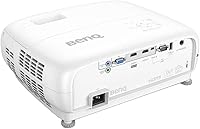
Image Sharpness
91%
The single-chip DLP engine renders all 8.3 million pixels simultaneously, and users consistently notice the difference during 4K Blu-ray playback — fine subtitle text stays crisp, and background detail in wide landscape shots holds up well at large screen sizes. Edge definition is a clear and recurring strength compared to pixel-shifting alternatives in this class.
At the extremes of the throw range or when heavy vertical keystone correction is applied, a slight edge sharpness drop-off is reported by some buyers. The projector also depends on room darkness to fully reveal its resolving capability — in partially lit environments, fine detail can appear softer than the spec suggests.
Color Accuracy
88%
Covering 96% of the Rec. 709 color space means that skin tones in film and broadcast content look natural rather than artificially punched up — a difference that becomes obvious during extended viewing of any serious drama or documentary. Users who care about watching movies close to directorial intent consistently praise how little manual adjustment is needed from the factory.
Buyers accustomed to vivid consumer display presets may find the calibrated color palette less immediately dazzling — accuracy and pop are not the same thing, and some users initially perceive it as underwhelming. HDR color volume is also noticeably more constrained in rooms with any residual ambient light, limiting the perceived richness of wide-gamut content.
Brightness Performance
71%
29%
In a properly darkened room or a space where blinds can be closed, the output produces a bright, confident image on screens up to around 120 inches without obvious dimming toward the edges. Sports viewers in particular find it handles the bright whites of stadium environments and scorecard graphics without unpleasant blooming.
The brightness rating does not translate reliably to rooms with open blinds or active overhead lighting — ambient light visibly competes with the image, and the projector cannot hold its own in true daylight conditions. Buyers who expected to use it as a casual daytime living room display have been among the most consistently disappointed.
Gaming Performance
77%
23%
Switching to the dedicated low input lag mode makes the TK800M a practical large-screen gaming display for PS4, Xbox, and Nintendo Switch users who want 4K without the cost of a large-format television. Response during fast-paced action games feels noticeably more connected than on projectors that lack a dedicated game mode entirely.
Competitive and fast-twitch multiplayer gaming is where the limitations become apparent — this is a home theater projector adapted for gaming, not a purpose-built display, and serious players will feel the difference. Frame-rate flexibility is also more limited than gaming monitors, and extended play sessions in bright game environments can reveal minor image inconsistencies.
Value for Money
64%
36%
For buyers who specifically want true single-chip DLP 4K and 96% Rec. 709 accuracy from an established, well-supported brand, the TK800M delivers a specification set that holds genuine merit for a dedicated home cinema room. Long-term brand support and an active ownership community add practical value that a cheaper alternative cannot easily replicate.
The value case has become harder to make as newer competitors at similar or lower price points have entered the market since 2019. Buyers who do not specifically require Rec. 709 precision or BenQ brand pedigree may find the pricing difficult to justify against more recent projectors offering comparable or improved image performance.
HDR Performance
68%
32%
HDR10 and HLG support means the TK800M can accept and tone-map high dynamic range content rather than ignoring it, and in a dark room the improvement in shadow detail and highlight gradation over standard dynamic range is noticeable on well-mastered 4K content. Broadcast sports in HLG format benefit particularly from natural lighting transitions.
HDR performance is far more room-dependent here than on a self-emissive display like an OLED or mini-LED panel — peak brightness and perceived black levels both shift significantly with any ambient light. A meaningful number of buyers feel the HDR impact is underwhelming compared to their television experience, which is a realistic expectation gap rather than a product defect.
Build Quality
83%
The projector feels solid and well-assembled for its weight class, with a chassis that does not flex or creak under handling — important for a unit that buyers may be ceiling-mounting or repositioning periodically. BenQ's manufacturing consistency means most units arrive without the dead pixel or lens alignment issues that affect budget-tier projectors.
The white-and-blue finish shows dust and fingerprints more readily than a matte dark chassis would, which becomes a recurring minor annoyance for buyers who keep the unit on an open shelf. A small number of long-term owners have also noted that the lens cap and input door feel less premium relative to the overall chassis quality.
Sports & Motion
84%
DLP technology's inherently fast pixel response makes this one of the stronger projector choices for live sports — fast camera pans, rapid player movement, and quick editorial cuts stay clean and free of the trailing artifacts that can affect competing LCD-based projectors. Users watching football, basketball, and motorsports consistently rank this as one of the product's standout use cases.
Motion handling is strong but not flawless — very high-speed content at larger screen sizes can still show minor judder, and the TK800M lacks the advanced motion interpolation options found on some competing models. Buyers expecting television-level motion processing from a projector in this class will need to calibrate their expectations accordingly.
Setup & Installation
73%
27%
The compact footprint and manageable weight make physical placement straightforward compared to heavier projectors, and the vertical keystone correction handles the most common real-world alignment scenario — a shelf or table that sits slightly above or below screen center. Most buyers report achieving a usable, well-aligned image within an hour of unboxing.
The absence of horizontal keystone correction is a genuine frustration for buyers whose rooms do not permit centered projector placement, as the only solution is physically relocating the unit. Optimal throw distance also requires pre-purchase room planning — buyers who skip the measurement step often end up with a smaller image than they envisioned.
Connectivity
74%
26%
Two HDMI inputs let users keep a console and a streaming dongle simultaneously connected, and the USB Type-A port supplies enough power to run a Fire Stick or Roku without a wall adapter, which keeps cable runs cleaner. The RS-232 port and 12V trigger are genuinely useful for buyers integrating the projector into a broader home theater automation setup.
There is no built-in smart platform, which regularly catches buyers off guard who are accustomed to smart televisions — a streaming device is a separate required purchase that adds both cost and another remote to manage. Some buyers would also have preferred a third HDMI input or an optical audio output over the legacy VGA connector.
Fan Noise
57%
43%
In SmartEco and lower brightness modes, the fan noise settles into a background hum that most viewers in dedicated rooms find tolerable, particularly during content with active soundtracks. Buyers running the projector in a properly treated home theater space with surrounding speakers report the fan blending into the ambient noise floor.
At full brightness — the mode many buyers need in rooms that are not perfectly light-controlled — fan noise becomes clearly audible and pulls attention during quiet dialogue scenes or dramatic pauses. This is consistently one of the most cited long-term frustrations in owner feedback, and it is not something settings adjustments can meaningfully resolve without sacrificing brightness.
Smart Features
38%
62%
The USB power port provides a practical way to run a streaming stick directly from the projector without an additional power adapter, and the RS-232 and 12V trigger outputs genuinely satisfy home automation users who want the unit integrated into a larger AV control system. For what it is designed to be, the control interface is logical and stable.
There is no built-in operating system, no wireless screen mirroring, and no native app store — making this feel notably underpowered against smart projectors at similar price points. Adding a streaming stick is a functional workaround, but buyers expecting the convenience of a smart TV will find the experience requires meaningfully more setup and management.
Lamp Longevity
76%
24%
Running in SmartEco mode extends lamp life to approximately 10,000 hours, which for a household watching a few hours per evening translates to many years of use before a replacement becomes necessary. BenQ's lamp availability and replacement documentation are better established than most competitors, which reduces long-term ownership anxiety considerably.
Normal-mode lamp life at around 4,000 hours sounds generous until buyers factor in the cost of genuine BenQ replacement lamps over a decade of ownership — it represents a recurring expense that first-time projector owners frequently underestimate. Users who habitually push the projector to maximum brightness will find their replacement interval arrives significantly faster than the published figures imply.

Suitable for:

The BenQ TK800M 4K Home Theater Projector is a strong match for dedicated home cinema enthusiasts who have a room — or at least a space — where they can genuinely control the ambient light. Film lovers who care about color fidelity will appreciate the 96% Rec. 709 coverage, which keeps skin tones and color grading accurate rather than artificially vivid. Sports fans benefit from DLP's native pixel response speed, which reduces motion blur on fast camera pans and action sequences across a large image. Console gamers who want the experience of playing on a massive 4K screen without the cost of a large-format 4K television will find the low input lag mode genuinely practical for PS4, Xbox, and Nintendo Switch. It also suits buyers who specifically want a reputable, well-established brand in projection rather than gambling on a lesser-known manufacturer at a comparable price point.

Not suitable for:

Anyone expecting to use the BenQ TK800M 4K Home Theater Projector in a bright living room, sunlit space, or outdoors will be disappointed — 3000 lumens sounds substantial, but it is not enough to fight significant ambient light and still deliver an impressive picture. Buyers who want a plug-and-play smart experience will also run into friction immediately: there is no built-in streaming platform, so a separate device like a Fire Stick or Apple TV is a required addition that adds cost and setup complexity. If you are sensitive to the DLP rainbow effect — the brief color fringing some viewers notice on high-contrast edges — this projector will not resolve that problem, as it is inherent to single-chip DLP technology regardless of brand. Those comparing recent projector releases may also find competing models offering similar or better performance at lower prices, making the value case here harder to justify. First-time projector buyers without a clear plan for room setup and light control will likely underutilize what this unit actually does well.

Specifications

  • Display Technology: Uses single-chip DLP technology, which processes the entire pixel array on one chip and avoids the image softening associated with pixel-shifting methods used by some rival projectors.
  • Native Resolution: Delivers true 4K UHD at 3840 × 2160, rendering 8.3 million distinct pixels per frame without any pixel-shifting or interpolation.
  • Brightness: Rated at 3000 ANSI lumens, which is sufficient for dark to semi-dark rooms but not designed to compete against significant ambient daylight.
  • Color Accuracy: Covers 96% of the Rec. 709 color space — the standard used in film and broadcast production — resulting in accurate skin tones and cinematic color grading rather than artificial oversaturation.
  • HDR Support: Compatible with both HDR10 and HLG formats, covering the most common HDR standards used across 4K Blu-ray, streaming platforms, and broadcast content.
  • Lens: Houses an all-glass 4K-optimized lens array with 7 elements arranged in 4 groups, providing superior light transmission and consistent sharpness from the center to the edges of the projected image.
  • Keystone: Includes vertical keystone correction to compensate for angled projection when the unit sits above or below the screen centerline, though horizontal keystone adjustment is not available.
  • HDMI Inputs: Includes 2 × HDMI Type-A ports, allowing two source devices such as a gaming console and a streaming dongle to remain connected at the same time.
  • Additional I/O: Beyond HDMI, connectivity includes a VGA video input, 3.5mm audio input and output jacks, a USB 2.0 Type-A port for powering a streaming dongle, an RS-232 serial control port, and a 12V trigger output for automated screen or device control.
  • Throw Ratio: Operates at an approximate throw ratio of 1.13 to 1.47:1, meaning that producing a 100-inch diagonal image typically requires placing the unit around 8 to 11 feet from the screen surface.
  • Lamp Life: The projector lamp is rated for approximately 4,000 hours in Normal mode and up to 10,000 hours in SmartEco mode, offering significantly different longevity depending on which brightness setting is used regularly.
  • Dimensions: Measures 10.7 × 13.9 × 5.3 inches, a compact footprint for a 4K projector that fits comfortably on most shelves, media consoles, or standard ceiling mounts.
  • Weight: Weighs 9.2 lb (approximately 4.2 kg), making it manageable for solo ceiling mounting or repositioning between spaces without specialist handling.
  • Color Finish: Finished in a two-tone White/Blue color scheme suited to typical home theater or living room environments.
  • Availability: First became available in February 2019, giving it a proven ownership history and an active user community for setup guidance and troubleshooting.
  • Recommended Use: Designed primarily for home theater film viewing, sports watching, and console gaming in controlled-light environments.

Related Reviews
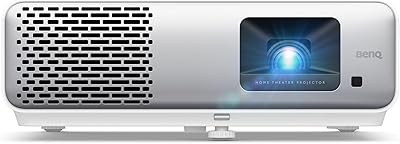
BenQ TK860i 4K Smart Home Theater Projector
85%
91%
Picture Quality
88%
Ease of Setup
87%
Connectivity Options
65%
Sound Quality
82%
Streaming Performance (Android TV)
More
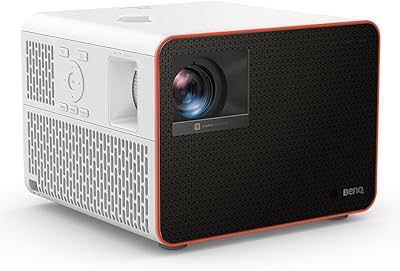
BenQ HT4550i 4K HDR LED Smart Home Theater Projector
85%
94%
Image Quality
89%
Brightness
93%
Color Accuracy
75%
Ease of Setup
65%
Sound Quality
More
BenQ HT2060 1080p Home Theater Projector
79%
93%
Color Accuracy
81%
Image Sharpness
76%
HDR Performance
89%
Gaming Performance
67%
Brightness & Room Versatility
More
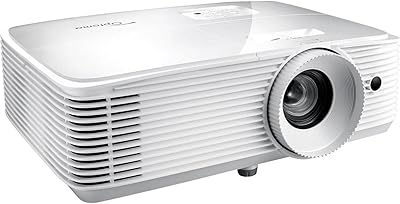
BenQ X3100i 4K Gaming Projector
86%
94%
Gaming Performance
91%
Image Quality
88%
Brightness in Well-Lit Rooms
95%
Input Lag and Responsiveness
73%
Sound Quality
More
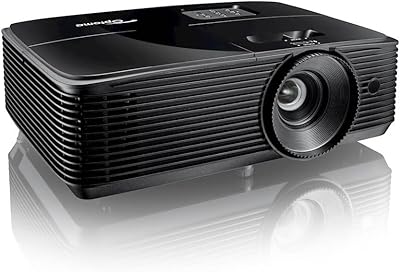
Optoma HD39HDR Home Theater Projector
76%
91%
Brightness Performance
88%
Gaming Performance
83%
Image Quality
67%
HDR Quality
79%
Color Accuracy
More
Optoma HD146X Home Theater Projector
74%
88%
Image Brightness
83%
Image Sharpness & Clarity
74%
Contrast & Black Levels
69%
Color Accuracy
77%
Gaming Performance
More
BenQ TK700 4K Gaming Projector
76%
91%
Gaming Performance
88%
Image Sharpness
86%
Dark Scene Quality
62%
Brightness & Ambient Light
89%
Input Lag
More
BenQ TK710STi 4K Short Throw Projector
77%
91%
Picture Quality
88%
Brightness in Real Rooms
89%
Gaming Performance
87%
Short Throw Convenience
78%
Setup & Calibration
More
Formovie Theater UST 4K Laser Projector
80%
89%
Picture Quality & Detail
83%
Brightness & Ambient Light Performance
86%
Color & HDR Performance
78%
Contrast & Black Levels
81%
Built-in Audio Quality
More
Epson Home Cinema 3200 4K Projector
82%
89%
Color Accuracy
86%
Brightness Performance
91%
Contrast & Black Levels
78%
4K Detail & Sharpness
84%
HDR Performance
More

FAQ

No, the TK800M does not include a built-in smart platform or any streaming apps. You will need to connect a separate device — such as an Amazon Fire TV Stick, Roku, or Apple TV — to one of the HDMI inputs. The USB port on the unit can supply power to a streaming dongle, which keeps the setup reasonably tidy. This is worth factoring into your total budget before purchasing.

For a 100-inch diagonal screen in a standard 16:9 aspect ratio, you are looking at roughly 8 to 11 feet of distance between the lens and the screen surface. The projector has an optical zoom, so you have some flexibility within that range. It is a good idea to measure your room carefully beforehand so you know the image size you can realistically achieve with your available depth.

The BenQ TK800M 4K Home Theater Projector includes a dedicated low input lag mode that reduces latency to a level suitable for console gaming on a PS4, Xbox, or Nintendo Switch. It is not a competitive gaming monitor, but for large-screen casual to mid-level play it performs well enough that most users will not find it frustrating. If you are a competitive multiplayer gamer where every millisecond matters, a dedicated gaming display will still serve you better.

The 3000-lumen output handles semi-dark conditions reasonably well — closing blinds and dimming overhead lights will give you a watchable image for casual viewing. Full daylight or a brightly lit room will wash the picture out significantly, so this is not the right tool for daytime use without some light management. For the color accuracy and HDR quality to truly come through, a dark or near-dark room is what you are aiming for.

Yes, the TK800M has two HDMI inputs, so you can keep both connected and switch between them using the remote. It also supports HDCP 2.2, which is the copy protection handshake required for 4K content playback from licensed Blu-ray and streaming sources, so compatibility is not a concern there.

The rainbow effect is a genuine characteristic of single-chip DLP technology, and this projector is not immune to it. Some viewers are sensitive and notice brief flashes of color fringing on high-contrast edges — particularly white text on dark backgrounds — while others never perceive it at all. There is no setting that removes it. If other DLP projectors have bothered you with this in the past, it is worth finding a way to audition this unit before committing.

The TK800M does include a built-in speaker, but it is modest and best suited for quick testing or temporary use. Most buyers setting up a proper home theater experience will want to route audio externally — to a soundbar, AV receiver, or speaker system — using the 3.5mm audio output or an HDMI audio extractor. The built-in speaker is not something you would want to rely on for regular film or sports viewing.

In Normal mode, the lamp is rated for around 4,000 hours, while SmartEco mode can stretch that to approximately 10,000 hours at a reduced brightness level. For someone watching a few hours per week, that could represent several years before a replacement is needed. BenQ lamp replacements are available through authorized channels, though they carry an ongoing cost that first-time projector buyers sometimes overlook when comparing total ownership expenses.

The projector offers vertical keystone correction, which addresses image distortion caused by the unit being pitched up or down relative to the screen. It does not include horizontal keystone adjustment, so significant left-right offset from the screen center cannot be corrected digitally — that requires physically repositioning the projector. For modest vertical misalignment, which is the most common real-world scenario, the keystone works well, though heavy correction can soften sharpness slightly at the edges.

That is a fair thing to check. The projector market has moved on since this model launched, and buyers comparing current options will find newer competitors offering competitive specifications at similar or lower price points. That said, this projector has a well-documented ownership track record, a large user community, and a reputable brand with established support — things that newer entrants may not yet have built. Running a direct comparison against current alternatives before purchasing is a genuinely smart step.