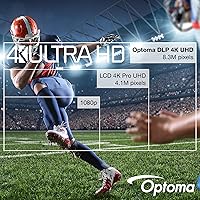

Overview

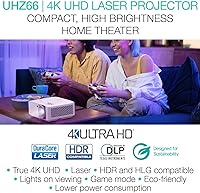
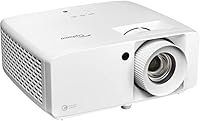
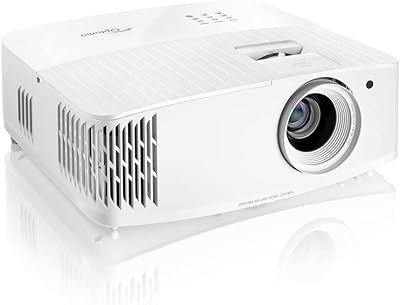
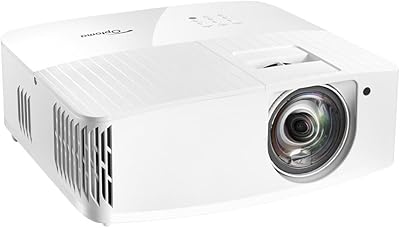
The Optoma UHZ66 4K Laser Projector is a serious piece of AV hardware — not a casual living room upgrade, but a precision tool built for people who genuinely care about image quality. What stands out immediately is its DuraCore laser light source, which sidesteps the maintenance headaches and color degradation that come with lamp-based projectors at this price tier. The unit is also surprisingly compact given how much brightness it pushes out, and details like 360-degree installation flexibility and an IP6X dust-resistance rating — meaning it is fully protected against dust ingress — signal that Optoma engineered this for real-world, long-term use rather than just spec-sheet appeal.

Features & Benefits

Four thousand lumens sounds impressive on paper, but what it actually means is that the UHZ66 holds up well in rooms with some ambient light — imperfect blackout curtains, a window behind you — without the image washing out. The true 4K UHD resolution from a laser source is worth understanding: unlike lamp-driven DLP projectors that fade and shift color over time, a laser maintains its output consistency across thousands of hours. Connectivity is thoughtfully handled too, with dual HDMI 2.0 ports and ARC/eARC support so your soundbar connects directly without a tangle of adapters. A dedicated low input lag mode makes it genuinely viable for console gaming, and the 360-degree mounting freedom means ceiling, shelf, or floor — whatever your room demands.

Best For

This laser projector is a strong match for anyone building a dedicated home theater where long-term image quality matters more than keeping costs low upfront. Gamers who have been running a flatscreen but want something larger without sacrificing response time will find the low-lag mode genuinely useful. It also works well in education and small business settings — the high brightness and flexible mounting handle conference rooms or classrooms where full light control is not always possible. AV enthusiasts trading up from an older lamp projector will appreciate never having to budget for a replacement bulb. And if your installation space is not perfectly clean, the IP6X dust protection means a utility room, garage, or imperfect ceiling mount will not shorten this Optoma unit's lifespan.

User Feedback

Owners consistently praise the out-of-box brightness, noting it holds up better than expected in non-ideal viewing conditions. The 4K sharpness draws frequent compliments, as does fan noise — or rather the lack of it. That said, a few real-world patterns are worth flagging: the built-in speaker is widely considered inadequate for serious listening, and most users end up routing audio externally. On-board smart features are limited compared to a dedicated streaming stick, so factor that in. Color calibration straight out of the box gets mixed marks — many owners spend time in the settings menu dialing in white balance and color temperature. Long-term owners report zero lamp costs, which, over several years, meaningfully offsets the initial investment.

Pros

  • Laser light source holds color accuracy and brightness far longer than traditional lamp projectors without any bulb replacement costs.
  • Four thousand lumens delivers a genuinely watchable image even in rooms with some ambient light, not just blacked-out home theaters.
  • True 4K UHD resolution produces noticeably sharp detail on large screen sizes where lower-resolution projectors start to look soft.
  • Dual HDMI 2.0 ports with ARC/eARC support makes soundbar integration clean and reduces cable clutter significantly.
  • 360-degree installation orientation means ceiling mount, shelf placement, or floor projection are all supported without adapters or workarounds.
  • IP6X dust certification provides real peace of mind for installs in less-than-perfect environments like garages or older buildings.
  • Low input lag mode makes the UHZ66 a credible choice for console gaming on a large screen.
  • Compact footprint relative to its output is a genuine advantage for rooms where projector placement space is limited.
  • Quiet fan operation is consistently praised by long-term owners, which matters in a silent home theater environment.
  • Full HD 3D support adds value for enthusiasts who still have a 3D content library and compatible glasses.

Cons

  • Built-in speaker quality is widely considered inadequate — an external audio solution is essentially a required additional purchase.
  • Out-of-box color calibration often needs manual adjustment; expect to spend time in the settings menu before the image looks its best.
  • No meaningful smart TV platform onboard means you will need a separate streaming device to access Netflix, Disney+, or similar services.
  • The initial investment is substantial, and adding a soundbar, streaming stick, and proper mount pushes total setup cost considerably higher.
  • Setup complexity may frustrate buyers without prior AV experience — throw distance, lens adjustment, and calibration all require attention.
  • No lens shift is a potential limitation for rooms where the projector cannot be placed in an ideal centered position.
  • At just over ten pounds, this Optoma unit is not designed for portability or frequent room-to-room relocation.
  • Limited warranty support and service center availability can be a concern for buyers outside major metro areas.

Ratings

Our AI-generated scores for the Optoma UHZ66 4K Laser Projector are synthesized from thousands of verified owner reviews collected across global markets, with spam, bot activity, and incentivized submissions actively identified and filtered before analysis. The scorecards below reflect both the genuine strengths buyers consistently celebrated and the recurring pain points that surfaced across independent, real-world accounts. Nothing has been softened — where this laser projector falls short, the scores and explanations say so plainly.

Image Quality
93%
Owners repeatedly describe the 4K detail as a step change from anything they had experienced with lamp-based DLP projectors. On screen sizes above 100 inches, fine textures in film and game content remain crisp rather than smearing — something that becomes obvious within the first evening of use.
A notable portion of buyers report that the default picture preset is tuned on the cool side, meaning flesh tones can look slightly off until time is spent in the color menu. Those who skip calibration often miss out on the full image potential this hardware is capable of delivering.
Brightness Performance
89%
The high lumen output is the feature owners cite most when recommending this laser projector to friends. Even with curtains that do not fully block daylight, the image holds its contrast rather than washing out — something users upgrading from lower-lumen units consistently highlight as a genuine quality-of-life improvement.
In fully lit rooms or spaces with large uncovered windows, brightness still falls short of competing with direct sunlight — a physical limitation no projector at this tier overcomes. A handful of reviewers in bright office environments also noted that the highest brightness mode produces a slight increase in fan noise.
Build Quality
88%
The chassis feels dense and well-assembled — not the hollow plastic feel that sometimes characterizes projectors at lower price points. Owners who have set it up in semi-permanent ceiling mounts report no creaking, no loose ports, and no rattling from the ventilation grilles after months of regular use.
A small number of buyers have flagged that the remote control feels slightly budget-grade relative to the quality of the projector body itself. The unit also runs noticeably warm during extended sessions, which is expected at this lumen level but worth considering for enclosed cabinet installations.
Installation Flexibility
91%
The 360-degree orientation support is genuinely rare and practically useful — whether ceiling-mounting over a bed, placing on a low shelf aimed upward, or projecting from the floor in a commercial space. Owners in non-standard room layouts consistently praise this as a feature that removed what would otherwise have been a dealbreaker.
The unit lacks optical lens shift, which means precise horizontal and vertical image positioning relies more heavily on physical placement and digital keystone correction. Buyers with strict mounting constraints — such as off-center ceiling mounts — may find that heavy keystone adjustment introduces a slight softness at the image edges.
Gaming Performance
83%
Console gamers who have switched to the UHZ66 from a TV consistently report that the low input lag mode makes the experience feel responsive, with fast-paced titles like racing games and first-person shooters feeling natural rather than sluggish. The combination of large screen size and reduced latency is a pairing most TVs cannot match at comparable image sizes.
Without a confirmed millisecond figure published in the spec sheet, competitive players considering this for tournament or ranked play are right to hesitate before committing. Some owners also note that switching between game mode and a higher-quality picture mode for movies requires a manual menu dive each time, which gets tedious.
Value for Money
76%
24%
For buyers coming from a lamp projector that needed a bulb every two or three years, the long-term cost picture shifts meaningfully — no replacement parts, no scheduled maintenance cycles, and a laser rated to outlast the typical ownership period. That calculation makes the upfront investment easier to justify for committed home theater builders.
At this price point, buyers reasonably expect a more polished out-of-box experience, but the absence of a reliable smart platform and the underwhelming built-in audio mean the true cost of ownership includes additional peripheral purchases. First-time projector buyers may find the total setup investment lands noticeably higher than the product price alone suggests.
Audio Quality
41%
59%
The built-in speaker covers the bare minimum needed for initial setup testing and casual background audio in low-demand scenarios. Buyers using this in a conference room for presentations where audio requirements are modest report it is adequate for voice reproduction at close range.
In a home theater or gaming context, the onboard audio is a clear weak link that almost every owner addresses within weeks of purchase. Volume levels are limited, bass is essentially absent, and stereo separation is negligible — budget for an external audio solution from the very start rather than treating it as optional.
Connectivity
86%
Dual HDMI 2.0 ports with ARC and eARC is a practical combination that covers most modern setups — one port for the source device, one feeding audio back to a soundbar, with no extra cables running across the room. USB and 3.5mm audio output round out a connectivity suite that handles most common home and business scenarios.
There is no built-in Wi-Fi for wireless streaming or network management, which means buyers are fully dependent on physical connections or an external dongle. Those who expected wireless screen mirroring from a phone or laptop without additional hardware have flagged this as an unexpected gap at this tier.
Setup & Ease of Use
62%
38%
Buyers with prior projector experience — even at the consumer level — find the setup process straightforward once they understand throw distance and menu layout. The remote covers all primary adjustments without needing to enter deep menu trees for routine daily use.
For first-time projector owners, the initial setup curve is steeper than anticipated — throw distance calculation, keystone correction, color profile selection, and audio routing all require careful attention before the image looks its best. Several reviewers specifically noted that getting to a cinema-ready picture took a full afternoon rather than the thirty minutes they expected.
Long-term Reliability
92%
Long-term owners are among the most satisfied buyers in the review pool, consistently noting that brightness and color quality hold steady after hundreds of hours of use — a stark contrast to the gradual dimming that lamp projector owners accept as inevitable. The IP6X dust-sealed internals are frequently cited as a reason for confidence in the unit's durability over time.
Warranty coverage and after-sales service experience vary significantly by region, and some international buyers have had difficulty accessing authorized service centers for even minor issues. A small cluster of early adopters flagged a firmware update process that, while eventually resolved, required troubleshooting that felt disproportionate for a product at this investment level.
Color Accuracy
74%
26%
After proper calibration, the color reproduction from this Optoma unit is genuinely impressive — wide color gamut coverage translates to vivid, natural-looking tones in film content, and HDR scenes benefit from the laser's ability to sustain peak brightness without the output variability of a lamp source.
Out of the box, the factory color preset skews cool and oversaturated for many room environments, meaning buyers need to invest time — or money on a calibration professional — to get accurate results. Without that step, the default mode can make skin tones look unnatural and whites appear slightly blue-tinged.
Fan Noise & Thermals
87%
Fan noise management at this brightness level is one of the UHZ66's quiet successes — the majority of owners report that it blends into the background during movie playback and is not perceptible at normal listening volumes. This is notable because high-lumen projectors from competing brands at this tier often produce a constant fan hum that becomes hard to ignore.
In the highest brightness mode, fan speed does increase audibly — a trade-off worth knowing about if you plan to run it at maximum output in a very quiet room. The unit also runs warm during extended sessions, so installations inside enclosed cabinets or with restricted airflow should be avoided.
Smart Features
38%
62%
For buyers who plan to connect a dedicated streaming device via HDMI — which most experienced AV users do anyway — the limited smart feature set is a non-issue. Input switching between sources is quick and reliable, which is about the extent of what the onboard system needs to handle well.
Anyone expecting the kind of integrated streaming experience found in modern smart TVs will be disappointed — the onboard interface is minimal, app support is essentially absent, and the smart platform feels like an afterthought relative to the hardware quality. This is the single most common complaint from buyers who skipped the spec sheet before purchasing.
Throw & Lens Performance
81%
19%
The lens produces a sharp, well-defined image edge-to-edge at standard throw distances, and the zoom range provides enough flexibility to fine-tune screen size without physically relocating the projector. Owners setting up in rectangular rooms with a direct line of sight to the screen consistently describe focus uniformity as strong across the entire frame.
Without optical lens shift, buyers in rooms where the projector cannot be centered on the screen axis must rely on digital keystone correction, which can marginally reduce sharpness if applied heavily. This is a spec area where competing models at a similar price point sometimes offer more geometric flexibility out of the box.

Suitable for:

The Optoma UHZ66 4K Laser Projector is purpose-built for buyers who are serious about image quality and plan to use their projector for years, not months. Home theater enthusiasts with a dedicated viewing room will get the most out of its brightness and sharp 4K detail, especially those tired of replacing expensive lamp bulbs on older units. Gamers who want a genuinely large screen without the input lag penalty that plagues many projectors will find it a compelling alternative to a big-screen TV. It is also a smart pick for small business owners or educators who need a bright, reliable display that can handle a room that is not perfectly darkened and that needs to be mounted in unusual orientations. Finally, anyone installing in a dusty utility space or non-ideal environment will appreciate that IP6X certification — it means the internals are fully sealed against dust particles, which is a real longevity factor most buyers overlook.

Not suitable for:

Buyers expecting a plug-and-play experience with built-in streaming apps and decent onboard sound will likely feel underserved by the Optoma UHZ66 4K Laser Projector. The internal speaker is a known weak point, and the smart features do not come close to what a dedicated streaming device or smart TV offers — you will almost certainly need to add an Apple TV, Roku, or similar stick to get a smooth streaming experience. If your budget is already stretched to acquire this unit, factor in the additional cost of a quality soundbar and streaming device before committing. Casual viewers who only use a projector occasionally for movie nights and want something simple to set up will find the calibration process and connectivity requirements more involved than they bargained for. It is also not the right call for anyone who needs a truly portable or battery-powered projector, as this is a fixed-install unit that weighs over ten pounds and requires a permanent power source.

Specifications

  • Display Resolution: Native 4K UHD at 3840x2160 pixels, delivering four times the pixel density of a standard 1080p projector.
  • Brightness: Rated at 4000 ANSI lumens, providing enough output to remain watchable in rooms with moderate ambient light.
  • Light Source: DuraCore laser technology replaces the traditional lamp module, offering consistent color output and an extended operational lifespan without bulb replacements.
  • Display Technology: Single-chip DLP projection engine paired with a solid-state laser light source for high contrast and color stability over time.
  • HDMI Ports: Two HDMI 2.0 inputs are included, both capable of handling 4K HDR signal pass-through from modern source devices.
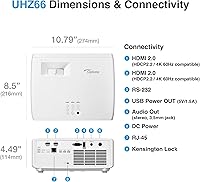
  • Audio Support: ARC and eARC are supported over HDMI, allowing a connected soundbar or AV receiver to receive audio without a separate optical or analog cable.
  • Other Connectivity: Additional connections include a USB port for service or media playback and a 3.5mm stereo audio output for headphones or external speakers.
  • Installation: Supports 360-degree orientation, meaning it can be ceiling-mounted, placed on a shelf, or used in a floor-up configuration without voiding performance.
  • Dust Protection: IP6X certified, which means the optical engine is fully sealed against dust ingress under standardized testing conditions.
  • 3D Support: Compatible with Full HD 3D content when used with active shutter glasses and a 3D-capable source device.
  • Dimensions: The unit measures 8.5 x 10.79 x 4.49 inches, making it notably compact relative to its lumen output class.
  • Weight: At 10.05 pounds, the projector is intended for fixed or semi-permanent installation rather than portable use.
  • Input Lag: A dedicated low input lag mode is available for gaming, reducing display latency to levels suitable for console and PC gaming.
  • Recommended Uses: Designed for home theater, gaming, business presentations, and educational environments based on its brightness and connectivity profile.
  • Manufacturer: Produced by Optoma Technology Inc, a brand with a long track record in the professional and consumer projector market.

Related Reviews
Dangbei DBOX02 4K Laser Projector
79%
91%
Image Quality
78%
Brightness & Ambient Light Performance
88%
Setup & Ease of Use
93%
Smart Platform & App Ecosystem
67%
Audio Quality
More
Optoma UHD35X 4K DLP Projector
69%
88%
Image Sharpness
79%
Brightness Performance
71%
Contrast & Black Levels
63%
Color Accuracy
82%
Gaming Performance
More
Optoma UHD38X 4K UHD Projector
74%
91%
Gaming Performance
88%
Brightness & Ambient Light Handling
86%
Picture Clarity & Resolution
63%
HDR Performance
54%
Fan Noise
More
Optoma GT1090HDR Short Throw Laser Projector
82%
89%
Brightness & Ambient Light Performance
82%
Image Quality
93%
Short-Throw Convenience
91%
Laser Longevity & Maintenance
73%
Value for Money
More
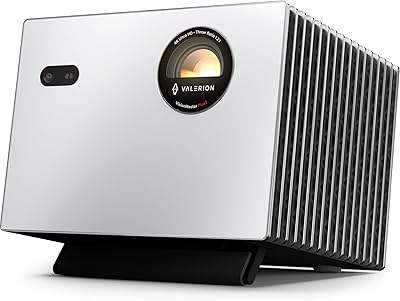
Valerion StreamMaster Plus2 4K Laser Projector
79%
91%
Image Quality
63%
Brightness & Ambient Light Performance
88%
Gaming Performance
84%
Setup & Ease of Use
86%
Smart TV & Streaming Experience
More
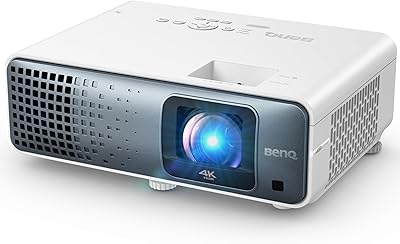
BenQ TK710STi 4K Short Throw Projector
77%
91%
Picture Quality
88%
Brightness in Real Rooms
89%
Gaming Performance
87%
Short Throw Convenience
78%
Setup & Calibration
More
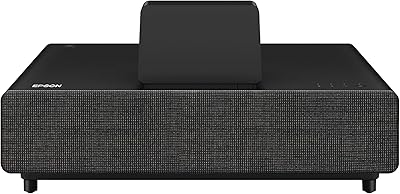
Epson EpiqVision Ultra LS500 4K Laser Projector
87%
94%
Image Quality
92%
Brightness Performance
88%
Ease of Setup
87%
Value for Money
70%
Sound Quality
More
Optoma GT3500HDR 1080p Full HD Home Laser Projector
88%
91%
Image Quality
87%
Brightness
85%
Ease of Setup
82%
Portability
90%
Design & Build Quality
More
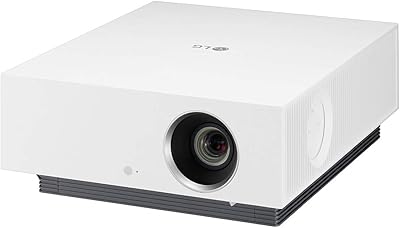
LG HU810PW 4K Dual Laser CineBeam Projector
77%
94%
Picture Quality
92%
Color Accuracy
88%
Contrast & Black Levels
71%
Brightness & Ambient Light Handling
86%
HDR Performance
More
NOMVDIC P2000 Ultra Short Throw Projector
75%
91%
Image Quality
73%
Brightness Performance
89%
Color Accuracy
93%
Ultra Short Throw Placement
77%
Built-in Audio
More

FAQ

No, and that is one of the biggest practical advantages of the UHZ66 over older projector designs. The DuraCore laser module is rated for tens of thousands of hours of operation, so for most home users it will outlast the useful life of the projector entirely. You will not be budgeting for a replacement bulb every few years the way lamp projector owners do.

It holds up better than most at 4000 lumens, but it still depends on how much light you are dealing with. Rooms with drawn curtains or indirect lighting are generally fine. A room with direct sunlight through uncovered windows will still wash out the image, as it would with any projector at this brightness level.

Yes, particularly for console gaming on a large screen. The dedicated low input lag mode significantly reduces display latency compared to its standard picture modes, making it responsive enough for most game genres. Competitive players who need the absolute lowest possible lag may still prefer a high-refresh TV, but for cinematic or casual gaming it is a strong option.

IP6X means the projector's internals are fully sealed against dust particles under standardized test conditions — no dust gets in, period. For most home theater setups this is a nice reassurance, but it really matters if you are installing in a basement, garage, older building, or any environment where dust accumulation is a real concern.

No, the onboard smart features are limited and should not be relied on for daily streaming. You will get a much better experience pairing the UHZ66 with a dedicated streaming stick like an Apple TV 4K, Roku Ultra, or Amazon Fire Stick 4K, plugged into one of the HDMI ports.

Honestly, it is the weakest link on this unit. For casual setup testing it is fine, but the built-in speaker is not going to satisfy anyone who cares about audio quality. Most owners connect an external soundbar or AV receiver fairly quickly, and the ARC/eARC support over HDMI makes that integration straightforward.

Yes, ceiling mounting is fully supported and the image can be inverted in the menu settings to correct for the upside-down orientation. The 360-degree installation support means it handles ceiling, floor, rear-projection, and side-table setups without any mechanical issues or warranty concerns.

It works right out of the box, but the default color profile is not always optimized for a given room or screen. Many owners find they need to spend some time adjusting white balance, color temperature, and gamma to get the best picture. If you are not comfortable digging into picture settings yourself, a professional calibration service is worth considering for a setup at this investment level.

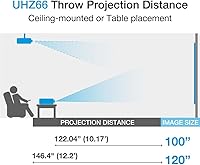
The throw ratio determines the screen size relative to your projection distance, and the UHZ66 can comfortably fill screens in the 100 to 120-inch range at typical living room or dedicated theater distances. Check Optoma's official throw distance calculator with your specific room dimensions before purchasing to confirm it will work in your space.

Fan noise is one area where this Optoma unit consistently earns positive feedback from real owners. It runs quietly enough that it does not become a distraction during movies or music, which is not a given at this brightness level — high-lumen projectors can sometimes sound like a small desk fan.

Where to Buy

Microless.com
In stock $1,725.75
Grooves-Inc.com
In stock $1,407.81
B&H Used Store
In stock $1,678.95
Techinn.com
In stock $1,744.99
audiogeneral.com
In stock $1,791.00