Overview

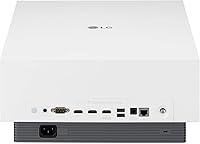
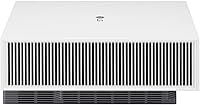
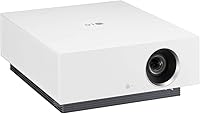
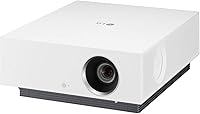
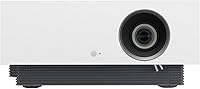
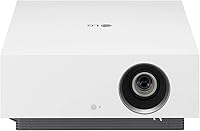
The LG HU810PW 4K Dual Laser CineBeam Projector is not a casual weekend purchase — it is a serious investment for people who want a genuine cinema experience at home. Where most projectors rely on a single lamp that dims and degrades over time, this dual laser projector uses two laser light sources to maintain brightness and color fidelity across thousands of hours. It can throw an image up to 300 inches, which sounds excessive until you experience it filling an entire wall. At 24.3 pounds with a 13.3 x 16.1-inch footprint, placement takes real planning — but webOS 5.0 is built in, so you can skip the extra streaming stick entirely.
Features & Benefits

The dual laser light source is where this home theater projector genuinely separates itself from the competition. Unlike a lamp, which loses significant brightness within a year or two of regular use, two laser diodes hold their output far longer and more consistently — the image at year three should look close to what you saw on day one. The 97% DCI-P3 color coverage translates into colors that feel rich and dimensional rather than washed out or artificially punched up. A 2,000,000:1 contrast ratio means dark scenes actually look dark, with real shadow detail in HDR content. Lens shift adds meaningful placement flexibility without forcing you to rely on digital keystone correction, which always costs image quality.

Best For

This dual laser projector rewards environments where you can control the light. A dedicated home theater with blackout curtains is the ideal match — in a fully darkened room, 2700 ANSI lumens produces a bright, punchy image at large sizes. In a living room with sunlight coming through, the picture will wash out noticeably, so ambient light control is non-negotiable at this screen scale. It is a natural fit for 4K Blu-ray collectors and streaming enthusiasts who prioritize color accuracy over raw brightness. If you are considering replacing a large TV with something that actually feels cinematic, this is a compelling path. The built-in smart platform and wireless connectivity keep the final setup surprisingly clean.

User Feedback

Owners consistently highlight out-of-box color accuracy as a standout strength — most report that minimal calibration is needed to achieve a picture that looks genuinely cinema-grade. The LG CineBeam HU810PW also earns praise for laser longevity, with long-term users noting that brightness holds up well after years of regular viewing. That said, fan noise comes up repeatedly, particularly during quiet dialogue scenes where the cooling system becomes more audible than some buyers anticipate at this price tier. Gamers should take note: input lag has been flagged as a concern, making this home theater projector better suited for films and TV than fast-paced gaming. Setup can also demand patience, especially when dialing in lens shift from a non-ideal mounting position.

Pros

  • Dual laser light source maintains brightness and color accuracy far longer than traditional lamp-based projectors.
  • Out-of-box picture quality is excellent — most owners report needing very little calibration to get a great image.
  • 97% DCI-P3 color coverage produces rich, nuanced tones that feel cinematic rather than artificially saturated.
  • The 2,000,000:1 contrast ratio delivers genuinely deep blacks and impressive shadow detail in HDR content.
  • Lens shift allows flexible physical placement without sacrificing image geometry the way digital keystone correction does.
  • Built-in webOS 5.0 supports major streaming apps, eliminating the need for a separate media player.
  • Long-term owners consistently report that laser brightness holds up well even after years of regular use.
  • AirPlay and Miracast support make wireless screen mirroring from phones and laptops straightforward.
  • The ability to project up to 300 inches offers a cinematic scale that no flat-panel display can match.

Cons

  • Fan noise is a recurring complaint — it can become noticeable during quiet dialogue scenes or subtle soundscapes.
  • Input lag makes this home theater projector a poor fit for serious or fast-paced gaming.
  • Ambient light is a genuine enemy here — without blackout curtains, image quality drops considerably.
  • At 24.3 pounds and with a large footprint, this is not a portable or easy-to-reposition unit.
  • Setup complexity, particularly dialing in lens shift and achieving a perfectly aligned image, takes time and patience.
  • The premium price point puts it out of reach for buyers who are not fully committed to a dedicated viewing setup.
  • No mention of a short-throw or ultra-short-throw option — room depth requirements may be an issue in smaller spaces.
  • webOS 5.0, while capable, is an older smart platform that may not receive software updates indefinitely.

Ratings

The scores below reflect an AI-driven analysis of verified owner reviews for the LG HU810PW 4K Dual Laser CineBeam Projector, sourced globally and filtered to remove incentivized, bot-generated, and spam submissions. Every category is scored to honestly represent where this home theater projector excels and where real buyers have run into friction — nothing has been softened to protect the rating.

Picture Quality
94%
Owners consistently describe the image as the closest thing to a commercial cinema they have experienced at home, particularly when watching 4K Blu-ray in a darkened room. The color accuracy out of the box is frequently praised — vivid without looking cartoonish, and natural skin tones hold up well across a wide range of content.
A small subset of users note that achieving truly reference-accurate calibration requires a colorimeter and some technical patience. The picture also softens slightly at the extreme edges of very large screen sizes, which a minority of perfectionists find distracting.
Color Accuracy
92%
The dual laser engine pushing 97% DCI-P3 coverage makes a visible difference compared to single-laser and lamp-based rivals — greens and reds in particular look rich and dimensional rather than flat. Film enthusiasts who switch from a high-end OLED TV often note this dual laser projector holds its own surprisingly well in terms of color fidelity.
Some users report that certain streaming apps, when accessed through webOS, apply their own tone mapping that can slightly shift colors away from the projector's calibrated profile. Getting the most out of color accuracy with HDR streaming content sometimes requires per-app tweaking rather than a single set-and-forget configuration.
Contrast & Black Levels
88%
The 2,000,000:1 contrast ratio translates into genuinely impressive dark-scene performance — viewers watching films like sci-fi thrillers or noir dramas note that shadow detail stays visible without lifting blacks into murky grey. HDR content in particular benefits noticeably, with bright highlights and deep blacks coexisting in the same frame in a way that cheaper projectors simply cannot manage.
Laser projectors inherently cannot match OLED panels for absolute black levels, and in mixed-brightness scenes some owners observe a slight glow in areas that should be completely black. In rooms that are not fully darkened, this limitation becomes more pronounced and the contrast advantage shrinks considerably.
Brightness & Ambient Light Handling
71%
29%
In a properly darkened room, 2700 ANSI lumens produces a bright, punchy image even at screen sizes above 120 inches — a level of output that keeps the picture from looking dull or washed out during daytime viewing with blackout curtains drawn. Long-term owners also confirm that brightness holds steady over years of use, which is a meaningful practical advantage of the dual laser light source.
Any meaningful ambient light — an open window, a lamp left on, sunlight through thin curtains — visibly degrades the image at large screen sizes. Users who expected to use this home theater projector in a semi-lit living room without room treatment modifications have been notably disappointed, and this is the single most common source of buyer regret in the feedback.
HDR Performance
86%
Dynamic Tone Mapping processes HDR10 and HLG content in real time, and owners who primarily watch Netflix and 4K Blu-ray notice it doing real work — bright specular highlights like sunlight on water or candle flames look distinctly more three-dimensional than with standard SDR content. The HLG support is a practical bonus for broadcast viewers with access to HDR TV channels.
The projector does not support Dolby Vision, which is a notable omission at this price tier and disappoints buyers who stream heavily from platforms where Dolby Vision is the dominant HDR format. HDR performance also varies depending on the source — some streaming services deliver compressed HDR that underperforms compared to physical media on this display.
Setup & Installation
67%
33%
Lens shift is a genuine practical asset during installation — it gives you meaningful flexibility to fine-tune image position without touching digital keystone correction, which preserves sharpness in a way that tilt-based adjustments cannot. Users who take the time to plan their room layout and throw distance in advance report a satisfying first-time setup experience.
Getting the image perfectly aligned and optimized is not a plug-and-play process for most buyers — multiple owner reviews mention spending several hours across two or three sessions dialing in placement, focus, and picture settings. For ceiling mount installations, the process is more involved and almost always benefits from a second pair of hands.
Smart Platform (webOS)
74%
26%
webOS 5.0 covers the major streaming apps most users need, and the interface is responsive enough that reaching for a separate streaming stick feels unnecessary for day-to-day use. AirPlay integration works reliably for iPhone and Mac users who want to mirror content quickly without fussing with cables.
webOS 5.0 is not the current version of the platform, and some apps — most notably Disney+ and a few regional streaming services — have reported inconsistent performance or update delays compared to dedicated streaming hardware. Buyers with a broad streaming library across niche platforms may still find an external media player necessary.
Fan Noise
58%
42%
During most film and TV content where the audio track is active, the fan noise sits below the threshold of distraction for the majority of owners. Users watching in rooms with a moderate level of acoustic treatment or soft furnishings tend to notice it less than those in bare, reverberant spaces.
Fan noise is one of the most commonly cited complaints in owner feedback, particularly during quiet scenes — slow dramas, arthouse films, and nature documentaries where silence is part of the experience. Several long-term owners describe learning to tolerate it rather than it ever fully disappearing into the background, which is a meaningful quality-of-life drawback at this investment level.
Gaming Performance
48%
52%
For slow-paced single-player titles — open-world exploration games, narrative adventures, or strategy games — the image quality is genuinely impressive and the scale of a large projection adds an immersive quality that a TV cannot replicate. Casual gamers who are not sensitive to input lag often report an enjoyable experience.
Input lag is a consistent and unambiguous complaint from gaming-focused buyers, with multiple owners specifically flagging it as a dealbreaker for anything requiring fast reflexes or competitive play. The LG CineBeam HU810PW was simply not designed with low-latency gaming as a priority, and its response times reflect that clearly.
Build Quality & Design
82%
18%
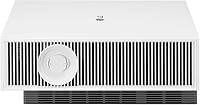
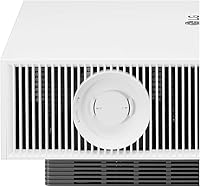
The chassis feels appropriately substantial for a premium home theater product — the white finish is clean and modern without looking plasticky, and owners note that the unit feels reassuringly solid when handled during installation. Controls and ports are logically laid out, and the overall construction gives the impression of a product built to last.
At 24.3 pounds, handling the unit during ceiling mount installation is physically awkward without assistance. A few owners mention that the white exterior shows dust more visibly than a matte black alternative would, which is a minor but recurring aesthetic nuisance in home environments.
Laser Longevity
91%
Long-term owners are among the most satisfied segment of the review pool — those who have used this dual laser projector for two or more years consistently report that brightness and color have not degraded perceptibly, which directly validates the dual laser architecture over traditional lamp replacements. The absence of a lamp replacement cost or cycle is a meaningful long-term financial and practical advantage.
Because this is still a relatively recent product category, very few owners have reached the 10,000-plus hour mark that would constitute a true long-term durability data point. Early indicators are positive, but buyers should understand that projecting decade-long laser reliability is still partly inferential at this stage.
Wireless Connectivity
77%
23%
AirPlay, Miracast, and Bluetooth work reliably for the everyday tasks owners typically use them for — mirroring a phone to share holiday photos on a large screen, connecting Bluetooth headphones for late-night viewing, or casting casual video content from a laptop. The range of wireless options reduces cable clutter for users who want a clean installation.
For sustained 4K streaming over AirPlay specifically, a handful of owners report occasional buffering or resolution drops that do not occur when using a wired HDMI source, suggesting the wireless path has limitations for the most demanding content. Bluetooth audio also introduces a slight latency that becomes noticeable when watching content with sensitive lip-sync requirements.
Value for Money
79%
21%
Buyers who set up this home theater projector in the right environment — a darkened room, a quality screen, and a capable audio system — describe the total experience as genuinely justifying the outlay, particularly when compared against the cost of a comparable-size direct-view display. The laser longevity argument also makes the total cost of ownership more favorable over a multi-year horizon than it might first appear.
For buyers who end up in a less-than-ideal room environment, or who discover the input lag limits their gaming use, the value calculation shifts considerably. The price point leaves no room for the setup to underperform — buyers who have not fully committed to the right use case often feel it did not live up to expectations relative to what they spent.

Suitable for:

The LG HU810PW 4K Dual Laser CineBeam Projector is purpose-built for buyers who take their home viewing seriously and are willing to set up an environment that lets it perform at its best. Cinephiles with a dedicated theater room — or even a living room they can reliably darken with blackout curtains — will find the combination of near-DCI-P3 color accuracy and deep contrast delivers a picture that genuinely rivals a commercial cinema screen. It is an especially strong match for 4K Blu-ray collectors who want their physical media to shine at scales simply not possible with any flat-panel TV. Streaming enthusiasts also benefit from the built-in webOS 5.0 platform, which handles Netflix, Apple TV, and other services without any external device. Those looking to replace a large television rather than supplement one will appreciate the flexibility of a 300-inch capable throw that disappears entirely when not in use — something no screen can offer.
Not suitable for:

The LG HU810PW 4K Dual Laser CineBeam Projector is a hard sell for anyone who cannot or will not control the ambient light in their viewing space. At 2700 ANSI lumens, it is reasonably bright for a laser projector, but a sunlit living room or open-plan space will wash out the image significantly — the stunning contrast ratio becomes largely irrelevant under those conditions. Buyers hoping to use this as a primary gaming display should also think twice, as reported input lag makes it poorly suited to fast-paced or competitive titles. The physical size and 24.3-pound weight mean casual placement is not realistic — ceiling mounting or a dedicated shelf is essentially required for a permanent setup, which adds cost and installation effort. Finally, anyone with a modest budget or without a room that can double as a real screening space will find the value proposition much harder to justify.
Specifications

  • Resolution: Outputs native 4K UHD at 3840 x 2160 pixels for sharp, detailed images at any supported screen size.
  • Light Source: Dual laser engine delivers consistent brightness and color accuracy over a significantly longer lifespan than lamp or single-laser alternatives.
  • Brightness: Rated at 2700 ANSI lumens, suitable for dark or well-dimmed rooms but not recommended for spaces with strong ambient light.
  • Contrast Ratio: A 2,000,000:1 contrast ratio enables deep blacks and fine shadow detail, particularly noticeable in HDR content.
  • Color Coverage: Covers 97% of the DCI-P3 color space, producing cinema-accurate color reproduction across a wide range of content types.
  • HDR Support: Compatible with both HDR10 and HLG formats, with Dynamic Tone Mapping applied to optimize HDR output in real time.
  • Screen Size: Capable of projecting an image up to 300 inches diagonally, depending on throw distance and room configuration.
  • Smart Platform: Runs webOS 5.0 with built-in access to major streaming applications, reducing the need for any external media player.
  • Wireless: Supports AirPlay, Miracast, and Bluetooth for wireless streaming and audio connectivity without additional adapters.
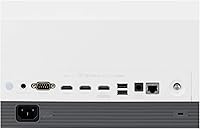
  • Wired Connectivity: Includes HDMI and USB ports for connecting external source devices, storage media, and accessories.
  • Lens Shift: Optical lens shift is supported, allowing physical image repositioning without introducing the distortion associated with digital keystone correction.
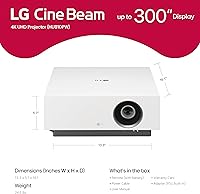
  • Dimensions: The unit measures 13.3 x 16.1 x 5.7 inches, requiring a stable, dedicated surface or ceiling mount for permanent installation.
  • Weight: Weighs 24.3 pounds, making it a fixed-placement unit rather than a portable or frequently moved projector.
  • Remote Batteries: The included remote control requires two AAA batteries, which are not included in the box.
  • Manufacturer: Designed and manufactured by LG Electronics, a South Korean multinational with an established track record in display technology.
  • Model Number: Official model number is HU810PW; the white colorway is the standard retail variant for this generation.
  • Release Date: First made available in January 2021, positioning it within LG's CineBeam laser projector lineup for that product cycle.
  • Discontinuation: As of the time of this review, LG has confirmed this model is not discontinued and remains an active product in their lineup.

Related Reviews

LG CineBeam HU70LAB 4K UHD Projector
76%
88%
Image Quality
58%
Brightness & Ambient Light
91%
Color Accuracy
63%
Setup & Installation
79%
Smart Platform & Apps
More
LG CineBeam Q 4K Portable Projector
77%
91%
Image Quality
61%
Brightness & Ambient Light Performance
88%
Portability & Form Factor
86%
Auto Setup & Ease of Use
93%
Color Accuracy
More
Dangbei DBOX02 4K Laser Projector
79%
91%
Image Quality
78%
Brightness & Ambient Light Performance
88%
Setup & Ease of Use
93%
Smart Platform & App Ecosystem
67%
Audio Quality
More
BenQ TK710STi 4K Short Throw Projector
77%
91%
Picture Quality
88%
Brightness in Real Rooms
89%
Gaming Performance
87%
Short Throw Convenience
78%
Setup & Calibration
More
Optoma UHZ66 4K UHD Laser Projector
86%
94%
Image Quality
92%
Brightness Performance
76%
Ease of Setup
90%
Build Quality
89%
Gaming Performance
More
Valerion StreamMaster Plus2 4K Laser Projector
79%
91%
Image Quality
63%
Brightness & Ambient Light Performance
88%
Gaming Performance
84%
Setup & Ease of Use
86%
Smart TV & Streaming Experience
More
Epson EpiqVision Ultra LS500 4K Laser Projector
87%
94%
Image Quality
92%
Brightness Performance
88%
Ease of Setup
87%
Value for Money
70%
Sound Quality
More
Formovie Theater Ultra Short Throw 4K Laser Projector
86%
94%
Picture Quality
88%
Ease of Setup
85%
Audio Performance
77%
Brightness
90%
Connectivity
More
NOMVDIC P2000 Ultra Short Throw 4K Laser Projector
85%
92%
Image Quality
89%
Ease of Setup
85%
Value for Money
88%
Connectivity Options
75%
Audio Quality
More
Hisense PX3-PRO Ultra Short Throw 4K Laser Projector
86%
94%
Image Quality
88%
Setup & Installation
91%
Brightness in Ambient Light
92%
Color Accuracy
85%
Sound Quality
More

FAQ

Not completely dark, but close to it for the best experience. The LG HU810PW 4K Dual Laser CineBeam Projector performs beautifully in a well-dimmed room, but if you have windows letting in daylight or bright overhead lighting, the image will wash out noticeably at large screen sizes. Blackout curtains make a significant practical difference if you plan to use it in a living room rather than a purpose-built theater space.
Fan noise is something real owners mention consistently, so it is worth being upfront about. During action sequences or dialogue-heavy scenes with active audio, most people do not notice it. During very quiet scenes — slow dramatic films, nature documentaries — the cooling fan becomes more audible and can be a mild distraction, especially in a silent room. It is not unusually loud for a projector of this class, but it is present.

Technically yes, but practically it depends on what you play. For casual gaming, slower-paced RPGs, or story-driven titles, the experience is fine and the image quality is genuinely impressive. For competitive multiplayer or fast-reflex games, the input lag has been flagged by multiple owners as a real issue. If gaming is your primary use case, this home theater projector is probably not the right tool for that job.

LG rates the laser module for around 20,000 hours of use, which is dramatically longer than a typical lamp projector running 3,000 to 5,000 hours. Long-term owners have noted that brightness holds up well over years of regular viewing, which is one of the practical advantages of dual laser technology. For most home users watching a few hours per night, this could realistically last well over a decade before any noticeable degradation.

It runs webOS 5.0 natively, which includes access to major streaming platforms like Netflix, Amazon Prime Video, Disney+, and Apple TV, among others. For most users, a separate streaming device is not necessary. That said, webOS 5.0 is not the latest version of the platform, so if app selection ever becomes a concern down the road, plugging in an external stick is always an option via HDMI.

Lens shift is genuinely one of the more underappreciated features here. It lets you physically move the projected image vertically and horizontally without tilting the projector or relying on digital keystone correction, which degrades sharpness. If your installation position is not perfectly centered in front of the screen — which is common in real rooms — lens shift lets you compensate cleanly. The exact range of adjustment is limited, so for very extreme placements, you may still need to factor in throw distance carefully.

Ceiling mounting is fully supported and is actually the preferred setup for many owners who want a clean, permanent installation. The unit is compatible with standard projector ceiling mounts. Given its 24.3-pound weight, you will want a mount rated for that load and ideally secured to a ceiling joist rather than drywall alone. Table placement works fine too, but ceiling mounting keeps the throw path clear and makes the room setup much tidier.

Genuinely impressive for a projector at any price. Most owners report that the default Cinema or Filmmaker picture mode is close enough to accurate that casual viewers need not touch anything. For those who want to fine-tune, there is enough room in the settings to push closer to reference calibration. The 97% DCI-P3 coverage is not just a marketing claim — colors look rich and natural rather than oversaturated or flat.

The 300-inch maximum is achievable but requires a very long throw distance that most rooms cannot accommodate. In a typical living room or basement with around 12 to 15 feet of throw distance, you are looking at a 100 to 150-inch image, which is still far larger than any consumer TV. That size range is where the LG CineBeam HU810PW produces its most practical and impressive results for everyday viewing.

Yes, AirPlay 2 is supported alongside Miracast and Bluetooth. AirPlay works reliably for mirroring from iPhones, iPads, and Macs, and most users find it stable enough for casual use. For sustained 4K streaming, a wired HDMI connection from an Apple TV or similar device will always be more consistent than wireless mirroring, but for sharing photos, casual video, or quick screen mirroring, AirPlay is a genuinely convenient built-in feature.

Where to Buy