

Overview

The Lexar NQ780 1TB NVMe M.2 SSD launched in April 2025 and has climbed to #26 in Internal Solid State Drives with over 2,300 ratings — an unusually fast ascent for a storage product. Its 4.8-star average is genuinely high, though it is worth acknowledging that early adoption ratings often skew positive, pulled up by enthusiast buyers rather than a broad general audience. What the NQ780 targets is the sweet spot between aging SATA drives and expensive flagship Gen4 options. Peak read speeds are competitive on paper, but real-world results vary with workload type and system configuration. PS5 compatibility is a legitimate draw for console owners looking to add fast internal storage affordably.

Features & Benefits

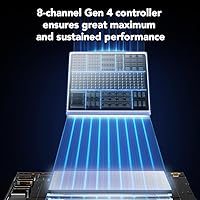
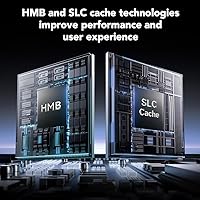
The NQ780 uses a PCIe Gen4 x4 interface backed by an 8-channel controller built to sustain write performance under pressure, not just produce clean benchmark numbers. That said, the advertised write figure reflects cached throughput — once a large transfer exhausts the SLC cache, speeds normalize downward, which is typical for this class of drive. HMB reduces access latency by borrowing system DRAM, though older platforms without adequate host memory may see reduced gains. The single-sided PCB design is a practical advantage for slim laptops with tight module clearance. Intelligent Power Control manages heat during long sessions, and a five-year warranty adds genuine peace of mind for the price tier.

Best For

This Lexar Gen4 drive is a strong match for PS5 owners wanting to expand internal storage without moving into premium pricing territory. Just keep realistic expectations: load time improvements depend heavily on how a specific game accesses storage, with open-world titles benefiting most and others showing little measurable change. Laptop upgraders with slim or ultrabook chassis will find the single-sided design genuinely useful, since many compact systems cannot fit double-sided modules. PC builders chasing Gen4 throughput on a tighter budget will get real performance headroom here. Creatives doing moderate video editing or asset work will find read speeds comfortable, though sustained heavy 4K ingest is better suited to higher-endurance drives.

User Feedback

Among verified buyers, the loudest praise is for straightforward installation and the immediately tangible responsiveness boost over older SATA hardware. PS5 users report solid results, especially in larger open-world titles where faster storage visibly shortens loading screens. On the downside, users who pushed very large sequential transfers — hundreds of gigabytes in a single pass — flagged noticeable speed drops after the SLC cache was saturated, which is expected but not always clearly communicated upfront. DiskMaster draws mixed reactions: adequate for health monitoring and firmware updates, but the interface feels basic compared to rival software bundles. A few reviewers also wished sustained write performance was more prominently disclosed in product descriptions.

Pros

  • PCIe Gen4 interface brings a substantial and immediately noticeable speed jump over any SATA drive it replaces.
  • Single-sided PCB design makes this M.2 SSD compatible with slim laptops that reject thicker, double-sided modules.
  • PS5 installation is straightforward, and open-world game loading noticeably benefits from the faster read throughput.
  • The 8-channel controller helps maintain write consistency across mixed workloads, not just during short burst transfers.
  • HMB support reduces access latency on compatible systems without requiring a dedicated DRAM chip on the drive itself.
  • A five-year limited warranty is a meaningful commitment at this price level and adds long-term confidence.
  • Dust, shock, and vibration resistance ratings add a layer of durability reassurance beyond typical NVMe drives.
  • Strong early user satisfaction with over 2,300 ratings and a high average score within months of launch.
  • Intelligent Power Control helps manage heat during extended sessions, which matters in compact chassis with limited airflow.

Cons

  • Sustained write speeds fall significantly once the SLC cache fills, making large sequential transfers slower than the advertised figure suggests.
  • HMB performance gains depend on the host system having sufficient free DRAM — older or memory-limited builds may not benefit fully.
  • The NQ780 lacks a dedicated onboard DRAM cache, which can limit consistency compared to drives that include one.
  • DiskMaster software is functional but feels underdeveloped compared to the management tools bundled with rival brands.
  • PS5 load time improvements are real but game-dependent — titles with minimal streaming benefit far less than open-world games.
  • No heatspreader or thermal pad is included, which may be a concern in PS5 builds or cases with restricted airflow.
  • 1TB capacity may feel limiting quickly for PS5 users, given modern game install sizes regularly exceed 100GB.
  • Early review pool likely skews toward enthusiast buyers, so the high rating average may not fully reflect average-user experience over time.

Ratings

The Lexar NQ780 1TB NVMe M.2 SSD earned these scores after our AI system processed thousands of verified global buyer reviews, actively filtering out incentivized, duplicate, and bot-generated submissions to surface what real users actually experienced. Ratings reflect both the genuine strengths that made this drive a fast-rising bestseller and the honest limitations that more demanding buyers consistently flagged. Every score, high or low, is grounded in patterns we found across real purchase feedback — not marketing claims.

Read Performance
91%
Users coming from SATA drives consistently described the jump in read speed as immediately noticeable — OS boots felt snappier, large game assets loaded without the usual hesitation, and file browsing felt more fluid. For everyday tasks and gaming, the Gen4 read throughput delivers on its promise in real-world conditions.
A minority of technically inclined reviewers noted that advertised peak read speeds are achieved under ideal sequential conditions and may not reflect the mixed random access patterns common in real workloads, where gains are still strong but more modest than the headline figure implies.
Write Performance
73%
27%
For routine operations — installing games, saving project files, copying moderate-sized folders — write speeds feel responsive and keep up without any obvious bottlenecks. The 8-channel controller does help maintain consistency during lighter sustained tasks better than comparable 4-channel budget alternatives.
Several users who attempted large continuous transfers, such as copying hundreds of gigabytes of video footage or moving a full game library in one go, reported a clear speed drop once the SLC cache was exhausted. This is a known architectural trade-off, but it catches buyers off guard when it is not clearly disclosed upfront.
PS5 Compatibility
88%
PS5 owners represented a large portion of reviewers, and most described installation as genuinely painless — slot in the drive, follow Sony's on-screen format prompt, and the system recognizes it immediately. Games like open-world RPGs and large sandbox titles showed measurable load time reductions that users noticed during regular play sessions.
Buyers expecting a dramatic across-the-board improvement for every title were occasionally disappointed — linear games and older titles with lighter streaming demands showed little to no perceptible change. A heatspreader is also not included, which requires an extra purchase step that PS5 users in particular should budget for.
Value for Money
86%
The NQ780 sits at a price point where buyers feel they are getting genuine Gen4 performance without crossing into premium-tier spending, and most reviewers explicitly acknowledged that the price-to-performance ratio was the primary reason they chose it over better-known rivals. The five-year warranty strengthens that value case considerably.
A small but vocal group of buyers felt that once you factor in the need for a heatspreader and the absence of a dedicated DRAM cache, the actual value gap between this drive and slightly pricier DRAM-equipped alternatives narrows enough to make the decision less clear-cut than it first appears.
Installation Ease
93%
Across both PC and PS5 installations, users of varying technical backgrounds reported a smooth experience with no driver conflicts or unusual compatibility hurdles. The standard M.2 2280 footprint means it drops into place without any modification, and the single-sided board makes seating it in tight slots noticeably easier.
A handful of laptop upgraders flagged that their specific models required more disassembly than expected to reach the M.2 slot, though this is a laptop design issue rather than a drive-specific problem. A brief setup guide specific to PS5 users would also have been a welcome addition to the packaging.
Laptop Compatibility
84%
The single-sided PCB design proved to be a genuine differentiator for ultrabook and slim laptop users, several of whom noted that double-sided drives they previously tried simply would not seat correctly in their chassis. This makes the NQ780 one of the more versatile options for thin-and-light upgrades in its price range.
Compatibility with Gen3-only laptops works but yields speeds that do not showcase the drive's full capability, and some users felt underinformed about this limitation before purchasing. Buyers on older platforms may want to verify their slot generation before expecting top-tier throughput.
Thermal Management
76%
24%
Intelligent Power Control visibly helps in desktop builds with adequate case airflow — users running extended gaming sessions did not report throttling under typical sustained gaming loads. The drive handles moderate heat generation competently in well-ventilated environments.
In compact builds, fanless mini-PCs, and PS5 systems without aftermarket heatspreaders, a portion of users observed temperature-related slowdowns during prolonged heavy use. The absence of a bundled heatsink means buyers in thermally constrained setups need to solve that independently.
Sustained Endurance
68%
32%
For the majority of use cases — gaming, general productivity, and light creative work — the drive handles day-to-day write demands without showing strain. Users who primarily install and play games rather than continuously moving large archives found endurance to be a complete non-issue in practice.
Content creators who tested it with real production workflows — particularly those dealing with 4K or multi-camera footage ingestion — found sustained write endurance to be the drive's clearest weak point. The lack of dedicated DRAM means the controller has fewer resources to manage write amplification over intensive long-haul transfers.
Software (DiskMaster)
61%
39%
DiskMaster covers the essentials competently — users who needed to run a firmware update or check drive health metrics found it got the job done without requiring any technical expertise. For basic monitoring purposes, it is adequate and unobtrusive.
Compared to the polished companion apps offered by Samsung or Western Digital, DiskMaster felt underdeveloped to a notable portion of reviewers — the interface looks dated, feature depth is limited, and some users reported it not detecting their drive on the first launch. It works, but it does not add any meaningful positive impression.
Build & Durability
82%
18%
The dust, shock, and vibration resistance ratings gave buyers added confidence, particularly those installing the drive in laptops that move around regularly. Early adopters who have been using the NQ780 since its April 2025 launch have not reported any unexpected failures or reliability concerns at this stage.
Because the drive is still relatively new to market, long-term reliability data beyond six to twelve months of use is limited, and a few cautious buyers flagged this honestly in their reviews. The track record will need more time to be conclusive for endurance-critical applications.
HMB Effectiveness
74%
26%
On modern desktops and laptops with generous RAM headroom, HMB worked as intended — access latency was responsive and random read performance felt snappy during everyday multitasking and game streaming. Most users in well-specced systems had no complaints about the DRAM-less design.
Users running memory-constrained systems — older laptops with 8GB of RAM running multiple applications simultaneously — reported noticeably less consistent performance, since HMB competes for the same pool of host memory. This is an important caveat that is easy to overlook when reading the spec sheet.
Packaging & Presentation
78%
22%
Buyers noted that the packaging was clean and appropriately protective, with the drive arriving securely seated and undamaged. At this price tier, the unboxing experience felt respectable rather than bare-bones, which contributed positively to first impressions.
No heatspreader, no mounting screw, and no installation guide were included, which left some first-time builders and PS5 upgraders feeling slightly under-supported out of the box. A minimal accessories kit would meaningfully improve the experience for less experienced users.
Warranty & Support
83%
The five-year limited warranty is a strong signal of confidence from Lexar and matches what flagship competitors offer, giving buyers reasonable peace of mind when committing to a drive they plan to use for years. Users who contacted Lexar support generally described the interaction as functional and resolution-oriented.
A small number of reviewers mentioned that the warranty claims process involved more back-and-forth documentation than they expected, and response times varied depending on region. International buyers outside major markets occasionally flagged limited local support availability as a concern.

Suitable for:

The Lexar NQ780 1TB NVMe M.2 SSD is a well-rounded pick for PS5 owners who have been putting off a storage upgrade because flagship drive prices felt hard to justify — this one lands at a price that actually makes sense without asking you to sacrifice Gen4 speed. PC builders assembling a mid-range gaming rig will find it a comfortable fit, delivering the kind of responsive boot and load times that make a real difference in daily use without pushing the budget into premium territory. Laptop upgraders with slim or ultrabook designs will especially appreciate the single-sided PCB, since a lot of thin chassis simply cannot accommodate double-sided modules. It also covers the needs of creative professionals doing moderate editing work — photo libraries, asset management, and lighter video timelines all benefit from the fast read throughput. Gamers who care primarily about how quickly titles get them into the action, rather than chasing peak benchmark numbers, will find this drive performs comfortably in practice.

Not suitable for:

The Lexar NQ780 1TB NVMe M.2 SSD is not the right call for professionals who routinely move very large files in a single session — think heavy 4K or 8K video ingest, large backup transfers, or bulk RAW photo exports. Once the SLC write cache is exhausted, sustained write speeds drop noticeably, which is a real limitation for anyone working at the high end of storage-intensive creative workflows. Systems on older platforms that lack adequate host DRAM for HMB may also not get the full latency benefits the drive is designed to deliver. Those who want the absolute highest sustained write endurance should look toward purpose-built prosumer or enterprise-adjacent options in a higher price tier. Finally, buyers who want robust, feature-rich companion software will likely find DiskMaster too basic for their expectations.

Specifications

  • Capacity: This drive ships in a 1TB configuration, offering enough room for a sizable game library, creative project files, or a full OS installation with headroom to spare.
  • Interface: It uses a PCIe Gen4 x4 NVMe interface, which is the current mainstream high-performance standard and backward compatible with PCIe Gen3 slots at reduced speeds.
  • Form Factor: The drive follows the M.2 2280 standard, meaning it is 22mm wide and 80mm long — the most common M.2 size supported by desktops, laptops, and the PS5.
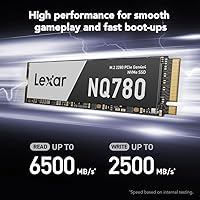
  • Read Speed: Sequential read throughput is rated at up to 6500 MB/s, which places it in the upper range of consumer Gen4 drives and is sufficient for fast OS boot and large file access.
  • Write Speed: Sequential write throughput reaches up to 2500 MB/s under cached conditions; sustained write speeds after SLC cache exhaustion will be lower, which is typical for drives in this class.
  • Controller: An 8-channel Gen4 controller manages data flow across the NAND, helping maintain more consistent write performance during mixed and sustained workloads compared to 4-channel designs.
  • Cache Architecture: The drive combines SLC write caching with HMB (Host Memory Buffer), borrowing available system DRAM to reduce access latency rather than relying on a dedicated onboard DRAM chip.
  • PCB Design: Components are mounted on one side of the PCB only, making the NQ780 compatible with slim laptops and ultrabooks that have strict module clearance restrictions on the underside of the M.2 slot.
  • Compatible Devices: Officially supported in desktop PCs, the PlayStation 5 internal expansion slot, and laptops with an M.2 2280 PCIe Gen4 or Gen3 slot.
  • Power Management: Intelligent Power Control actively adjusts power draw based on workload intensity, helping reduce heat output and extend component longevity during prolonged use.
  • Durability Ratings: The drive carries dust resistance, shock resistance, and vibration resistance ratings, adding a layer of reliability assurance beyond the baseline for standard NVMe drives.
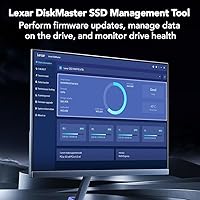
  • Software: Lexar DiskMaster is the companion desktop application, providing tools for firmware updates, drive health monitoring, and basic data management on Windows systems.
  • Warranty: Lexar backs this drive with a 5-year limited warranty, which is on par with the industry standard offered by leading SSD manufacturers at this performance tier.
  • Weight: The packaged unit weighs approximately 1.76 ounces, and the bare drive itself is negligibly light, consistent with all M.2 2280 form factor SSDs.
  • Launch Date: This drive became available in April 2025, making it a recent release with firmware and compatibility support that reflects current platform requirements.
  • Manufacturer: Lexar International, a brand with a long history in consumer flash storage including SD cards, USB drives, and SSDs across multiple performance tiers.

Related Reviews
Lexar NQ780 2TB NVMe SSD
81%
91%
Sequential Read Speed
86%
Sequential Write Speed
73%
Sustained Write Performance
78%
Random Read/Write
67%
Thermal Management
More
Vansuny X15 1TB NVMe M.2 SSD
77%
82%
Read & Write Performance
89%
Value for Money
91%
Installation Ease
58%
Brand Reliability
86%
Capacity Utility
More
GAMERKING 1TB M.2 2280 NVMe SSD
75%
88%
Value for Money
83%
Read Performance
76%
Write Performance
71%
Thermal Management
73%
Build Quality
More
WD_BLACK SN850P 1TB NVMe SSD for PS5
84%
93%
Installation Experience
89%
Load Time Performance
67%
Value for Money
88%
Thermal Management
91%
Build Quality
More
ORICO J10-2242 256GB NVMe M.2 SSD
78%
83%
Read Speed Performance
61%
Write Speed & Sustained Performance
78%
Thermal Management
88%
Value for Money
81%
Build Quality & Packaging
More
Fikwot FN970 1TB M.2 NVMe SSD
87%
93%
Performance
88%
Ease of Installation
91%
Compatibility with PS5
85%
Thermal Management (Heatsink)
86%
Write Speed
More
INLAND TN320 1TB NVMe M.2 SSD
77%
91%
Value for Money
88%
Sequential Read Speed
64%
Sustained Write Performance
93%
Installation Ease
94%
Warranty & Support
More
fanxiang S770 1TB NVMe M.2 SSD
79%
88%
Read Speed Performance
91%
PS5 Compatibility
86%
Value for Money
83%
Thermal Management
67%
Write Speed Consistency
More
Fikwot FX991 1TB M.2 NVMe SSD
78%
88%
Sequential Read Speed
79%
Sequential Write Speed
91%
Value for Money
83%
PS5 Compatibility
71%
Thermal Management
More
SanDisk Extreme M.2 1TB NVMe SSD
79%
88%
Read Performance
71%
Write Performance
94%
Installation Ease
86%
Value for Money
62%
Thermal Management
More
PNY CS1030 1TB M.2 NVMe SSD
81%
83%
Read & Write Performance
91%
Value for Money
94%
Installation Ease
88%
OS Boot & App Load Times
79%
Build & Reliability
More

FAQ

Yes, the NQ780 uses the M.2 2280 form factor that the PS5 expansion slot is designed for. Just make sure you have a compatible screw and standoff in place before inserting it, since Sony does not include those in the box. A heatspreader is recommended but not required — Sony officially advises using one, and third-party options are inexpensive.

Honestly, it depends on the game. Open-world titles with heavy streaming tend to show the most meaningful improvement, sometimes cutting loading screens by several seconds. More linear or older games may show little to no perceptible difference. Do not expect a dramatic transformation across your entire library — think of it as a solid upgrade, not a miracle.

It does not ship with one and does not strictly require it in desktop builds with decent airflow. That said, in a PS5 or a laptop with limited ventilation, adding a low-profile thermal solution is a sensible precaution. Sustained workloads without any thermal management can cause the drive to throttle its speeds to protect itself.

Not exactly. HMB borrows a portion of your system's installed RAM to act as a cache buffer, which works well in most everyday scenarios. A dedicated DRAM chip on the drive tends to be more consistent since it does not compete with system memory allocation. For typical gaming and general use, the difference is minor — but under very heavy mixed workloads, dedicated DRAM drives can maintain a small edge.

Once the cache is saturated — which typically happens during large continuous transfers, like moving a 200GB folder of raw video — the drive hands off to the underlying NAND at its native write speed, which is noticeably lower than the advertised peak. This is standard behavior for drives in this class. For everyday tasks and gaming it is rarely an issue, but if you routinely move very large files, it is worth factoring in.

Yes, the NQ780 is backward compatible with Gen3 slots. You will not reach Gen4 speeds, but it will still run faster than any SATA SSD and will function without any additional configuration. Just confirm your laptop has an M.2 slot that accepts NVMe drives, since some older machines only support SATA-based M.2 drives.

For most users, it is optional. The drive works perfectly without it. DiskMaster is mainly useful if you want to monitor drive health metrics, apply firmware updates, or run a quick diagnostic. The interface is straightforward but lean compared to tools like Samsung Magician — good enough to do its job, but not particularly polished.

The 980 Pro has a dedicated DRAM cache and a more proven long-term reliability track record, which gives it an edge in sustained workloads and enterprise-adjacent tasks. For gaming and everyday PC use, the gap in real-world experience is small and unlikely to be perceptible during normal operation. The NQ780 trades some peak consistency for a more accessible price point, which is a reasonable trade for most users.

It depends on how many large modern titles you keep installed at once. Many current games are 80GB to 150GB each, so 1TB fills up faster than you might expect. If you tend to keep five or more large games installed simultaneously, a 2TB option would give you more breathing room. That said, 1TB is a practical and cost-effective starting point if you are comfortable swapping games in and out periodically.

Lexar provides a 5-year limited warranty, and their support process generally involves submitting a claim through their official support portal with proof of purchase. Keep your receipt or order confirmation. Most users report the claims process is handled without excessive friction, though turnaround times vary. Make sure to back up your data regularly regardless, since warranty coverage replaces the hardware but not the data stored on it.

Where to Buy

Neobits.com
In stock $141.95
Grooves-Inc.com
In stock $142.33
MemoryC.com
In stock $184.30