
Overview

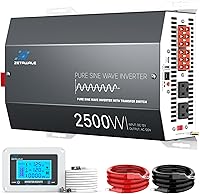
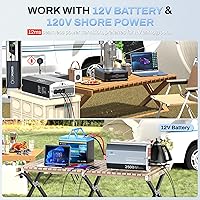
The ZETAWALE 2500W Pure Sine Wave Inverter sits in a crowded mid-range space, but it earns attention with one feature most budget inverters skip: an auto transfer switch. That means it can run off campground shore power and flip to your 12V battery bank automatically when the grid drops — no manual switching required. At 2500W continuous and 5000W peak, it can handle a full-size refrigerator, a microwave, or a CPAP machine with capacity to spare. Keep in mind this unit only launched in early 2025, so long-term reliability data is limited. Confirm your battery bank can sustain the draw before buying.

Features & Benefits

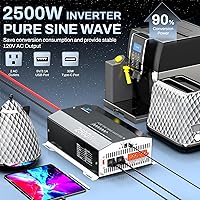
The auto transfer switch is genuinely useful for RV users who plug into campground power but want battery backup the moment that connection drops. It is not a full inverter-charger — it does not charge your batteries from the grid — but for automatic failover, it does the job cleanly. The pure sine wave output matters more than many buyers realize: modified sine wave inverters can hum through motors, damage variable-speed appliances, and cause CPAP machines to underperform. The 14.76-foot wired remote with LCD display is a practical touch if the inverter is mounted in a tight compartment. Dual variable-speed cooling fans stay quiet under light loads and ramp up only when heat demands it.

Best For

This RV inverter fits a specific niche well. RV travelers who park at campgrounds with shore power hookups and want protection from unexpected outages will get the most value from the transfer switch capability. Van-lifers and truck drivers running tools or kitchen appliances off a 12V battery bank will appreciate the 2500W headroom. At home, it works as a basic battery-backed emergency supply for essentials like a refrigerator, modem, or medical device — not a whole-home backup, but enough for critical loads. Off-grid solar users with 12V lithium or AGM banks are a natural fit. It is less suited for anyone who needs bidirectional charging or a built-in battery management system.

User Feedback

With a 4.6-star average from over 250 buyers since its January 2025 launch, the ZETAWALE unit has started on solid footing. Reviewers consistently praise the clean power output, reporting that sensitive electronics and CPAP devices run without interference. Installation draws positive mentions too, with most buyers finding the wiring setup straightforward for a unit in this class. On the critical side, some users note that fan noise increases noticeably under heavy sustained loads, which can be an issue in quiet sleeping environments. A smaller number of reviewers flag questions about cable quality and long-term durability. Given the brand is under a year old, those concerns are fair and worth watching.

Pros

  • Auto transfer switch handles grid-to-battery switchover automatically, removing the need for manual intervention during outages.
  • Pure sine wave output keeps sensitive electronics, CPAP machines, and modern appliances running without noise or interference.
  • 5000W peak surge capacity handles startup spikes that trip up lower-rated inverters.
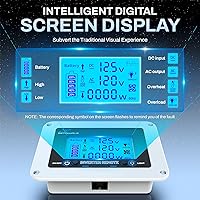
  • The 14.76-foot wired remote with LCD display lets you monitor inverter status without crawling into tight compartments.
  • Variable-speed cooling fans stay quiet during light-load operation, avoiding unnecessary background noise day to day.
  • At 8.16 pounds, the compact build makes installation manageable for a single person.
  • USB-A and USB-C fast charging ports mean you are not sacrificing AC outlets just to charge phones or tablets.
  • Multi-layer protection suite — covering overload, over-temperature, and short-circuit scenarios — reduces risk during unattended operation.
  • Early buyer ratings across 258 reviews skew strongly positive, with clean power output consistently highlighted.
  • Wiring setup is reported as straightforward even by first-time inverter buyers.

Cons

  • Does not charge your battery bank from the grid — it is a DC-to-AC inverter only, not a true inverter-charger.
  • Fan noise ramps up noticeably under heavy continuous loads, which can be disruptive in quiet sleeping environments.
  • Input is limited to 12V DC only, ruling it out for 24V or 48V battery systems.
  • As a brand with under a year of market history, long-term durability under regular heavy use remains an open question.
  • A subset of buyers has flagged concerns about cable and connector build quality, worth inspecting carefully on delivery.
  • Only two AC outlets may feel limiting if you need to run several high-draw appliances at the same time.
  • No built-in solar charge controller or battery charger means additional hardware is required for a complete off-grid system.
  • The wired remote, while practical, limits placement flexibility compared to a wireless control option.
  • Brand support infrastructure for a newer company is less proven than that of established inverter manufacturers.

Ratings

The ZETAWALE 2500W Pure Sine Wave Inverter has been evaluated using AI analysis of verified global buyer reviews, with spam, bot-generated, and incentivized feedback actively filtered to ensure every score reflects genuine ownership experience. Across 258 confirmed ratings, this sine wave inverter earned consistent praise for its power output quality and transfer switch reliability, while transparent scoring also captures recurring concerns around fan noise, cable quality, and the uncertainties inherent to a brand with a limited market track record. Both strengths and real-world friction points are honestly reflected in every category below.

Pure Sine Wave Quality
91%
CPAP users and people running sensitive audio or medical equipment consistently call out the clean, interference-free power as a standout strength. Devices that previously hummed or ran erratically on modified sine wave inverters reportedly perform without issue on this unit, validating the core technology investment for buyers who genuinely need it.
At this waveform quality level there is very little to criticize, and most complaints center on other aspects of the unit rather than the sine wave output itself. A handful of buyers with specialized lab or professional audio equipment report minor harmonic distortion under heavy simultaneous loading, though this is far from a common complaint.
Auto Transfer Switch
87%
For RV users who park at campgrounds and rely on shore power but want automatic battery fallback, the transfer switch works reliably in real-world conditions. Buyers report the handoff happens quickly enough that running appliances continue without noticeable interruption when grid power cuts or reconnects during a campsite hookup or departure.
Several buyers came in expecting full inverter-charger behavior and were frustrated to find the switch only selects the power source — it does not push charge back into the battery bank. The disappointment in reviews is almost always a mismatched expectation rather than a flaw, but it is a distinction worth understanding before purchasing.
Value for Money
84%
At its price point, the combination of pure sine wave output, auto transfer switch, LCD remote, and USB-C fast charging represents a genuinely strong package compared to similarly priced competitors that frequently omit one or two of those features. Most buyers explicitly call out strong value in positive reviews, particularly RV and van-life users who rely on the full feature set daily.
The value calculation shifts when buyers factor in sourcing better-quality connection cables to supplement the included ones, which many treat as a near-mandatory upgrade. Buyers comparing against established inverter brands may find the premium-brand peace of mind worth paying more for when the inverter is part of a mission-critical power setup.
Long-term Reliability
61%
39%
In the months since its January 2025 launch, buyer feedback has been encouraging, with most users reporting consistent performance across the period they have owned the unit. Early adopters running this RV inverter in solar and home backup applications have not reported widespread early failures, which is a positive early signal for a new entrant.
The honest limitation here is time — a brand with under a year of market history simply cannot provide the track record needed to rate multi-year durability with any confidence. Buyers who need an inverter for mission-critical or permanent installations should weigh this transparency gap carefully alongside the otherwise competitive feature set.
Cooling & Noise
68%
32%
The variable-speed fan design is a genuine step up from the fixed-speed cooling found in cheaper inverters — under light loads the fans run slowly and stay relatively unobtrusive, which matters during overnight RV stays, quiet off-grid setups, or home use where background noise levels affect daily comfort.
Under sustained heavy loads, the fans spin up to levels that multiple reviewers describe as noticeably loud inside enclosed spaces. Full-time RV users or anyone running this unit near a sleeping area during high-demand overnight operation will likely find the fan noise more disruptive than the product description prepares them for.
Power Output Accuracy
83%
Most buyers running real-world loads — refrigerators, microwaves, and power tools — report the continuous 2500W rating holds up in practice. Users who tested carefully found the output stable under sustained draw, with the 5000W surge headroom handling appliance startup spikes without tripping protection circuits unexpectedly or prematurely.
A minority of buyers note that running multiple high-draw appliances simultaneously pushed the unit closer to its limits than the rated specs suggested. Some report the protection circuit trips at loads slightly below the stated 2500W ceiling, particularly in warmer ambient temperatures where thermal derating reduces the effective output capacity.
Installation Ease
86%
First-time inverter buyers consistently praise how approachable the wiring process is, with most reporting a successful setup without professional help. The compact dimensions work well for underseat or compartment mounting in RVs and trucks, and the generous 14.76-foot remote cable gives real flexibility in placing the display somewhere actually convenient.
The included instructions have been flagged as overly brief by several buyers, leaving beginners uncertain about optimal cable sizing and fusing for longer battery-to-inverter cable runs. Those without prior electrical experience may need to consult external resources or community forums to complete the installation safely and correctly.
Build Quality
72%
28%
The housing feels solid for the price tier, and most users describe the physical construction as acceptably well-built for mid-range inverter expectations. Terminal connections are secure and the unit does not feel flimsy during handling or mounting, clearing a reasonable baseline bar for buyers shopping in this segment.
As a brand that entered the market in early 2025, the long-term durability of the housing, terminals, and internal components remains genuinely unknown. Included cables and connector quality are frequently flagged as below average relative to the overall unit quality, a recurring theme in buyer reviews across multiple use cases.
Remote & Display
79%
21%
The wired LCD remote is a practical addition that many inverter buyers at this price point do not receive, and the ability to monitor battery voltage, load percentage, and fault codes from a distance saves real troubleshooting headaches. RV owners with compartment-mounted inverters especially appreciate not needing to physically access the unit during operation.
The wired nature of the remote limits placement flexibility — routing 14.76 feet of cable around corners or across longer distances in a larger vehicle becomes genuinely awkward. Buyers who expected wireless monitoring or smartphone app connectivity flag consistent disappointment, as those features are increasingly standard expectations in this product class.
Protection Systems
88%
The five-layer protection suite covering overload, over and under voltage, thermal shutdown, and short-circuit cutoff gives buyers meaningful confidence when running the unit unattended overnight in an RV or during a home power outage. Most reviewers who have triggered the protections report they activated correctly and the unit recovered cleanly afterward.
A small number of buyers report the overload protection trips at loads slightly below the 2500W threshold, particularly in warmer ambient temperatures where thermal derating quietly reduces the effective ceiling. Buyers planning to run loads consistently near the rated maximum in hot environments should factor this real-world derating into their load calculations.
Port Selection
81%
19%
Having USB-A and USB-C fast charging alongside two AC outlets means buyers are not forced to sacrifice a valuable outlet just to charge phones or tablets during a trip or outage. The port mix suits the typical mixed-device needs of RV and van-life users who juggle appliances and personal electronics simultaneously throughout the day.
Two AC outlets is a reasonable count for this class but will feel restrictive to users who want to run three or more appliances at once without a power strip. Adding a strip is workable but introduces an additional component and load calculation complexity that some buyers do not account for upfront.
Thermal Management
74%
26%
The dual intelligent fans prevent dangerous heat buildup during moderate use effectively, and the thermal shutdown protection adds a reliable last line of defense if internal temperatures climb beyond safe limits during extended heavy operation. For typical RV or home backup use cycles, the thermal management holds up adequately under normal ambient conditions.
In hot ambient conditions — a parked RV in summer sun or an enclosed vehicle compartment — the unit runs warmer than expected and the fans work harder and louder as a direct consequence. Adequate ventilation around the unit is important for safe operation and not always easy to achieve in tight mounting spaces.
Cable Quality
63%
37%
The included connection cables are adequate for a short-run installation positioned close to the battery bank, and buyers doing a straightforward basic setup report them as functional for getting the unit running quickly out of the box without needing additional parts on the first day.
Cable and connector quality is one of the most consistently flagged complaints across buyer reviews — the included cables are widely seen as undersized for anything beyond minimal load operation. A meaningful share of buyers recommend budgeting for heavier-gauge aftermarket cables as a near-mandatory part of any serious installation from the start.
Compatibility
77%
23%
The ZETAWALE unit works across the major 12V battery chemistries — AGM, gel, lead-acid, and lithium iron phosphate — covering most RV, van, and off-grid solar setups without requiring special configuration or chemistry-specific workarounds that can trip up buyers during installation.
The 12V-only input is a real limitation for buyers with larger battery systems built around 24V or 48V banks, which are increasingly common in serious off-grid and solar installations. This unit does not scale with future battery system voltage upgrades the way competing inverters at higher price tiers often do.

Suitable for:

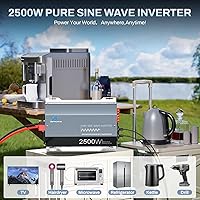
The ZETAWALE 2500W Pure Sine Wave Inverter is a strong match for RV owners who regularly move between campground shore power and battery or solar operation — the auto transfer switch handles that transition automatically, removing a real daily hassle. It is also well-suited for van-lifers and truck drivers who need a reliable 110V/120V source to run kitchen appliances, power tools, or workstation equipment from a 12V battery bank. At 2500W continuous, it can sustain a full-size refrigerator, a mid-size microwave, or medical equipment like a CPAP machine without issue. Home users looking for a basic battery-backed layer of protection during power outages — covering a router, a few lights, and a refrigerator — will find it handles that role without overcomplicating the setup. Off-grid solar users with 12V AGM or lithium battery banks are another natural fit, particularly those who want remote monitoring through the wired LCD remote without running complicated cable installations.

Not suitable for:

The ZETAWALE 2500W Pure Sine Wave Inverter is not the right tool for buyers expecting a full inverter-charger — it does not replenish your battery bank from grid power, so if bidirectional charging capability matters to you, look elsewhere before purchasing. Anyone planning to run loads above 2500W continuously, such as large air conditioning units, electric water heaters, or high-draw power tools, should size up to a higher-capacity inverter. Users who need a proven multi-year track record should also think carefully: the brand entered the market in early 2025, and while initial feedback is encouraging, there is simply not enough long-term data to judge how it holds up under sustained heavy use. Buyers who need 24V or 48V input compatibility for larger battery systems will find this unit is strictly limited to 12V only. Finally, anyone installing in a quiet sleeping environment — full-time RV living or a bedroom-adjacent setup — should factor in that the cooling fans get noticeably louder when the unit is working hard.

Specifications

  • Continuous Power: Delivers a steady 2500W of continuous AC output, capable of sustaining a full-size refrigerator, mid-size microwave, or medical equipment during extended operation.
  • Peak Surge: Handles up to 5000W of peak surge power to absorb the startup spikes produced by compressors, motors, and other inductive loads.
  • Input Voltage: Accepts 12V DC input from standard lead-acid, AGM, gel, or lithium battery banks.
  • Output Voltage: Produces 110V / 120V AC output compatible with standard US household appliances and consumer electronics.
  • Waveform Type: Generates a pure sine wave output functionally equivalent to utility grid power, safe for sensitive electronics and variable-speed motor loads.
  • AC Outlets: Equipped with two standard US three-prong AC outlets for simultaneous appliance connections.
  • Charging Ports: Includes one USB-A port and one USB-C fast charging port for powering mobile devices alongside AC loads without occupying an outlet.
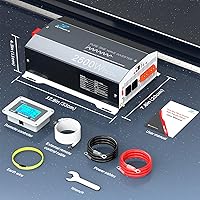
  • Remote Control: Ships with a 14.76 ft wired remote featuring an integrated LCD display for real-time status monitoring, on/off control, and fault code readout.
  • Cooling System: Uses dual intelligent variable-speed fans that modulate based on internal temperature, reducing audible noise during low-demand operation.
  • Dimensions: Measures 11.93 x 7.87 x 4.33 inches, compact enough for underseat or compartment mounting in most RV, truck, and van installations.
  • Weight: Weighs 8.16 pounds, manageable for a single person to position and secure without additional assistance during installation.
  • Transfer Switch: Built-in auto transfer switch automatically prioritizes grid AC input when shore power is connected and shifts to battery DC the moment that connection drops.
  • Protections: Incorporates five hardware protection layers covering overload, over-voltage, under-voltage, over-temperature, and short-circuit conditions.
  • Model Number: Identified as model ZETAWALE-2500P; use this designation when contacting support or sourcing compatible accessories.
  • Market Launch: First listed in January 2025, making it a recent market entrant with an encouraging early rating base but a limited long-term reliability record.

Related Reviews
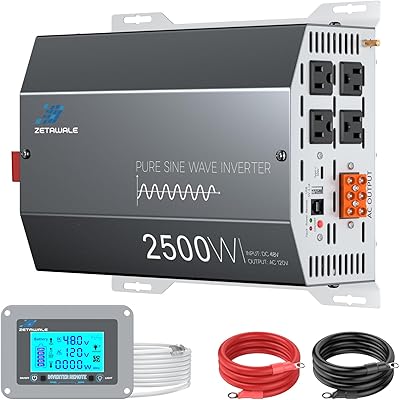
ZETAWALE 48V 2500W Pure Sine Wave Inverter
85%
88%
Performance
85%
Ease of Installation
91%
Reliability
80%
Cooling System Effectiveness
87%
Compatibility with Appliances
More
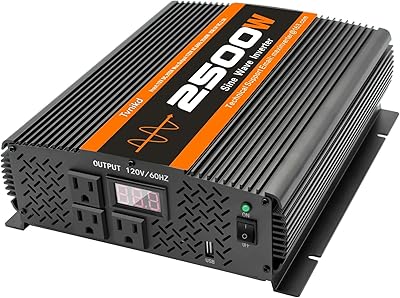
TVNIKD 2500W Pure Sine Wave Power Inverter
77%
88%
Power Output Quality
81%
Build Quality
63%
Heat Management
86%
Ease of Installation
83%
LCD Display Usability
More
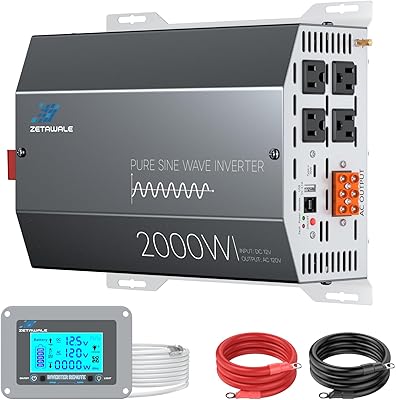
ZETAWALE 2000W Pure Sine Wave Power Inverter
83%
93%
Output Power Quality
88%
Value for Money
91%
Remote Control & LCD
79%
Thermal Management
82%
Build Quality
More
VOLTWORKS VS-3000PCR 3000W Pure Sine Wave Inverter
79%
83%
Output Power Accuracy
91%
Output Signal Quality
88%
Cooling & Noise Level
79%
Build Quality & Housing
86%
Installation Ease
More
SUNWHEEL 2000W Pure Sine Wave Inverter
80%
86%
Power Output Reliability
91%
Waveform Quality
83%
Build Quality
88%
Noise Level
67%
LCD Display Usefulness
More
SUNWHEEL 500W Pure Sine Wave Inverter
86%
92%
Power Conversion Efficiency
88%
Noise Level
85%
Build Quality & Durability
80%
Cooling System
83%
Portability
More
Tebrol 3500W Pure Sine Wave Inverter
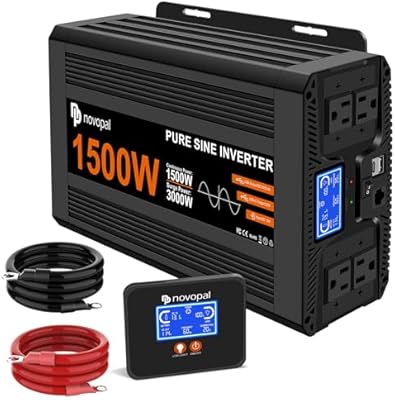
79%
88%
Output Power Accuracy
92%
Pure Sine Wave Quality
79%
Build Quality
83%
Cooling & Thermal Management
81%
Ease of Installation
More
Novopal 1500W Pure Sine Wave Inverter
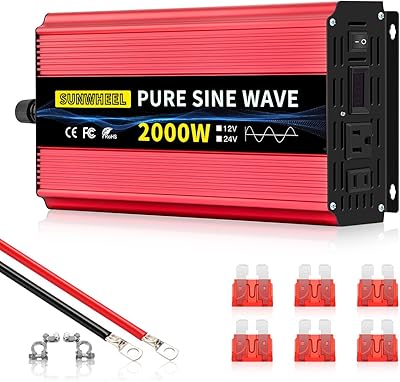
76%
83%
Power Output Accuracy
88%
Power Quality
74%
Build Quality
86%
Ease of Installation
89%
Remote Control Usability
More
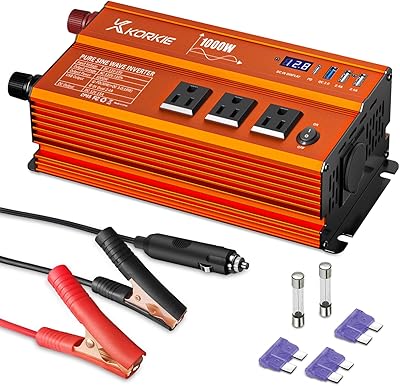
KORKIE 1000W Pure Sine Wave Inverter
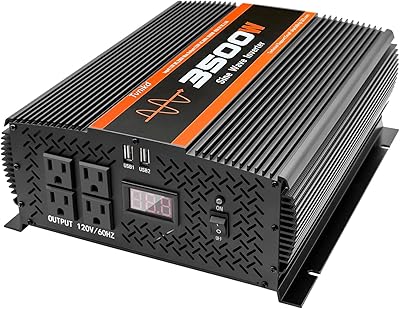
76%
88%
Output Signal Quality
82%
Port Variety & Charging
91%
Ease of Setup
79%
Fan Noise
63%
Build Quality
More
TVNIKD 3500W Pure Sine Wave Inverter
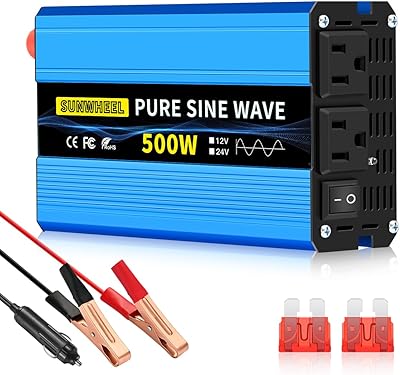
86%
92%
Power Conversion Performance
89%
Ease of Setup
72%
Portability & Size
90%
Reliability & Durability
91%
Power Output (Wattage)
More

FAQ

No, it cannot. The auto transfer switch selects which power source to draw from — grid AC or your battery bank — but it does not push charge back into your batteries. If you need to replenish your battery bank from shore power, you will need a separate battery charger or a dedicated inverter-charger unit.

At 2500W continuous, you can comfortably run a full-size refrigerator (roughly 150–200W running, 600–800W on startup), a mid-size microwave (1000–1500W), a CPAP machine, LED lighting, and USB device chargers simultaneously. What you cannot run is a central air conditioner, electric water heater, or most electric dryers, as those exceed 2500W and require a larger inverter.

Yes, it works with lithium iron phosphate as well as AGM, gel, and standard lead-acid batteries, provided they are rated at 12V. The key thing to verify is that your battery bank can sustain the current draw under load — at 2500W, a 12V system pulls roughly 208 amps, so your batteries, fuse, and cabling all need to be sized appropriately.

Under light loads, the variable-speed fans run slowly and stay relatively quiet — noticeable if the room is silent, but not intrusive during normal activity. Under heavy sustained loads, they spin up significantly. If you plan to run this unit in a sleeping area of an RV or near a bedroom during an overnight power outage, that elevated fan noise at high load is worth factoring into your decision.

The unit ships with connection cables for the battery hookup. That said, always verify the gauge and length against your specific installation before relying on them — buyers who mount the inverter farther from their battery bank often find heavier-gauge aftermarket cables necessary to minimize voltage drop and prevent heat buildup at high loads.

The switchover happens quickly enough that most equipment continues operating without visible interruption. It is not an instantaneous zero-transfer-time switch like a true online UPS, so very sensitive equipment may notice the brief transition, but the vast majority of common appliances handle it without issue.

Yes, but the inverter itself only handles the DC-to-AC conversion — it does not regulate solar input or charge your batteries from the panels. You will need a separate solar charge controller to manage the charging side of the system. Once your 12V battery bank is charged and ready, this sine wave inverter converts that stored energy into usable AC power for your appliances.

The remote shows key operational data including input voltage from the battery, output voltage on the AC side, current load level, and any fault codes if a protection circuit has tripped. It is especially useful when the inverter is mounted inside a compartment or under a seat, since you can check its status from a convenient location without physically accessing the unit.

It works well as a targeted emergency solution covering essential loads like a refrigerator, router, a few lights, and phone chargers — not a whole-home replacement for grid power. The runtime during an outage depends entirely on your battery bank capacity, so pair it with a bank sized for the hours of backup you actually need. For short outages covering the basics, the ZETAWALE unit handles the job capably.

Most buyers with basic DIY comfort report the setup is manageable: connect the battery cables to the DC input terminals, mount the unit in a ventilated spot, and route the remote cable to wherever you want to monitor it. The most important detail to get right is cable sizing — undersized wiring causes voltage drop, heat, and nuisance trips of the protection circuits, so match your wire gauge to the load and the distance between the inverter and battery bank.