Overview

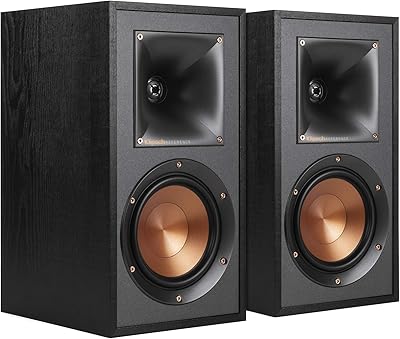
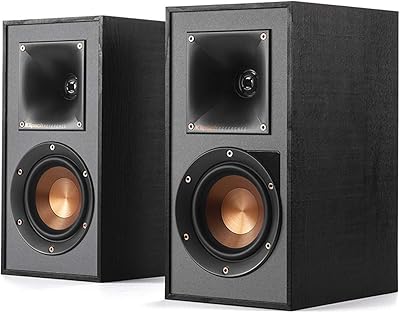
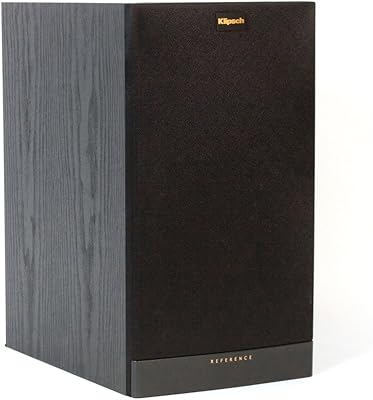
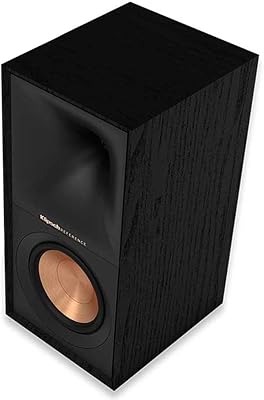
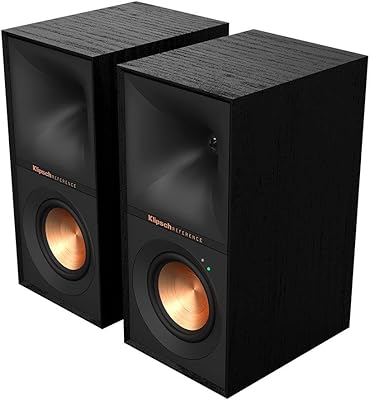
The Klipsch R-40M Bookshelf Speakers are Klipsch's next-generation update to their Reference bookshelf lineup, stepping up from the well-regarded R-41M with meaningful refinements rather than a cosmetic refresh. Sitting in the mid-range price tier, they occupy a sweet spot for buyers who find budget speakers unsatisfying but aren't ready to commit to audiophile-grade pricing. The compact 4-inch woofer format makes them well-suited to smaller rooms, apartment setups, or desktop listening environments. With a 4.5-star rating across 170 reviews, buyer satisfaction is notably consistent. One important caveat before buying: these are passive speakers, meaning you'll need a separate AV receiver or amplifier to drive them — nothing is included for that.

Features & Benefits

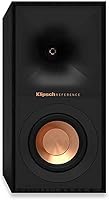
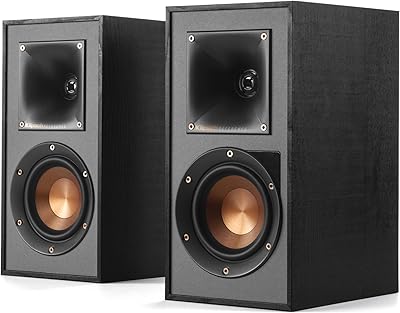
The standout engineering starts with the 90x90 Tractrix Horn, redesigned with larger outer dimensions compared to previous Reference models. That wider mouth gives the horn better control over a broader range of frequencies, producing a more focused, accurate soundstage rather than the diffuse presentation typical of conventional dome-loaded designs. The 1-inch LTS aluminum tweeter uses Kapton suspension to keep distortion in check at higher output levels. The spun-copper TCP woofers, borrowed from Klipsch's pricier Reference Premiere line, feature steeper cone angles for cleaner midrange response. Inside, reinforced MDF construction with internal bracing keeps cabinet resonance from muddying the output. The 8-ohm impedance pairs easily with most AV receivers.

Best For

These Klipsch bookshelves make the most sense for home theater builders working within a moderate budget on a 2.0 or multi-channel setup who don't want to spend floorstander money. If you're upgrading from a budget pair, the jump in clarity and dynamic punch is substantial. Apartment dwellers will appreciate the compact footprint — at just under 12 inches tall, they don't overwhelm a shelf or desk. Music fans who prefer a detailed, forward-sounding presentation will feel right at home with the horn-loaded character. Just have a compatible receiver on hand before ordering, since these passive speakers won't make a sound without one.

User Feedback

Across buyer reviews, the R-40M pair earns consistent praise for its dynamic, punchy output and the way it fills a room well beyond what the enclosure size suggests. Stereo imaging gets called out repeatedly as a genuine strong point. The main friction is the Klipsch house sound — it skews noticeably bright, which works well for film dialogue and high-energy music but can fatigue listeners sensitive to treble during long sessions. Bass extension is limited, as expected from a 4-inch driver; most buyers pair this horn-loaded speaker set with a subwoofer for a fuller low end. Build quality and packaging draw almost universally positive remarks, and owners upgrading from the R-41M specifically note a smoother, less edgy treble.

Pros

  • Horn-loaded design delivers exceptional midrange clarity and dialogue intelligibility for film and TV.
  • Stereo imaging is a genuine strong point — instruments lock into position across a convincingly wide soundstage.
  • Highly efficient design means the R-40M pair gets loud without demanding heavy amplifier power.
  • Trickle-down TCP woofer technology from Klipsch's pricier Reference Premiere line adds real engineering credibility.
  • Updated tweeter assembly produces noticeably smoother treble than the previous R-41M generation.
  • Solid 3/4-inch MDF cabinet with internal bracing keeps resonance from coloring the sound.
  • 8-ohm impedance pairs safely with virtually any mid-range AV receiver on the market.
  • Compact dimensions make these Klipsch bookshelves practical for smaller rooms, shelves, and media consoles.
  • Build quality and packaging consistently meet or exceed buyer expectations for the price tier.
  • A natural fit for expanding into a full Klipsch Reference surround system down the line.

Cons

  • Passive design means a separate amplifier or receiver is required — nothing drives them out of the box.
  • The bright Klipsch sound signature can cause listener fatigue during extended sessions with treble-heavy recordings.
  • Bass extension drops off noticeably below 80Hz, making a subwoofer a near-necessity for home theater use.
  • High sensitivity can expose noise floors in budget amplifiers, resulting in audible hiss at idle.
  • Off-axis listening loses imaging precision — placement and toe-in angle require more care than with conventional speakers.
  • Vinyl cabinet finish, while durable, looks slightly plasticky up close compared to real wood veneer alternatives.
  • Occasional reports of minor cosmetic shipping damage suggest outer packaging protection has room for improvement.
  • Not well-suited to larger rooms without subwoofer support, where output can feel thin on bass-heavy content.
  • Buyers sensitive to forward-sounding presentations may need significant adjustment time to the horn-loaded character.

Ratings

The Klipsch R-40M Bookshelf Speakers have been evaluated using AI-driven analysis of verified global buyer reviews, with spam, bot-generated, and incentivized submissions actively filtered out before scoring. What you see below reflects where these Klipsch bookshelves genuinely excel and where real-world buyers have run into friction — no airbrushing, no cherry-picking. Each score is calibrated to give first-time buyers and experienced audiophiles alike an honest benchmark before committing.

Sound Clarity & Detail
88%
The horn-loaded design gives the R-40M pair a level of midrange and high-frequency articulation that clearly separates it from comparably priced conventional bookshelf speakers. Dialogue in film comes through with unusual precision, and instruments like acoustic guitar and piano retain their texture at varied volume levels.
That same clarity can work against listeners who are treble-sensitive, particularly during extended listening sessions with brighter recordings. A handful of buyers noted that certain genres — especially compressed pop or older rock mastering — can sound slightly harsh on this horn-loaded speaker set.
Bass Performance
61%
39%
For a 4-inch driver, the low-end output is reasonably controlled and punchy within its range, handling mid-bass frequencies like kick drums and male vocals with decent body. In smaller rooms, this is often enough for casual music and TV use without feeling thin.
Bass extension below 80Hz drops off noticeably, and buyers expecting room-filling low end without a subwoofer will be let down. This is a physics limitation of the driver size, not a defect, but it matters — pairing with a subwoofer is practically a necessity for home theater use.
Soundstage & Imaging
86%
Stereo imaging is a recurring highlight in buyer feedback, with many noting that instruments and voices lock into distinct positions across the soundstage in a way that feels surprisingly wide for speakers this compact. The Tractrix horn's directivity control plays a meaningful role here.
The forward-firing, narrow horn pattern means placement is more critical than with conventional dome-tweeter speakers — toe-in angle noticeably affects the sweet spot width. Listeners sitting off-axis lose some of that imaging precision.
Efficiency & Sensitivity
91%
Horn-loaded designs are inherently efficient, and these Klipsch bookshelves perform well at lower amplifier power levels, making them a practical choice for mid-powered AV receivers in the 50–80 watts-per-channel range. They get loud without demanding much from the amplifier.
High efficiency means they can expose noise floors in lower-quality amplifiers or receivers — some buyers reported faint hiss at idle that was inaudible with their previous, less sensitive speakers. Pairing with a clean amplifier matters more than it would with an inefficient speaker.
Build Quality
83%
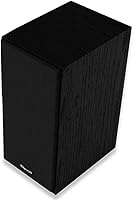
The 3/4-inch MDF cabinet feels solid and resonance-free when knocked, and the scratch-resistant vinyl wrap holds up well to everyday handling. Hidden fasteners and the edge-to-edge horn finish give them a noticeably more refined look than competitors at a similar price.
The cabinet corners and vinyl wrap are durable but not impervious — a few buyers noted minor finish chips after shipping, suggesting the packaging, while generally praised, has occasional inconsistencies. The magnetic grilles, though well-designed, attract dust more readily than traditional clip-on alternatives.
Design & Aesthetics
79%
21%
The low-profile magnetic grilles and clean horn-forward face give the R-40M pair a modern, uncluttered appearance that blends into a living room or media setup without looking industrial. The copper woofer adds a visual flair that buyers consistently mention positively in photos and unboxing impressions.
The textured vinyl finish, while practical, reads as slightly plasticky up close compared to real wood veneer options available from some competing brands at a higher price. The overall silhouette is functional rather than distinctive — it won't turn heads the way a luxury speaker enclosure might.
Value for Money
84%
At its price point, this horn-loaded speaker set delivers a sound character and engineering pedigree that few competitors match directly — trickle-down technology from Klipsch's own higher-end Reference Premiere line adds genuine credibility to the value argument. Buyers upgrading from entry-level speakers consistently describe the jump as substantial.
The value calculation shifts if you don't already own an AV receiver, since the total system cost rises quickly once you factor in amplification. A few buyers also felt that while the speakers themselves justify the price, comparable listening experiences can be found from competing brands at slightly lower cost if the Klipsch sound signature doesn't appeal to you.
Treble Smoothness
73%
27%
Compared to the previous R-41M, several experienced buyers specifically noted that the updated tweeter assembly in the R-40M pair produces a less edgy, more refined high-frequency presentation. For well-recorded acoustic music and orchestral content, the treble is genuinely pleasing.
The Klipsch house sound still skews brighter than neutral, and this is unlikely to change with placement or amplifier swaps alone. Listeners accustomed to warmer British-style bookshelf speakers may find the treble character takes adjustment — or simply isn't their preference regardless of smoothness improvements.
Midrange Accuracy
82%
18%
Vocals and acoustic instruments reproduce with a presence and immediacy that the horn loading actively contributes to. Speech intelligibility during movie watching is where many buyers notice the midrange quality most — dialogue stays clear even at lower volume levels.
The midrange can occasionally feel slightly forward or forward-pushed on recordings that are already mid-heavy, giving certain content a slightly in-your-face quality that takes some getting used to. This is a characteristic of the design rather than a flaw, but it's worth knowing before buying.
Room Suitability
77%
23%
The compact footprint — under 12 inches tall — makes these Klipsch bookshelves a practical fit for apartments, bedrooms, and smaller living rooms where floorstanders would overwhelm the space. The horn's efficiency also means they perform at lower volumes, which matters in shared living situations.
In larger rooms above roughly 300 square feet, the 4-inch woofer starts to feel undersized for a full home theater experience, and even the horn's projection has limits. Without subwoofer support, bass-heavy content in bigger spaces can feel noticeably thin.
Compatibility with Receivers
89%
The 8-ohm nominal impedance is about as safe a load as an AV receiver could ask for, and the 200W power handling gives plenty of headroom for typical home use. Most buyers reported zero compatibility issues across a range of entry-to-mid-level Denon, Yamaha, and Onkyo receivers.
These are passive speakers — a point that trips up some buyers who assume speakers at this price point include a built-in amplifier. If you're starting from scratch with no receiver, that is a meaningful additional cost that should be factored into the purchase decision upfront.
Packaging & Unboxing
81%
19%
The speakers arrive double-boxed with foam cutouts that hold each cabinet securely, and most buyers describe the unboxing experience as matching or exceeding expectations for the price tier. Accessories are minimal but complete — what you need is included.
A small but consistent minority of buyers received units with minor cosmetic damage attributed to shipping, suggesting the outer box protection has occasional gaps. Klipsch's warranty coverage handles this, but the back-and-forth of a return or claim is frustrating for an otherwise straightforward purchase.
Upgrade Potential
76%
24%
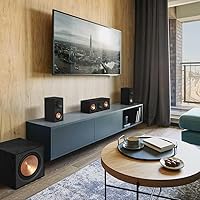
For buyers building out a Klipsch Reference ecosystem, the R-40M pair slots naturally into a larger multi-channel setup as front or surround speakers, with matching center and subwoofer options available in the same Reference lineup. That system coherence is a genuine long-term advantage.
As a standalone 2.0 system, the upgrade ceiling is limited by the driver size — you can improve amplification or add a subwoofer, but the speakers themselves will eventually become the bottleneck for serious listeners. They are a strong mid-tier option, not an endpoint for dedicated audiophiles.

Suitable for:

The Klipsch R-40M Bookshelf Speakers are an excellent match for home theater builders who already own an AV receiver and want a meaningful audio upgrade without crossing into premium territory. Apartment dwellers and anyone working with smaller listening rooms will find the compact footprint practical — at under 12 inches tall, they fit comfortably on a shelf, media console, or desktop without dominating the space. Listeners who favor a detailed, forward-sounding presentation — the kind that makes movie dialogue crisp and guitar strings feel present — will feel right at home with the horn-loaded character these Klipsch bookshelves deliver. They also make a compelling upgrade path for anyone stepping up from a budget bookshelf pair, since the jump in clarity and dynamic punch is noticeable from the first listening session. Buyers building out a broader Klipsch Reference surround system will find the R-40M pair slots naturally as front or surround channels alongside matching center and subwoofer options in the same lineup.

Not suitable for:

The Klipsch R-40M Bookshelf Speakers are not the right call for buyers who are starting entirely from scratch with no amplifier or receiver — these are passive speakers, and the additional cost of quality amplification can shift the overall budget significantly. Listeners who prefer a warm, relaxed, or neutral sound signature — the kind associated with many British-designed bookshelf speakers — will likely find the Klipsch house sound too bright for long listening sessions, particularly with older or heavily compressed recordings. Anyone expecting deep, room-filling bass without a subwoofer will be let down; the 4-inch driver simply cannot reproduce low frequencies below roughly 70–80Hz with any authority, which matters for action films and bass-heavy music. Larger rooms above 300 square feet will expose the limits of this horn-loaded speaker set, where the output can feel thin without supplemental low-end support. Dedicated audiophiles seeking an endpoint speaker for critical listening may also find these a solid intermediate step rather than a long-term solution.

Specifications

  • Woofer: Each speaker uses a 4-inch spun-copper thermoformed crystalline polymer (TCP) woofer with steeper cone angling borrowed from the Reference Premiere series for improved accuracy.
  • Tweeter: A 1-inch linear travel suspension (LTS) aluminum tweeter with Kapton suspension minimizes distortion and maintains high-frequency detail at varied output levels.
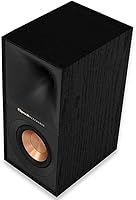
  • Horn Design: The 90x90 Tractrix horn features expanded outer dimensions compared to previous Reference models, providing improved directivity control across a wider frequency bandwidth.
  • Impedance: Nominal impedance is 8 ohms, making these speakers a safe and compatible load for the vast majority of consumer AV receivers and stereo amplifiers.
  • Power Handling: Maximum power handling is rated at 200 watts, offering substantial headroom well above the output of typical home receiver pairings.
  • Frequency Response: Frequency response begins at 71.21 Hz and extends through the upper audible range, meaning low bass below that threshold requires a dedicated subwoofer.
  • Cabinet Material: The enclosure is constructed from reinforced 3/4-inch MDF with an internal bracing design specifically engineered to reduce cabinet resonance and coloration.
  • Dimensions: Each speaker measures 11.7″ high by 5.8″ wide by 8.5″ deep, making them compact enough for bookshelves, media consoles, and desktop placements.
  • Weight: The pair weighs 14 pounds total, reflecting solid MDF construction without being unwieldy for shelf or stand mounting.
  • Finish: An exterior scratch-resistant, textured wood grain vinyl wrap provides day-to-day durability while maintaining a clean, modern visual profile.
  • Grille: Low-profile magnetic grilles attach without visible pins or clips, contributing to the edge-to-edge horn aesthetic and allowing tool-free removal.
  • Channel Config: The R-40M pair is configured as a 2.0 stereo system, sold as two matched bookshelf speakers with no additional channels or satellite units included.
  • Mounting Type: Designed for tabletop or shelf placement; no wall-mount bracket is included in the standard package, though third-party speaker mounts are compatible.
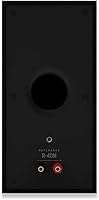
  • Power Source: These are fully passive speakers with no built-in amplifier — they require a corded connection to an external amplifier or AV receiver to operate.
  • Surround Config: Surround sound channel configuration is 2.0, suitable for stereo music listening or as front channel speakers within a broader multi-channel home theater system.
  • Included Items: The package includes two R-40M bookshelf speakers with magnetic grilles attached; no cables, amplifier, stands, or subwoofer are included.
  • Warranty: Klipsch covers the R-40M pair with a full manufacturer warranty; buyers should register the product directly with Klipsch to activate coverage terms.
  • Series: The R-40M belongs to Klipsch's Reference lineup, positioned below the Reference Premiere series but above the entry-level Reference range in terms of driver technology and cabinet design.

Related Reviews
Klipsch R-41M
Klipsch R-41M
78%
91%
Sound Clarity & Detail
52%
Bass Performance
86%
Soundstage & Imaging
93%
Sensitivity & Amplifier Compatibility
78%
Build Quality
More
Klipsch R-50M Bookshelf Speakers
82%
91%
Sound Clarity & Detail
74%
Treble Balance
86%
Midrange Performance
63%
Bass Response
93%
Efficiency & Sensitivity
More
Klipsch R-41PM Powered Bookshelf Speakers
80%
88%
Sound Clarity & Detail
67%
Bass Performance
84%
Soundstage & Imaging
91%
Built-in Phono Preamp
86%
Connectivity & Input Range
More
Klipsch R-51M
Klipsch R-51M
82%
93%
Sound Clarity
91%
Dynamic Range
88%
Build Quality
72%
Bass Performance
89%
Value for Money
More
Klipsch R-40PM
Klipsch R-40PM
79%
91%
Sound Clarity & Detail
67%
Bass Performance
88%
Connectivity & Input Options
86%
Built-in Phono Preamp
83%
Amplifier Performance
More
Klipsch RP-500M Bookshelf Speakers
89%
94%
Sound Quality
88%
Bass Performance
91%
Build Quality
93%
Ease of Setup
89%
Design & Aesthetics
More
Klipsch R-625FA Dolby Atmos Floorstanding Speaker
83%
93%
Sound Dynamics
74%
Dolby Atmos Height Effect
81%
Bass Performance
91%
Build Quality
86%
Ease of Setup
More
Klipsch The Fives Powered Bookshelf Speakers
86%
92%
Sound Quality
89%
Connectivity Options
85%
Setup & Installation
88%
Build Quality
91%
Bass Performance
More
Klipsch R-620F Floorstanding Speakers
80%
91%
Sound Dynamics
72%
Treble Quality
78%
Bass Performance
88%
Value for Money
84%
Build Quality
More
Klipsch R-52C Center Channel Speaker
80%
93%
Dialogue Clarity
88%
Sound Dispersion
89%
Build Quality
84%
Value for Money
81%
Receiver Compatibility
More

FAQ

Yes, absolutely — these are passive speakers with no built-in amplification. You will need to connect them to an AV receiver or stereo amplifier using speaker wire. If you don't already own one, factor that into your total budget before purchasing.

For casual TV watching and music in a smaller room, they hold their own, but bass extension cuts off around 71 Hz — so anything with real low-end weight, like action movie soundtracks or bass-heavy music, will sound noticeably thin. Most buyers who are serious about home theater end up pairing them with a subwoofer, and the difference is significant.

The R-40M pair refines rather than reinvents the R-41M formula. The most consistent feedback from buyers who have owned both is that the treble is smoother and less edgy in this generation, which is a meaningful improvement for long listening sessions. The overall sound character remains distinctly Klipsch — detailed and forward — but with better-controlled highs.

The 8-ohm impedance means they are compatible with virtually any consumer AV receiver, including popular options from Denon, Yamaha, Onkyo, and Marantz. You don't need a powerhouse amp — the horn-loaded design is efficient, so even a 50-watt-per-channel receiver drives them comfortably. The one thing to be mindful of is amplifier noise floor, since highly sensitive speakers can make hiss audible from lower-quality budget receivers.

They genuinely work well for music, particularly genres where detail and instrument separation matter — acoustic, jazz, classical, and rock all sound lively through this horn-loaded speaker set. The caveat is the forward, bright sound signature, which is energizing with well-recorded material but can feel fatiguing with heavily compressed or older recordings. If you prefer a warmer, more laid-back sound, the Klipsch character may not be your preference regardless of the content.

More so than with typical dome-tweeter bookshelf speakers. The 90x90 Tractrix horn controls sound in a defined pattern, so toe-in angle — how much you angle the speakers toward your listening position — has a real effect on imaging and treble balance. A slight inward angle toward the primary listening seat is generally the starting point, and small adjustments from there can make a noticeable difference.

Yes, and they actually slot naturally into the broader Klipsch Reference lineup as surround or front speakers alongside matching center channel and subwoofer options. Timbre-matching across all speakers in a surround system matters for seamless audio, so using the same Reference series throughout is worth considering if you plan to expand.

Like most grilles, leaving them on introduces a minor amount of acoustic filtering, particularly at higher frequencies. It is a subtle difference for most listeners in typical home settings, but enthusiasts who want the most transparent presentation tend to remove them during dedicated listening. The good news is that the magnetic attachment makes removal and replacement quick and tool-free.

They get surprisingly loud for their size, thanks to the high efficiency of the horn-loaded design. In a small-to-medium room, they can fill the space at social volume levels without any strain. For truly large open areas or outdoor use, the 4-inch woofer and compact enclosure will eventually reach their limits — these are indoor bookshelf speakers, not event speakers.

The scratch-resistant textured vinyl wrap holds up well to normal handling and the occasional bump or scrape that comes with everyday shelf life. It is not as premium-feeling as real wood veneer when examined closely, but it is practical and consistent in quality. Just avoid sliding the speakers across rough surfaces without lifting them, as the base of the cabinet can still pick up minor marks over time.

Where to Buy