Overview

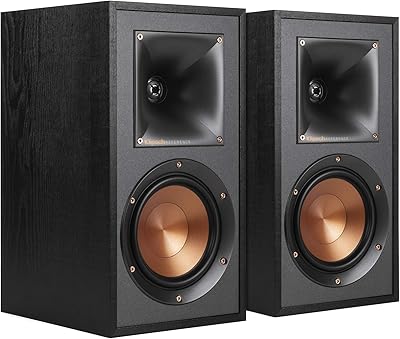
The Klipsch R-41PM Powered Bookshelf Speakers represent Klipsch's answer to a real listener problem: how do you build a serious-sounding stereo setup without the tangle of a separate receiver, preamp, and amplifier? As part of the Reference line, these powered monitors carry genuine Klipsch DNA — efficient drivers, horn-loaded highs, and a no-compromise approach to dynamics. What sets them apart from typical powered speakers is the breadth of inputs: phono, USB digital, 3.5mm analog, and Bluetooth. That versatility is rare at this price tier. Just don't expect the bass depth of a floor-stander; the compact cabinet has real limits, and knowing that upfront saves disappointment.
Features & Benefits

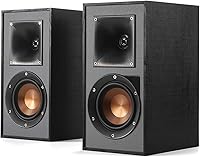
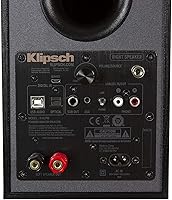
The R-41PM pair's most practical feature for vinyl fans is the built-in phono preamp — plug your turntable straight in, connect the ground wire to the dedicated screw terminal, and you're done. No extra box required. The Tractrix Horn, a funnel-shaped waveguide that channels high frequencies efficiently, paired with a 1-inch aluminum tweeter produces crisp, detailed highs without the harshness that plagues cheaper tweeters. Low-end response gets help from Dynamic Bass EQ, a circuit that boosts bass at lower listening volumes so the sound doesn't thin out when you're not cranking it. Bluetooth handles about 10 meters reliably, and the included remote, pre-soldered speaker cable, and USB cable mean you're genuinely ready to listen right out of the box.

Best For

These powered monitors are built for listeners who want a complete, self-contained audio setup with minimal fuss. Turntable owners are the most obvious fit — the phono stage removes a component and cost from the chain entirely. But the use case extends to work-from-home setups where you're toggling between a record player, a laptop via USB, and Bluetooth from a phone throughout the day. Room size matters here: this Klipsch bookshelf system performs well in spaces up to roughly 150–200 square feet. Push it into a large open living room and the limits of the 4-inch woofer become apparent. If you're upgrading from a soundbar or basic PC speakers, the improvement in audio quality feels significant.

User Feedback

Owners consistently point to the horn-tweeter clarity as the standout characteristic — the soundstage is wider than you'd expect from a speaker this size. Turntable users in particular appreciate not needing an external phono preamp; it's a convenience that shows up repeatedly in long-term reviews. On the critical side, buyers in larger rooms note that bass can feel lean at moderate volumes, and while the Dynamic Bass EQ compensates somewhat, it's not a substitute for a subwoofer in a bigger space. Bluetooth works well but connects to one device at a time, which frustrates multi-device households. The remote earns consistent praise, though a handful of reviewers wish it offered more EQ control beyond basic volume and input switching.

Pros

  • Built-in phono preamp eliminates the need for a separate turntable preamp, saving both money and desk space.
  • The horn-loaded tweeter delivers vocal and instrumental clarity that outperforms most passive speakers at a similar price point.
  • Four distinct input types — phono, USB, 3.5mm, and Bluetooth — cover virtually every common source device without adapters.
  • Wood cabinet construction gives the R-41PM pair a solidity and resonance control that plastic-bodied competitors rarely match.
  • Dynamic Bass EQ keeps the low end audible and balanced at quiet listening volumes, a genuinely useful feature for late-night sessions.
  • The included accessory bundle — pre-soldered speaker wire, USB cable, remote, and rubber feet — means no additional purchases are needed out of the box.
  • Soundstage width routinely surprises buyers who expect a narrow stereo image from speakers this compact.
  • The remote control adds real convenience for living room or studio placements where getting up to adjust volume is impractical.
  • Buyers stepping up from soundbars report an immediate, dramatic improvement in detail and dynamic range.
  • At 70 watts total, there is enough headroom to fill a mid-sized room without the amplifier sounding strained at moderate volumes.

Cons

  • Bass extension is genuinely limited in rooms larger than roughly 150 to 200 square feet, and no EQ adjustment fully compensates.
  • Bluetooth pairs with only one device at a time, which is a recurring friction point in multi-device or shared households.
  • The remote offers no EQ or tone adjustment, leaving listeners with no way to tailor the sound to their specific room acoustics.
  • Off-axis listening angles noticeably reduce high-frequency presence due to the directional nature of the horn-loaded tweeter.
  • The included speaker wire, at 4 meters, is too short for setups where the two speakers need to be placed farther apart.
  • Long-term reliability data for the internal amplifier is thinner than for equivalent passive speaker designs, and the amplifier cannot be replaced independently if it fails.
  • The phono preamp is a competent MM stage but will not satisfy audiophiles running premium cartridges who are accustomed to a dedicated, tunable external preamp.
  • There is no subwoofer output, so adding a sub to extend the low end requires a workaround rather than a straightforward connection.
  • The input selector switch has drawn durability complaints from some long-term owners, suggesting it is not built to the same standard as the speaker drivers.
  • Bluetooth audio quality, while functional, lags behind what the USB and analog inputs deliver, making wireless streaming a convenience option rather than a preferred listening mode.

Ratings

The Klipsch R-41PM Powered Bookshelf Speakers have been scored by our AI system after processing thousands of verified buyer reviews worldwide — filtering out incentivized submissions, duplicates, and suspected bot activity — to surface what real listeners actually experience over weeks and months of use. The scores below reflect a transparent picture of where these powered monitors genuinely shine and where they fall short, so you can make an informed call before purchasing.
Sound Clarity & Detail
88%
The horn-loaded tweeter is the headline act here, and buyers notice it immediately. Vocals cut through with unusual precision for a speaker this size, and acoustic instruments — guitar, piano, strings — have a lifelike presence that passive speakers at a similar price rarely achieve. Listeners describe the high-frequency detail as confident without being fatiguing.
At the top of the volume range, some listeners detect a slight sharpness on bright recordings, particularly with compressed streaming audio. It is a characteristic of horn-loaded designs generally, and not everyone finds it bothersome, but ears sensitive to upper-midrange emphasis should audition carefully.
Bass Performance
67%
33%
The Dynamic Bass EQ circuit does meaningful work at lower listening levels, keeping the low end from disappearing entirely when you are watching late at night or working in a quiet office. For a 4-inch woofer in a compact wood cabinet, the controlled, tuneful bass it produces is genuinely respectable.
In rooms larger than roughly 150 square feet, the bass thins out noticeably and no amount of volume adjustment fully fixes it. Buyers who expected club-level low end from a compact bookshelf speaker have been disappointed — a subwoofer output would have addressed this, but one is not included.
Soundstage & Imaging
84%
One of the most consistent surprises buyers mention is how wide the stereo image feels relative to the physical size of the cabinets. Instruments separate cleanly left to right, and with good source material, there is a convincing sense of depth that makes casual listening genuinely engaging over long sessions.
The imaging is more impressive in a desktop near-field setup than across a larger room. Push the listening distance beyond roughly 8 to 10 feet and the precision of the soundstage compresses somewhat, which is a natural byproduct of the driver size and cabinet volume rather than a design flaw.
Built-in Phono Preamp
91%
For turntable owners, this is arguably the most consequential feature of the whole package. Connecting a record player is as straightforward as it gets — plug in the RCA cables, attach the ground wire to the dedicated terminal, and the system handles the rest. Buyers routinely describe it as eliminating an entire component from their chain.
The onboard phono stage is a solid MM (moving magnet) implementation, but it is not the last word in phono performance. Audiophiles running a higher-output MC cartridge or a premium turntable may find a dedicated external preamp extracts more from their setup than the built-in stage can.
Connectivity & Input Range
86%
Having phono, USB digital, 3.5mm analog, and Bluetooth on a single pair of powered monitors is genuinely unusual at this price point. Work-from-home users appreciate being able to keep a turntable, a laptop, and a phone all connected simultaneously and switch between them without physically swapping cables.
Bluetooth is limited to a single paired device at a time, which creates friction in households where multiple people want to stream. There is no aptX or higher-quality Bluetooth codec support documented, so wireless audio quality, while functional, does not match what comes through the USB or analog inputs.
Amplifier Power & Headroom
79%
21%
Seventy total watts is enough to fill a mid-sized room comfortably, and the Klipsch driver efficiency means the amplifier rarely sounds strained at moderate listening volumes. The dynamic punch on percussive music — drums, bass guitar, electronic beats — has more impact than competitors with similar watt ratings.
At sustained high volumes in a larger space, the amplifier approaches its ceiling and the sound can compress slightly. This is a design tradeoff inherent to self-powered bookshelf speakers at this form factor; buyers wanting concert-level output in a big room need to manage expectations accordingly.
Build Quality & Materials
82%
18%
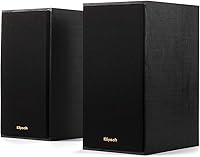
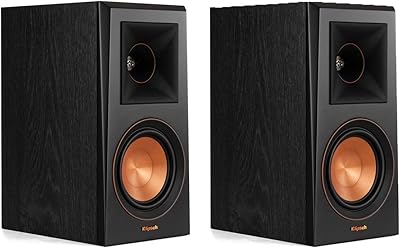
The wood cabinet construction gives the R-41PM pair a solidity that plastic-bodied competitors simply cannot match. The finish is clean, the drivers are recessed behind a removable grille, and the Spun-Copper woofer cone is visually distinctive in a way that signals genuine Klipsch craftsmanship rather than cosmetic cost-cutting.
The rear panel connections, while functional, feel slightly less premium than the rest of the build. A handful of long-term owners have noted that the input selector can feel imprecise after extended daily use, suggesting the switching mechanism is not built to the same standard as the speaker drivers themselves.
Out-of-Box Experience
89%
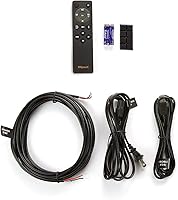
Klipsch ships the R-41PM pair with a notably complete accessory set: a remote control with batteries, pre-soldered speaker wire, a USB cable, a power cord, and rubber feet. For most buyers, no additional purchases are needed on day one, which compares favorably to passive speaker setups that require sourcing cables and amplifiers separately.
The included speaker wire, while convenient, is a relatively short 4 meters. Buyers placing the speakers farther apart than a standard desktop or bookshelf arrangement will likely need to purchase longer cable. The manual is functional but sparse on troubleshooting guidance for first-time powered-speaker owners.
Bluetooth Reliability
73%
27%
Within the rated 10-meter range and with clear line of sight, the Bluetooth connection holds steady without dropout issues that plague cheaper wireless speakers. Pairing is quick on first connection, and everyday streaming from a phone or tablet works reliably for background listening and casual use throughout the day.
Multi-device Bluetooth management is the persistent weak point — reconnecting a second device requires manually disconnecting the first, which is a minor but recurring annoyance reported across dozens of reviews. There is no auto-reconnect behavior sophisticated enough to handle a household where multiple devices compete for the connection.
Remote Control Usability
77%
23%
Having a physical remote for a desktop speaker system is a genuine quality-of-life feature that many competitors simply omit. Buyers appreciate being able to adjust volume, switch inputs, and manage basic playback from across the room without getting up, which makes the R-41PM pair particularly convenient in a living room or studio setting.
The remote covers the basics competently but stops there. There is no EQ adjustment, no tone control, and no balance control accessible via the remote, which frustrates listeners who want to tune the sound to their room. A few users also mention the remote feels lightweight in hand, which undermines the otherwise solid build impression.
Value vs. Passive Alternatives
83%
When you total the cost of a comparable passive bookshelf speaker pair plus a stereo amplifier plus a phono preamp, this Klipsch bookshelf system consistently comes out as the more economical path for listeners who want all three functions. Reviewers who made that comparison explicitly tend to rate the value perception very highly.
Against purely passive setups in the same total budget, the passive route can yield better driver and cabinet quality since none of that budget is spent on amplification electronics. The tradeoff is simplicity versus ultimate sound-per-dollar, and buyers who prioritize maximum sonic performance over convenience occasionally express mild regret.
Desktop & Near-Field Performance
87%
At a typical desk listening distance of 2 to 4 feet, these powered monitors genuinely reward the listener. The Tractrix Horn's controlled dispersion means the sweet spot is well-defined, and detail retrieval at low volumes makes them effective for focused work sessions where background music needs to stay unobtrusive but still sound good.
The horn-loaded tweeter's directional nature means that off-axis listening — sitting at a sharp angle to the speakers — loses some of the high-frequency presence that makes them compelling on-axis. In a shared desk setup where multiple people sit at different angles, this is a more noticeable limitation than in a solo listening environment.
Room Size Suitability
66%
34%
In a home office, a compact studio, or a bedroom, the R-41PM pair handles its duties with authority. The volume ceiling is high enough for these spaces, and the bass extension, modest as it is, feels proportionate to the room dimensions where the speakers genuinely belong.
Place them in an open-plan living area or a room with high ceilings and the limitations become apparent fast. The bass disappears into the room before it can pressurize the space, and the overall presentation loses the weight and scale that the near-field experience delivers. Room matching is critical to satisfaction with this system.
Long-Term Reliability
74%
26%
Many buyers who have owned the R-41PM pair for two or more years report no failures in the amplifier section or driver performance, which is reassuring for a product category where internal electronics can be a point of failure. The limited warranty provides some backstop against early defects.
Long-term data on powered speaker reliability is inherently harder to accumulate than for passive designs, and a small but consistent thread of reviews mentions unit failures after the warranty period. The inability to replace or upgrade the internal amplifier independently is a real limitation compared to a separates-based system.

Suitable for:

The Klipsch R-41PM Powered Bookshelf Speakers are purpose-built for listeners who want a genuinely capable audio system without assembling a stack of separate components. Turntable owners get the most immediate value: the built-in phono preamp means you can plug a record player directly into these powered monitors and be listening to vinyl in minutes, with no extra preamp box taking up shelf space or budget. Work-from-home setups are another natural fit — the combination of USB digital input for a laptop, a phono connection for a turntable, and Bluetooth for a phone means you can cover every source in a typical home office without ever swapping a cable. This Klipsch bookshelf system also makes a strong case for anyone upgrading from a soundbar or a budget PC speaker set, since the step up in clarity, dynamics, and soundstage is immediately noticeable. Compact room dimensions play in its favor: home offices, studios, dedicated listening rooms, and mid-sized bedrooms are where these speakers operate at their best.
Not suitable for:

The Klipsch R-41PM Powered Bookshelf Speakers are a poor match for listeners who prioritize deep, room-filling bass above all else. The 4-inch woofer and compact cabinet are simply not engineered to pressurize a large open-plan living space, and no amount of Dynamic Bass EQ can substitute for cabinet volume and driver surface area when low-end output is the primary goal. Buyers who already own a high-quality external phono preamp tuned to their specific cartridge may also find the built-in stage a step down from their current setup rather than a convenience. If your household has multiple people who frequently want to stream music wirelessly from different devices, the single-device Bluetooth pairing limitation will become a daily frustration rather than an occasional inconvenience. Serious audiophiles who prefer the upgrade flexibility of a separates system — swapping amplifiers, preamps, and speakers independently over time — will find the all-in-one architecture of the R-41PM pair more restrictive than liberating in the long run. Finally, anyone expecting concert-level volume in a room larger than roughly 200 square feet should look at a more powerful active system or a traditional passive setup with a higher-output amplifier.
Specifications

  • Speaker Type: Two-way powered bookshelf speaker pair with a built-in stereo amplifier, sold as a complete set of two.
  • Amplifier Power: The integrated amplifier delivers 70 watts of total output power across both channels.
  • Woofer: Each speaker uses a 4-inch Spun-Copper IMG (Injection Molded Graphite) woofer for low-to-mid frequency reproduction.
  • Tweeter: A 1-inch aluminum Linear Travel Suspension tweeter is mounted in a Tractrix Horn waveguide for controlled high-frequency dispersion.
  • Frequency Response: The system reproduces audio frequencies up to 21 kHz, covering the full range of human hearing at the high end.
  • Inputs: Available inputs include a phono/line analog input with ground screw terminal, a 3.5mm analog mini-jack, and a USB Type-B digital input.
  • Wireless: Bluetooth wireless streaming is supported with a rated range of approximately 10 meters under typical conditions.
  • Cabinet Material: Cabinets are constructed from wood with a bass-reflex (ported) design to aid low-frequency extension.
  • Dimensions: Each speaker measures 8.51″ deep by 5.75″ wide by 11.3″ tall.
  • Weight: Each speaker unit weighs 8.1 pounds, for a combined pair weight of approximately 16.2 pounds.
  • Surround Config: The system operates in a 2.0 stereo configuration with no dedicated surround or center channel output.
  • Control Method: Primary user control is handled via the included infrared remote control, which manages volume, input selection, and basic playback functions.
  • Power Source: The active speaker requires a corded electrical connection and includes a region-specific power cord in the box.
  • Included Accessories: The package includes a remote control with AAA batteries, 4 meters of speaker wire with pre-soldered tips, a 2-meter USB Type-A to Type-B cable, a power cord, and rubber feet.
  • Bluetooth Range: Bluetooth connectivity is rated for up to 10 meters, though walls and interference can reduce effective range in real-world environments.
  • Bass Design: A Dynamic Bass EQ circuit automatically adjusts low-frequency response at lower volume levels to compensate for the compact cabinet size.
  • Warranty: Klipsch covers the R-41PM pair under a limited manufacturer warranty; buyers should confirm current warranty terms directly with Klipsch or the retailer at time of purchase.
  • Special Features: Key technology highlights include the Tractrix Horn, Spun-Copper IMG woofer, Dynamic Bass EQ, low-noise internal amplifiers, and a built-in MM phono preamplifier with ground terminal.

Related Reviews
Klipsch R-40PM
Klipsch R-40PM
79%
91%
Sound Clarity & Detail
67%
Bass Performance
88%
Connectivity & Input Options
86%
Built-in Phono Preamp
83%
Amplifier Performance
More
Klipsch R-41M
Klipsch R-41M
78%
91%
Sound Clarity & Detail
52%
Bass Performance
86%
Soundstage & Imaging
93%
Sensitivity & Amplifier Compatibility
78%
Build Quality
More
Klipsch R-50M Bookshelf Speakers
82%
91%
Sound Clarity & Detail
74%
Treble Balance
86%
Midrange Performance
63%
Bass Response
93%
Efficiency & Sensitivity
More
Klipsch The Fives Powered Bookshelf Speakers
86%
92%
Sound Quality
89%
Connectivity Options
85%
Setup & Installation
88%
Build Quality
91%
Bass Performance
More
Klipsch R-51M
Klipsch R-51M
82%
93%
Sound Clarity
91%
Dynamic Range
88%
Build Quality
72%
Bass Performance
89%
Value for Money
More
Orroplus OR-02 Powered Bookshelf Speakers
77%
83%
Sound Clarity & Midrange
61%
Bass Performance
91%
Connectivity & Input Range
78%
Bluetooth Performance
72%
Setup & Ease of Use
More
Majority D100 Bookshelf Speakers
74%
76%
Sound Quality
71%
Bass Performance
83%
Build Quality
89%
Connectivity Range
68%
Phono Stage
More
Micca PB42X Powered Bookshelf Speakers
83%
87%
Sound Quality
91%
Value for Money
76%
Bass Performance
89%
Ease of Setup
85%
Build Quality
More
Fluance Ai41 Powered Bookshelf Speakers
82%
88%
Sound Quality
73%
Bass Performance
84%
Treble Clarity
91%
Build Quality
87%
Connectivity & Inputs
More
Klipsch R-625FA Dolby Atmos Floorstanding Speaker
83%
93%
Sound Dynamics
74%
Dolby Atmos Height Effect
81%
Bass Performance
91%
Build Quality
86%
Ease of Setup
More

FAQ

Yes, and that is one of the most practical things about the R-41PM pair. There is a dedicated phono input with a ground screw terminal on the back of the active speaker, so you just run your turntable's RCA cables to that input, attach the ground wire to the screw, and you are ready to play records. No external preamp box needed.

They work well for this. The USB Type-B input accepts a digital audio signal directly from a computer, which means your PC or Mac handles the audio without routing it through the computer's internal sound card. The included USB cable covers the connection, so setup is straightforward for a desktop listening arrangement.

In practical terms, these powered monitors perform best in spaces up to roughly 150 to 200 square feet — think a home office, a studio, a large bedroom, or a compact living room. In a bigger open-plan space or a room with high ceilings, the bass starts to thin out and the overall volume ceiling becomes noticeable. They are near-field and mid-field speakers, not large-room performers.

There is no dedicated subwoofer output on the R-41PM pair, which is a genuine limitation. Some buyers work around this by using a subwoofer with speaker-level inputs connected in parallel with the main speakers, but this is a workaround rather than a clean integrated solution. If deep bass is a priority, factor in the cost of a sub and a compatible connection method before purchasing.

The Bluetooth connection handles one paired device at a time. To switch from your phone to your laptop, you need to disconnect the active device first and then connect the second one. It works, but it is not the effortless automatic switching you get with some newer Bluetooth speaker systems. If you frequently toggle between multiple wireless sources, the physical inputs are actually more convenient for daily use.

The remote is genuinely useful and most owners keep using it. It handles volume, muting, and input switching, which covers the day-to-day interactions most listeners actually need. Where it falls short is tone control — there are no EQ or bass and treble adjustments available through the remote, so if you want to tune the sound to your room, you are limited to what the speaker does natively.

They can serve as stereo front speakers in a simple 2.0 home theater arrangement — connected to a TV via the 3.5mm input or through a Bluetooth connection — and they handle dialogue and music in films well. They are not designed to anchor a full surround system, and without a subwoofer the low-end impact from action content will feel restrained. For casual TV watching and streaming in a smaller room, they work fine.

This Klipsch bookshelf system uses a horn-loaded tweeter, which is a design that some listeners find bright on the first listen, particularly with compressed audio from streaming services. The majority of long-term owners describe the highs as clear and detailed without becoming fatiguing, but ears that are sensitive to upper-midrange energy may want to audition them before committing. Source quality matters: well-recorded music sounds genuinely impressive through these speakers.

One speaker contains all the electronics (the active unit) and the other is a passive speaker driven by the first. If the passive speaker fails, replacing it is relatively straightforward. If the active unit's amplifier fails outside the warranty period, repair or replacement becomes more complicated and costly, since the electronics are integrated into the speaker cabinet rather than being a separate, swappable component.

Setup is about as straightforward as this category gets. You connect the two speakers using the included speaker wire, plug in the power cord, and connect whatever source you are using — turntable, phone via Bluetooth, laptop via USB — to the corresponding input. The included accessories mean you are not hunting for cables before you can start listening. Most first-time buyers report being up and running in well under half an hour.

Where to Buy