Overview

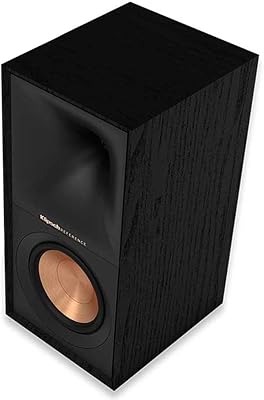
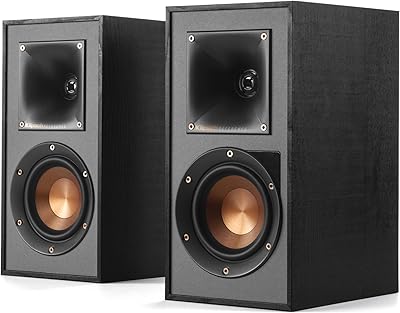
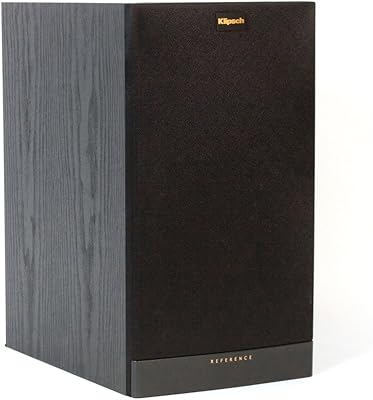
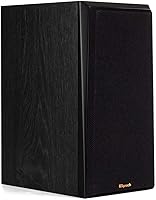
The Klipsch RP-500M Bookshelf Speakers sit at the heart of Klipsch's Reference Premiere lineup — a range that has built a devoted following among serious listeners who want real performance without stepping into audiophile-exotic pricing. Unbox them and the first thing you notice is how solid they feel. The ebony cabinet has a scratch-resistant vinyl finish that honestly looks more expensive than many rivals in this price bracket. One thing to flag before anything else: these are passive speakers, meaning you need a separate amplifier or AV receiver to drive them. Plan accordingly. Beyond stereo music, they work well as front left and right channels in a home theater setup.

Features & Benefits

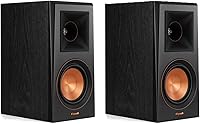
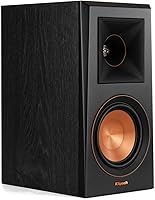
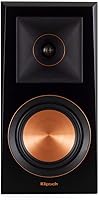
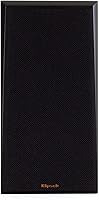
The Hybrid Tractrix Horn surrounding the 1-inch titanium tweeter is more than a design signature — it controls how sound disperses across the room, which means you get a wide, even listening window without the harshness that plagues cheaper tweeters at high volumes. The 5.25-inch copper Cerametallic woofer is rigid enough to stay accurate but light enough to move quickly, which pays off in crisp, clean midrange detail. The rear-firing Tractrix port is worth knowing about: pull these Klipsch bookshelves at least six to eight inches from the wall, or you risk muddying the low end. Sensitivity is high enough that a modest receiver will drive them to satisfying volume without strain. The magnetic grille snaps on and off in seconds — a small convenience that gets appreciated over time.

Best For

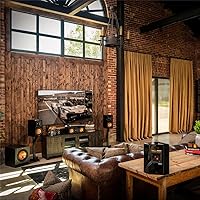
If you're coming from a pair of budget plug-and-play speakers and want to hear what your music actually sounds like, the RP-500M pair is a compelling next step. They shine in small-to-medium rooms where their forward, dynamic character fills the space without overwhelming it. Home theater builders will find them a natural fit as front left and right channels alongside a matching Klipsch center and subwoofer. That said, they lean toward a lively, energetic presentation rather than the flat, neutral sound a mixing engineer might prefer — so if you want studio-monitor accuracy, look elsewhere. You also need an amp or receiver already in hand; these are not a standalone solution.

User Feedback

Owners who've lived with these Reference Premiere speakers for a while tend to report that the soundstage and dynamics are the standout qualities — the kind of thing that catches new listeners off guard in a good way. Efficiency is another recurring compliment; these don't need a beefy amplifier to perform. On the other side, a meaningful number of users flag upper-treble brightness with certain recordings, particularly older masters or compressed streaming at high volume, and note that a warm-sounding amp helps tame it. Wall placement is a real practical concern — pull them too close to the wall and bass gets woolly. Several owners also note that out-of-box sound improves noticeably after a break-in period of several hours. Packaging and shipping reviews are generally solid, with few reports of damage on arrival.

Pros

  • Delivers a wide, engaging soundstage that outperforms most rivals in this size and price class.
  • High sensitivity means even a modest amplifier drives the RP-500M pair to impressive, room-filling volume.
  • The Hybrid Tractrix Horn disperses sound evenly across the room, reducing listening fatigue over long sessions.
  • Spun copper Cerametallic woofer produces clean, well-defined midrange that stays composed at higher volumes.
  • Premium ebony vinyl finish looks and feels significantly more upscale than competing speakers in the same bracket.
  • Magnetic grille attaches and detaches in seconds without tools — a small but genuinely useful everyday convenience.
  • Scratch-resistant cabinet holds up well over time without requiring careful handling or special storage.
  • Works effectively as home theater front channels, integrating naturally into a broader Klipsch surround setup.
  • Long-term owners consistently report that sound quality improves further after an adequate break-in period.
  • Solid packaging means these Klipsch bookshelves typically arrive well-protected, with damage reports being rare.

Cons

  • Require a separate amplifier or receiver — first-time passive speaker buyers are often caught off guard by this added cost.
  • Upper-treble brightness can become fatiguing with certain recordings, particularly compressed or harshly mastered tracks.
  • Rear-firing port demands at least six to eight inches of clearance from the back wall, limiting placement options in tight spaces.
  • The energetic, forward-sounding tuning does not suit listeners who prefer a neutral or laid-back tonal balance.
  • Bass output from the 5.25-inch woofer is limited at lower frequencies — a subwoofer is effectively necessary for full-range sound.
  • Pairing these Reference Premiere speakers with a bright or harsh-sounding amplifier significantly worsens treble hardness.
  • At roughly 11.9 pounds per unit, they are heavier than they look, which matters when choosing stands or shelving.
  • Out-of-box sound can feel unrefined until the drivers have had adequate time to loosen up, which may disappoint impatient buyers.

Ratings

Our AI scoring model analyzed thousands of verified owner reviews for the Klipsch RP-500M Bookshelf Speakers from buyers worldwide, applying filters to remove incentivized, bot-generated, and outlier feedback before calculating each category score. The results reflect the full picture — where these speakers genuinely impress and where real buyers have run into frustration. Both the highs and the legitimate pain points are represented transparently below.

Sound Dynamics
92%
Owners consistently describe the dynamic punch as one of the most immediately striking qualities — drums crack, guitar attacks land with conviction, and film explosions have genuine weight. For listeners stepping up from budget passive or powered speakers, the improvement in energy and presence is reported as dramatic and immediately obvious.
A small segment of buyers who prefer a laid-back, relaxed presentation find the forwardness tiring over long sessions, particularly with rock or electronic music at higher volumes. The character is distinctly colored rather than neutral, which is not universally loved.
Treble Clarity
78%
22%
The titanium tweeter paired with the Tractrix Horn produces detailed, extended high frequencies that bring out cymbal shimmer, vocal sibilance, and fine string texture in ways that cheaper tweeters simply cannot. Many owners praise the sense of airiness and resolution at the top end, especially with well-recorded jazz and acoustic music.
Brightness in the upper treble is the single most recurring criticism across owner feedback — compressed streaming audio, older recordings, and bright amplifier pairings can all push the RP-500M pair into harshness territory. This is not a subtle fringe complaint; it surfaces frequently enough to be a genuine buying consideration.
Midrange Detail
88%
Vocals and instruments occupying the midrange — guitars, piano, horns, human voice — come through with a texture and presence that owners find engaging and lifelike. The Cerametallic woofer's rigidity keeps the midrange from sounding bloated or congested even when the music gets complex.
At very high playback levels, some buyers note a slight hardness creeping into the upper midrange that makes sustained listening less comfortable. This is less of an issue at moderate volumes but becomes relevant for those who regularly listen loud in smaller rooms.
Bass Performance
71%
29%
For a 5.25-inch driver in a compact cabinet, the bass output is tighter and more articulate than many competitors in the same size class. Bass guitar lines and kick drums come through with good definition, and the Tractrix port extends the low end further than a sealed design of equivalent size would manage.
Deep sub-bass is simply beyond what this driver and cabinet size can deliver — below roughly 50 Hz the output drops off noticeably, and owners watching action films or listening to electronic music with heavy sub content almost universally end up adding a subwoofer. Placing these Reference Premiere speakers too close to a rear wall also makes the bass muddy rather than extended.
Soundstage & Imaging
89%
The Tractrix Horn's wide, controlled dispersion pattern creates a broad, enveloping soundstage that owner after owner describes as one of the most impressive qualities at this price point. Instruments and voices are well-separated in space, and the stereo image holds together convincingly even off-axis.
A handful of owners in acoustically reflective rooms report that the wide dispersion can work against precise imaging, with early reflections smearing the stereo image unless some room treatment or careful speaker toe-in is applied. This is a room-interaction issue as much as a speaker limitation, but it is worth knowing about.
Build Quality
86%
The cabinet feels solid and inert when you tap it, with none of the hollow resonance common in cheaper bookshelf designs. The ebony vinyl wrap is applied evenly and cleanly, and the magnetic grille mechanism works reliably without wobbling or misaligning.
A small number of buyers have noted that the vinyl wrap at cabinet corners can show wear over time with heavy handling, and the composite wood construction means these Klipsch bookshelves are not quite as acoustically inert as true MDF or real wood alternatives at higher price points.
Amplifier Compatibility
74%
26%
High sensitivity means these speakers produce impressive volume from amplifiers that would struggle to drive less efficient designs — a 50-watt-per-channel receiver is genuinely enough for most rooms and listening levels, which is good news for buyers who want to avoid a costly amplifier upgrade.
The flip side of that sensitivity is that the speakers reveal the character — and flaws — of whatever amplifier is upstream, including noise and tonal coloration. Buyers pairing them with a bright or analytical amplifier frequently report the treble issues becoming more pronounced, and first-time passive speaker buyers are sometimes caught off guard by needing any amplifier at all.
Placement Flexibility
63%
37%
On stands in open space, the RP-500M pair performs at its best, and the relatively compact footprint means they fit comfortably on medium-depth shelving when wall clearance is available. Shelf-mount suitability is solid for buyers who have at least some room to work with.
The rear-firing port is the main practical constraint — owners who try to use these in built-in shelving or push them close to a rear wall report noticeably woolly, one-note bass compared to a more open placement. This is a recurring and legitimate complaint that narrows the viable installation scenarios for buyers with tighter spaces.
Value for Money
83%
The combination of Klipsch's Reference Premiere engineering, premium-looking finish, and genuinely competitive sound quality makes these speakers feel like more than their price would suggest to most owners. Buyers who compare them directly against similarly priced rivals frequently report that the dynamics and build quality stand out favorably.
The total system cost climbs quickly once a buyer factors in a quality amplifier and a subwoofer — both of which are effectively necessary to get the best from these speakers. Buyers who did not anticipate those additional costs sometimes feel the overall investment turned out higher than expected.
Break-in Experience
67%
33%
Owners who gave these Klipsch bookshelves adequate break-in time — roughly 40 to 100 hours of normal listening — consistently report a worthwhile improvement in bass fullness and treble smoothness. Long-term owners are generally more satisfied than those who judged the speakers in the first few hours.
The out-of-box presentation can be noticeably stiffer and brighter than the broken-in sound, and buyers who return or dismiss the speakers after a brief initial listen may be missing what they eventually become. The dependence on break-in time is an inconvenience that not all buyers are prepared for.
Home Theater Integration
91%
As front left and right channels in a home theater system, these Reference Premiere speakers are a natural fit — their dynamics, sensitivity, and tonal character work exceptionally well with the dramatic transients in film soundtracks. Owners building Klipsch-matched systems report seamless timbre consistency across the front soundstage.
Their limited deep bass output means a subwoofer is not optional for home theater duty — without one, low-frequency effects and bass-heavy scenes are noticeably thin. Integration without a subwoofer is simply not the intended use case.
Aesthetic Appeal
87%
The ebony finish with copper-colored woofer cones is a distinctive and attractive combination that owners frequently call out as a genuine differentiator on a shelf or stand. The visual premium relative to similarly priced competitors is a consistent talking point among buyers who care about how their setup looks.
The copper woofer aesthetic is somewhat polarizing — it reads as bold and distinctive to some, but looks too showy or mismatched in minimalist or neutral-toned rooms for others. Finish options are also limited, which frustrates buyers who would prefer a white or walnut alternative.
Packaging & Shipping
82%
18%
The majority of buyers report receiving their units in excellent condition, with protective foam inserts and outer packaging that hold up adequately through standard shipping handling. Damage-related complaints are a small minority relative to overall volume.
A recurring subset of reviewers notes that the outer box shows damage on arrival even when the speakers inside are unharmed, which creates unnecessary anxiety during unboxing. A small but consistent number of buyers do report driver or cabinet damage from shipping, particularly through third-party sellers.

Suitable for:

The Klipsch RP-500M Bookshelf Speakers are an excellent match for listeners who are ready to move beyond entry-level audio and want a meaningful, immediately noticeable upgrade in dynamics and detail. If you already own a mid-range AV receiver or a dedicated stereo amplifier — even a modestly powered one — these speakers are efficient enough to reward you without demanding a high-wattage power source. Home theater enthusiasts building a cohesive Klipsch system will find the RP-500M pair a natural anchor for the front left and right channels, especially when paired with a matching Klipsch center speaker and a subwoofer to fill in the low end. They are also well-suited to small-to-medium dedicated listening rooms or living spaces where their lively, forward-sounding character can really stretch its legs. Anyone who values energetic, punchy playback over sterile neutrality — whether listening to rock, film soundtracks, or live recordings — will find these Reference Premiere speakers genuinely satisfying to live with day to day.

Not suitable for:

The Klipsch RP-500M Bookshelf Speakers are a poor fit for anyone expecting a plug-and-play solution straight out of the box, as they are passive speakers that require a separate amplifier or AV receiver to function at all. Buyers who prefer a flat, analytically neutral sound — the kind of presentation favored by mixing engineers or critical mastering work — will likely find the RP-500M pair too colored and forward in character for that purpose. Those with very large, open-plan living spaces may find that the 5.25-inch woofer simply cannot pressurize the room adequately without heavy subwoofer support. Listeners who tend to stream compressed audio at high volumes, or who plan to pair these with a bright-sounding amplifier, should be aware that the tweeter can become fatiguing in those conditions. Finally, anyone planning to push them close to a rear wall without the option to pull them out at least six to eight inches should look at front-ported alternatives, as placement flexibility here is genuinely limited.

Specifications

  • Speaker Type: Passive bookshelf speakers sold as a stereo pair, requiring an external amplifier or AV receiver to operate.
  • Tweeter: 1-inch titanium LTS vented tweeter paired with a Hybrid Tractrix Horn for controlled sound dispersion and reduced high-frequency distortion.
  • Woofer: 5.25-inch spun copper Cerametallic driver designed for high rigidity and low mass, supporting accurate midrange and upper-bass reproduction.
  • Port Design: Rear-firing Tractrix bass-reflex port that improves low-frequency extension while requiring adequate clearance behind the cabinet.
  • Peak Power: Rated to handle up to 300W peak power input, though typical real-world listening levels draw a fraction of that figure.
  • Frequency Response: Frequency response extends up to 20 kHz at the high end, covering the full range of human hearing on the treble side.
  • Connectivity: Connects to an amplifier or receiver via standard RCA input terminals on the rear of each cabinet.
  • Audio Output: Configured for stereo output, functioning as a left and right channel pair in both two-channel and multi-channel home theater systems.
  • Cabinet Finish: Scratch-resistant ebony vinyl wrap applied to a wood-composite cabinet, providing a premium appearance with practical durability for everyday use.
  • Grille: Flexible magnetic grille attaches and detaches without pins or clips, allowing tool-free removal without risking damage to the cabinet surface.
  • Mounting Type: Designed for shelf mounting, and also compatible with standard bookshelf speaker stands when elevated placement is preferred.
  • Unit Weight: Each speaker unit weighs approximately 11.9 pounds, so stand or shelving load capacity should be confirmed before installation.
  • Driver Technology: Uses dynamic driver technology in both the tweeter and woofer, a proven approach for reliable, consistent audio performance.
  • Brand Line: Part of Klipsch's Reference Premiere series, which sits above the entry-level Reference line and below the company's flagship Heritage and THX-certified ranges.
  • Recommended Use: Intended for home audio music listening, dedicated stereo setups, and as front left and right channels in home theater configurations.

Related Reviews
Klipsch RP-600M II
Klipsch RP-600M II
80%
91%
Sound Quality
88%
Treble & High-Frequency Detail
83%
Bass Performance
94%
Sensitivity & Efficiency
79%
Midrange Clarity
More
Klipsch RP-140D Speaker
86%
91%
Sound Quality
87%
Ease of Installation
90%
Design & Aesthetics
89%
Value for Money
85%
Build Quality
More
Klipsch R-50M Bookshelf Speakers
82%
91%
Sound Clarity & Detail
74%
Treble Balance
86%
Midrange Performance
63%
Bass Response
93%
Efficiency & Sensitivity
More
Klipsch R-41M
Klipsch R-41M
78%
91%
Sound Clarity & Detail
52%
Bass Performance
86%
Soundstage & Imaging
93%
Sensitivity & Amplifier Compatibility
78%
Build Quality
More
Klipsch The Fives Powered Bookshelf Speakers
86%
92%
Sound Quality
89%
Connectivity Options
85%
Setup & Installation
88%
Build Quality
91%
Bass Performance
More
Klipsch RB-61 II
Klipsch RB-61 II
81%
91%
Sound Clarity
94%
Sensitivity & Efficiency
72%
Bass Performance
86%
Sound Staging & Imaging
83%
Build Quality
More
Klipsch RP-504C Center Channel Speaker
81%
96%
Dialogue Clarity
93%
Build Quality
91%
Driver Performance
89%
Soundstage Integration
87%
High-Frequency Dispersion
More
Klipsch RP-450C Center Channel Speaker
84%
96%
Dialogue Clarity
93%
Build Quality
91%
Tonal Matching
88%
Soundstage & Imaging
89%
Dynamic Range
More
Klipsch R-51M
Klipsch R-51M
82%
93%
Sound Clarity
91%
Dynamic Range
88%
Build Quality
72%
Bass Performance
89%
Value for Money
More
Klipsch RP-250C Center Channel Speaker
82%
94%
Dialogue Clarity
91%
Build Quality
86%
System Compatibility
78%
Value for Money
88%
Cabinet Aesthetics
More

FAQ

Yes, absolutely. The Klipsch RP-500M Bookshelf Speakers are passive, meaning they have no built-in amplification whatsoever. You will need a separate stereo amplifier or AV receiver to power them. This is not an optional extra — without an amplifier, they simply will not produce any sound.

These speakers are quite efficient, so you do not need a powerhouse amplifier to get excellent results. A mid-range AV receiver or a stereo integrated amplifier in the 50 to 100 watts per channel range will drive them very comfortably. One thing worth noting: if your amplifier has a bright or harsh character, it can accentuate the already lively treble on these speakers, so a warmer-sounding pairing tends to work better.

Strictly speaking, no — but practically speaking, most people will want one. The 5.25-inch woofer handles midrange and upper bass well, but it rolls off in the deep bass region that you feel in music and film soundtracks. For casual music listening they hold their own, but if you watch movies or listen to bass-heavy genres, adding a subwoofer makes a significant difference.

Because the port fires out of the rear of the cabinet, you want to keep at least six to eight inches of space between the back of each speaker and the wall behind it. Placing them too close causes the bass to build up and become boomy rather than tight and defined. If your room does not allow that much clearance, a front-ported design would suit your situation better.

It depends heavily on the amplifier you use and the recordings you listen to. These Reference Premiere speakers have an energetic, forward-sounding presentation that a lot of listeners love, but it does mean that poorly mastered or highly compressed recordings can sound a little harsh at higher volumes. Pairing them with a warm-sounding receiver and giving the drivers a proper break-in period goes a long way toward smoothing things out.

Most owners report noticeable improvement after roughly 40 to 100 hours of normal listening. Out of the box, the drivers can sound slightly stiff or bright, and the bass may feel a little thin. After adequate use, the woofer surround loosens up and the overall presentation becomes more balanced and refined. It is worth being patient before drawing any firm conclusions about the sound.

You can, though they are not optimized for very close listening distances. The Tractrix Horn is designed to project sound across a room, so at very short range the dispersion can feel a little wide and diffuse compared to a dedicated nearfield monitor. That said, plenty of people run them on a desk with good results — just expect a different character than a typical studio nearfield speaker.

Yes, this is genuinely one of their strongest use cases. These Klipsch bookshelves integrate well as front left and right channels, particularly if you pair them with a matching Klipsch center channel speaker for consistent timbre across the front soundstage. Their high sensitivity and dynamic punch make dialogue and action sequences sound lively and immediate.

The ebony vinyl wrap is scratch-resistant and holds up well under normal conditions. It is not invincible — sharp objects will still mark it — but for regular handling, dusting, and the occasional bump, it performs better than many competitors in this price range. The magnetic grille also removes cleanly without leaving pin holes or marks on the cabinet.

Packaging-related damage reports are relatively uncommon based on owner feedback, suggesting Klipsch takes reasonable care with transit protection. Klipsch backs its products with a manufacturer warranty, though the specific terms and duration can vary by region, so it is worth confirming coverage details directly with the retailer or Klipsch at the time of purchase.

Where to Buy