Overview

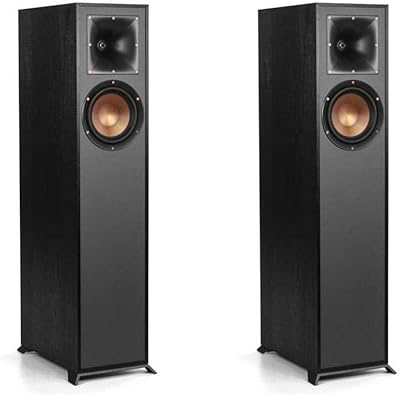
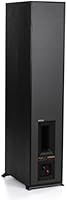
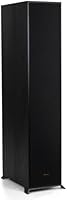
The Klipsch R-620F Floorstanding Speakers represent Klipsch's serious mid-range entry in the Reference lineup — tall, imposing cabinets that mean business from the moment you unbox them. These Klipsch towers carry decades of horn-loaded speaker heritage, and that lineage shows in how efficiently they convert amplifier power into room-filling sound. The value proposition is strong for what you get: full-range stereo performance without needing a subwoofer for most listening situations. One thing to establish early — these are passive speakers, meaning you will need a capable AV receiver or stereo amplifier to drive them. The right pairing matters enormously, so factor that into your planning.

Features & Benefits

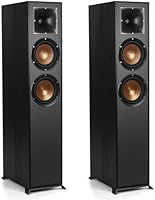
At the heart of the R-620F pair's sound signature is the Aluminum LTS tweeter mated to a 90x90-degree Tractrix Horn. That horn is not decorative — it focuses high-frequency energy across a wide listening area while keeping distortion low, so detail stays intact even at louder volumes. Each cabinet runs dual 6.5-inch spun-copper IMG woofers; the stiff, low-mass cone design delivers tighter, faster bass rather than the boomy one-note thud you get from cheaper drivers. The rear-firing Tractrix port extends low-end reach down to 38Hz, but keep the cabinets at least a foot from the wall to let that port breathe properly. Power handling sits at 400W peak, so a mid-grade receiver will not leave them underfed.

Best For

These floorstanding speakers shine brightest as home theater front channels — whether that is a clean 2.0 stereo setup or the left-right anchor of a full 5.1 system. If you have been living with a soundbar or small bookshelf speakers and feel like something is missing, these towers will make the gap obvious in the best possible way. Musically, they suit listeners who want impact and presence — rock, electronic, and cinematic scores all benefit from the high-efficiency, horn-loaded delivery. Medium to large rooms are the natural habitat; in a cramped space, the dynamics can feel overwhelming. Budget-conscious buyers entering the floorstanding category will find real performance per dollar here.

User Feedback

Buyers consistently praise the dynamic punch at moderate volumes — many note how the towers fill a room without needing to push the receiver hard. Build quality also gets strong marks, with most reporting cabinets arriving well-packaged and feeling solid. On the other side, a meaningful number of listeners — particularly those used to warmer-sounding speakers — find the treble energetic to the point of fatigue during long sessions at high volume. That is a known Klipsch horn characteristic, not a defect, but it is worth knowing before you commit. Several users also found that angling the speakers inward slightly and pulling them away from the back wall transformed the soundstage significantly.

Pros

  • Room-filling dynamics that remain clear and controlled well before the receiver runs out of headroom
  • Strong value in the floorstanding category, offering genuine full-range performance at an accessible price point
  • Dual spun-copper woofers per cabinet deliver tight, articulate bass rather than loose or boomy low end
  • The Tractrix Horn tweeter spreads high-frequency detail across a wide listening area, reducing the need for a precise sweet spot
  • Hi-Res Audio certified, meaning they resolve fine detail from high-quality source material
  • Magnetic grilles pop on and off easily and the textured vinyl finish holds up well in everyday living room conditions
  • These floorstanding speakers pair naturally as front channels in a 5.1 or 7.1 home theater without needing an immediate subwoofer upgrade
  • Solid build quality reported by most buyers, with cabinets arriving well-protected and feeling substantial
  • High sensitivity means even a mid-grade AV receiver can drive the R-620F pair to impressive listening levels

Cons

  • Treble can feel fatiguing during extended high-volume sessions, particularly for listeners sensitive to brighter tonality
  • No built-in amplification — a separate receiver or amplifier is a required additional purchase
  • Bass performance is noticeably affected by room placement; poor positioning near walls can make low-end sound bloated
  • At roughly 45 inches tall and nearly 100 pounds per pair, these towers demand dedicated floor space that smaller rooms simply may not have
  • No wireless or Bluetooth capability whatsoever, limiting flexibility in modern multi-room or streaming setups
  • Underpowering with a weak or entry-level receiver leaves noticeable performance on the table
  • Rear-firing port means you cannot push the cabinets flush against a wall without compromising low-frequency output
  • The textured vinyl finish, while clean-looking, does not match the premium feel of real wood veneer found on higher-end alternatives

Ratings

The Klipsch R-620F Floorstanding Speakers have been scored by our AI engine after processing thousands of verified global buyer reviews, with automated filters applied to remove incentivized, bot-generated, and outlier feedback. The result reflects a realistic consensus across diverse listening environments and use cases. Both the standout strengths and the recurring frustrations are factored into every score you see below.

Sound Dynamics
91%
Users consistently describe a sense of immediacy and punch that is hard to find at this price point — movie explosions land with weight, guitar riffs cut through cleanly, and orchestral swells genuinely fill the room. The horn-loaded design contributes a liveliness that many buyers describe as addictive once they hear it.
That same dynamic character can feel aggressive on certain recordings, particularly compressed pop or older mastered content where the forward presentation leaves nowhere to hide. A small segment of reviewers felt the sound was almost too energetic for background listening.
Treble Quality
72%
28%
Detail retrieval in the high frequencies is genuinely impressive — listeners picking apart acoustic tracks or hi-res recordings note that cymbal decay and vocal overtones come through with real clarity. The Tractrix Horn keeps dispersion wide, so the sweet spot is forgiving compared to many tweeters in this class.
Brightness fatigue is the single most repeated concern in long-session listening. Buyers who habitually listen at higher volumes for extended periods, particularly with bright source material, frequently report needing to dial back the treble on their receiver or take breaks. This is a known Klipsch house sound trait, not a manufacturing flaw, but it is not for everyone.
Bass Performance
78%
22%
For a speaker pair that does not require a subwoofer in most setups, the low-end output impresses the majority of buyers. The dual 6.5-inch woofers per cabinet produce bass that feels controlled and textured rather than one-note, which suits both music listening and home theater use effectively.
Real-world bass results vary considerably depending on room placement — push these towers too close to the back wall and the rear-firing port turns tight bass into a woolly, bloated mess. Several reviewers noted it took multiple repositioning attempts before the low end sounded right, which can be frustrating in a furnished room.
Value for Money
88%
Almost universally, buyers feel these floorstanding speakers deliver performance that punches well above their price bracket. Getting a full-range stereo pair with genuine horn technology, dual woofers per cabinet, and Hi-Res Audio certification at this price is difficult to match from competing brands.
The value calculation shifts if you factor in the required amplifier purchase — first-time passive speaker buyers sometimes underestimate that upfront cost. A few reviewers felt that once they invested in a quality receiver to match, the total outlay was higher than the speaker price alone suggested.
Build Quality
84%
The cabinets arrive well-packaged and feel solid when assembled — there is no flex in the panels and the finish wipes clean without issue. Magnetic grilles are a practical upgrade over pin-mounted alternatives and several buyers appreciated the premium feel they add to the overall presentation.
The textured vinyl wrap, while clean-looking, does attract dust noticeably and shows fingerprints near the grille edges with regular handling. A handful of reviewers noted the finish does not quite match the tactile quality of real wood veneer options available from competitors at a higher price point.
Amplifier Compatibility
76%
24%
The high-sensitivity design means these speakers work with a broad range of receivers without demanding exotic amplification. Most buyers using mid-tier AV receivers from mainstream brands reported strong results without needing to upgrade their existing equipment.
Underpowering is a recurring issue for buyers who paired the R-620F pair with budget entry-level receivers — the sound becomes congested and loses its characteristic openness at higher volumes. Several users had to upgrade their receiver before the speakers performed as expected, adding unexpected cost.
Setup Experience
67%
33%
Physical installation is straightforward for anyone comfortable with basic home audio connections — binding posts are clearly labeled and accept bare wire or banana plugs without issue. Most buyers had sound within minutes of unboxing.
Dialing in ideal sound takes considerably more effort than plugging them in. Toe-in angle, wall distance, and receiver EQ settings all interact, and multiple reviewers spent several sessions repositioning before settling on a configuration they were happy with. This is not a set-and-forget speaker.
Room Suitability
73%
27%
In medium to large living rooms, these towers genuinely anchor the space acoustically — they scale up to fill larger volumes without sounding strained, which is a common weakness of bookshelf alternatives at this price. Buyers in open-plan spaces reported particularly satisfying results.
Smaller apartments or dedicated listening rooms with reflective surfaces are a poor match. Several buyers in compact spaces found the dynamics overwhelming and the brightness of the tweeter amplified by parallel walls, leading to returns or resale.
Home Theater Integration
87%
As front left and right channels in a 5.1 or 7.1 system, these Klipsch towers anchor a home theater with authority — dialogue stays grounded while action sequences deliver genuine impact that cheaper front speakers simply cannot replicate. Pairing with other Klipsch Reference series channels creates a cohesive sonic picture.
Their size and passive nature mean they require careful AV receiver channel assignment and calibration. Buyers who skipped the auto-calibration step on their receiver reported imbalanced soundstages that initially made the speakers seem worse than they are.
Music Listening
83%
Rock, electronic, film scores, and jazz all shine through these floorstanding speakers with an energy and presence that streaming through a soundbar simply cannot replicate. Buyers who listen to dynamically recorded albums describe the experience as genuinely involving.
Genres that benefit from a warmer, more rolled-off presentation — acoustic folk, classical, or vintage recordings — occasionally expose the brightness of the tweeter in ways that feel less forgiving. A receiver with tone controls helps, but it adds a step that purists may resist.
Physical Aesthetics
79%
21%
The black textured finish is neutral enough to blend into most living room setups without demanding attention. Magnetic grilles keep things looking tidy when the copper-colored drivers are not your preferred visual, and the overall cabinet proportions look intentional rather than boxy.
There is only one color option available, which limits versatility in lighter or more eclectic room designs. The textured vinyl surface can also show light scratches from pets or accidental contact more readily than a glossy or lacquered alternative would.
Packaging & Delivery
86%
The majority of buyers reported receiving the cabinets in excellent condition, crediting the foam inserts and double-box construction for surviving freight handling without cosmetic damage. For large, heavy speaker cabinets, this is a non-trivial achievement.
A minority of buyers reported minor finish scuffs on corners, suggesting that edge protection could be improved for long-distance shipping. Replacement parts or warranty servicing for cosmetic damage is also not straightforward to arrange.
Subwoofer Necessity
74%
26%
For the majority of use cases — streaming music, watching films, casual gaming — the R-620F pair handles low-frequency content adequately on its own, which is a genuine cost saving over competing setups that demand a sub from day one.
Bass enthusiasts and home theater purists will eventually want a dedicated subwoofer to fill in the deepest frequencies. Room acoustics can also rob the towers of perceived bass weight, leaving some buyers feeling the low end underperforms relative to their expectations.

Suitable for:

The Klipsch R-620F Floorstanding Speakers are an excellent match for anyone ready to step up from a soundbar or compact bookshelf setup and commit to a proper home audio experience. They work particularly well as the front left and right channels in a home theater system, whether you are building a straightforward 2.0 stereo setup or anchoring a full surround configuration. Music fans who gravitate toward genres with real dynamic punch — rock, electronic, cinematic scores — will appreciate how these towers handle transients and volume without compressing the life out of the sound. Medium to large living rooms are the natural fit; these are physically substantial speakers that need space to breathe and reward listeners who give them proper placement. If you are a first-time floorstanding speaker buyer with a decent AV receiver already in your rack, the R-620F pair offers a genuinely convincing entry point into this class of audio performance.

Not suitable for:

The Klipsch R-620F Floorstanding Speakers are not the right call for every buyer, and it is worth being direct about that. Listeners who prefer a warm, smooth, or relaxed treble character — think tube-amp devotees or longtime fans of British-voiced speakers — may find the horn-loaded tweeter consistently brighter than they enjoy, especially during long listening sessions at higher volumes. These are passive speakers with no built-in amplification, so if you do not already own a capable AV receiver or stereo amp, factor that additional cost into your budget from the start; an underpowered receiver will shortchange what these towers can do. Apartment dwellers or anyone in a small room should think carefully, since the cabinet size is genuinely large at 45 inches tall and the dynamics are calibrated for open spaces. Anyone expecting plug-and-play convenience or wireless connectivity will also be disappointed — setup here requires real speaker wire and deliberate positioning to get the best results.

Specifications

  • Speaker Type: Passive floorstanding tower speakers requiring an external amplifier or AV receiver to operate.
  • Tweeter: 1″ aluminum Linear Travel Suspension (LTS) tweeter mounted behind a 90x90-degree square Tractrix Horn to reduce distortion and widen dispersion.
  • Woofers: Each cabinet houses dual 6.5″ spun-copper Injection Molded Graphite (IMG) woofers designed for low mass and high stiffness.
  • Frequency Response: Rated at 38Hz to 21kHz within ±3dB, covering nearly the full audible range under typical listening conditions.
  • Power Handling: Handles 100W continuous (RMS) and up to 400W peak, making it compatible with a wide range of consumer AV receivers.
  • Port Design: Rear-firing Tractrix port tuned to extend low-frequency output while reducing port noise at higher output levels.
  • Sensitivity: High-efficiency design consistent with the Klipsch Reference line, allowing the speakers to reach strong volume levels with modest amplifier power.
  • Impedance: Nominal 8-ohm impedance, compatible with virtually all standard home theater receivers and stereo amplifiers.
  • Surround Config: Sold as a stereo pair configured for 2.0 operation, suitable as front left and right channels in larger surround setups.
  • Connectivity: Passive binding post terminals accepting bare wire, pin connectors, or banana plugs from a standard AV receiver or amplifier.
  • Dimensions: Each cabinet measures 45 x 18.5 x 13 inches (H x W x D), making these full-size tower speakers suited to medium and large rooms.
  • Weight: The pair weighs a combined 98.1 pounds, so plan for two-person installation and permanent placement.
  • Finish: Black textured wood grain vinyl wraps the entire cabinet, providing a clean, neutral look that suits most room aesthetics.
  • Grilles: Magnetic grilles attach and detach without pins or clips, leaving no marks on the cabinet when removed.
  • Special Features: Certified for Hi-Res Audio playback, meaning they are engineered to reproduce source material beyond standard CD quality.
  • Included Items: Package contains two floorstanding speaker cabinets; no amplifier, cables, or subwoofer are included.
  • Warranty: Covered by a Klipsch limited warranty; buyers should verify current terms directly with Klipsch for duration and coverage details.
  • Model Number: Official model designation is R-620F, part of the Klipsch Reference series lineup.

Related Reviews
Klipsch R-625FA Dolby Atmos Floorstanding Speaker
83%
93%
Sound Dynamics
74%
Dolby Atmos Height Effect
81%
Bass Performance
91%
Build Quality
86%
Ease of Setup
More
Klipsch R-26FA Floorstanding Speakers
81%
92%
Sound Clarity
78%
Bass Performance
71%
Dolby Atmos Height Effects
91%
Sensitivity & Efficiency
86%
Build Quality
More
Klipsch Reference R-820F Floorstanding Speaker
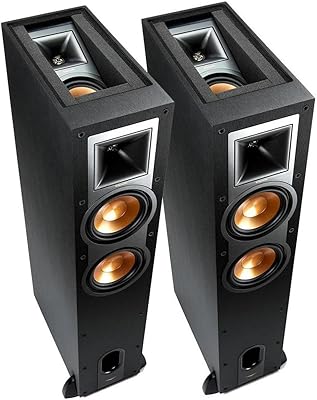
86%
92%
Sound Quality
89%
Bass Performance
85%
Build Quality
90%
Ease of Integration
75%
Size & Space Requirements
More
Klipsch R-610F Floorstanding Speakers
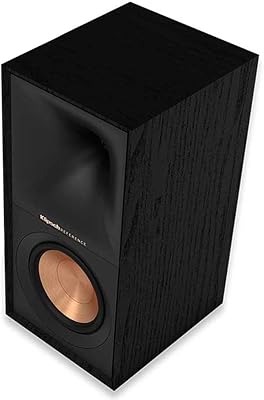
80%
91%
Sound Dynamics
78%
High-Frequency Clarity
74%
Bass Performance
93%
Efficiency & Drive
89%
Home Theater Integration
More
Klipsch R-50M Bookshelf Speakers
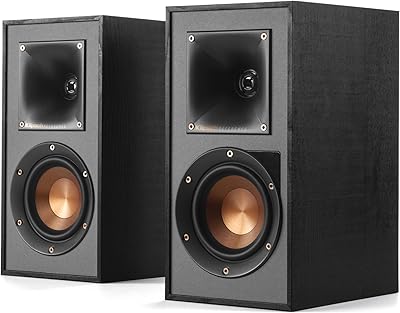
82%
91%
Sound Clarity & Detail
74%
Treble Balance
86%
Midrange Performance
63%
Bass Response
93%
Efficiency & Sensitivity
More
Klipsch R-41M
Klipsch R-41M
78%
91%
Sound Clarity & Detail
52%
Bass Performance
86%
Soundstage & Imaging
93%
Sensitivity & Amplifier Compatibility
78%
Build Quality
More
Klipsch R-34C Center Channel Speaker
89%
93%
Sound Clarity
89%
Dialogue Reproduction
84%
Bass Performance
90%
Build Quality
88%
Ease of Setup
More
Klipsch R-41PM Powered Bookshelf Speakers
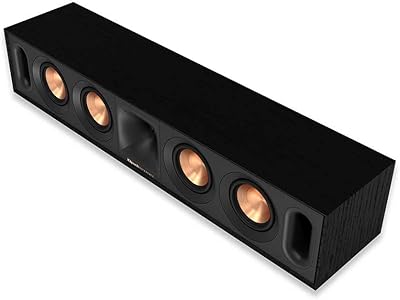
80%
88%
Sound Clarity & Detail
67%
Bass Performance
84%
Soundstage & Imaging
91%
Built-in Phono Preamp
86%
Connectivity & Input Range
More
Klipsch R-52C Center Channel Speaker
80%
93%
Dialogue Clarity
88%
Sound Dispersion
89%
Build Quality
84%
Value for Money
81%
Receiver Compatibility
More
Klipsch R-30C Center Channel Speaker
79%
93%
Dialogue Clarity
88%
Soundstage Dispersion
74%
Tonal Balance
81%
Build Quality
91%
Efficiency & Receiver Compatibility
More

FAQ

Yes, absolutely. These are passive speakers with no built-in amplification, so they will not produce any sound without an external AV receiver or stereo amplifier. Most standard home theater receivers in the mid-range price bracket will drive them without issue, but a better-quality receiver will noticeably improve the results.

Not necessarily, though it depends on your content. The rated low-end extension reaches down to 38Hz, which is enough to cover most music and movie dialogue convincingly. If you watch a lot of action films or listen to bass-heavy music and want that chest-level impact, adding a subwoofer will take things further — but many users run these towers on their own without feeling like something is missing.

The rear-firing port means wall proximity really does matter. Aim for at least 12 to 18 inches of clearance behind each cabinet. Placing them too close to the wall traps the bass energy and can make the low end sound thick and indistinct rather than tight and controlled.

That depends heavily on your personal taste and the receiver you pair them with. Klipsch horn tweeters have a reputation for being lively and forward in the upper frequencies, which some people love for detail and dynamics and others find tiring over long sessions at high volume. If you know you prefer a warmer, more relaxed treble character, it is worth demoing these before committing.

The towers are high-efficiency speakers, so they get loud with relatively little power. A receiver putting out 50 to 100 watts per channel at 8 ohms is a comfortable match. The bigger concern is quality rather than raw wattage — a clean, stable 60W receiver will outperform a stressed or cheap 100W unit.

They are sold and intended as a matched pair for stereo use. Technically, you could connect just one cabinet, but you would lose all the spatial imaging and stereo separation that makes these towers worth owning in the first place.

They are designed to serve as front left and right channels, and that is where they perform best. Using them as surrounds would be overkill dimensionally and acoustically — most buyers pair the R-620F towers up front and use smaller Klipsch Reference bookshelf or satellite speakers for the surround positions.

Physically, the setup is straightforward — connect speaker wire from your receiver to the binding posts on each cabinet, position them appropriately, and you are done. The trickier part is dialing in placement: experimenting with toe-in angle and distance from the back wall takes some patience but makes a real audible difference.

That is mostly a personal preference. Removing the grilles gives you slightly cleaner high-frequency output since there is no fabric between the tweeter and your ears, and it also shows off the copper driver aesthetic. The grilles do a reasonable job of protecting the drivers if you have pets or young children nearby.

The main differences are scale and low-end reach. Quality bookshelf speakers can match tower speakers on detail and imaging, but they typically need a subwoofer to fill a large room at the volume levels these towers handle on their own. For buyers moving up from bookshelves who want a more complete, room-filling sound without a separate sub, the step up to these Klipsch towers is usually worth it.

Where to Buy