Overview

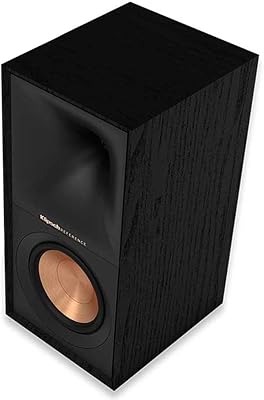
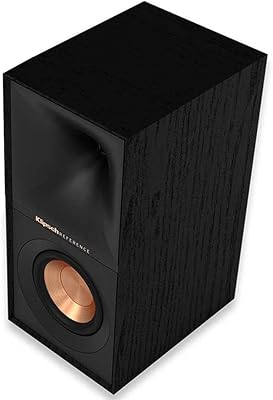
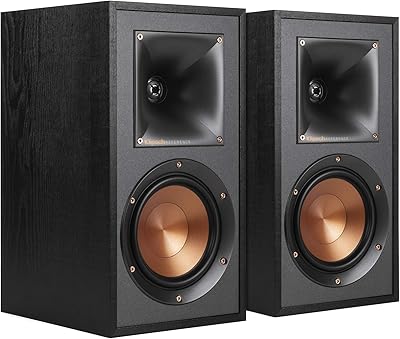
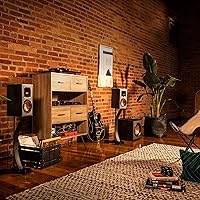
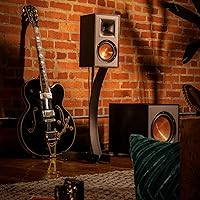
The Klipsch R-41M is a compact, high-efficiency bookshelf speaker from Klipsch's Reference line, and it punches well above its price class. Klipsch has been building horn-loaded speakers since the 1940s, and that heritage shows up here in a design that prioritizes efficiency and dynamics over raw size. The cabinet is reinforced MDF wrapped in a textured vinyl finish — nothing flashy, but solid and resistant to everyday scuffs. These Reference-line speakers are equally at home as a stereo pair on a bookshelf or as front channels in a home theater setup. For the money, the build quality and brand pedigree are genuinely hard to argue with.

Features & Benefits

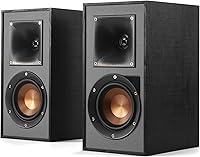
The star of the show is the Tractrix Horn-loaded tweeter — a 90x90 degree design that spreads high-frequency sound more evenly across a room compared to conventional dome tweeters. The 1-inch aluminum tweeter uses a Kapton suspension to stay light and responsive, which translates to crisp, low-distortion treble even at higher volumes. Paired with a 4-inch spun-copper woofer that handles mids and upper bass with surprising punch, the result is a lively, detailed sound. At 90dB sensitivity, these Klipsch bookshelf speakers will sing with even modest receivers — you genuinely do not need a powerful amplifier to get them performing well.

Best For

These Reference-line speakers shine brightest in small to medium rooms where close-range listening allows their directional horn to do its best work. They fit naturally as a primary stereo pair on a desk or entertainment unit, and slot cleanly into a 5.1 or 7.1 home theater as front or surround channels. First-time upgraders stepping up from a soundbar or a cheap Bluetooth speaker will likely be caught off guard by how much detail suddenly becomes audible. One honest caveat: if you listen to bass-heavy music and plan to skip a subwoofer, the R-41M pair may leave you wanting more below 70Hz.

User Feedback

Across thousands of reviews, these Klipsch bookshelf speakers earn consistent praise for their vocal and treble clarity — listeners frequently describe acoustic instruments and voices as sounding unusually present and forward. The horn-loaded character is a big reason for this, though it is worth noting that some people find the top end a touch bright, especially in acoustically reflective rooms. Buyers who expected full-range sound without a subwoofer report the bass as noticeably thin. A few owners also mention cabinet resonance at high volumes, which tends to improve with solid placement away from walls. Most agree these outperform their price — the value sentiment across user feedback is notably strong.

Pros

  • Exceptional vocal and treble clarity that outperforms most rivals at this price tier.
  • The Klipsch R-41M delivers a wide, open soundstage unusually large for its physical size.
  • At 90dB sensitivity, these speakers perform well even with budget receivers and entry-level amps.
  • Horn-loaded dispersion covers a room more evenly, reducing the need for a perfect listening position.
  • Reinforced MDF cabinet feels solid and resists scuffs better than typical entry-level speaker boxes.
  • Fits cleanly into existing 5.1 or 7.1 home theater setups as front or surround channels.
  • Works with virtually any AV receiver or stereo amp thanks to its standard 8-ohm impedance.
  • Value perception among owners is exceptionally high — most describe the sound as punching well above the price.
  • These Reference-line speakers are compact enough for desktop, shelf, or media unit placement without dominating the space.

Cons

  • Bass rolls off sharply below 70Hz, making a subwoofer a near-necessity for full-range listening.
  • The bright, forward treble character will not suit listeners who prefer a warmer or more relaxed sound signature.
  • Cabinet resonance becomes noticeable when pushed to high volumes, affecting tonal accuracy at the upper range of output.
  • Out-of-the-box sound can be polarizing; a meaningful break-in period is often needed before the tweeter settles.
  • Placement close to rear walls causes bass buildup that muddies the otherwise clean midrange presentation.
  • The included speaker grilles feel noticeably cheap relative to the quality of the cabinet and drivers.
  • High sensitivity can expose amplifier hiss in quiet listening environments when paired with noisy budget amps.
  • No speaker cable is included, adding an overlooked cost for first-time buyers who need to wire everything from scratch.

Ratings

Our scores for the Klipsch R-41M were generated by an AI system that analyzed thousands of verified global user reviews, actively filtering out incentivized, bot-generated, and low-quality submissions to surface genuine buyer experiences. The ratings below reflect both the standout strengths and the recurring frustrations that real owners report — nothing is glossed over. Where this speaker impresses, the scores show it; where it falls short, those gaps are just as visible.

Sound Clarity & Detail
91%
The horn-loaded tweeter consistently draws praise for how it renders vocals, acoustic instruments, and high-frequency detail. Buyers who stream podcasts, jazz, or classical music describe an almost immediate sense of presence and air that entry-level rivals rarely match at this price point.
That same clarity can tip into brightness in rooms with hard surfaces like tile floors or bare walls. A handful of listeners find extended high-frequency sessions fatiguing, particularly at volumes above casual listening levels.
Bass Performance
52%
48%
The 4-inch spun-copper woofer does a solid job handling mid-bass punch — kick drums and bass guitar lines in pop and rock carry decent weight in a small room. For casual TV viewing or background music, most buyers find the low-end acceptable without a subwoofer.
Below roughly 70Hz, these Klipsch bookshelf speakers run out of steam fast. Buyers who enjoy electronic music, hip-hop, or film soundtracks with deep bass report a clearly hollow, thin low end unless a subwoofer is added — this is the single most common complaint across all user feedback.
Soundstage & Imaging
86%
The 90x90 Tractrix Horn disperses sound across a wider horizontal arc than most conventional tweeters at this size, which gives the R-41M pair an unusually open and spacious feel for speakers sitting on a bookshelf. Listeners frequently comment on how well instruments separate across the stereo field.
The wide horizontal dispersion can become a double-edged factor in smaller or irregularly shaped rooms, where early reflections muddy the imaging. Getting the toe-in angle right takes some experimenting before the soundstage fully locks in.
Sensitivity & Amplifier Compatibility
93%
At 90dB sensitivity, these Reference-line speakers are among the easiest-to-drive bookshelf options available. Owners consistently report that budget AV receivers and even modest integrated amps deliver genuinely loud, dynamic results without any strain — a major practical advantage for entry-level system builders.
The high sensitivity is a slight liability in very quiet listening environments, where low-level amplifier hiss becomes more audible than it would be with less sensitive speakers. This is rarely a dealbreaker, but it is worth knowing before pairing with a budget amp that has a noisy noise floor.
Build Quality
78%
22%
The reinforced MDF cabinet feels solid and appropriately dense for this price tier, and the textured vinyl wrap resists minor scuffs reasonably well. Most owners report that the cabinets look and feel more expensive than the price suggests, which adds to the value perception considerably.
Up close, the vinyl finish lacks the premium feel of real wood veneer competitors, and the included grilles feel noticeably lightweight and plasticky. A few owners also report minor cabinet resonance when pushed to high volumes, suggesting the internal bracing has its limits.
Value for Money
92%
Across the entire body of user feedback, value is the most unanimously praised aspect. Buyers upgrading from soundbars or cheap shelf speakers are frequently surprised by the quality jump. The combination of Klipsch brand credibility, real driver technology, and reliable sound at this price is genuinely difficult to match.
The value proposition weakens for buyers who do not already own or budget for a subwoofer. Once you factor in the cost of a sub to cover the missing bass, the total system spend climbs noticeably and shifts the value calculus compared to similarly priced full-range alternatives.
Midrange Performance
83%
Male and female vocals, spoken dialogue, and instruments that live in the 300Hz to 3kHz range come through with texture and natural tonality. Home theater users in particular note how clearly dialogue cuts through even during action-heavy scenes, which makes these a solid choice for movie watching.
The midrange can sound slightly recessed compared to the very forward treble presentation, especially on brighter recordings. Listeners used to a warmer, more mid-forward speaker character — like many British-voiced designs — sometimes describe the balance as slightly thin through the upper mids.
High-Frequency Character
77%
23%
The aluminum tweeter extends cleanly to the upper limits of the audible range, and hi-hats, string overtones, and ambient reverb tails all come through with genuine resolution. For listeners who want to hear exactly what is on a recording, these deliver more treble information than most competitors at this size.
Klipsch's horn-loaded treble is a signature sound, not a neutral one, and it genuinely divides opinion. A meaningful minority of owners describe the highs as forward or sharp, and some note it takes a few weeks of break-in before the tweeter softens slightly from its out-of-the-box character.
Setup & Placement Flexibility
71%
29%
At roughly 11 inches tall and under 8 inches deep, the R-41M pair fits comfortably on most media units, bookshelves, and desktop stands. The standard binding post terminals accept bare wire, banana plugs, and spade connectors, which suits the majority of receiver and amp setups without any adapters.
Placement close to a rear wall tends to produce a slightly boomy, congested bass response, and the horn tweeter rewards proper toe-in toward the listening position. Getting the best performance requires more attention to positioning than plug-and-play speakers, which catches some casual buyers off guard.
Home Theater Integration
87%
As front left and right channels in a 5.1 or 7.1 system, these Reference-line speakers perform confidently, pairing especially well with other speakers from the Klipsch Reference family for timbre-matched surround arrays. The high sensitivity means even mid-range AV receivers can drive them effortlessly alongside a center and surrounds.
Without a subwoofer handling the LFE channel, movie audio loses most of its impact. The speakers are officially rated for 5.1 and 7.1 configurations, but any home theater user treating them as a full-range solution without a sub will be disappointed by action and sci-fi content in particular.
Stereo Music Listening
84%
For two-channel music listening in a small room, the R-41M pair offers a surprisingly engaging and dynamic experience across a wide range of genres. Acoustic, folk, jazz, and rock all benefit from the forward, detailed presentation, and the wide horizontal dispersion creates a listening window that does not require perfect head placement.
Bass-heavy genres like electronic, hip-hop, and orchestral music with low strings expose the woofer size limitations in a two-channel context without a sub. Listeners who primarily stream these genres at home will likely feel underwhelmed unless the low-end gap is addressed externally.
Break-in Period
66%
34%
Multiple owners note a noticeable improvement in sound character after 20 to 40 hours of use, with the tweeter in particular becoming slightly less edgy and the overall presentation opening up. For buyers who found the out-of-box sound too bright, patience often paid off.
The fact that break-in is frequently discussed at all suggests the initial listening experience is polarizing enough to require an adjustment period. Buyers expecting to be immediately impressed straight out of the box may form an unfavorable first impression and return the speakers before giving them adequate run-in time.
Cabinet Resonance at Volume
63%
37%
At moderate listening levels in an average-sized room, the cabinet holds together well and does not draw attention to itself. The reinforced MDF construction does its job adequately for typical day-to-day usage, and most owners never encounter any resonance issues under normal conditions.
Push these Klipsch bookshelf speakers hard in a party or high-volume cinema scenario and a subset of owners report audible coloration creeping in from the cabinet panels. Placing the speakers on isolation pads or stands rather than directly on furniture surfaces helps reduce this, but it should not be necessary at moderate output levels.
Unboxing & Packaging
74%
26%
The packaging is functional and protective, with adequate foam inserts keeping the drivers and cabinet corners safe during shipping. Most buyers report the speakers arriving in perfect condition, and the included manual covers basic setup clearly enough for first-time speaker buyers.
The included grilles feel like an afterthought relative to the speaker itself — thin, lightweight, and with a fit that some owners describe as slightly loose. There are no speaker cables included, which is standard at this tier but still means first-time buyers need to budget for wire separately.

Suitable for:

The Klipsch R-41M is a strong match for anyone building their first real audio setup and stepping up from a soundbar, a Bluetooth speaker, or the built-in audio on a television. Listeners who prioritize vocal clarity, detailed highs, and an open soundstage — particularly those who enjoy acoustic music, jazz, podcasts, or movie dialogue — will find these Reference-line speakers genuinely rewarding. They work especially well in small to medium rooms where the horn-loaded tweeter can fill the space without needing high amplifier power, making them practical for bedroom setups, home offices, and compact living rooms alike. Home theater enthusiasts building a 5.1 or 7.1 system will appreciate how naturally the R-41M pair integrates as front or surround channels, particularly when paired with other Klipsch Reference speakers for a timbre-matched array. Anyone already planning to add a subwoofer to their system — or who already owns one — gets the best of both worlds: the clarity and efficiency these speakers do well, with the low-end filled in properly.

Not suitable for:

The Klipsch R-41M is not the right choice for buyers expecting full-range bass performance without a dedicated subwoofer. If your listening diet leans heavily on electronic music, hip-hop, modern pop production, or cinematic soundtracks with deep low-frequency effects, these Klipsch bookshelf speakers will leave a noticeable gap in the sound that no amount of receiver EQ fully compensates for. Listeners who prefer a warm, relaxed, or neutral tonal character may also find the forward and sometimes bright treble presentation tiring over long sessions — horn-loaded sound is a distinct flavor, and it genuinely does not suit every ear. Buyers setting up in large, open-plan spaces should also look elsewhere; these Reference-line speakers are sized and tuned for contained rooms, and they will struggle to pressurize a large living room with high ceilings without considerable amplifier support. Finally, anyone expecting a completely plug-and-play experience should be aware that placement, toe-in angle, and a break-in period all factor into getting the best result — this is not a set-it-and-forget-it speaker.

Specifications

  • Driver Config: The speakers use a 2-way design with a dedicated woofer and tweeter handling separate frequency ranges for cleaner sound reproduction.
  • Woofer: A 4-inch spun-copper IMG (Injection Molded Graphite) woofer handles mid-bass and midrange frequencies with a lightweight yet rigid cone.
  • Tweeter: A 1-inch aluminum LTS (Linear Travel Suspension) tweeter with Kapton suspension reproduces high frequencies with low distortion and high efficiency.
  • Horn Type: A 90x90 degree square Tractrix Horn is mounted in front of the tweeter to improve dispersion, sensitivity, and reduce high-frequency distortion.
  • Sensitivity: Rated at 90dB at 2.83V/1M, meaning these speakers produce high output levels from relatively modest amplifier power.
  • Frequency Response: The speakers cover 68Hz to 21kHz within plus or minus 3dB, suitable for most music and dialog without a subwoofer in casual use.
  • Impedance: Nominal impedance is 8 ohms, making these speakers compatible with the vast majority of consumer AV receivers and stereo amplifiers.
  • Power Handling: The speakers are rated for 50 watts continuous power and up to 200 watts peak, providing headroom for dynamic musical passages.
  • Crossover Frequency: The internal crossover hands off from woofer to tweeter at 1,730Hz, a frequency chosen to keep each driver operating within its optimal range.
  • Cabinet Material: The enclosure is constructed from reinforced MDF (Medium Density Fiberboard), which reduces cabinet vibration compared to thinner particle board alternatives.
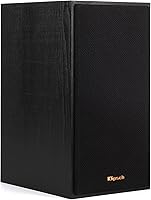
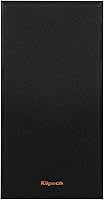
  • Finish: The exterior is wrapped in a scratch-resistant textured wood grain vinyl in black, providing a clean appearance that holds up to everyday handling.
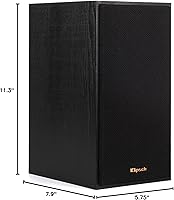
  • Dimensions: Each speaker measures 7.9″ deep by 5.75″ wide by 11.3″ tall, a compact footprint suitable for shelves, media units, and desktop stands.
  • Weight: The pair weighs 7 lbs (3.2 kg) total, making placement and repositioning straightforward without requiring additional hardware or mounting support.
  • Included Items: Each pair ships with two speakers, two snap-on grilles, and a printed user manual; no speaker cable is included in the box.
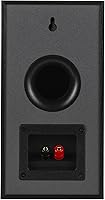
  • Connectivity: Each speaker uses a set of spring-clip or binding post terminals that accept bare wire, banana plugs, and spade connectors for flexible wiring options.
  • System Compatibility: These speakers are designed for use in stereo two-channel setups as well as 5.1 and 7.1 surround sound configurations as front or surround channels.
  • Warranty: Klipsch covers these speakers with a limited warranty; buyers should confirm current warranty terms directly with Klipsch or their point of purchase.
  • Country of Origin: The R-41M is manufactured for Klipsch and is part of the Reference product line, which is produced under Klipsch quality standards.

Related Reviews
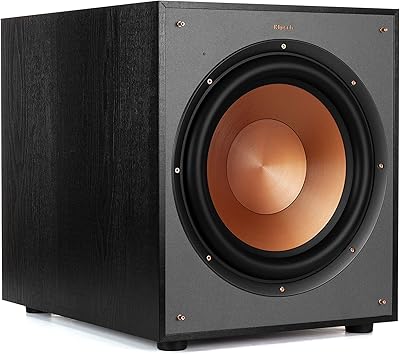
Klipsch R-120SW Subwoofer
80%
91%
Bass Performance
88%
Value for Money
84%
Build Quality
92%
Ease of Setup
79%
Room Integration & Tuning
More
Klipsch R-625FA Floorstanding Speaker
86%
94%
Sound Quality
91%
Bass Response
88%
Build Quality
85%
Ease of Setup
90%
Power Handling
More
Klipsch R-100SW 10″ Subwoofer
86%
92%
Bass Quality
89%
Sound Clarity
91%
Integration with Klipsch Systems
85%
Compactness/Size
88%
Ease of Setup
More
Klipsch R-50M Bookshelf Speakers
82%
91%
Sound Clarity & Detail
74%
Treble Balance
86%
Midrange Performance
63%
Bass Response
93%
Efficiency & Sensitivity
More
Klipsch R-34C Center Channel Speaker
89%
93%
Sound Clarity
89%
Dialogue Reproduction
84%
Bass Performance
90%
Build Quality
88%
Ease of Setup
More
Klipsch Reference R-620F Floorstanding Speakers
86%
92%
Sound Quality
88%
Bass Performance
90%
Build Quality
85%
Ease of Setup
89%
Design & Aesthetics
More
Klipsch Reference R-26FA Floorstanding Speaker
85%
91%
Sound Quality
88%
Bass Performance
93%
Build Quality
82%
Ease of Setup
74%
Size and Placement
More
Klipsch R-52C Center Channel Speaker
87%
93%
Sound Clarity
95%
Dialogue Clarity
89%
Ease of Setup
91%
Build Quality
87%
Soundstage Balance
More
Klipsch R-51M
Klipsch R-51M
82%
93%
Sound Clarity
91%
Dynamic Range
88%
Build Quality
72%
Bass Performance
89%
Value for Money
More
Klipsch R-40M Reference Next-Generation
88%
94%
Sound Clarity
81%
Bass Response
92%
High-Frequency Detail
90%
Build Quality
88%
Aesthetic Design
More

FAQ

For casual TV watching, podcasts, or acoustic music in a small room, most people find the bass adequate on its own. But if you listen to music or movies with real low-end content — anything with deep kick drums, bass synths, or cinematic LFE effects — you will notice a clear gap below roughly 70Hz. A subwoofer is not required, but it is strongly recommended if bass matters to you.

Almost anything will work, honestly. At 90dB sensitivity and 8 ohms impedance, these Klipsch bookshelf speakers are among the easiest-to-drive options at their size. A mid-range AV receiver in the 50 to 100 watts per channel range is more than enough. Even modestly powered stereo amplifiers and budget AV receivers will get them to convincingly loud levels without any strain.

They do both well, but with some caveats. For music genres that live in the midrange and upper frequencies — jazz, acoustic, folk, rock, classical chamber music — they are genuinely excellent. For bass-heavy genres, you will want a subwoofer to fill in what the 4-inch woofer cannot reach. For home theater, they shine as front channels, especially for dialogue clarity.

Keep them away from rear walls to avoid bass buildup, and angle them slightly toward your listening position — what audiophiles call toe-in. Placing them at or near ear level makes the biggest difference, whether that means on a stand, a shelf, or a desktop riser. Avoid sitting them directly on a hard surface without any isolation; a small foam pad or rubber feet under each speaker can tighten up the sound noticeably.

Many owners report that the tweeter sounds a bit sharp or edgy straight out of the box and mellows noticeably after 20 to 40 hours of use. It is not dramatic, but it is real enough that multiple buyers who initially found the treble harsh came back after a few weeks with a much more positive impression. Give them time before forming a final opinion.

Yes, and they work well in that role. They pair naturally with other speakers in the Klipsch Reference family, which is ideal for timbre-matching across your surround channels. If you are mixing brands, just be aware that tonal differences between your front and surround speakers can become noticeable during panning effects in movies.

Leaving the grilles off generally gives slightly better high-frequency clarity since any physical barrier in front of a tweeter introduces some diffraction. The difference is subtle rather than dramatic, but most serious listeners prefer grilles off for critical listening. The grilles are mainly there for dust protection and aesthetics, so use them based on your preference and environment.

These Reference-line speakers stand out for their sensitivity and treble detail, which is noticeably better than many rivals at this price point. Where competitors sometimes offer a warmer, more bass-forward sound, these lean toward clarity and dynamics. If you want the most neutral or bass-rich sound for the money, there are alternatives worth considering — but for sheer detail and efficiency, very few match this pair at a similar price.

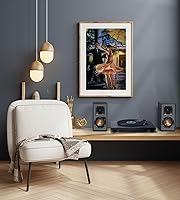
Yes, but you will need an amplifier or receiver with a phono input between the turntable and the speakers, since these are passive speakers with no built-in amplification. If your turntable has a built-in phono preamp, you can connect it to any standard amplifier input. If it does not, you will need either a receiver with a dedicated phono stage or a separate phono preamp.

Almost certainly nothing is wrong. The horn-loaded tweeter has a naturally forward and extended high-frequency character that takes some getting used to, especially if you are coming from a warmer-sounding speaker. Give the tweeter 30 to 50 hours of run-in time, experiment with toe-in angle to adjust how directly the horn fires toward your ears, and try adding soft furnishings to your room to absorb some of the high-frequency reflections. Most buyers find the brightness settles into something very enjoyable after the initial adjustment period.