Overview

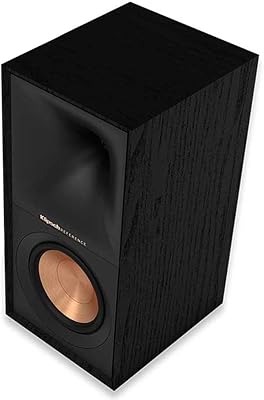
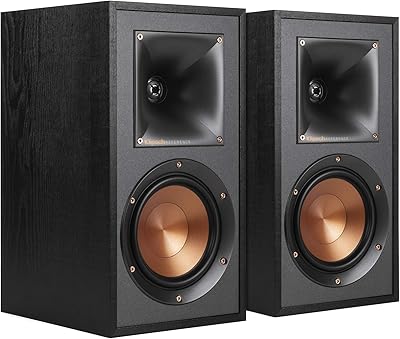
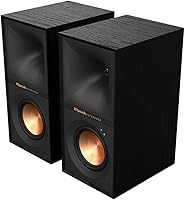
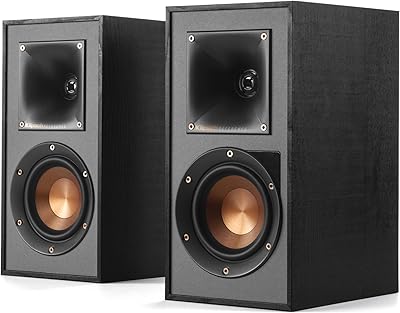
The Klipsch R-40PM is Klipsch's answer to a question a lot of music lovers are quietly asking: why do I still need a receiver? These powered bookshelf speakers bundle a custom-tuned amplifier, phono preamp, Bluetooth, digital optical, and analog inputs into a compact cabinet that sits on a desk or shelf without complaint. Klipsch has been building speakers since 1946, and the Reference line is where that legacy becomes accessible without demanding a second mortgage. The spun-copper woofers give them a distinctly premium look — the kind of thing that makes visitors ask questions. It's a genuinely complete stereo system in two boxes.

Features & Benefits

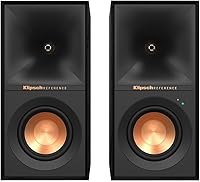
The horn tweeter is the defining element here. Klipsch's 90-degree Tractrix horn spreads high frequencies across a wide arc, so the sweet spot isn't a narrow band in front of the speakers — you can hear the detail from across the room. The 1-inch aluminum tweeter behind that horn is engineered for low distortion, meaning instruments stay distinct even when the volume climbs. The 4-inch copper-spun woofers borrow cone geometry from Klipsch's pricier Reference Premiere line for smoother, more controlled bass. The built-in 240-watt amplifier is calibrated specifically for these drivers, which matters far more than raw wattage numbers suggest. A ground-screw phono input makes connecting a turntable completely painless.

Best For

These Reference-line speakers were practically designed for the person who loves vinyl but doesn't want a rack full of gear. Set a turntable on the same shelf, plug it in, and you're done. They're also a strong fit for home office listening — the gap between these and a typical desktop speaker or soundbar is immediately obvious. Apartment dwellers and small-room listeners who want genuine stereo imaging without the footprint of a floor-standing system will find them compelling. Buyers new to serious audio but wary of complicated component matching will appreciate that there's nothing to configure. A subwoofer output also leaves the door open for a bass upgrade later if the room demands it.

User Feedback

Owners consistently highlight the clarity and treble detail — you start hearing things in familiar recordings that cheaper speakers simply bury. That said, this is a forward, bright sound signature, and buyers coming from warmer-sounding gear sometimes find the high frequencies more prominent than expected. Turntable users are almost universally satisfied with the built-in phono stage. Where opinions diverge is bass: in a small room the low end feels tight and well-controlled, but in a larger space it can start to feel thin without a subwoofer added. Most find the touch controls workable day-to-day, though input switching draws occasional complaints about being unintuitive. Build quality earns consistent praise across the board.

Pros

  • Built-in phono preamp lets you connect a turntable directly with zero extra hardware.
  • The Tractrix horn tweeter resolves detail that most speakers at this price simply bury.
  • A single pair replaces an entire component stack — amplifier, preamp, and speakers in two boxes.
  • Spun-copper woofer finish looks genuinely premium and stands out on any shelf or desk.
  • Wide input selection covers Bluetooth, optical, analog RCA, and phono in one unit.
  • Custom-tuned amplifier and drivers work as a matched system, so setup guesswork is eliminated.
  • Dedicated subwoofer output leaves a clear upgrade path if you eventually need more bass.
  • Soundstage is wide and imaging is precise, making even familiar recordings feel more three-dimensional.
  • Setup takes under fifteen minutes for most users, including turntable connection.

Cons

  • Bass feels noticeably thin in rooms larger than a bedroom or small living area.
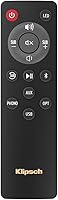
  • No remote control included, so every input change requires physically touching the speaker.
  • Input switching sequence is unintuitive and catches new users off guard repeatedly.
  • Bright sound signature can cause listening fatigue with compressed or poorly mastered audio.
  • The internal amplifier cannot be upgraded or replaced independently if your needs change.
  • Bluetooth lacks high-quality codec support, making wireless streaming a convenience feature rather than a fidelity one.
  • Cabinet depth of over 10 inches demands meaningful shelf or desk space that not every setup has.
  • Touch controls lack the tactile feedback of physical knobs, making volume adjustments feel imprecise.
  • No remote or companion app means these powered bookshelf speakers offer limited day-to-day control flexibility.

Ratings

Our scores for the Klipsch R-40PM are generated by AI after systematically analyzing verified buyer reviews from multiple global markets, with spam, bot-submitted, and incentivized feedback actively filtered out. The result is an honest picture of where these powered bookshelf speakers genuinely impress and where real owners have run into friction. Both the standout strengths and the recurring pain points are reflected transparently in every category below.

Sound Clarity & Detail
91%
The horn-loaded tweeter is where these speakers earn their reputation. Listeners consistently report hearing layers in familiar recordings they had never noticed before — subtle reverb tails, finger noise on guitar strings, breath in vocals. That level of resolution at this price tier is not common.
The clarity comes with a forward, bright character that not everyone warms to immediately. Buyers who have lived with darker, warmer speakers sometimes find the high-frequency presence fatiguing during longer listening sessions, particularly with poorly mastered pop or compressed streaming audio.
Bass Performance
67%
33%
In a small to medium room, the 4-inch copper-spun woofers deliver tight, punchy bass that feels controlled rather than bloated. For genres like jazz, acoustic, and vocal music, the low end is more than adequate and integrates naturally with the horn tweeter.
Push these speakers into a larger room or ask them to handle bass-heavy genres like hip-hop or electronic music and the limitations become apparent. More than a few owners describe the low end as lean or thin, and without adding a subwoofer, the gap below 60 Hz is simply absent.
Connectivity & Input Options
88%
The range of inputs is a genuine differentiator. Having Bluetooth, a phono preamp with a ground terminal, digital optical, and analog RCA all on the same pair of powered speakers means most buyers can connect every source they own without buying additional hardware.
Switching between inputs is where the experience loses some polish. A handful of users find the process less intuitive than expected, especially when toggling between Bluetooth and a wired source quickly. The touch controls work but lack the tactile confidence of physical buttons.
Built-in Phono Preamp
86%
Turntable owners are consistently among the most satisfied buyers. The phono stage is competent enough that many users who previously ran a separate preamp removed it from their chain entirely. The ground screw terminal keeps hum under control with most cartridge and tonearm combinations.
Serious vinyl enthusiasts running high-end cartridges may eventually want a dedicated external preamp to extract the last bit of performance. The built-in stage is genuinely good for its purpose but is not audiophile-grade by specialist standards.
Amplifier Performance
83%
The custom-tuned 240-watt built-in amplifier means there is no mismatch risk between the amp and drivers — they were designed together. The result is headroom that feels effortless at normal listening levels, and the speakers rarely sound stressed even when pushed in a home office or bedroom context.
Because the amplifier is fixed and internal, there is no path to upgrading it independently. Buyers who eventually want more power or a different amplifier character have no option but to replace the entire speaker system, which limits long-term flexibility.
Build Quality & Materials
89%
The cabinet construction feels solid and the spun-copper woofer finish gives these speakers a visual premium that looks more expensive than the price suggests. Multiple reviewers specifically mention that the speakers look great on a shelf or desk and hold up well over time with no creaking or rattling.
A small number of buyers have noted that the cabinet finish can show fingerprints and scuffs more readily than a matte or fabric-covered alternative. The magnetic grilles are well-designed but a few users found them slightly less secure than expected when shipped.
Ease of Setup
84%
Unboxing to playing music takes most buyers under fifteen minutes. Connecting a turntable is as simple as plugging into the phono input and attaching the ground wire. There is no receiver to configure, no crossover to set, and no driver software to install — it is a genuinely plug-and-play experience.
The initial input selection and Bluetooth pairing sequence is not entirely self-explanatory, and the manual is thin on detail. A small subset of buyers spent more time than expected figuring out the touch control sequence for input switching on first use.
Soundstage & Imaging
82%
18%
The 90-degree Tractrix horn creates a wider listening window than most bookshelf speakers at this price. Stereo imaging is precise — instruments and voices have distinct, stable positions across the soundstage, which makes these speakers engaging for critical listening and not just background music.
The soundstage, while wide, can feel somewhat two-dimensional on complex orchestral recordings. Depth — the sense of distance between near and far instruments — is good but not as pronounced as what larger or more specialized speakers in the same price bracket can achieve.
Bluetooth Performance
74%
26%
For casual streaming from a phone, tablet, or laptop, the Bluetooth connection is reliable within its 10-meter range and reconnects quickly to paired devices. Most users find it more than adequate for background listening during work or casual daily use.
Audiophiles using Bluetooth as a primary source will notice a quality ceiling compared to the wired inputs. There is no aptX or higher-codec support mentioned, so the wireless path compresses audio more than the optical or analog inputs. It is a convenience feature, not a high-fidelity one.
Value for Money
78%
22%
When you price out the equivalent stack — a stereo amplifier, phono preamp, and passive bookshelf speakers at comparable quality — these powered speakers represent a meaningful saving in both cost and complexity. For buyers who want to avoid building a component system, the all-in-one value is real.
Buyers who already own an amplifier and phono stage may find the bundled electronics add cost they cannot use. In that scenario, passive alternatives at the same price offer better driver quality per dollar, making the value proposition dependent heavily on your existing setup.
Design & Aesthetics
87%
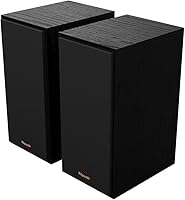
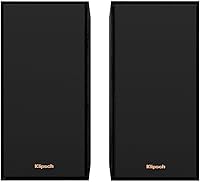
The copper-driver look is a consistent point of praise. These speakers have a distinctive industrial-meets-audio character that photographs well and holds up to in-person scrutiny. The low-profile magnetic grilles give buyers a clean option when guests are over or a raw-driver look for everyday listening.
The rectangular cabinet is fairly conventional in form, and the overall footprint — nearly 10 inches deep — means they need meaningful shelf or desk depth to sit properly. Buyers in very tight spaces should measure carefully before purchasing.
Room Size Compatibility
63%
37%
In a bedroom, home office, or small living room, these speakers have enough output and bass extension to fill the space convincingly. The horn tweeter projects well and the sound does not thin out at moderate volumes, which is exactly what smaller-room listening requires.
In a medium-to-large room, the 4-inch woofer simply runs out of air-moving ability. The sound becomes noticeably thinner and the bass presence that worked in a compact space disappears. Adding a subwoofer via the dedicated output is the correct fix, but it adds cost buyers should factor in upfront.
Input Switching & Controls
58%
42%
Touch controls keep the front panel minimal and clean, which suits the modern aesthetic. Once a user learns the input switching sequence, day-to-day operation between a primary source or two becomes second nature and reasonably quick.
Multiple reviewers describe the input switching logic as unintuitive, particularly when moving between Bluetooth and wired sources. There is no remote control included, which means every adjustment requires physically reaching the speakers — a real inconvenience if they are mounted on a high shelf or behind a monitor.
Long-term Upgrade Path
71%
29%
The dedicated subwoofer output is a smart inclusion that allows buyers to add low-end extension without replacing the whole system. It provides a realistic, affordable path to improving bass performance as needs evolve or room size changes.
Beyond adding a subwoofer, the upgrade options are limited by the self-contained design. There is no way to swap the amplifier, improve the DAC section, or add a better phono stage without moving to a fundamentally different speaker system, which may frustrate buyers who like incremental upgrading.

Suitable for:

The Klipsch R-40PM is purpose-built for anyone who wants a serious stereo upgrade without the complexity of assembling a component system. Vinyl lovers will find it particularly compelling — the built-in phono preamp with ground terminal means you can connect a turntable directly, skip the external preamp entirely, and be spinning records within minutes of unboxing. Home office workers who have outgrown laptop speakers or a soundbar will notice an immediate and substantial improvement in clarity, stereo width, and overall listening engagement. These powered bookshelf speakers also suit apartment dwellers and small-room listeners who need quality audio in a tight footprint, where the horn-loaded tweeter's wide dispersion works especially well at modest volumes. First-time audiophiles who want a trusted brand with a proven sound without needing to research amp-speaker matching will feel right at home here — the system is already optimized out of the box.

Not suitable for:

Buyers with large listening rooms should approach these Reference-line speakers with realistic expectations, because the 4-inch woofers simply cannot move enough air to fill a big space convincingly without a subwoofer added to the chain. Anyone who already owns a quality stereo amplifier and phono stage is essentially paying for electronics they do not need — in that scenario, passive speakers at a similar price point would likely deliver better driver performance per dollar. Listeners who prefer a warm, smooth, or relaxed sound signature may also find the forward and bright Klipsch character more tiring than enjoyable over long sessions, especially with modern pop, compressed streaming audio, or sibilant vocal recordings. The Klipsch R-40PM is also not the right fit for buyers who want remote control operation, prefer physical knobs and buttons, or need a speaker system they can gradually upgrade component by component over time — the self-contained design intentionally forecloses those options.

Specifications

  • Driver Config: Each speaker houses a 1″ aluminum LTS tweeter paired with a 4″ spun-copper thermoformed crystalline polymer woofer.
  • Horn Design: The tweeter is loaded with a 90-degree x 90-degree Tractrix horn for wide, controlled high-frequency dispersion.
  • Amplifier Output: A built-in custom-tuned amplifier delivers 240 watts total power, optimized specifically for these drivers.
  • Frequency Response: The system reproduces frequencies from 60 Hz upward, covering the full midrange and high-frequency spectrum.
  • Inputs: Available connections include Bluetooth, phono with ground screw terminal, digital optical, and analog RCA.
  • Bluetooth Range: Wireless Bluetooth streaming operates reliably up to 10 meters from the paired source device.
  • Dimensions: Each speaker measures 10.1″ deep, 5.7″ wide, and 11.8″ tall.
  • Weight: The pair weighs 18.26 lbs (approximately 8.3 kg) combined.
  • Surround Config: The system operates in 2.0 stereo configuration and supports 2.1 expansion via a dedicated subwoofer output.
  • Control Method: Speaker functions including volume and input selection are managed through onboard touch controls.
  • Grilles: Low-profile magnetic grilles are included and can be removed tool-free to expose the copper-driver aesthetic.
  • Power Source: Both speakers require a corded AC power connection and are not battery-powered or portable.
  • Indoor Use: These speakers are designed and rated for indoor use only and are not weather-resistant or waterproof.
  • Included Items: The package contains two powered speakers — one active unit with amplifier and controls, one passive satellite.
  • Warranty: Klipsch covers the speakers under a limited manufacturer warranty; terms are defined by Klipsch directly.
  • Mounting Type: The speakers are designed for tabletop or shelf placement and do not include dedicated wall-mount hardware.
  • Compatible Devices: Bluetooth pairing is compatible with smartphones, tablets, and laptops from any major operating system.

Related Reviews
Klipsch R-120SW Subwoofer
80%
91%
Bass Performance
88%
Value for Money
84%
Build Quality
92%
Ease of Setup
79%
Room Integration & Tuning
More
Klipsch R-625FA Floorstanding Speaker
86%
94%
Sound Quality
91%
Bass Response
88%
Build Quality
85%
Ease of Setup
90%
Power Handling
More
Klipsch R-41M
Klipsch R-41M
78%
91%
Sound Clarity & Detail
52%
Bass Performance
86%
Soundstage & Imaging
93%
Sensitivity & Amplifier Compatibility
78%
Build Quality
More
Klipsch R-50M Bookshelf Speakers
82%
91%
Sound Clarity & Detail
74%
Treble Balance
86%
Midrange Performance
63%
Bass Response
93%
Efficiency & Sensitivity
More
Klipsch R-100SW 10″ Subwoofer
86%
92%
Bass Quality
89%
Sound Clarity
91%
Integration with Klipsch Systems
85%
Compactness/Size
88%
Ease of Setup
More
Klipsch R-41PM Powered Bookshelf Speaker
85%
92%
Sound Quality
89%
Bass Response
94%
Bluetooth Connectivity
90%
Ease of Setup
68%
Volume Range
More
Klipsch R-34C Center Channel Speaker
89%
93%
Sound Clarity
89%
Dialogue Reproduction
84%
Bass Performance
90%
Build Quality
88%
Ease of Setup
More
Klipsch Reference R-620F Floorstanding Speakers
86%
92%
Sound Quality
88%
Bass Performance
90%
Build Quality
85%
Ease of Setup
89%
Design & Aesthetics
More
Klipsch R-51M
Klipsch R-51M
82%
93%
Sound Clarity
91%
Dynamic Range
88%
Build Quality
72%
Bass Performance
89%
Value for Money
More
Klipsch R-52C Center Channel Speaker
87%
93%
Sound Clarity
95%
Dialogue Clarity
89%
Ease of Setup
91%
Build Quality
87%
Soundstage Balance
More

FAQ

No, that is the whole point of this design. The active speaker unit contains a built-in amplifier that powers both speakers, so you plug them into the wall, connect your source, and you are done. No receiver, no amp, no extra boxes required.

Yes, and this is one of the strongest selling points of the Klipsch R-40PM pair. There is a dedicated phono input with a ground screw terminal on the back of the active speaker. Most turntables with a standard RCA output will connect directly without any additional hardware. Just make sure your turntable does not already have a built-in preamp set to active, or you will want to bypass it.

Klipsch speakers in general, and these in particular, lean toward a bright, forward sound. Treble is detailed and present, which many listeners love for acoustic music, jazz, or anything with a lot of instrumental texture. If you are coming from a warmer-sounding system, the difference will be noticeable and may take some adjustment.

They perform best in small to medium-sized rooms. In a bedroom, home office, or compact living area, the sound is full and satisfying. In a larger room, the 4-inch woofers can struggle to fill the space and the bass thins out noticeably. Adding a subwoofer via the dedicated output is the practical solution if you are working with more square footage.

Yes, there is a dedicated subwoofer output on the active speaker. It accepts a standard RCA connection, so any powered subwoofer with an RCA line-level input will work. There is no brand restriction, and no specific crossover pairing is required — the sub output carries a full-range signal and the subwoofer's own crossover handles the rest.

Input switching is handled through the touch controls on the front of the active speaker. It works, but a number of users find the sequence less intuitive than expected, especially when first getting set up. There is no remote control or companion app, so every input change is done at the speaker itself. Once you learn the pattern it becomes routine, but the first few days can feel a little fiddly.

Yes, the digital optical input is the ideal connection for a TV. Most modern televisions have an optical audio output, so you can run a standard optical cable directly from the TV to these powered bookshelf speakers. The sound quality for dialogue and music-heavy content is noticeably better than a built-in TV speaker, though dedicated home theater speakers will still outperform them for cinematic bass and surround effects.

Klipsch has not specified aptX or LDAC support for this model, so it is safest to assume standard SBC Bluetooth is what you are working with. For casual background listening or streaming playlists, this is perfectly fine. If you care deeply about audio fidelity from a wireless source, the optical or analog inputs will deliver noticeably better results.

One speaker contains all the amplification, inputs, and touch controls — that is the active unit. The second speaker is a passive satellite that connects to the active one via a speaker cable included in the box. Only the active speaker needs to be plugged into the wall.

Most buyers are up and running in under fifteen minutes. Connect the passive speaker to the active one using the included cable, plug the active speaker into the wall, connect your source, and power on. The phono connection adds a ground wire step but that takes about thirty seconds. The only area where setup slows people down is learning the touch control input switching, which is not always obvious from the included documentation.