Overview

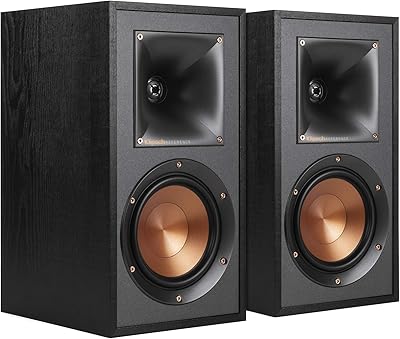
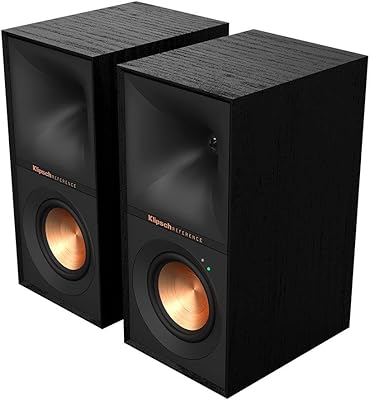
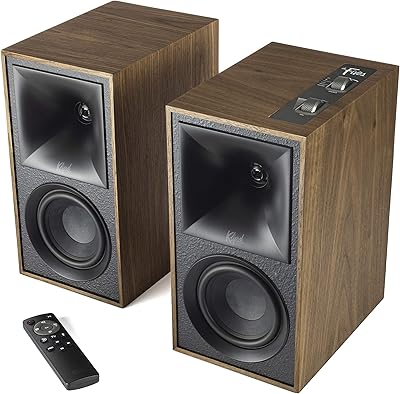
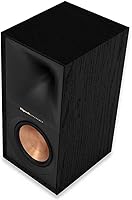
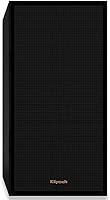
The Klipsch R-50M Bookshelf Speakers represent the next step in Klipsch's Reference lineup, sitting in the mid-to-upper price tier where serious listeners start paying attention. These Klipsch bookshelf speakers succeed the popular R-41M and R-51M models, carrying forward design ideas trickled down from the more expensive Reference Premiere series. Out of the box, the build impresses — the textured vinyl cabinet feels dense and deliberate, not hollow or plasticky. At 22 lbs for the pair, there's a satisfying heft to them. Low-profile magnetic grilles keep things tidy, and the overall aesthetic fits neatly on a shelf or speaker stands without demanding attention.
Features & Benefits

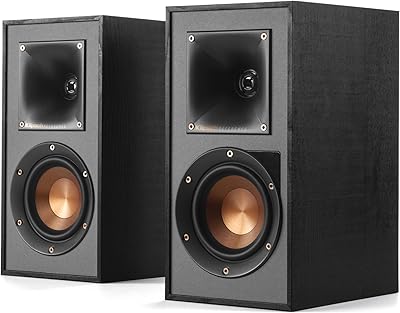
The centerpiece of the R-50M pair is its Tractrix Horn design — enlarged compared to previous Reference models, it controls how high frequencies disperse into a room, giving you a wider listening sweet spot without the strained, beamed quality some horns produce. The aluminum tweeter rides a Kapton suspension that keeps movement linear, translating to cleaner, more controlled treble during fast musical passages. The spun-copper woofer cones borrow their geometry from Klipsch's flagship line, resulting in a noticeably smoother midrange response. Inside, the reinforced MDF cabinet uses updated bracing to reduce resonance that can muddy bass at higher volumes. With 8-ohm impedance, nearly any competent AV receiver will drive them without complaint.

Best For

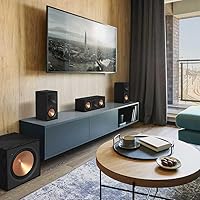
These horn-loaded monitors are a natural fit for anyone building or expanding a Klipsch Reference home theater, where matching timbre across channels genuinely matters. In a stereo music context, listeners who enjoy a forward, lively presentation — think jazz, rock, or acoustic recordings with lots of transient snap — will find the sound signature rewarding. Room size is worth considering: in a mid-sized space or apartment, the 5.25-inch woofer handles itself well without over-taxing the low end. That said, if you listen to bass-heavy genres regularly, pairing with a subwoofer is not really optional — it's the setup these speakers are clearly designed to thrive in.

User Feedback

Owners consistently praise the R-50M pair for its sensitivity and efficiency — many report impressive volume at modest power levels, which is exactly what horn-loaded designs are built to deliver. The treble clarity gets frequent mentions, though it's worth being upfront: the sound leans bright, and while that works beautifully on certain recordings, listeners who prefer a laid-back top end may find it fatiguing over long sessions. Cabinet finish and build quality draw positive remarks across the board. The most recurring owner advice, almost without exception, is to add a subwoofer. Buyers upgrading from the older R-51M are genuinely split on whether the refinements here justify the price difference.

Pros

  • Exceptional sensitivity means these speakers get loud and dynamic without needing a powerful amplifier to drive them.
  • Horn-loaded tweeter delivers crisp, well-defined highs that make live recordings and acoustic music feel genuinely present.
  • Solid, dense cabinet construction feels and sounds more expensive than the price tier would suggest.
  • Imaging precision is a real strength — instruments and voices lock into specific positions in the stereo field.
  • Compatible with virtually any 8-ohm-rated AV receiver, making system integration straightforward.
  • The R-50M pair slots naturally into a Klipsch Reference home theater setup with excellent tonal consistency across channels.
  • Midrange clarity is a clear step up from previous Reference generations, particularly on vocals and piano.
  • Low-profile magnetic grilles and hidden fasteners give the front baffle a clean, modern look on a shelf or stands.
  • Efficient enough to fill a mid-sized room at modest volume levels, which is genuinely useful in shared living spaces.

Cons

  • The treble can tip into fatiguing territory during long sessions, especially in rooms with hard reflective surfaces.
  • A subwoofer is essentially required — solo bass performance below 60 Hz is noticeably thin and unsatisfying.
  • High sensitivity exposes amplifier noise floor issues; budget receivers may introduce an audible background hiss.
  • Compressed streaming audio and poorly mastered recordings are not flattered by the detail-forward presentation.
  • The off-axis listening experience narrows noticeably, which matters in wider rooms with multiple seating positions.
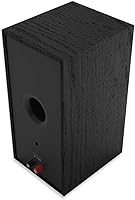
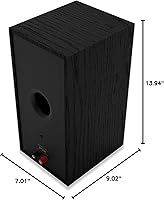
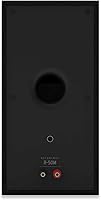
  • Binding post and port hardware feels utilitarian compared to the otherwise solid cabinet build.
  • The copper driver aesthetic, while distinctive, does not suit every room style or decor preference.
  • Buyers upgrading specifically from the R-51M will find the sonic improvements subtle rather than immediately obvious.
  • No speaker cables, stands, or setup accessories are included, which adds to the real cost of ownership for first-time buyers.

Ratings

The Klipsch R-50M Bookshelf Speakers have been scored by our AI system after processing thousands of verified owner reviews from global markets, with spam, incentivized, and bot-generated feedback actively filtered out. The result is an honest, composite picture of where these horn-loaded monitors genuinely deliver and where they fall short for real buyers. Both the strengths and the friction points are reflected transparently in the scores below.
Sound Clarity & Detail
91%
Owners consistently describe a level of transient detail that punches well above the price tier, particularly on vocals, guitar plucks, and cymbal work. The Tractrix Horn does its job: high frequencies arrive focused and articulate rather than diffused, which makes live recordings and acoustic music feel noticeably more present.
That same clarity can expose harshness in compressed streaming audio or older recordings mastered with heavy limiting. Listeners who primarily use lossy streaming services at moderate bitrates sometimes find the detail retrieval unforgiving rather than flattering.
Treble Balance
74%
26%
For listeners who prefer an energetic, forward-sounding top end, the treble presentation here is genuinely satisfying. Strings and brass cut through a mix cleanly, and the horn-loaded tweeter gives the high end a sense of immediacy that passive dome tweeters in this price range rarely match.
The brightness is a real and recurring complaint, not just an occasional outlier. Paired with a receiver that itself leans bright, or used in a room with lots of hard reflective surfaces, the upper frequencies can tip into fatiguing territory during long listening sessions.
Midrange Performance
86%
The spun-copper woofer cones contribute a cleaner, more composed midrange than earlier Reference models, which sometimes sounded slightly honky in the upper-mid region. Male vocals and piano reproduction in particular benefit from the improved cone geometry.
The midrange still carries a trace of that classic Klipsch coloration — slightly forward and punchy rather than neutral and recessed. Listeners expecting a flat studio-monitor character will find these monitors have a distinct personality of their own.
Bass Response
63%
37%
Within their operating range, the 5.25-inch woofers produce surprisingly controlled, tight bass that suits rock drumming, spoken dialogue in films, and acoustic bass lines well. They handle the midbass region with confidence and avoid the bloat that plagues similarly sized budget competitors.
Below roughly 60 Hz, they simply run out of room — and owners know it. The overwhelming consensus from long-term users is that these speakers are genuinely incomplete without a subwoofer. Using them for bass-heavy music genres like hip-hop or EDM without a sub is a noticeably unsatisfying experience.
Efficiency & Sensitivity
93%
This is one of the clearest strengths of the R-50M pair. Owners repeatedly note being surprised by how loud and dynamic they get at low amplifier volume settings, which makes them an excellent match even for modest entry-level AV receivers. In apartment-sized rooms, they fill the space with authority at volumes that would barely tax a 50-watt-per-channel amp.
The high sensitivity also means any noise floor from the amplifier or receiver — hiss, hum, or thermal noise — becomes audible at close listening distances. Users with budget receivers or noisy integrated amps have reported a faint but perceptible background hiss that more sensitive speakers tend to expose.
Soundstage & Imaging
83%
The controlled directivity of the updated Tractrix Horn pays off in imaging precision. Instruments lock into specific positions across the stereo field in a way that feels organized and deliberate, which benefits both movie dialogue placement and studio recordings with intentional panning.
The soundstage width, while accurate, is not particularly expansive compared to some competitors using wider-dispersion dome tweeters. Listeners who sit significantly off-axis — common in shared living room setups — may notice the imaging tighten and lose some of its precision.
Build Quality
88%
The cabinet construction earns consistent praise from buyers who have owned cheaper bookshelf speakers before. The reinforced MDF panels feel solid rather than hollow, the vinyl wrap shows no obvious seams, and the magnetic grille attachment is smooth and secure without looking like an afterthought.
At this weight and price tier, some buyers expected a more premium finish on the port and binding post hardware, which feels slightly utilitarian by comparison. The vinyl texture, while durable, still reads as vinyl rather than the real-wood veneer found on competing speakers at a similar price.
Design & Aesthetics
81%
19%
The hidden fasteners and edge-to-edge horn give the front baffle a clean, uncluttered look that genuinely suits modern living spaces. With the grilles on, the R-50M pair blends quietly into a shelf or entertainment unit without drawing awkward attention.
The copper driver color is a deliberate visual signature, and it reads as striking with the grilles off — but it is also polarizing. Some buyers find the industrial copper aesthetic dated or mismatched against more minimalist or Scandinavian-style decor.
Home Theater Integration
92%
As front left and right speakers in a Klipsch Reference-based home theater system, these monitors are nearly purpose-built for the role. Timbre matching with other Reference or Reference Premiere components is tight, and dialogue reproduction at moderate volumes is crisp and easily intelligible.
Buyers building a mixed-brand system sometimes find the Klipsch horn signature harder to blend tonally with center channels or surrounds from other manufacturers. The forward character that works so well in a matched system can create tonal inconsistency in hybrid setups.
Stereo Music Listening
78%
22%
For rock, jazz, and acoustic genres, the R-50M pair is a genuinely enjoyable stereo listen with a lively, engaging presentation. Transients feel fast and instruments carry a sense of physical presence that makes casual listening feel rewarding.
Neutral-reference listeners and classical music fans have mixed reactions. The energetic voicing that makes rock recordings exciting can also make orchestral dynamics feel slightly exaggerated or tonally uneven, particularly in the upper strings and woodwind registers.
Value for Money
79%
21%
Against direct competitors at this price tier, the combination of horn-loaded efficiency, solid cabinet construction, and trickle-down driver technology represents a credible package. Buyers upgrading from entry-level bookshelf speakers almost universally describe the jump in perceived quality as immediately noticeable.
The upgrade argument becomes harder when buyers cross-shop with the older R-51M, which can frequently be found at a significantly lower street price with a similar overall sound character. The incremental improvements in the R-50M generation are real but not dramatic enough to feel like an obvious must-buy for existing R-51M owners.
Ease of Setup & Pairing
87%
Being a passive 8-ohm speaker with generous power handling, these monitors are genuinely flexible when it comes to amplifier compatibility. Setup involves nothing more than running speaker cable, and the binding posts accept both bare wire and banana plugs without issue.
The setup experience can mislead buyers who expect a full-range out-of-the-box experience without additional equipment. Without a subwoofer in the chain, first-time owners sometimes feel let down by the low-end performance before realizing the speakers were simply never designed to work solo.
Long-Term Listening Comfort
71%
29%
At reasonable volume levels in a well-treated room, these horn-loaded monitors are easy to spend extended time with. The dynamic efficiency means you rarely need to push the volume to uncomfortable levels to feel like music is filling the room.
Fatigue is the most polarizing long-term feedback category for these speakers. A meaningful portion of owners report needing to take breaks during extended sessions, particularly when streaming compressed audio or watching action films with heavy high-frequency sound design.
Packaging & Out-of-Box Experience
84%
The speakers arrive well-protected, and buyers frequently comment that the unboxing experience feels appropriately premium for the price tier. The build quality visible immediately upon opening sets a positive first impression that aligns with the asking price.
The package does not include speaker cables, stands, or any setup accessories, which is standard for this product category but still catches some first-time buyers off-guard. A brief pairing guide or receiver recommendation sheet would meaningfully improve the newcomer experience.

Suitable for:

The Klipsch R-50M Bookshelf Speakers are a strong match for anyone building or expanding a dedicated home theater system, particularly buyers who want their front left, right, or surround speakers to share the same tonal character as other components in the Klipsch Reference family. They also work well for two-channel stereo listeners who genuinely enjoy an energetic, forward-leaning sound — the kind of presentation that makes rock, jazz, and acoustic recordings feel alive and immediate rather than polite and distant. If you are upgrading from budget bookshelf speakers and want a clear, tangible improvement in detail and imaging, these horn-loaded monitors deliver that jump in a way that is obvious from the first listening session. Apartment dwellers and people with mid-sized rooms will find the 5.25-inch woofers appropriately scaled — powerful enough to pressurize the space without overwhelming it. The one firm prerequisite is that you are either already running a subwoofer or plan to add one, because these speakers are genuinely designed to hand off the lowest frequencies to a dedicated driver rather than carry the full range alone.
Not suitable for:

Listeners who prefer a neutral, laid-back sound signature — the kind associated with studio reference monitors or flatter-voiced competitors like the Polk Audio Reserve R200 — are likely to find the Klipsch R-50M Bookshelf Speakers fatiguing rather than engaging over long sessions. If your primary listening material is compressed streaming audio, older recordings with limited dynamic range, or any content that was not mastered with care, the horn-loaded tweeter has a way of making those flaws audible rather than forgiving them. Buyers expecting full, room-filling bass without adding a subwoofer will be genuinely disappointed — this is not a corner case but a fundamental design reality that owners raise repeatedly. Existing R-51M owners who are happy with their current sound and simply want a modest upgrade should think carefully here, as the generational improvements are real but incremental rather than transformative at the listening level. Finally, anyone building a mixed-brand surround system should audition carefully before committing, since the Klipsch horn character can be tricky to blend tonally with center channels or surround speakers from other manufacturers.

Specifications

  • Woofer Driver: Each speaker uses a 5.25-inch spun-copper Thermoformed Crystalline Polymer cone woofer with angled geometry borrowed from the Reference Premiere series for improved linearity.
  • Tweeter Driver: A 1-inch aluminum dome tweeter with Linear Travel Suspension on a Kapton backing handles high-frequency reproduction with reduced mechanical distortion.
  • Horn Type: The 90° x 90° Tractrix Horn features enlarged outer dimensions compared to previous Reference generations, providing controlled high-frequency dispersion across a wider listening area.
  • Frequency Response: These speakers are rated down to approximately 58 Hz, meaning low-frequency extension below that point requires a separate subwoofer in the signal chain.
  • Power Handling: Maximum power handling is rated at 300 watts, with the speakers designed to operate comfortably across a wide range of amplifier output levels.
  • Impedance: Nominal impedance is 8 ohms, making the R-50M pair broadly compatible with the vast majority of consumer AV receivers and stereo amplifiers.
  • Cabinet Material: The enclosure is constructed from reinforced 3/4-inch MDF with an updated internal bracing structure designed to minimize panel resonance at higher playback volumes.
  • Finish: The exterior is wrapped in a scratch-resistant, textured wood grain vinyl that provides durability while maintaining a clean, modern appearance on shelves or stands.
  • Dimensions: Each speaker measures 13.94″ in height, 7.01″ in width, and 9.02″ in depth, making them appropriately sized for bookshelf, stand, or wall-bracket placement.
  • Pair Weight: The two speakers together weigh 22 lbs, reflecting the density of the MDF cabinet construction rather than hollow or lightweight alternatives.
  • Grille: Low-profile magnetic grilles are included and attach flush to the front baffle without visible mounting hardware for a clean aesthetic.
  • Connectivity: These are fully passive speakers that connect via standard speaker cable; no amplifier, Bluetooth module, or power supply is built in.
  • Channel Config: Sold as a matched stereo pair in a 2.0 configuration, suitable as front left and right speakers in a multichannel system or as a standalone stereo pair.
  • Mounting Type: The speakers are designed primarily for shelf or stand mounting in an indoor environment and are not rated for outdoor or moisture-prone installation.
  • Binding Posts: Each speaker is equipped with standard five-way binding posts that accept bare wire, pin connectors, spade lugs, and banana plugs.
  • Warranty: Klipsch provides a limited warranty covering manufacturing defects; buyers should confirm current warranty terms directly with Klipsch or their authorized retailer at time of purchase.
  • Brand Origin: Klipsch is an American audio company founded in Hope, Arkansas, with the Reference series designed in the USA and manufactured to brand-controlled specifications.
  • Box Contents: The package includes two R-50M bookshelf speakers and their magnetic grilles; no speaker cables, stands, or mounting hardware are included in the box.

Related Reviews
Klipsch R-41M
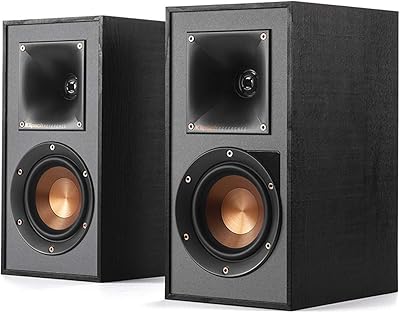
Klipsch R-41M
78%
91%
Sound Clarity & Detail
52%
Bass Performance
86%
Soundstage & Imaging
93%
Sensitivity & Amplifier Compatibility
78%
Build Quality
More
Klipsch R-41PM Powered Bookshelf Speaker
85%
92%
Sound Quality
89%
Bass Response
94%
Bluetooth Connectivity
90%
Ease of Setup
68%
Volume Range
More
Klipsch R-51M
Klipsch R-51M
82%
93%
Sound Clarity
91%
Dynamic Range
88%
Build Quality
72%
Bass Performance
89%
Value for Money
More
Klipsch R-40PM
Klipsch R-40PM
79%
91%
Sound Clarity & Detail
67%
Bass Performance
88%
Connectivity & Input Options
86%
Built-in Phono Preamp
83%
Amplifier Performance
More
Klipsch RP-500M Bookshelf Speakers
89%
94%
Sound Quality
88%
Bass Performance
91%
Build Quality
93%
Ease of Setup
89%
Design & Aesthetics
More
Klipsch R-625FA Floorstanding Speaker
86%
94%
Sound Quality
91%
Bass Response
88%
Build Quality
85%
Ease of Setup
90%
Power Handling
More
Klipsch The Fives Powered Bookshelf Speakers
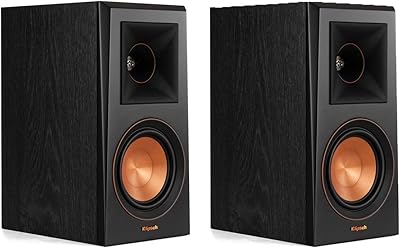
86%
92%
Sound Quality
89%
Connectivity Options
85%
Setup & Installation
88%
Build Quality
91%
Bass Performance
More
Klipsch R-30C Center Channel Speaker
87%
94%
Dialogue Clarity
88%
Build Quality
91%
Soundstage Improvement
87%
Design & Aesthetics
85%
Ease of Integration
More
Klipsch RB-61 II
Klipsch RB-61 II
81%
91%
Sound Clarity
94%
Sensitivity & Efficiency
72%
Bass Performance
86%
Sound Staging & Imaging
83%
Build Quality
More
Klipsch R-52C Center Channel Speaker
87%
93%
Sound Clarity
95%
Dialogue Clarity
89%
Ease of Setup
91%
Build Quality
87%
Soundstage Balance
More

FAQ

Practically speaking, yes — you will want a subwoofer. The speakers roll off meaningfully below about 58 Hz, which means bass guitar fundamentals, kick drum depth, and low-end movie effects are all going to feel thin without one. Owners who tried running them solo almost universally came back to add a sub. Set your receiver to cross over around 80 Hz and let a subwoofer handle everything below that, and the overall system will sound substantially more complete.

Any competent AV receiver rated at 8 ohms will drive these without issue — you do not need anything exotic. Because the speakers are quite sensitive, even modestly powered receivers in the 50–80 watts-per-channel range will produce plenty of volume. The more important consideration is tonal matching: if your receiver or amplifier already leans bright, the combination may push the top end further than you want. A warmer-voiced receiver can actually help balance out the forward treble character of these horn-loaded monitors.

The R-50M generation brings a revised Tractrix Horn with improved outer dimensions, updated woofer cone geometry borrowed from the pricier Reference Premiere line, and better internal cabinet bracing. In practical listening terms, the differences are real but incremental — the midrange is slightly cleaner and the high-frequency dispersion is a bit more controlled. If you already own the R-51M and are happy with the sound, the jump here is unlikely to feel dramatic enough to justify the cost of replacement. For new buyers choosing between them, the R-50M is the better-engineered speaker.

They genuinely work well for both, though the sound signature suits certain music genres more than others. Rock, jazz, acoustic, and vocal-forward music tend to benefit from the energetic, forward presentation and sharp transient detail. Classical, orchestral, and audiophile-grade recordings with wide dynamic range are also enjoyable but will expose the brightness more readily. For hip-hop, electronic, or bass-heavy genres, the subwoofer question becomes even more important.

Yes, and they are arguably well-suited to smaller rooms. The high sensitivity means you can reach satisfying listening volumes at modest power levels without driving the amplifier hard. The 5.25-inch woofer is also scaled appropriately for smaller spaces — it produces tight, controlled bass without pressurizing the room in a way that becomes overwhelming. Just keep the subwoofer pairing in mind if full-range listening matters to you.

You can, and they will perform competently in that role. However, where they really shine is as front left and right speakers in a Klipsch Reference-based system. The timbre match between the R-50M pair and other current Reference or Reference Premiere components is tight, which is what you want for convincing surround audio. Using them as rears while running a different brand for the fronts or center can introduce tonal inconsistency that is noticeable on music and some film content.

These are passive speakers, so they cannot connect directly to a TV — they require an amplifier or receiver to power them. If you want a simpler setup without a full AV receiver, a compact stereo amplifier or an integrated amp will work fine given the 8-ohm impedance. Just make sure whatever amplifier you choose has a line-level input that accepts the audio output from your TV, whether that is an optical-to-analog converter, an HDMI ARC connection, or a standard RCA output from the television.

To a meaningful degree, yes. Most AV receivers include tone controls or parametric EQ, and pulling back the treble shelf by 2–3 dB can take the edge off without significantly harming the detail these speakers are known for. If your receiver includes room correction software like Audyssey or YPAO, running that calibration routine will also help tame any room-induced brightness at the listening position. Speaker placement matters too — keeping them away from hard reflective surfaces and toeing them in slightly can reduce harsh high-frequency reflections.

Like most speakers, these perform at their measured best without the grilles in place, as the grille fabric introduces a small amount of high-frequency attenuation. In practical terms the difference is subtle rather than dramatic, and most listeners would struggle to identify it in a blind test. For everyday use, grilles on or off comes down to personal preference and whether you want to protect the drivers from dust and accidental contact.

Most 24-inch or 28-inch speaker stands pair well with these in a typical seated listening environment, placing the tweeter at roughly ear level for someone seated on a sofa. The speakers are about 14 inches tall and weigh just under 11 lbs each, so most mid-duty stands will support them without any issue. If you are placing them on a bookshelf rather than stands, try to leave some clearance at the rear for the port to breathe and avoid pushing them flush against a back wall, which can make the bass response sound a bit bloated.