Overview

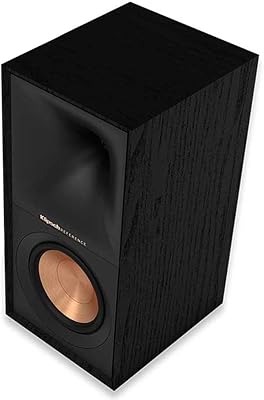
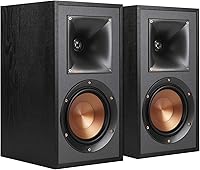
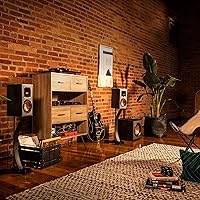
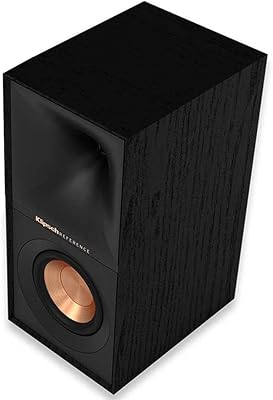
The Klipsch R-51M sits comfortably in the brand's Reference lineup — a range built on decades of high-efficiency speaker engineering tracing back to Paul Klipsch's horn-loading work in the 1940s. These Klipsch bookshelves occupy a genuine sweet spot: priced above throwaway desktop sets but well within reach of a first serious stereo build. One thing worth knowing upfront — they are passive speakers, meaning they won't make a sound without a separate amplifier or receiver driving them. Out of the box, the MDF cabinets feel solid and the copper woofer cones give them a distinctive visual presence that makes them look like they cost considerably more than they do.

Features & Benefits

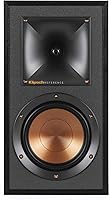
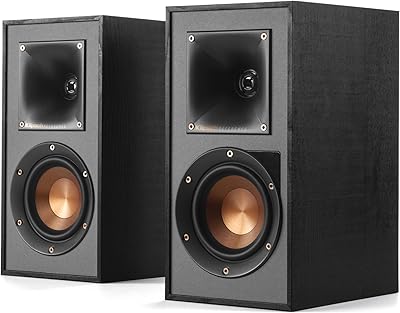
At the heart of these horn-loaded speakers is a 1-inch aluminum tweeter loaded into a 90x90 square Tractrix horn — an arrangement that spreads high-frequency detail evenly across a wide listening area without the harshness you often get from dome tweeters at this price. Each cabinet carries two 5.25-inch spun-copper woofers, which are stiffer and lighter than paper cones, resulting in tighter, more controlled mid-bass. The rear-firing bass-reflex port adds meaningful low-end reach that the physical cabinet size wouldn't ordinarily allow. With 98dB sensitivity and an 8-ohm load, even modest amplifiers can push these loud without strain. Bass response starts around 62Hz, so pairing with a subwoofer is a natural next step for full-range listening.

Best For

These Klipsch bookshelves are an especially strong fit for someone building their first real stereo system — someone who has moved past Bluetooth speakers or soundbars and wants to hear what a proper amplifier and speaker pair actually sounds like. They also work well in home theater setups, either as main front speakers in a 2.0 system or satellites in a 5.1 build. Desktop use is viable if you have the space, though the rear port needs room to breathe. One honest caveat: the R-51M pair has a forward, energetic sound character that suits rock, electronic, and film audio beautifully, but listeners who prefer a flat, neutral response for critical work may find that energy a bit much.

User Feedback

Across a large pool of owner reviews, two things come up repeatedly: exceptional treble clarity and a sense of dynamic punch that feels out of proportion to the cabinet size — the horn design takes most of the credit. On the flip side, a meaningful number of listeners find these horn-loaded speakers run bright, particularly when paired with analytical electronics or played loudly for extended periods. That is a fair concern worth factoring in. Placement also matters more than people expect; pushing cabinets flush against a wall compresses the rear port and muddies the bass. Add a subwoofer and most criticisms about low-end thinness fade quickly. Build quality earns consistent high marks relative to the price tier.

Pros

  • The Klipsch R-51M delivers exceptional treble clarity and midrange detail that outperforms most competitors at its price tier.
  • High 98dB sensitivity means even a budget amplifier drives these horn-loaded speakers to room-filling levels with ease.
  • The spun-copper woofers and dense MDF cabinets give the R-51M pair a premium look and feel well above their price class.
  • Wide horizontal dispersion from the Tractrix horn creates a generous sweet spot, so off-axis listening still sounds cohesive.
  • Dynamic punch and transient speed make film soundtracks and live music recordings feel genuinely engaging and present.
  • Adding a subwoofer transforms the system into a full-range powerhouse — the integration is natural and the upgrade path is clear.
  • Stereo imaging is precise enough that instrument placement in a mix becomes easy to follow during focused listening.
  • These Klipsch bookshelves are efficient enough to work well with modest amplification, keeping total system costs manageable.

Cons

  • Buyers must budget for a separate amplifier or receiver — the speakers alone produce no sound straight out of the box.
  • The aluminum tweeter can sound harsh or fatiguing during long sessions, especially when paired with bright-sounding electronics.
  • The rear-firing port demands several inches of wall clearance — tight shelving installations will noticeably degrade bass quality.
  • Bass rolls off around 60Hz, leaving bass-heavy genres sounding thin without subwoofer support.
  • High sensitivity exposes amplifier noise floors — pairing with a cheap, noisy receiver may introduce audible background hiss.
  • The cabinet vinyl wrap scuffs with handling and attracts fingerprints more than matte or fabric alternatives.
  • Binding posts are functional but not premium — thick speaker cables or oversized connectors can be awkward to secure cleanly.
  • The energetic sound character, while exciting for movies and rock, is a poor match for neutral reference monitoring tasks.

Ratings

The Klipsch R-51M scores presented here were generated by AI after analyzing thousands of verified global buyer reviews, with automated filtering applied to remove incentivized, duplicate, and bot-driven submissions. Ratings reflect real ownership experiences across a wide range of listening environments, system pairings, and use cases — strengths and frustrations weighted equally. The result is an honest, data-grounded picture of where these Klipsch bookshelves genuinely deliver and where they fall short for certain buyers.

Sound Clarity
93%
Owners across setups — from budget stereo receivers to higher-end integrated amplifiers — consistently single out the treble and upper-midrange detail as the standout quality. The horn-loaded tweeter renders vocals, strings, and cymbal decay with a presence and air that competing speakers at this price simply do not match.
That same clarity can tip into stridency with poorly mastered recordings or overly bright source components. Listeners pairing these with analytical DACs or receivers sometimes describe extended sessions as tiring, particularly at higher volumes.
Dynamic Range
91%
The 98dB sensitivity rating translates directly into real-world listening: these horn-loaded speakers hit hard and fast, even when driven by modest amplifiers. Film soundtracks, live recordings, and electronic music all benefit from the sense of effortless headroom that high-sensitivity speakers provide.
In smaller rooms, that same dynamic punch can feel excessive — transients arrive with more force than some listeners prefer for background or late-night listening. Volume control becomes a more deliberate act than it would be with lower-sensitivity alternatives.
Build Quality
88%
The MDF cabinets feel dense and inert, with no noticeable flex or hollow resonance when knuckle-tapped. The spun-copper woofer cones and textured vinyl wrap give these Klipsch bookshelves a visual and tactile premium that exceeds expectations for the price tier.
The cabinet finish, while attractive, shows fingerprints easily and is prone to minor scuffs if moved frequently. The binding posts are functional but not audiophile-grade — thick-gauge speaker cable can be an awkward fit without banana plugs.
Bass Performance
72%
28%
For cabinets of this size, the rear-firing port coaxes respectable mid-bass weight that works well for rock, pop, and movie dialogue. Most owners describe the low end as punchy and defined rather than bloated — a deliberate design choice that suits the speaker's overall character.
Extension below 60Hz is limited, and in larger rooms the R-51M pair starts to sound thin on bass-heavy material without subwoofer support. Several users note that the rear port requires meaningful clearance from the wall — push these too close to the back and the bass becomes congested and indistinct.
Value for Money
89%
Buyers upgrading from soundbars or entry-level Bluetooth speakers consistently describe these as a revelation at this price point. The combination of sensitivity, dynamics, and build quality is genuinely difficult to match from competing brands in the same bracket.
The passive design adds hidden costs — a capable amplifier or receiver is required before hearing a single note, which can surprise first-time buyers. Factoring in amplification, the total system investment climbs meaningfully beyond the speaker price alone.
Soundstage & Imaging
84%
The 90x90 Tractrix horn delivers a wide, consistent sweet spot that makes precise stereo imaging achievable even when seated off-axis. Listeners describe instrument separation as noticeably cleaner than what they experienced with prior all-in-one systems.
Depth and three-dimensionality in the soundstage are competent but not exceptional — the presentation leans forward and immediate rather than expansive and layered. Audiophiles accustomed to more laid-back speaker designs may find the image slightly flat at the front of the room.
Midrange Accuracy
81%
19%
Vocals sit naturally in the mix without the nasal coloration common in ported speakers at this price. Acoustic guitar, piano, and spoken-word content all come through with convincing texture and body during everyday listening sessions.
The slight upper-midrange emphasis that gives these Klipsch bookshelves their lively character can occasionally push certain instruments — particularly electric guitar and brass — to feel slightly forward or edgy on recordings that already lean bright.
High-Frequency Detail
87%
Aluminum tweeters in the Reference line are known for their extended, detailed top end, and real-world use bears this out. Hi-hats, room ambience, and the fine texture of bowed strings are rendered with a level of resolution that outperforms most competitors in this segment.
Aluminum drivers, by nature, have a harder character than silk-dome alternatives. Listeners sensitive to sibilance or ear fatigue will want to match these speakers carefully with warmer amplification to balance the top-end energy over long sessions.
Efficiency & Amp Pairing
92%
At 98dB sensitivity, these are among the easiest passive speakers to drive in their class. A modest 20–30 watt per channel integrated amplifier is genuinely sufficient for normal room volumes, which makes budget system-building straightforward and accessible.
High sensitivity also means any noise floor in the amplifier — hiss, hum, or low-level interference — becomes more audible than it would with less sensitive speakers. Pairing with noisy entry-level receivers occasionally surfaces background hiss at idle.
Placement Flexibility
66%
34%
The compact footprint — roughly 8.5 inches deep and 7 inches wide — fits reasonably well on most bookshelves, media consoles, and dedicated stands. Owners with dedicated listening rooms or open wall space find positioning straightforward.
The rear-firing port is a genuine constraint: the speakers need several inches of clearance behind them to breathe properly, which rules out true flush-against-the-wall placement. Several buyers discovered this only after positioning them in a tight shelving unit and noticing muddied, pressurized bass.
Subwoofer Integration
78%
22%
When crossed over sensibly around 80Hz, the R-51M pair blends with a subwoofer in a way that feels cohesive and natural. Owners who added even a modest subwoofer to the system describe a transformation in fullness and cinematic impact.
Without subwoofer support, bass-heavy genres like hip-hop, EDM, and orchestral film scores reveal a clear ceiling. Some buyers feel the speakers should be marketed more explicitly as part of a system rather than a standalone full-range solution.
Design & Aesthetics
83%
The copper woofer cones against the black vinyl cabinet create a striking contrast that reads as premium and intentional — uncommon in mass-market audio at this price. Several owners cite appearance as a factor that influenced the purchase alongside sound.
The black vinyl wrap is a fingerprint magnet and the gloss-finish baffle around the woofer shows wear over time with regular handling. Those who prefer a more understated or furniture-grade appearance may find the industrial copper-and-black look a bit bold for certain interiors.
Long-Term Listening Fatigue
69%
31%
For shorter listening sessions — an hour of focused music or a film — the energetic presentation is genuinely engaging and keeps attention anchored to the content. Many users describe a satisfying sense of immersion during movie watching in particular.
Extended listening at moderate-to-high volumes is where some owners tap out. The combination of a forward midrange and detailed aluminum tweeter pushes certain listeners toward fatigue after two to three hours, particularly with compressed streaming audio rather than lossless sources.
Setup & Out-of-Box Experience
74%
26%
The speakers arrive well-packaged and ready to connect. For buyers who already own a receiver or integrated amplifier, the path from unboxing to first sound is measured in minutes — terminals are clearly labeled and the included documentation is straightforward.
For first-time passive speaker buyers, the realization that an external amplifier is required can be jarring if not researched in advance. The packaging and product listing do not shout this requirement loudly enough, leading to a pattern of confused early reviews from buyers who expected plug-and-play simplicity.

Suitable for:

The Klipsch R-51M is purpose-built for listeners who are ready to take their first real step into dedicated hi-fi audio and want tangible, immediate results without spending a fortune. If you already own a stereo receiver or integrated amplifier — or are actively shopping for one — these Klipsch bookshelves slot into a 2.0 stereo or 5.1 home theater setup with impressive authority for the cabinet size. Music lovers who stream high-quality audio, spin vinyl, or watch films at home will appreciate the dynamic, forward-leaning presentation that makes everything feel live and immediate rather than politely restrained. Desktop users with enough desk depth to allow rear-port clearance will find that these horn-loaded speakers fill a room far beyond what their footprint suggests. They are also a strong fit for anyone upgrading from a Bluetooth speaker or soundbar who wants to understand, for the first time, what a proper separates system actually sounds like.

Not suitable for:

The Klipsch R-51M is a harder sell for buyers who expect a plug-and-play, all-in-one audio solution — these are passive speakers that produce no sound without a separate amplifier or receiver, and that additional investment can catch first-time buyers off guard. Listeners who prefer a flat, neutral, or warm sound signature — producers monitoring mixes, classical enthusiasts, or anyone with ear sensitivity to bright highs — may find the R-51M pair fatiguing over extended sessions, especially when driven by equally analytical electronics. The rear-firing port is a genuine placement constraint: anyone planning to mount these flush against a wall or inside a closed shelving unit will compromise the bass performance and should consider a front-ported or sealed alternative instead. Those who listen primarily to bass-heavy genres like hip-hop or EDM and do not plan to add a subwoofer will likely find the low-end extension insufficient for a satisfying experience. Buyers in very small rooms or apartment settings where volume must be kept consistently low may also not fully realize the dynamic advantages these horn-loaded speakers offer.

Specifications

  • Tweeter: Each cabinet features a 1-inch aluminum Linear Travel Suspension (LTS) tweeter designed to reduce distortion and extend high-frequency response.
  • Horn Type: The tweeter is loaded by a 90x90 square Tractrix horn that controls sound dispersion both horizontally and vertically for consistent off-axis performance.
  • Woofer: Each cabinet houses a single 5.25-inch spun-copper IMG (Injection Molded Graphite) woofer, chosen for its high stiffness-to-weight ratio and low coloration.
  • Frequency Response: The R-51M pair covers a frequency range starting at 62Hz, making subwoofer pairing advisable for full-range low-end reproduction.
  • Sensitivity: Rated at 98dB at 1 watt at 1 meter, these horn-loaded speakers are among the most efficient passive bookshelves available in their price range.
  • Impedance: Nominal impedance is 8 ohms, making the speakers compatible with the vast majority of stereo receivers and integrated amplifiers on the market.
  • Power Handling: The cabinets are rated to handle up to 340 watts peak power, though real-world listening rarely approaches that threshold in typical home environments.
  • Cabinet Material: Enclosures are constructed from MDF (Medium Density Fiberboard), which minimizes panel resonance and contributes to the speakers' solid, inert feel.
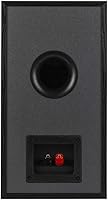
  • Port Design: A rear-firing bass-reflex port extends low-frequency output beyond what the cabinet volume alone would allow, requiring adequate clearance behind the speaker.
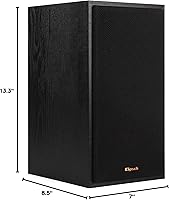
  • Dimensions: Each cabinet measures 8.5″ deep, 7″ wide, and 13.3″ tall — a footprint manageable for most shelves, media consoles, or speaker stands.
  • Weight: The pair weighs approximately 11 pounds total, with each individual cabinet substantial enough to feel premium without requiring special mounting hardware.
  • Connectivity: These are fully passive, wired speakers with no built-in amplification, Bluetooth, or wireless functionality — an external amplifier or receiver is required.
  • Binding Posts: Standard five-way binding posts on the rear panel accept bare wire, pin connectors, spade connectors, and banana plugs for flexible cable termination.
  • Mounting Type: Designed for shelf mounting, though they perform equally well on dedicated bookshelf speaker stands that allow full port clearance at the rear.
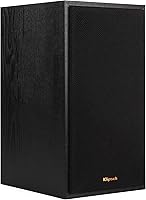
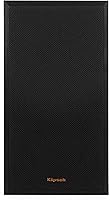
  • Finish & Color: Cabinets are wrapped in a black wood grain vinyl with a textured finish, accented by a removable cloth grille and a gloss-black front baffle.
  • Sold As: The listing includes a matched stereo pair — two individual cabinets — configured for standard left and right channel stereo or surround use.
  • Warranty: Klipsch covers these speakers with a limited warranty; buyers should confirm current terms directly with Klipsch or the authorized retailer at time of purchase.
  • Manufacturer: Designed and engineered by Klipsch, an American audio brand founded in 1946 and known for high-efficiency horn-loaded speaker designs across all price tiers.

Related Reviews
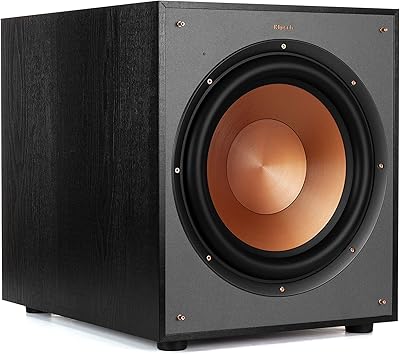
Klipsch R-120SW Subwoofer
80%
91%
Bass Performance
88%
Value for Money
84%
Build Quality
92%
Ease of Setup
79%
Room Integration & Tuning
More
Klipsch R-625FA Floorstanding Speaker
86%
94%
Sound Quality
91%
Bass Response
88%
Build Quality
85%
Ease of Setup
90%
Power Handling
More
Klipsch R-41M
Klipsch R-41M
78%
91%
Sound Clarity & Detail
52%
Bass Performance
86%
Soundstage & Imaging
93%
Sensitivity & Amplifier Compatibility
78%
Build Quality
More
Klipsch R-100SW 10″ Subwoofer
86%
92%
Bass Quality
89%
Sound Clarity
91%
Integration with Klipsch Systems
85%
Compactness/Size
88%
Ease of Setup
More
Klipsch R-50M Bookshelf Speakers
82%
91%
Sound Clarity & Detail
74%
Treble Balance
86%
Midrange Performance
63%
Bass Response
93%
Efficiency & Sensitivity
More
Klipsch Reference R-26FA Floorstanding Speaker
85%
91%
Sound Quality
88%
Bass Performance
93%
Build Quality
82%
Ease of Setup
74%
Size and Placement
More
Klipsch R-40M Reference Next-Generation
88%
94%
Sound Clarity
81%
Bass Response
92%
High-Frequency Detail
90%
Build Quality
88%
Aesthetic Design
More
Klipsch R-34C Center Channel Speaker
89%
93%
Sound Clarity
89%
Dialogue Reproduction
84%
Bass Performance
90%
Build Quality
88%
Ease of Setup
More
Klipsch R-52C Center Channel Speaker
87%
93%
Sound Clarity
95%
Dialogue Clarity
89%
Ease of Setup
91%
Build Quality
87%
Soundstage Balance
More
Klipsch Reference R-820F Floorstanding Speaker
86%
92%
Sound Quality
89%
Bass Performance
85%
Build Quality
90%
Ease of Integration
75%
Size & Space Requirements
More

FAQ

You will need a separate amplifier or stereo receiver before you hear anything — these are passive speakers with no built-in power source. Once you connect them to an amplifier using standard speaker wire, setup takes only a few minutes. Many buyers pair them with budget-friendly integrated amplifiers or AV receivers they already own.

Very little, as it turns out. The 98dB sensitivity rating means even a 20 to 30 watt per channel amplifier will push these Klipsch bookshelves to loud, room-filling levels. You certainly can use a more powerful receiver, but raw wattage is less important here than amplifier quality and noise floor.

For most casual listening — TV, streaming, rock, pop, or jazz — they hold up well without one. Bass rolls off meaningfully below 60Hz though, so if you listen to hip-hop, EDM, orchestral music, or watch action films regularly, a subwoofer will make a noticeable difference. Think of adding a sub as a natural system upgrade rather than a fix for a flaw.

A rear-firing port needs room to breathe — ideally at least 3 to 4 inches of clearance between the back of the cabinet and the wall. Placing them flush against a wall or inside a closed shelving unit causes the bass to sound congested and boomy. If wall placement is your only option, consider angling the speakers slightly outward to help airflow.

Yes, with one caveat: the forward, energetic sound signature of the R-51M pair tends to complement warmer phono preamps and turntable cartridges very well. If your turntable chain is already on the bright side, the combination may feel a little much for extended listening sessions. Pairing them with a warmer integrated amplifier balances things out nicely.

One of their genuine strengths is how composed they remain at high volumes. The horn-loaded design and high sensitivity let these speakers play loud without the compression or strain you hear from less efficient designs. Some listeners do find the treble becomes fatiguing at high volumes over long periods, but that is about ear fatigue rather than distortion.

Absolutely — many home theater builders use the R-51M pair as front left and right speakers in a 2.0 setup or pair them with a center channel and additional Klipsch Reference surrounds in a 5.1 configuration. Their efficiency and horn dispersion make them a natural fit for medium-sized living rooms.

They can work well at a desk, but the rear port is worth thinking about. If your desk setup allows the speakers to sit a few inches from the wall, you should be fine. Near-field desktop listening also tends to place you closer to the tweeters, which can highlight the brightness of the aluminum driver — matching them with a warm-sounding DAC or headphone amp helps offset that.

The physical setup is genuinely simple: strip a small length of speaker wire, insert it into the binding post, tighten, and connect the other end to your amplifier. The learning curve is more about understanding amplifier selection and speaker placement than anything mechanical. There are no apps, no Bluetooth pairing, and no drivers to install.

Most owners remove the cloth grilles for critical listening since they can slightly soften the high-frequency detail that these horn-loaded speakers are known for. The difference is subtle rather than dramatic, but audiophiles tend to prefer them bare. For everyday TV listening or if you have kids or pets nearby, the grilles offer practical protection without a serious sonic penalty.