
Overview

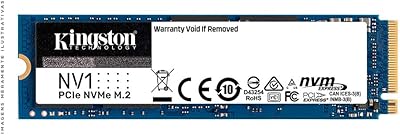
The Kingston NV1 2TB NVMe SSD sits squarely in the entry-level NVMe segment, and that is not a criticism — it is exactly what makes it worth considering. Kingston has been shipping reliable storage hardware for decades, so this is not some no-name gamble. The drive uses the standard M.2 2280 form factor, which fits nearly every consumer laptop and compact desktop built in the last several years. Running on a PCIe Gen 3 interface, it delivers real-world speeds that will feel dramatically faster than any hard drive, even if it does not chase the top benchmarks that pricier Gen 4 drives post.

Features & Benefits

With sequential reads up to 2100 MB/s and writes up to 1700 MB/s, this Kingston drive handles everyday computing tasks with ease — Windows boots in seconds, large files transfer quickly, and applications load without the hesitation you get from older SATA drives. The PCIe Gen 3.0 x4 interface is broadly compatible, meaning you do not need a newer motherboard to take advantage of NVMe speeds. At 2TB, there is genuine room for a full OS installation, a game library, and a working media collection without constantly juggling files. Weighing under a quarter of an ounce, the NV1 2TB adds essentially no measurable weight to any build — a small but welcome detail for laptop upgrades.

Best For

This entry-level NVMe stick makes the most sense for a fairly specific type of buyer. If you have a laptop still running on a mechanical hard drive — or a sluggish SATA SSD — the jump to NVMe speeds will be immediately noticeable. It is also a practical pick for compact PC builders who want 2TB on a single M.2 slot, keeping the second slot free. Students, remote workers, and home users who need reliable everyday storage without overpaying for Gen 4 performance they would rarely use will find the value clear. It also works well as a secondary drive where a faster primary drive already handles the heavy lifting.

User Feedback

Across more than 1,000 ratings, this Kingston drive holds a 4.6-star average — a score that reflects genuinely satisfied buyers, not a small sample of enthusiasts. Most positive feedback points to how straightforward the installation is, with no drivers or companion software required, and how noticeably faster machines feel afterward. That said, the picture is not entirely without blemish. A portion of reviewers note that the drive runs warmer than expected during sustained write activity, which can cause throttling on tasks like large video transfers or disk cloning. For typical daily use — browsing, documents, casual gaming — thermal behavior is rarely a concern, but heavy continuous write workloads are worth factoring into your decision.

Pros

  • Boot times drop dramatically compared to any hard drive or older SATA SSD.
  • 2TB on a single M.2 stick keeps your second slot available for future upgrades.
  • PCIe Gen 3.0 x4 interface works in virtually every laptop and desktop from the last several years.
  • Installation is plug-and-play with no software, drivers, or configuration required.
  • Sequential reads up to 2100 MB/s make large file transfers fast enough for everyday tasks.
  • Kingston is a well-established brand with a track record of consistent quality control.
  • The M.2 2280 form factor fits the vast majority of consumer laptops and compact builds.
  • Weighing under a quarter of an ounce, this Kingston drive adds no meaningful bulk to portable systems.
  • Over 1,000 buyer ratings averaging 4.6 stars reflects a broad, reliable pattern of satisfaction.
  • Available in multiple capacities, so you can right-size the purchase to your actual storage needs.

Cons

  • Sustained write workloads can cause thermal throttling, reducing transfer speeds during long sessions.
  • Longevity feedback from heavy-write users is mixed, raising questions about endurance over time.
  • No Gen 4 speeds means the NV1 2TB will underperform in systems capable of faster NVMe throughput.
  • Random read and write performance, which affects real-world multitasking, is less impressive than peak sequential figures suggest.
  • No bundled heatsink or thermal pad, which matters in tighter chassis with limited airflow.
  • No proprietary monitoring or health software means less visibility into drive condition over time.
  • The drive has been on the market since 2021, so newer competing options at this tier have emerged.
  • Not rated or marketed for NAS, server, or high-endurance workloads, limiting its use case scope.

Ratings

Our AI rating system analyzed thousands of verified global purchases of the Kingston NV1 2TB NVMe SSD, actively filtering out incentivized reviews, bot activity, and outlier submissions to surface what real everyday buyers consistently experienced. The scores below reflect both where this entry-level NVMe stick genuinely delivers and where it falls short — no sugarcoating, no spin.

Value for Money
88%
Buyers upgrading from aging hard drives or budget SATA SSDs repeatedly called out the cost-per-gigabyte as a strong point. Getting 2TB of NVMe storage at this tier, backed by a recognizable brand, struck most users as a fair trade for the performance on offer.
A small but vocal segment felt the pricing was harder to justify once faster Gen 4 alternatives entered a similar price range. Shoppers doing careful comparisons noted that the gap between this drive and more capable options has narrowed over time.
Read/Write Performance
82%
18%
For everyday tasks — booting Windows, launching applications, transferring a semester's worth of files — the sequential speeds hold up well. Users migrating from mechanical drives described the difference as night and day, with load times dropping to a fraction of what they were used to.
Real-world performance under mixed workloads does not always match the headline numbers. Random read and write speeds, which matter more during multitasking and background processes, are less impressive than the sequential figures suggest and trail behind pricier alternatives.
Installation Ease
93%
This was consistently one of the most praised aspects across thousands of reviews. The plug-and-play experience required no drivers, no software setup, and no technical knowledge beyond physically seating the drive — a genuine win for first-time upgraders.
A small number of users ran into compatibility surprises when their laptop's M.2 slot turned out to be SATA-only rather than NVMe. This is a system compatibility issue rather than a flaw in the drive, but it caught enough buyers off guard to be worth flagging.
Thermal Management
61%
39%
Under light to moderate workloads — general computing, streaming, casual gaming — temperatures stay within an acceptable range and rarely cause any noticeable slowdown. Most home and student users never experienced any heat-related issues during normal daily use.
Sustained write sessions, such as large file transfers or full-drive cloning, caused measurable throttling for a meaningful share of reviewers. Compact laptops with restricted airflow around the M.2 slot amplified the issue, leading to slower-than-expected transfer rates mid-task.
Long-Term Reliability
71%
29%
The majority of buyers who had used this Kingston drive for one to two years reported no failures or data issues under typical workloads. Kingston's reputation as a storage brand gave many buyers additional confidence in the purchase decision.
Endurance feedback for heavier write workloads is less reassuring. A subset of longer-term reviewers reported degraded performance over time, and the drive is not rated or marketed for high TBW workloads, which is a legitimate concern for anyone using it as a primary work drive under constant pressure.
Compatibility
86%
The M.2 2280 form factor is the most common size on the market, and the NV1 2TB slotted in without issues across a wide range of laptops and compact desktops reported by buyers. PCIe Gen 3 backward and forward compatibility meant very few users encountered slot conflicts.
The occasional mismatch between NVMe and SATA-only M.2 slots tripped up buyers who did not verify their system specs beforehand. PS5 users considering this drive also found it fell short of Sony's recommended speed thresholds for the console's expansion bay.
Capacity Usefulness
91%
Having 2TB in a single M.2 slot proved genuinely practical for users who wanted to consolidate storage without occupying a second slot. Students, remote workers, and light gamers found 2TB comfortably handled an OS, applications, a game library, and media files with room to spare.
Users with very large media production libraries or extensive game collections noted that 2TB can fill up faster than expected. Those managing large video editing projects in particular found the drive's capacity ceiling came sooner than they had anticipated.
Build Quality
77%
23%
The drive feels solid in hand for its size and weight, and the lack of moving parts is the fundamental reliability advantage all SSDs share. Kingston's manufacturing consistency received positive mentions from buyers who had previously owned other Kingston products.
There is no heatsink included, which is an omission that matters more in tighter or hotter chassis. The bare PCB design means the drive is entirely dependent on its environment for cooling, which is not always a safe assumption in compact form factor builds.
Boot & Load Times
89%
This was perhaps the most universally praised practical benefit. Users switching from HDDs described Windows boot times dropping from over a minute to under 15 seconds, and applications that previously took several seconds to open became nearly instant.
The improvement over a premium NVMe drive is less dramatic. Buyers upgrading from a mid-range SATA SSD noticed a smaller gain than those coming from mechanical drives, and a few felt the real-world difference did not match the enthusiasm of online benchmark discussions.
Noise & Vibration
96%
As a solid-state drive with no mechanical components, it operates in complete silence under all conditions. Users coming from noisy spinning hard drives specifically noted how the absence of drive noise improved their overall computing experience.
There is genuinely little to criticize here — SSD silence is a baseline expectation rather than a differentiator. This score reflects the standard NVMe advantage rather than anything unique to this particular drive.
Software Ecosystem
58%
42%
The absence of required software is actually a positive for most users — there is nothing to install, nothing to configure, and nothing to keep updated. Buyers appreciated that the drive just works without any ecosystem lock-in or mandatory account creation.
Kingston does not offer a dedicated SSD health monitoring tool for the NV1 series, which means users who want visibility into drive temperature, remaining lifespan, or SMART data need to rely on third-party utilities. For less technical buyers, this gap in support can feel like a blind spot.
Packaging & Unboxing
74%
26%
The packaging is minimal and functional — most buyers received the drive safely and found everything they expected inside. The straightforward presentation suited the no-frills positioning of the drive well.
No mounting screw is included, which tripped up a handful of buyers who assumed one would be provided. For first-time builders or upgraders unfamiliar with M.2 installations, this small omission added an unexpected trip to a hardware store.
Brand Trustworthiness
87%
Kingston's multi-decade presence in the storage market carries real weight with buyers, many of whom cited brand familiarity as a deciding factor over lesser-known alternatives at similar prices. The company's warranty support reputation contributed positively to buyer confidence.
Some technically informed buyers noted that Kingston does not always disclose the flash memory supplier or controller used in the NV1 series, which makes third-party endurance comparisons harder to pin down. This opacity is a minor but legitimate concern for detail-oriented shoppers.

Suitable for:

The Kingston NV1 2TB NVMe SSD is a strong fit for anyone whose primary goal is escaping slow storage without overcomplicating the upgrade. Laptop owners still running mechanical hard drives will notice an immediate and dramatic difference in boot times and application responsiveness from day one. It is equally well-suited for small form factor PC builders who want a single high-capacity M.2 drive that leaves their second slot free for future expansion. Students, remote workers, and casual home users who store a mix of documents, photos, software, and occasional games will find 2TB more than sufficient without paying a premium for cutting-edge Gen 4 speeds that their workloads would never fully exercise. Anyone upgrading an older secondary machine or building a budget home media server will also get solid, dependable performance from this Kingston drive.

Not suitable for:

The Kingston NV1 2TB NVMe SSD is not the right call for buyers who push storage hardware hard on a daily basis. Video editors, data scientists, or anyone regularly writing large files continuously — think 4K footage ingestion, virtual machine images, or disk-to-disk cloning — may run into thermal throttling during those sustained sessions, which can noticeably drag down transfer rates. It also does not belong in a high-end workstation build where the rest of the system is capable of leveraging PCIe Gen 4 bandwidth; in that context, the entry-level NVMe stick would become a bottleneck rather than an asset. Buyers prioritizing long-term endurance ratings for write-intensive server or NAS use should look at drives specifically rated for higher TBW (terabytes written). And if your workflow demands consistent peak performance under load rather than just strong sequential bursts, a drive from a higher tier is worth the added investment.

Specifications

  • Brand: Manufactured by Kingston Technology, a well-established storage hardware company with decades of industry presence.
  • Model Number: The drive carries model number SNVS/2000G, part of Kingston's NV1 series.
  • Capacity: Available in 500GB, 1TB, and 2TB; this variant provides 2TB of usable solid-state storage.
  • Form Factor: Uses the M.2 2280 form factor, measuring 3.15 x 0.87 x 0.14 inches (80mm length standard).
  • Interface: Connects via NVMe PCIe Gen 3.0 x4 lanes, delivering significantly faster throughput than SATA-based M.2 drives.
  • Sequential Read: Rated for sequential read speeds of up to 2100 MB/s under ideal conditions.
  • Sequential Write: Rated for sequential write speeds of up to 1700 MB/s under ideal conditions.
  • Installation Type: Internal drive only; designed to be permanently seated in an M.2 slot, not used as an external device.
  • Compatible Devices: Compatible with laptops and small form factor PCs that include an M.2 2280 NVMe PCIe slot.
  • Weight: The drive weighs approximately 0.247 oz (roughly 7g), adding negligible mass to any host system.
  • Flash Type: Uses NAND flash memory in a solid-state configuration with no moving parts, improving shock resistance over HDDs.
  • Release Date: First made available in March 2021 and remains an active, non-discontinued product in Kingston's lineup.
  • Warranty: Kingston backs the NV1 series with a limited warranty; buyers should verify current terms directly with Kingston for their region.
  • Software: No proprietary companion software or drivers are required; the drive is recognized natively by modern operating systems.
  • Buyer Rating: Holds a 4.6 out of 5 star average rating based on over 1,191 customer ratings on Amazon.
  • Sales Rank: Ranked #1,271 in the Internal Solid State Drives category on Amazon at time of review.
  • Thermal Management: The drive has no integrated heatsink; sustained write workloads may cause thermal throttling in poorly ventilated enclosures.
  • OS Compatibility: Works with Windows, Linux, and other operating systems that support standard NVMe drivers.

Related Reviews
Kingston NV1 250GB NVMe SSD
79%
88%
Value for Money
83%
Read Speed Performance
71%
Write Speed Performance
93%
Installation Ease
81%
Compatibility
More
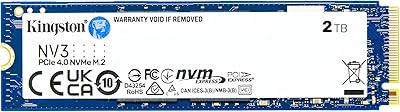
Kingston NV3 2TB NVMe SSD
82%
88%
Read Speed Performance
71%
Write Speed Consistency
63%
Thermal Management
86%
Value for Money
94%
Installation Ease
More
Kingston NV1 500GB M.2 2280 NVMe SSD
85%
88%
Performance
92%
Value for Money
90%
Installation Ease
80%
Speed Consistency
85%
Durability
More
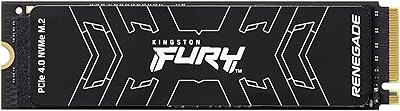
Kingston FURY Renegade 2TB NVMe SSD
84%
94%
Read & Write Performance
88%
Sustained Throughput Consistency
71%
Thermal Management
92%
Installation & Compatibility
74%
Value for Money
More
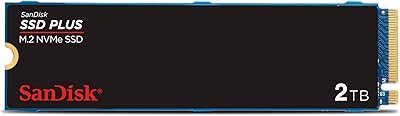
SanDisk 2TB SSD Plus M.2 NVMe SSD
86%
89%
Performance
92%
Ease of Installation
88%
Reliability
91%
Value for Money
90%
Capacity
More
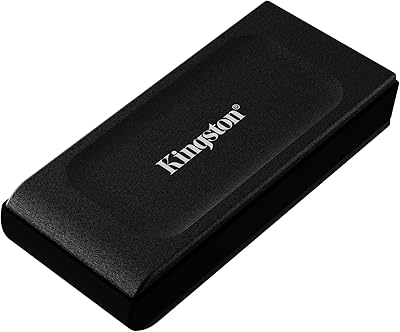
Kingston XS1000 2TB SSD
88%
94%
Performance
90%
Portability
93%
Speed (Read/Write)
88%
Build Quality
91%
Ease of Use (Plug & Play)
More
GiGimundo G7400 2TB NVMe SSD
76%
88%
Read Speed Performance
54%
Sustained Write Speed
91%
Gaming Load Times
83%
Value for Money
67%
Thermal Management
More
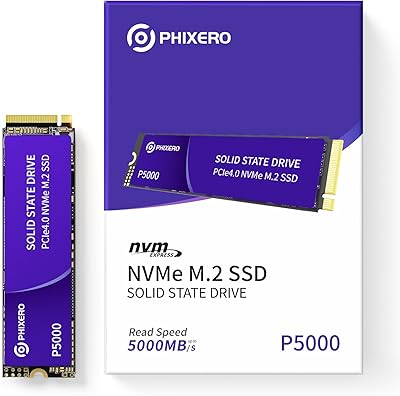
PHIXERO P5000 2TB NVMe SSD
88%
93%
Performance (Speed)
88%
Build Quality
90%
Heat Management
85%
Ease of Installation
92%
Compatibility
More
WD_BLACK SN7100 2TB NVMe SSD
85%
93%
Read & Write Performance
88%
Gaming Load Times
86%
Power Efficiency
84%
Thermal Management
91%
Value for Money
More
ORICO e7400 2TB M.2 NVMe SSD
81%
91%
Sequential Speed
78%
Random Read/Write
86%
Thermal Management
83%
PS5 Compatibility
88%
Value for Money
More

FAQ

It depends on whether your laptop's M.2 slot supports NVMe or only SATA. Many older laptops have M.2 slots that are SATA-only, which means an NVMe drive like this one would not be recognized. Check your laptop's spec sheet or motherboard documentation to confirm it supports NVMe PCIe before purchasing.

No special software is needed — modern operating systems recognize the drive automatically. For installation, you typically just need a small Phillips-head screwdriver to secure the drive in its M.2 slot. If you are migrating from an existing drive, you will want cloning software like Macrium Reflect or a fresh OS install, but neither is provided in the box.

Yes, it will work in a Gen 4 slot but will only operate at Gen 3 speeds. PCIe is backward compatible, so there is no risk of damage — you just will not see any Gen 4 performance gains. If your system is Gen 4 capable and speed is a priority, a native Gen 4 drive would serve you better.

Very noticeable. The jump from a mechanical hard drive to this entry-level NVMe stick is one of the most impactful upgrades you can make to an older machine. Boot times can drop from over a minute to under 15 seconds, and applications that used to take several seconds to open will launch almost instantly.

Technically you can place it in an M.2 NVMe USB enclosure, but it is designed and rated as an internal drive. Performance through USB will be limited by the enclosure's USB controller regardless of the drive's own speed rating. If you need portable external storage, a dedicated external SSD would be a better fit.

Under everyday workloads — browsing, office applications, light gaming — temperatures stay manageable. Where things can get warmer is during prolonged sustained writes, like copying hundreds of gigabytes at once or cloning a drive. In compact laptops with limited airflow, this can trigger thermal throttling and slow transfers temporarily. It is not a dealbreaker for typical use, but worth knowing if you plan heavy continuous writes.

For most gamers, yes. A modern AAA game can occupy anywhere from 50GB to 150GB, so 2TB gives you room for 15 to 30 large games alongside your operating system and other software. If you have an especially large library or work with game development assets, you may eventually want a second drive, but casual to moderate gaming setups will be comfortable.

Kingston backs its NV1 series with a limited warranty, though the exact duration can vary by region and should be confirmed on Kingston's official site. As with any storage drive, it is strongly recommended to keep regular backups regardless of warranty coverage, since data recovery is not typically included in hardware warranties.

The PS5 does accept M.2 NVMe drives in its expansion slot, but Sony recommends drives with PCIe Gen 4 speeds to match the console's internal storage performance. This Kingston drive runs on Gen 3 and will physically fit, but may not meet Sony's recommended speed thresholds. For PS5 specifically, a Gen 4 drive is the safer choice.

No heatsink is included, and most laptops and motherboards do not come with a spare M.2 mounting screw either — check whether your laptop or motherboard provides one. In most desktop motherboard builds, a screw is included with the board. If your chassis runs hot or airflow around the M.2 slot is restricted, an aftermarket heatsink is a low-cost addition worth considering.

Where to Buy